Welcome visitors! Check out our pages for more information about our meat or buying a quarter cow or half hog.
We live and Farm in the driftless region of Southwest Wisconsin, which means in the last Ice Age the glaciers split and went around us, resulting in a geologically different area than the surrounding land.
Underlying the relatively shallow soils is limestone and is referred to as Karst geology. I don’t fully understand the reason why, but the resulting grass which grows here is incredibly rich and perfect for grass fed cattle. There are a few other areas in the world similar to here, Kentucky , an area in France, probably others I’m not aware of.
Anyway, we feel blessed to live and farm here and hope you enjoy our meat!
I don’t have a good photo of bedding cattle, so I just threw this one in here of a nice heifer calf from this fall.
Bedding cattle, for those of you who don’t know, is the practice of laying down forage, usually straw, to give the cattle more comfort in winter or in muddy conditions.
For those of you who bed cattle on a hillside, here’s something to try. The natural inclination, for me at least, is to bed around the contour of the hill, which works fine.
But one day I decided to bed up and down the hill, and I saw right away that the cattle prefer and utilize the bedding better when it’s bedded up and down the hill.
Strange but true, at least for my herd. Give it a try, and let me know if it works for your herd.
Contributing to the axiom, “Nothing is given so freely as advice,” I’m starting a new series of tips and tricks I’ve learned over the years.
You don’t need to corral livestock to sort them. If you have livestock which come to you and are used to going through a gate into the next pasture, which is true for most of us rotational grazers, you can sort at any gate by simply moving a few steps back and forth.
Sorting animals who are facing you, wanting to go by you, is a breeze. The challenge is to have patience and work slowly enough so you don’t make mistakes.
My buddy, who also farms and markets at DCFM, came over to help me. I told him what I was doing, and to watch my right side, as I would primarily be sorting to my left, and its impossible to watch everywhere when the animals are moving aggressively.
Our herd has about 90 cows and 90 calves. We sorted 80 cows through the gate into the next pasture in maybe ten to fifteen minutes. Because we hadn’t been pressuring the rest of the herd, they felt comfortable staying near the gate. So we simply moved around them and drove the entire herd down the lane into the corral where we finished sorting.
A video would show this a lot better, but I was too busy to film. I may make one in the future though, as I’ve started using tiktok, which makes it very easy to make short videos. Search Curiousfarmer if you would like to see some of the videos I’ve been making. Or check out this link of moving the herd a few weeks ago.
WARNING: Detailed and Long Post. I wrote this to remind me of our selection goals and to hold myself accountable. If you’re not me or Larry from Madison, I suggest you skip this long post.
100% Calf Crop. If you’re a cow/calf producer and you aren’t weaning a calf from every cow, I’ve just saved you time by identifying what should be your #1 goal.
But, but, but. I know, you have more butts than a Piedmontese stud, and its your herd, and you aren’t going to take my word for it. Why should you? Who am I anyway?
I’ll tell you. I’m a guy who’s been farming his whole life, made most every mistake once, sometimes twice, (I’m a slow learner), and hung in there long enough that we make a living farming.
But you’re still not going to take my advice about your herd. And you shouldn’t. Its your herd.
So, where are you going with your herd? Can you verbalize your goals? Have you ever written them down.
Write down your goals!
You know who we lie to the most? Ourselves. Writing down your goals keeps you accountable to yourself.
I’ll use our farm as an example. These are the traits we’ve identified and written down as being top priority for our farm.
Our #1 trait is Disposition.
Why is Disposition our top trait? My work crew is 2 elderly parents, a wife, and a toddler.
I loaded two old bulls the other day with the help of my wife and Grandpa. Grandpa got to ride his 4 wheel drive ATV. My wife and I walked through ankle deep mud, and one of her boots leaks.
To inspire my wife’s courage I used audible cues, “Come on honey!” She came on. We got the bulls loaded and I hauled them to market.
At the end of a long day I looked for my supper and I realized it was going to be something I remember my mom serving my dad from time to time. In our family its a dish called, “Find it yourself.”
So yes, Disposition is going to stay at the top for the foreseeable future. We need to have cattle we can work with.
Our next most important trait is Calving Ease.
I anxiously watched my first heifer of the calving season try to push out a calf, Wednesday, April 6th, 2022. 20 mph wind was blowing rain sideways. We don’t have fancy calving barns so we wait until April to start calving here in southwest Wisconsin.
I told my wife we were going to have to wait until this heifer had her calf safely before we went to Platteville. We had planned an outing to Farm and Fleet, maybe lunch at Culver’s, but that was on hold while we waited.
And I prayed that the calving ease bull we used was truly easy calving, as it was not going to be easy to help this heifer if she had a problem. The pasture I have these heifers calving in is pretty nice, with stockpiled fescue, and hills for drainage, and draws to get out of the wind.
But it would not be easy to help her as we would have to walk her through the muddy winter hay feeding lot, up to the pen by the barn, and then either haul her to my parents corral or haul the catch chute up to my barn.
Well it took most of the morning, but the heifer had her calf unassisted, with my dedication to calving ease only strengthened. We missed our lunch at Culver’s, but happy to have a live calf.
I should mention we want both kinds of calving ease, direct and maternal. Direct calving ease estimates how easily a bull’s calves will be born. Maternal calving ease estimates how well a bull’s daughters will calve.
The final trait we select is Soundness. And by Soundness I mean feet and legs, breeding, and udder.
If your cow can’t walk because of long hooves or poor legs, she won’t stay in the herd. If the bull and cow can’t connect, no calf. And if the newborn calf can’t stand up and put his mouth around a functioning teat, Matthew has to stop whatever else he’s doing and get the cow into the corral and help the calf nurse.
The first Soundness traits keep you in the cattle business. The last Soundness trait keeps me from being annoyed, and since I don’t like being annoyed, its definitely staying in our Soundness criteria.
For our farm, that’s it! 3 Traits, Disposition, Calving Ease, and Soundness. If you think I’m cheating by subgrouping 3 traits into soundness, then fine, call it 5 traits we select.
What do you select? Keep in mind, the more traits you select, the less emphasis and progress you can make on any one trait.
What don’t we select? Off the top of my head, weaning weight, yearling weight, milk, maintenance energy, average daily gain, dry matter intake, marbling, carcass weight, yield. And everything else, except for one trait I forgot to mention.
We like red cattle. Most of our neighbors have black cattle. We like red cattle, so we select red cattle. Maybe you don’t care what color your cattle are, fine, its your herd.
What traits do you select?
Remember to keep it simple! The more traits you select, the less progress you will make in any trait.
Let’s take a ludicrous example and say that you and a buddy have talked it over and decided that cattle need long tails to swat flies. The longer the better. You both decide to add tail length to your selection criteria.
Now this is a great trait to make progress on, because its measurable, and most likely highly heritable. All you have to do is measure tail length at a consistent time in your cattle’s life, select the best, and breed the best to the best. You will increase the tail length in your cattle.
Now your buddy is a reasonable person, and she likes well balanced cattle, so while she does select for tail length, she also selects for disposition, calving ease, weaning and yearling weight, and she does a little direct marketing of beef, so she even looks at the marbling EPD.
You, on the other hand, are not a reasonable person. You don’t care about anything besides tail length. You measure tails and you breed the best to the best.
Now let’s say you and your buddy are consistent in your selection and keep after this for several years, several generations, who is going to have cattle with longer tails?
Your buddy may have well balanced cattle with beautiful tails, but you, you unreasonable person, will have cattle that can swat a fly off the tip of their nose!
When people talk about long tailed cattle, your name will go down as the visionary, the pioneer. You’ll be the Thomas Edison of long tailed cattle.
Now depending on what traits long tails in cattle is correlated with, will determine what your cattle look like. Maybe they’ll be tall, wild, quiet, easy calving or require c sections to calve. You don’t care. You wanted long tails and you got them!
So, I ask you, what do you want? And will you have the guts to go after it? And will you have the courage to hold yourself accountable and write it down?
UPDATE: Taking orders for delivery every other Saturday to Madison. Next date: March 19th. Email Matthew with order and/or questions: oakgrovelane@yahoo.com. Thank you!
Lunched with friends today and one of them mentioned he would like to sell his Red Devon cows, bred for spring calving, and Bull. He’s going to focus on finishing more animals.
Contact me if you are interested and I can give you his contact info. Located in southern Wisconsin.
I asked my Dad to recollect about vaccinations. He remembered the days when Cholera and Erysipelas were devastating to swine, nearly 70 years ago.
When the vaccines were developed, Dad’s family built catch pens out in the pasture and herded the pigs into the pens and then proceeded to catch and vaccinate every pig.
It was a lot of work, but worth it, as it eliminated death loss from these dreaded diseases.
Whatever you want to call it, these herbivores have been doing what they do. Its been another excellent growing season here in southwest Wisconsin and the cattle show it.
We are finally catching up to the extra demand for local meats caused by Covid-19 and the resulting shortages. We’ve taken care of our long-time customers and picked up a few new ones as well.
With all the turmoil and trouble so many are experiencing, we count our blessings every day.
UPDATE: Taking orders for delivery every other Saturday to Madison. Next date October 3rd. Email Matthew with order and/or questions: oakgrovelane@yahoo.com. Thank you!
UPDATE: Taking orders for delivery every other Saturday to Madison. Next date June 6th. Email Matthew with order and/or questions: oakgrovelane@yahoo.com. Thank you!
On the hoof at our farm. Other, much larger farms, don’t have the flexibility of space, and farmers have euthanized their pigs and chickens as a last resort due to complications from Covid-19.
How did we get here? According to Temple Grandin, the huge, meat processing plants that dominate our industry now, are more fragile than the smaller, more numerous meat packers our industry used to have.
“Big is not bad, it is fragile.” Temple Grandin
When one of the huge meat packers shut down, the few others available to take more animals, struggle to absorb the overflow. Animals which are designed to be harvested on a certain date, overwhelm a highly efficient, yet fragile, system.
I’m so thankful to have a close, working relationship with Avon Locker in Darlington. They’ve picked up a lot of new business and had to turn some away. Their business is booming, as everyone nowadays is thinking about their food and how to have it hyperlocal, like in their freezer right now!
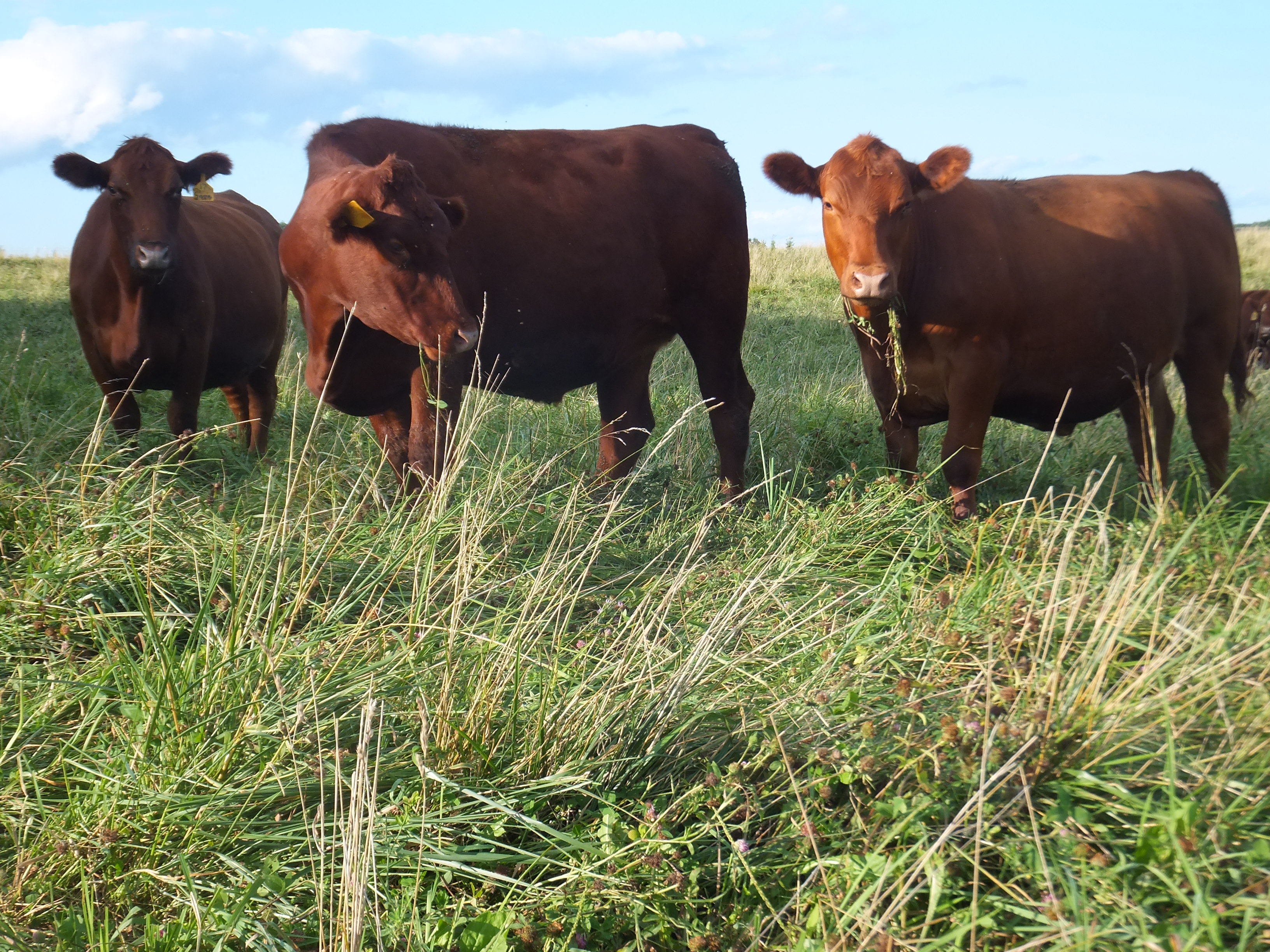
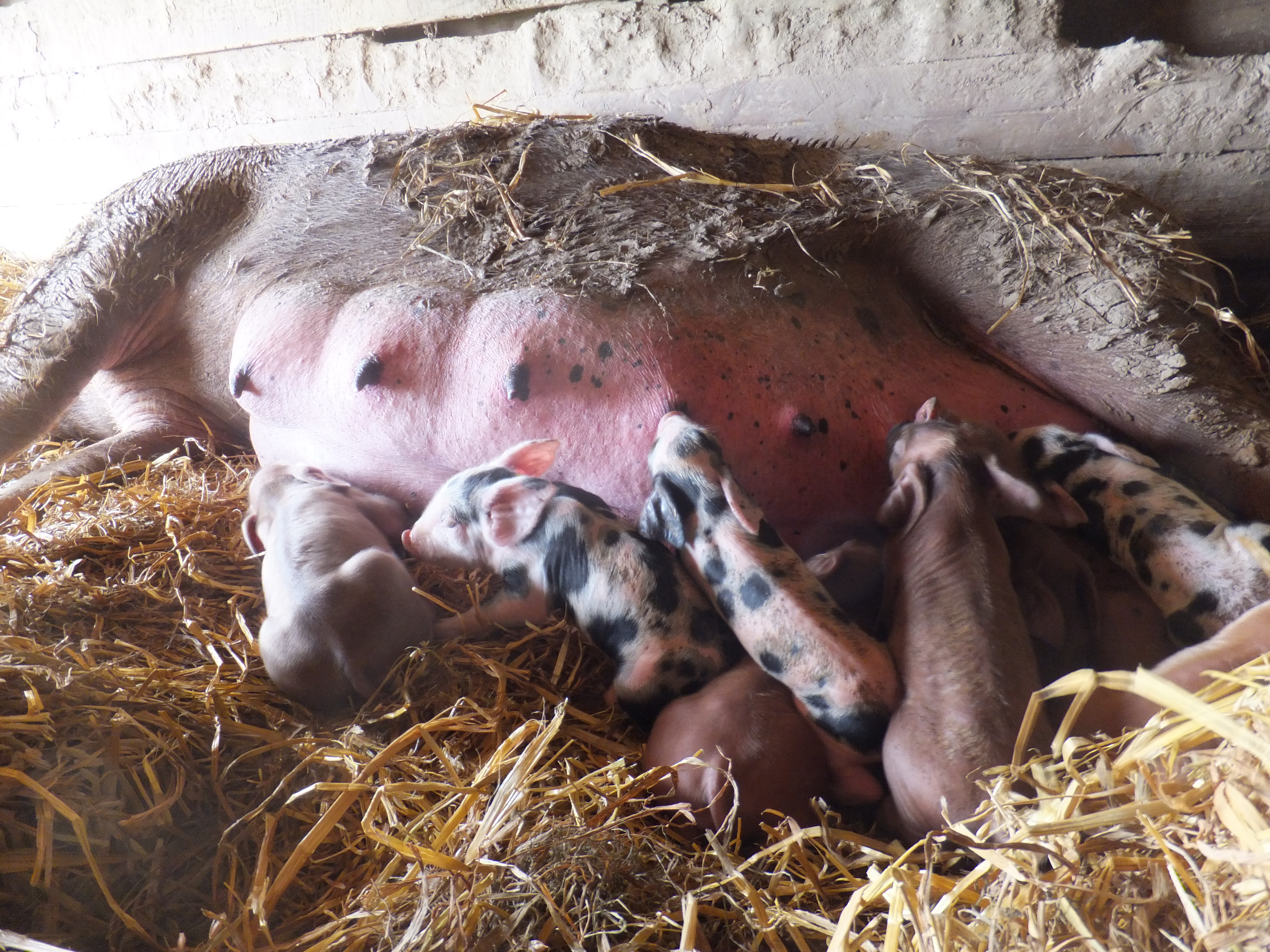
And with a little patience we will put meat in your freezer. I’m sharing photos of our cattle on pasture and a new litter, reassuring customers we are working as always.
As people think more about their food, many are appreciating resilient, local food. I’ll conclude this post with a quote from one of our best, long-time customers, Heather.
“If there is a hopeful note to attach to the mess our world is in just now, I have to say I am so glad for small farmers and small local processors to be getting new business. I really hope that more people realize the benefits of doing local business on small scale, as they get superior food while helping the local economy. I started buying meat at farmers market trying to find a more humane source, but the quality is so much better too. And it is good to know personally and trust the people producing my food.” Long-time customer, Heather.
It may not be easy, but it is heaven on Earth for me.
Spring always seem like a miracle, but this spring’s new births are especially welcome.
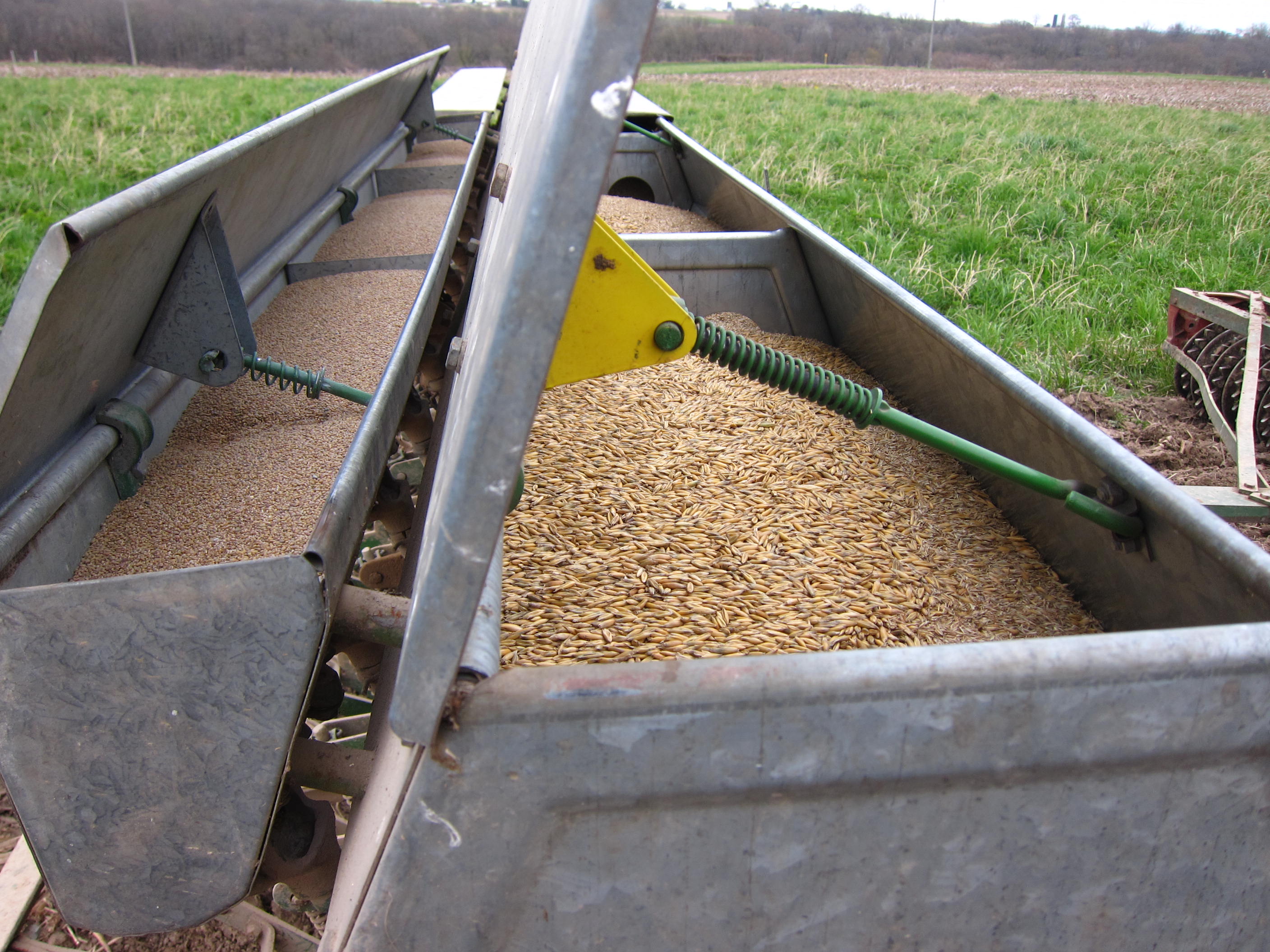
I marvel at the promise of a seed, all the instructions it needs, packed tightly inside.
All I do is drop them on the soil, and in a few weeks, luxurious green!
Saturday morning Dane County Farmer’s Market closed due to Covid-19. Making trips to Madison for meat drops every other Saturday. Next delivery April 25th. Contact Matthew for more information: oakgrovelane@yahoo.com. Thank you!
September 2019 steer in front of a 2018 steer. We harvest our 100% Grass-fed, Grass-finished cattle around 24 to 30 months in age, considerably older than the typical corn-fattened cattle, harvested around 15 to 20 months in age.
I really like fall calving. The cows are calving in great shape, as they’ve been grazing pasture all summer. The calves winter well, drinking their mother’s milk and eating hay. The cows eat all the hay they want out of feeders and my cows stay in good shape, despite the added stress of nursing a calf. The calves are weaned in May or June directly onto lush pastures and never seem to miss a beat.
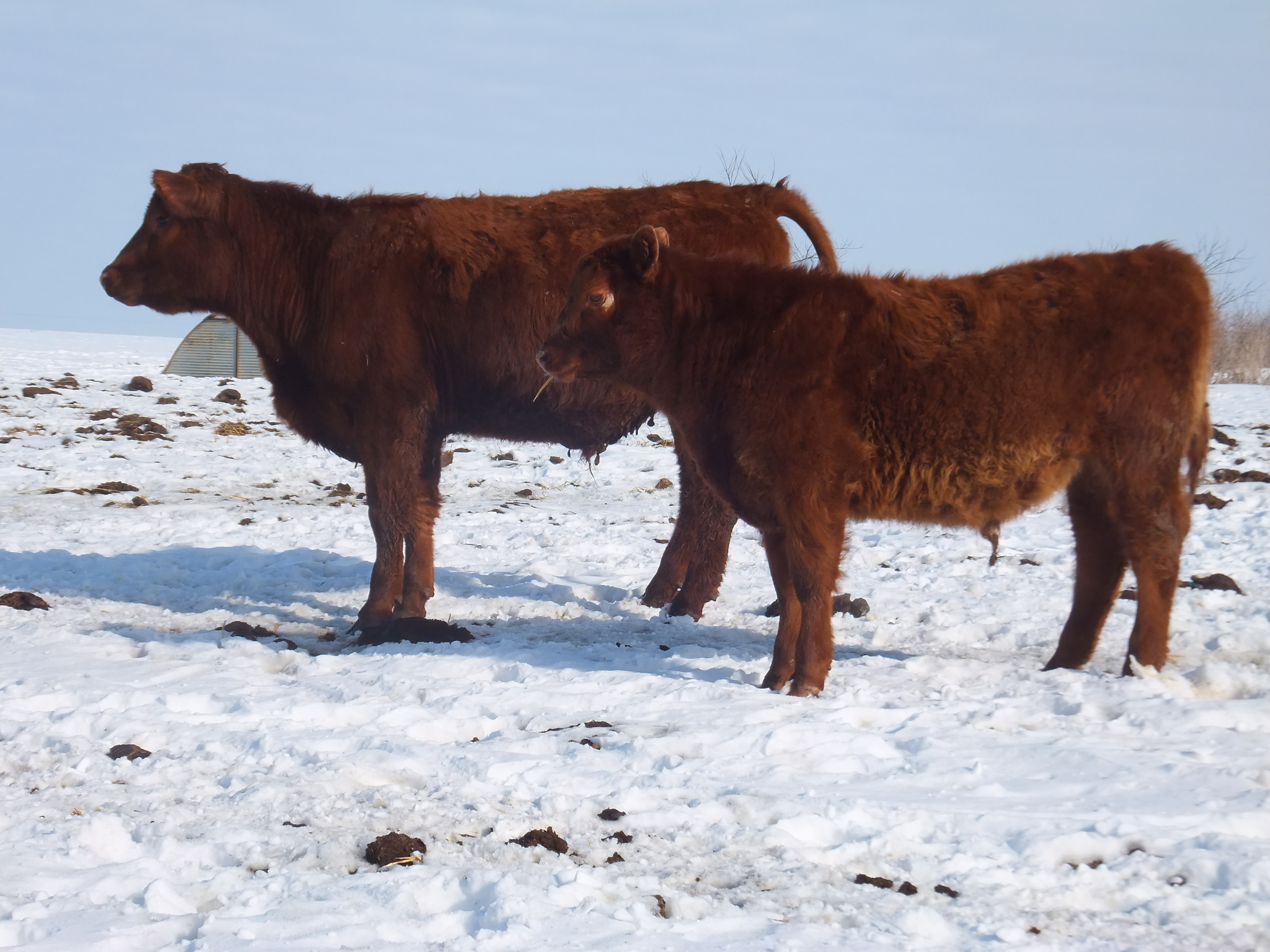
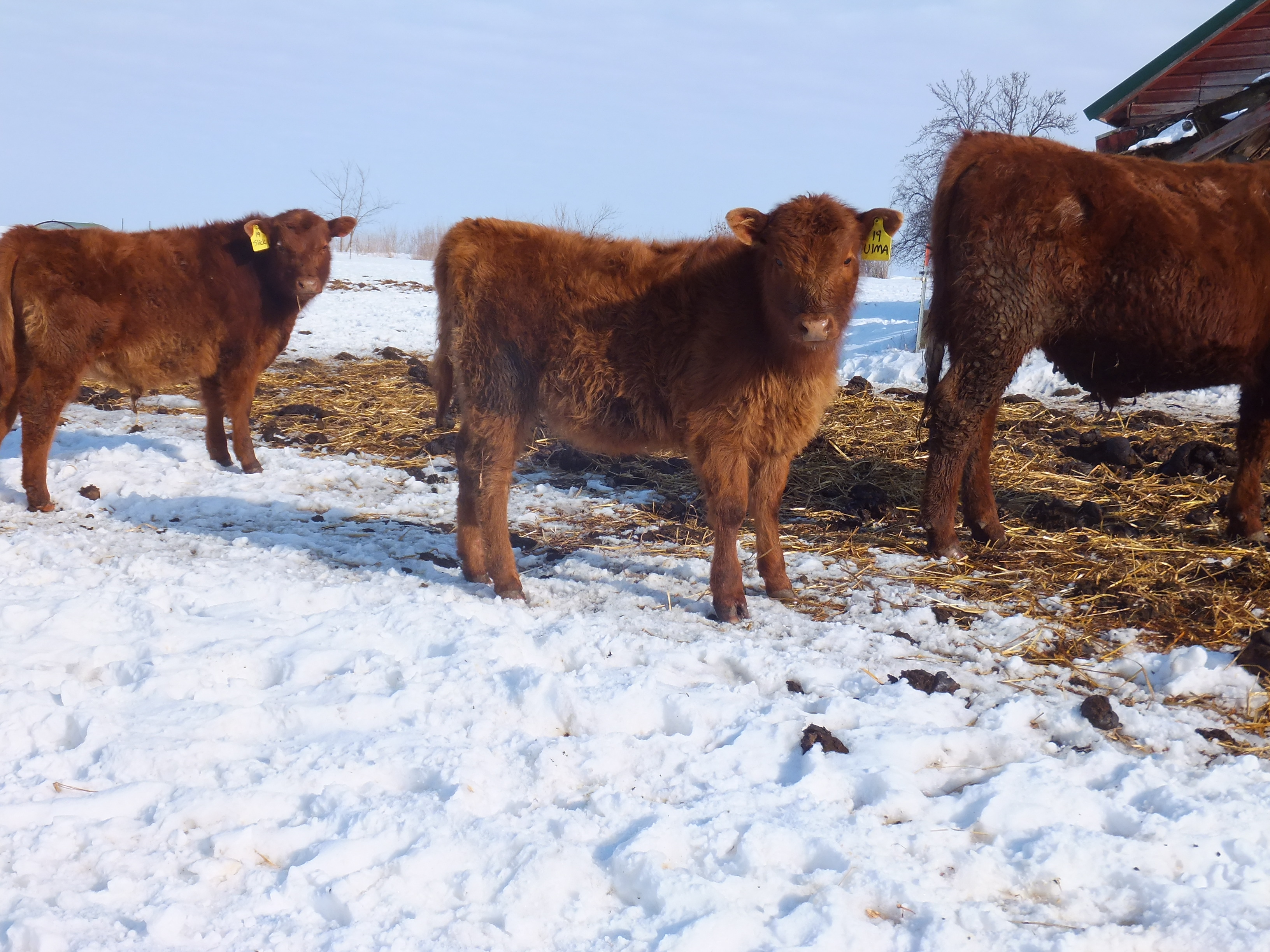
My cattle never see the inside of a barn. When the weather turns extreme, I use straw or hay to make a bedding pack near a wind break. You can see the bedding pack in the bottom photo. Sometimes the edge of a calf’s ears will frostbite, but otherwise they handle the elements very well.
Check out the heavy winter hair coat the fall calves in the bottom photo exhibit. For some reason, they develop what looks like a heavier coat than the older cattle. They almost resemble Scottish Highland cattle in their shagginess.


 Posted by Curiousfarmer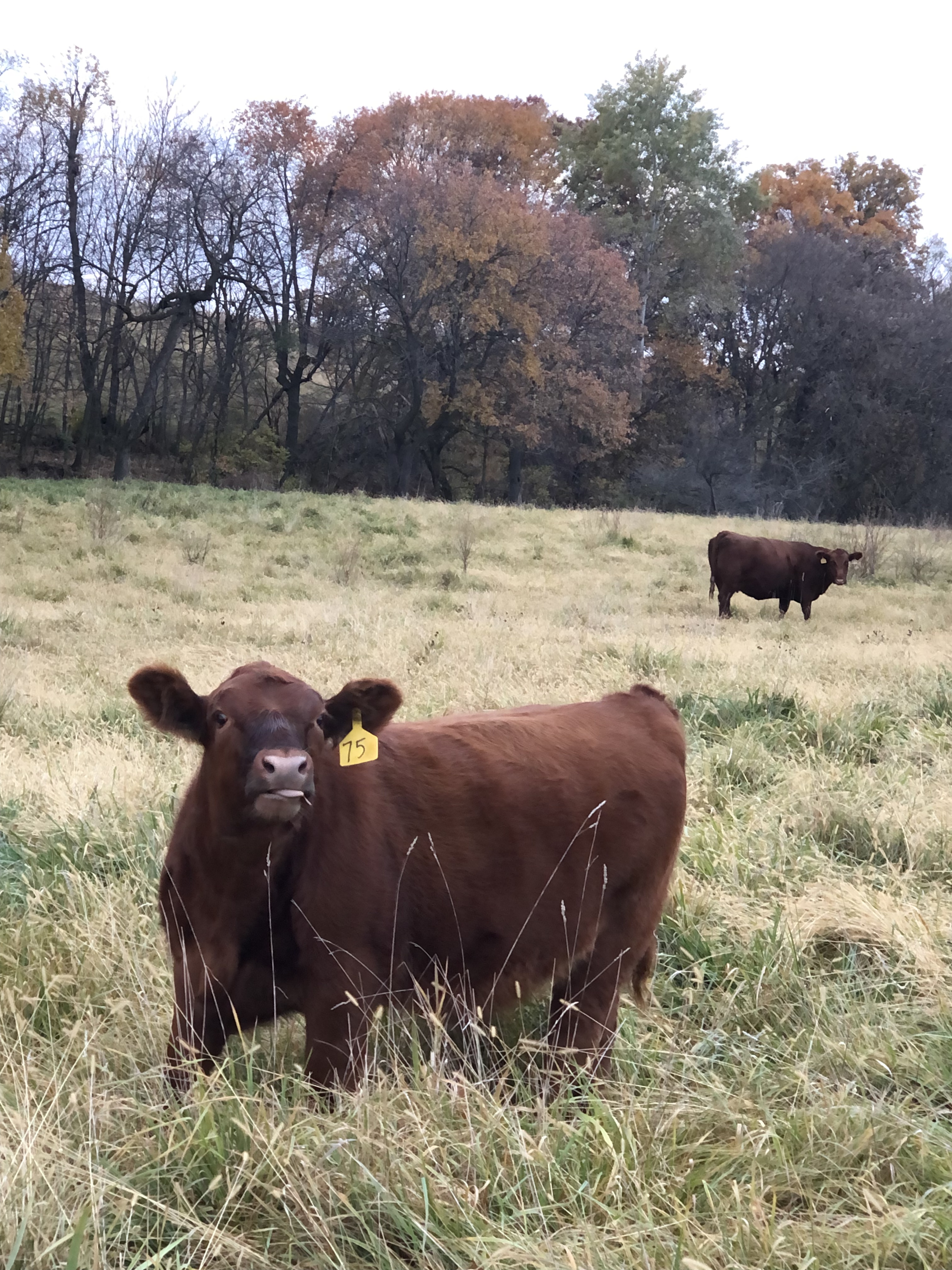







 Curiousfarmer