Black and Yellow Garden Spider

September 6, 2011

The Black and Yellow Garden Spider, Argiope aurantia.  This one is a female.  I don’t recall ever seeing a male, which, according to the link, is much smaller and duller.

The female mates only once, with a male who has been hanging around her web.  The male dies after mating, sometimes being eaten by the female.  I guess the male must actually lose something vital from sex, giving credence to the fear of old-time coaches, who advised their athletes to avoid sex before a contest.

The Garden Spider’s size, brilliant color, and huge, orderly web, help make it one of a child’s first insect memories, at least in the American countryside.  Below are a couple of egg sacs.  Spiders hatch from the egg sac the following spring.


Square-Foot Saturday 19, September 3, 2011

September 3, 2011

I cut it this week.  Of course it rained twice, including an inch just this morning.  It seems to be a “Murphy’s Law” of farming; ‘Cutting hay makes it rain.’

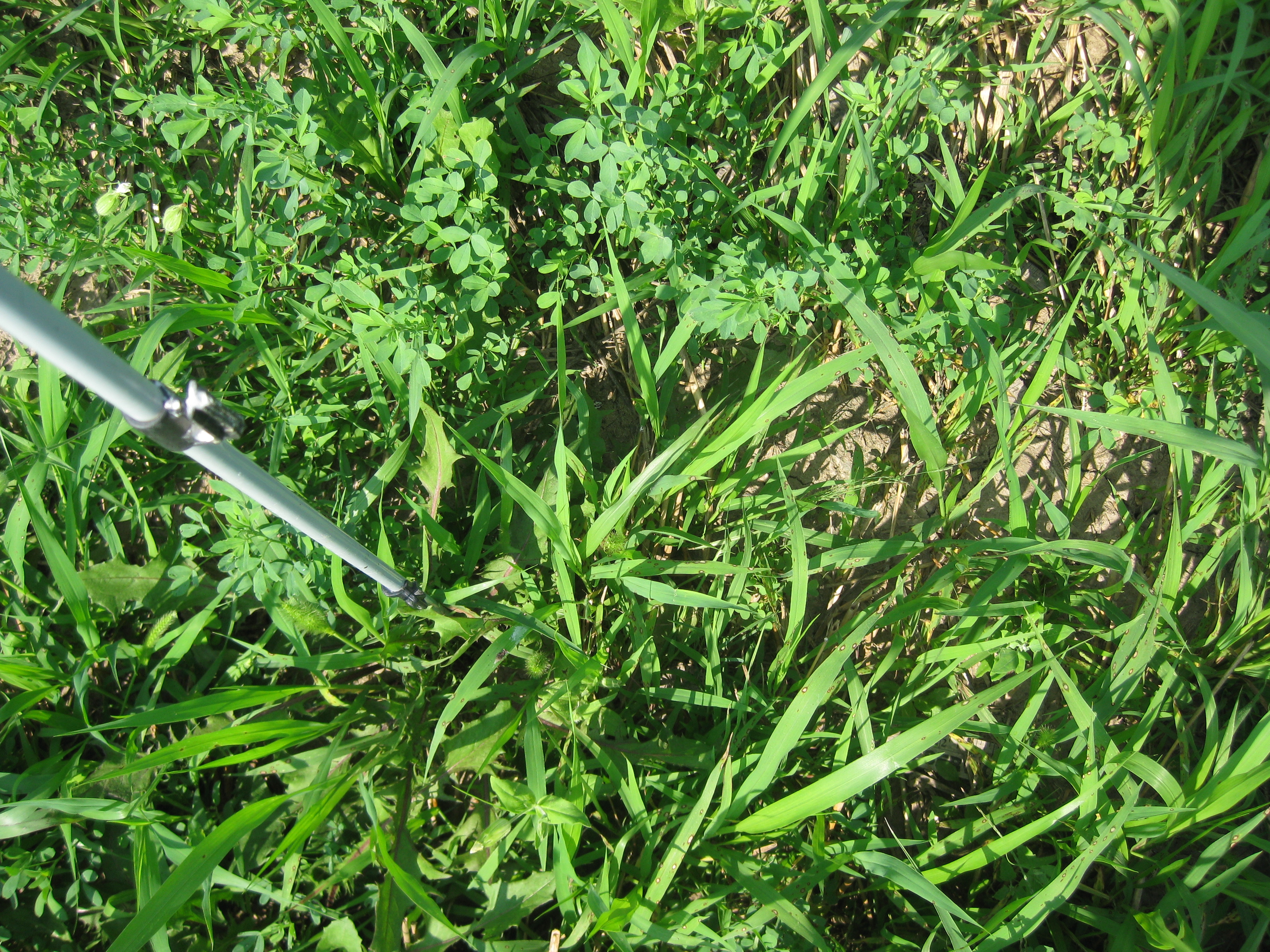
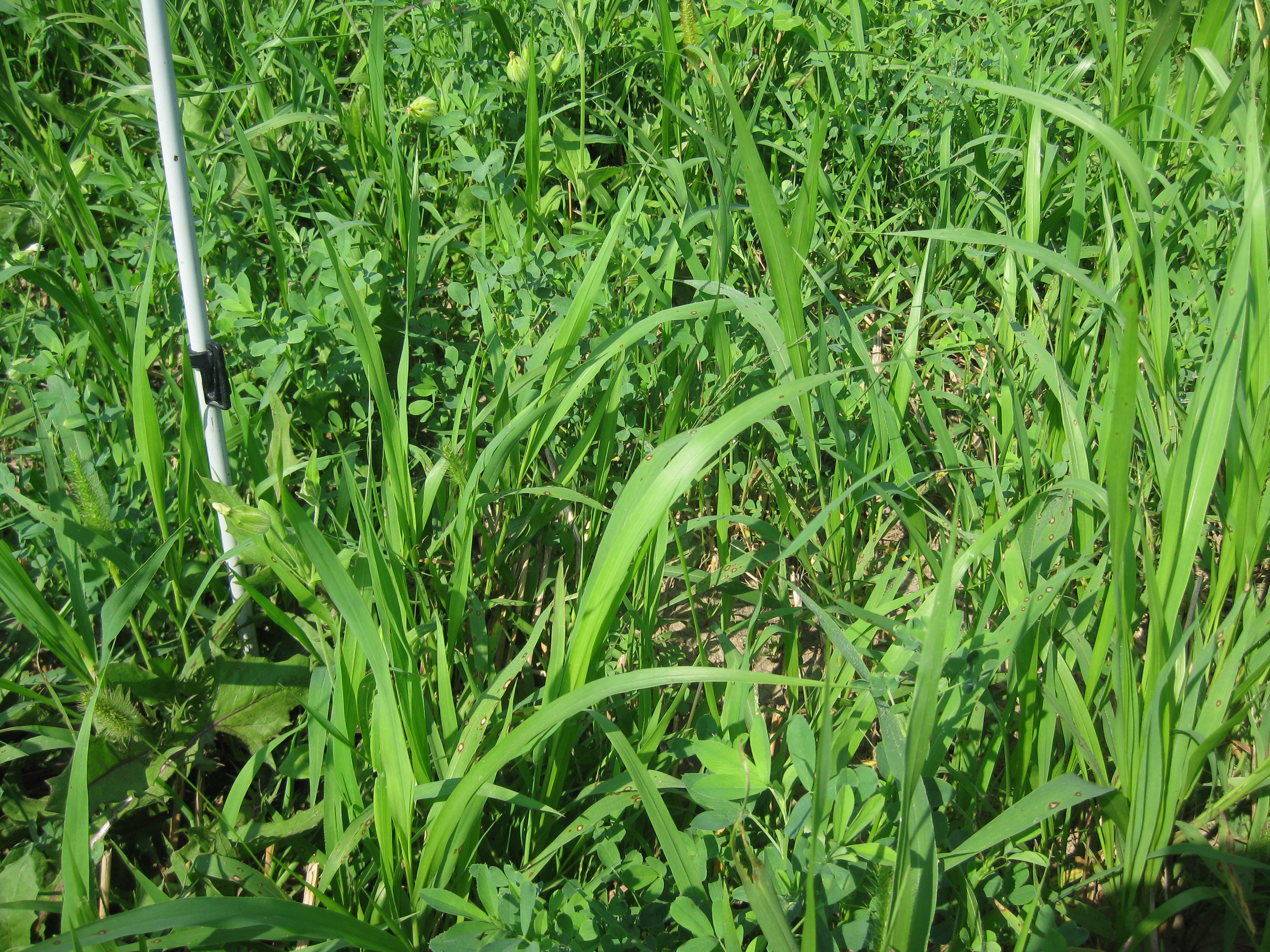
I am happy to see the new growth coming up.  I hope taking the weeds off will leave a nice growth of alfalfa before the fall frost and winter.


Midwestern Bio-Ag

September 1, 2011

I enjoyed attending a Midwestern Bio-Ag field day.  Fertilizer is their main business, but they also deal in feed and seed.  Pictured is a large truck which is used to spread fertilizer, and a red buggy which a farmer can pull behind a tractor to spread fertilizer.

Gary Zimmer is the founder of Midwestern Bio-Ag.  I picked up a copy of his new book, “Advancing Biological Farming.”  He sold me in his introduction, when he wrote:

“So please, when you read this book don’t be too quick to judge.  Don’t read between the lines.  I’m sure you can find some details you won’t or can’t agree with, but remember, these are my thoughts, observations, ideas, and experiences up to this point in time.  Show me a better way and I’m ready to make changes and take on new ideas after they have been tested and their success demonstrated on the farm.  I want to know when it works, how it works, why it works or doesn’t work.  If a new idea makes sense, improves quality and/or yield, and is profitable, then let’s go with it.”

I always listen to a person who admits he doesn’t know everything.

I have a difficult time knowing if a fertilizer is real, or “foo-foo dust”.  There are so many variables in farming, it’s nearly impossible to know if a little something we spread on the fields has an effect.  Unless I correct a visible deficiency, fertilizer is almost faith-based.

That being said, I’m thinking about working with Midwestern Bio-Ag for my fertilizer wants and needs.  I plan to figure ways to test the effectiveness of their products.


Square-Foot Saturday 18, August 27, 2011

August 27, 2011

Another week of growth.

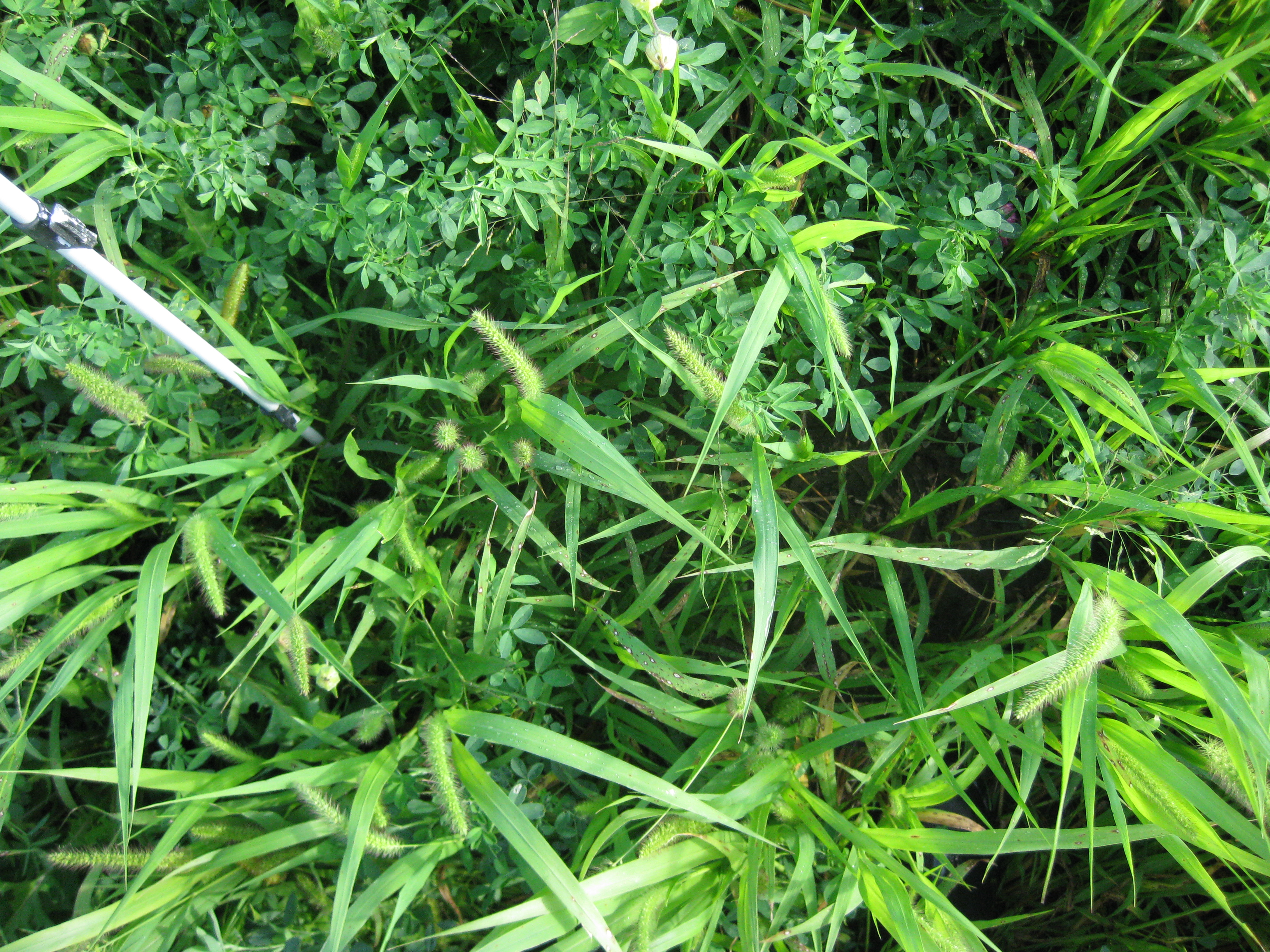
This is not what I envisioned when I started this series.  You can hardly see the alfalfa through the weeds.  I eat a huge slice of humble pie every time I post.

So I’m including a picture of last year’s new hay seeding for my wounded pride.  It’s ready to be cut for a third time this summer, and there isn’t a weed visible.


New Farm

August 25, 2011

Big news.  I’m splitting up farming with my parents.

A little background.  My parents own 510 acres with roughly 200 acres tillable, and 300 acres pasture.  I own 120 acres with roughly 80 acres tillable, and 40 acres pasture.  We have managed our farms as a collective farm for the past 17 years.

We raise beef cattle and hogs, pasturing and growing all the forages for the cattle, and growing all the corn and oats and straw bedding for the hogs.  Soybean meal is purchased for the hogs.

A few years ago, I started a partnership with a couple about my age to direct-market an increasing amount of our beef and pork in the Madison markets.  This is where my passion lies, and I want to continue this business.

So I’ve been spending a lot of brain power figuring out how to do this on my farm.  What I’ve decided so far is to buy steers in the fall and grass-finish them the following green season.  I believe I have enough pasture and forage to raise enough cattle to meet the demand of our direct-market.

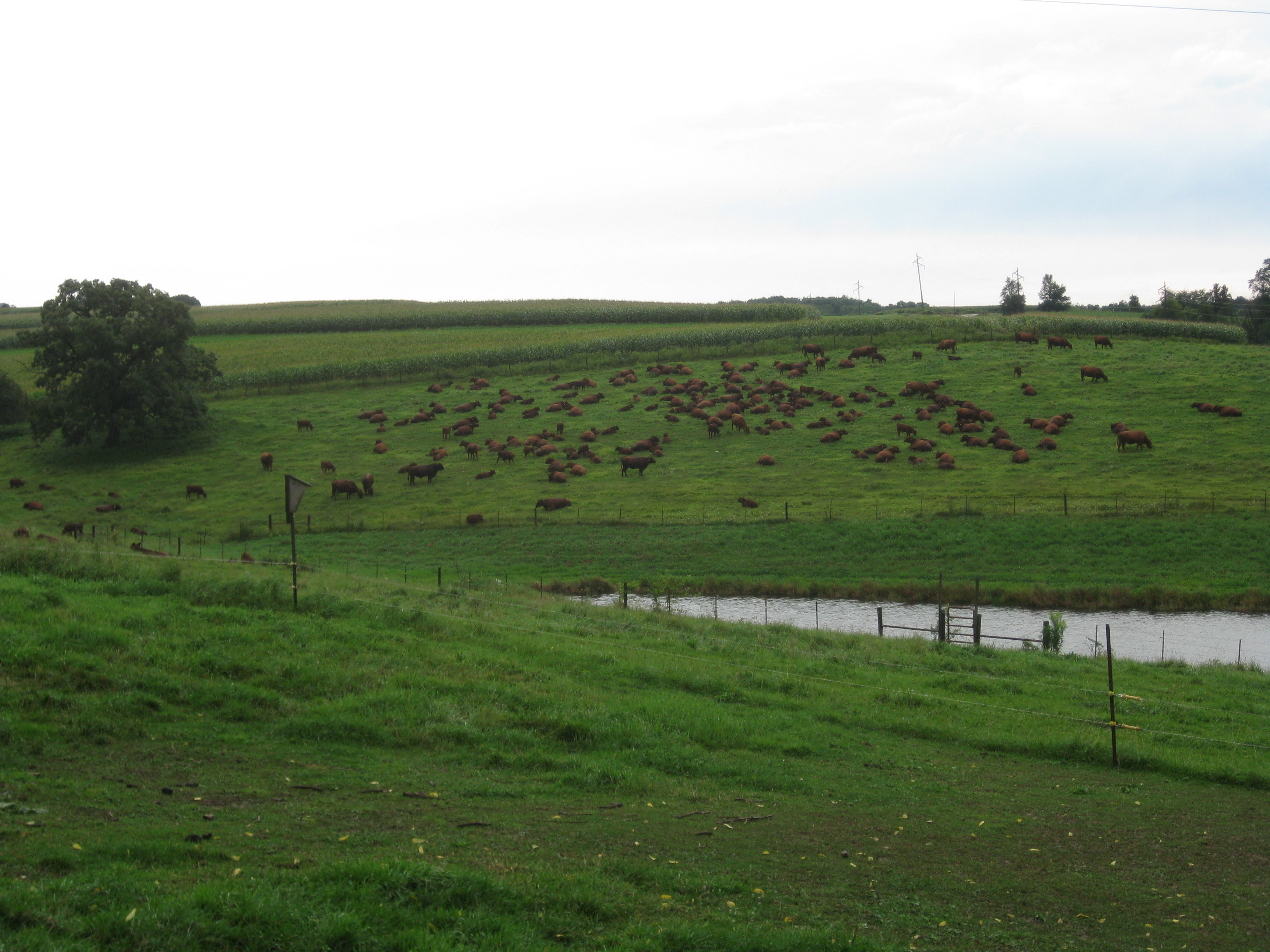
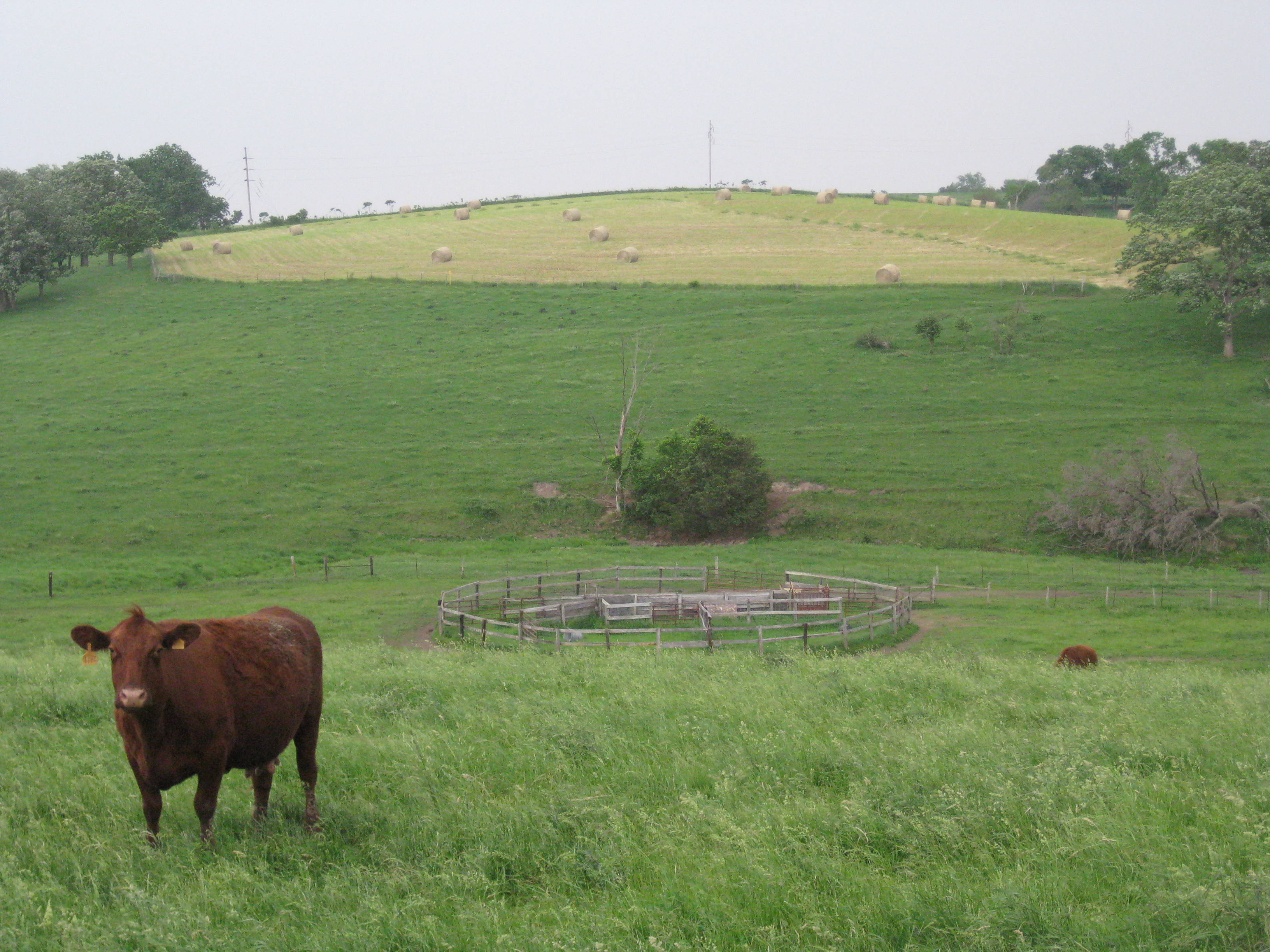
What I’m going to have to give up is the beautiful herd of cows and calves  pictured below.  I simply don’t have enough land to have everything.

I am going to continue to have my swine breeding stock.  Genetics is another one of my passions, so I have to continue to play with the genetics of something.  I plan on raising just enough hogs for my direct-market.  I’ll probably have to purchase more of the grain than I do now.

Pictured below is a Duroc boar I raised who will be the first herdsire on my new farm.  I haven’t named him yet, so I thought it would be fun if you have a suggestion to leave a comment.  I’ll pick the best name out of your suggestions.

This blog will be one of the biggest beneficiaries of this change.  Since I no longer have anyone’s privacy to protect but my own, I can be as open as I am brave.  I’m looking forward to sharing more.


Square-Foot Saturday 17, August 20, 2011

August 20, 2011

Ideal growing conditions with heat and plenty of moisture.


Like Sharks Circling a Chum Ship

August 14, 2011

Herald of spring,

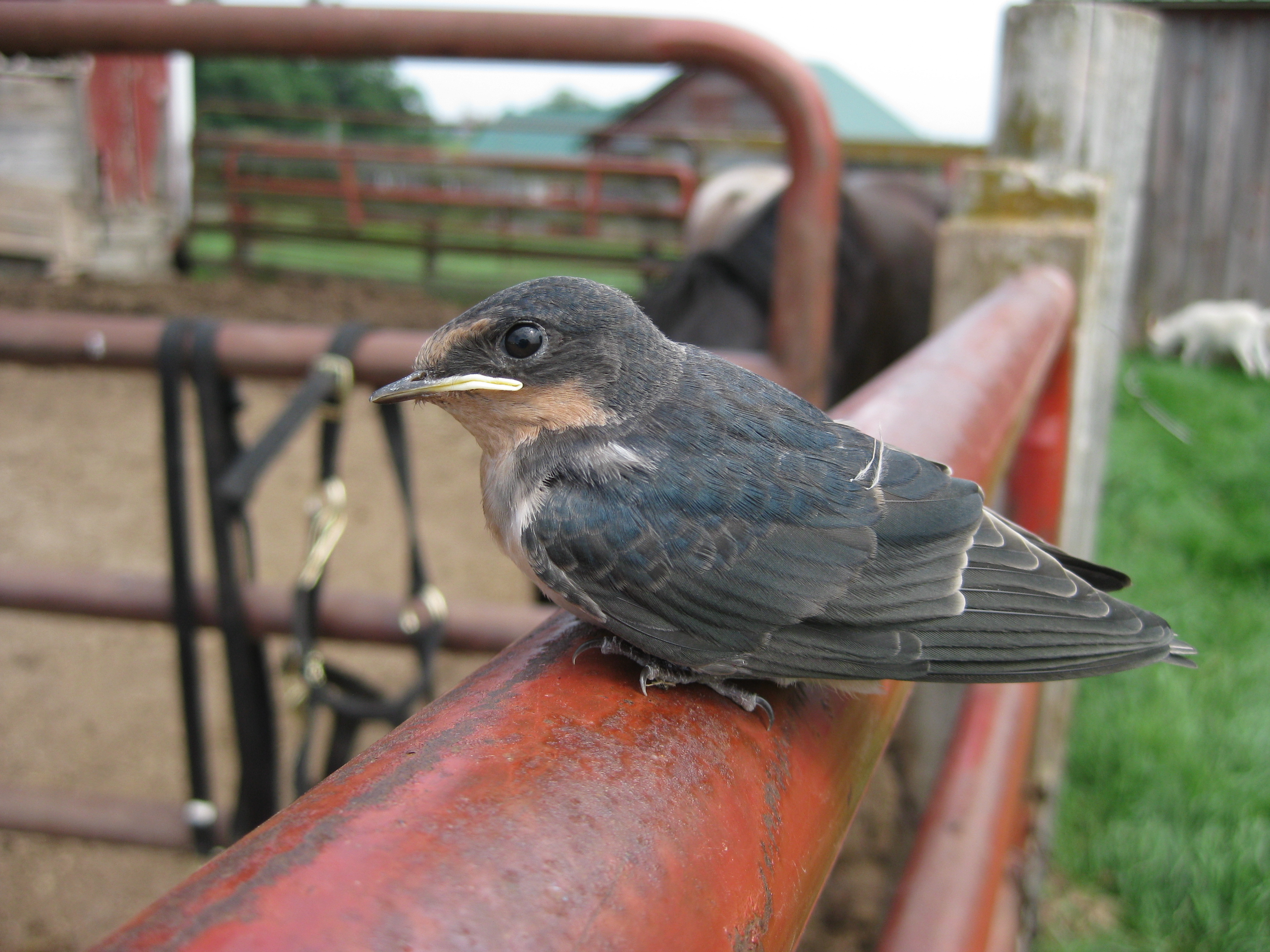
Barnswallows are back!

Tropical winters,

Wisconsin summers.

New mud nest,

Or top-mud the old one.

Two or three clutches,

Of insatiable young.

Dive-bombing children,

And curious cats.

Feeding their young,

Who wait on the line.

Finally feasting,

On Leafhoppers flying.

Circling tractor,

As I mow hay.


Square-Foot Saturday 16, August 13, 2011

August 13, 2011

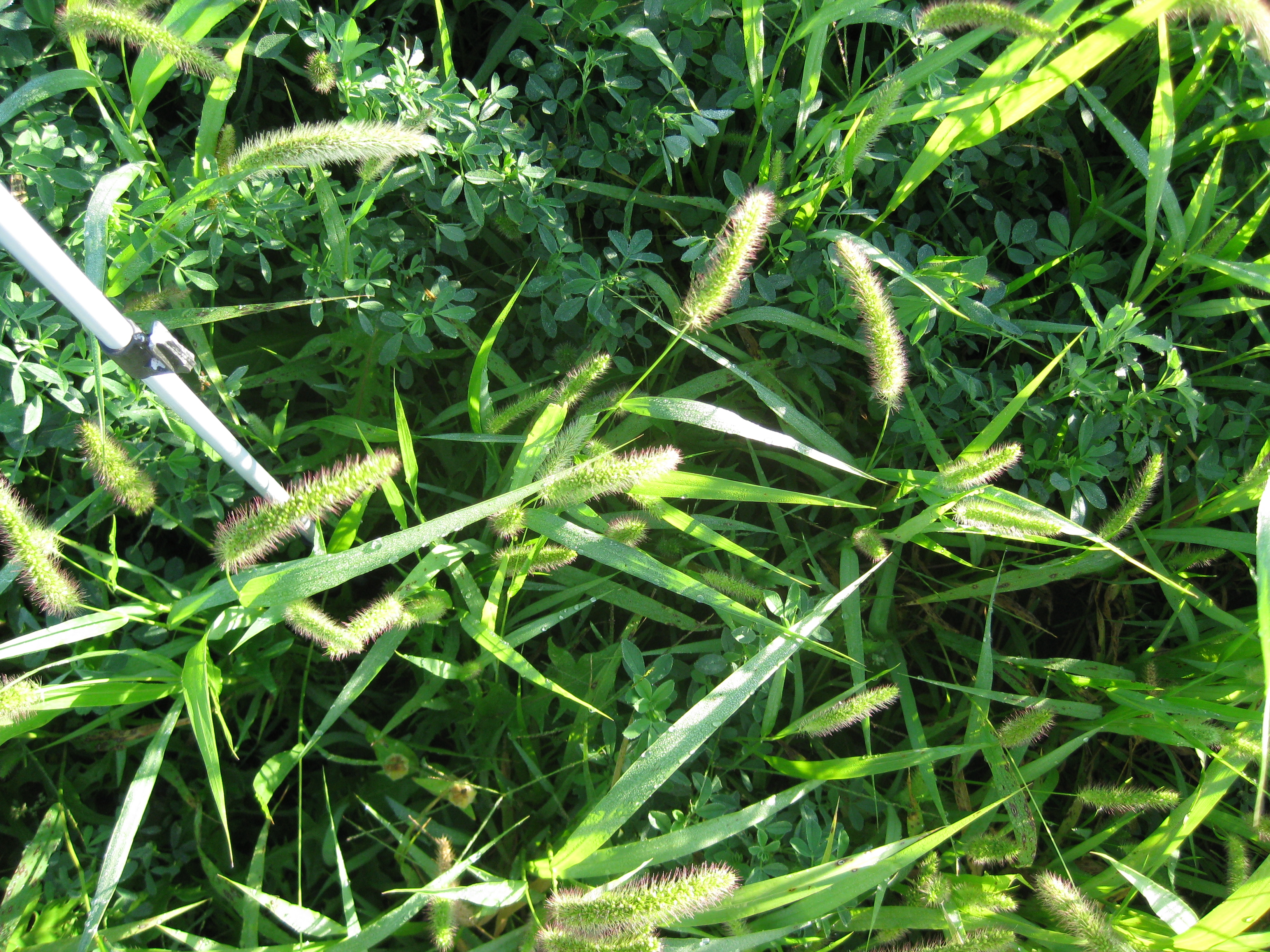
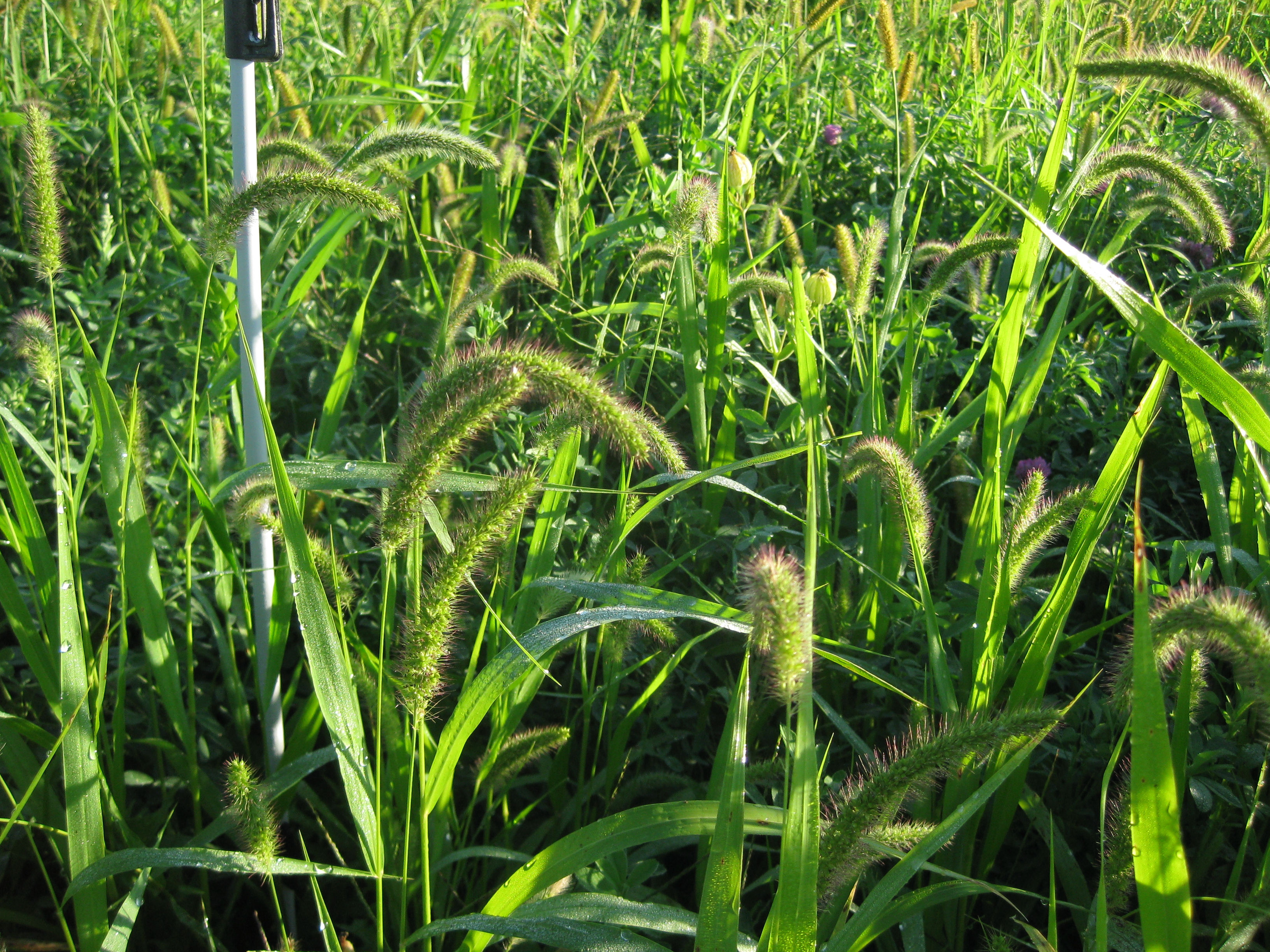
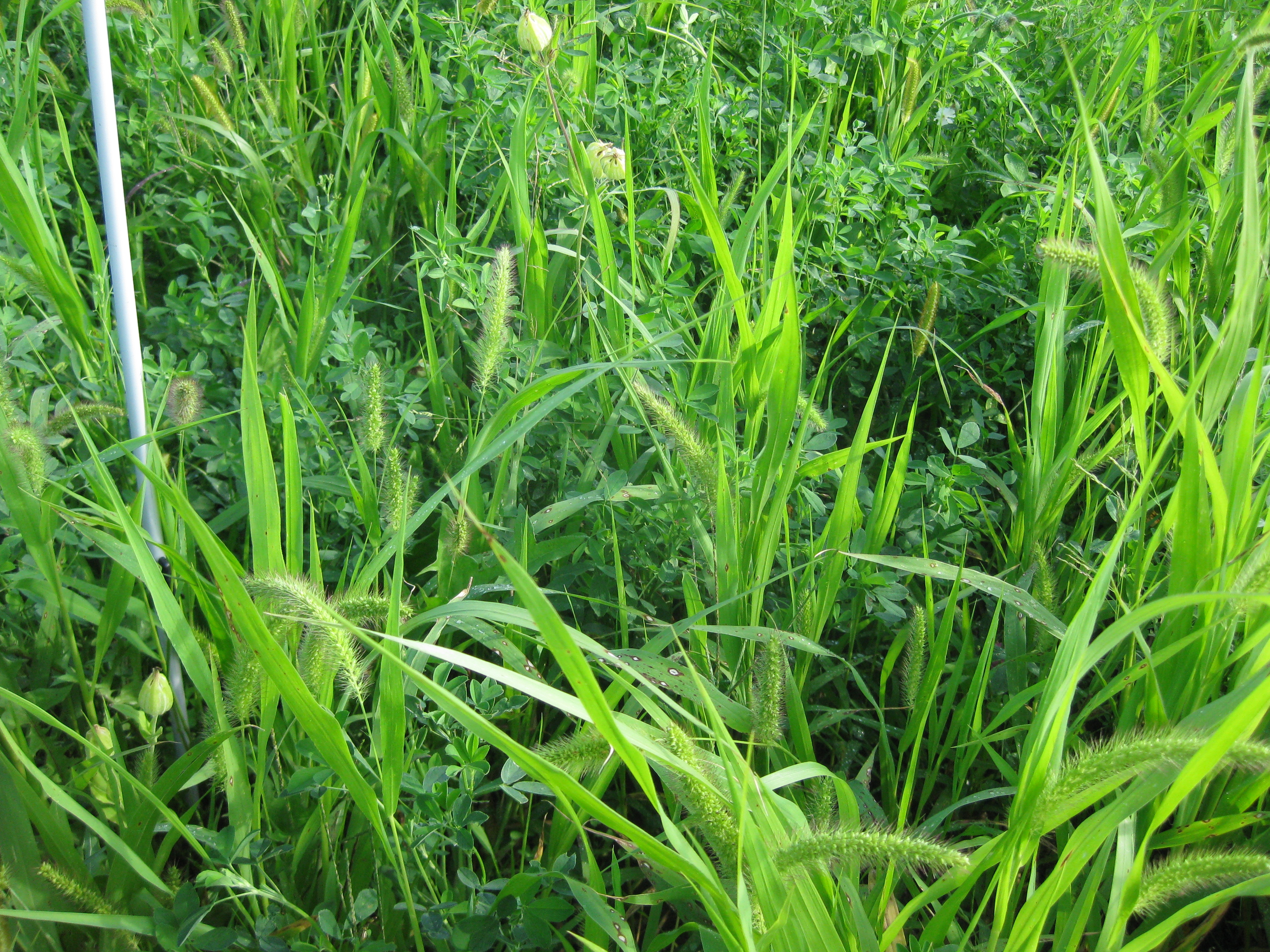
I’m disappointed in this alfalfa/grass stand.  There is as much Foxtail as alfalfa.

Looking at the positive though, I appreciate the rain which helped the alfalfa, grass, and weeds grow.  The farmers of Texas and the south probably haven’t had enough rain for weeds to grow.


Square-Foot Saturday 15, August 6, 2011

August 6, 2011

The alfalfa is growing, but so is the Foxtail, (weed).


Baling Hay

August 2, 2011

Field of baled hay.

Below is a picture of the Round Baler, unloading a finished bale.  Hay is picked up underneath the baler.  The belts keep tension on the hay as an ever-increasing amount is rolled up, resulting in a tightly-packed round- bale of hay.

Photo  by Melissa.

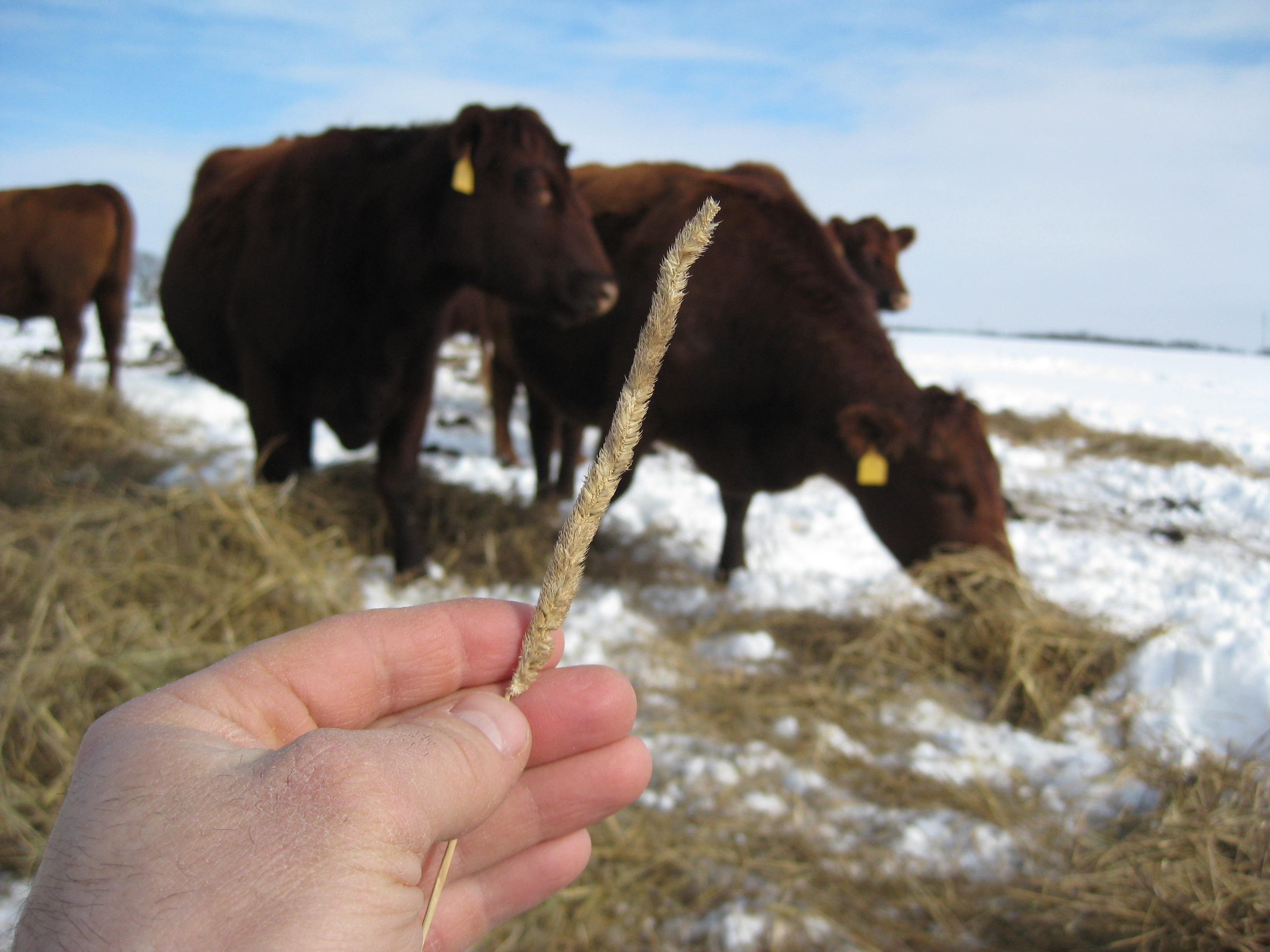
Each bale weighs about 1500 lbs. and feeds at least 50 cows a day in winter.  We feed the cows by unrolling the hay on the frozen ground so all the cows can eat at once.  They eat their daily allotment in a few hours.