The wet spring appears to be favorable for the butterflies, as I’ve been seeing a ton. Incidentally, which weighs more, a ton of bricks, or a ton of butterflies?

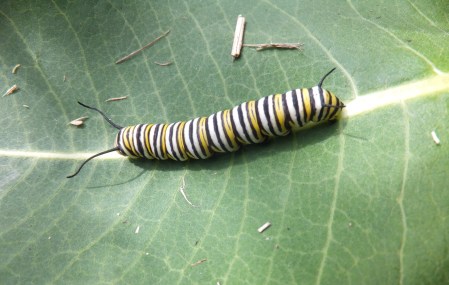
I’m seeing more Milkweed, which is the host plant for Monarch larvae, the Monarch caterpillar. Its orange, black, and white stripes signal toxicity to potential predators. The word for this is Aposematism.
Milkweed contains large amounts of Cardiac glycoside poisons, and the Monarch, from feeding on the Milkweed, does as well. Some predators have evolved workarounds for the poisons, though.
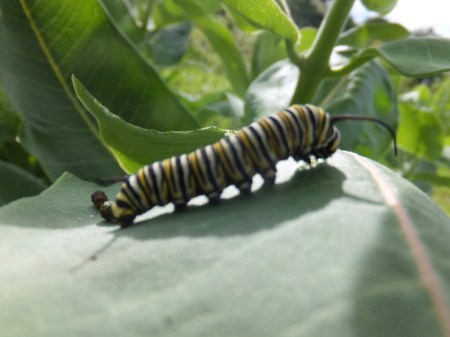
Check out the massive turds behind the caterpillar in the photo above. Chewed leaves and feces is your best signifier that a monarch caterpillar may be near.
I read in my local paper that its not just my experience, but scientists and citizen scientists confirm the greatest number of Monarchs in the last decade.
No doubt efforts by many of us to increase the amount of Milkweed and Monarch habitat have helped. Some have taken to mass rearing Monarchs indoors. While I appreciate their efforts, the holistic naturalist in me questions the overall effectiveness and it appears some agree, citing concerns over spreading of parasites and disease, and inadvertently selecting for less thrifty individuals.
What do you think?


 Posted by Curiousfarmer

 Curiousfarmer