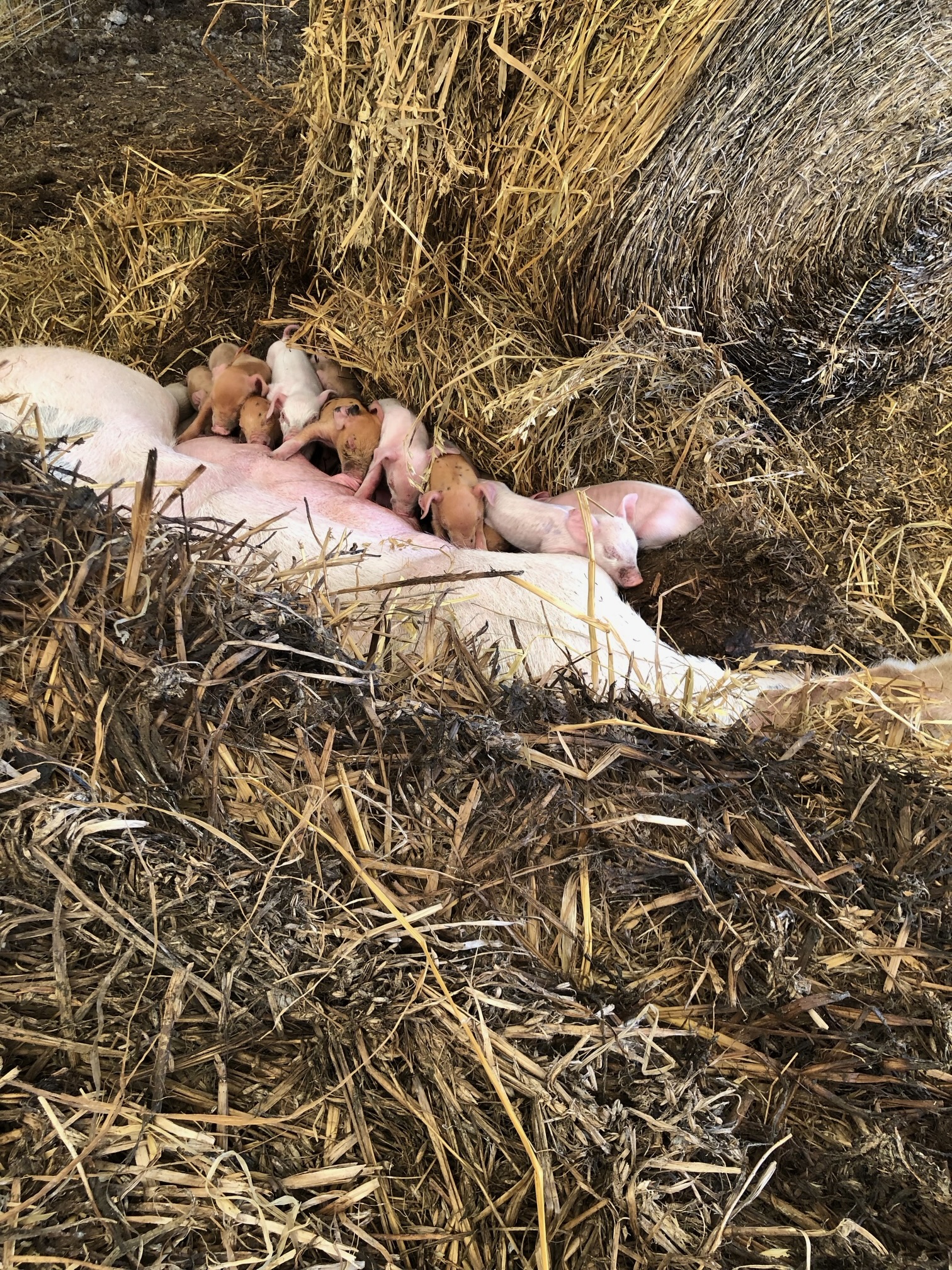
Our fall litters are off to a good start. The white sow farrowed 15 and still has 14 live, snug in the straw.
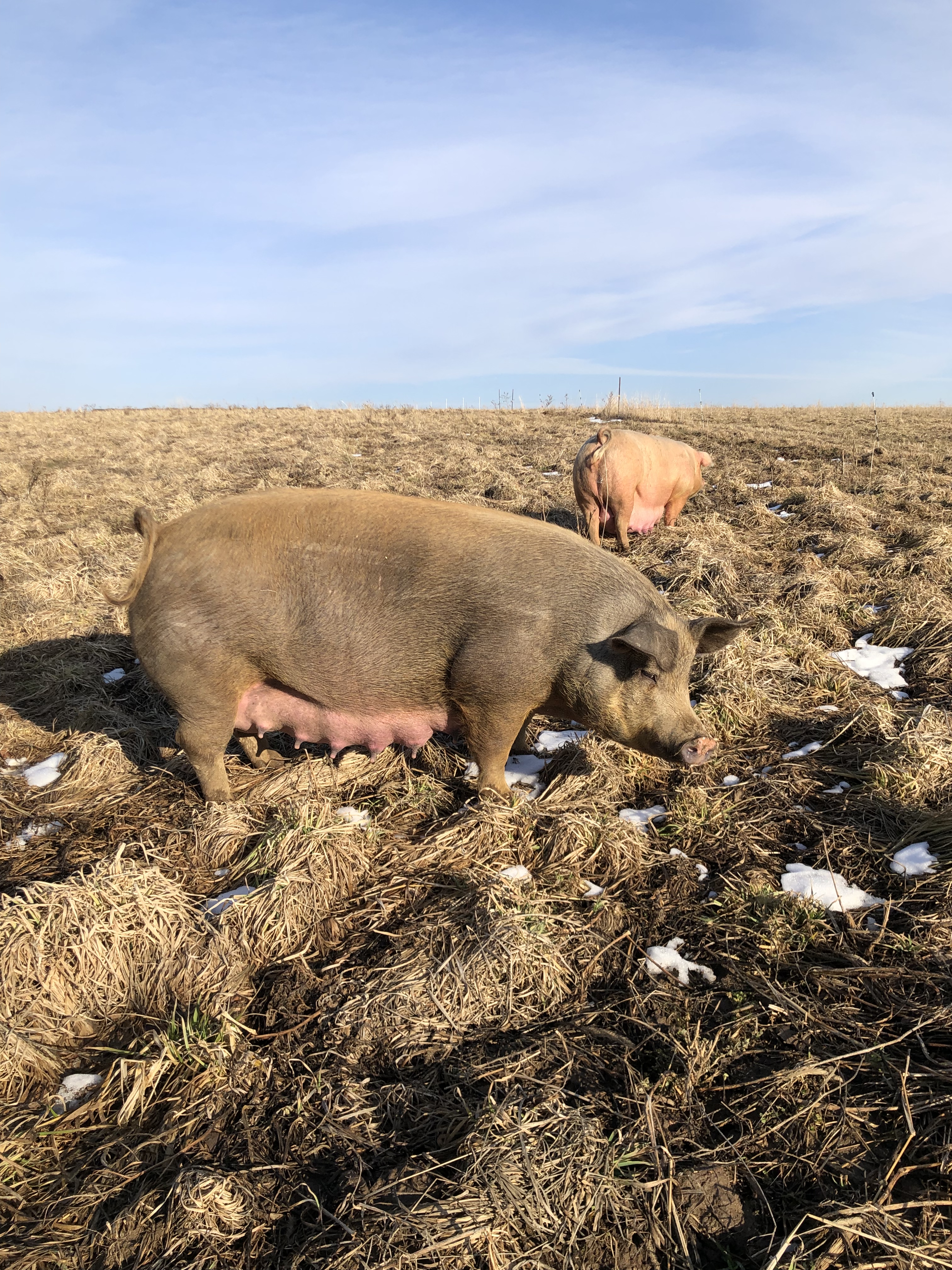
We practice long lactations at Curiousfarmer. This sow was bred by our dark red boar, 9 weeks after farrowing, while still lactating.
This is highly unusual for today’s swine, but typical for the beef cow. Sometimes we have to look at other species to help us think outside the box. I’m often filled with wonder as I continue this journey away from conventional agriculture.
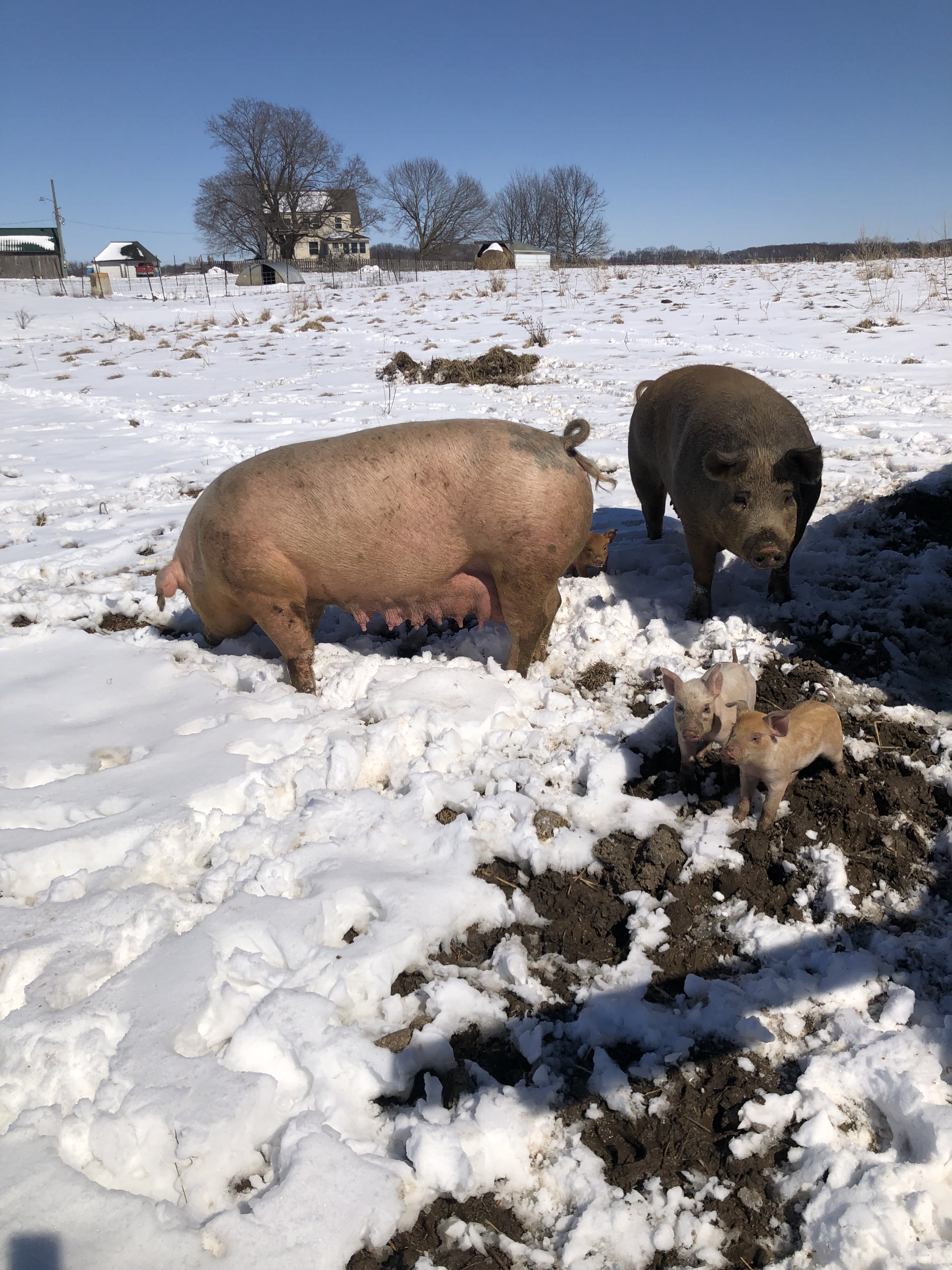
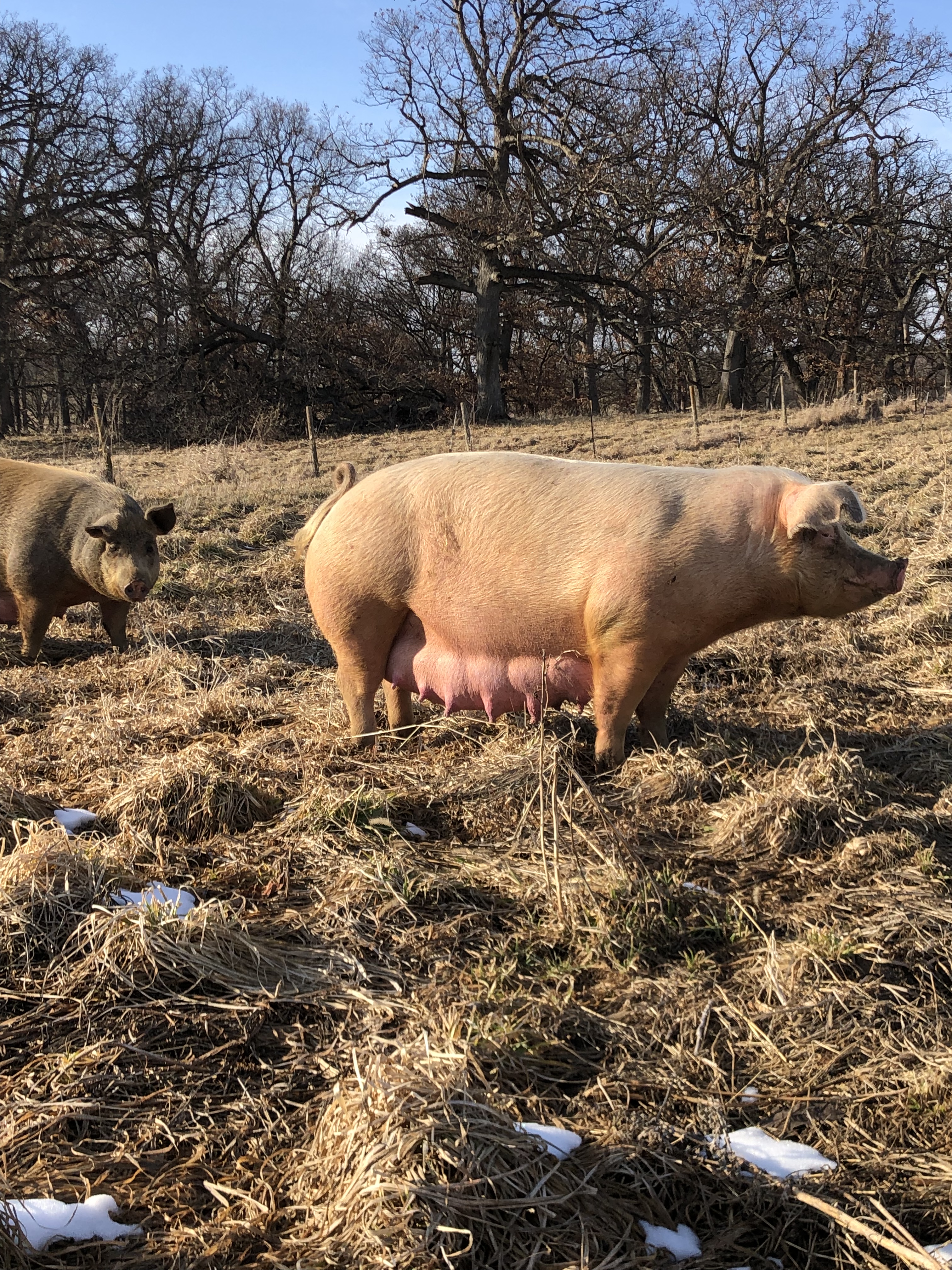
Here’s another photo of the piglets with their mothers on a windy 24 Fahrenheit degree day. Cows in the background are on their second to last pasture before starting to feed hay.
Had a couple of nice litters in November before it turned quite cold. The hardiness of the piglets is still amazing to me. In this photo the piglets are a week old. The temperature is below freezing.
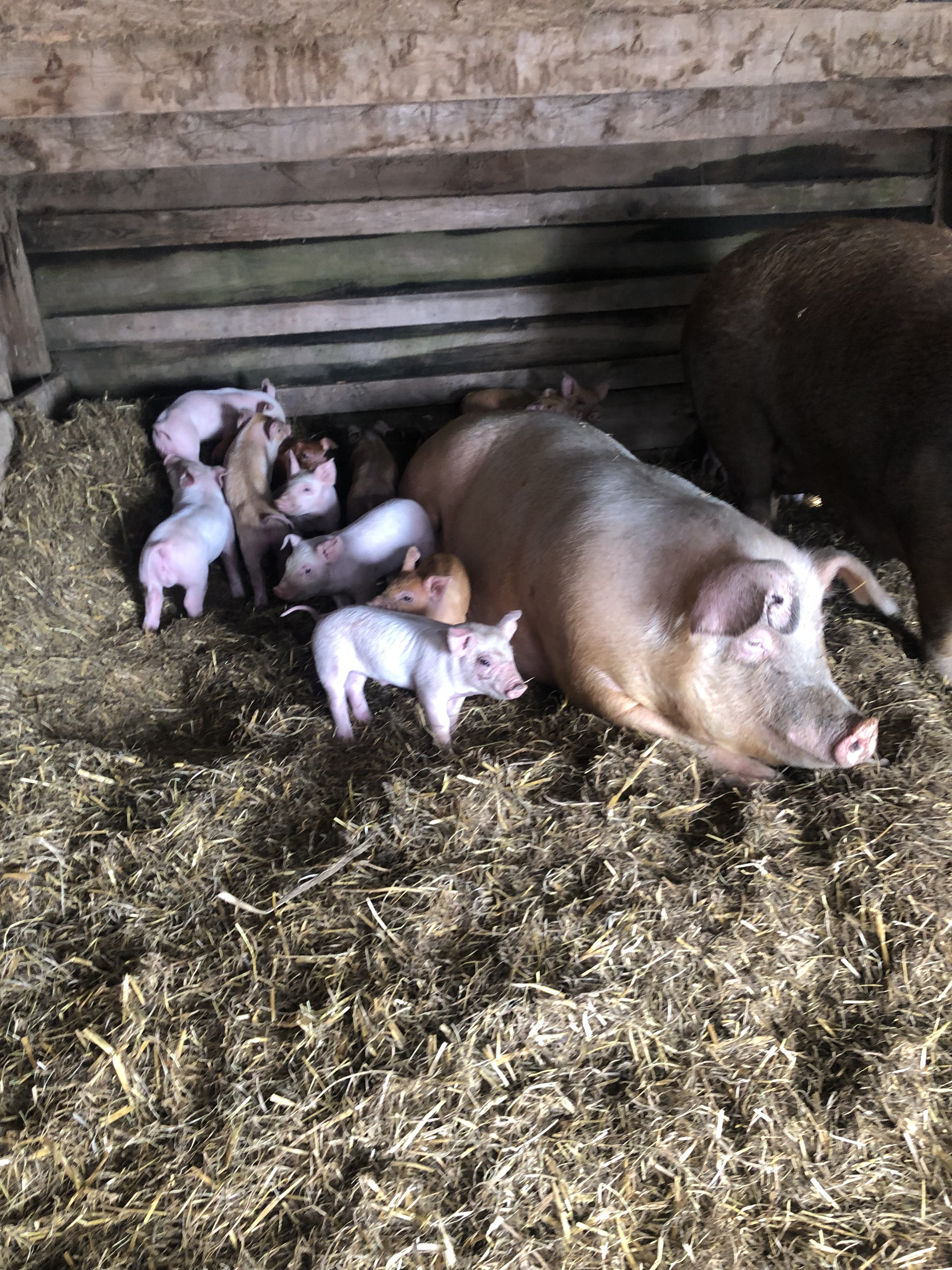
The red sow was bound and determined to join her litter up with her friend. I walked her back to her shelter, but that only lasted a couple days before she took her litter over to be with her friend and litter. It’s better if they can stay in their own shelter, which, thankfully, they farrowed each in their own shelter.
In the bottom photo you can see the white sow with her litter in the back of the shelter. They have 20 piglets between them at 10 days. We’ll see how many they can finish with.
I’m officially going on record and saying Landrace are more intelligent than the other breeds I’ve worked with. I’ve long suspected it, but this latest group of half Landrace hogs confirms my suspicions.
First example is the way they deal with electric fence. Most hogs, once trained to electric fence, respect it like you respect a beloved mentor. But these trained Landrace hogs respect electric fence like you respect a younger sibling. Definitely some testing of limits and boundary pushing!
Second example is when I moved them to a new pasture. After only a day of exploring, I fed them grain in their new pasture and some of them were stuck in their old pasture. They had to move away from me and go around a corner in order to get to their new pasture. This would’ve been impossible for most of my hogs to figure out, but it took these guys about five seconds to figure it out.
I’m really impressed with this group of half Landrace hogs produced by artificial insemination and plan to keep two or three gilts out of the group. I was so happy to find another Boar stud, North Iowa Boar Stud. I used Swine Genetics International for nearly thirty years, but the last time I called I was informed they had sold all their maternal boars and only had showpig sires.
I was in shock. It’s like hearing Hershey no longer makes chocolate bars. But times change. I guess they no longer have the demand. Thankfully, North, Iowa Boar Stud has a lot of maternal and meat quality boars for me to choose from. I hope they stay in business for a long time.
This week’s story is about my time in 4H showing hogs and trying to improve them with Dad. Just like any youth activity, there are a lot of ways kids can learn the wrong lessons. But with my parents’ help, I can’t imagine my 4H experience being any better of a life lesson.
I grabbed a bale of hay and set it at the back of our truck. It was about a three foot drop from the back of our ton truck to the ground. We didn’t want our new Hampshire boars hurting themselves jumping out of the truck.
Mom came outside to see the two young boars Dad and I picked from the Waldrige Farms herd, Williamsburg, Iowa. It was an eight hour roundtrip in our old Ford truck with the tall sides on the back, good for hauling corn or hogs. But Dad and I weren’t tired, we were too excited for the genetic progress these boars promised.
I had been showing hogs at the Lafayette County Fair for the past three years and I was disappointed with my hogs’ placing, white and red ribbons, never pink, the bottom of the class, but never breaking through to a blue ribbon either.
I was always interested in genetics of livestock, possibly because Dad was interested and he dabbled with purebred Shorthorn cattle and he subscribed to various breed magazines which I found fascinating. Fascinating, because while every breeder touted their animals as great and worthy of purchase, I could see, even at a young age, that many were not.
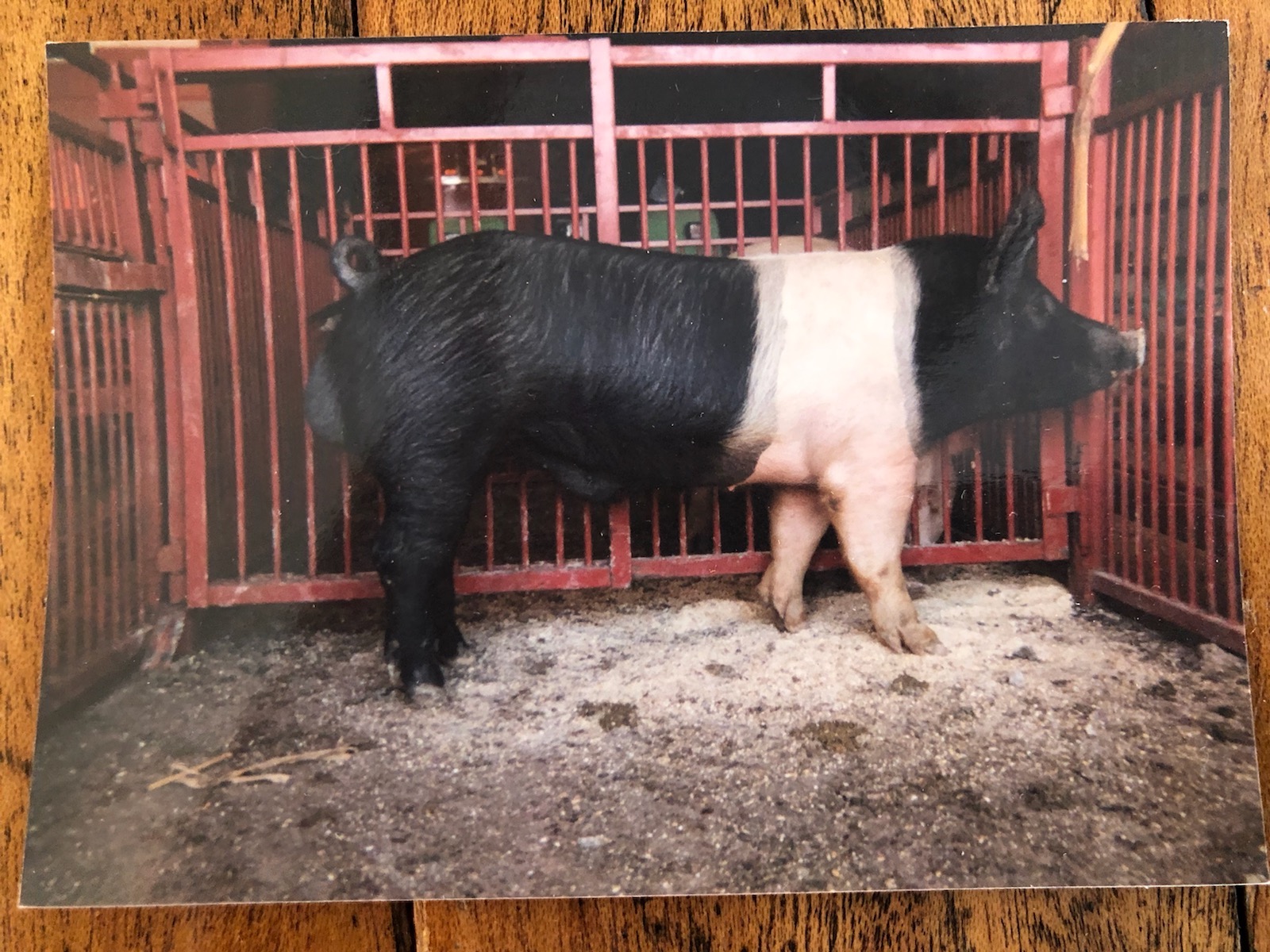
My favorite breed was the Hampshire, black with a white belt around their shoulders and front legs, their slogan, “Mark of a Meat Hog.” And its true, Hampshires are known as the leanest and most muscular of the major breeds.
But when I was a boy, breeders of all the swine breeds had been selecting away from muscling and leanness as a response to the “stress gene”. The stress gene, a simple recessive, had been identified, but a test to identify carriers was yet to be developed.
This gene, when two copies are present in an animal results in extremely lean and muscular animals. The downside is these animals are fragile and likely to start shaking and die in any kind of stressful situation.
Breeders succeeded in reducing the incidence of the stress gene, but hogs were getting fatter and lighter muscled. This trend hit bottom at our Lafayette County Fair when the worst market hog had about two inches of backfat and a smaller chop than the biggest lamb chop at the carcass show.
Dr. Dewey Walcholz, a UW River Falls Animal Science Professor, judged many county, state, and even national livestock shows. He was our swine and sheep show judge that year, along with the carcass judge. He made sure to point out this low in the quality of swine at our fair.
We were all just farmers trying to make a profit and improve, so I don’t think anyone was offended by Dr. Walcholz’ comments. But he also judged a national Hampshire show in Milwaukee that summer and shared the same criticisms as he placed the animals. These leading breeders of the time didn’t take the criticism as well.
So, even as a 13 year old boy, I knew what was needed to improve our hogs. I now know there is more to a quality hog than leanness and muscling, but at the time, it was clear that this was the most pressing need.
I read the breed journals cover to cover. My favorite issue was the July “Herdsire Edition”. It was about an inch thick, filled with advertisements, profile pieces, and pedigrees of the most popular boars. I pored over the pedigrees and the advertisements.
Most of the breeders stuck pretty close to the popular type of the day. Peer pressure is strong. But one breeder dared to be different. C. Eliot Driscoll, Waldridge Farms, Williamsburg, Iowa.
He knew what he liked and wasn’t afraid to go after it, even as the Hampshire breed continued to move away from his lean type of Hampshires. Every July Herdsire Edition Mr. Driscoll took out a full page ad and printed an original essay about his hogs and how they differed from where the Hampshire breed was headed.
I liked what I saw and wondered if his boars could improve our hogs. I showed it to Dad and asked if we could buy a boar. Dad said, let’s do it!
I can still remember those first two boars I picked out with Dad. One had a wide head and wide, white belt encircling his shoulders. I named him Wolfman. The other boar was an “offbelt”, mostly black, and I named him Spock.
We started using them that summer and prepared for the September breedings, as they produce January litters, which is what you want for market hogs to be ready at the July, Lafayette County Fair.
The first hogs out of Wolfman and Spock were definitely better. I started getting blue ribbons, and I even won the Carcass show one year. I never did win Grand Champion Live, but the lessons I learned about striving to improve, setting goals, and taking action, were invaluable. Thank you, Dad.
We’ve probably had over 10 inches of rain in September and October. It’s a little late after a dry summer, but it’s nice to remember how productive our pastures can be with the best fertilizer, which is rain.
We plan to wean our spring calves next week and then we’ll be able to graze everything one more time before winter. The cows, free from the burden of nursing a calf, will put on weight before winter.
We are excited for a couple of litters ready to pop any day now. Hoping they avoid farrowing during the predicted winter storm Wed/Thurs, but probably will, as a dropping barometer tends to induce labor.
UPDATE: Taking orders for delivery every other Saturday to Madison. Next date: March 5th. Email Matthew with order and/or questions: oakgrovelane@yahoo.com. Thank you!
Blue, red, white, pink. 1st through 4th ribbons at the Lafayette County Fair. We didn’t have participation ribbons. Whatever you were showing, the judge told you where you stood.
We showed everything from cattle to crops, but my favorite to show was hogs. Other than some success in showmanship, that’s where you’re being evaluated rather than the hog, I was stuck getting white and red ribbons with my hogs.
I always had an interest in livestock genetics and subscribed to the breed journals which I read cover to cover every month. My favorite was “The Hampshire Herdsman” which covered my favorite breed, Hampshire.
Most of the journal consisted of breeder advertisements. Even at a young age, I understood that much of a breeder’s success was based on perception.
It was interesting to see the different types within a breed and how type changed over time. I understood that some change was based on the hopes of improvement of the breed. And I cynically understood some change was based on the need for leaders to change type to stimulate demand for their stock.
One breeder who never wavered in the type of Hampshire he was striving for was C. Elliot Driscoll, of Waldridge Farms.
I noticed his two page ad in every July issue, (the biggest and best, herdsire issue), of The Hampshire Herdsman. He always had something to say and didn’t care about offending other breeders.
While it did seem he had a chip on his shoulder, Mr. Driscoll also displayed a sense of humor in his advertisements. He listed his children and their various occupations, with the boys starting out as “sanitation engineers” and gradually moving up through the ranks to “apprentice breeders”.
I showed Waldridge Farms ad to Dad and asked if we could buy a boar from them in the hopes of improving our hogs. Dad said sure.
Dad made the 3 hour drive in our Ford ton truck with the stock rack on the back. Must have been a school day as I didn’t go with on this first trip. I’m guessing it was around 1985 or 1986.
Dad brought home two boars. I named them “Wolfman” and “Spock”. Wolfman was a big, wide-belted boar. Spock was an off-belt, almost black.
We had a good base of maternal gilts sired by some good Yorkshire boars we purchased from local Yorkshire breeder, Larry Teasdale. Wolfman and Spock went to work breeding those gilts.
We saw improvement in our hogs right away. We went from white and red ribbons to blue, at the county fair. But the biggest benefit to our farm was economically.
Perhaps in response to the detrimental effects of the stress gene, I’m not sure, I was too young to know exactly why, breeders selected away from the lean and narrow hogs of the 1970s, and towards short, wide, and ultimately fat hogs in the 1980s.
I remember one Lafayette County Fair carcass show in which the judge kind of chewed out the hog producers as there were hardly any good carcasses and the worst carcass had about two inches of backfat and the loin, (pork chop) was smaller than the largest lamb chop.
Consumers were avoiding fat and starting to demand lean meat. It was clear that type needed to change once again.
In an effort to promote and pay for lean muscle, pork processors started measuring individual hog carcasses for fat and muscle and paying the producer accordingly.
We were paid a premium for our Waldridge sired hogs. And, in an effort to help other producers in the area, buying station managers started to promote our hogs to other producers.
Producers started to ask to purchase our Hamp-York gilts for replacement females. So we obliged, charging $50 over market price. Demand was good, and this became a nice sideline business.
We alternated Teasdale Yorkshire boars one year, and Waldridge Hampshire boars the next, into the early 1990s. By this time, breeders had responded to the call for lean hogs and as usual, were taking it too far.
Waldridge hogs were no longer the leanest, meatiest boars available. I remember discussing this with Mr. Driscoll. He wasn’t worried, as he knew the type of hog he wanted to raise and wasn’t influenced by prevailing winds of change.
He said something to the effect that a hog with .8 inch backfat and a 6.5 square inch loin was always going to be a good hog. That really stuck in my mind. Whenever I’ve been confused about the direction of my hogs, I remind myself of that truth.
By 1994 when I came home from college, it was clear the swine industry was continuing to change. Teasdale Yorkshires sold out before the market collapsed that year. Many producers exited the business. 1998 and 1999 were two more brutal market years for the swine industry and many more exited after that.
In college I saw the benefits of artificial insemination and decided to close our herd to new stock, only bringing in new genetics via AI. August of 1994 was the last time we brought new animals onto the farm.
While many producers had exited the swine industry, there were still enough producers left who needed boars that I started and developed my own business selling boars. This was a good business for me from 1995 to around 2010.
By then, so many producers had left the industry, I could see the writing on the wall. I only sell boars to two producers now.
I pivoted once again into selling meat direct to consumers in Madison. This has been really enjoyable. As a farmer, we know we are producing food, but I’m one of the lucky ones who actually get to know the consumers enjoying our food.
I guess I’ll end by thanking Waldridge Hampshires, Teasdale Yorkshires, and Swine Genetics International for providing the good swine genetics that help us produce good pork. Thank you!


 Posted by Curiousfarmer


 Curiousfarmer