Soil Testing and Fertilizer

May 1, 2011

We tested the soil in a few of our fields last week.  Pictured is the probe, laying on its side, which is pushed into the soil vertically, and then pulled back up, removing a small core of soil which you can see in the bottom part of the probe. It takes five samples to fill a testing bag.  We sent our samples to AgSource Soil & Forage Laboratory, located in Bonduel, WI.

This is also the first picture in a series showing how this field changes throughout the year.  We call this field M6.  It was planted to corn last year.  It will be planted to oats this year.

We last tested this field in 2006.  It looks like our management has improved the soil profile in five years.  I’ll go through the soil test without much explanation.  If you have anything to add, please do.

Organic matter increased from 2.1% to 2.9%.  pH stayed constant at 7.4.  Cation exchange capacity increased from 10 to 11.

The next observations are all in parts per million.  Phosphorous increased from 38 to 41.  Potassium decreased from 109 to 97.  Calcium increased from 1285 to 1600.  Magnesium increased from 395 to 500.  Boron increased from .5 to .9.  Manganese increased from 4 to 6.  Zinc increased from 3.2 to 10.4.

Our soils are different types, based mainly on our management.  The soil close to my parents’ farm, next to the buildings, has had a lot of hog manure spread on it over the past thirty-plus years.  The soil on my farm has received a lot of hog manure since we built the three hoop buildings in 1996-1997.  The cowherd is usually fed hay in the winter on some of this land as well.  As a result, the soil is high in phosphorous, and optimum in potassium.

The soil on the east hills receives no manure except for when the cows graze the fields.  This soil tests low in both phosphorous and potassium.

The other farm soil receives some manure, so it’s optimum in phosphorous and low in potassium.

Our chosen fertilizer is manure.  The problem with manure is it is not perfectly balanced.  Our management of the manure and crop removal has caused  phosphorous to increase relative to potassium.  We are doing a few things to combat this.  1. Managing the spreading of manure better.  2. Feeding phytase, an enzyme which helps pigs digest phosphorous better, resulting in less phosphorous in the manure.  3. Fertilize with potash, 60% potassium, in the fall, when our budget allows.  We spread 200 lbs of potash on all the crop acres last fall.

Our plan for this spring. 1. Hog manure will be spread and tilled in to all 2nd-year corn fields.  Oat and hay fields on my farm and my parents’ farm close to the buildings will receive nothing.  2. Other farm and fields farther from my parents’ buildings received 200 lbs of potash to increase potassium.  3. East hills received 100 lbs of potash and 100 lbs of MAP, 52% phosphorous, to increase potassium and phosphorous.


And The Winner Is…

April 29, 2011

Shayla!  Shayla is a young Madisonian who blogs about life and running.  Shayla is receiving a $25 gift certificate to Kiva, my favorite company.  Kiva unites borrowers and lenders to help alleviate poverty.  What I like about Kiva is the bottom-up approach.  Borrowers have their own ideas about how to make money.  We as  lenders can help them realize their dream.

No one guessed the correct answer of four days.  Shayla was closest without going over, three days.

I was shocked at how fast the tree was used up.  I guess that’s why it’s good to keep statistics, not as easy to delude myself.  Next winter I’ll stack a face-cord and see how fast that is used up.

Thank you to all who guessed!


How Much Wood?

April 25, 2011

How much wood does my outdoor wood boiler use?  Make a guess and you’ll have a chance to win.

I cut up a medium-sized tree.  I started burning it on a Sunday afternoon.  The weather was blustery and in the 30’s.  We kept the house at 75F, and the door to the uninsulated porch open most of the time.

I’ll show a few pictures of the cutting process, and you’ll get a feel for the size of the tree.

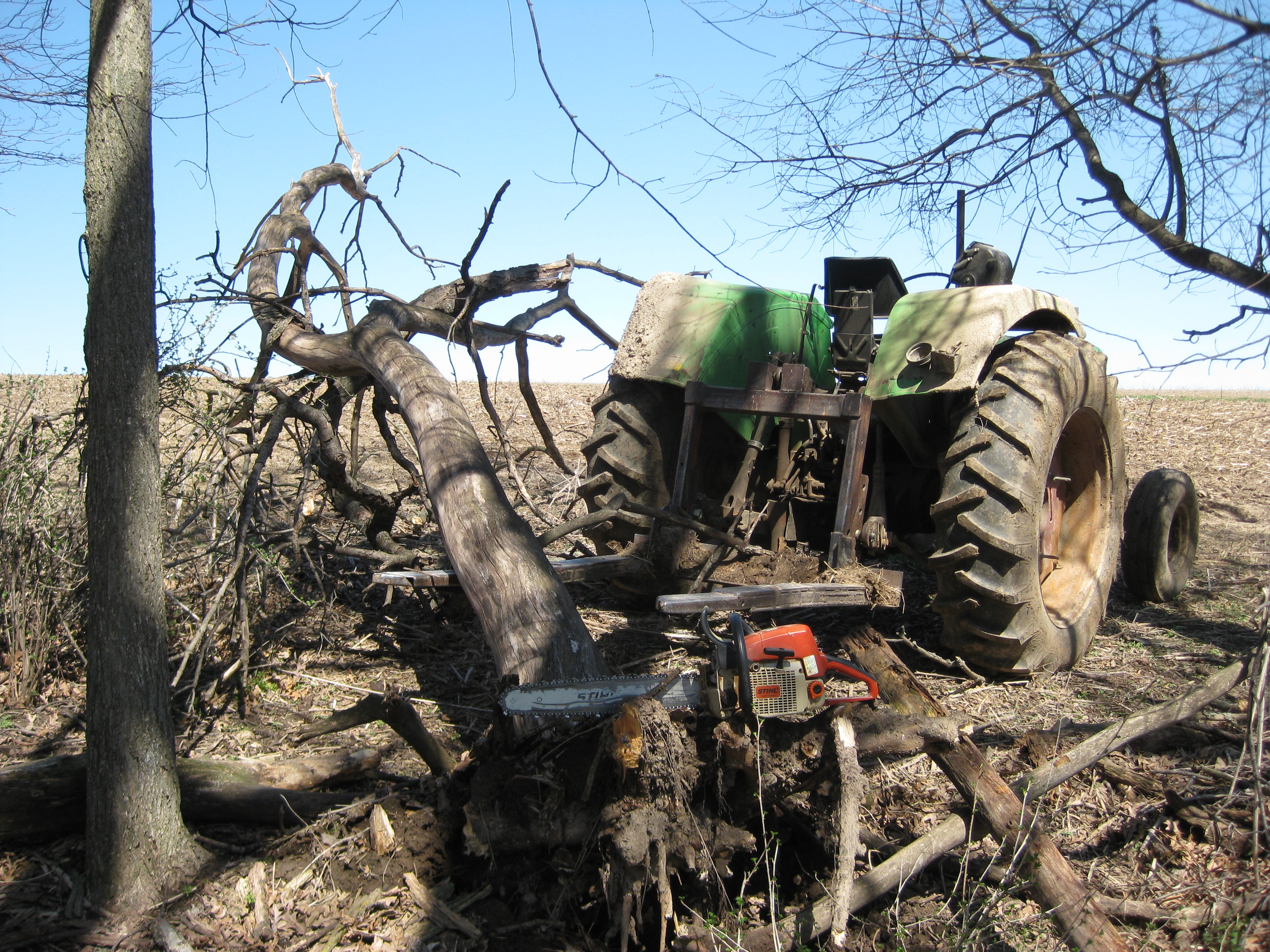
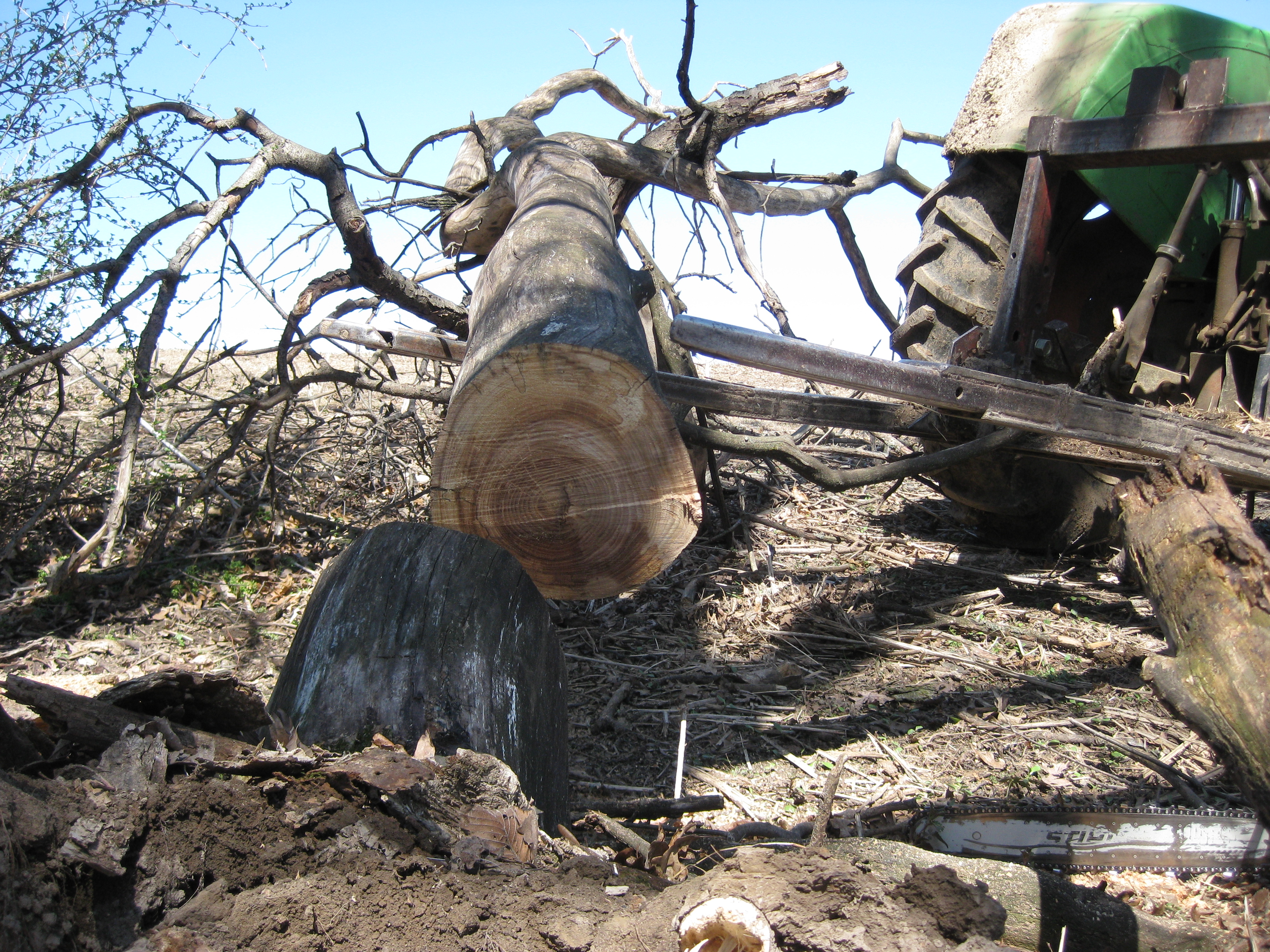
This elm tree died and fell over into a field, so it needed to be cut up before planting.  I used the bale carrier on the tractor to apply upward pressure so my chainsaw wouldn’t be pinched as I cut down through the trunk, separating the tree from the roots.

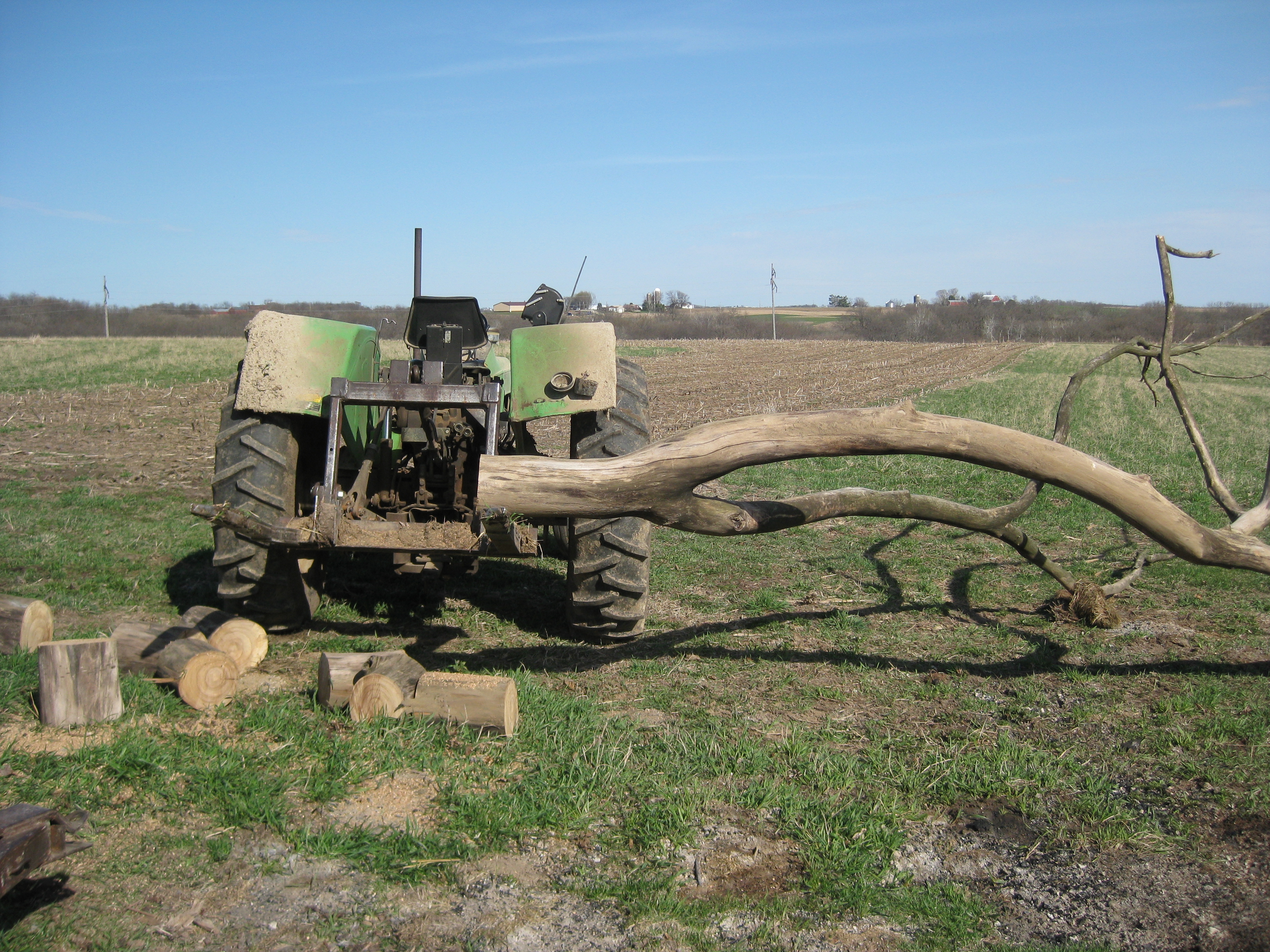
I pulled the tree by the wood boiler.  Shepherd held goggles over his eyes as I cut it up.

I use the bale carrier to lift the tree off the ground to make it easier to cut.

How long do you think this tree lasted?  Make your guess in days, and put it in the comments.  Closest one wins a $25 gift certificate to Kiva.  One entry per person.  No duplicate days, first one with the right number wins.  Good luck!


Bad Weather Calving

April 22, 2011

32 degrees Farenheit, rain, turning to sleet, turning to snow.  We only had to bring two calves into the barn to warm up.  One was born weak.  One was born in a ditch, and unable to get out of it.  The other newborns who got a belly full of milk were ok out in the pasture.

The calves who are too cold and weak to nurse, we stick an esophageal tube down their throat and give them a product called Colostrx Plus.  It helps them get going.

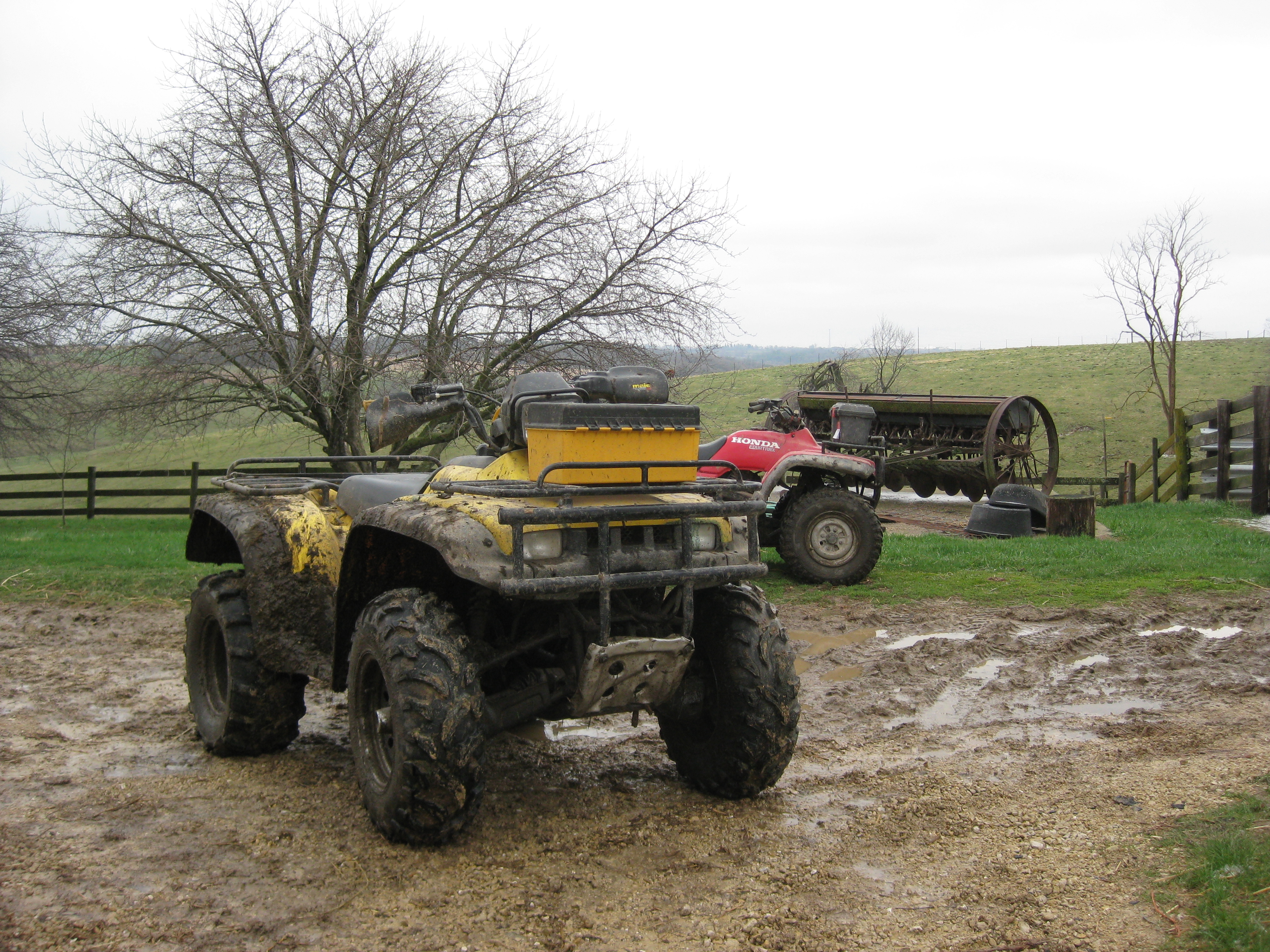
Next we have to get their mothers into the corral.  This is where the ATVs are indispensable.  A few years ago we had a freak April snowstorm and had to bring four calves into the barn.  We only had one four-wheel drive ATV and a two-wheel drive ATV.  The two-wheel drive ATV was worthless in the heavy, wet snow.  I had to walk.  I put in quite a few miles, slipping and sliding up and down the hills of our calving pasture.  We were able to get three cows in, but couldn’t get the fourth.

Now we have two, four-wheel drive ATVs, pictured.  It took about a half hour to get the two cows into the corral.  We put a cow into the catch-chute, and then help her calf  nurse.

April is usually not this cold, but it’s important to remember it can be, which is difficult to do in mid-June when the weather is beautiful and the bulls are itching to breed.  I wrote up a contract one April and signed it.  “No bulls will be turned out for breeding before the 1st of July.”

I haven’t broken the contract, and the Matthew of late March, early April, is always grateful.


New Manure Spreader

April 8, 2011

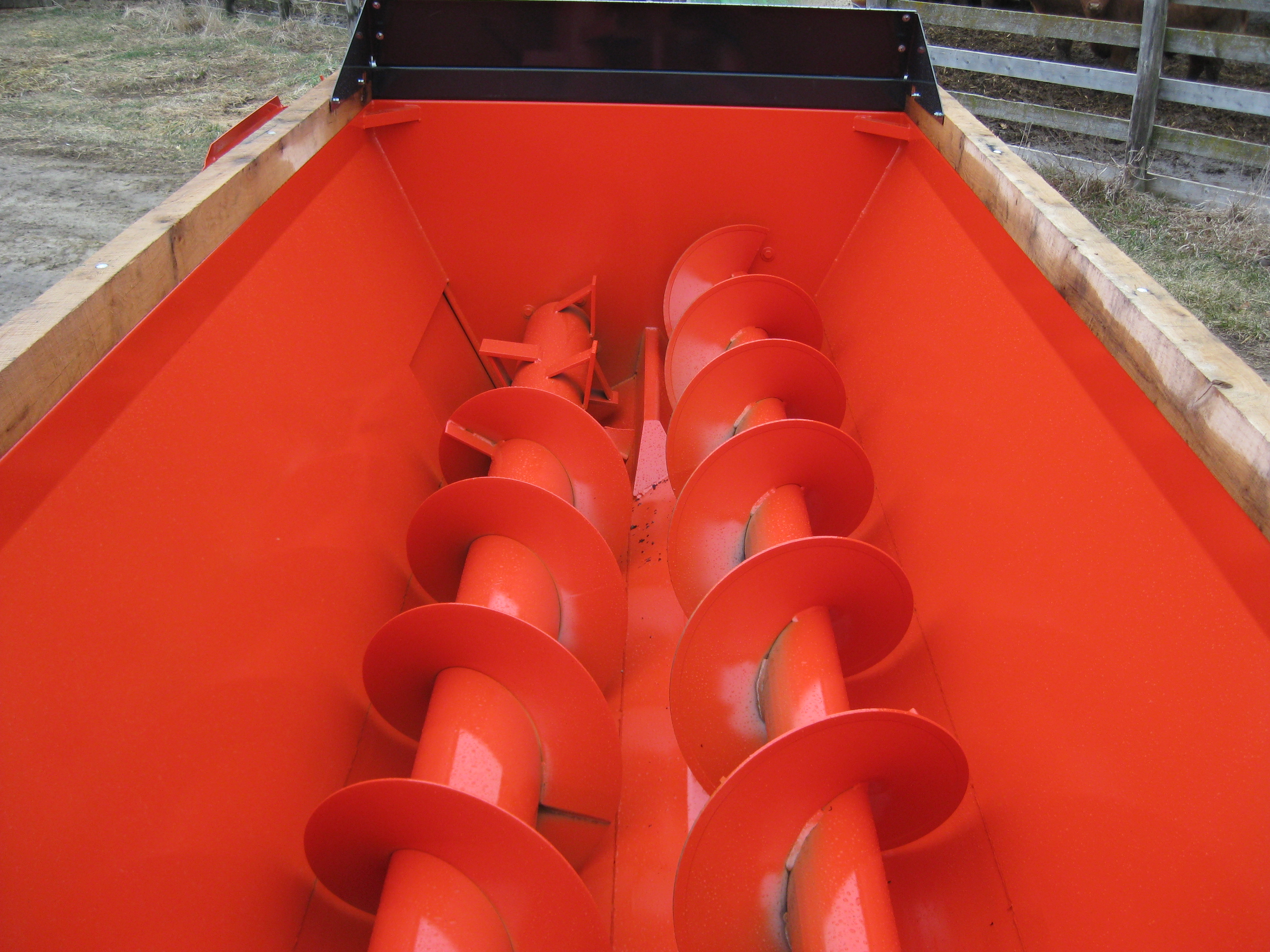
We purchased a new manure spreader from Studer Super Service.  It’s a Kuhn/Knight Slinger 8114. It’s basically the newer model of our twenty-year-old spreader we junked this winter.  I want this one to last twenty years.  We paid $14,500 for it.

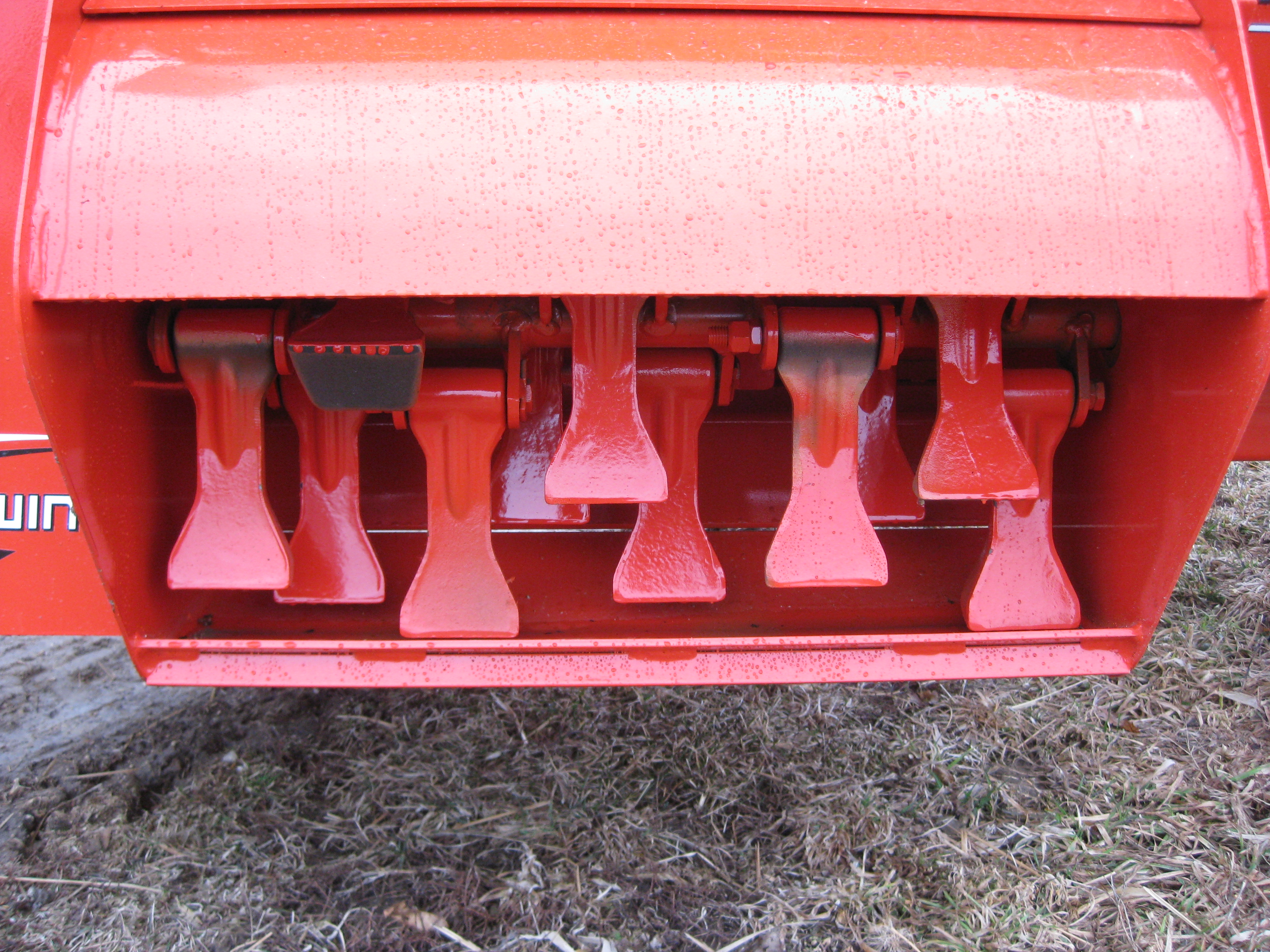
The auger on the right moves the material backwards as the auger on the left moves the material frontwards and to the side-unloading door.  The beaters, pictured below, sling the manure into the field.

I’m excited to use it.  We have two hoop buildings to clean out, and several hay feeding areas.  I want to cover the corn fields with a light layer of manure before corn planting.  April is going to turn into May, fast.


March 2011, Fertilizer Prices

March 24, 2011

We priced fertilizers with our local dealer.  Nitrogen (N), Phosphorous (P), and Potassium (K) are the macro elements we are usually most concerned with.  I’ll list the fertilizer, the percent of each nutrient, and the price per ton.  The percent of each nutrient is listed in this order: Nitrogen, Phosphorous, Potassium, and Sulfur.

Urea 46-0-0-0 $462/ton

Ammonium sulfate 21-0-0-24 $343/ton

Monoammonium phosphate (MAP) 11-52-0-0 $673/ton

Potassium chloride (Potash) 0-0-60-0 $537/ton

Which source of nitrogen, Urea or Ammonium sulfate, is a better deal.  We need to calculate the nitrogen cost per pound.

What is 46% of a ton?  Multiply .46 times 2000 equals 920 lbs. nitrogen per ton of Urea.  Divide $462 by 920 lbs. equals $.50 per lb. of nitrogen.

Ammonium sulfate is 21% nitrogen.  .21 times 2000 equals 420 lbs. nitrogen per ton.  Divide $343 by 420 lbs. equals $.82 per lb. of nitrogen.

The Ammonium sulfate is higher priced per lb. of nitrogen.  Ammonium sulfate also contains sulfur, which is needed by plants, and it is more stable, releasing its nitrogen more slowly than Urea.  Urea will volatilize, turn into a gas, in hot, dry, conditions.  Urea is best spread before a rain, or when the ground is cool and moist.  So someone may want to use Ammonium sulfate even though it is more expensive.

I realized when I started writing, this is part of a much larger post about the philosophy of fertilizer.  For our farm, animal manure is our preferred fertilizer.  We just purchased a new manure spreader which I’m excited to use, and will show in a post soon.


The Protest in Madison, Wisconsin

March 13, 2011

I took the boys to the protest in Madison.  This is the 26th day.  There was a “Farmer Labor Tractorcade” in the morning.

At first the boys didn’t understand what was happening, but they liked the excitement.  Children pay attention when adults are excited about something.  I did my best to explain the complicated issues to the boys without simplifying too much.

The way Governor Walker is ramming his agenda down our throats is probably what riles the people of Wisconsin the most.  He has always claimed it’s about the budget, but when he couldn’t get the 14 Democrat senators who fled the state to return to make a quorum, the bill to eliminate collective bargaining was stripped from the budget bill, and passed in two hours.

The last few years has seen the rise of the Tea Party, which is considered Right Wing.  This movement would be considered Left Wing.  They are approaching the problems from different angles,  but it boils down to Americans concerned about their future and the future of their country.

I’m so glad to live in a country that allows peaceful protests.  My favorite chant of the day says it best:

“Tell us what democracy looks like.  This is what democracy looks like!”


Chicken Pictures for WSB

March 9, 2011

In, “Chicks, Fun and Trouble,” I told about the new chicks we received by mail.  WSB asked for more pictures when they were grown.

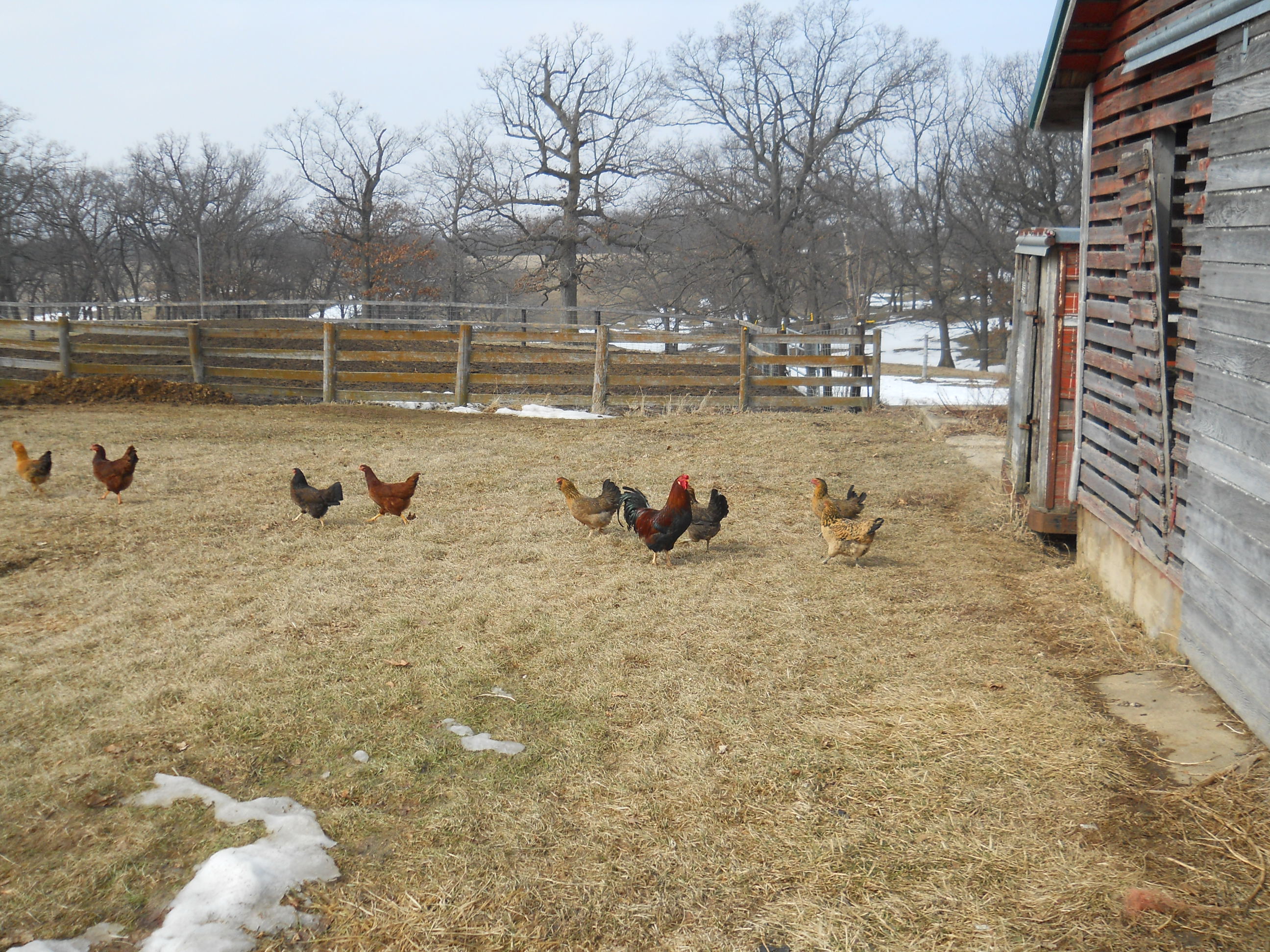
I took these pictures yesterday.  The chickens are enjoying getting out of the barn, scratching, grazing, picking up rocks for their crop.  It’s been a long winter, stuck in the barn.

Today we have a snowstorm and school is canceled.  Seems like Mother Nature always teases us.  What’s the saying?  “Robins always get three snows on their backs?”

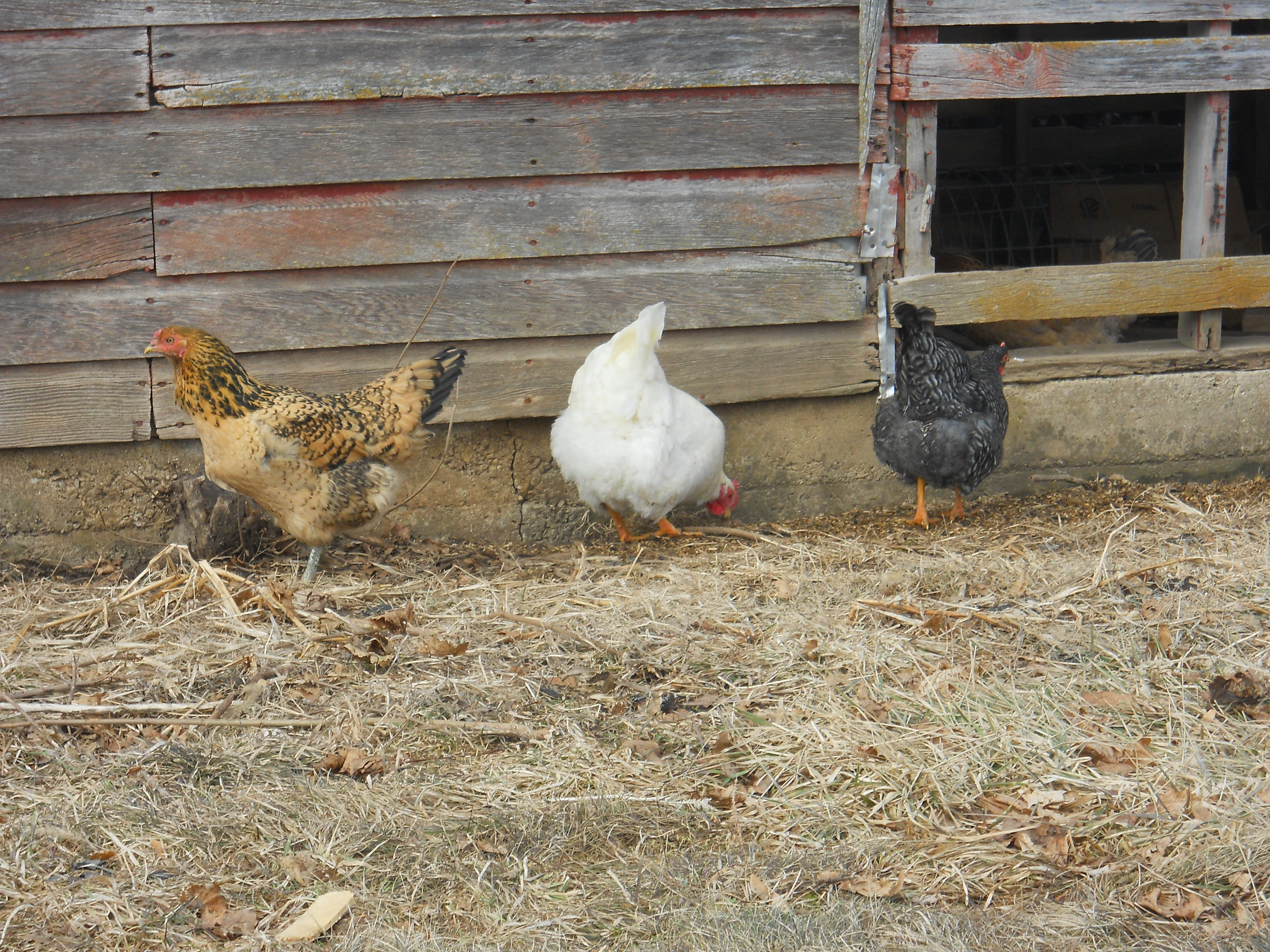
Below are three of the chicks, grown.  An Araucana, White Rock, and Barred Rock.  They are laying beautiful, little, pullet eggs.

Also, I want to say thank you to all the women in my life.  Today is the 100th International Women’s Day. It was started in 1911 to honor the Suffragettes, who fought for womens’ right to vote.


Robert Frost: A Blue Ribbon at Amesbury

March 6, 2011

How can a poem, written years before, capture the way I feel?  In “A Blue Ribbon at Amesbury,” Robert Frost writes my thoughts, my feelings.

“A Blue Ribbon at Amesbury” describes a young man’s mind, as he observes his blue-ribbon winning hen.

Excerpt:

The one who gave her ankle-band,
Her keeper, empty pail in hand,
He lingers too, averse to slight
His chores for all the wintry night.

He leans against the dusty wall,
Immured almost beyond recall,
A depth past many swinging doors
And many litter-muffled floors.

He meditates the breeder’s art.
He has a half a mind to start,
With her for Mother Eve, a race
That shall all living things displace.

The cattle on my farm can be traced back over fifty years, the hogs over thirty, the chickens over ten.  We are always selecting, always monitoring, always striving.

Thank you Quantum Devices, Inc. for your guess. Since you were the only one to guess which Frost poem is my favorite, you win the $25 gift certificate to Kiva.


Icehouse/Icebox

February 20, 2011

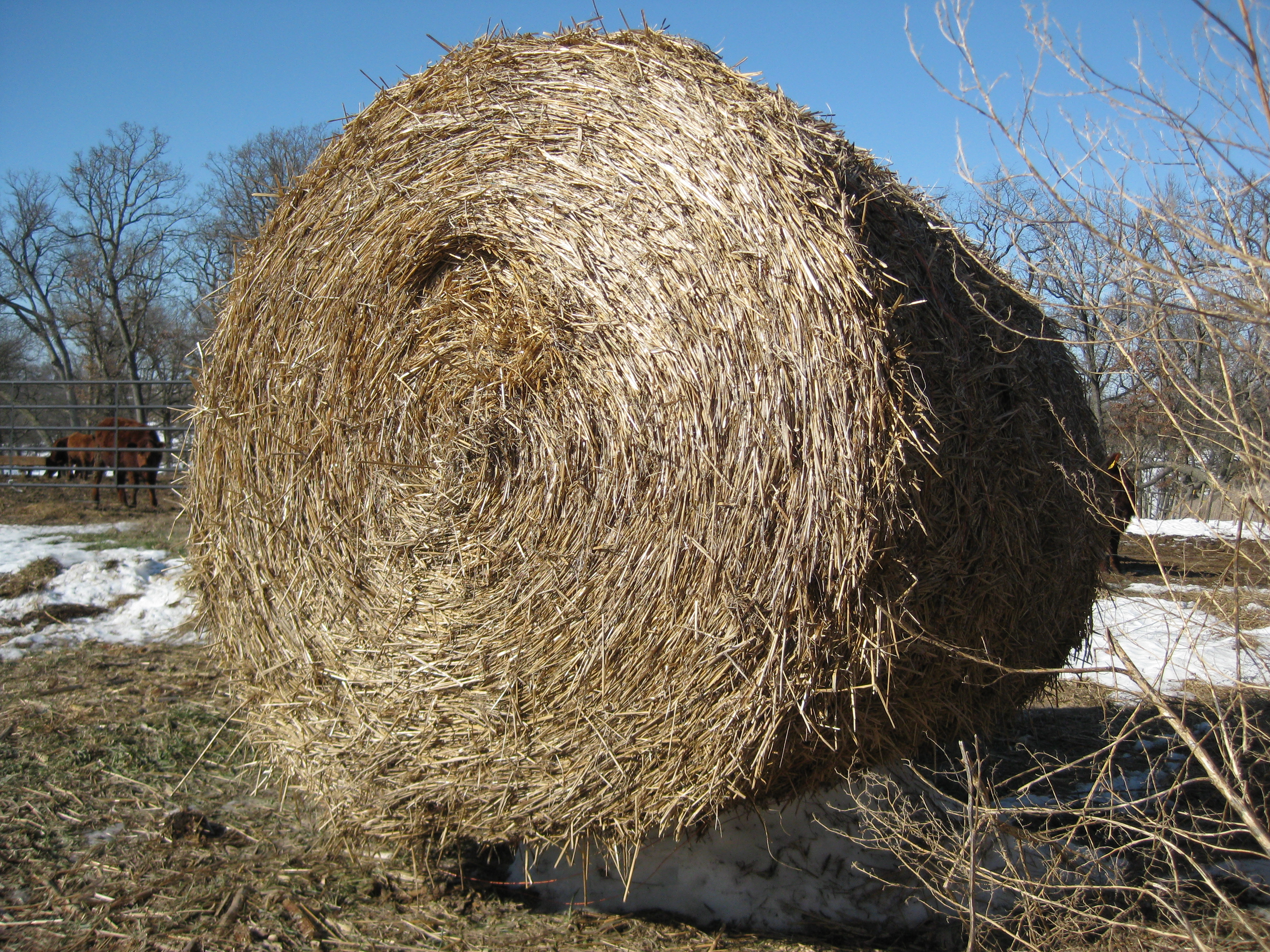
I set this round bale of straw down after the big snow.  We had a big melt this past week and all the snow around it melted, leaving the bale sitting on its own block of ice.  It got me to thinking about the insulating properties of straw.

There is an old building on my Dad’s home farm.  The building is called the Icehouse.  Back in the days before rural electrification, people would cut chunks of ice out of lakes or streams and put the ice into their icehouse.  Then they would insulate the ice with wood shavings or straw.

People had an Icebox in their house to keep food and beverages cool.  There was a place to put a block of ice.  When one block of ice melted, they would go get another one.  Maybe you’ve heard someone refer to the refrigerator as the icebox.

In Henry David Thoreau’s classic, “Walden,” he tells about the time he let a young man warm up in his cabin.  He had fallen in the cold water of Walden Pond when he was out cutting ice.

Thoreau provides details about the process of cutting out ice, which he observed 100 men doing over a span of 16 days.  They made a stack of ice weighing 10 tons.  They covered the stack with hay and boards for insulation, and didn’t open until July.  Even after it was exposed to the air and sunshine, Thoreau says the stack didn’t fully melt until September of the following year.