Grazing Winter Rye

April 5, 2012

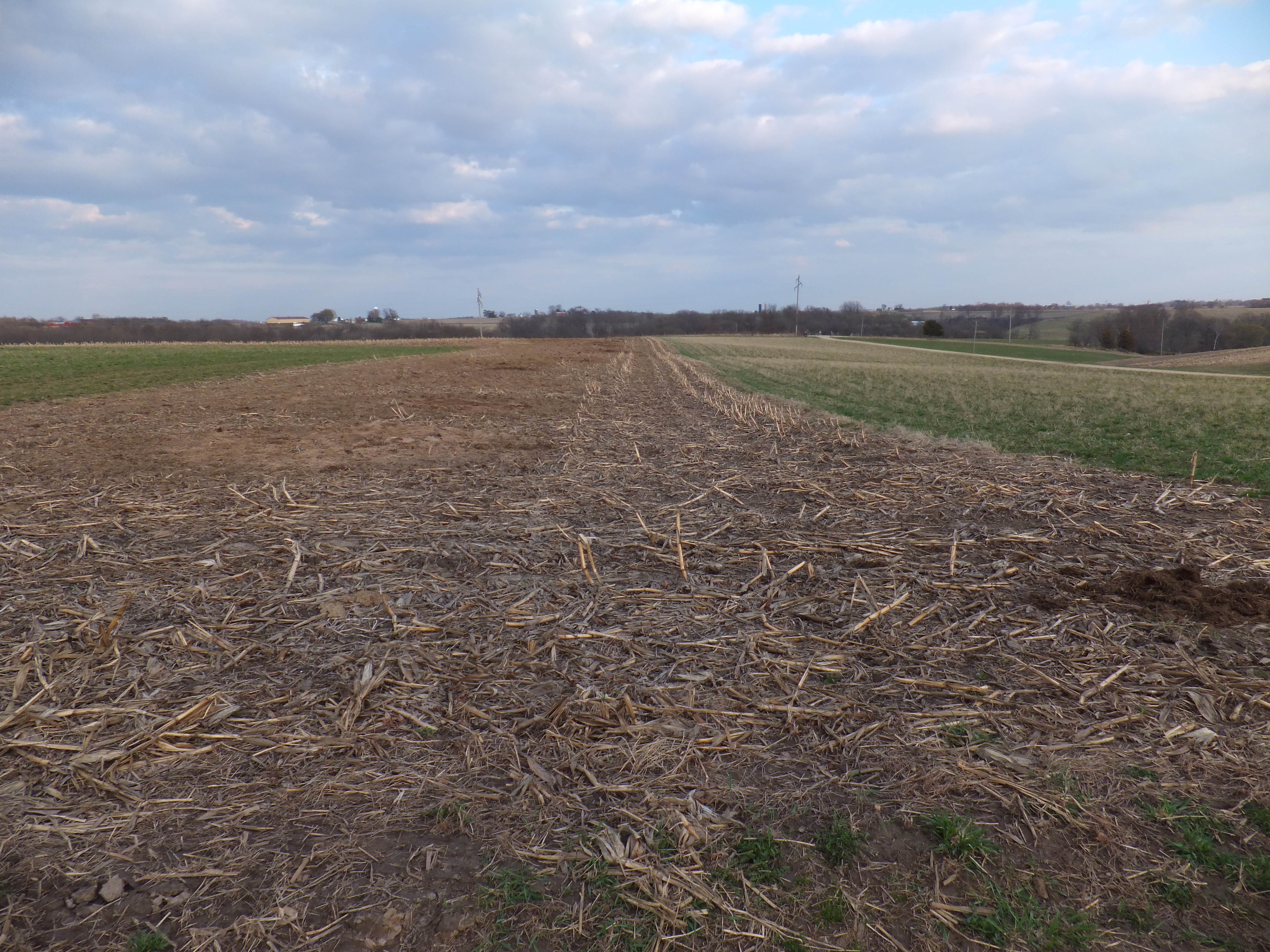
I planted winter rye after corn silage harvest last fall.  I spreaded the bedding pack manure from one hoop building evenly over the field, disced the field lightly, and planted a bushel of rye per acre with my drill.

It came up nicely and gave me a few days of grazing last fall.  The real beauty of winter rye is that it stays green all winter.  When the snow isn’t too deep, it’s nice to find a sea of green in a dead and dormant winter landscape.

Winter rye also takes off growing in the spring faster than anything.  It has an alleopathic effect, meaning it’s competitive with other plants.  A quick glance in the field found no weeds.
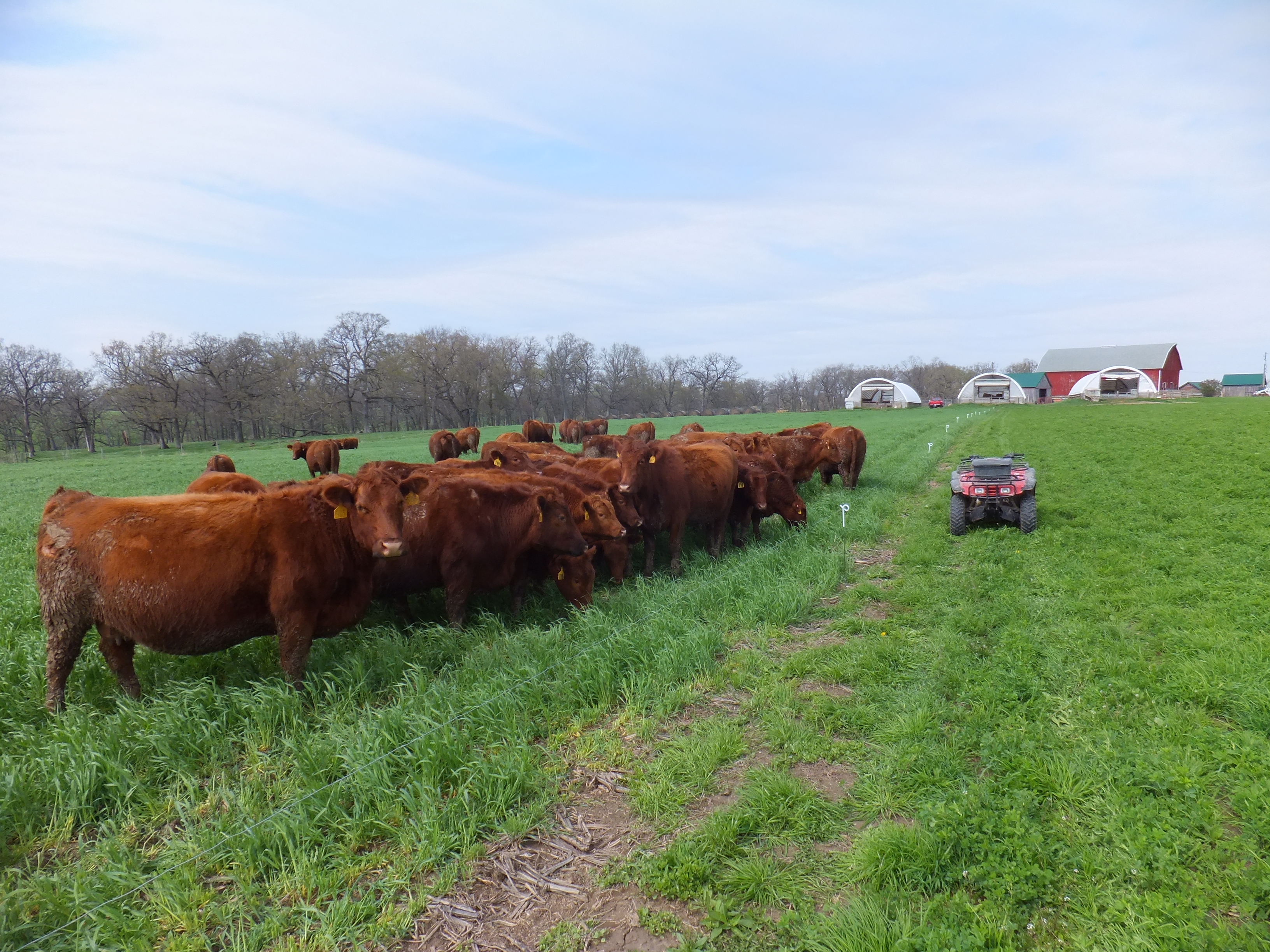
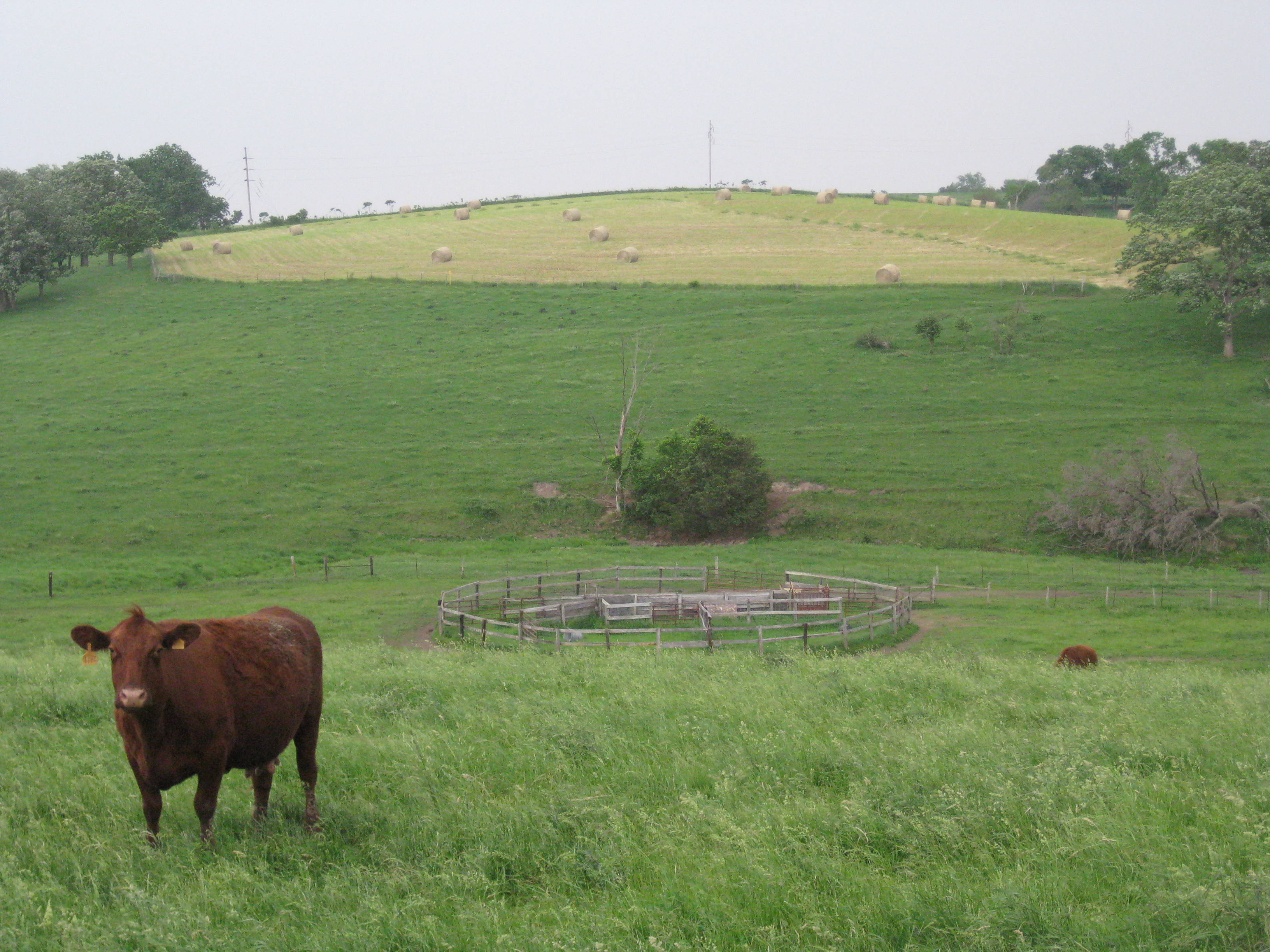
In the photo above you can see the cattle in the rye, kept in  with a single electric wire.  The field with the ATV is alfalfa/grass.  The dead area is where I concentrated the driving of machinery, keeping the compacted/damaged area in one place, rather than scattered throughout the fields.

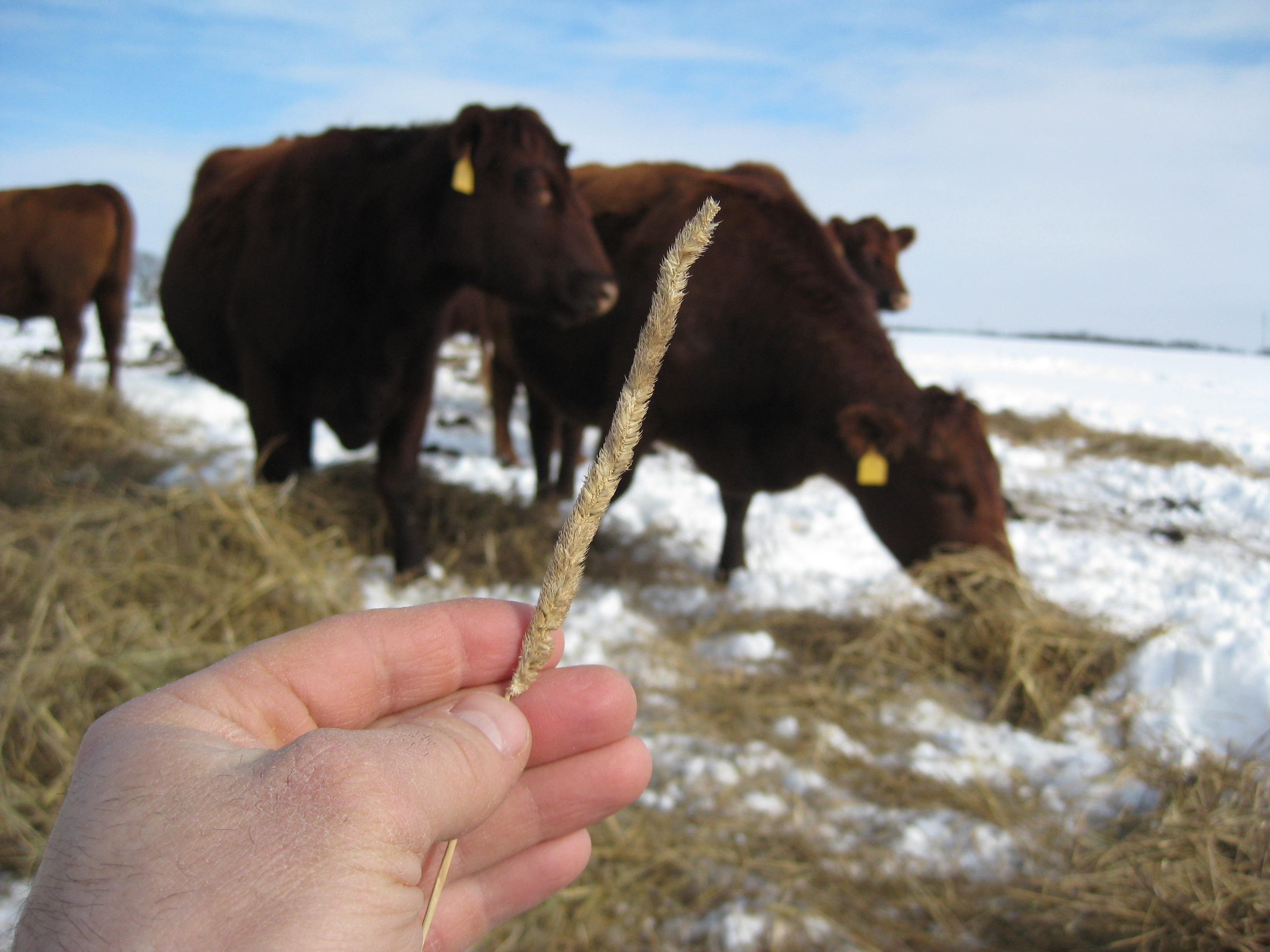
In the photo below you can see the saying is true, “grass is greener etc,” even when it’s not.  I’m amazed at cows’ body knowledge.  They will reach under an electric fence, mere inches from being shocked, and rarely get shocked.


March 2012, Early Spring

March 19, 2012

A warm winter followed with record high temperatures in March, finds me in the fields earlier than ever.

I fed round bales of hay in a feeder to my fall-calving cows on a field which was corn last year and will be oats and new hay seeding this year.  I moved the feeder every time I fed a new bale so the manure would be spread across the field, pictured below.

The cows had to walk across a hay field to get to water.  Any time the ground wasn’t frozen resulted in damage from the cows’ hooves.

I dragged the damaged areas with a chain harrow pictured above.  I also spread some oats on the worst areas, using the silver seeder located on the back of the tractor, pictured above.  The oats will give some ground cover and forage.

I also fertilized last week.  I put 100 lbs of gypsum and 100 lbs of ammonium sulfate on every acre.  Gypsum supplies Calcium and Sulfur, while ammonium sulfate supplies Nitrogen and Sulfur.

I decided to not add any Phosphorous or Potassium.  My soil tests showed high levels of Phosphorous in the soil.  My forage tests showed high levels of Potassium in the hay.  These two elements, along with Nitrogen are considered the primary macro-nutrients.  Another reason I decided not to fertilize with Potassium is “luxury consumption.”  If potassium is readily available, plants will suck up more than they need.  This is one of the reasons I prefer to fertilize with Potassium in the fall.

Secondary macro-nutrients include Calcium, Magnesium, and Sulfur.  My forage tests were lower in Calcium than I liked.  So I decided to add gypsum which is 22% Calcium.  I could have added  lime, but that would raise the pH of the soil, which is already high at 7.4.

My soil is high in Magnesium because the rock underlying our soil is dolomitic limestone, which is high in Magnesium.

Needed Sulfur was supplied from the polluted atmosphere in acid rain for many years.  Now that the air is getting cleaner, there is less Sulfur available to plants, and plants deficient in Sulfur are being seen.  Gypsum is 17.5 % Sulfur, and Ammonium Sulfate is 24% Sulfur.

I didn’t add any of the micro-nutrients.  I plan on soil testing in late summer and fertilizing in the fall if my budget allows.


March 2012, Fertilizer Prices

March 14, 2012

We priced fertilizers with our local dealer.  Most prices have increased from last year.  I referred back to last year’s post to compare prices.  All prices are per ton.

Product:     2012 Price  2011 Price  % Change

Urea            $650           $462           +41

Am. Sulfate $418           $343           +22

Potash        $620           $537           +16

MAP            $640           $673           -5


Forage Testing

October 13, 2011

I took three cutting off this hay field, and it’s ready to be cut or grazed again at the end of September.  I’ll wait until after a hard frost, but before the snow gets deep, to graze this field with cattle.

If I grazed this field now, the alfalfa may use most of its root reserves to initiate regrowth.  If a hard frost shuts down the alfalfa at this point, it may have a difficult time surviving the winter because its root reserves are too low.  Grazing or cutting after the plant has gone dormant has little effect.  The time I avoid cutting or grazing is from about September 15th to October 15th, for this climate.

Justin, formerly of  Midwestern Bio-Ag, took two forage samples, one from first cutting, and one from second cutting.  The samples were taken from square bales, stored in the barn.  First cutting was baled June 1st.  Second cutting was baled July 8th.  The alfalfa was full-bloom both times.

I don’t understand forage testing very well.  If you want an in-depth explanation, check out this excellent article from the University of Kentucky.

These were the first forage tests I’ve ever taken on my farm.  I’ll share some of what I learned.

Even though both cuttings were taken when the alfalfa was full-bloom, 2nd cutting was considerably higher in quality than 1st cutting.  The cattle’s preference confirms this.  2nd cutting was higher in protein, (17.28 to 16.58), lower in ADF fiber, (31.96 to 37.23), higher in TDN total digestible nutrients, (57.06% to 51.13%), and higher in RFQ relative feed quality, (143.91 to 108.68).

I’ll summarize what these numbers mean to me.  Cattle can maintain their weight eating the first cutting hay, and gain some weight eating the second cutting hay.

Some other interesting findings, calcium was low, lending credence to the importance of added calcium, which I have not done.  Manganese was fine, which is strange because my soil tests show low manganese.  Potassium was high, which is also strange because I didn’t add any potassium in the spring, eliminating the theory of luxury consumption, and the soil tests show medium potassium.

If you have any thoughts about this, please share.


Midwestern Bio-Ag

September 1, 2011

I enjoyed attending a Midwestern Bio-Ag field day.  Fertilizer is their main business, but they also deal in feed and seed.  Pictured is a large truck which is used to spread fertilizer, and a red buggy which a farmer can pull behind a tractor to spread fertilizer.

Gary Zimmer is the founder of Midwestern Bio-Ag.  I picked up a copy of his new book, “Advancing Biological Farming.”  He sold me in his introduction, when he wrote:

“So please, when you read this book don’t be too quick to judge.  Don’t read between the lines.  I’m sure you can find some details you won’t or can’t agree with, but remember, these are my thoughts, observations, ideas, and experiences up to this point in time.  Show me a better way and I’m ready to make changes and take on new ideas after they have been tested and their success demonstrated on the farm.  I want to know when it works, how it works, why it works or doesn’t work.  If a new idea makes sense, improves quality and/or yield, and is profitable, then let’s go with it.”

I always listen to a person who admits he doesn’t know everything.

I have a difficult time knowing if a fertilizer is real, or “foo-foo dust”.  There are so many variables in farming, it’s nearly impossible to know if a little something we spread on the fields has an effect.  Unless I correct a visible deficiency, fertilizer is almost faith-based.

That being said, I’m thinking about working with Midwestern Bio-Ag for my fertilizer wants and needs.  I plan to figure ways to test the effectiveness of their products.


Baling Hay

August 2, 2011

Field of baled hay.

Below is a picture of the Round Baler, unloading a finished bale.  Hay is picked up underneath the baler.  The belts keep tension on the hay as an ever-increasing amount is rolled up, resulting in a tightly-packed round- bale of hay.

Photo  by Melissa.

Each bale weighs about 1500 lbs. and feeds at least 50 cows a day in winter.  We feed the cows by unrolling the hay on the frozen ground so all the cows can eat at once.  They eat their daily allotment in a few hours.


Raking Hay

July 31, 2011

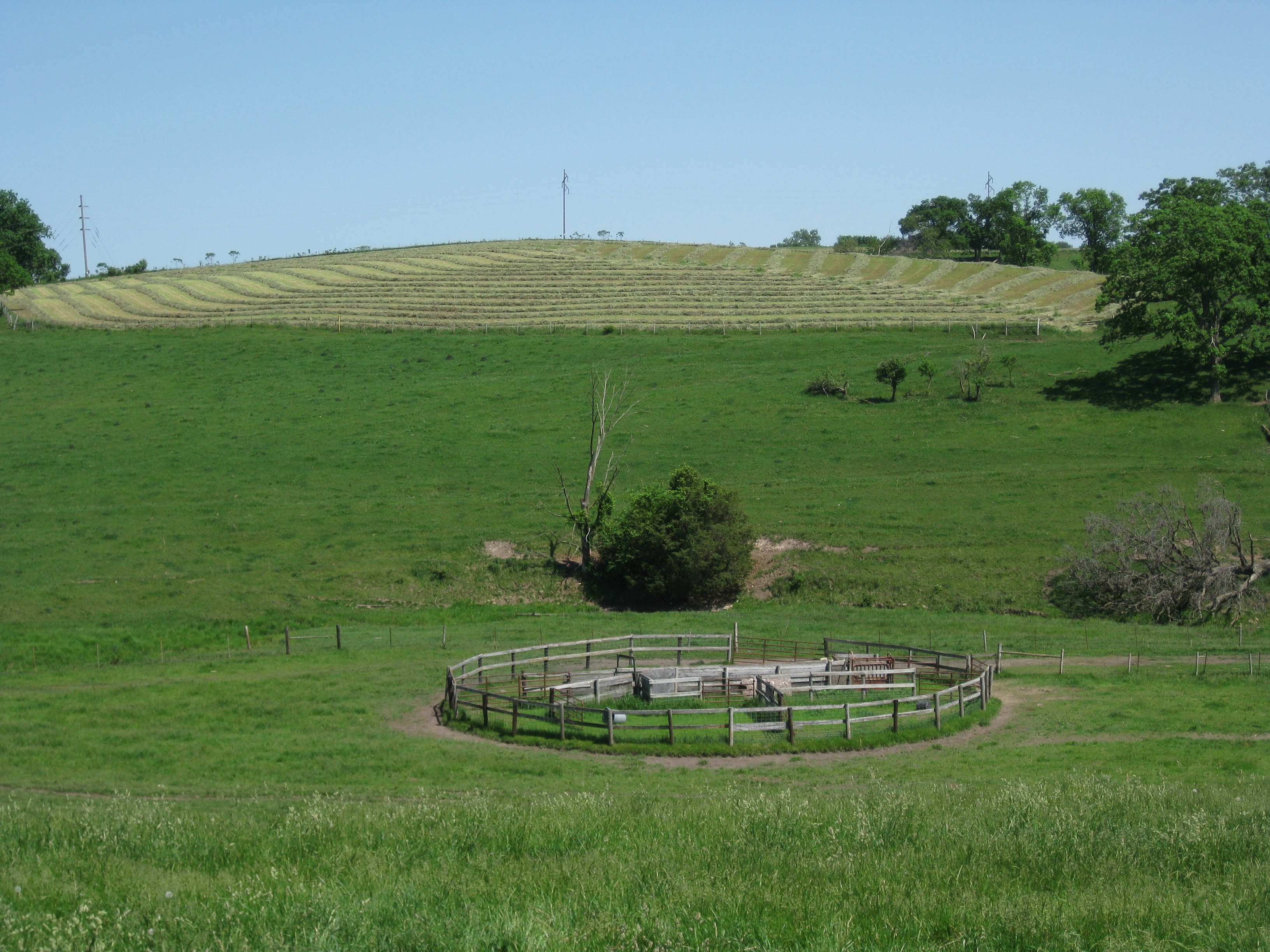
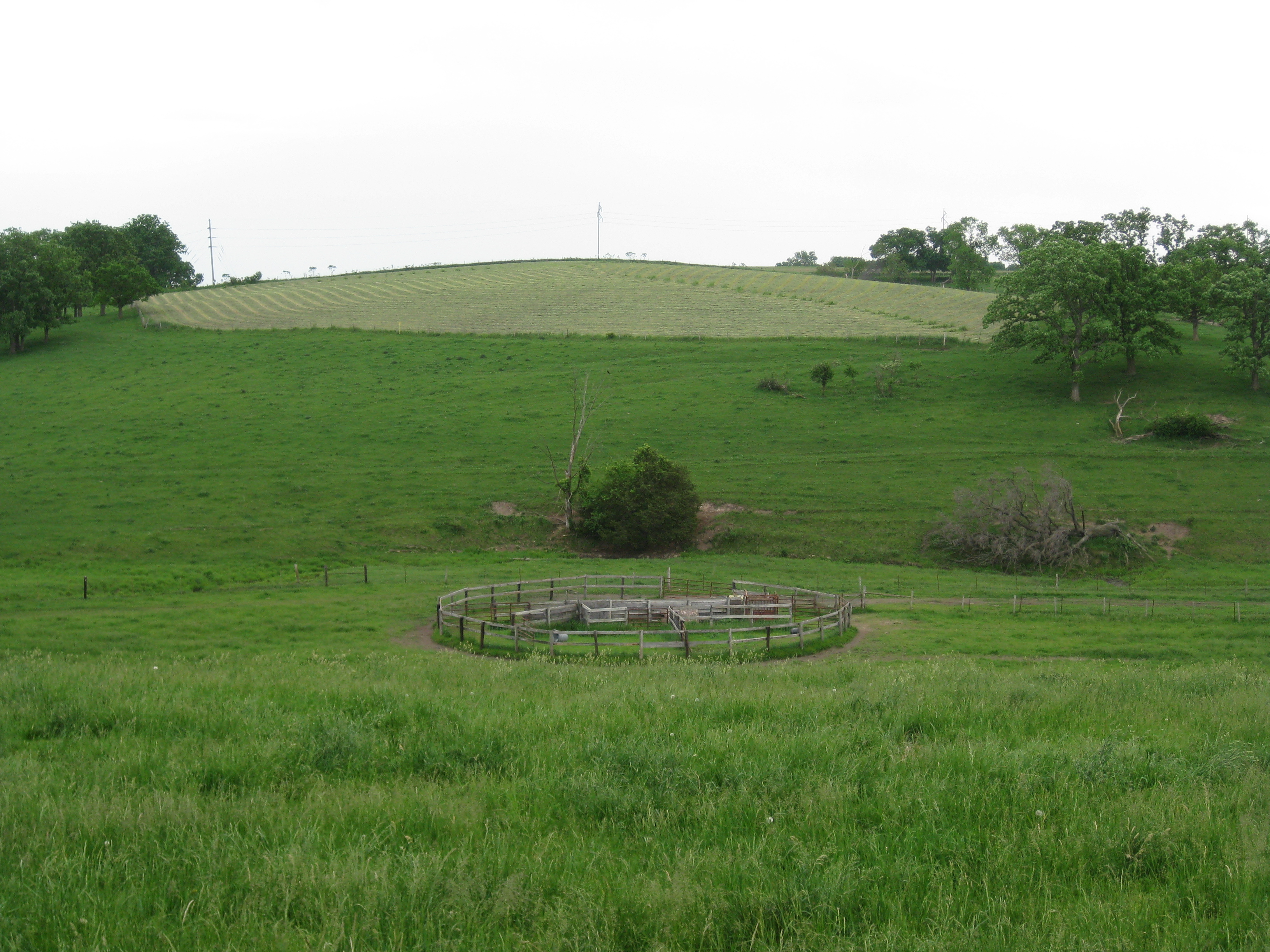
Field of raked hay.  After two to three days of drying, the mowed hay is raked into a double windrow, meaning two are merged into one, resulting in less time baling.  The hay continues to dry as the hay which was underneath is now exposed to the air and sunshine.

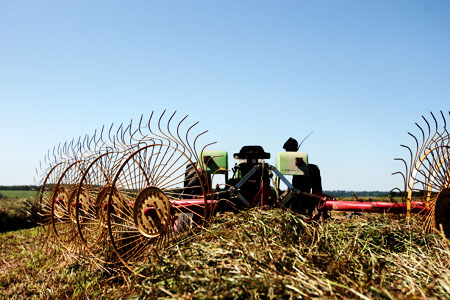
The picture below is of our wheel rake.  Each arm of wheels moves up and down hydraulically.  When the wheels are down, they turn along the ground moving the hay into the center.

Photo by Melissa.


Down Corn

July 17, 2011

This was my worst field of down corn, Monday, after the severe storm.  We received close to three inches of rain in less than an hour.  Wind speeds of 70 mph were reported.

I was shocked when I looked out and saw the fields.  I examined it right away and figured it was a total loss, but held out hope because I only found one stalk snapped off.  Sometimes corn can pull itself back up if it’s early enough in the growing season.

And thankfully, that’s what our corn did.  The picture below is of the same field  on Friday.  The mud on the leaves shows how down it was.

Before me, Citygirlfriend had never known someone who actually talked about the weather.  I think she’s starting to see why we do.


2011 Corn Height, 4th of July

July 4, 2011

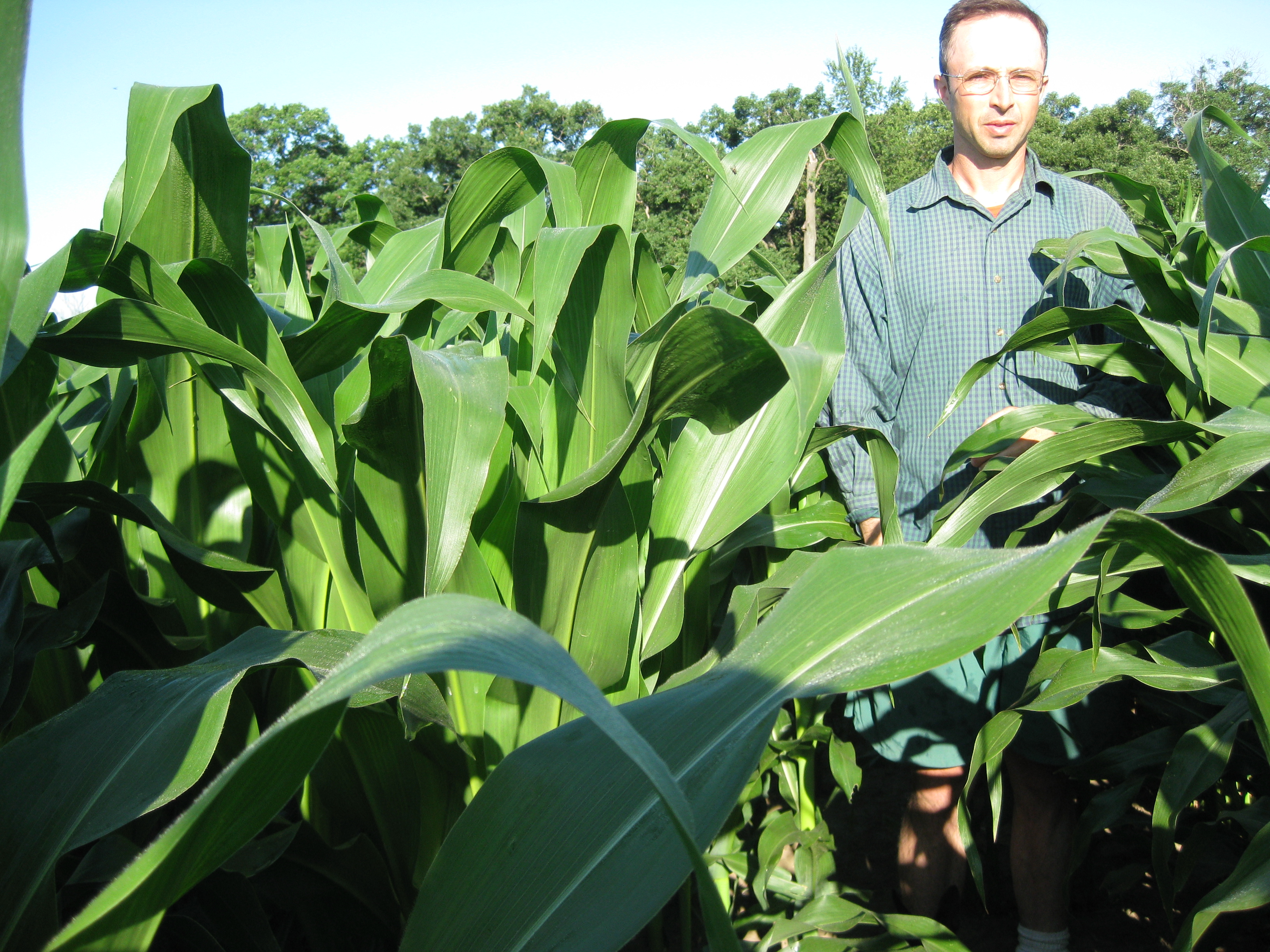
This is a traditional 4th of July picture in my family.  Shepherd snapped the photo this year.  Links to the last two years are here and here.


Mowing Hay

June 28, 2011

Ten acre field of mowed hay.  We mow around the outside edge of the field and work our way in, leaving concentric swaths of cut hay.

This is the front view of the haybine which cuts the hay.  Its power comes from a tractor which is ahead and to the left of the haybine.

This is the rear view of the haybine where the hay is thrown out in a swath.  We can control the width of the swath by moving a sheet of metal up or down.

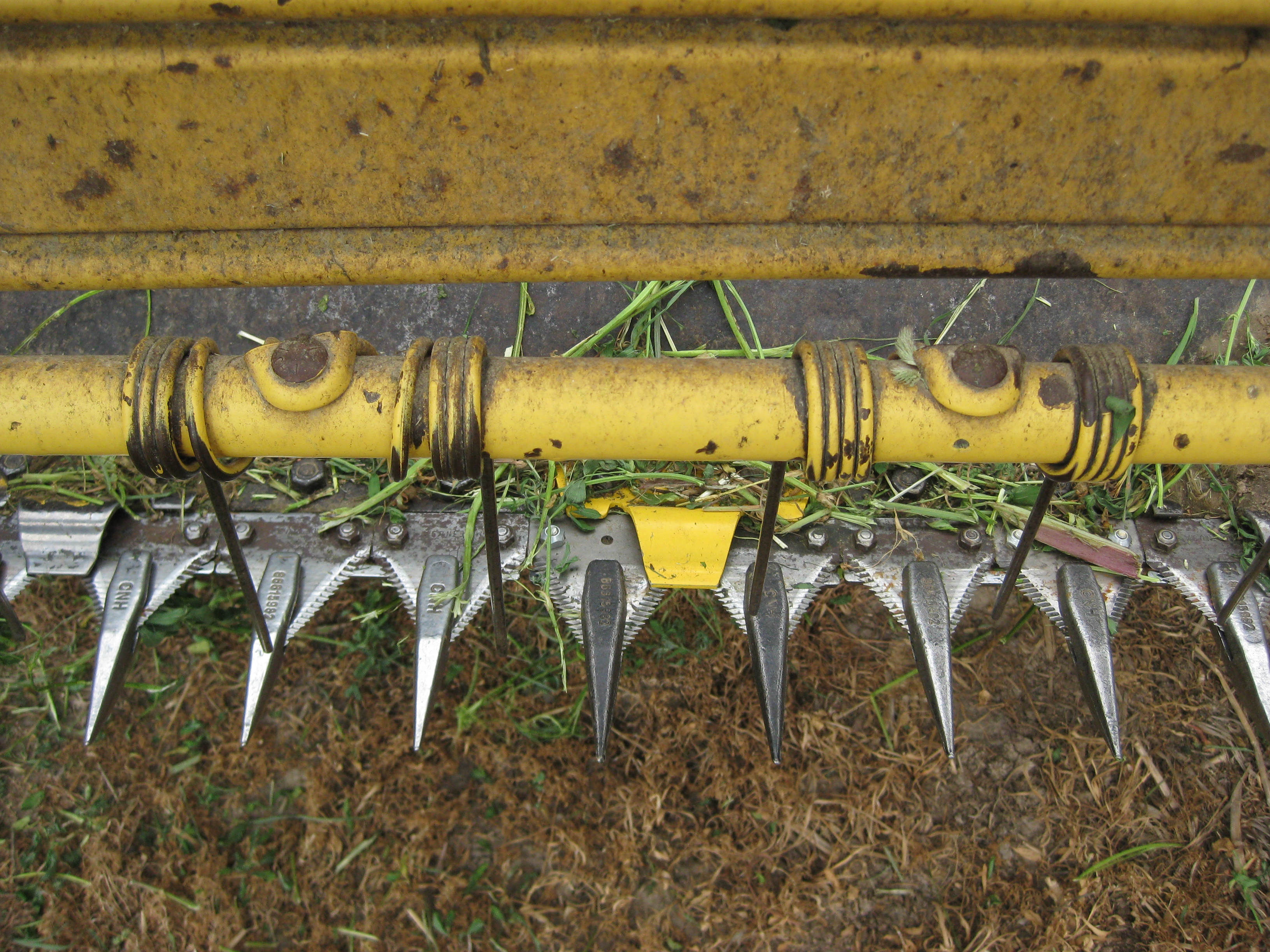
The sickle goes back and forth quickly, while the tines on the reel pull the hay towards the sickle.  The sickle is made of individual blades which can be changed if they are damaged.  The large metal points in front of the blades are called rock guards.  They can be changed if damaged as well.

This haybine is called a mower/conditioner.  The conditioning is performed by these two rolls.  The hay is crushed as it passes through the rolls, allowing the stems to lose moisture faster.  This helps with alfalfa, but isn’t necessary for grass.