Looking Out For Me

November 9, 2011

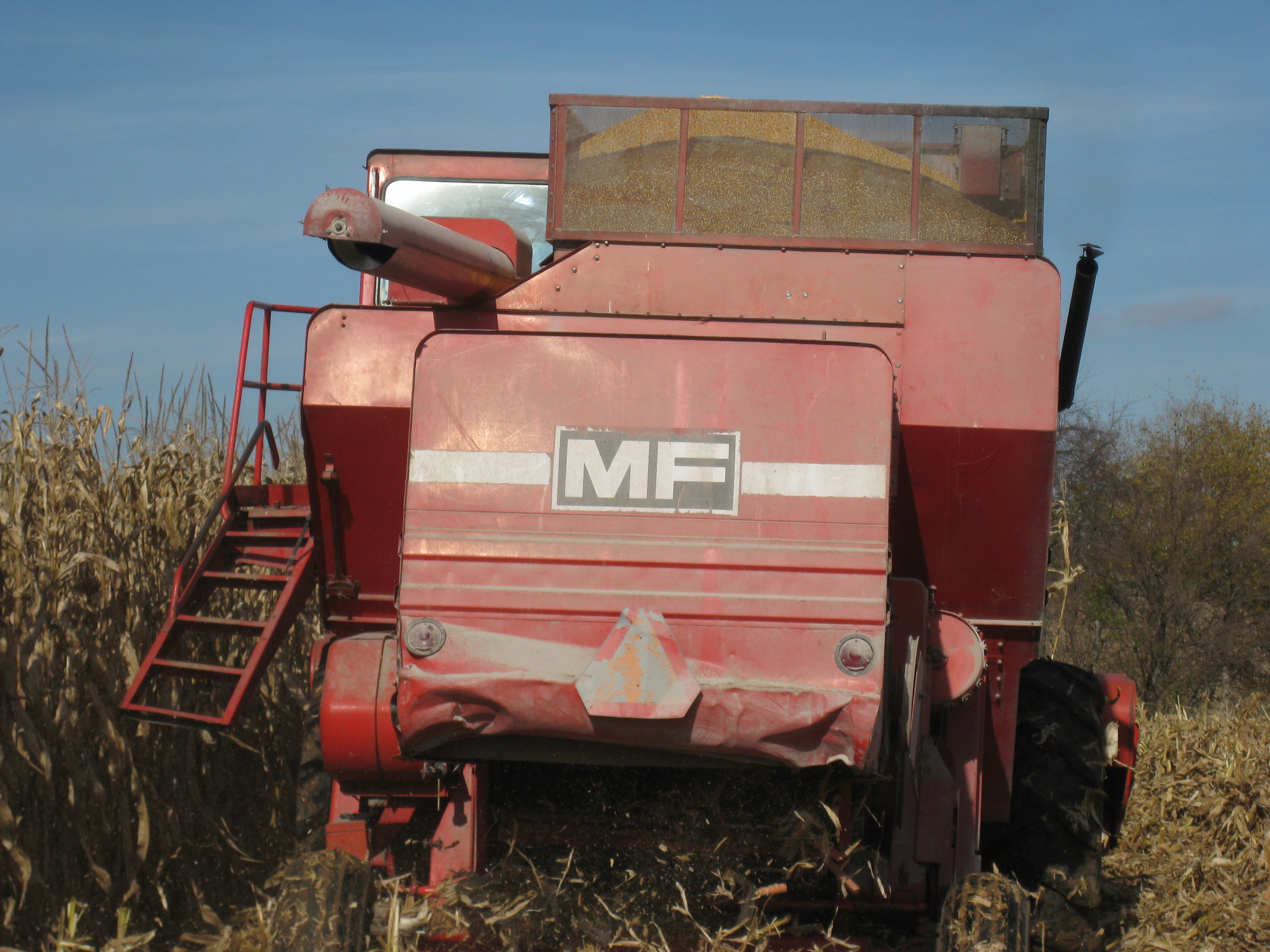
The hind end of our old Massey 750 combine, kicking out cobs.

You ever notice people driving down the road with a dent in their car, and then the driver does the maneuver, (tailgating, veering into the other lane, etc.), which probably caused the previous dent?

The dents on this combine tell a similar story, except we have an excuse, it’s impossible to see directly behind.  If you ever find yourself behind a combine, look out.

I have several people looking out for me, and it’s nice.  When they find an article they think may be of interest to me, they tweet or email.  Thank you.  I appreciate it.


Jude Becker’s Philosophy

September 25, 2011

I cut the spring garden peas.  They regrew and flowered.  I don’t recall the flowers being this pretty in the spring.

—-

“Do you ever see piles of junk around a winery?” Jude Becker asked.

“No.”

“And why not?  Because the wine people decided that a visit to their farm would be a wonderful part of the wine experience.  That’s what I want to do here.”

We stood in the loft of his remodeled barn, surrounded by his Dad’s beautiful wood projects, including a depiction of the twelve apostles, commissioned by a church but never paid for.  We leaned against the bar.

“Why can’t pork be the same as wine?  This is where I want to have tastings.”

I thought about what Jude said, and I realize he’s right.  Pork should have more prestige than wine.  Somehow we’ve commoditized this animal, and took away anything special, anything which could enrich our life rather than just sustain it.  And in so doing, we’ve commoditized the farmer.

Jude strives to differentiate his pork from commodity pork.  Why shouldn’t his pork be different from mine also?  We could celebrate the terroir of pork.  We could celebrate the seasons.  We could celebrate the in-season feeds.

Citygirlfriend grew celery this year.  It was dense, dark-green, and full of flavor.  I raved, “This is nutrient-dense celery.  I never want to eat store-bought celery again.”

I know all of this sounds artisanal, and it is.  I’m going further down the artisanal road, and probably won’t be able to ever return to commodity food  production.  So be it, I’m not a commodity, why should my food be?


A Visit to Becker Lane Organic Farm

September 20, 2011

Jude Becker, of Becker Lane Organic Farm.  Jude is an Iowa State graduate, and probably the largest outdoor pig producer in the US.  He supplies fresh, organic pork, year- around, to many discerning customers, including Whole Foods.  Jude even has a quote from Michael Pollan, raving about his pork.

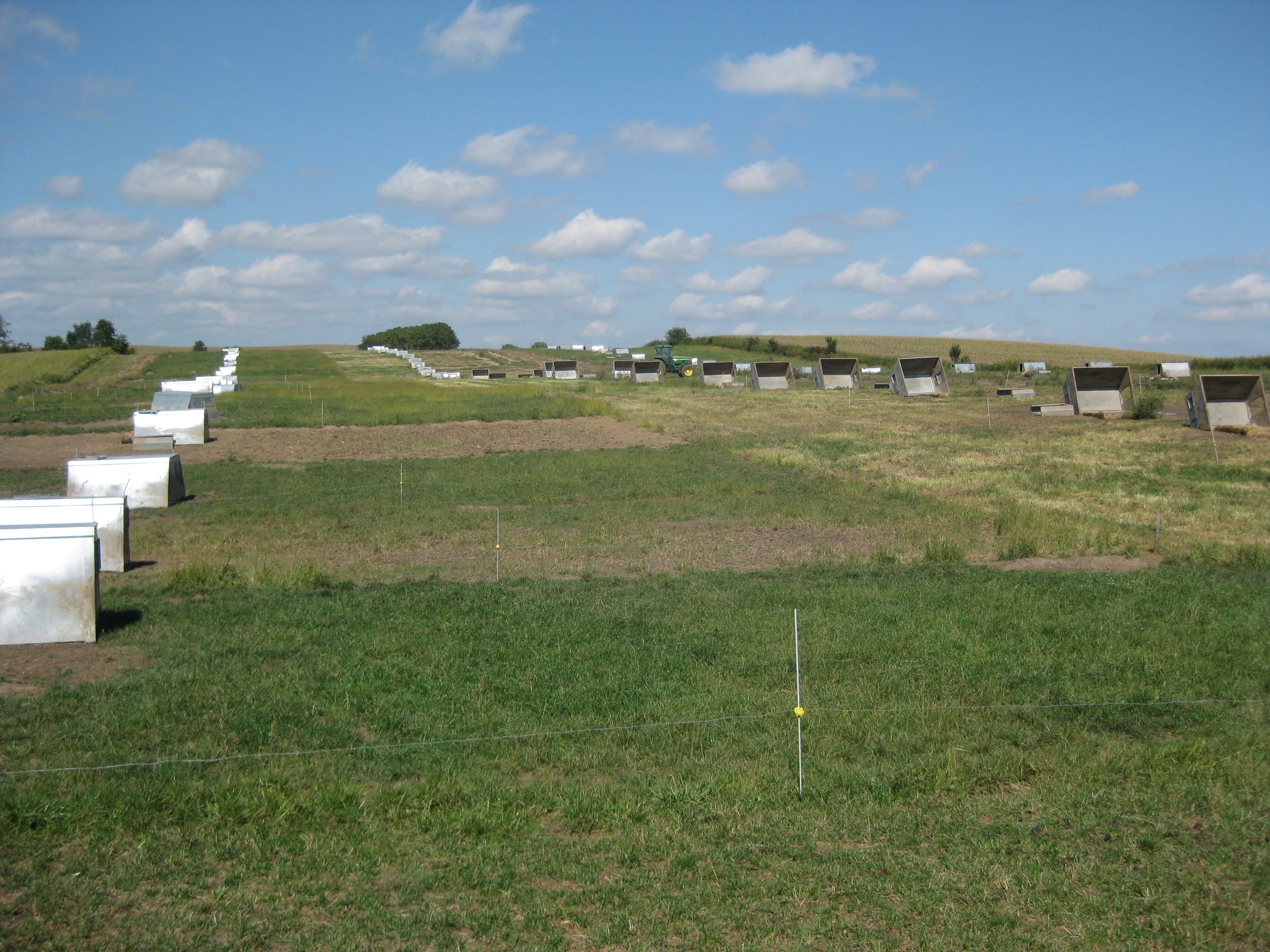
I knew I was close to the right farm when I saw farrowing huts stretching over the horizon.  Jude has three full-time employees.  Production is intensive and extensive.  Each of these huts is individually fenced, with one sow and litter in each pen.  Two sows share a water, and each is fed individually, once a day.  The shelters in the right of the photo are turned on their side, and being disinfected before being used for another litter.

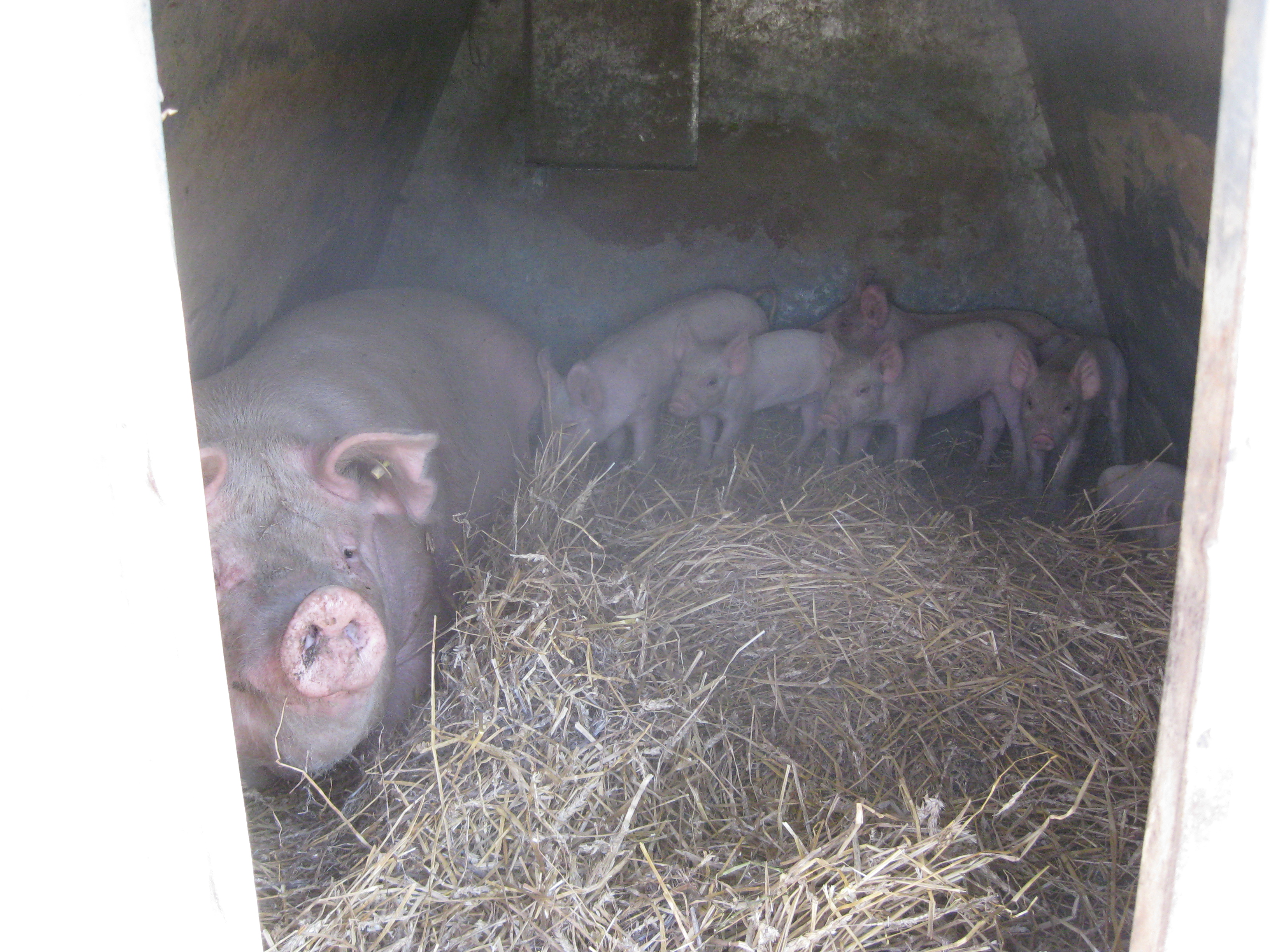
Sow with litter, in farrowing hut.  Jude has tried cheaper huts, but finally settled on the cadillac of farrowing huts, John Booth, imported from the UK.  Huts are insulated, so Jude is able to farrow in the heat of summer, and the cold of winter.

Piglet crushing is still a problem.  Jude is still searching for the best genetics for outdoor pig production.  His current philosophy is to have a super-maternal sow, bred to an excellent meat-quality boar.  Jude uses artificial insemination to breed his sows.

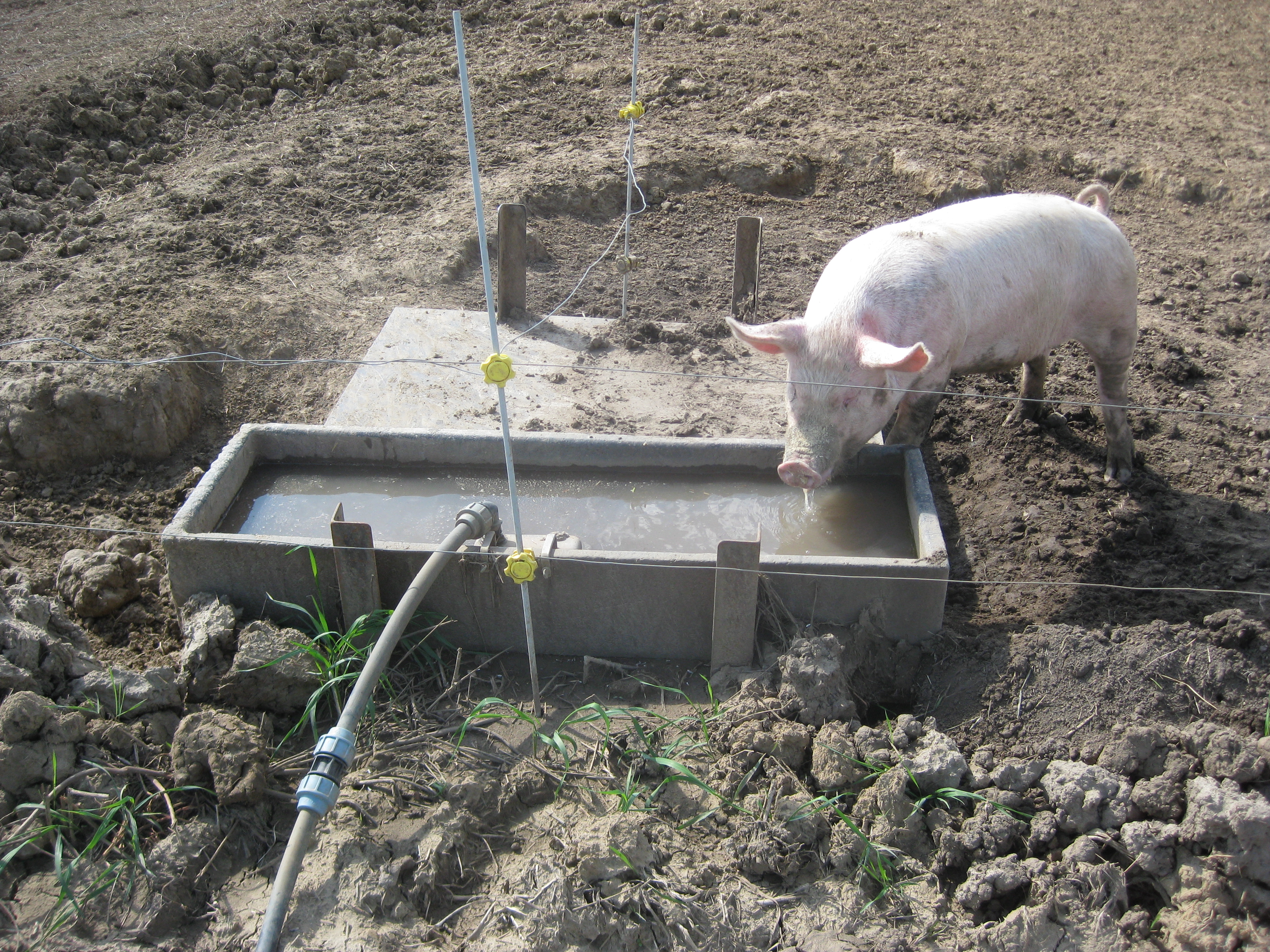
Pig drinking.  One well supplies water to all his pigs.  Most of his equipment has been imported from Europe, as they are years ahead of the US with outdoor pig production.


Good news, bad news.  I’m heartened to see pigs consistently kept in with a two-strand electric fence.  I’m disheartened to see the destruction of Jude’s pastures from the pigs’ incessant rooting.  Jude admits this is a major hurdle for outdoor pig production.

Going to Jude’s farm, I hoped to find a protocol which I could copy.  But, like most things in life, I realize I’m still going to have to find my own way.

Thank you Jude, for being a gracious host, giving me many ideas, and hopefully saving me some troubles.


Midwestern Bio-Ag

September 1, 2011

I enjoyed attending a Midwestern Bio-Ag field day.  Fertilizer is their main business, but they also deal in feed and seed.  Pictured is a large truck which is used to spread fertilizer, and a red buggy which a farmer can pull behind a tractor to spread fertilizer.

Gary Zimmer is the founder of Midwestern Bio-Ag.  I picked up a copy of his new book, “Advancing Biological Farming.”  He sold me in his introduction, when he wrote:

“So please, when you read this book don’t be too quick to judge.  Don’t read between the lines.  I’m sure you can find some details you won’t or can’t agree with, but remember, these are my thoughts, observations, ideas, and experiences up to this point in time.  Show me a better way and I’m ready to make changes and take on new ideas after they have been tested and their success demonstrated on the farm.  I want to know when it works, how it works, why it works or doesn’t work.  If a new idea makes sense, improves quality and/or yield, and is profitable, then let’s go with it.”

I always listen to a person who admits he doesn’t know everything.

I have a difficult time knowing if a fertilizer is real, or “foo-foo dust”.  There are so many variables in farming, it’s nearly impossible to know if a little something we spread on the fields has an effect.  Unless I correct a visible deficiency, fertilizer is almost faith-based.

That being said, I’m thinking about working with Midwestern Bio-Ag for my fertilizer wants and needs.  I plan to figure ways to test the effectiveness of their products.


New Farm

August 25, 2011

Big news.  I’m splitting up farming with my parents.

A little background.  My parents own 510 acres with roughly 200 acres tillable, and 300 acres pasture.  I own 120 acres with roughly 80 acres tillable, and 40 acres pasture.  We have managed our farms as a collective farm for the past 17 years.

We raise beef cattle and hogs, pasturing and growing all the forages for the cattle, and growing all the corn and oats and straw bedding for the hogs.  Soybean meal is purchased for the hogs.

A few years ago, I started a partnership with a couple about my age to direct-market an increasing amount of our beef and pork in the Madison markets.  This is where my passion lies, and I want to continue this business.

So I’ve been spending a lot of brain power figuring out how to do this on my farm.  What I’ve decided so far is to buy steers in the fall and grass-finish them the following green season.  I believe I have enough pasture and forage to raise enough cattle to meet the demand of our direct-market.

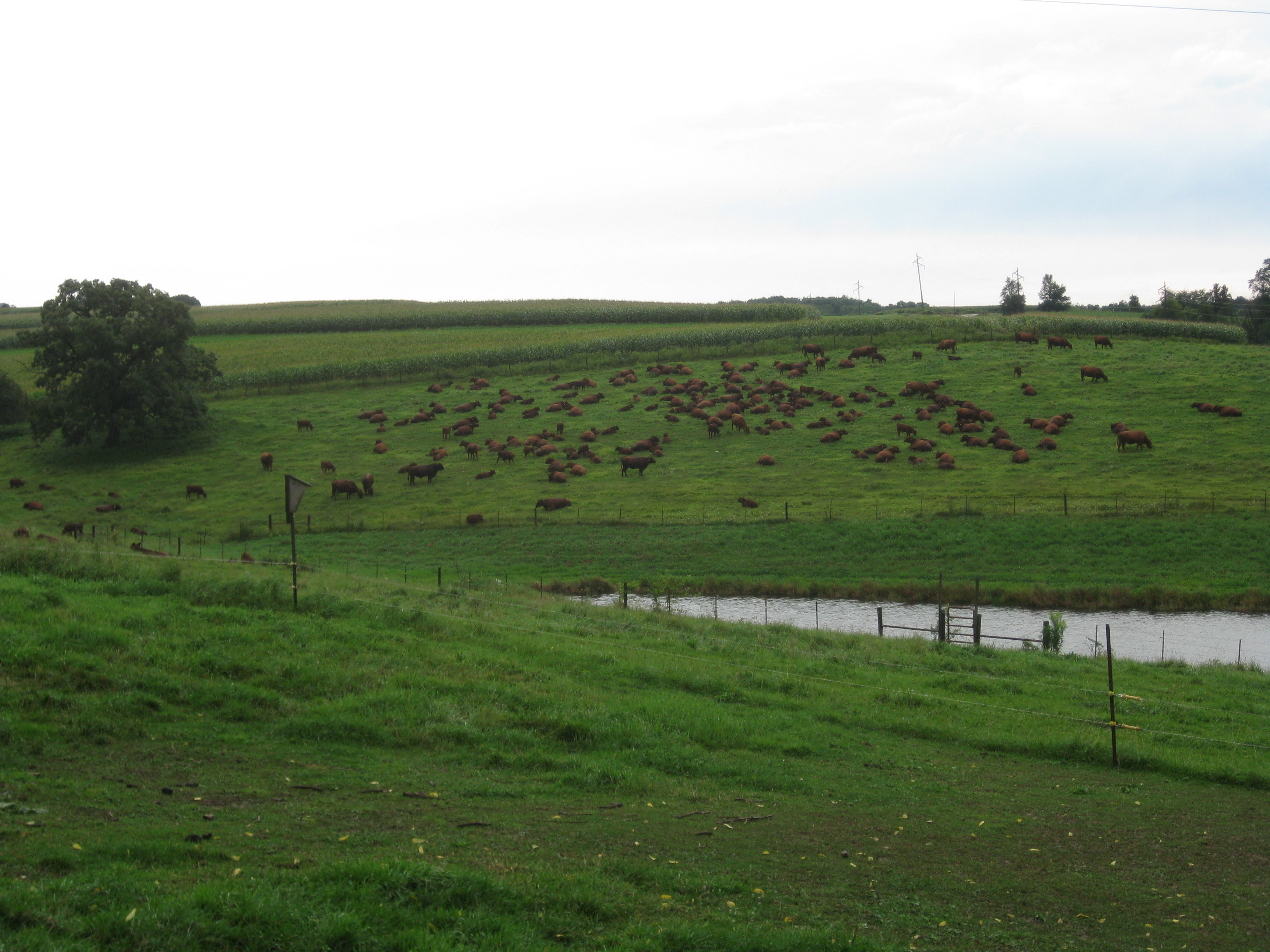
What I’m going to have to give up is the beautiful herd of cows and calves  pictured below.  I simply don’t have enough land to have everything.

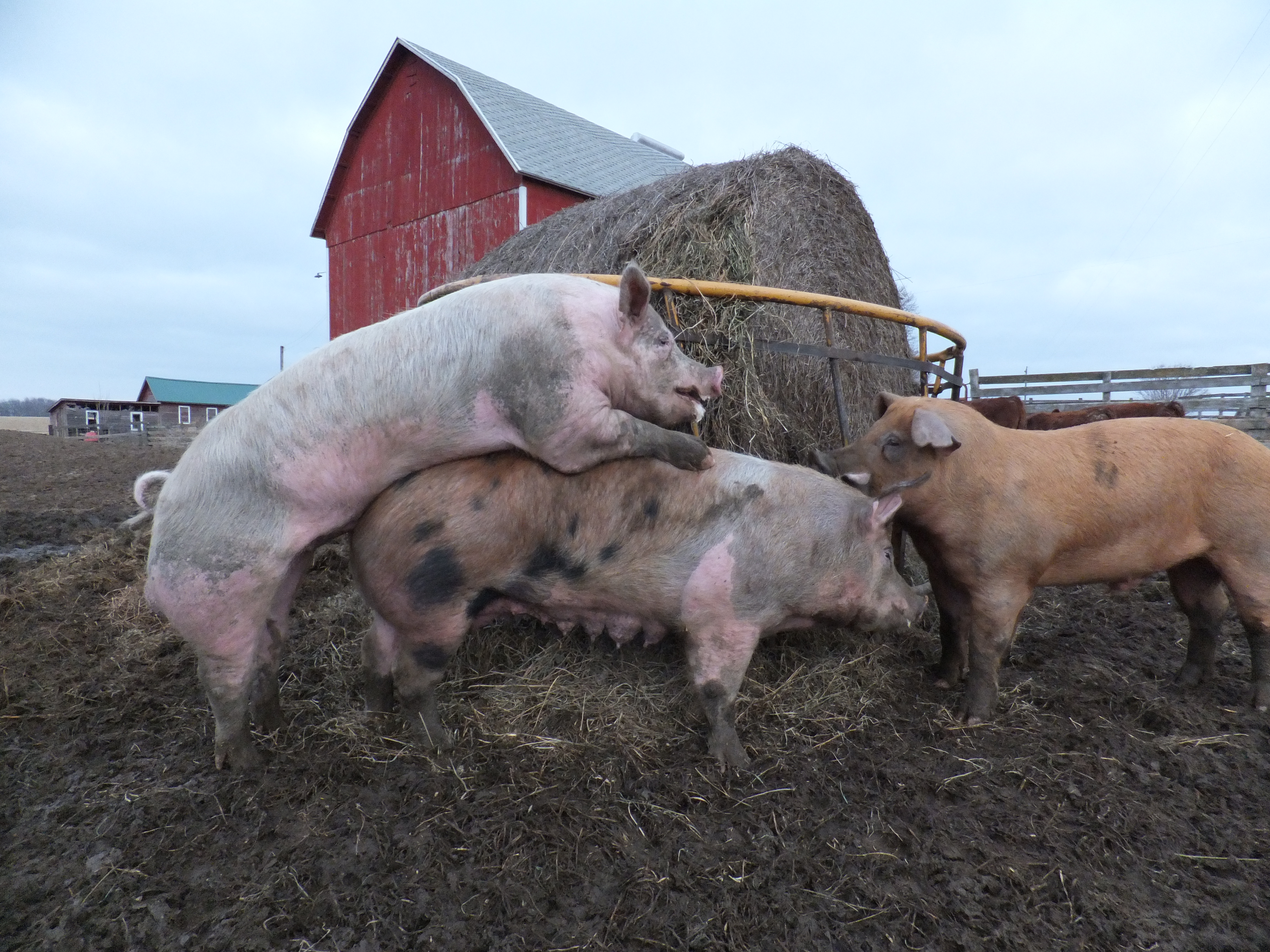
I am going to continue to have my swine breeding stock.  Genetics is another one of my passions, so I have to continue to play with the genetics of something.  I plan on raising just enough hogs for my direct-market.  I’ll probably have to purchase more of the grain than I do now.

Pictured below is a Duroc boar I raised who will be the first herdsire on my new farm.  I haven’t named him yet, so I thought it would be fun if you have a suggestion to leave a comment.  I’ll pick the best name out of your suggestions.

This blog will be one of the biggest beneficiaries of this change.  Since I no longer have anyone’s privacy to protect but my own, I can be as open as I am brave.  I’m looking forward to sharing more.


Like Sharks Circling a Chum Ship

August 14, 2011

Herald of spring,

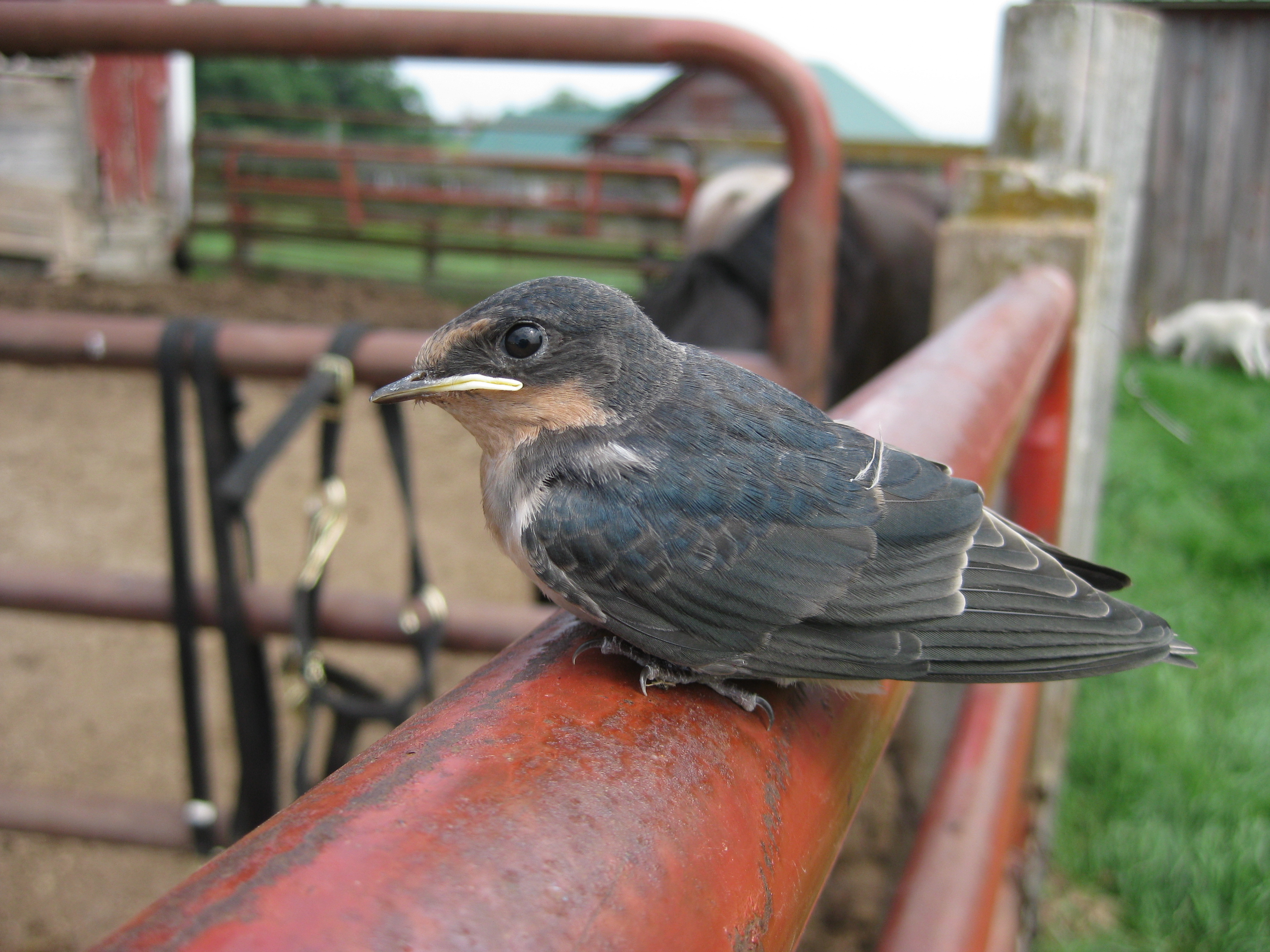
Barnswallows are back!

Tropical winters,

Wisconsin summers.

New mud nest,

Or top-mud the old one.

Two or three clutches,

Of insatiable young.

Dive-bombing children,

And curious cats.

Feeding their young,

Who wait on the line.

Finally feasting,

On Leafhoppers flying.

Circling tractor,

As I mow hay.


2011 Corn Height, 4th of July

July 4, 2011

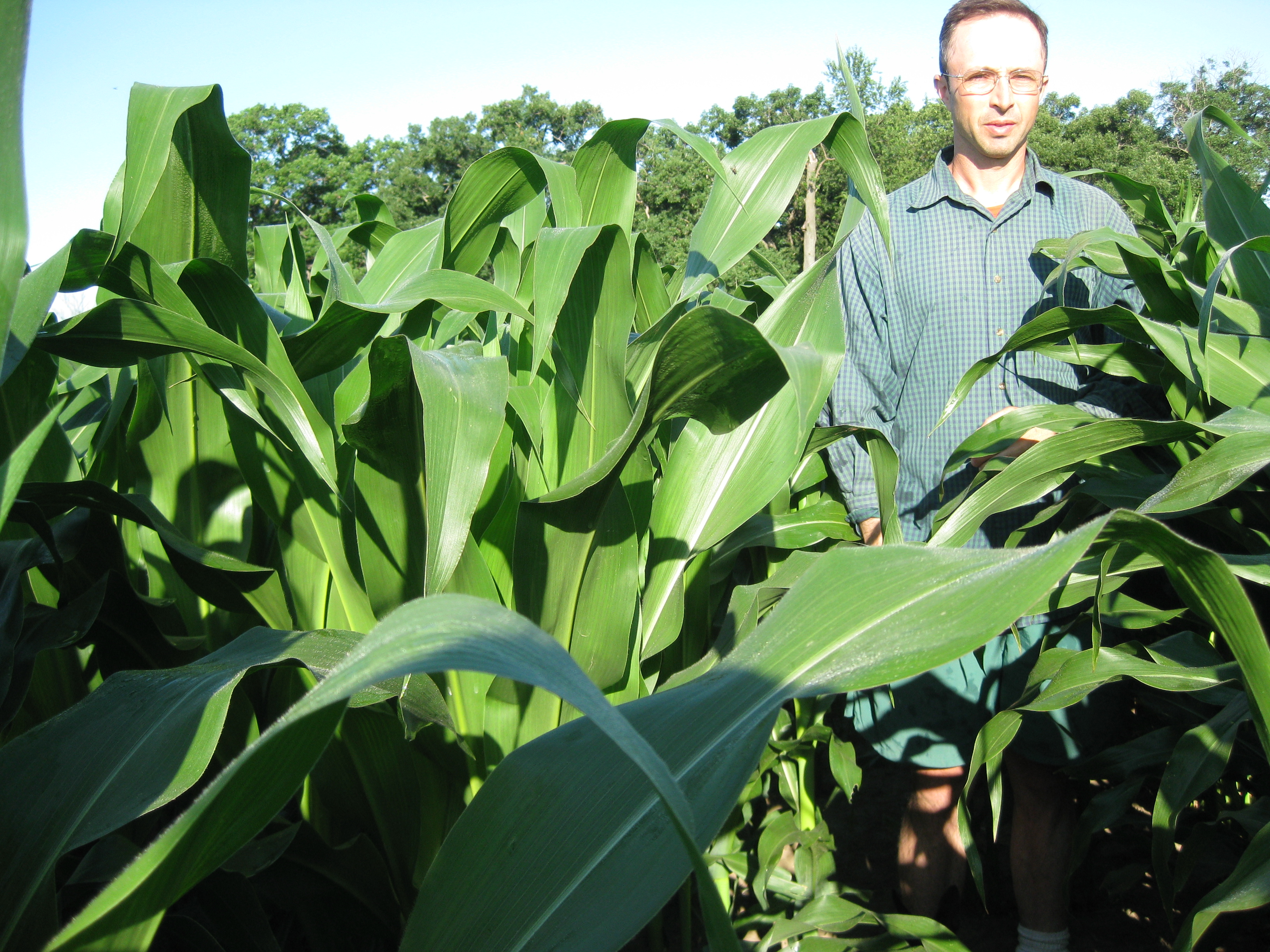
This is a traditional 4th of July picture in my family.  Shepherd snapped the photo this year.  Links to the last two years are here and here.


Best Laid Plans

June 14, 2011

We built a small corral at the intersection of four pastures.  It’s way out back, and we never had a good way to catch a cow that needed help out there.

I checked the cows late one afternoon.  A cow was trying to calve, and looked like she had been straining for awhile, but nothing was showing.  We gave her an hour and checked her again.  Sure enough, one foot was sticking out, but not the other one.

We decided to get her in.  We were excited to use our new corral.  Two ATVs, a jeep, low-stress stockmanship, and we had her in the corral, barely.  She was starting to get hot.  She circled the corral a few times, charged at the gate I was standing by, put her nose over the top board, and jumped and pushed.  Once the board broke, her body weight broke down the wire panel, and she was over and out.

“Well, she’s on her own now.  No sense getting killed over her.”

The next morning, Dad drove back from checking the cows.

“Is she dead?”

“No, and she’s got a live calf, runnin’ around healthy.”

“Do you think we were just too early?”

“No, I think the calf got straightened out when she jumped the fence.”

Dad smiled.


Oats and Hay Seeding

May 11, 2011

This is our oat drill with roller behind. It has two compartments for seeds, shown below.  The smaller one holds alfalfa and timothy.  The larger one holds oats and perennial ryegrass.

The oats and perennial ryegrass is dropped into the small furrow made by the disc blade.  The alfalfa and timothy is dribbled onto the ground behind the planter via tubes, not shown.

The roller breaks up more soil clods, and ensures a firm seed bed and good soil to seed contact.

Below is the planted seedbed.  This is also the picture I’m using for the May 7th square-foot saturday.

I planted this field, M6, on May 3rd.  That’s the latest I’ve ever planted oats, and exactly one month later than I finished planting oats last year.  I planned on showing a square-foot in this field, so I’m sticking with the plan, even though I’m not happy with the planting date.  Oats grow well in cool weather.

It was a late spring, but the truth is we missed a small planting window in April because we were in the middle of building a new barb-wire fence and didn’t want to stop.  We thought we would be able to plant a few days later, but a couple weeks of wet weather ruined that plan.

Farming is about windows.  You want to do the right job at the right time.  Work the soil and plant too wet, and you face compaction and yield reduction.  Plant late, and you miss valuable heat units and yield is reduced.

Check back every weekend and we’ll see how this field progresses.


How Much Wood?

April 25, 2011

How much wood does my outdoor wood boiler use?  Make a guess and you’ll have a chance to win.

I cut up a medium-sized tree.  I started burning it on a Sunday afternoon.  The weather was blustery and in the 30’s.  We kept the house at 75F, and the door to the uninsulated porch open most of the time.

I’ll show a few pictures of the cutting process, and you’ll get a feel for the size of the tree.

This elm tree died and fell over into a field, so it needed to be cut up before planting.  I used the bale carrier on the tractor to apply upward pressure so my chainsaw wouldn’t be pinched as I cut down through the trunk, separating the tree from the roots.

I pulled the tree by the wood boiler.  Shepherd held goggles over his eyes as I cut it up.

I use the bale carrier to lift the tree off the ground to make it easier to cut.

How long do you think this tree lasted?  Make your guess in days, and put it in the comments.  Closest one wins a $25 gift certificate to Kiva.  One entry per person.  No duplicate days, first one with the right number wins.  Good luck!