Sow and Calves, Getting Acquainted

December 12, 2011

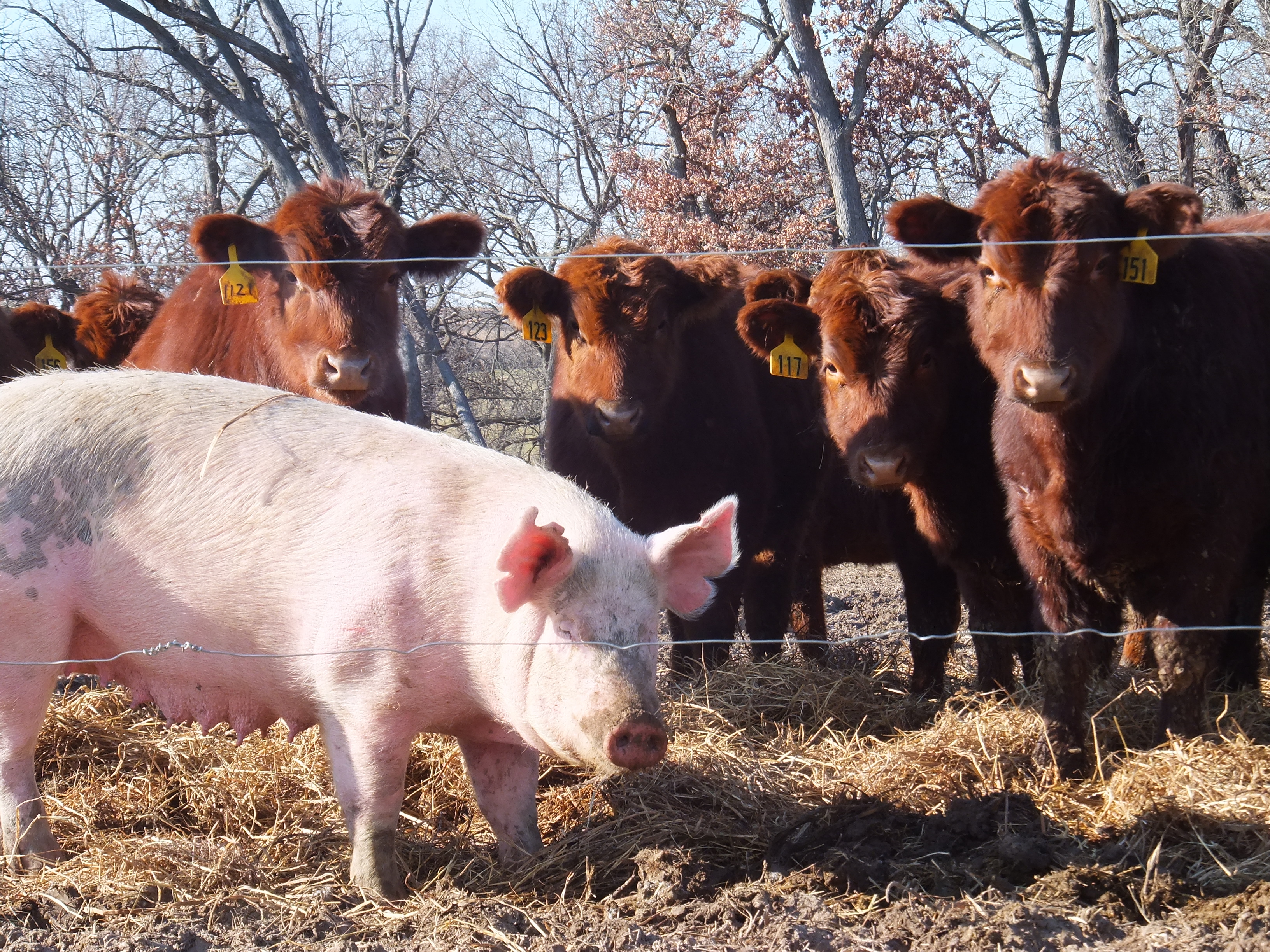
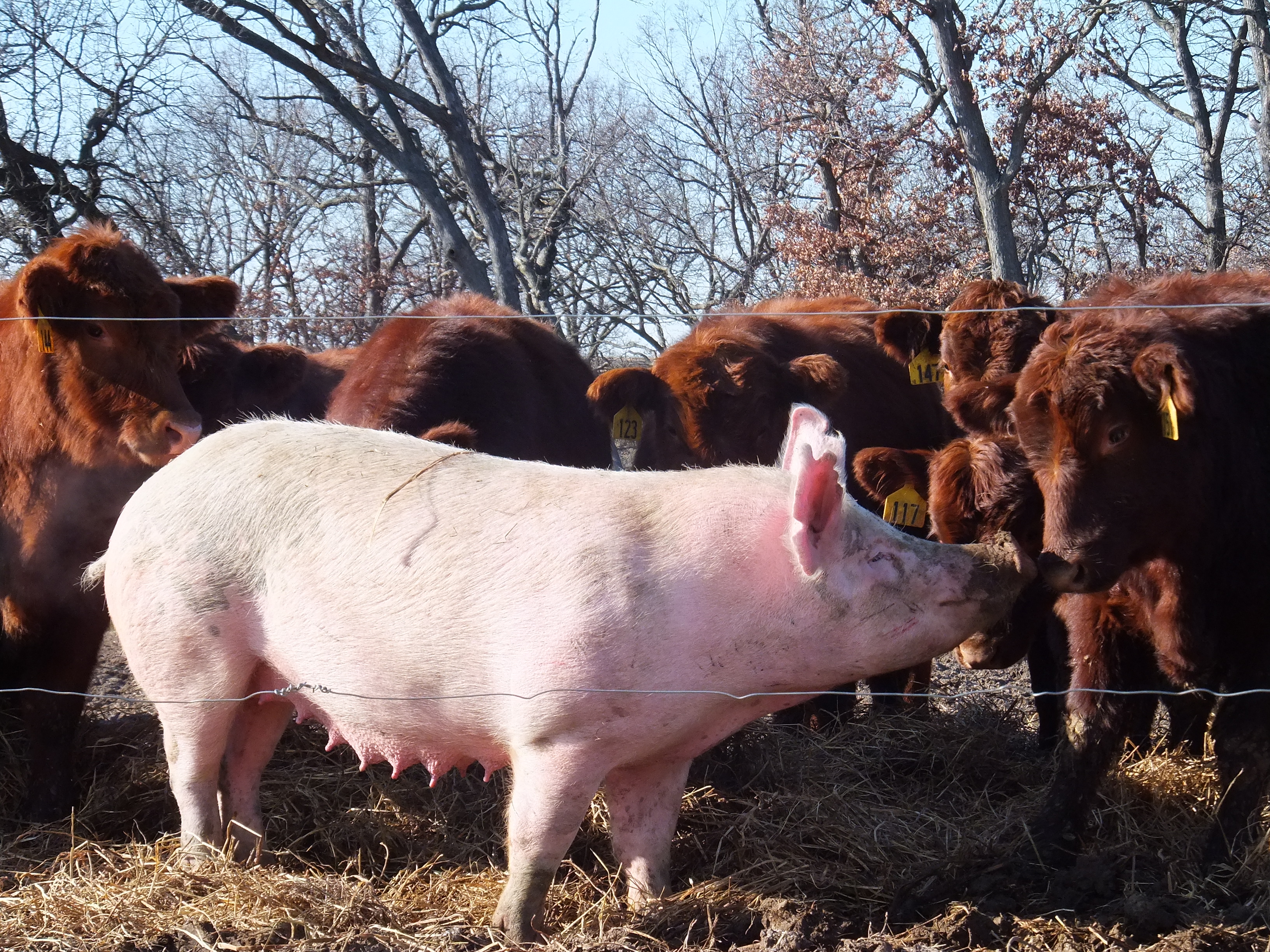
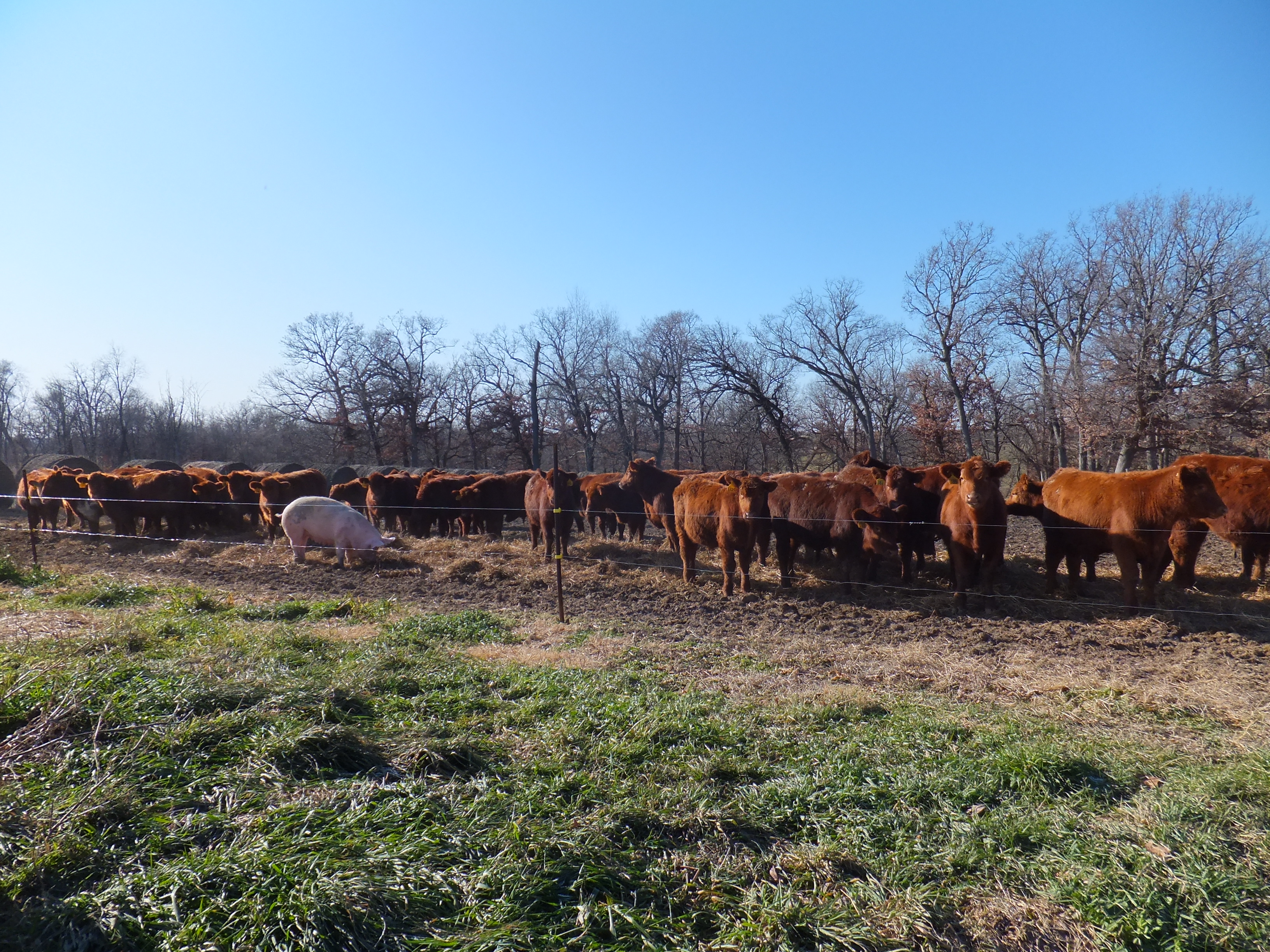
The steer calves, with one adventurous sow.

You can see the two-strand electric fence.  In the industry we refer to this as a psychological fence.  Hogs and cattle are easily trained to electric fence.  The fence around the other lot is a physical fence, with five-foot high cattle panels and two boards, attached to wooden posts.

While I hate to anthropomorphize and say they’re  friends, I will say they’ve gotten acquainted.


Sow Housing

December 10, 2011

Wednesday was a big day for my new farm.  We moved 17 sows and 2 boars to my farm.  The sows have always been housed on my parents’ farm, but since we are splitting up our farms, I needed to figure out sow housing on my farm.

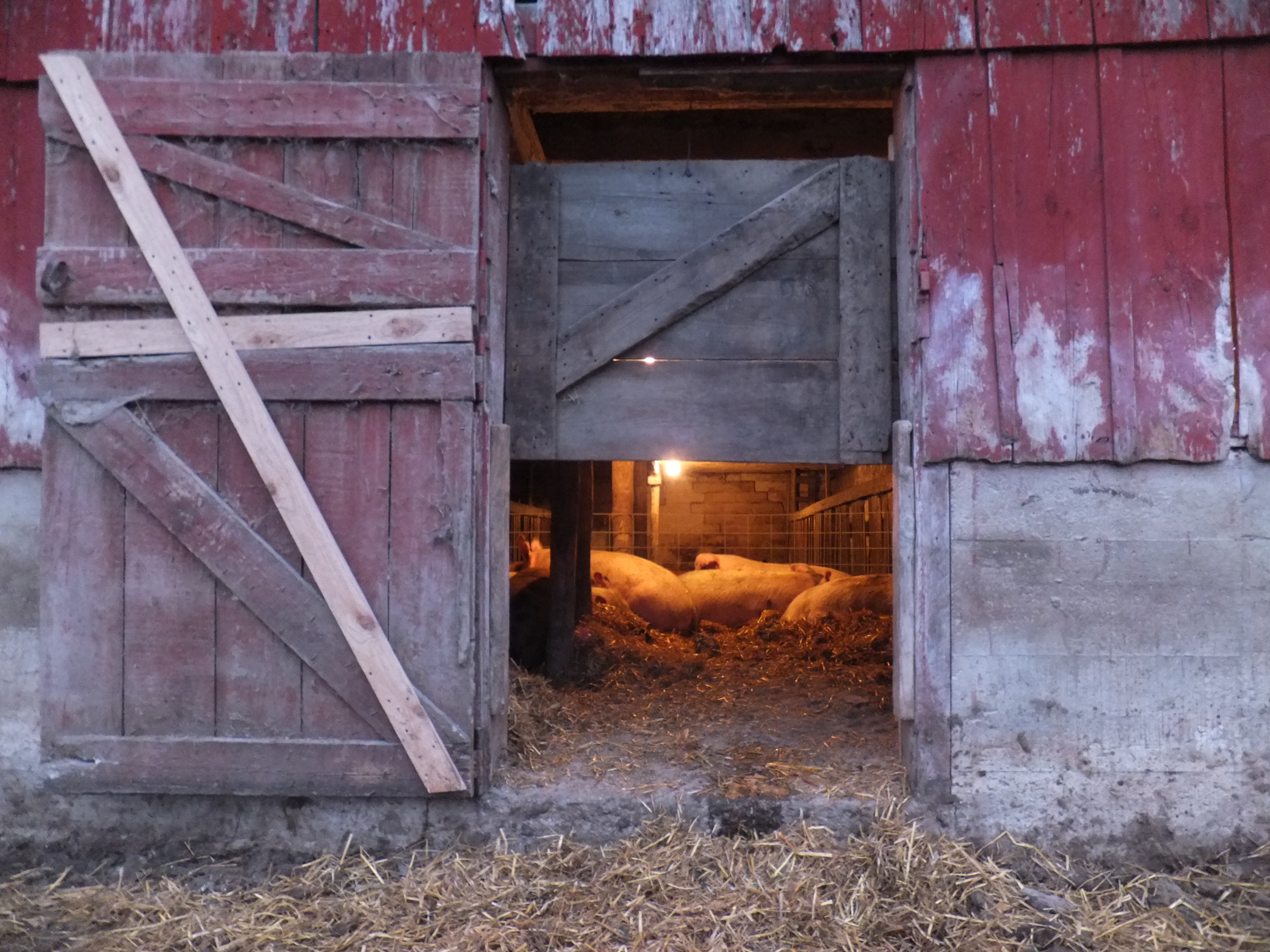
I could have used the hoop barns, as I have used them for sows with litters and gestating sows, from time to time when I had room.  But I figured I would need all three hoop barns for growing pigs, so I brainstormed and decided to use the former dairy barn which is the bottom of  my big old red barn.

A carpenter friend helped me shore up the old barn door and build the sliding door you see pictured below.  I came up with that so I could lock the sows in or out securely, and I didn’t want a door which swung, because the bedding could pile up next to the door and make it difficult to operate.

The sows exit the barn into the cattle lot.  This is where the steer calves eat their hay and drink their water.  This lot is fenced securely, but I also built another lot to give the calves more room, which is fenced with a two-strand electric fence.

So the time had come to make the move, but I had no idea how it would work.  The variables I was unsure of included:

1.Would the sows find and go in the barn?

2. Would the cattle and sows get along, or would they scare each other through the fence?

3. Would the sows see the electric fence, get shocked, then back away instead of going through and destroying it?

This is how I managed the situation.  I kept the calves and sows separated during the morning.  I fed some grain in the entrance of the barn to lure sows in.

How did it work?  The sows found the barn and all but one were sleeping in it by night.  I couldn’t get the one to go in, so I left the door open all night.  The calves were scared of the sows, but in a curious way with no stampeding.  A few sows were shocked by the electric fence and retreated without destroying it.

What didn’t work?  The sows enjoyed lounging by the calves’ hay, so the calves wouldn’t eat their hay.  I moved the hay further away so the calves could eat.

An unanticipated problem was the automatic waterer was frozen.  I put in a new Ritchie so the sows could drink, which I’ll post about later. I panicked for a moment, but all I had to do was turn the thermostat up.

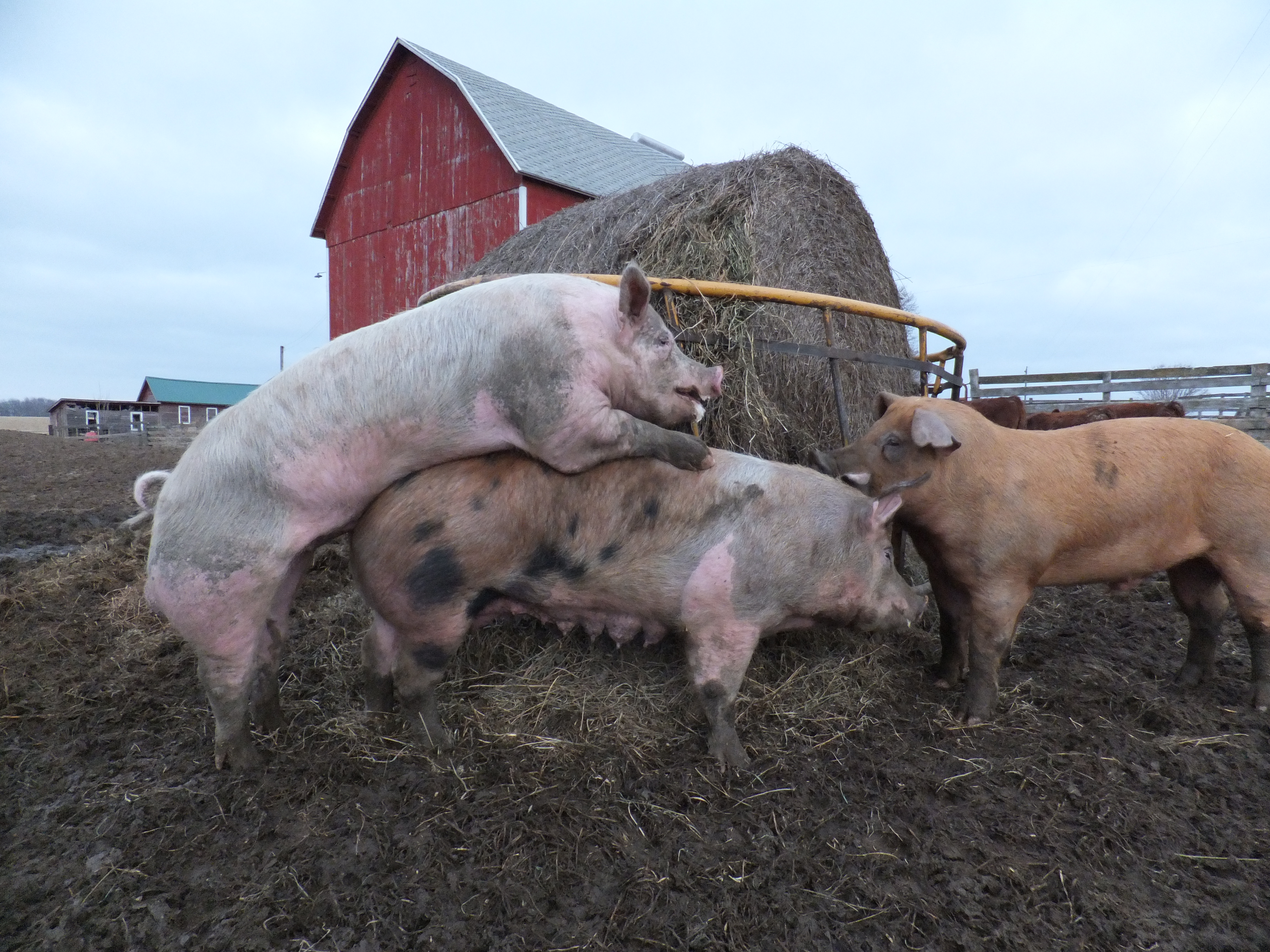
The photo above shows a boar I call “Able” breeding.  Standing at the front of the sow is “Bewilder”, my other herd boar I wrote about earlier in the year.


Commodities, Food, Inflation

November 20, 2011

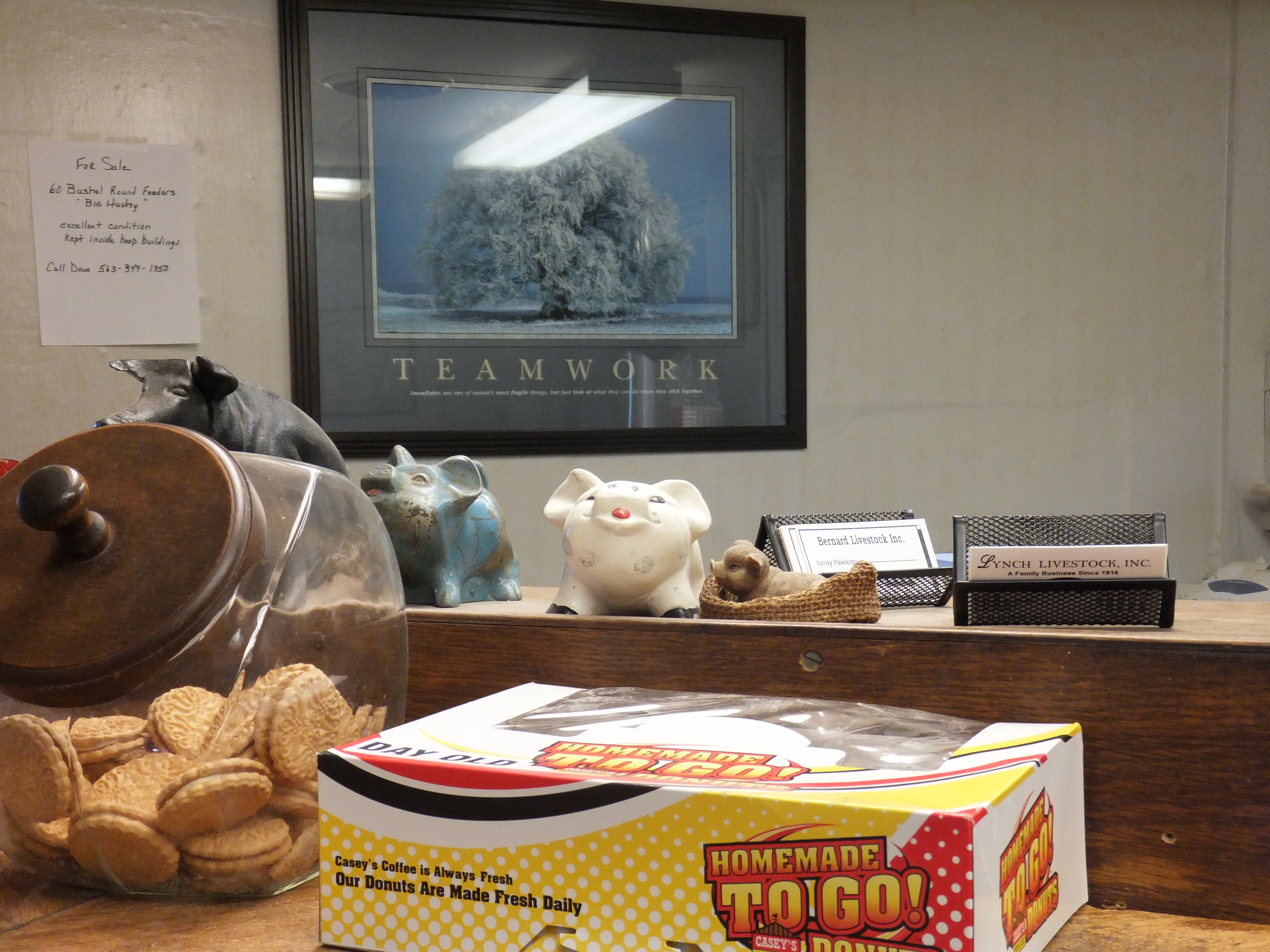
The office of Lynch Livestock, Iowa.  We sold cull sows last week.  Leroy always treats us well, but I was shocked with our price.  He paid $.61 per pound for the heaviest sows weighing over 600 pounds.  It was about $370 per sow.  I can remember when I was pleased with $200 per sow.

Hog, cattle, corn, and other commodity prices are at or near historic highs.  I’ve been trying to understand why this is happening and if it’s going to continue.  Our direct-market meat used to be priced at a premium, paying us for the extra costs involved with hoop-house pork and grass-finished beef.  But the commodity markets have narrowed that premium, and I’m rethinking it.  Maybe grass-finished beef should be cheaper, since the cattle aren’t being fed high-priced corn?

A buddy turned me on to Chris Martenson.  Chris says there is unprecedented levels of money and debt.  Inflation is just more money chasing after the same amount of resources.  The USA and world carry so much debt, there are only two ways out; default, or print more money.  If more money continues to enter circulation, inflation will ensue.  Inflation erodes wealth, because a dollar today buys less in the future.

Is this what’s happening in agriculture?  We are certainly handling more money.  But the costs of our inputs: fertilizer, corn, soybean meal, metal, wood, machinery, have all risen.  Should we save for a rainy day or buy now?

Toasted Tofu sent me a link about how Goldman Sachs created the food crisis.  It said that these huge hedge funds have been buying commodities, and only buying, and this has driven up the price of commodities.  An error in the article says that corn prices just kept going up.  Actually, in the last few years, corn went up to $7 per bushel, dropped back under $4, and then went back up over $7.  There is definitely more volatility.  My grandfather remembers when corn was $1 per bushel, only moving a few cents up or down for years and years.

As you can probably tell by this disjointed post, I don’t really understand what’s happening, or what’s going to happen.  I guess I’ll continue to use this blog to post what is actually happening to me, and the prices I incur and receive.  History always becomes a clear, concise, obvious story, but the future is always uncertain, with only fools and experts making obvious predictions.


A Visit to Becker Lane Organic Farm

September 20, 2011

Jude Becker, of Becker Lane Organic Farm.  Jude is an Iowa State graduate, and probably the largest outdoor pig producer in the US.  He supplies fresh, organic pork, year- around, to many discerning customers, including Whole Foods.  Jude even has a quote from Michael Pollan, raving about his pork.

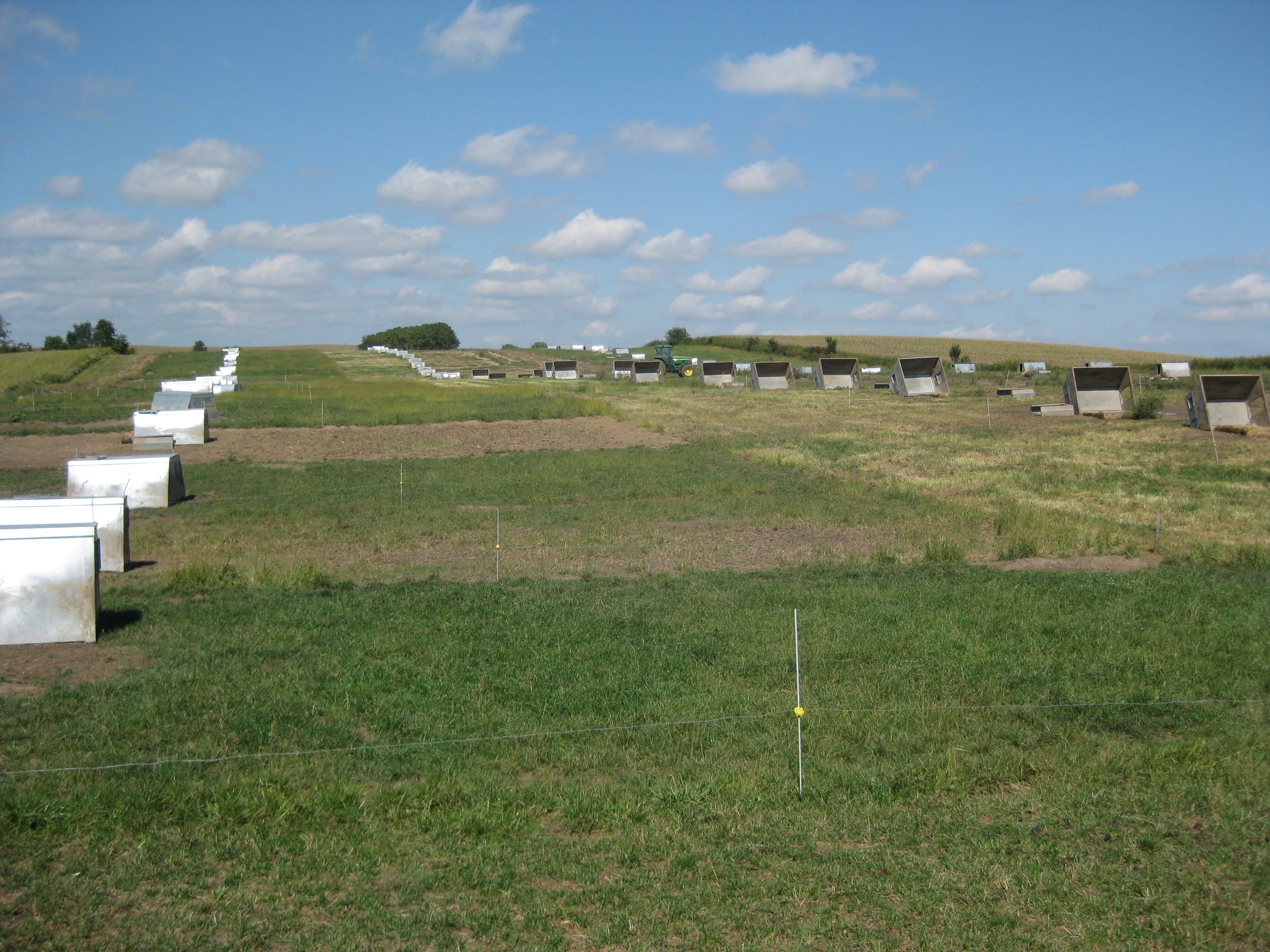
I knew I was close to the right farm when I saw farrowing huts stretching over the horizon.  Jude has three full-time employees.  Production is intensive and extensive.  Each of these huts is individually fenced, with one sow and litter in each pen.  Two sows share a water, and each is fed individually, once a day.  The shelters in the right of the photo are turned on their side, and being disinfected before being used for another litter.

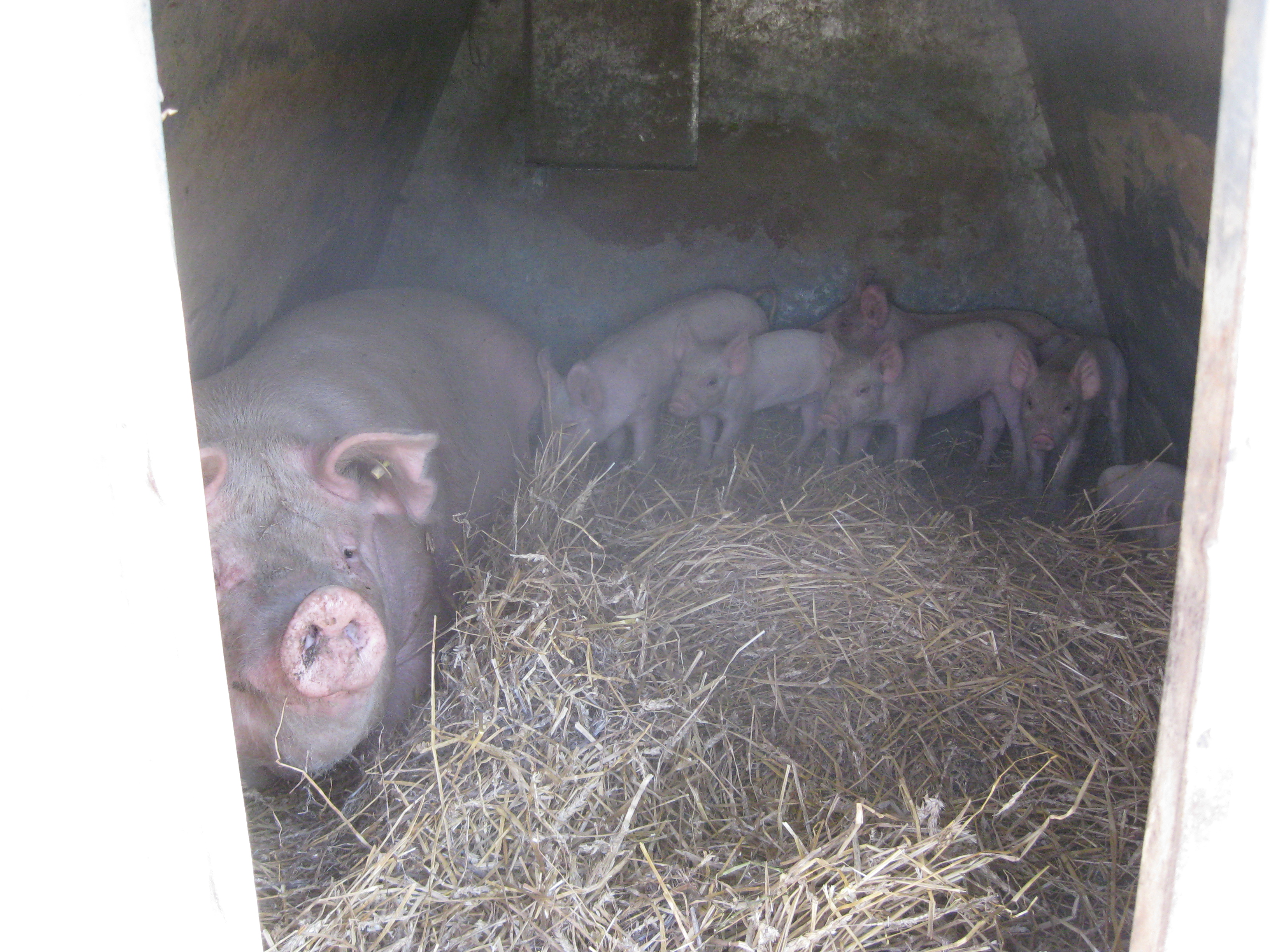
Sow with litter, in farrowing hut.  Jude has tried cheaper huts, but finally settled on the cadillac of farrowing huts, John Booth, imported from the UK.  Huts are insulated, so Jude is able to farrow in the heat of summer, and the cold of winter.

Piglet crushing is still a problem.  Jude is still searching for the best genetics for outdoor pig production.  His current philosophy is to have a super-maternal sow, bred to an excellent meat-quality boar.  Jude uses artificial insemination to breed his sows.

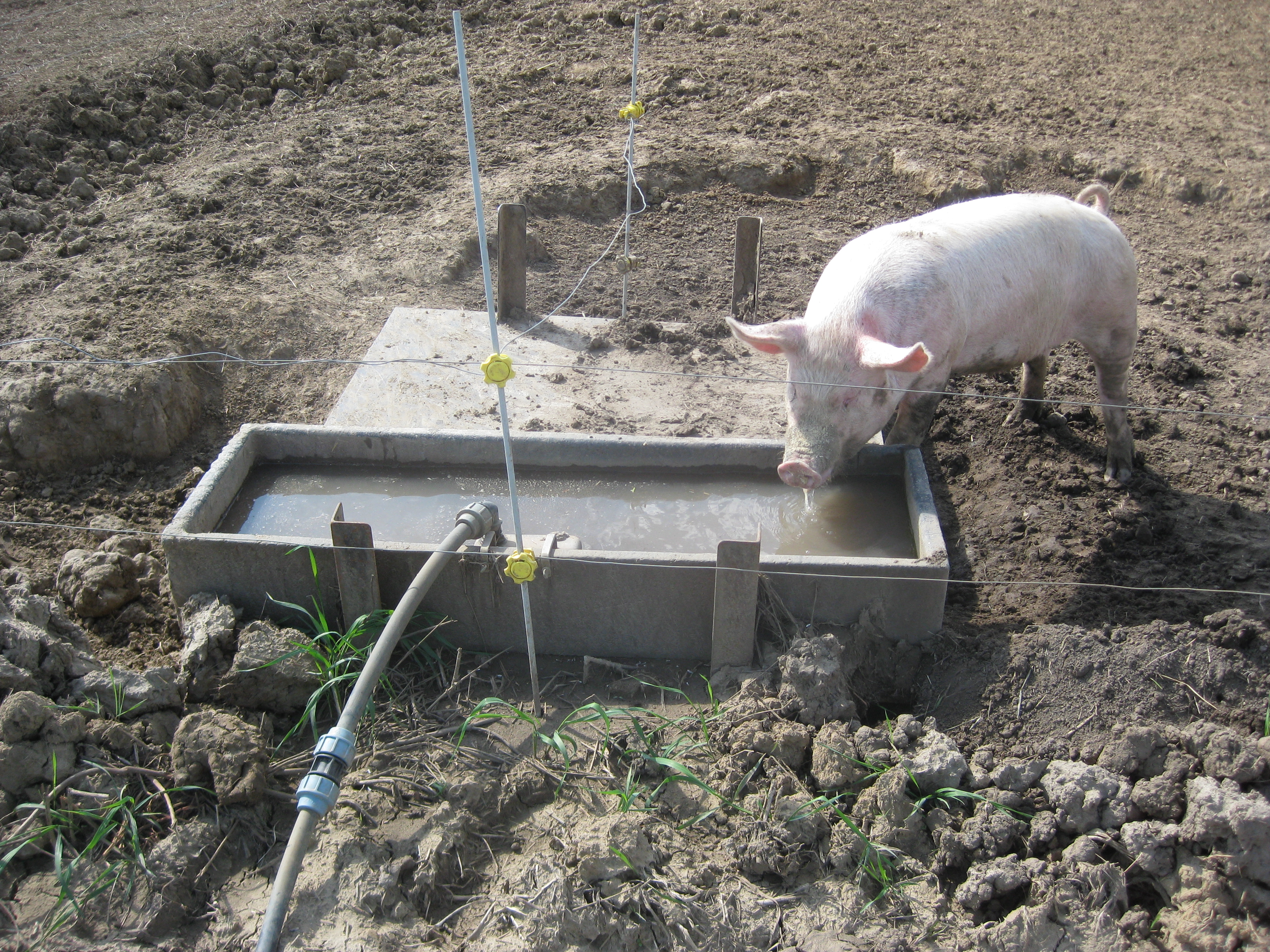
Pig drinking.  One well supplies water to all his pigs.  Most of his equipment has been imported from Europe, as they are years ahead of the US with outdoor pig production.


Good news, bad news.  I’m heartened to see pigs consistently kept in with a two-strand electric fence.  I’m disheartened to see the destruction of Jude’s pastures from the pigs’ incessant rooting.  Jude admits this is a major hurdle for outdoor pig production.

Going to Jude’s farm, I hoped to find a protocol which I could copy.  But, like most things in life, I realize I’m still going to have to find my own way.

Thank you Jude, for being a gracious host, giving me many ideas, and hopefully saving me some troubles.


February 2011 Price of Hog Feed

February 15, 2011

Historically high, and going up!  Karen asked what the price of soybeans is, and that got me to thinking, I haven’t calculated the price of hog feed lately.  I sat down and did some figurin’, and was shocked at the price.

Our basic hog feed mix is corn, soybean meal, and a vitamin/mineral/amino acid premix.  Corn is $7.17 for a 56 lb. bushel.  Soybeans are $14.16 for a 60 lb. bushel.  Dividing the cost by the lbs. gives us the price per lb.  Corn is $.128/lb., and soybeans is $.236/lb.

We buy soybean meal, which is soybeans with the oil removed and sold.  Our last bill for soybean meal was $.20/lb.  Our premix is around $.40/lb.  And we will use the $.128 market price for corn.

What is the breakdown of our hog feed?  80% is corn, 16.5% is soybean meal, and 3.5% is premix.  Let’s figure out what 100 lbs. of feed costs.

80 lbs. of corn multiplied by $.125 equals $10.24.  16.5 lbs. of soybean meal multiplied by $.20 equals $3.30.  3.5 lbs. of premix multiplied by $.40 equals $1.40.  Adding the three together totals $14.94 per 100 lbs.  So that gives us a price of almost $.15 per lb.

Our whole herd feed conversion is 4.  This means that it takes 4 lbs. of hog feed to produce 1 lb. of pork.  So if we multiply 4 lbs. times the $.15/lb gives us the cost of feed to produce 1 lb. of pork, $.60/lb.!!!!! I remember when the whole herd feed cost was $.30/lb., and all costs were $.40/lb.

The commodity hog  market price is around $.60/lb.  We used to think we were making great money at $.60/lb.  Now…?

Don’t cry for Curiousfarmer,  it’s not as bad as it seems.  While we buy the soybean meal and premix, and these are the actual prices we are paying, we grow our own corn, so it costs us whatever it costs us to grow it.  The $7.17 per bushel is  the opportunity cost to feed corn to hogs.  I haven’t figured lately, what it actually costs us to grow corn, but it’s probably less than half of the $7.17 market price.

So why are we still raising hogs, when it’s a break-even business this year?  Consistency.  Pa always said, “farmers who jump in and out of things never catch up.”  We feel it’s better to choose what we do, and work to do it well.  We make major changes based on our needs, and the longer-term fundamentals.

That doesn’t mean we won’t modify our operation.  We are selling all of our less productive sows and our older boars.  We will still have plenty of pork for our direct-market customers, but we won’t have as many hogs to sell on the commodity market.

Longer-term, what are these markets going to do?  How long will it take for the livestock markets to catch up to the grain markets, so  livestock farmers can make some money?  How much will food prices increase?

Thank you Karen, for a great question, which led to more questions.

Artificial Insemination of Swine II

November 12, 2010

I wrote about how we use Artificial Insemination to bring new genetics into our swineherd in one of my very first posts, “Artificial Insemination of Swine.” Click on the link if you want to read about our AI protocol.

I didn’t use any pictures in the beginning, because I didn’t have access to a camera.  My sister bought us a digital camera, and I’ve loved it.  So easy. When we AI’d some sows in October, I snapped a few photos.


Versatile Hoop Buildings

September 25, 2010

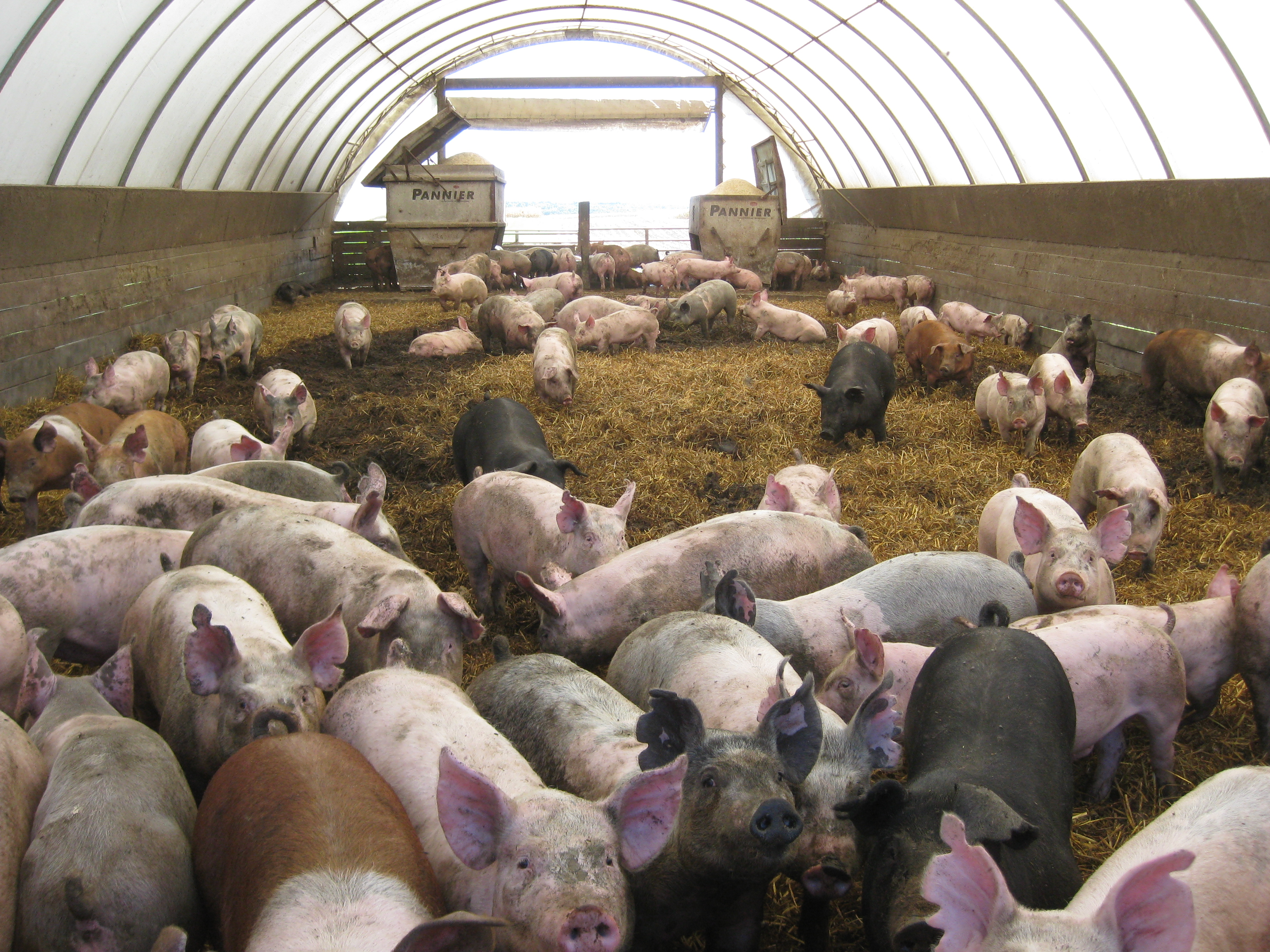
Hogs in a hoop building.  This is the typical and intended use of the hoop buildings on our farm.

Hoop buildings are a single-arch structure covered with a tarp-like material that is stronger than a typical greenhouse.  They are an economical and efficient way to raise hogs.

Another draw is their versatility.  They make great storage for machinery, hay, or even grains.

We had an excellent oat crop this year and needed to make room for corn in our bins.  We put a tarp down to keep the ground underneath dry, then we augered the oats into the building.

I like how the stream of oats undulates, as it falls.  Below is a picture of the mountain of oats after we finished.


Giant Foxtail, Hogs in the Mist

August 20, 2010

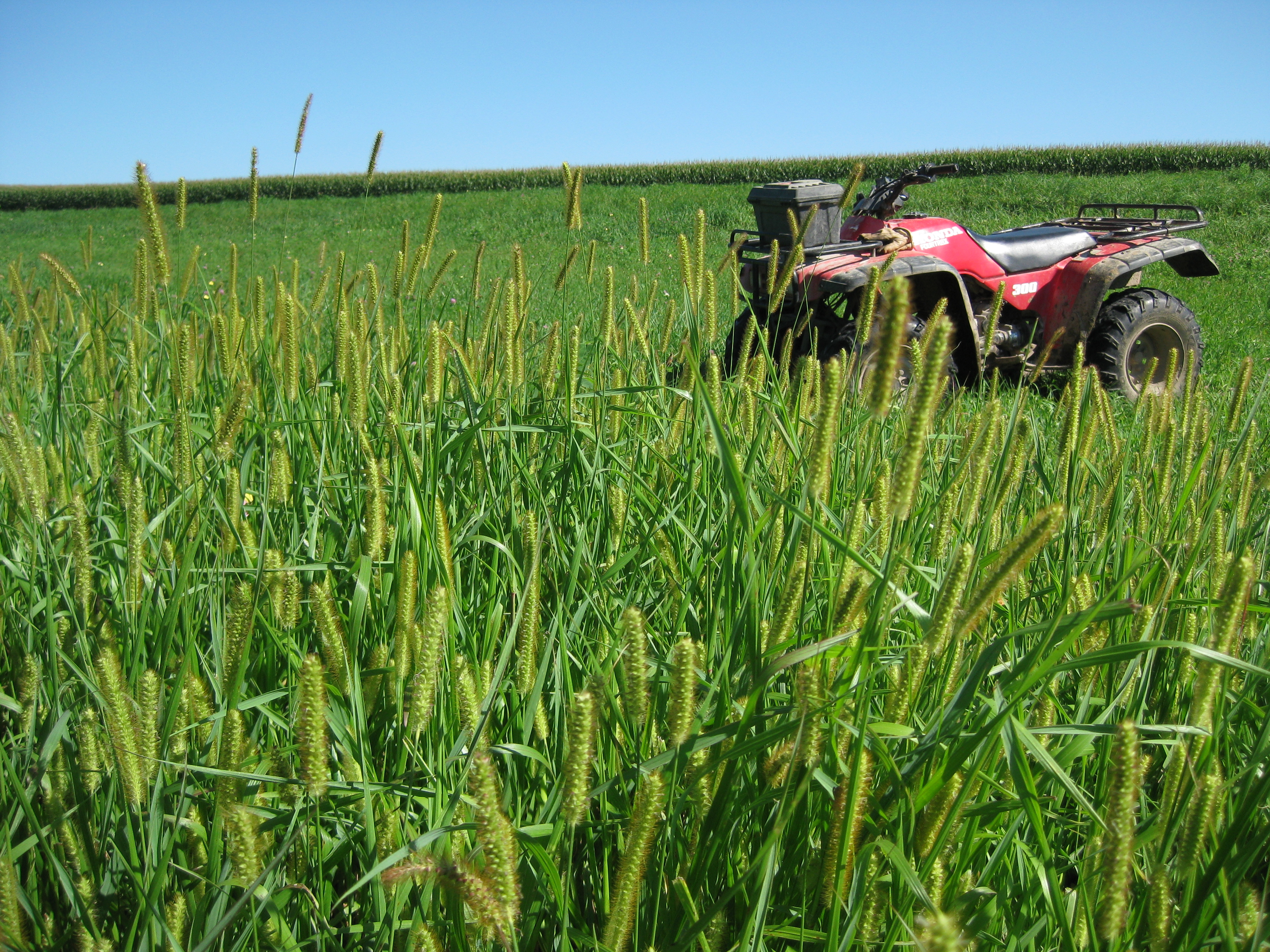
Giant Foxtail, (Setaria faberi).

Giant Foxtail is an invasive weed from Asia that we have entirely too much of on our farm.  It prefers high ph soils that have been compacted.  Our soil, mere feet above a limestone base, is consistently neutral to alkaline.  This picture was taken where the cows compacted the soil, last march.

I had some hogs in what I thought was a secure pasture.  I was encouraged, because they were nibbling on the foxtail, as well as the other grasses and forbs.  If hogs would eat it, maybe I could tolerate it.

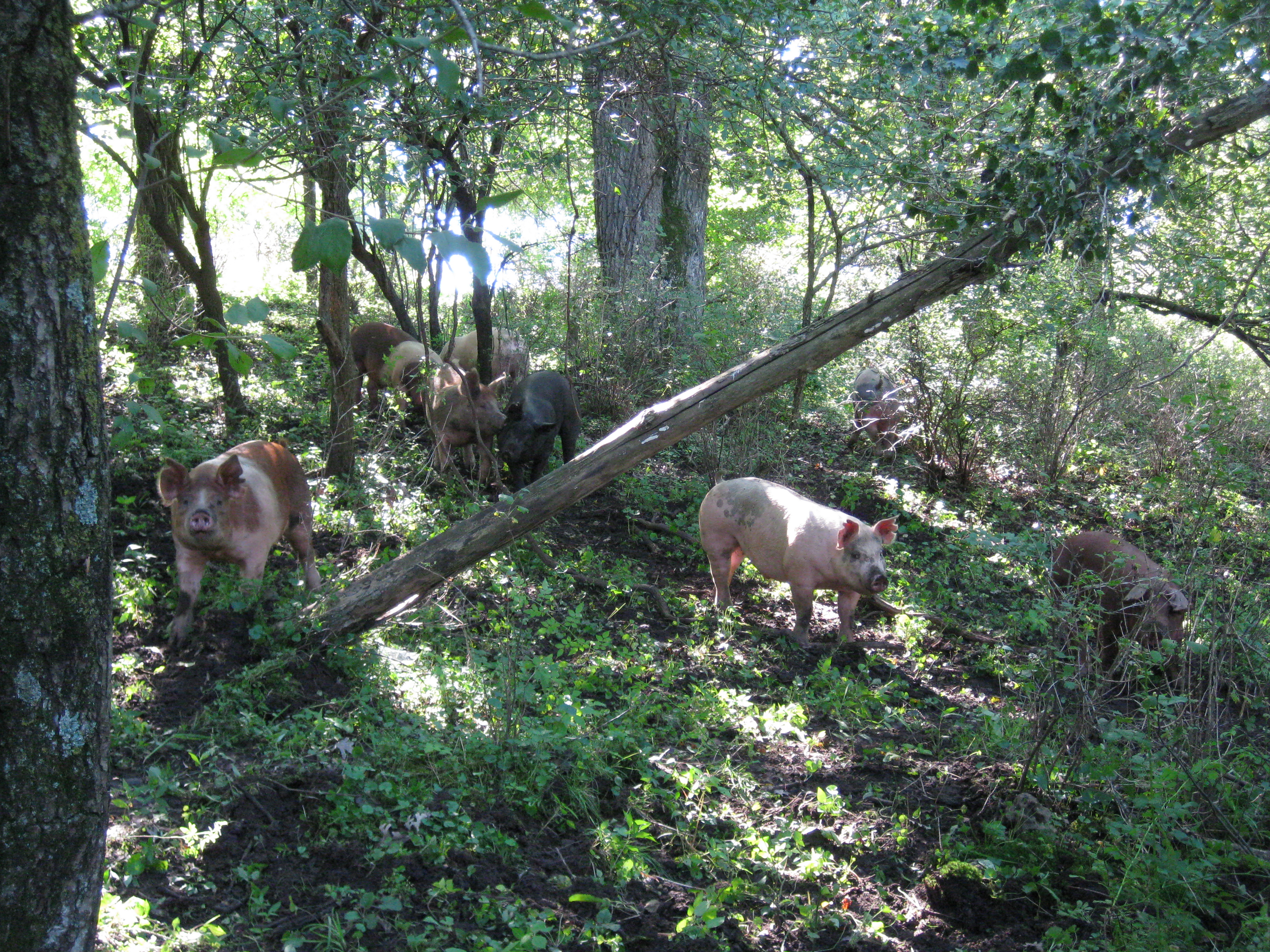
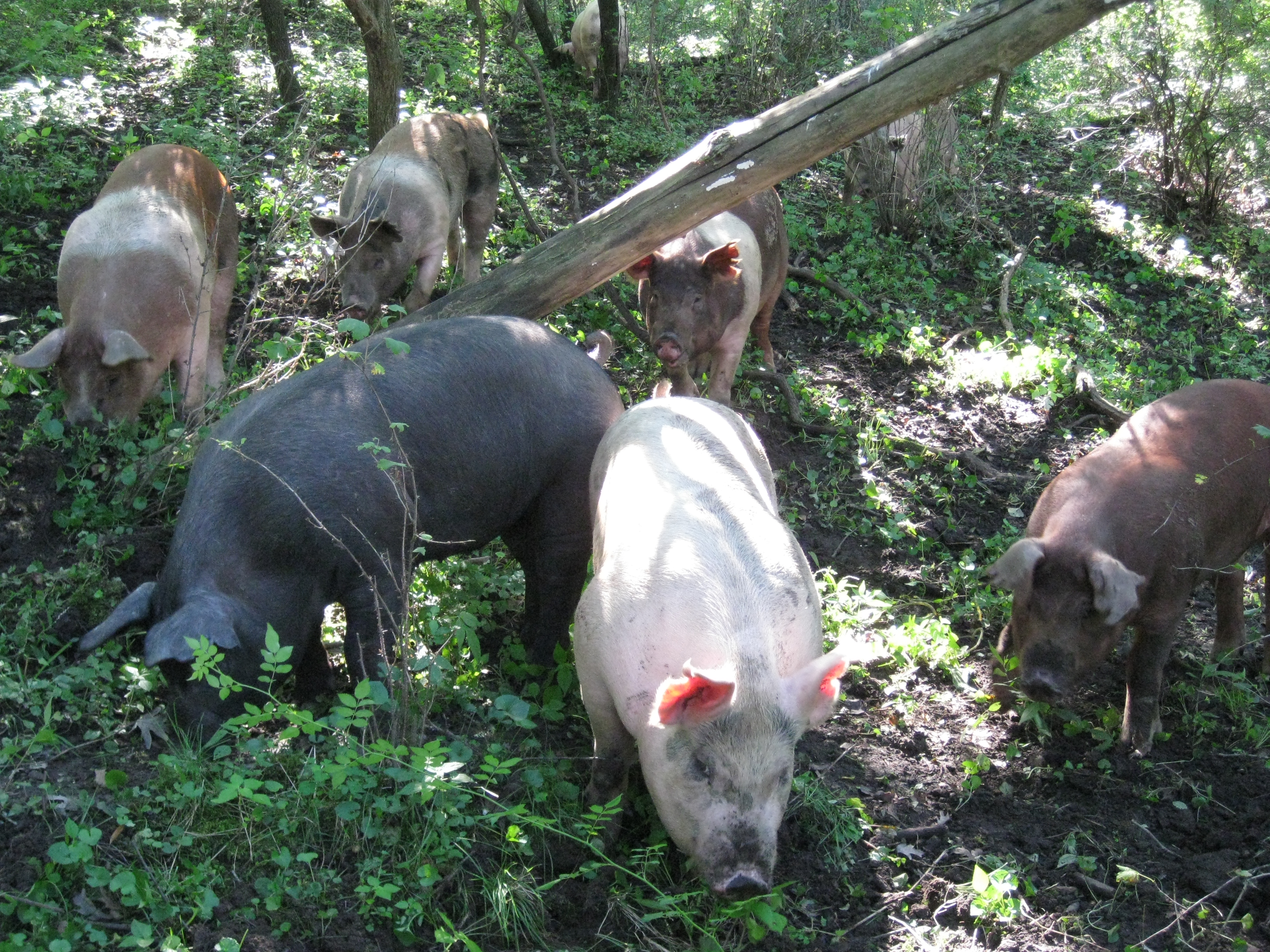
Unfortunately, one morning I found a gate popped off its hinges and some of the pigs gone.  I locked up the other pigs and set off into the woods looking for them.  This is what I found.

I felt like Dian Fossey, the first time she observed gorillas in the wild.  Hogs like hoop buildings and alfalfa/grass pastures, but they love the woods.

But alas, the fence surrounding this woods is not hog-secure, and I’m not going to be known as the farmer who introduced wild hogs to Lafayette County, so I herded them back to their pen.

Wild hogs are nothing but trouble.  A guy released some in Crawford County, Wisconsin and they survived the Wisconsin winter and have become a real problem.

But I like the idea of fattening hogs on apples and acorns.  Joel Salatin does it. Why can’t I?


Lafayette County Fair: Swine Ultrasound

August 6, 2010

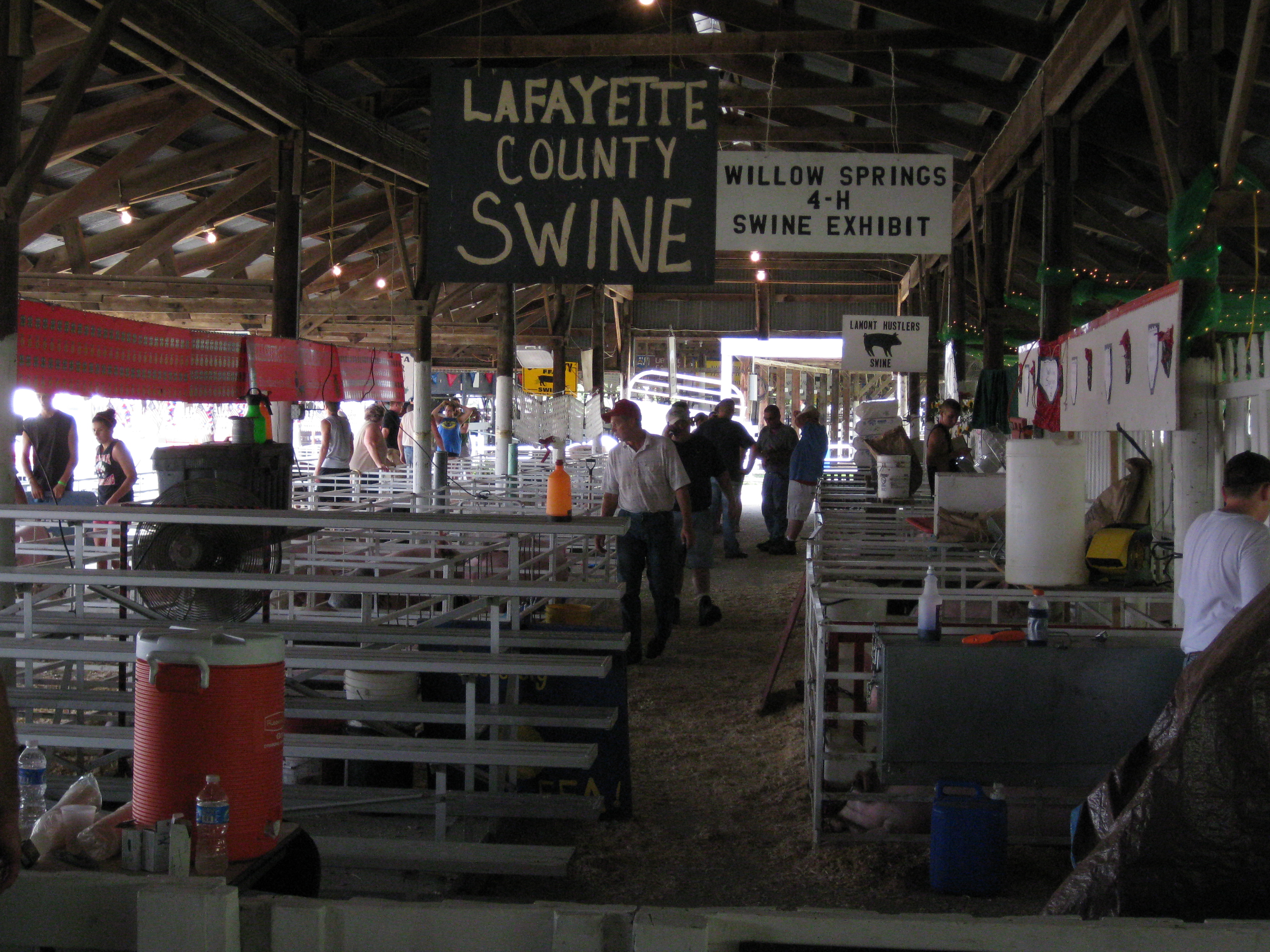
Swine barn, Lafayette County Fair.

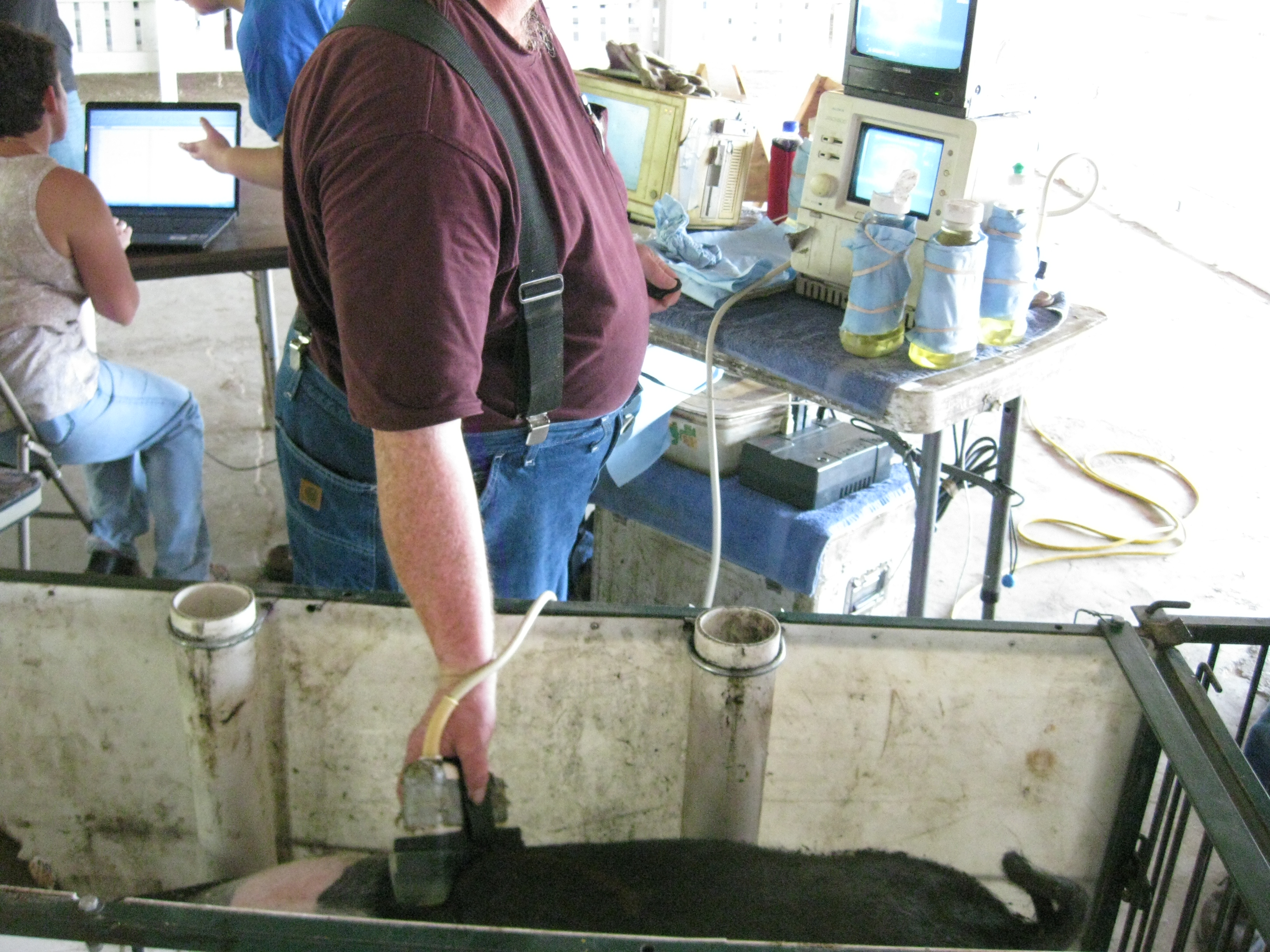
Because of my background as a certified swine ultrasound technician, the fair superintendent asked me to line-up a technician.  Ultrasound is used to evaluate a hog’s carcass.  Below is a picture of the technician with the probe on a hog’s back.  The information is entered into a computer and a formula is used to rank the hogs on percent lean.

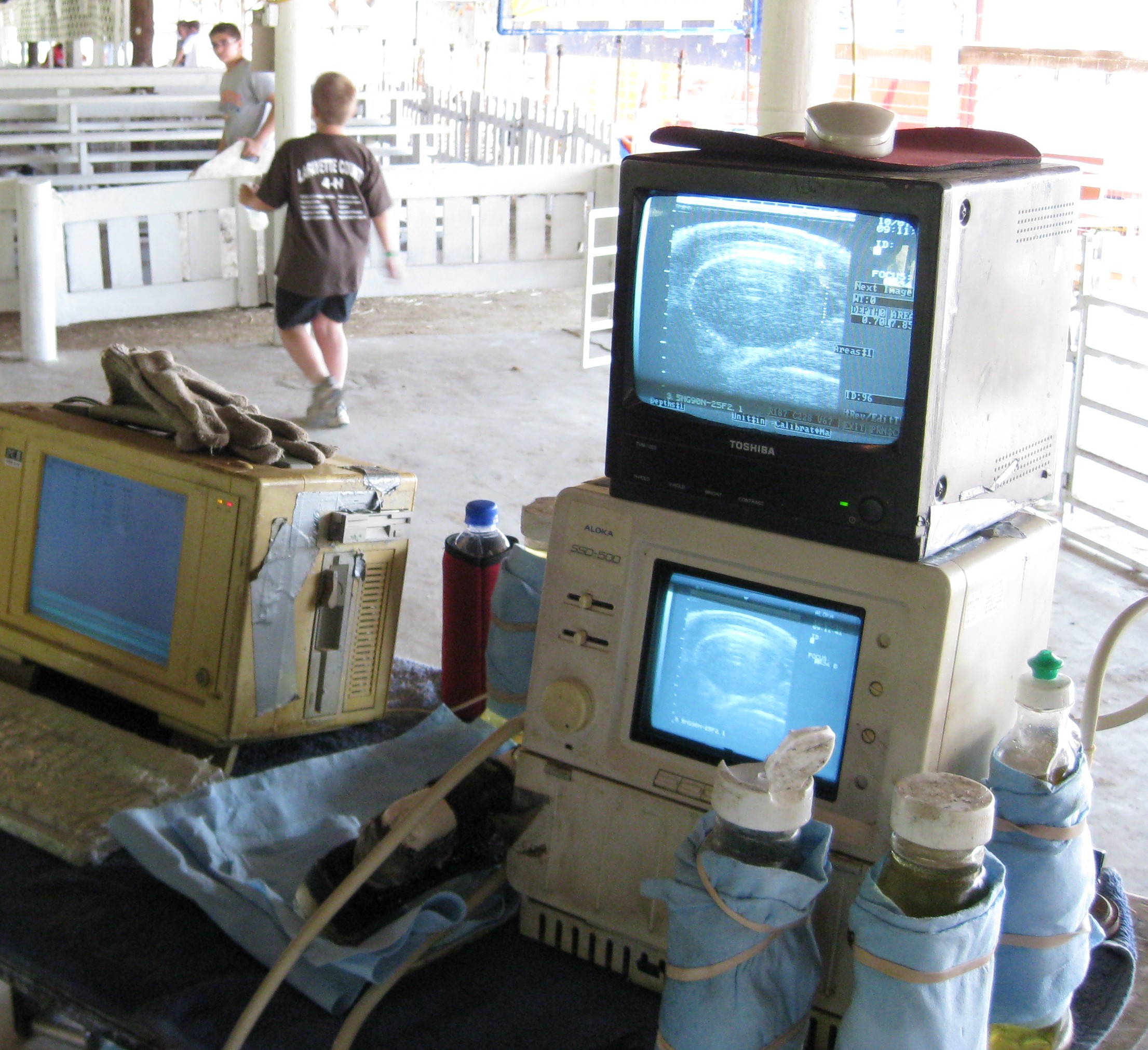
The measurements taken are backfat and loin muscle area.  These two statistics, along with the weight of the hog, are used in the percent lean formula.  Look at the screen in the picture below and see if you can see the layer of backfat above the roundish loin muscle area, (pork chop).  Also visible is a rib in the lower right-hand corner.

Even though I used to be an ultrasound technician, I miss the old days when we actually measured the carcass.  We would show our hog at the fair on Friday.  Sell it at the auction on Saturday.  Load it onto the trailer on Sunday.  And see it’s carcass hanging on the rail on Wednesday.

One summer my sister went to band camp and as introductions were made, each camper told what they had been doing this summer.  When it was my sister’s turn, she said, “I got a blue ribbon at the carcass show.”


Round and Square-Baling Straw

July 29, 2010

Baling square bales of straw.

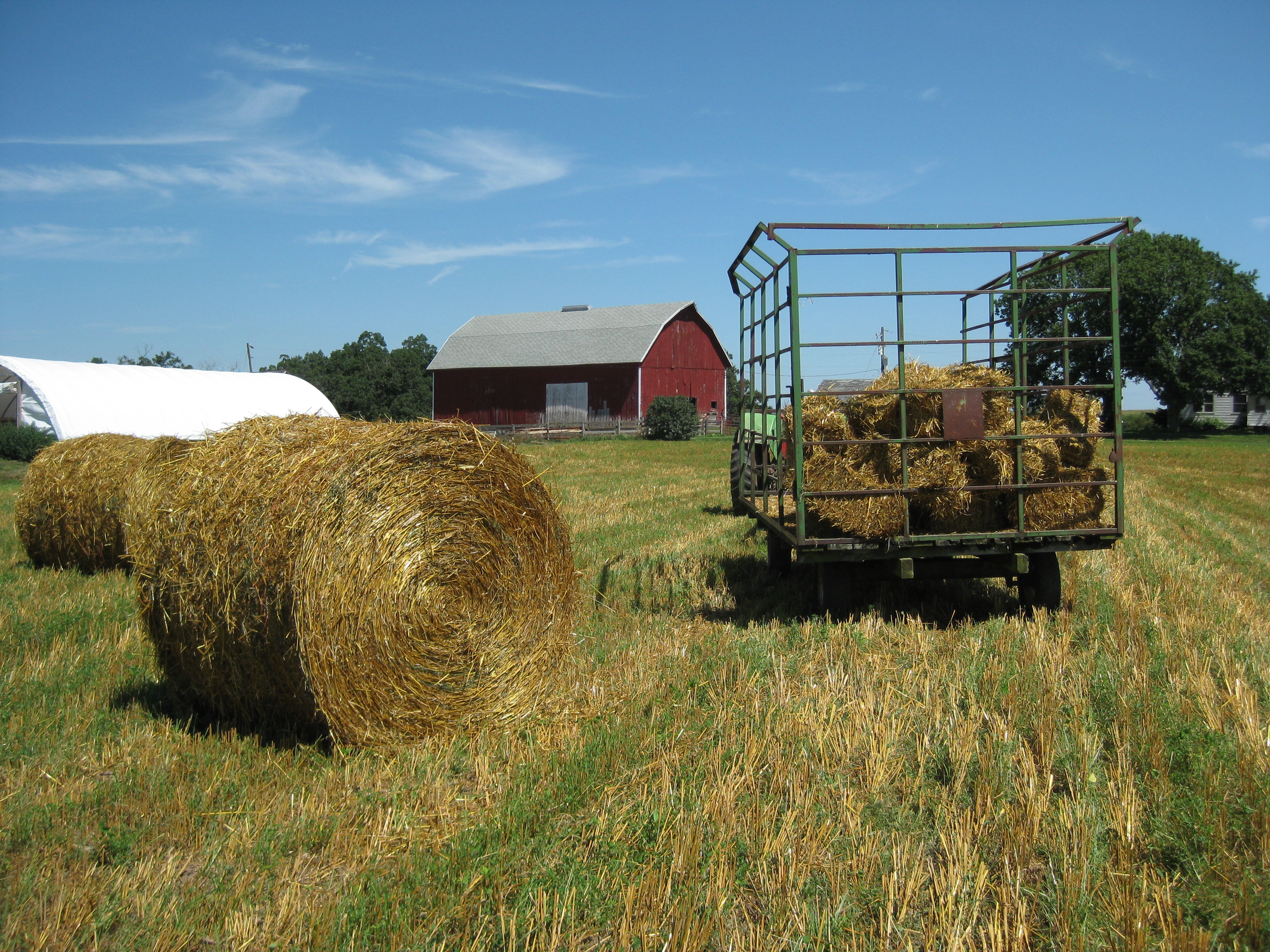
After the oats are harvested with our combine, the straw dries in the field for a day or two and is raked into rows and baled.

Most of the straw is round-baled.  This is much easier than small square bales because all of the work is done mechanically.with round bales.  The round bales are used in the hoop buildings to bed the pigs.

We bale a couple of loads, (250 bales), of small square bales.  These bales are used to bed the sow shelters or to bed the trailer when we take animals to the butcher.

Square bales have to be unloaded by hand and stacked in the barn.  I always appreciate the round-baler more after finishing this job.