Cattle Coral Design: Low-Stress Stockmanship

February 3, 2010

Below is a drawing of our corral.  Mark from ISU asked for more information on our corral.  Thanks Jammer for helping with Autocad.

Dad spent all of one winter studying a book of corral designs.  He built his own design the next summer.  We have used it for over 25 years and there isn’t a lot we would change.

There is an exterior gate between #2 and #1 and an exterior gate between #8 and #9.  Gates open so that the corral could be used as a circular riding arena.  I will describe how we use the corral to preg-check the cows.

Cattle are lured into the large alleyway, #1, with hay or walked in using low-stress stockmanship.   Gates are opened from the exterior into #2, and through #5, #3, and #4.  Cattle are walked using pressure from at least three people from #1 to #2.  By the time we get the exterior gate shut, cattle are beginning to move into #3 and #4.  I run around and shut the gate between #3 and #5 to keep too many cows from crowding in.

When the veterinarian arrives, I move all the cows except for about fifteen back into #2.  Fifteen cows are now in #3.  And #4 is empty.  I now walk two cows at a time into #5 and #6 which has a crowding gate and they go down the alleyway into the catch chute, #7.  One or more cows stands and waits in the alleyway with a bar behind her to keep her from backing out.

When the system is working well, I’m slowly bringing in more cows as the vet. is preg-checking them.  One person is helping move the cows down the alleyway while standing in #10. 

If a cow is bred, she is vaccinated and turned back out into the pasture.  If a cow is not bred, (open), she is moved into #4.  At the end of the day we can load the open cows using the alleyway or back the trailer into #10 and load there.

Ok, this is quick and dirty.  Comment if you have questions and I will clarify.


2010 Wisconsin Grazing Conference

February 2, 2010

I am looking forward to the Wisconsin Grazing Conference in Wisconsin Rapids, February 18-20.  The theme is “Pasture, People, Planet, Profit.”  Here is the schedule of speakers and entertainment.

I will report on some of the more interesting speakers  and any other scuttlebut I hear.  I have attended this conference several times and have always learned something and been rejuvenated by talking with my peers.  I hope to see you there!


A Winter Wonderland: What is Rime?

January 28, 2010


Psalm 39: 4-5

“Show me, O Lord, my life’s end and the number of my days;  let me know how fleeting is my life.

You have made my days a mere handbreadth;  the span of my years is as nothing before you.  Each man’s life is but a breath.”

 How many days do I have?  Can I find wonder in each day?

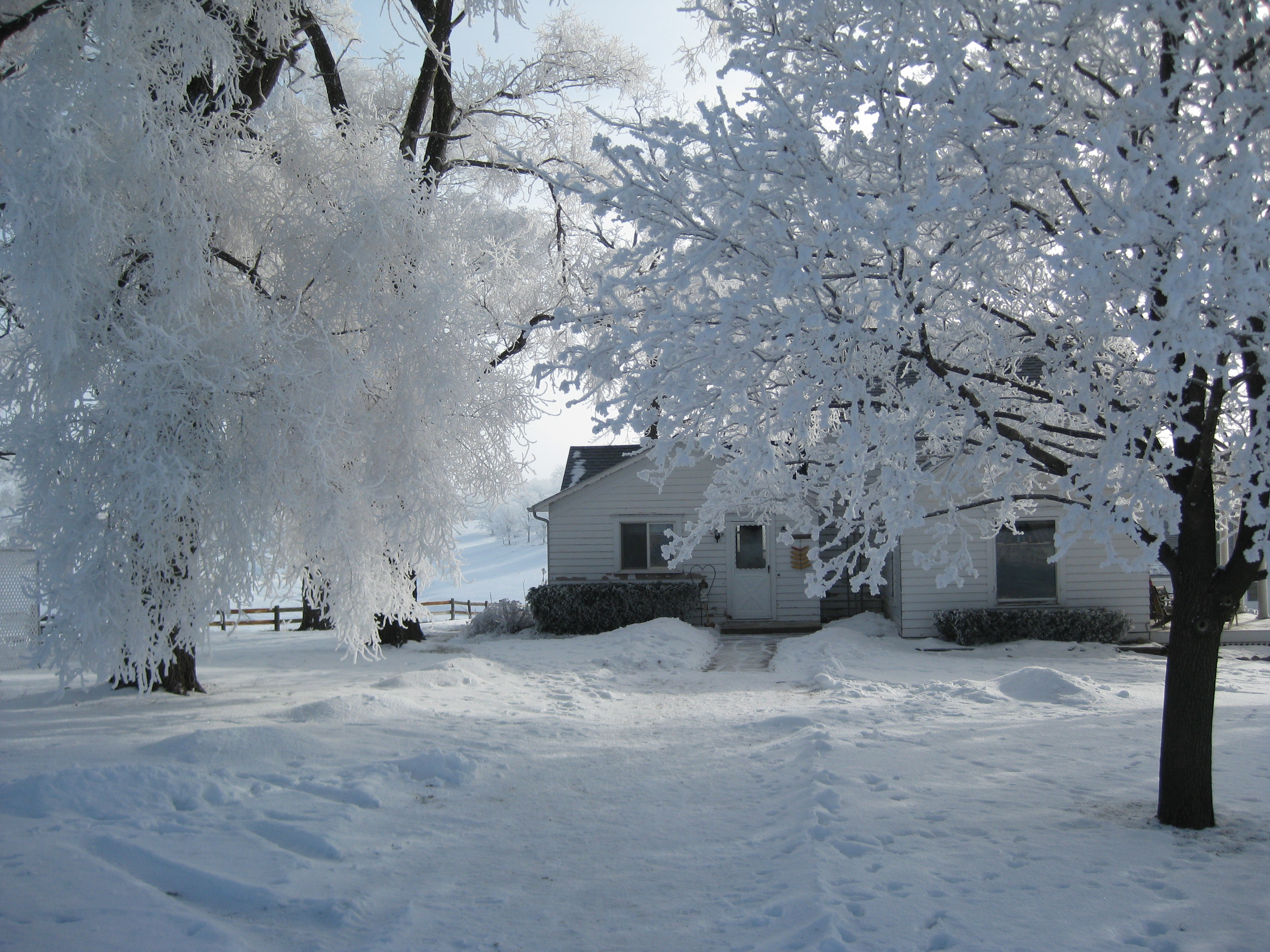
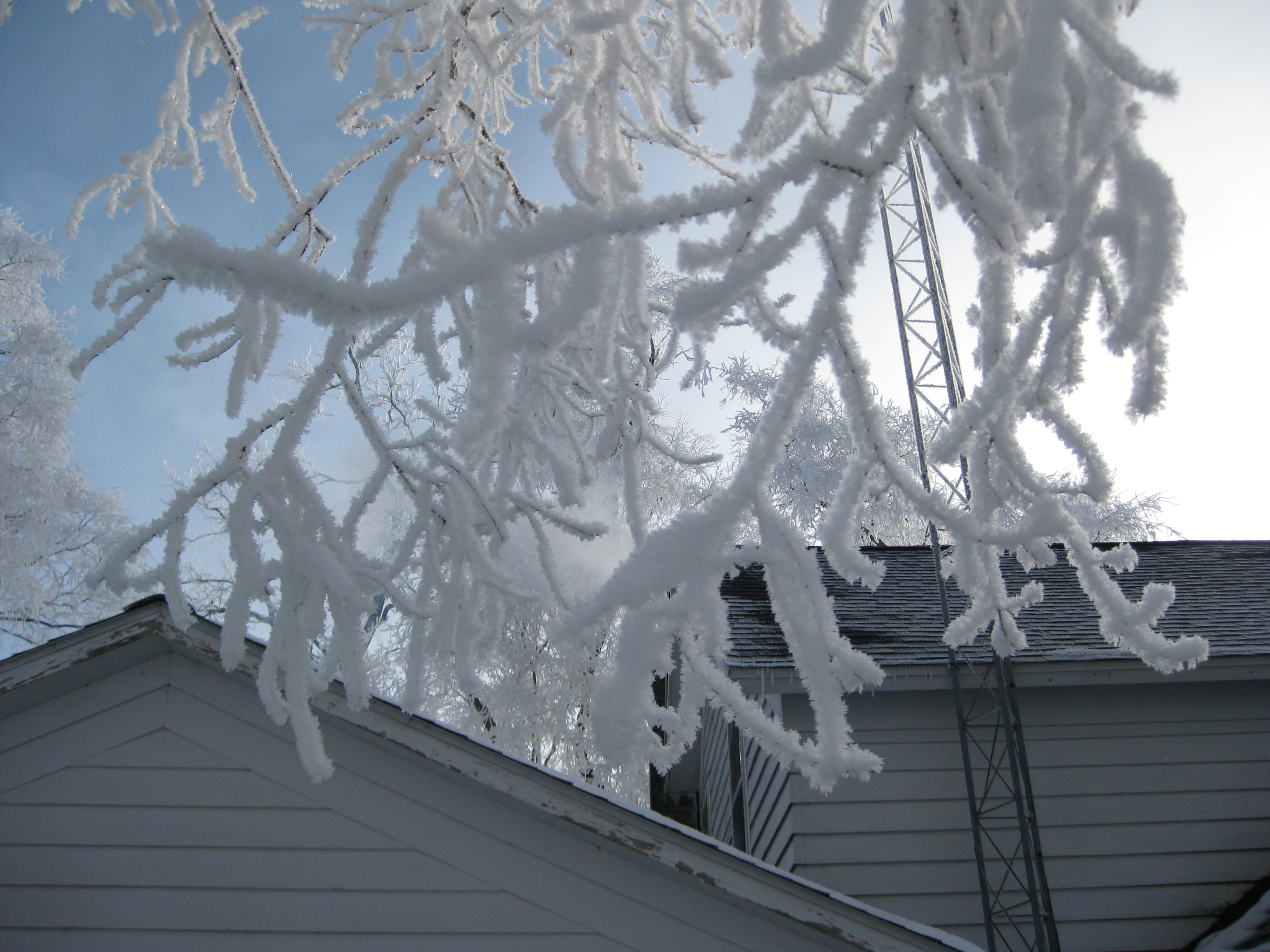
It’s easy to find wonder in a day like the one pictured.  A dense fog on a subfreezing night led to the ice crystal buildup called rime.

“It’s so pretty!” everyone said.


Forage Seeding Rates/ Seeds Per Square Foot

January 20, 2010

Do you know how many seeds per square foot you are planting?  I didn’t, until I read an interesting article titled, “The Forage Seeding Gamble” by Fae Holin.

It’s interesting that my planned recipe for this year’s seeding, 10 lbs. alfalfa, 5 lbs. orchardgrass, and 2 lbs. Timothy, results in 50 alfalfa seeds per sq. foot, 55 orchardgrass seeds per sq. foot, and 58 timothy seeds per sq. foot, according to the author’s calculations.  Very similar number of seeds per sq. foot.

I’m surprised I had never figured this out before as the calculations are not that difficult.  First, you need to find the number of seeds per lb.  I found several sources on the web, all with different numbers.  I guess people get bored counting thousands of seed and just start to estimate.  Here is a nice chart with reasonable numbers.

To find the seed per sq. foot with 1 lb. per acre, just divide the number of seeds in a lb. by the number of sq. feet in an acre.  We’ll use alfalfa as an example.  Alfalfa has 227,000 seeds per. lb. on the previous chart.  We know there is 43,560 sq. feet in an acre.  So 227,000 divided by 43,560 equals roughly 5 seeds per sq. foot.  If we plant 10 lbs. per acre then just multiply 10 by the number of seeds per sq. foot with 1 lb. per acre and you have 50 seeds per sq. foot when planting 10 lbs. per acre.

Another calculation which I had never considered is seeds per dollar.  I’m not sure how useful this calculation is, but I find it interesting.

Here are my figures for this year.  K500 alfalfa, 227,000 seeds per lb., $2.58 dollars per lb., equals 87,984 seeds per dollar.  Climax timothy, 1,152,000 seeds per lb., $1.06 dollars per lb., equals 1,086,792 seeds per dollar.  Baraula orchardgrass, 416,000 seeds per lb., $2.44 dollars per lb., equals 170,492 seeds per dollar.  Seed seems less expensive now.

Now that I know how many seeds per sq. foot I’m planting, I wonder how many actually grow.  It would be interesting to get down on my hands and knees and do some counting this summer.  One thing always leads to another in an interested life!


Sledding: Life in Microcosm

January 13, 2010

My “Flexible Flyer” sled.

I love sledding.  I love sharing sledding with people, mostly kids.  It’s difficult to sell adults on sledding when they have been out of practice.

I think I’m old enough to know I’m not going to outgrow sledding.  And here’s why.

Sledding is not about the “whe-e-e-e!!!” part of going down the hill.  Sledding is about walking up the hill.  And I like walking up the hill.

People who don’t like walking up the hill, don’t like sledding.

Life is a lot like sledding.  A long, uphill walk, interspersed with exhilarating moments of “whe-e-e-e!!!”

I hope you enjoy the walk.


Baraula Orchardgrass Seeding for Hay and Pasture

January 6, 2010

Rejoice!  Baraula Orchardgrass seed is a steal this year compared to last year.

In my post, “2009 New Hay Seeding,” I detail how I planted a field to Baraula Orchardgrass and Alfalfa.  I didn’t plant any Baraula in 2009 because I was waiting to evaluate the quality and yield.  It was outstanding and I wrote about it in my post, “2009 Hay and Forage Summary.”

When I received the 2010 Welter seed catalog I immediately flipped to Baraula Orchardgrass and was happily surprised by the price of $122 for a 50 lb. bag.  Last year the price was $200.

I emailed Welter’s and asked why.  They said there is a much better supply this year.

The “law of supply and demand” works.  But it’s important to remember it may be supply and/or demand affecting the price.  I assumed the demand for Baraula must have been through the roof.  Looking back now I see all the Orchardgrasses were higher priced.  The seed companies must have had a poor yielding year.  So the price was affected more by supply than demand.

I realize I need to do what’s right for my farm.  I’m glad I tried some other species of grass last year as I look forward to evaluating them.

As for this year’s new seeding I’m going to plant all 59 acres to K500 Alfalfa, Climax Timothy, and Baraula Orchardgrass.


Why Kenyans Dominate the Big Marathons

December 24, 2009

I ran the 2004 Chicago marathon.  My training was less than recommended and I had only worked up to a long run of 15 miles, so the last 11 miles were a challenge.  But I finished, and in the top half, so I was happy.

In 2005 I went back to watch the race and cheer on my cousin.  Watching the race unfold helped me formulate a theory why the Kenyans dominate all the big marathons.

October 9, 2005.  Chicago marathon, 13.1 mile mark, halfway.

We stood in the 2nd level of a parking ramp across the street from the Sears tower.  We waited to see the lead runners.

As the mob of people along the race course thickened, anticipation grew.  It was an early morning-party atmosphere.  My kind of party.

Suddenly, a cheer!  Whistles, bells, shouts, “Here they come!”

“They” came rolling by.  The lead wheelchair racers finish in about an hour and a half.  They also get a head start.  So we waited some more and cheered on the slower wheelchair racers.

The lead pack of runners went by so quickly, I barely had time to study them.  There were ten in the pack.  They looked very comfortable running together, even at a speed of over twelve miles per hour.

I thought I saw two-time defending champion Evans Rutto in the middle of the pack.  I assumed the pack was all Kenyans.  I was right.

Fifty yards behind the lead pack a solitary runner struggled.  A few more yards back, another runner, then another, then two, then three.  They all seemed to be struggling to maintain the pace they had run in the first half of the race.  None of them looked like they could mount a challenge to the Kenyans.  I was right.

The runners behind the Kenyans seemed to be so alone.  Even if a few runners were grouped together, I could tell they were running alone.

In contrast, the Kenyans seemed to be running as one unit with interchangeable parts.  And in a sense they were.  And I think the Kenyans, with great humility, realize that. 

The Kenyans finished 1st through 10th, with only 5 minutes between them.  Evans Rutto, the two-time defending champion, finished 4th, 26 seconds behind his countryman, Felix Limo.

How humble is Rutto to win Chicago twice, and then finish a few seconds behind his fellow countryman?  Is it coincidence the Kenyans train and race as a group and dominate the way they do?


Wild Food Foraging/ Sam Thayer’s New Book, “Nature’s Garden”

December 20, 2009

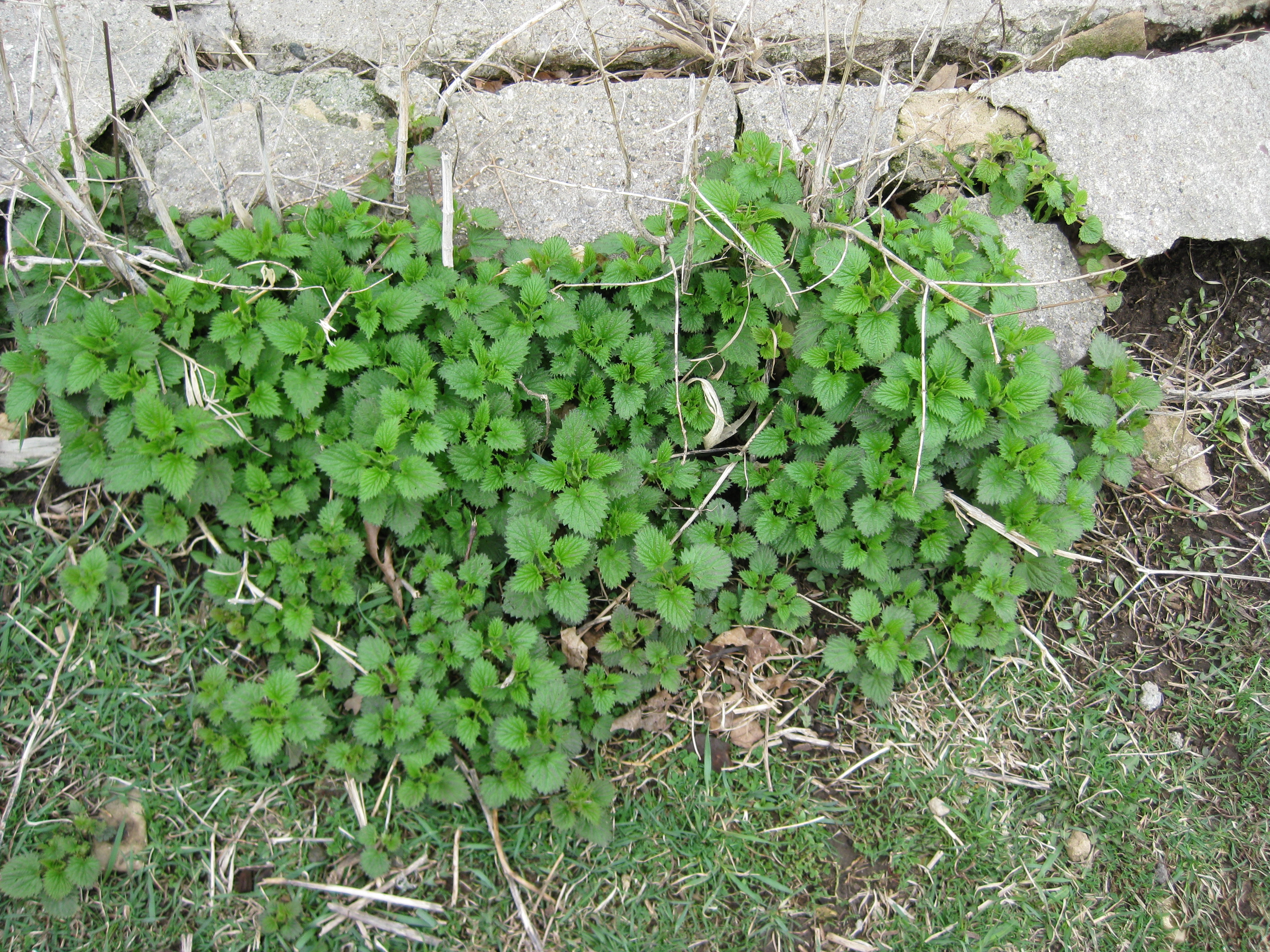
Stinging Nettle, a delicious, wild edible, WHEN COOKED, profiled in “The Forager’s Harvest”, Sam Thayer’s first book on wild food foraging.

I’m excited!  I just received a mailing from Sam Thayer announcing the printing of his new book, “Nature’s Garden.”  This book is the second in his series on wild edibles.

Sam is the leader on wild food foraging for our generation.  I met him a couple of years ago when I attended one of his weekend seminars.  This guy lives what he preaches.

One of my goals for 2010 is to make foraging a bigger part of my life.  I need to figure out a way to phrase this goal.  I recently found Leo Babauta’s blogs and plan on using his techniques for accomplishing change.


Heating with Wood/ Blizzard, Dec. 09

December 10, 2009

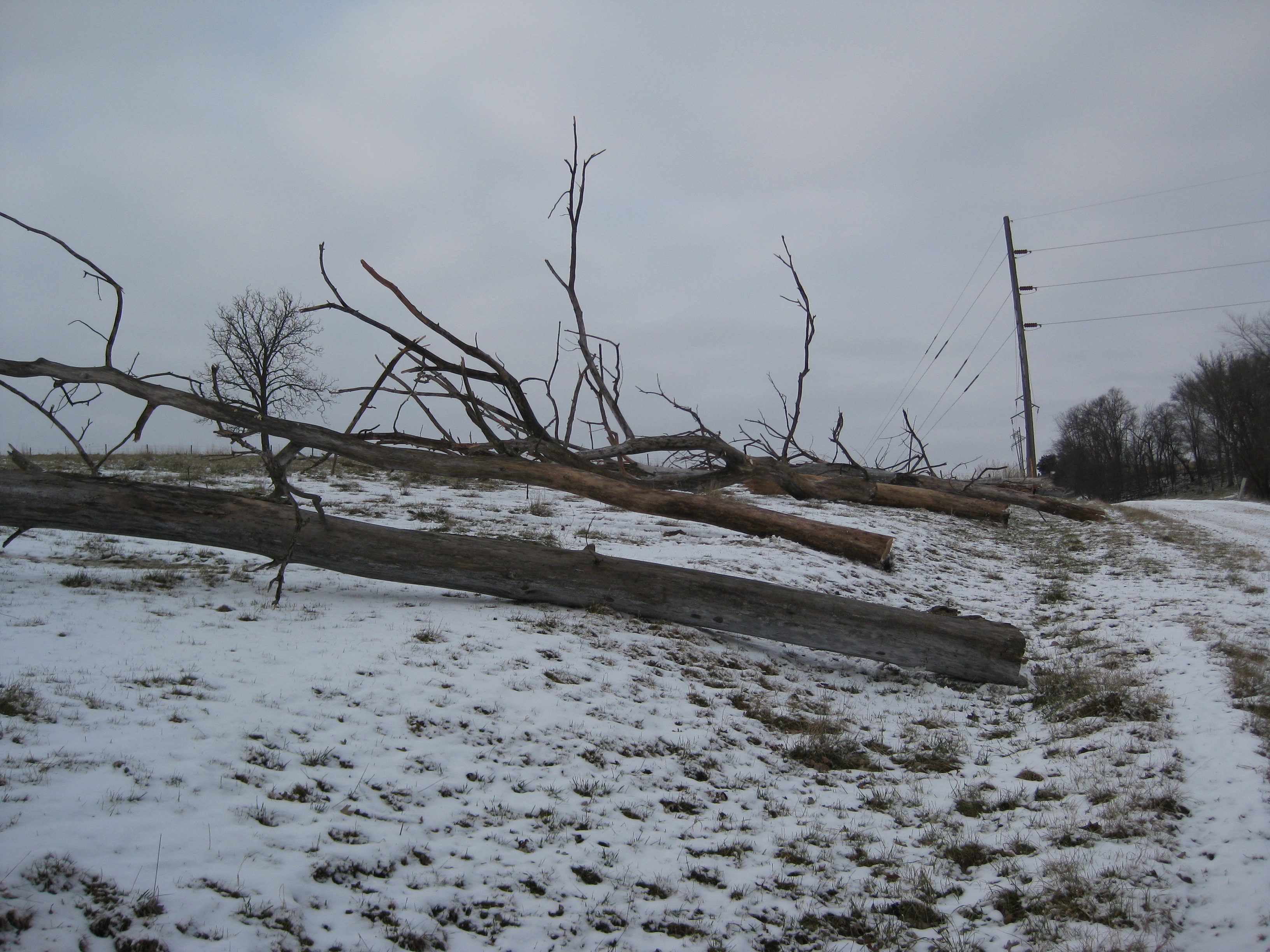
Our monument to winter, before and after the blizzard of December 8-9 2009.  Why do I live here?

When my parents moved to their current farm in March of 1975, there was only a huge wood furnace in the basement which heated the house.  The winter had been so bad the previous farmer was unable to cut wood and had to buy coal to burn in the furnace.  Yes, in 1975 coal could be purchased.

The smoke and dust from the coal left a black soot on the walls of the house.  I wonder how many brain cells were lost by my sisters and I as we breathed in the soot.

My parents put in a furnace that burned propane that summer.  But they also burned wood that next winter because it was available and affordable on the farm.  They fell in love with the warm heat generated by wood and have burned it every winter since.

So Monday found my Dad, Uncle, and I pulling dead trees out of the forest to be cut up later as we need the wood or find time.  We always say we are going to cut all our wood for the winter in November.  But we never seem to get around to it, and frankly, harvest and taking care of the animals takes priority.

Two days later you can see why autumn is a hurried time as harvest is over and survival mode is in effect.  I’ve been gorging on carbs like a black bear getting ready to hibernate.  Somebody send me a ticket to someplace warm.


Mycotoxins in Corn

November 22, 2009

“There’s always something!”  common quote by farmers usually said with a shrug and tired smile. 

This farming game is tough.  The something right now is mycotoxins in the 2009 corn crop

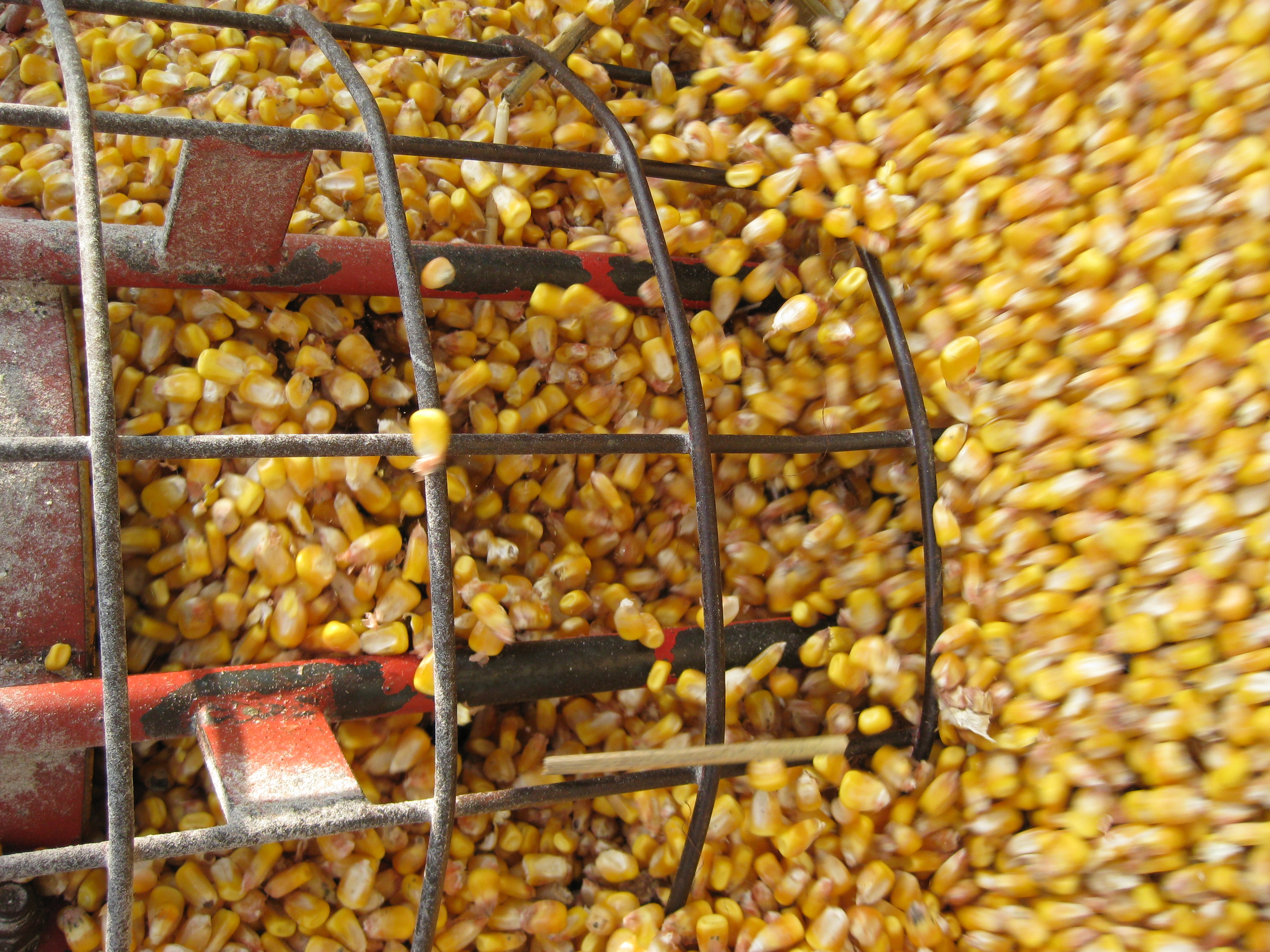
Mycotoxins are by-products of mold growth.  Animals exhibit poor health when fed grains contaminated with mycotoxins.

Our feed salesman took a sample of our corn expecting to find high levels of the three mycotoxins being found in this year’s corn crop.  He said that much of the corn crop in Ohio was contaminated and he had already found high levels of mycotoxins in some of his customers’ corn in Wisconsin.

He knew of a farmer who still had much of the 2008 corn crop on hand and counseled us that we should try to sell our 2009 corn and buy his old corn.  This would be a logistical headache for us.  Thankfully, we didn’t have to consider this.

We sent a sample of our corn to Holmes Laboratory Inc. in Ohio.  The test came back with acceptably low levels of Vomitoxin, Zearalenone, and Fumosin.  Two months ago I had never heard of these three mycotoxins.  Aflatoxin was the only mycotoxin I had ever heard of.

If your corn does have high levels of mycotoxins, you can blend with good corn to reduce the level of mycotoxin in the feed.  You can also put additives in the feed that absorb and bind the toxin or deactivate it.  JBS United  conducts research on the effectiveness of additives.

I have no idea why our corn has low levels of mycotoxins while others find high levels.  Sometimes it’s better to be lucky than good.