Baling Hay

August 2, 2011

Field of baled hay.

Below is a picture of the Round Baler, unloading a finished bale.  Hay is picked up underneath the baler.  The belts keep tension on the hay as an ever-increasing amount is rolled up, resulting in a tightly-packed round- bale of hay.

Photo  by Melissa.

Each bale weighs about 1500 lbs. and feeds at least 50 cows a day in winter.  We feed the cows by unrolling the hay on the frozen ground so all the cows can eat at once.  They eat their daily allotment in a few hours.


Best Laid Plans

June 14, 2011

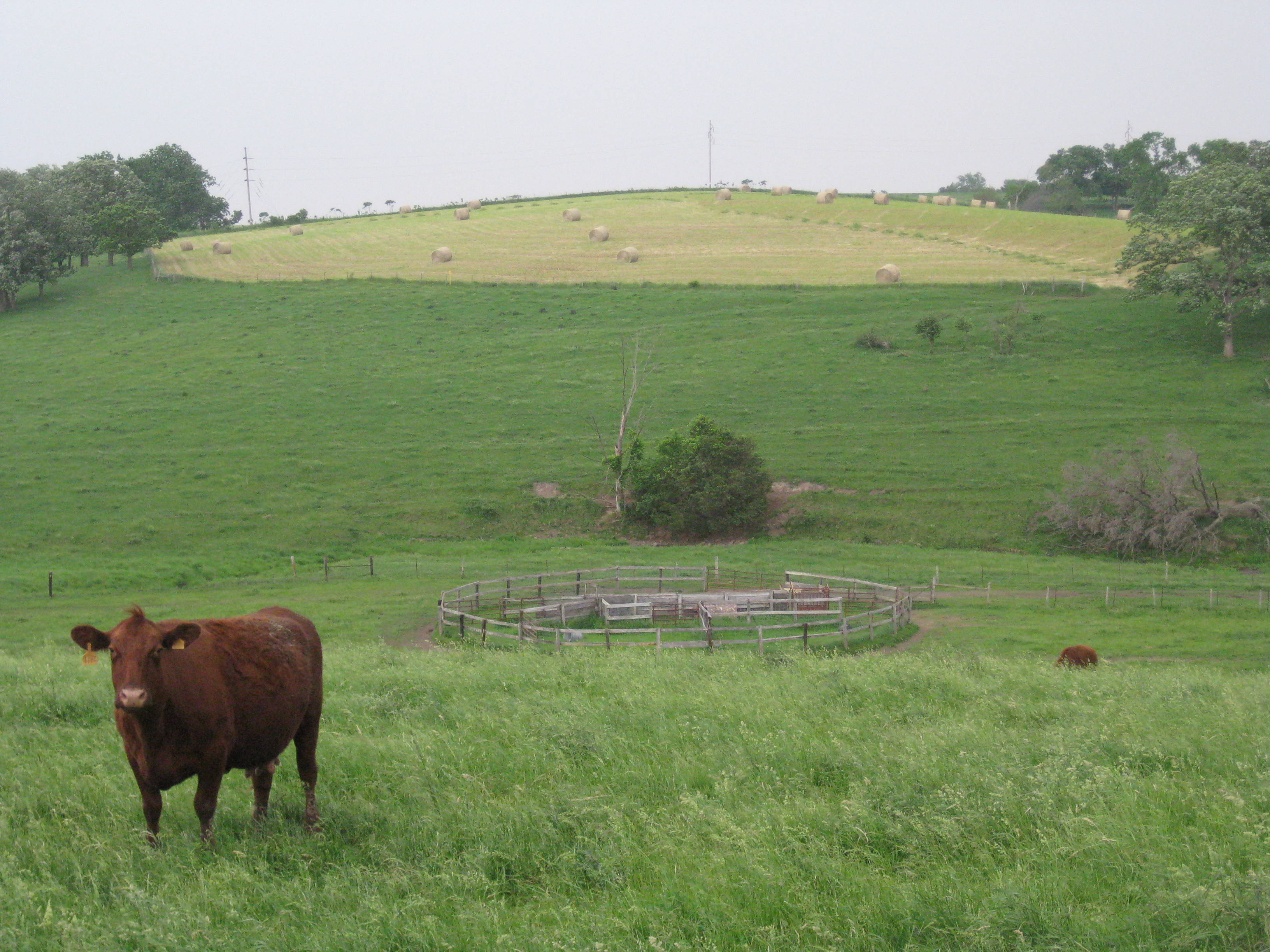
We built a small corral at the intersection of four pastures.  It’s way out back, and we never had a good way to catch a cow that needed help out there.

I checked the cows late one afternoon.  A cow was trying to calve, and looked like she had been straining for awhile, but nothing was showing.  We gave her an hour and checked her again.  Sure enough, one foot was sticking out, but not the other one.

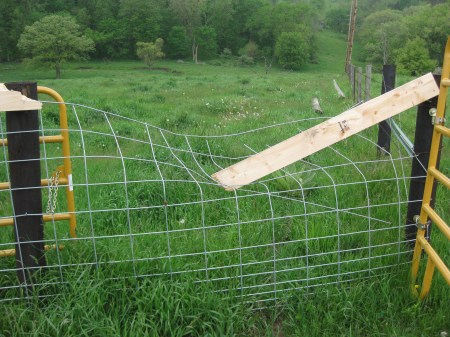
We decided to get her in.  We were excited to use our new corral.  Two ATVs, a jeep, low-stress stockmanship, and we had her in the corral, barely.  She was starting to get hot.  She circled the corral a few times, charged at the gate I was standing by, put her nose over the top board, and jumped and pushed.  Once the board broke, her body weight broke down the wire panel, and she was over and out.

“Well, she’s on her own now.  No sense getting killed over her.”

The next morning, Dad drove back from checking the cows.

“Is she dead?”

“No, and she’s got a live calf, runnin’ around healthy.”

“Do you think we were just too early?”

“No, I think the calf got straightened out when she jumped the fence.”

Dad smiled.

Bad Weather Calving

April 22, 2011

32 degrees Farenheit, rain, turning to sleet, turning to snow.  We only had to bring two calves into the barn to warm up.  One was born weak.  One was born in a ditch, and unable to get out of it.  The other newborns who got a belly full of milk were ok out in the pasture.

The calves who are too cold and weak to nurse, we stick an esophageal tube down their throat and give them a product called Colostrx Plus.  It helps them get going.

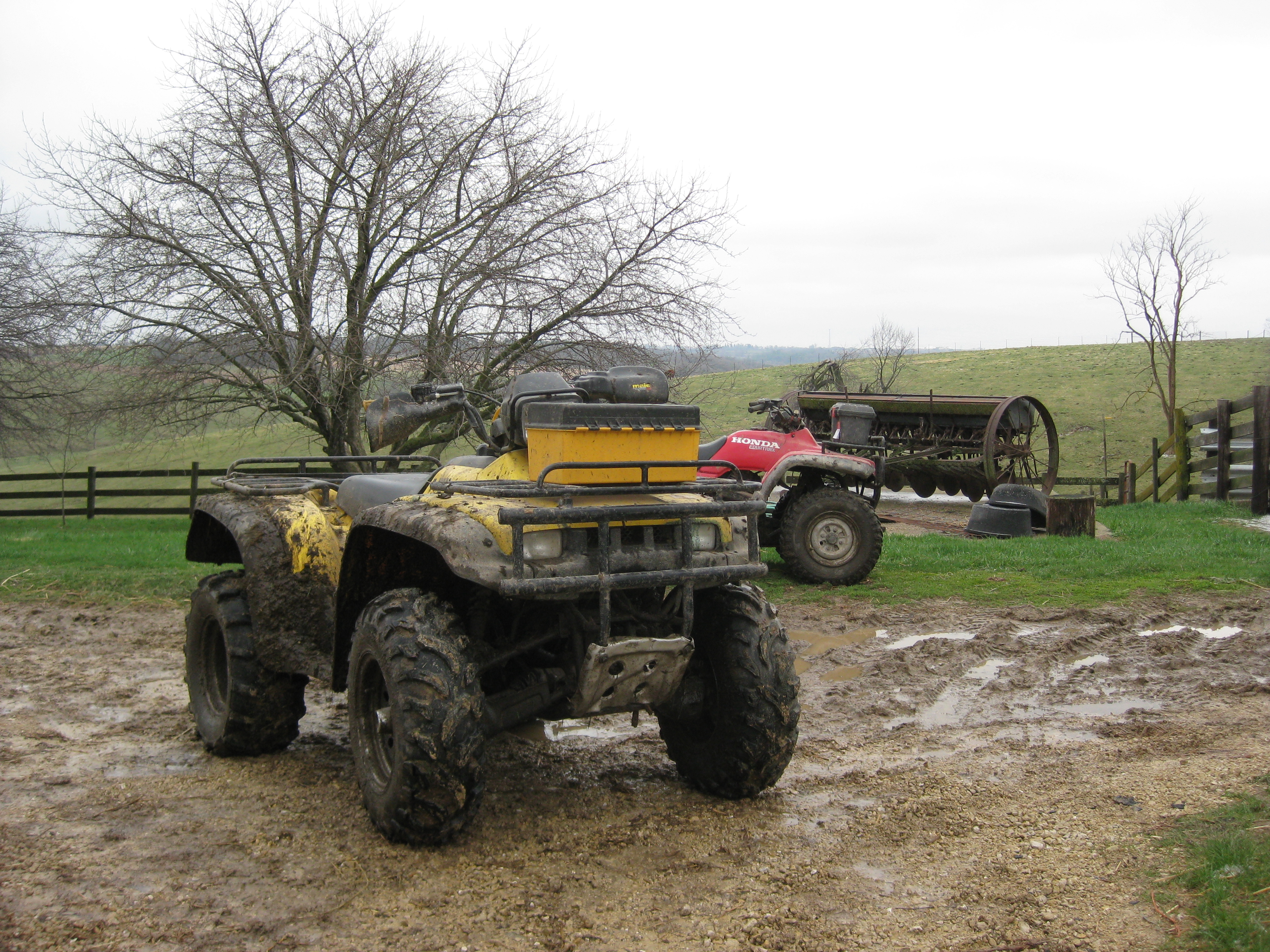
Next we have to get their mothers into the corral.  This is where the ATVs are indispensable.  A few years ago we had a freak April snowstorm and had to bring four calves into the barn.  We only had one four-wheel drive ATV and a two-wheel drive ATV.  The two-wheel drive ATV was worthless in the heavy, wet snow.  I had to walk.  I put in quite a few miles, slipping and sliding up and down the hills of our calving pasture.  We were able to get three cows in, but couldn’t get the fourth.

Now we have two, four-wheel drive ATVs, pictured.  It took about a half hour to get the two cows into the corral.  We put a cow into the catch-chute, and then help her calf  nurse.

April is usually not this cold, but it’s important to remember it can be, which is difficult to do in mid-June when the weather is beautiful and the bulls are itching to breed.  I wrote up a contract one April and signed it.  “No bulls will be turned out for breeding before the 1st of July.”

I haven’t broken the contract, and the Matthew of late March, early April, is always grateful.


Final Harvest

November 6, 2010

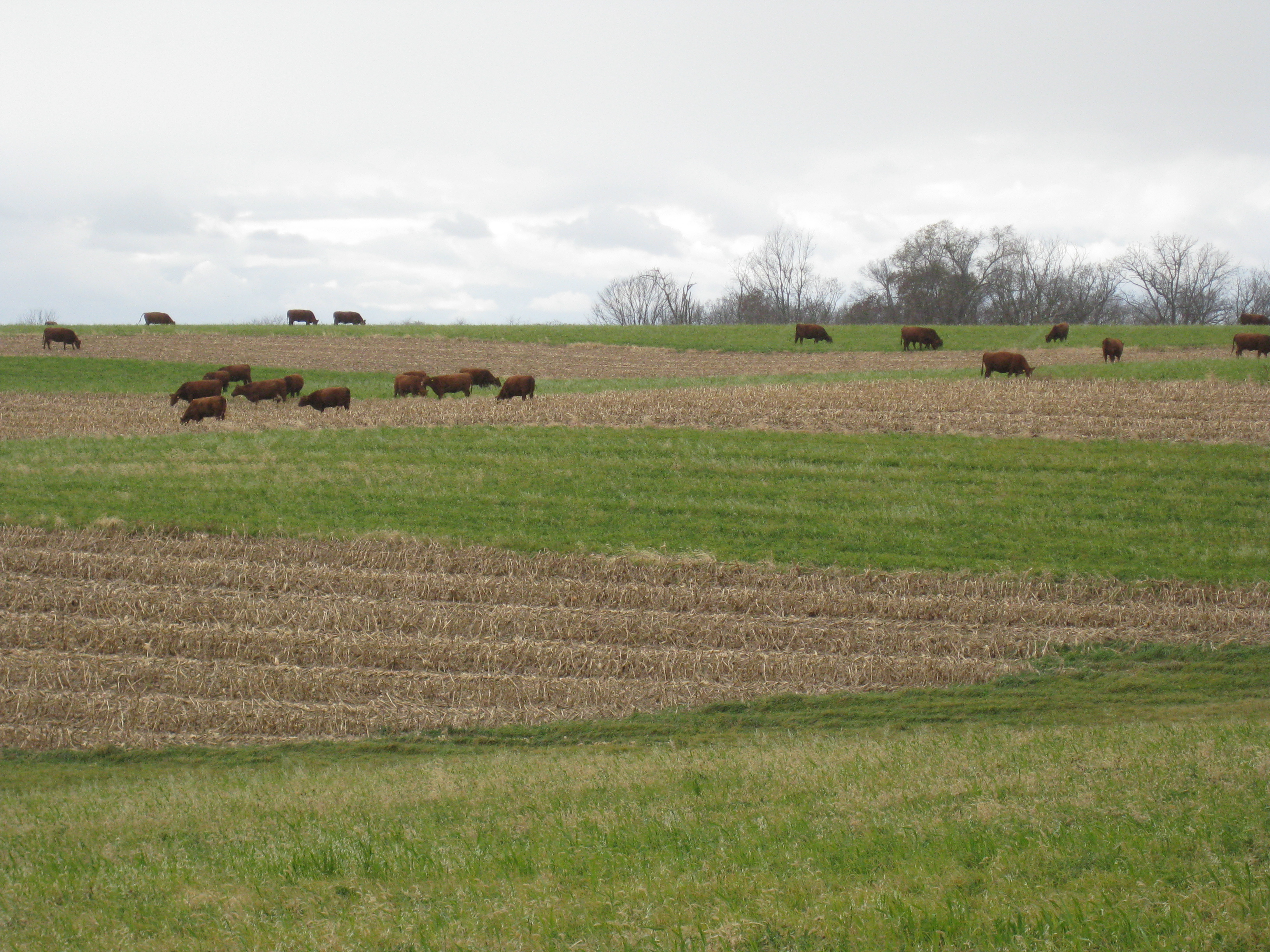
Cows harvesting the standing hay and cornstalks on my contour strips.  Here is a picture taken right before corn harvest.

The cows above are the ones the vet. confirmed pregnant when we pregnancy checked at the end of October.  I wrote about my expectations, and the problems we faced this breeding season.  90% of the cows and heifers ended up being bred with a 60 day breeding season for the cows, and a 45 day breeding season for the heifers.  10% open is normal for us and acceptable.  We have an excellent market for hamburger, so the cows that didn’t breed end up as beef.  We have appointments with our butcher over the next month.

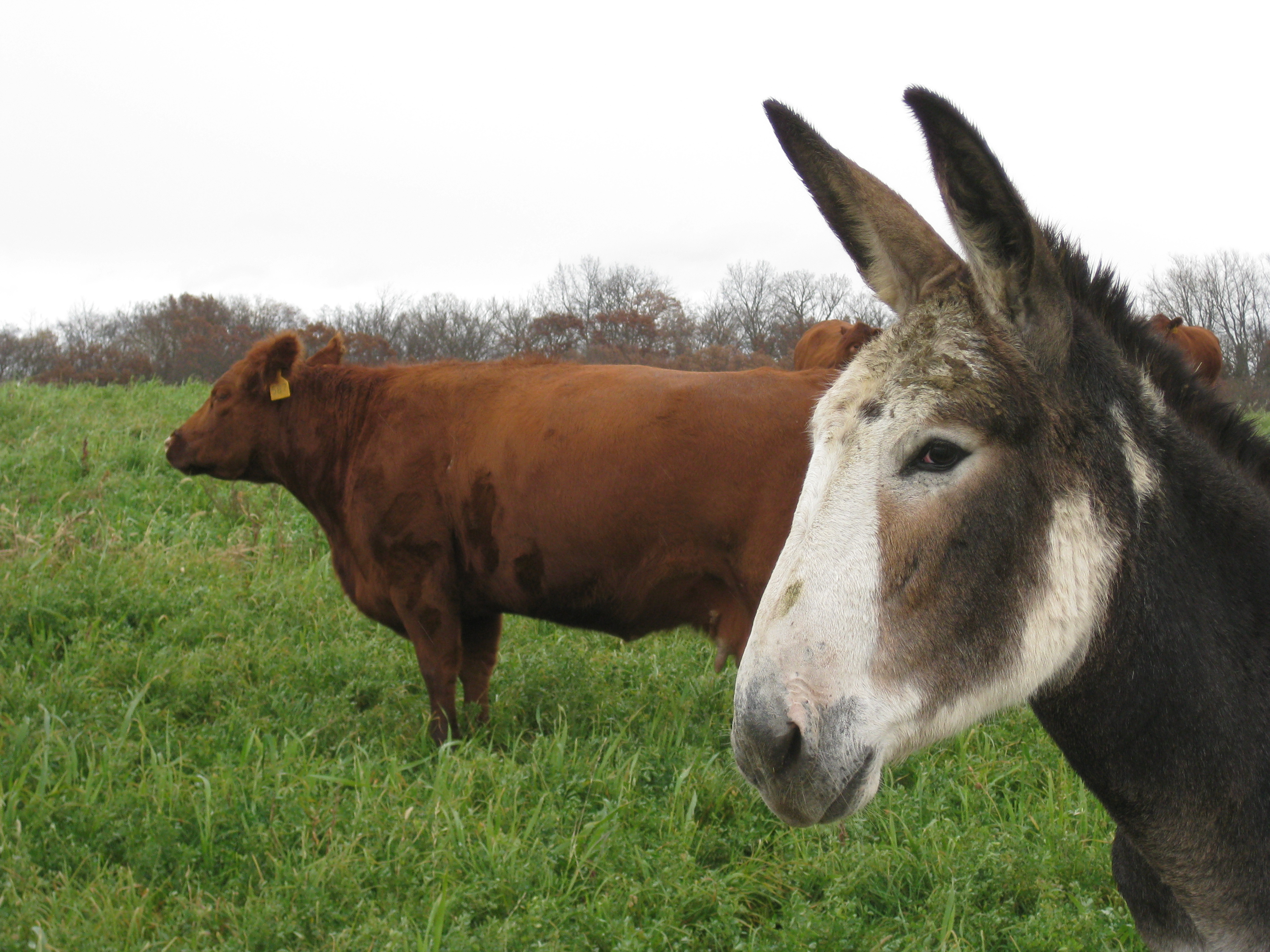
Below is a cow which didn’t breed, and Wilma, of course.  The open cows are grazing one of our best remaining pastures.  I was thinking about the life they lead.  I think it’s pretty good.  They get to be in a herd of peers, eating quality forage, moving weekly, breeding, raising young.  Up until the bolt-gun shatters their brain, it’s not a bad life.

We took the boys to a city-wide Halloween party.  A friend gave me the low-down on the best place to go trick-or-treating: the manor, or old-folks-home.  The residents are seated in a semi-circle, each holding a bucket of candy.  It’s funny, because whatever aversion a child has to old people is overcome by the lure of easy candy.

I don’t know what kind of life each person has had, but the ending can be difficult.  We all want to live a good life and die in our sleep.


Weaned Calves

October 21, 2010

Calves in the corral, separated from their mothers.  We weaned all of the calves, October 14th.

After sorting the cows away from the calves, we run the calves into the catch-chute one at a time to administer a couple of vaccine cocktails.  We use what our vet. recommends, and what is common in the industry.  Ultrabac 7/Somnubac is $1/dose.  Vira Shield 6 + Somnus is $2/dose.

The vaccines cover about a dozen diseases, or strains of a disease.  I have a difficult time believing one can get a good immune response to all.  But in the vaccine’s defense, we have lost a calf from Blackleg, but never after vaccinating.

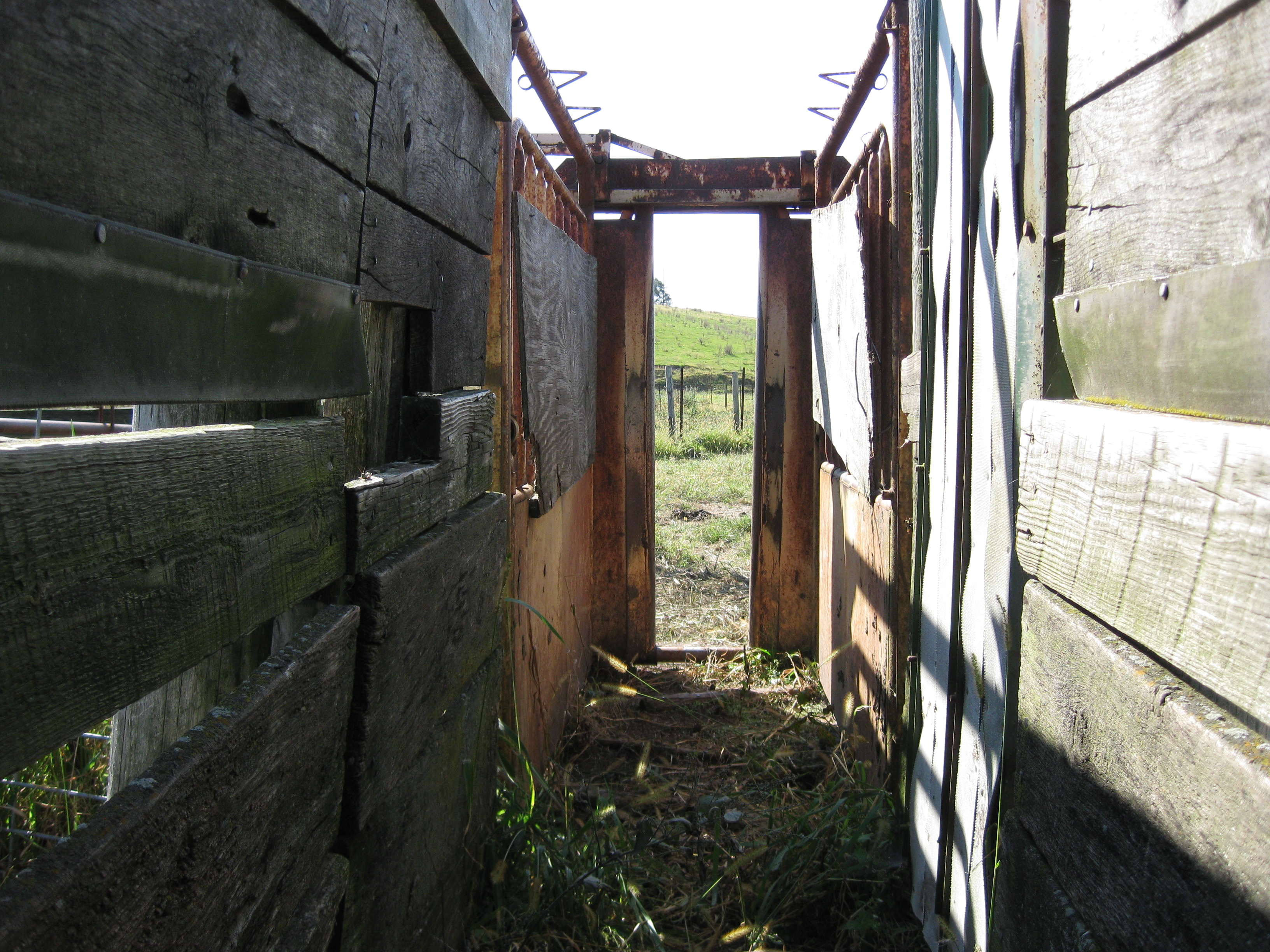
Below is a view down the alleyway leading to the catch-chute.


Breeding Season II: Problems

August 10, 2010

My early July post, “Breeding Season Starts”, was full of optimism.  We started breeding season with five, virile bulls, breeding 131 beautiful cows.  We now have one, extremely popular bull, with 131 cows.

The bull in the bottom of the picture above, “New Chapter”, fought with the other bulls instead of breeding the cows.  We took him to market after he hurt the other five-year-old bull, “New York.”  “New York” is refusing to rejoin the herd and is recovering his confidence in the back pasture.  “Red Direction” and “Judge” are lame and limping along with the herd.

But “Julius”, “Julius” is thriving!  Look at him in action!

Even though he’s busy, he still makes each cow feel special after he puts a kink in her tail.

We’ve kicked around some options to make sure the cows get bred.  We could take the yearling bulls out of the heifer pasture and put them with the cows.  We could buy bulls, but we may not find quality bulls on short notice.

We’ve decided to watch and wait.  We aren’t seeing many cows “in heat” now.  We think the bulls settled many of the cows during the first heat cycle.  A cow’s cycle is 21 days.  We are nearing the end of the 2nd heat cycle, so a decision needs to be made because the 3rd cycle is their last chance to get bred.  All cows that don’t breed are butchered.

We won’t know for sure what percentage of the cows are bred until November when a veterinarian pregnancy checks them.  I’ll let you know how we did, then.


Sleeping During Calving

July 15, 2010

A robin’s nest, with fledglings, in our cattle catch-chute.

I realized I needed to post this picture when WSB asked an astute question: “If the breeding season is short, will you get any sleep during calving season?”

Yes, and this picture explains why.

This is my proudest cattle picture.  I’m striving to breed problem-free cattle.  We aren’t there yet, as my post, “A Weekend During Calving Season” illustrates, but if birds can successfully nest in our catch-chute…

We pulled two calves coming breach, (backwards), in April.  We helped one calf nurse a cow with too-large teats.  We transferred a twin calf onto a cow that had lost her calf in the creek.  We pulled one large calf out of a heifer on May 7th. But that was it, out of more than 130 births. We didn’t use the corral from May 7th until the middle of June when we corralled some cattle for grass-finished beef.

Calving problem-free cattle in April and May should be fun.  I’ll keep you updated.

Breeding isn’t going as well as I planned.  Soon I’ll post about the problems we’ve already experienced early in this breeding season.


Breeding Season Starts

July 6, 2010

Our cowherd at the end of June.  We turned the bulls in with the cows on July 1st.  This means they are due to start calving about April 8th.  This is early enough for us as we remember early April snowstorms.

Cows have a tremendous ability to fluctuate their weight based mainly upon environmental conditions.  Low-cost managers time the peak nutritional requirements of the cow with the time of peak nutrition in the environment.  Put simply, calve in late spring.

May and June pastures in the driftless region are tremendous.  Our cows gain at least 100 lbs. from calving in April and May until breeding in July.

The picture below shows a cow in excellent condition in the foreground.  The background shows two cows engaged in homoerotic behavior.  This is common for cows when they are ‘in heat’.

This is a good sign, because it shows the cow is ovulating.  It takes good genetics and good management to keep cows on a yearly reproductive schedule. They need to calve, lactate, and have their reproductive tract return to normal so they can start cycling again.

Our breeding season last year was six weeks for the heifers and nine weeks for the cows.  We only had two cows calve in the last week of calving, so I’m thinking of shortening our breeding season to eight weeks.

Ian Mitchell-Innes is a South African rancher I heard speak at a Mob Grazing seminar.  He claims to have a 30 day breeding season.  I wonder how short of a breeding season we could have.


Placentophagy: Mammals Eating Their Own Placenta

June 10, 2010

Cow eating placenta, shortly after giving birth.  Why do they do this?  Many other mammals do as well.  It’s called placentophagy.

It’s becoming vogue for people to eat placenta.  There are purported health benefits.  Have you heard of this?

Here is a funny video of Joel Stein, my favorite writer for Time, watching his wife’s placenta being prepared for consumption.

“You’re not going to kiss me with that mouth, are you Mom?”


Building a New Fence III

June 1, 2010

This is the final fencing post.

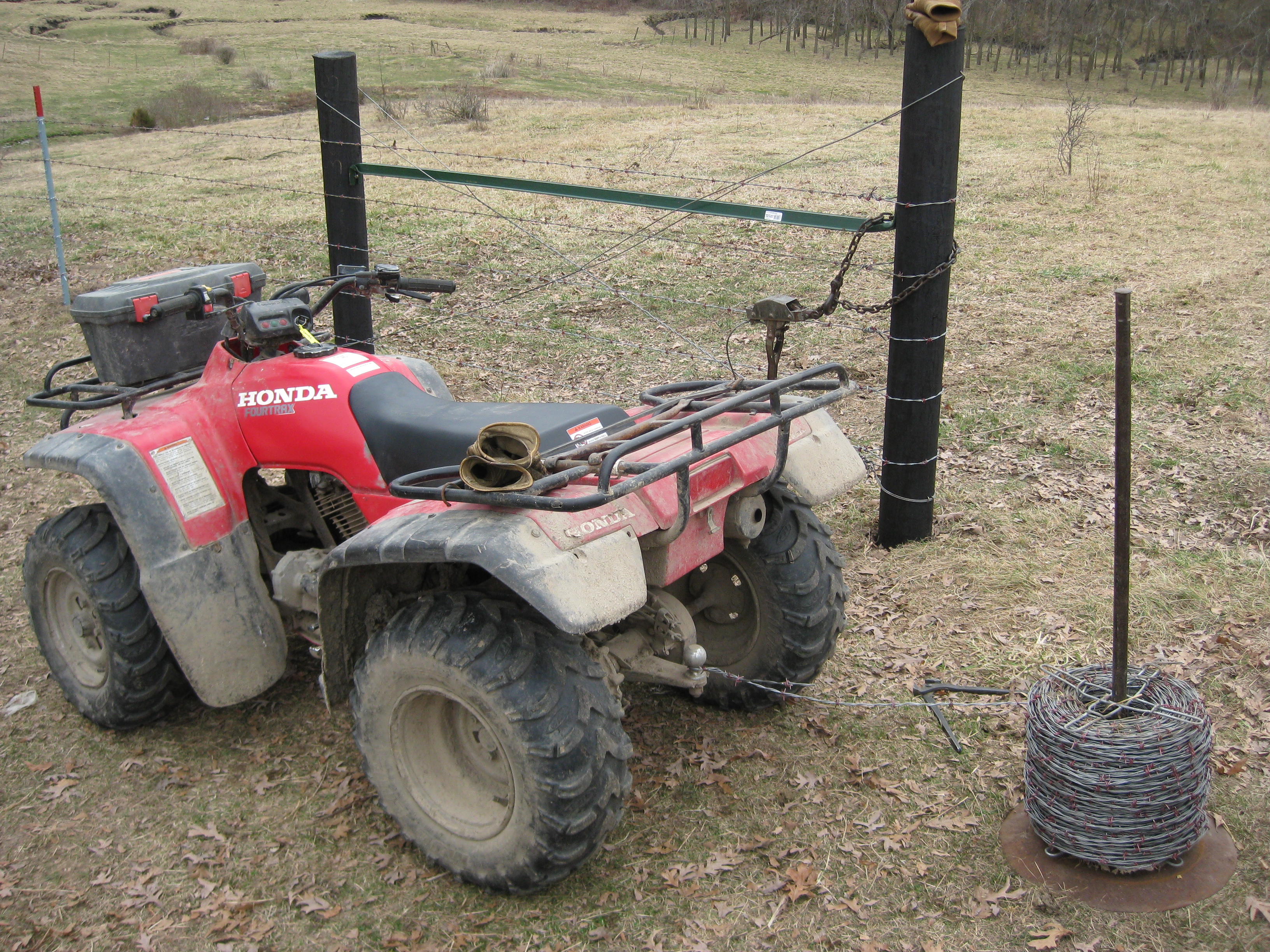
A metal rod is pounded into the ground and an old disc blade is placed on the ground to protect the soil.  The roll of barb-wire is placed on the disc and one end of the wire is tied to the ATV.  I use the ATV to pull the wire to the other end of the fence and tie it to the end post.

After your first wire is in place as a guide wire, pound the rest of your posts into the ground.  We use a ratio of five metal to one wooden.  Metal posts are cheaper and don’t rot; but wooden posts are stronger and resist cattle pushing on the fence better.

A fence-stretcher is attached to the wire.  As Dad cranks the handle, I make sure the wire is not caught on any brush and is in line with the fence.  I use a pliers because if the fence-stretcher slips off, the wire will slip quickly and cut through your hand.

Once the proper tightness is achieved, the wire is tied to the end post and the fence-stretcher is removed.

A clip is used to secure the wire to the steel post.  There are notches on the post and we use these as markers to make sure the wires are evenly spaced.

Staples are used to secure the wire to the wooden posts.

This concludes my fencing posts.  If you have any questions, please comment.