Building a New Fence II

May 25, 2010

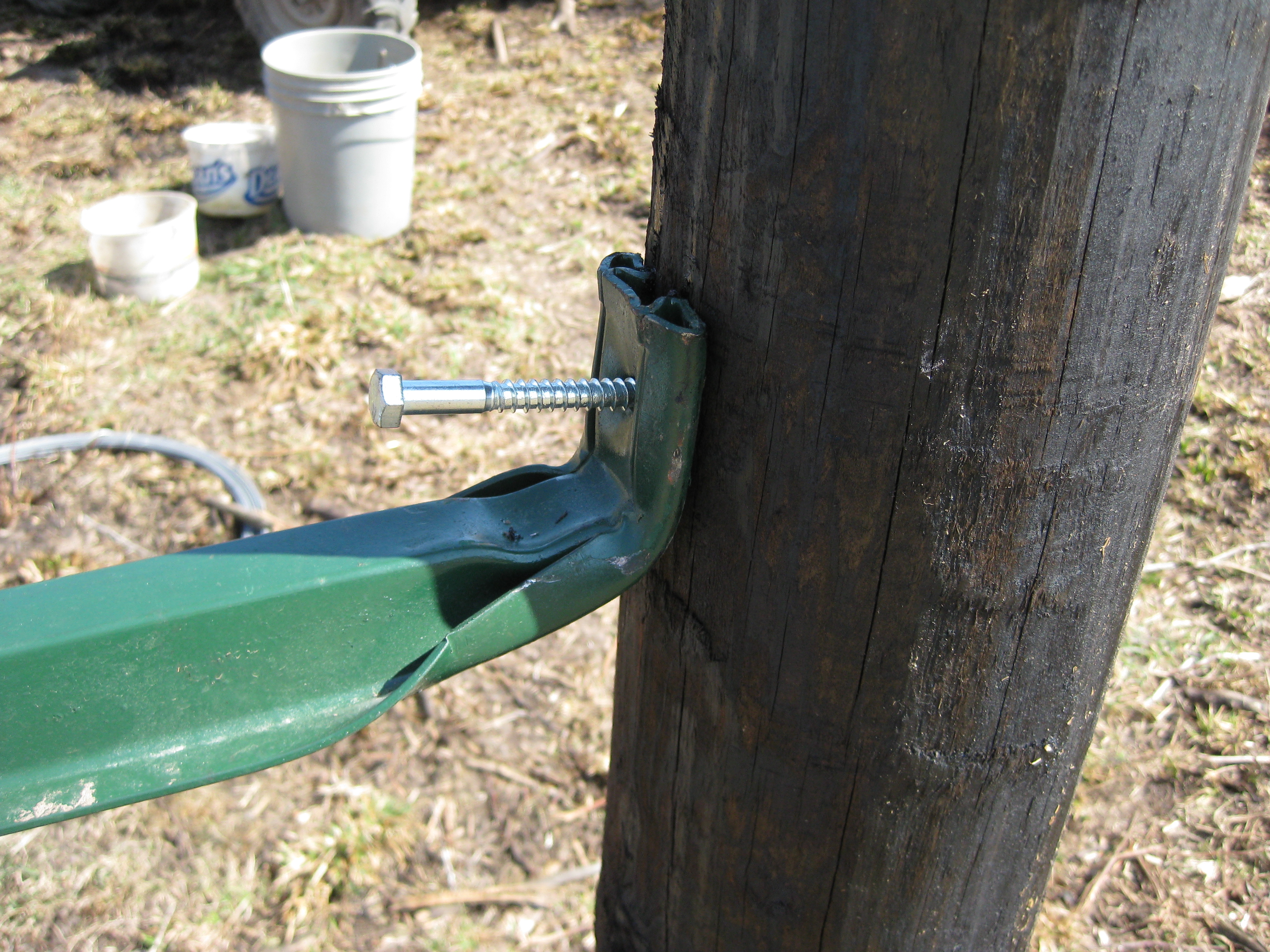
Brace posts with metal brace and brace wire running diagonally from upper second post to lower end post.  Once you’ve decided where to put your fence, put your brace posts in.  You need a set of brace posts on each end of your fence in order to pull the barb-wire tight. 

You can also have more, based on your needs.  We put six sets of brace posts in this quarter mile of fence because we put a space for a gate, and had to fence across two valleys. 

We use six-inch diameter, eight-foot long, creosote-treated posts and pound them into the ground about three feet for our brace posts.  The posts in the interior of the fence are five-inch diameter, seven-foot long creosote-treated posts.  We have found no other wood treatment comes close to creosote for preserving wood from rotting.  It is frustrating to build a new fence and watch the wooden posts rot off in ten or fifteen years.

The metal brace is secured to the posts with a lag-bolt.  We put our brace in level, about two-thirds up the posts.  Many people are putting the brace at the top.  The old-fashioned way is to put the brace at an angle.  This has the tendency to pull one of the brace  posts out of the ground, though.

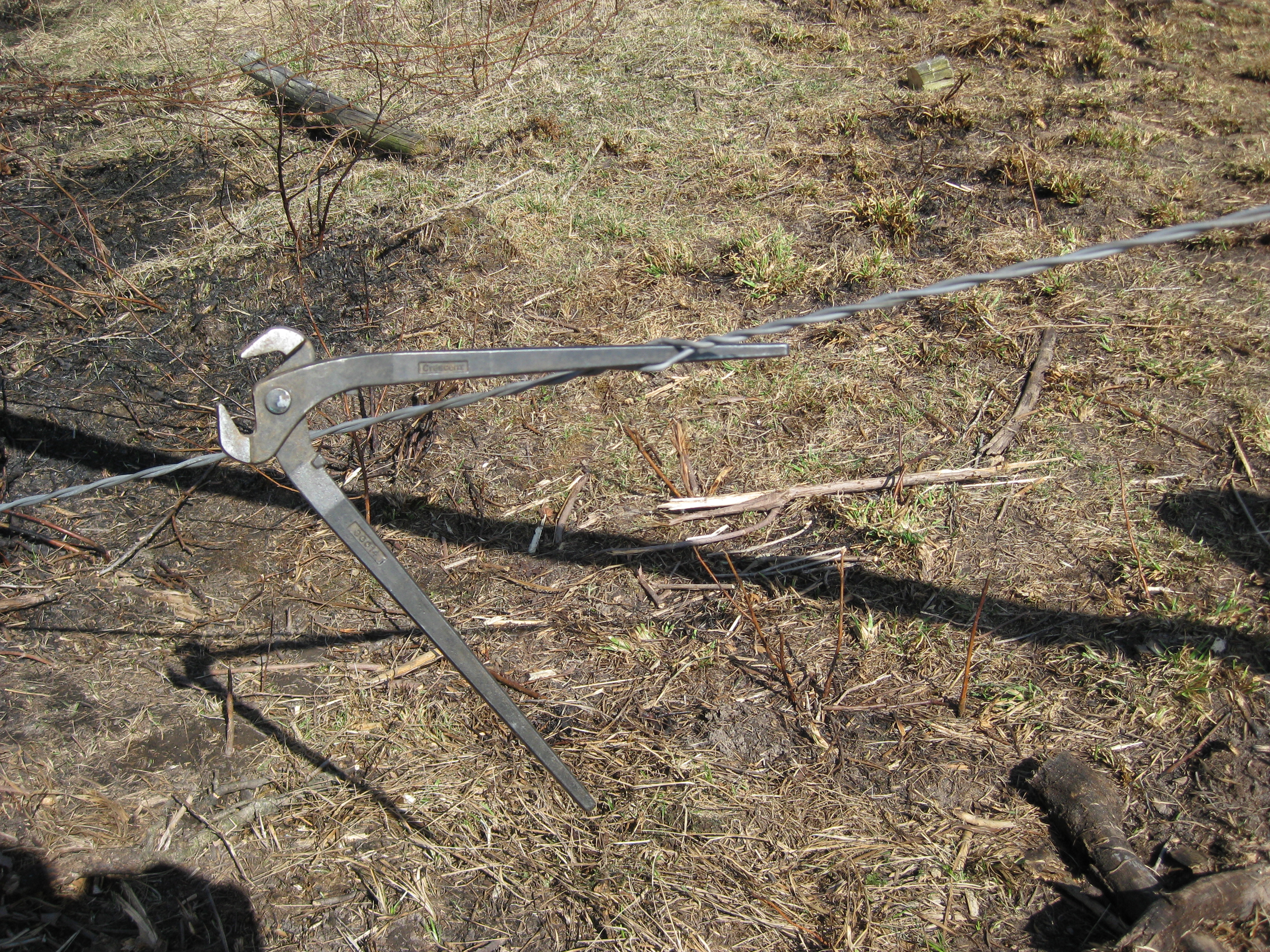
The brace wire is run through a staple at the top of the second post, around the posts, and through a staple at the bottom of the end post.  After it is tied, I use the handle of a fencing pliers to wind it, thereby tightening it.  This pulls the two posts together against the brace, making an excellent anchor to stretch barb-wire for your fence.


Body Language in Cattle

May 21, 2010

Citygirlfriend helped us move the herd to the next pasture.  The young calves are slow to move unless they are at their mother’s side.

Citygirlfriend did fine.  I didn’t go far from her, though.  I worried she wouldn’t recognize dangerous body language in the mother cows.

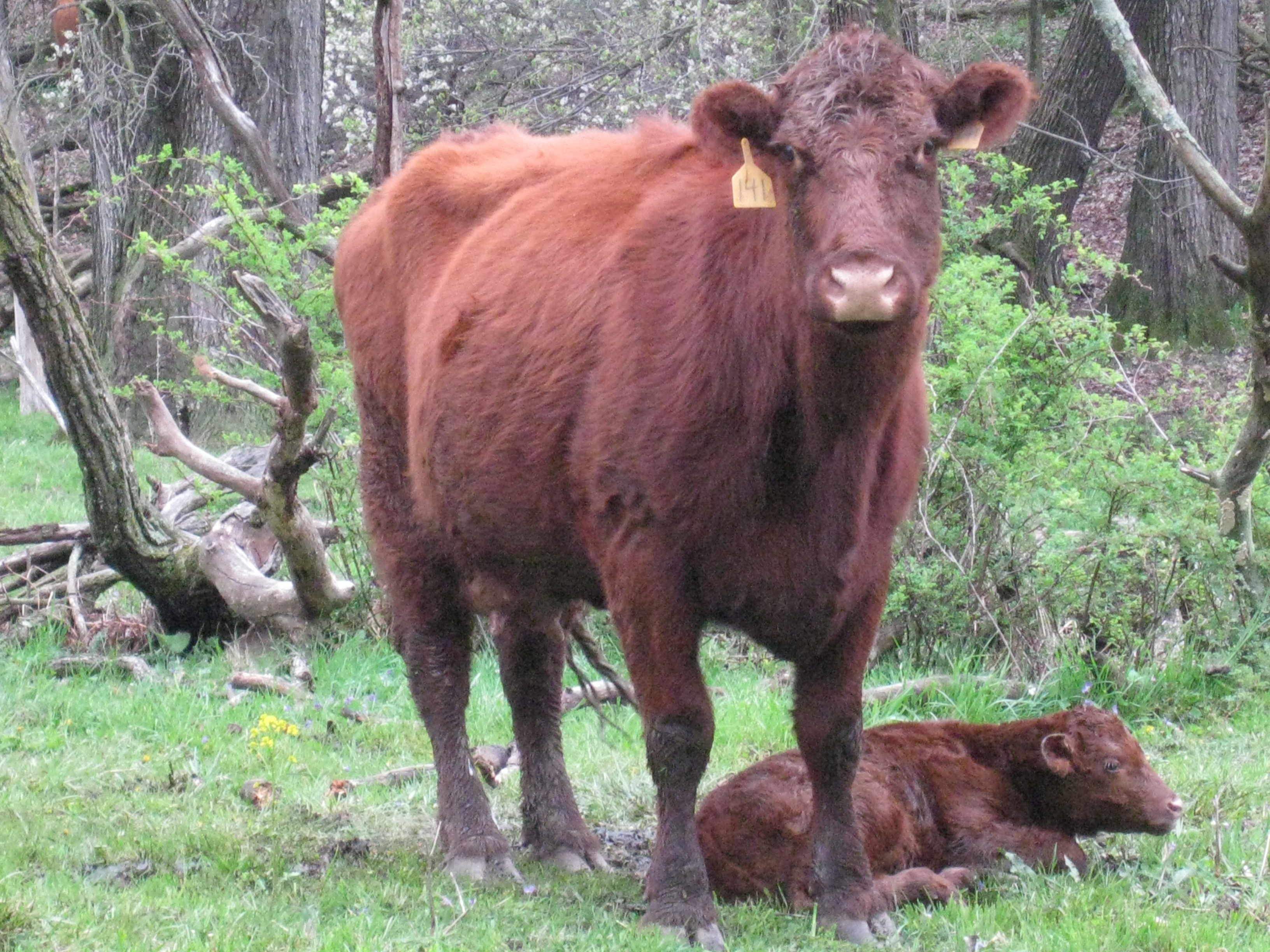
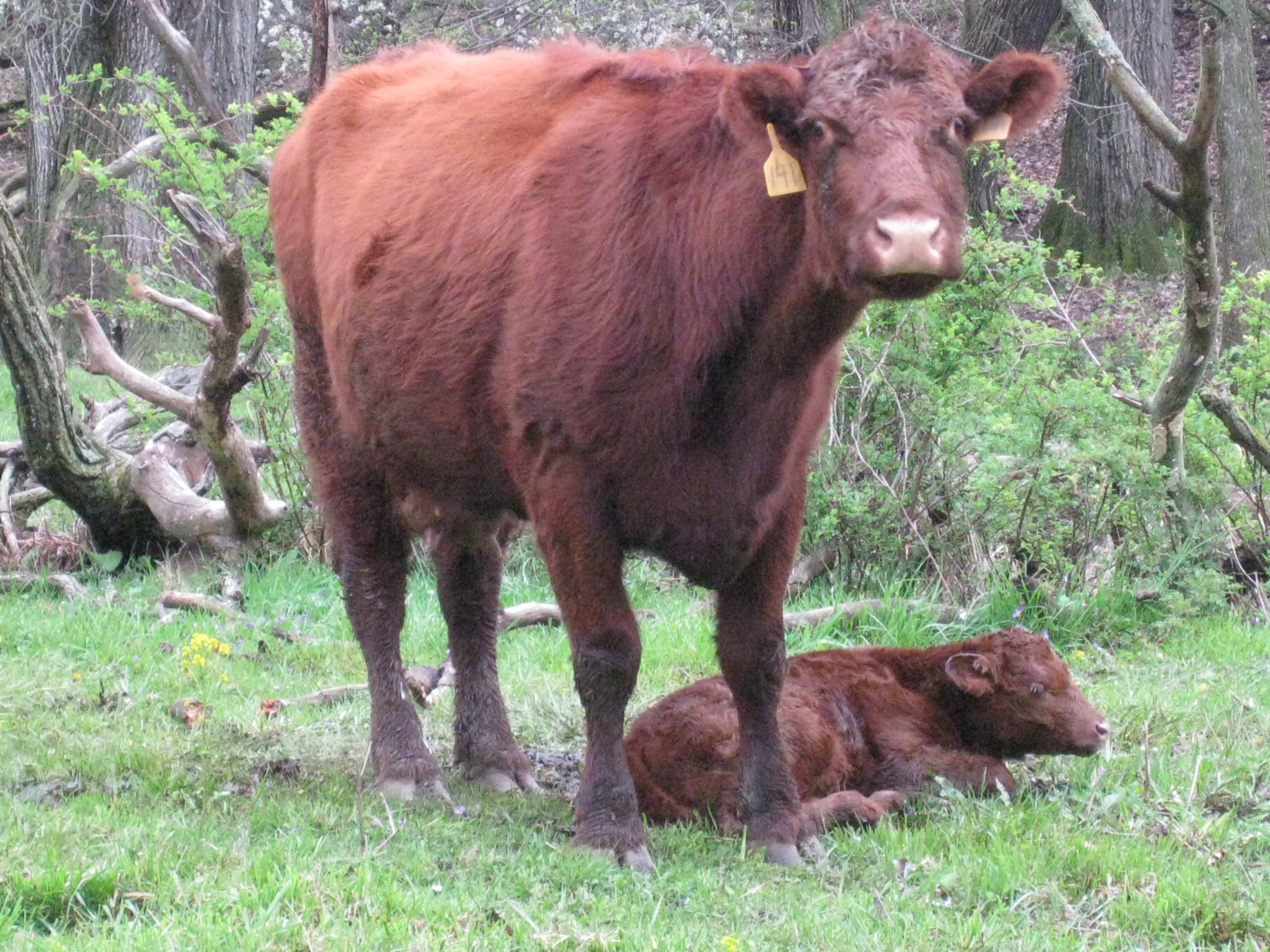
The cow above is protective of her new calf, but neutral.  When I approached her, look at how her body language changed.  She is telling me she won’t back off and I better.

What do you see? 


Building a New Fence

May 11, 2010

I’m finally getting around to posting the photos and writing about making our new fence.  We made the fence the week after my post, “Tearing Out Fence.”

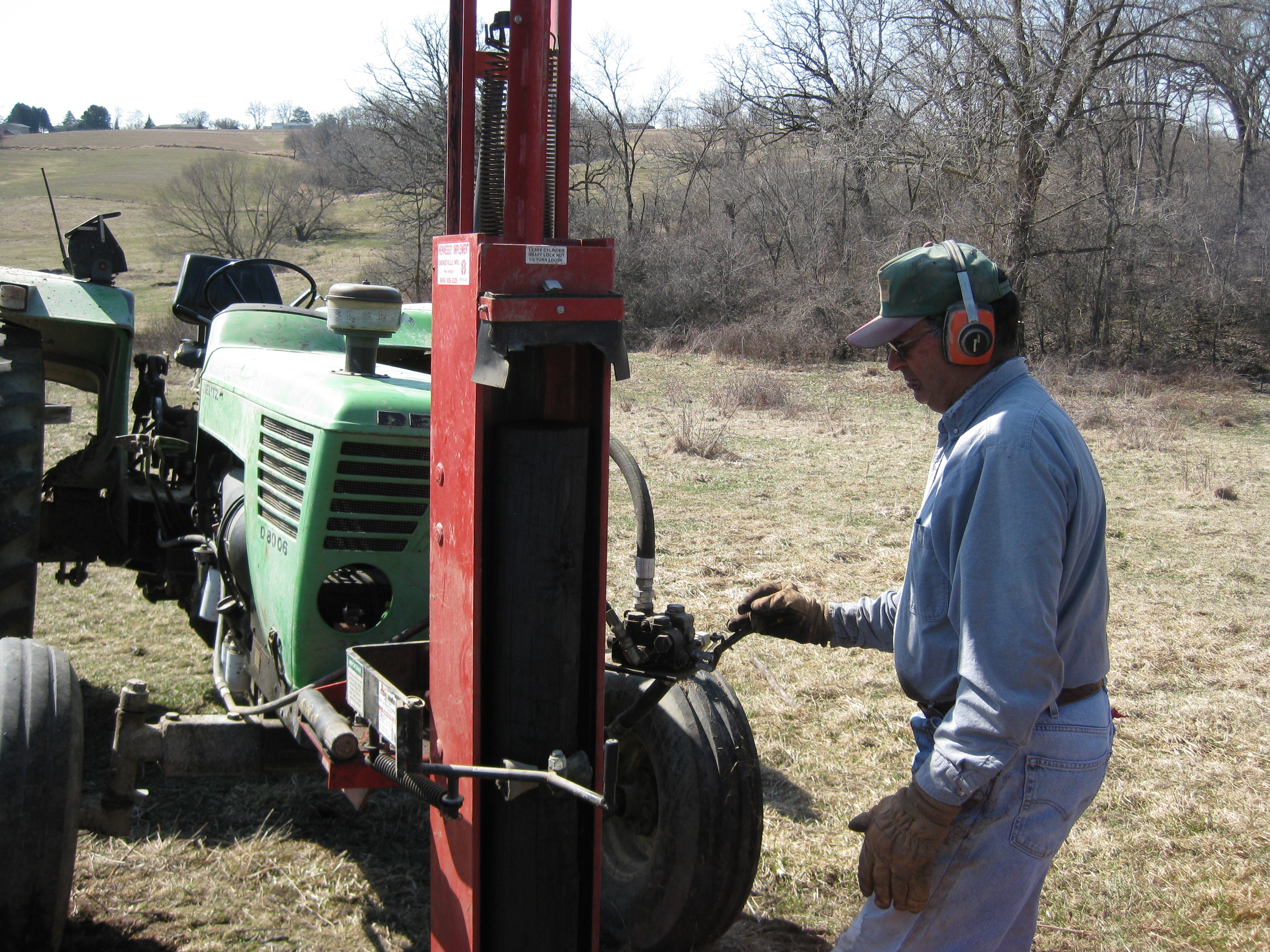
This is a quarter mile of fence.  Pictured above is the post pounder on the front of our tractor.  It is a machine that pounds posts into the soft ground without the need for digging a hole.  It saves a lot of time.  We purchased it new for $2,000 a couple of years ago.  It replaced the one we had used the previous thirty years.

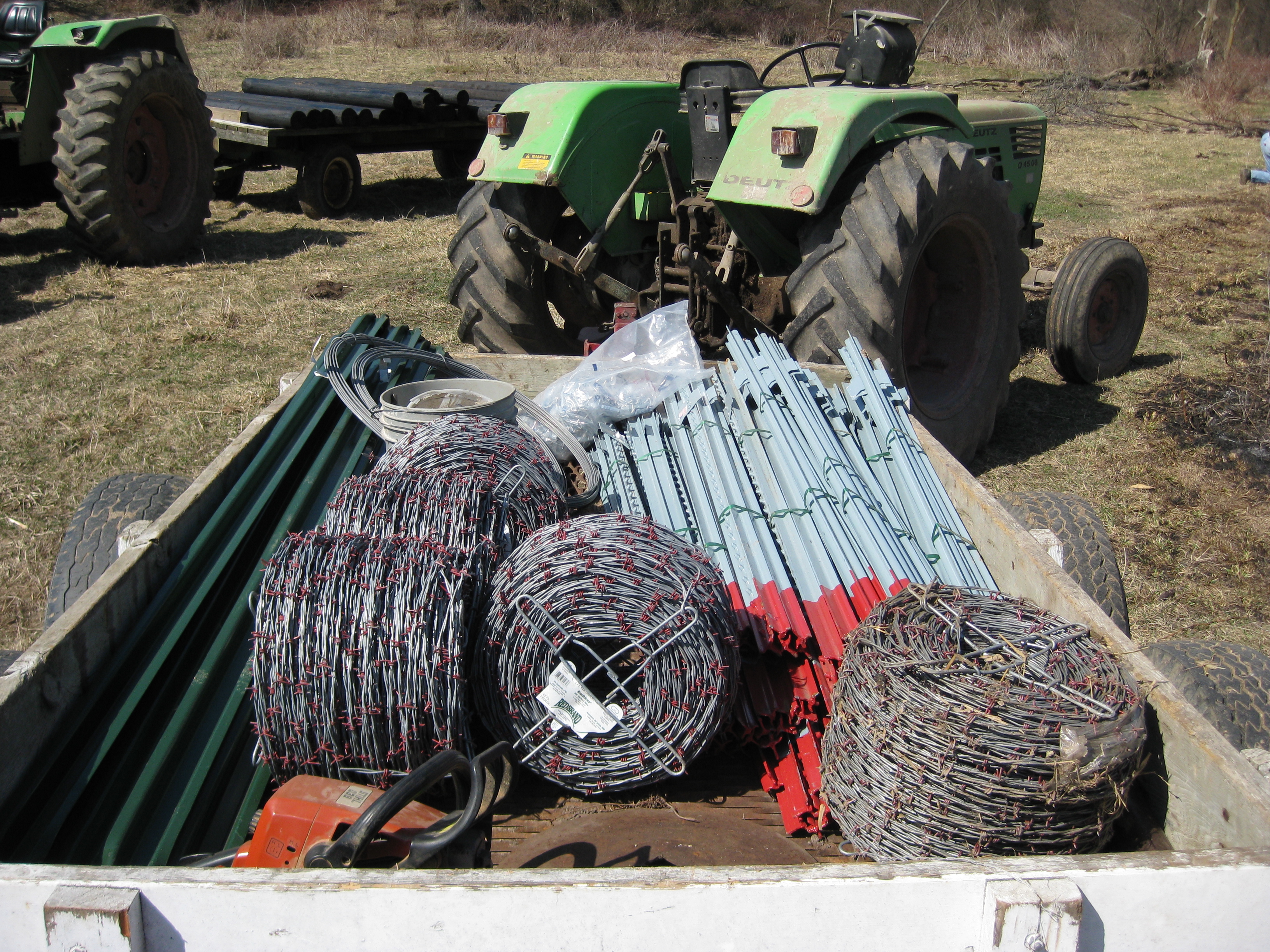
Most of the materials needed to build the fence are pictured below.  We used 100 steel posts, 15 5×7 wooden posts, 12 6×8 wooden posts, 6 ten’ steel braces, 1 roll of brace wire, 5 rolls of barb-wire, staples, and clips.

The costs for the materials are as follows.

100 steel posts @ $3.95 each, equals $395.

15 5×7 wooden posts @$12 each, equals $180.

12 6×8 wooden posts @$18 each, equals $216.

6 ten’ steel braces @$14.99 each, equals $90.

1 roll of brace wire @$10.99 each, equals $11.

5 rolls of barb-wire @$64.95 each, equals $325.

Clips are included with the purchase of the steel posts and staples are relatively cheap. 

So the grand total is $1217.  Multiplied times four equals the cost per mile, $4868.  Not a cheap fence, but we expect it to last thirty years. 

Will I be around to build its replacement?  Who will I be working with?

Following posts will go into more fence-building detail with pictures and explanations.

After and before pictures.


Mothers and Farmers Always Appreciate a Good Poop

April 25, 2010

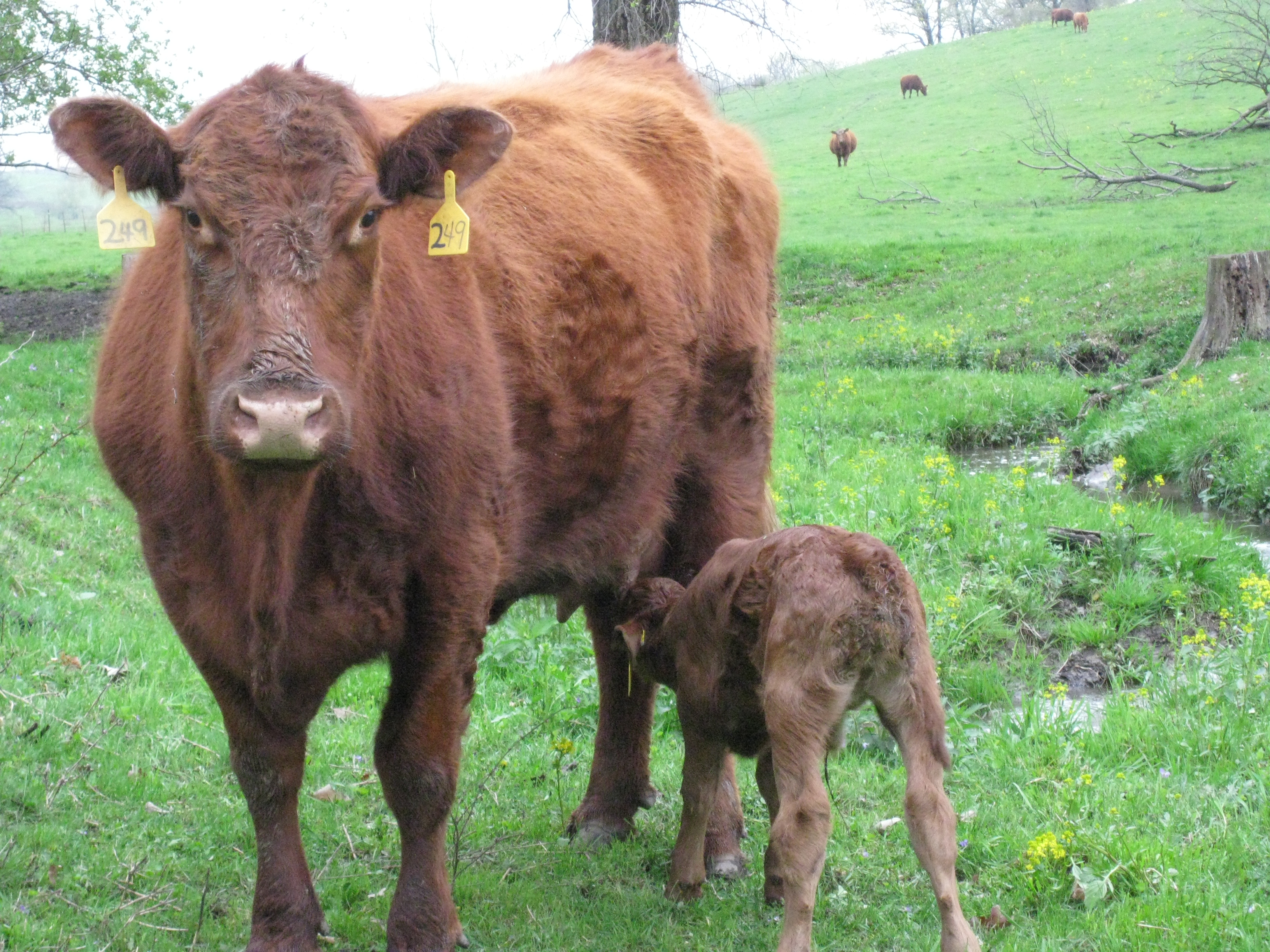
We had a cold, hard rain last night.  249 wasn’t with her calf that was born yesterday.  She was looking in the next pasture.  I drove around in the next pasture.

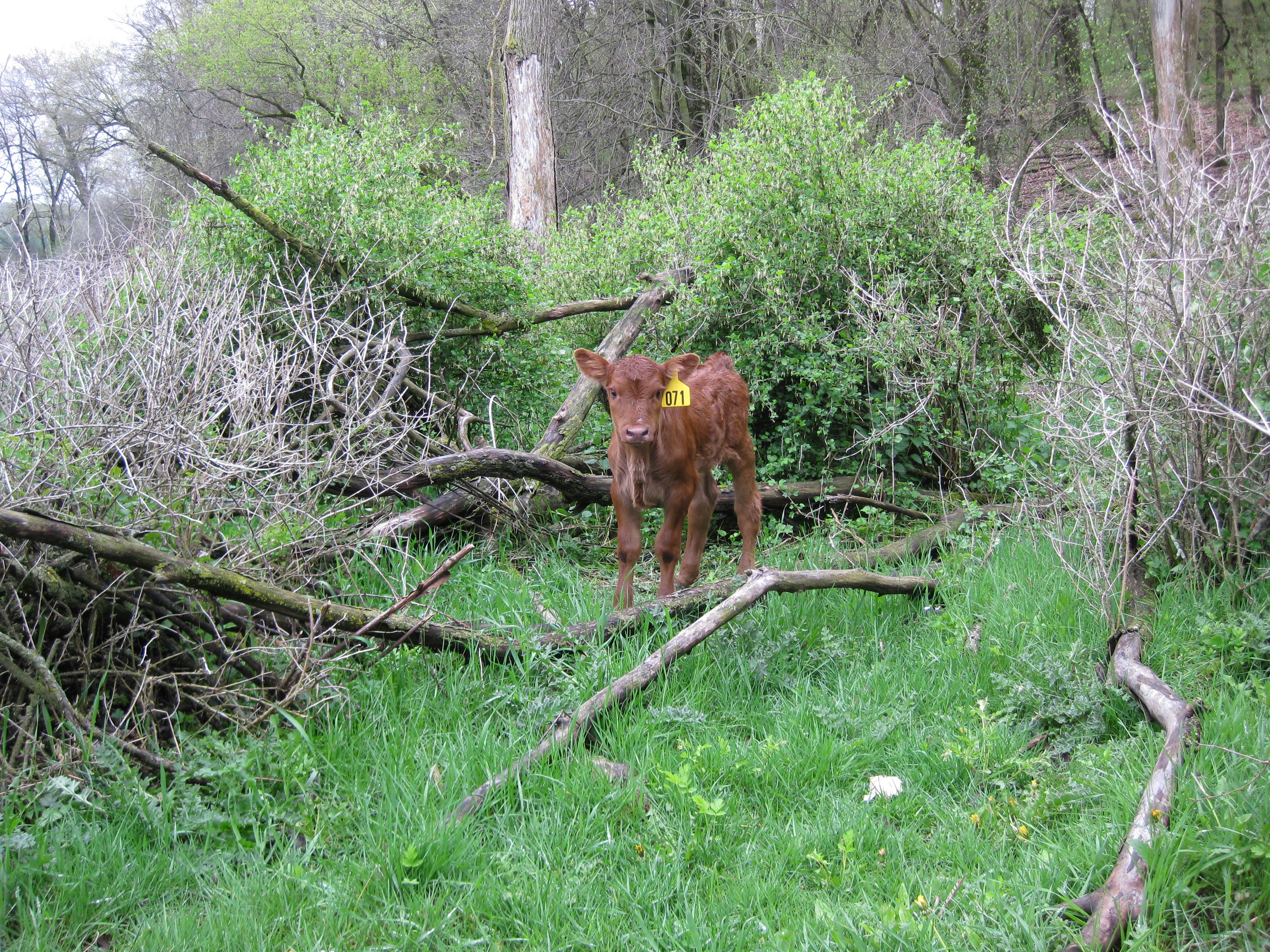
Sure enough, the little shit had gotten separated and went throught the barb-wire fence in the storm.  He was smart enough to find this cozy spot in the bushes.  I caught him and carried him over to the fence and put him under.

He went right to nursing.  I stuck around long enough to see him take a healthy milk poop.

The insect on the manure is Scathophagidae, or Common Yellow Dung-fly.  I have known this insect my whole life;  but until I researched  this post, I didn’t know its name.


A Weekend During Calving Season

April 15, 2010

“We don’t have a problem-free herd yet,” I said.

Dad and I locked 534 in the catch chute in the corral.  We opened up the side gate and put the calf up to its mother’s teat.  It was 24 hours old and no longer had a great desire to nurse.

Dad worked 534’s teat with his hand. He squirted milk onto and into the calf’s mouth, which he held open with his other hand.  The warm milk stimulated the calf and this time he latched onto the tip of the over-large teat when Dad placed it into his mouth.

—–

“I’ll bring the 4-wheeler into the corral if you open the gate,” I said.

I was moving 672 into a side pen with her twins so that we could get 619 into the catch chute and pull her calf, which was coming breach.  672 was a protective mother; which also made her difficult to move on foot.

—–

“How’s everything,” I said.

“Fair,” Dad said.

“What do you mean?”

“Well, 3127 had a calf yesterday afternoon.  I swear it had white on its legs.  Tismorning 3127 had a red calf with her.”

“You think she had twins and left one?” I said.

“Yeah, I was just looking for it.  But maybe I saw the placenta and it looked white on the calf’s legs.”

“Which was it?”

“I don’t know.”

“Let’s go look again.”

The calf with white on its legs was laying alone in the woods where it was born.

“I’ll pick it up and you can carry it on the 4-wheeler.  Are you going to take it to the barn or to the corral?”

“The barn.  I’ll tube it first.  Then we can decide what to do with it.”

—–

“We lost a calf in the creek last night,” Dad said.

“Shit.  Which one?”

“103.  She walked all around the pasture yesterday and had to have it next to the creek last night.”

“And that cold rain didn’t help.  Do you want to put the twin on her?”

—–

Our corral was full.  103 was in a pen with her foster calf.  672 was in a pen with her twins.  534 was in a pen with her calf.  619 was in the alleyway with her calf.


Red is the New Black

March 29, 2010

“RANG Heifers?  What kind of breed is that?” Dad said.

“No idea.  Maybe it stands for range?”  I said.

We were looking at a sale report from March 19th for Monroe, Wisconsin.

The best-selling Angus heifers brought $93.50 per hundred lbs. at an average weight of 682 lbs.  The best-selling Angus steers brought $99 per hundred lbs. at an average weight of 750 lbs.  The best-selling Crossbred heifers brought $93 per hundred lbs. at an average weight of 682 lbs.

The RANG cattle blew them out of the water.  653 lb. heifers brought $102 per hundred lbs.  757 lb. steers brought $105 per hundred lbs.  That’s about 50 dollars higher per head.

We had topped the March 12th sale at Bloomington, Wisconsin.  Our red heifers brought $102.50 at an average weight of 666 lbs.

Our heifers are not purebred.  Dad raised Shorthorns all his life as his Dad did before him.  We grew disgusted, however, with the Shorthorn breed’s emphasis on the showring and the addition of Maine-Anjou genetics to the Shorthorn breed in the 90’s.  We tried using Maine/Shorthorn bulls; but decided to do something different when we found ourselves pulling big, dead, calves out of cows.

We started using Red Angus bulls.  Rah-rah Red Angus!  Calving ease improved and raising cattle was fun again.

We have been using Red Angus bulls exclusively for over the past ten years.  We have been using bulls from Leland Red Angus and James Red Angus for the past five years.  I wrote about our selection criteria in my post,  “Selection: A Force for Change.”

The bulb in my head lit up.  “I know what RANG stands for. Red Angus!”


Reputation Selling Heifers

March 26, 2010

“Would you take 650 a head for the entire group?” Greg said.

“We would,” Dad said.  “But we’ve got guys coming to the sale. And I told Kevin I’m bringing them.  And Bloomington advertised already.”

“Yeah,” I said.  “I wished we could have talked a week ago.  We’ll definitely call you next year.  I didn’t realize you bought cattle in the spring.”

“Whenever.  Whenever there are good cattle to be bought,” John said.

“Do you think we made the right decision,” Dad said.

“Yeah, it’s our reputation,” I said.  “It’s probably going to cost us about 2,000 dollars, though.”

“How do you figure?”

“I figure they’ll bring about 600 dollars net at the sale barn.  So 50 dollars a head times 40 head equals 2,000 dollars.”

“I guess that sounds about right,” Dad said.  “Would could we do?  We’ve made a commitment.”

“And we’re in this business for the long haul.  So even if it costs us a couple thousand short-term, we can make it up long-term by having consistently good cattle that people want to buy.  Let’s call it an investment in our future.”

As our hay supply dwindled and the groundhog didn’t see his shadow, we thought about selling our yearling heifers.  We planned to select the heifers we wanted to breed and keep for cows and then offer the rest privately for farmers to add to their cowherd.  Whatever was left would be sold at the local livestock auction.  We have been doing this ever since we improved our genetics using Red Angus bulls and have always had a positive response from farmers.

We placed an ad in the local Shopping News.  It read, “Yearling Red Angus replacement heifers for sale.  Matthew Walter, phone number.”

We ran the ad for three weeks and I received no calls the first week, two calls the second week, and four calls the third week.  Nibbles, but no bites.

It appeared that our price was a little high.  We were asking $700 a head.  The feeder calf market was soft in January and the first half of February.  Our best estimate was that we would get $500 to $550 a head at the sale barn.

One guy stopped in a couple of times and told us we were $100 too high.  We thanked him for his interest and told him we would tell him when we took them to the sale barn.

Dale stopped in and walked through them.  We could tell he was impressed when 978 walked up and licked his arm.  People are impressed by quiet cattle.

Dale was interested, but in the whole group.  He wanted us to call him when we took them to the sale barn.

We called Kevin at Bloomington a week in advance of the sale so he could advertise them.  We contacted a trucker to help us haul them.  Everything was lined up for the March 12th sale.  And then John and Greg stopped in and made us a great offer.

The very night after we declined Greg’s offer, Kevin called us to make sure we were bringing our heifers.  He said they had received calls and there was definitely some interest in them.  Dad and I were glad we weren’t going back on our word.

We sat and watched cattle sell.  There is always tremendous variation in the prices.  Four red heifers averaging 666 lbs., brought 95 cents per lb.  Five black heifers averaging 632 lbs., brought only 88 cents per lb.

Thirteen red heifers averaging 656 lbs., brought 99.5 cents per lb.  I hoped ours would bring that much.

Our heifers came in the ring.  They looked good.  Thirty-eight heifers averaging 666 lbs., brought 102.5 cents per lb.  Two small heifers averaging 420 lbs. , brought 112.5 cents per lb.  Dale was the winning bidder for all of them.

They averaged $672 each.  Even after commission and trucking was paid, we still made well over $650 each.

We were happy.  We made some money.  And more importantly, we stuck to our word and kept our reputation intact.


Tearing Out Fence

March 20, 2010

Dad is ok.  But we had an emotional St. Patrick’s Day.

Dad sat down on a pail to take a break while I used my chainsaw to cut some shrubs in the fence row  about ten feet away.  I was trying to avoid the barb wire, of course, but hit a wire that was embedded in the tall grass.  It broke and went flying into his face.

I gave him a ride home on the ATV and Mom took him to the local clinic where he received three stitches in his lip and a tetanus shot.  Mom took him to McDonald’s after that. He had a shamrock shake.

Dad was hurt at 2:30 and was back helping me clear out the fence row by 4.  We finished clearing the fence row by 6.  A quarter mile of fence cleared in a day and a half, even with an injury timeout.

Pictured below are the brace posts.  The brace posts are tied together with wire, with a brace between them.  This gives you something to pull against when stretching the barb wire.

The brace was traditionally placed at an angle.  But this results in one post being pushed out of the ground over time.   We place our brace  level and I will picture this when we make this fence new.

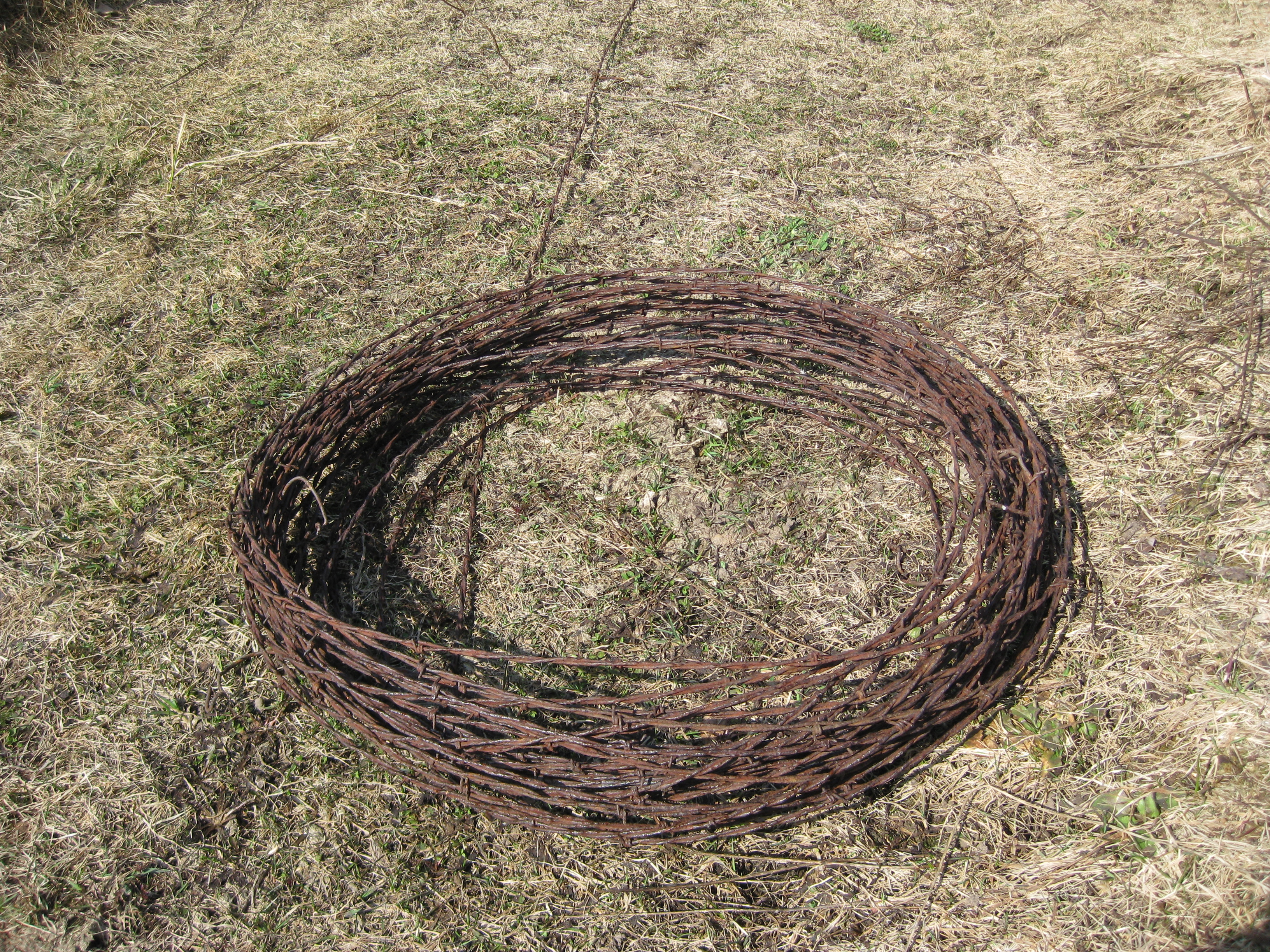
This is the old barb wire being rolled up.  Our neighbor was rolling up his barb wire on a barrel.  Dad said not many people know how to roll up barb wire.

The wire is on the ground and a hoop is formed and rolled along the ground crisscrossing the wire as you roll.  It doesn’t seem like rocket science to me; but I benefited from Dad’s teaching.

This is the worst stretch of fence because of all the brush that has grown up in it.  Dad wasn’t the only one to get hurt.  I sprained a tendon in my forearm trying to do too much, too fast.

We have been talking about replacing this fence for at least the last three years.  It was great to find some beautiful March weather to get after it.

Now it’s the first day of spring and it snowed.  This will give us a few days to heal until the ground is dry enough to put in the new fence.


Cattle Coral Design: Low-Stress Stockmanship

February 3, 2010

Below is a drawing of our corral.  Mark from ISU asked for more information on our corral.  Thanks Jammer for helping with Autocad.

Dad spent all of one winter studying a book of corral designs.  He built his own design the next summer.  We have used it for over 25 years and there isn’t a lot we would change.

There is an exterior gate between #2 and #1 and an exterior gate between #8 and #9.  Gates open so that the corral could be used as a circular riding arena.  I will describe how we use the corral to preg-check the cows.

Cattle are lured into the large alleyway, #1, with hay or walked in using low-stress stockmanship.   Gates are opened from the exterior into #2, and through #5, #3, and #4.  Cattle are walked using pressure from at least three people from #1 to #2.  By the time we get the exterior gate shut, cattle are beginning to move into #3 and #4.  I run around and shut the gate between #3 and #5 to keep too many cows from crowding in.

When the veterinarian arrives, I move all the cows except for about fifteen back into #2.  Fifteen cows are now in #3.  And #4 is empty.  I now walk two cows at a time into #5 and #6 which has a crowding gate and they go down the alleyway into the catch chute, #7.  One or more cows stands and waits in the alleyway with a bar behind her to keep her from backing out.

When the system is working well, I’m slowly bringing in more cows as the vet. is preg-checking them.  One person is helping move the cows down the alleyway while standing in #10. 

If a cow is bred, she is vaccinated and turned back out into the pasture.  If a cow is not bred, (open), she is moved into #4.  At the end of the day we can load the open cows using the alleyway or back the trailer into #10 and load there.

Ok, this is quick and dirty.  Comment if you have questions and I will clarify.


Pregnancy-Checking Cows

November 14, 2009

IMG_7478


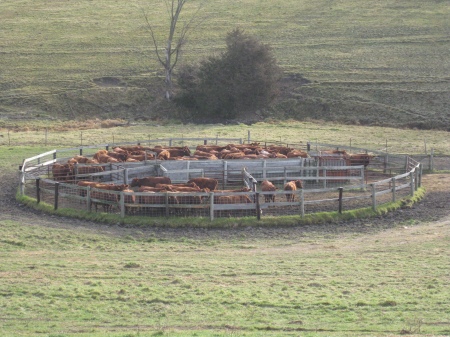
Sixty-seven cows waiting in the corral.

We pregnancy checked our cows last Tuesday and Wednesday.  The vet. checked 129 cows.  10 cows were not bred, which is “open” in farm-speak.  That makes 8% open or 92% bred in a 60 day breeding season.  I was hoping for less than 10%, so I’m happy.

Five cows were not checked because we are taking them to market because of old age.  All 134 cows were in one herd with five bulls.  This is the 2nd year of mob-grazing and the results are better than last year.