Sorghum/Sudangrass and Forage Peas for Pig Pasture

June 20, 2014

DSCF1719


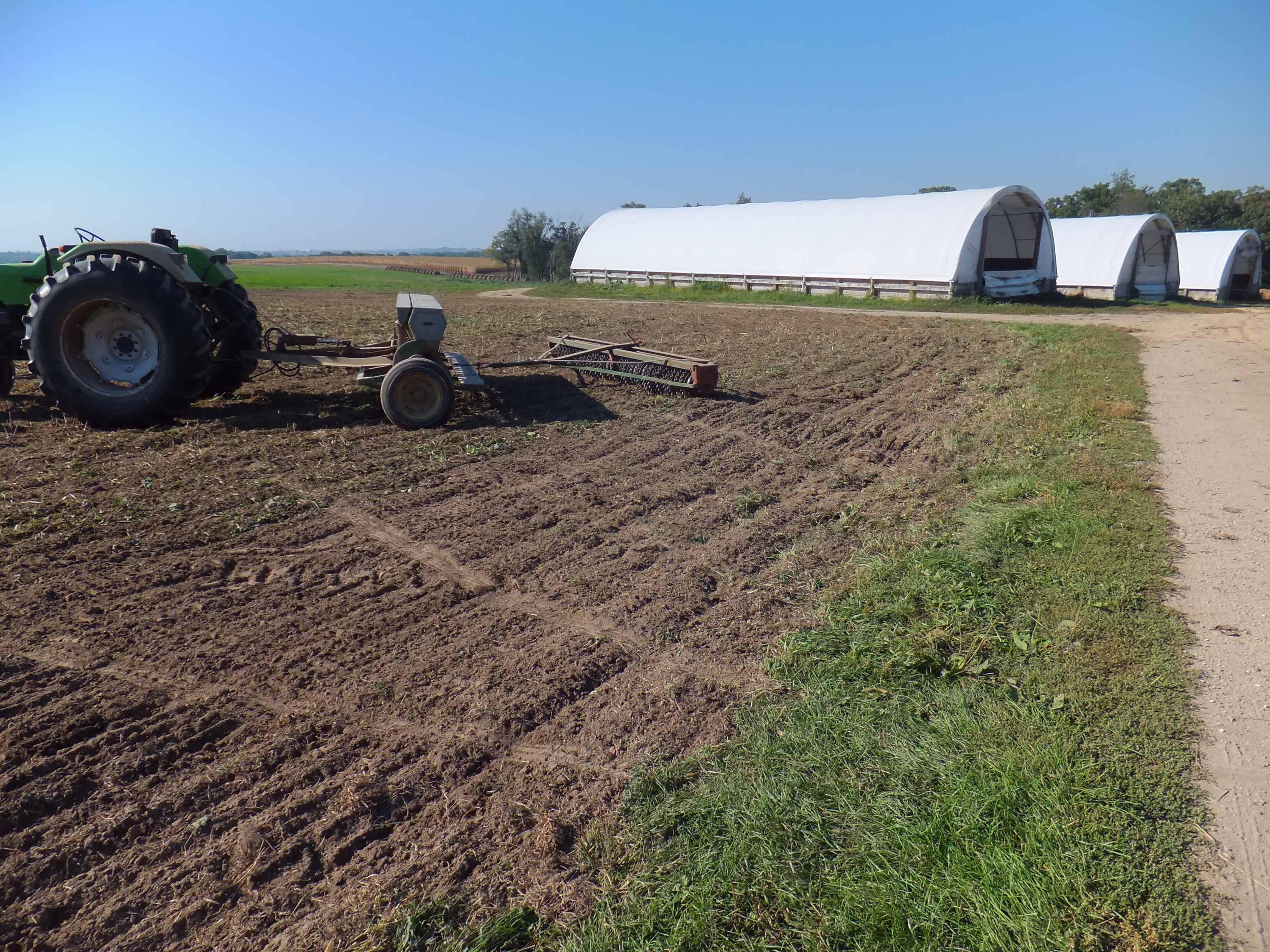
I planted two forages for a pig pasture this spring which are new to me.  I’m very pleased with the forage peas.  I’m not happy with the sorghum-sudangrass, but don’t feel I utilized it correctly.

I no-till planted both into last year’s pig pasture on April 23rd.  I used my single-disc John Deere grain drill, which is not considered a no-till drill, but works great when the ground is mallow in the spring.  I planted about 25 lbs to the acre for each.

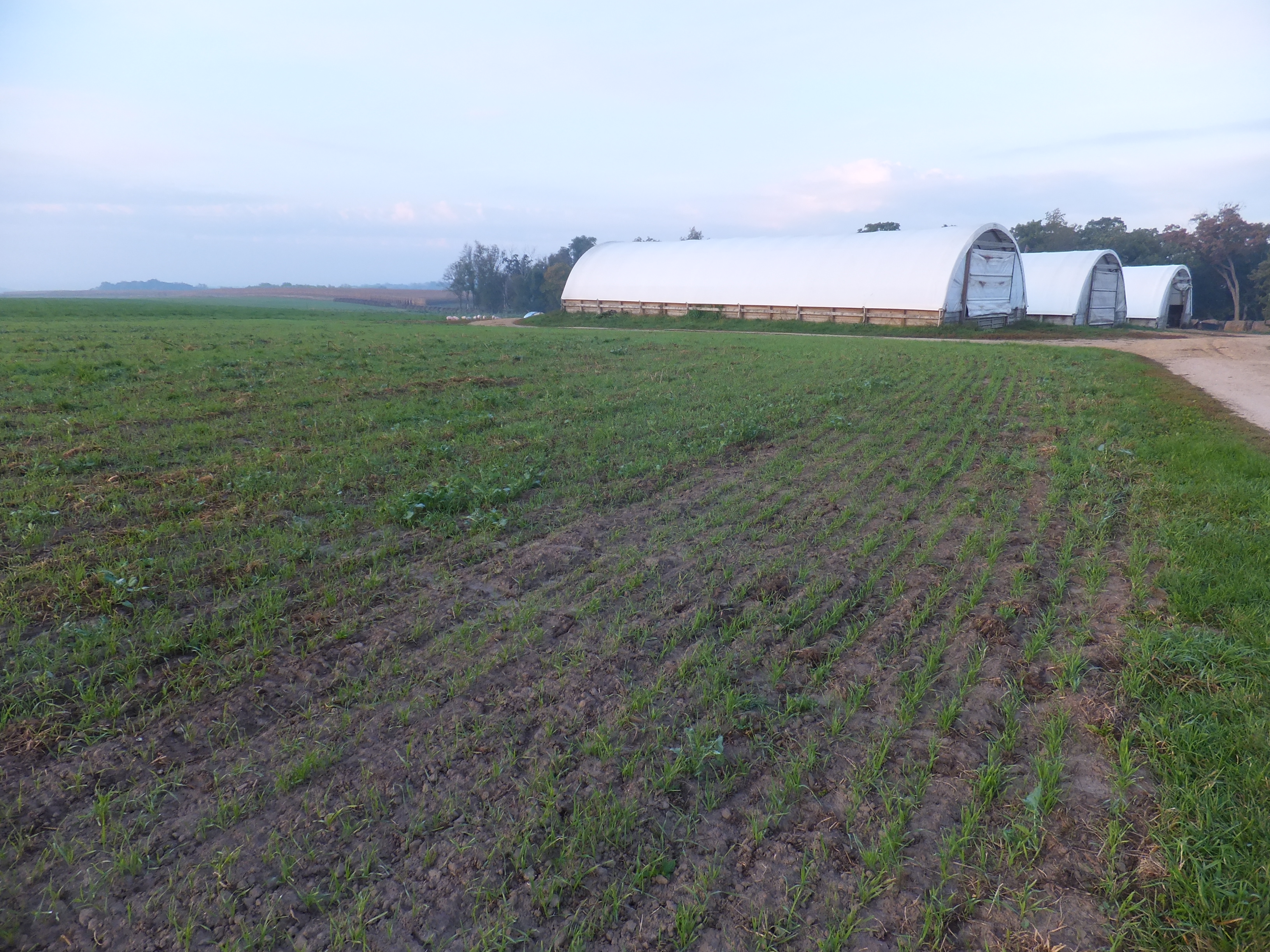
Above you can see what most of the pasture looks like.  Three-foot high forage peas growing thickly.  The warm-season sorghum-sudangrass has been overpowered by the cool-season peas.

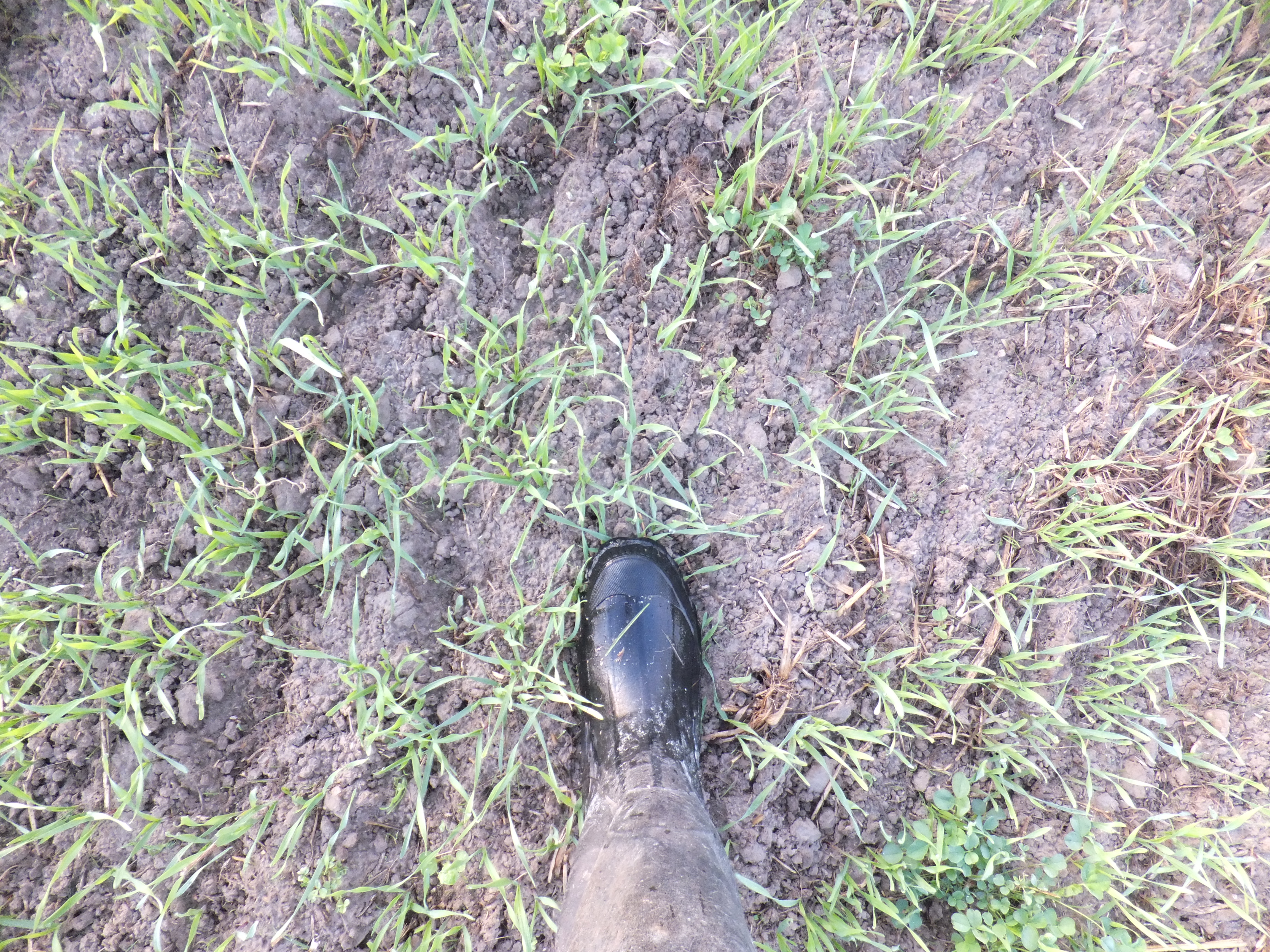
Below you can see an open area where each plant is growing side by side.  The sorghum-sudangrass is thriving here.  It looks like corn.  The pea is the green and white leaf on the left.

The sorghum-sudangrass is called Surpass BMR 6, and is from Lacrosse Seeds.  I can’t even find the forage pea on their website.  It’s safe to say the pea did better, but I believe it’s all in how I used them.

Planting them together and early in the spring is an advantage for the peas, and the results bear witness.  I shouldn’t have planted them together, but I wanted to try both plants and wasn’t sure I would have another spot to plant in this year.  Waiting another year is just too much.

I also think the sorghum-sudangrass would have like to have been planted deeper, but no-till into mallow ground worked great for the pea.  On a side note, Buckwheat no-tills very well in the spring, although it is not supposed to tolerate frost.


DSCF1709


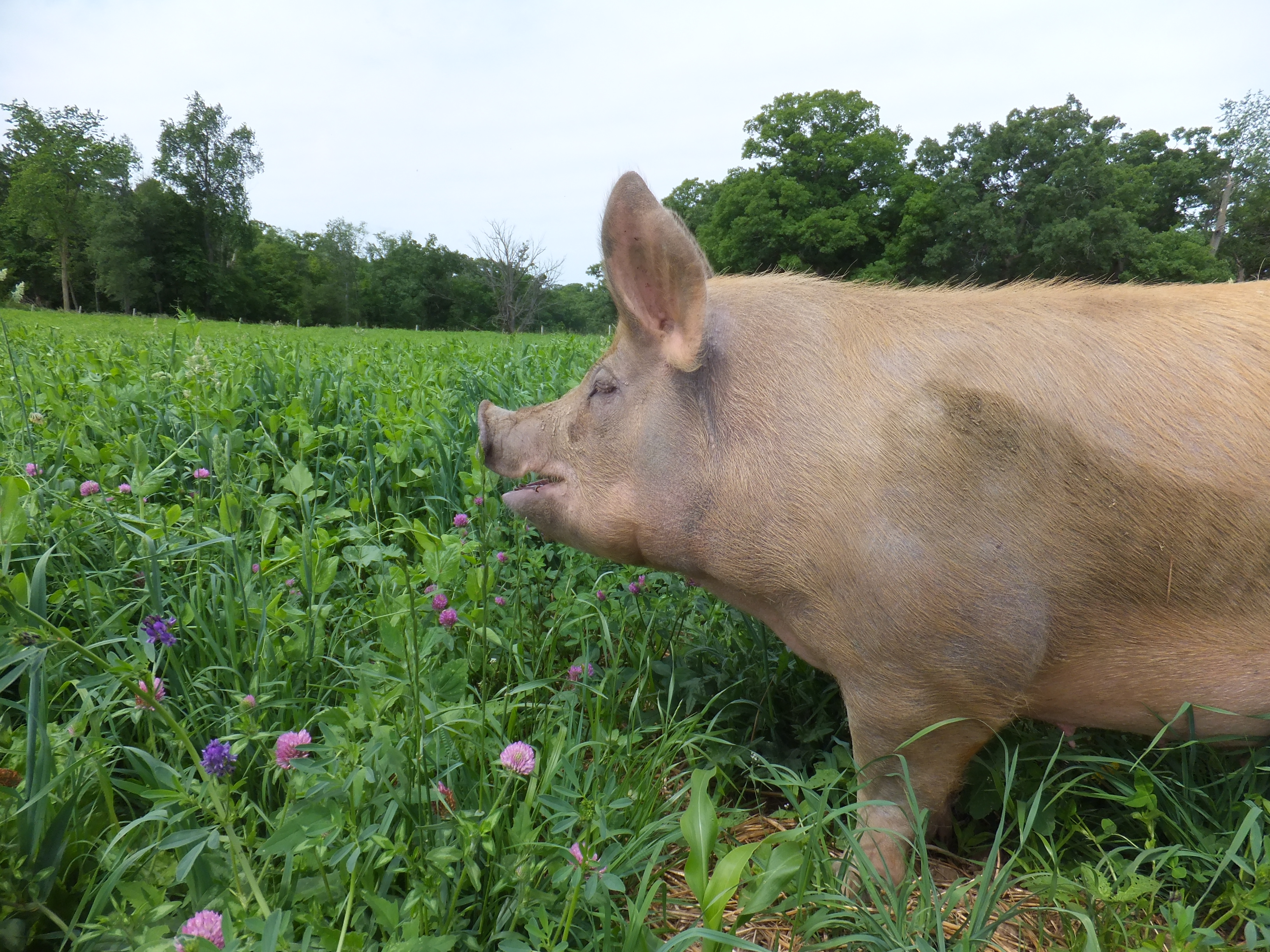
I couldn’t resist including the photo below with my model sow amongst the purple and red flowers of alfalfa and red clover.  The sow was pictured last September as a gilt with her beautiful litter.  She has large, erect ears, which make it seem as if everything is exciting to her.  Maybe everything is.
DSCF1715


Rotary Hoeing Sweet Corn

June 3, 2014

DSCF1705


If a city person asks you if it will rain tomorrow, you couch your answer based on the likelihood of their plans being ruined. If a country person asks, you answer based on how dry or wet it is, and if we need rain or a break in the rain to get some field-work done.

We were getting dry, but it was moist enough for my sweet corn to germinate.  It was coming out of the ground about a week after I planted.  I rotovated a second time, then planted.

The second rotovating pretty much took care of the rye.  Unfortunately, whatever alleopathic properties the rye had also seemed to dissipate.  About a week after planting I could see small button weeds shooting up.

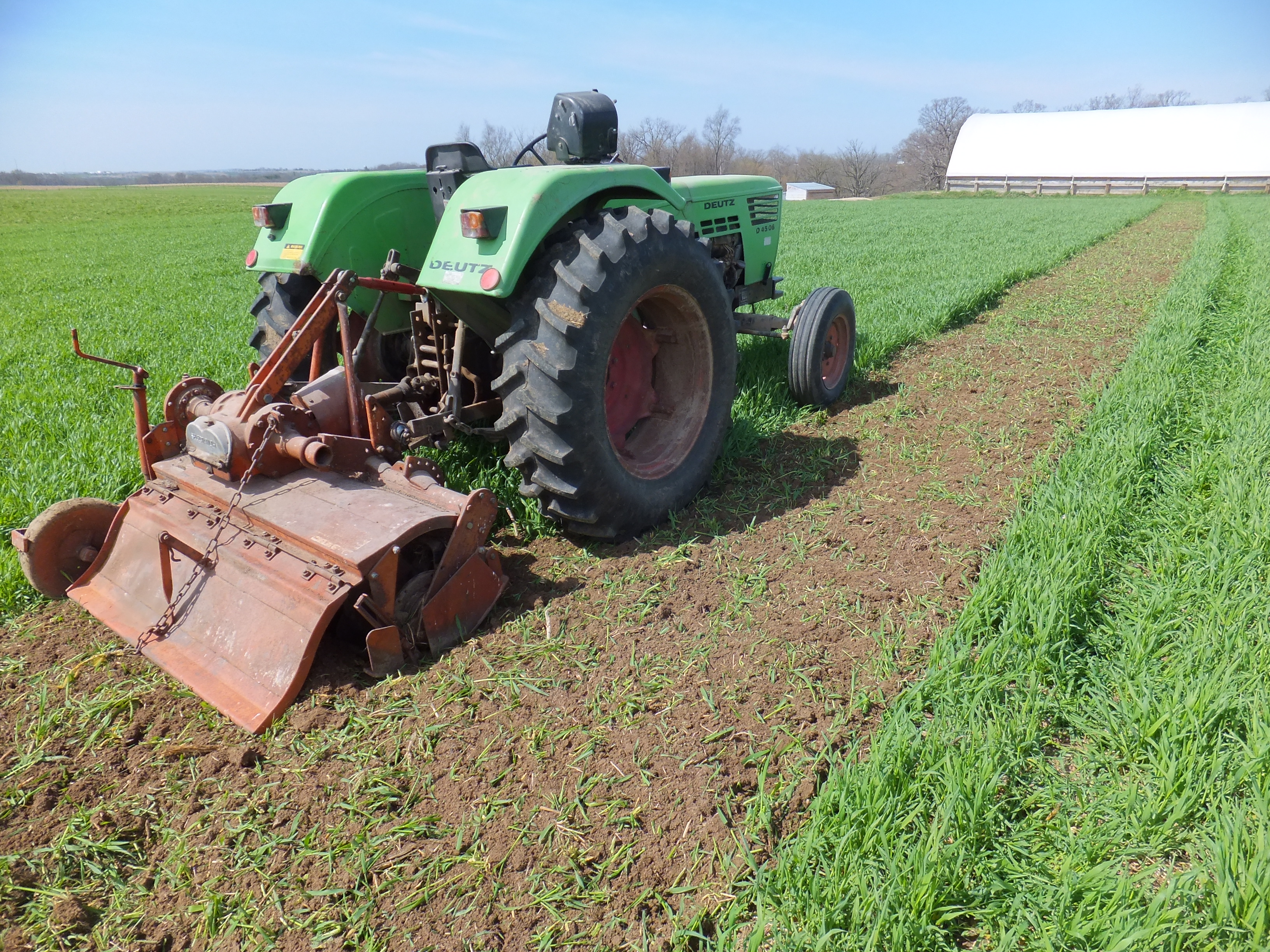
So I took the rotary hoe, pictured, and ran it over the field.  It took some of the weeds out, but not all.  Then we had some rain.

Yesterday I could see more weeds, (pigweed, lambsquarters, and foxtail), poking out of the ground.  I read online that you can rotary hoe until the corn is six inches high without much damage.  So I rotary hoed a second time.  It took out more weeds and didn’t damage the corn.  I’ll probably have to switch to cultivation between rows for weed control next.

My sweet corn is coming up uneven.  I dug and found some of the plants struggling to come out of the ground.  I think the ground was so mallow after two rotovatings I ended up planting too deep.  I had reduced the depth from my Dad’s field corn, but apparently not enough.  Sweet corn has a shrunken kernel when compared to field corn and it doesn’t appear to be as strong pushing itself out of the ground.  Learning.


Rotovating Rye Cover Crop

May 13, 2014

DSCF1668


I rotovated the rye cover crop last week.  The rye was about twelve inches tall and growing fast.  I used a Howard rotovator I borrowed from my partner.  Its a fifty- inch wide model.  I rotovated to a depth of about five inches.

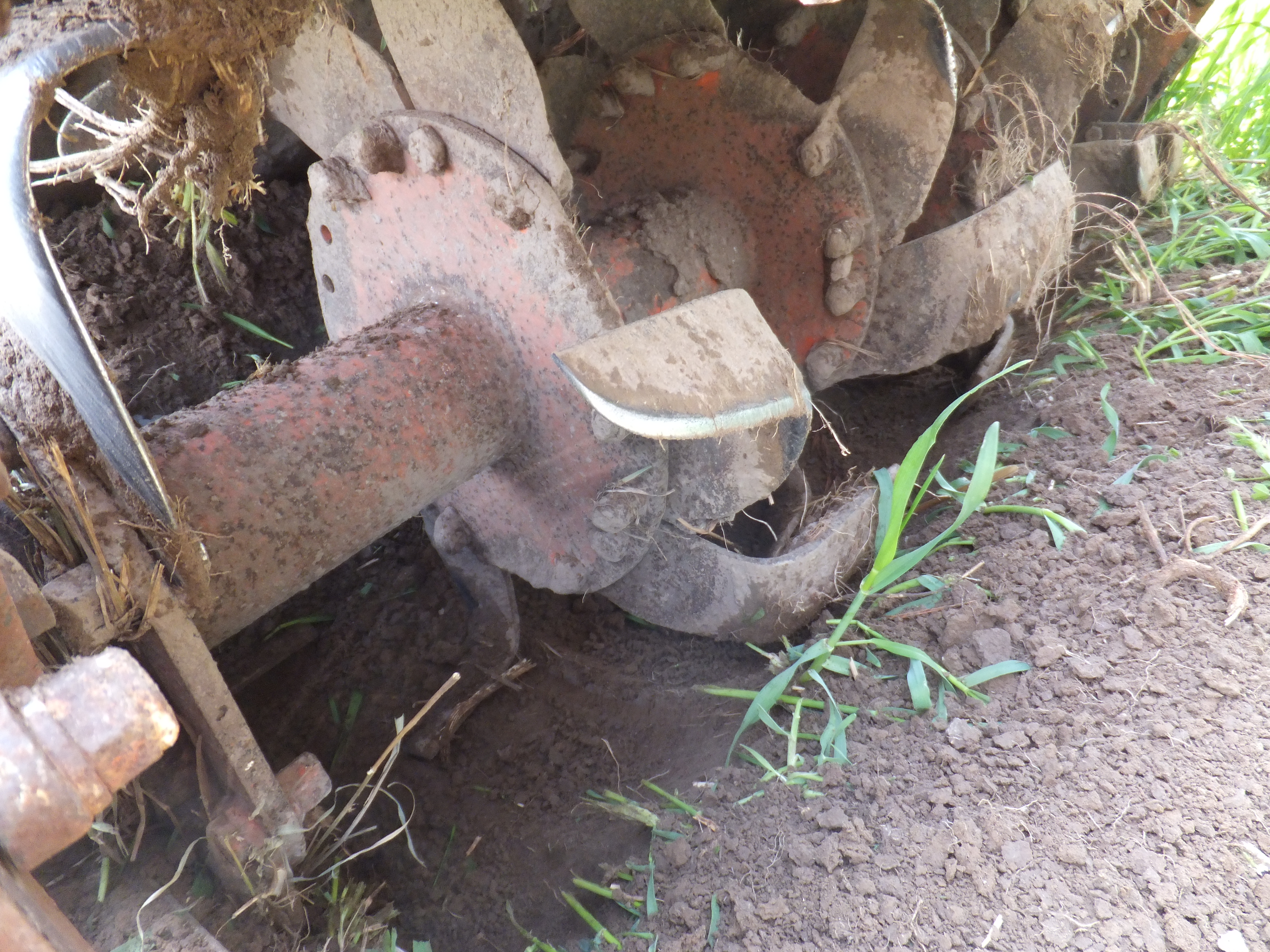
The rotovator has blades which travel downward, pictured below, cutting through the plant and soil, mixing and tossing it backwards.  The gate at the back of the rotovator can be raised or lowered with a chain, which will leave the field very rough or fairly smooth.  I thought I may plant after this, so I tried to keep it smooth.

I wasn’t sure if I should plant sweet corn right away, so I did a google search.  When Curiousfarmer came up on the first page, I realized that unless I’m suffering from dementia, I’m unlikely to learn anything from myself.

So I called my old organic farmer friend and he told me to wait a week, then rotovate it again, then plant immediately.  He thought I could kill any weeds which may have germinated, and hurt the rye again.

A week later and I’m glad I’ve waited because although I don’t see any weeds, owing to the alleopathic nature of rye, I do see some of the rye greening up.  The rye is very tough.  Any larger root-clumps of rye look like they will recover and grow and compete with the sweet corn.


DSCF1670


I have mixed feelings about tillage.  When I garden, I like to keep the soil mulched.  But in a larger planting, mulching is impractical, and tillage seems to be the best way to make a good seedbed and set the weeds back.

I’m not an expert, but the way I understand it is that one drawback of tillage is that it burns up some of the organic matter in the soil.  Another thing I don’t like is the potential for compaction, which can happen anytime you drive on a field, but especially in the spring when the soil is moist.

When the rotovator cuts through the soil, it ends up smearing the soil and creating a compacted layer at its bottom depth.  It leaves the soil above this very fluffy, but I wonder if the corn will have trouble growing its roots though this compacted layer.  Remind me to dig this summer and see what is happening with the roots.

Rotovators are very popular with the organic and sustainable crowd, so I am glad to be able to borrow this one from my partner.  I also don’t think I would try to kill the rye without herbicide with any less aggressive tillage.  So all in all I’m happy with the way this experiment is going, but I am still working well outside of my comfort zone.  Stay tuned.


2014 New Hay Seeding

April 12, 2014

The snow all melted and ran off and we found out we are in a drought!  We’re dry.  The ditches which always run with water in the spring are empty.  Still, there is no cure for a drought like a good rain, and they are calling for rain this weekend.

I’m happy because I planted my oats/hay seeding the last two days.  I saw John and his Dad  in town on Tuesday pulling their purchased oat seed on a flat rack trailer.  I told my Dad we’d better get our oat seed picked up.

So we picked up the oat seed Wednesday morning, and started discing Wednesday afternoon.  We were worried about it being too wet, but it worked up nice, didn’t ball or stick to the disc blades.  I let the soil dry for a day, then hit it with the disc again, then planted.

I thought it would be good to report on my planting this year, as I’ve tried many different recipes in the past, but have kind of settled on a favorite.  All of the following figures are per acre.

2.5 bushels Jerry oats as cover crop.  Plan to cut and bale sometime in boot/dough stage in June.

13 lbs FSG 408DP alfalfa.  I paid a little more for this variety because they say it’s for hay or grazing, with lowerset crowns than the typical alfalfa.  The crowns are where new growth comes from and they can be damaged by wheel or hoof traffic.

4 lbs Extend Orchardgrass.

2.5 lbs Gain Festulolium.


First Day of Spring, Rye Cover Crop, Egg Balancing,

March 20, 2014

DSCF1626

It seems like a long time since the last photo of the rye cover crop in November.  You know it’s been a long winter if you feel like a different person come spring.

Spring always has an effect on me.  Along with being outside more, I’m reading and writing more, and sleeping less.  It’s a funny thing, I always think I’ll get more reading and writing done in the winter, but it appears I enter a state of semi-hibernation, only to emerge revitalized in the spring.

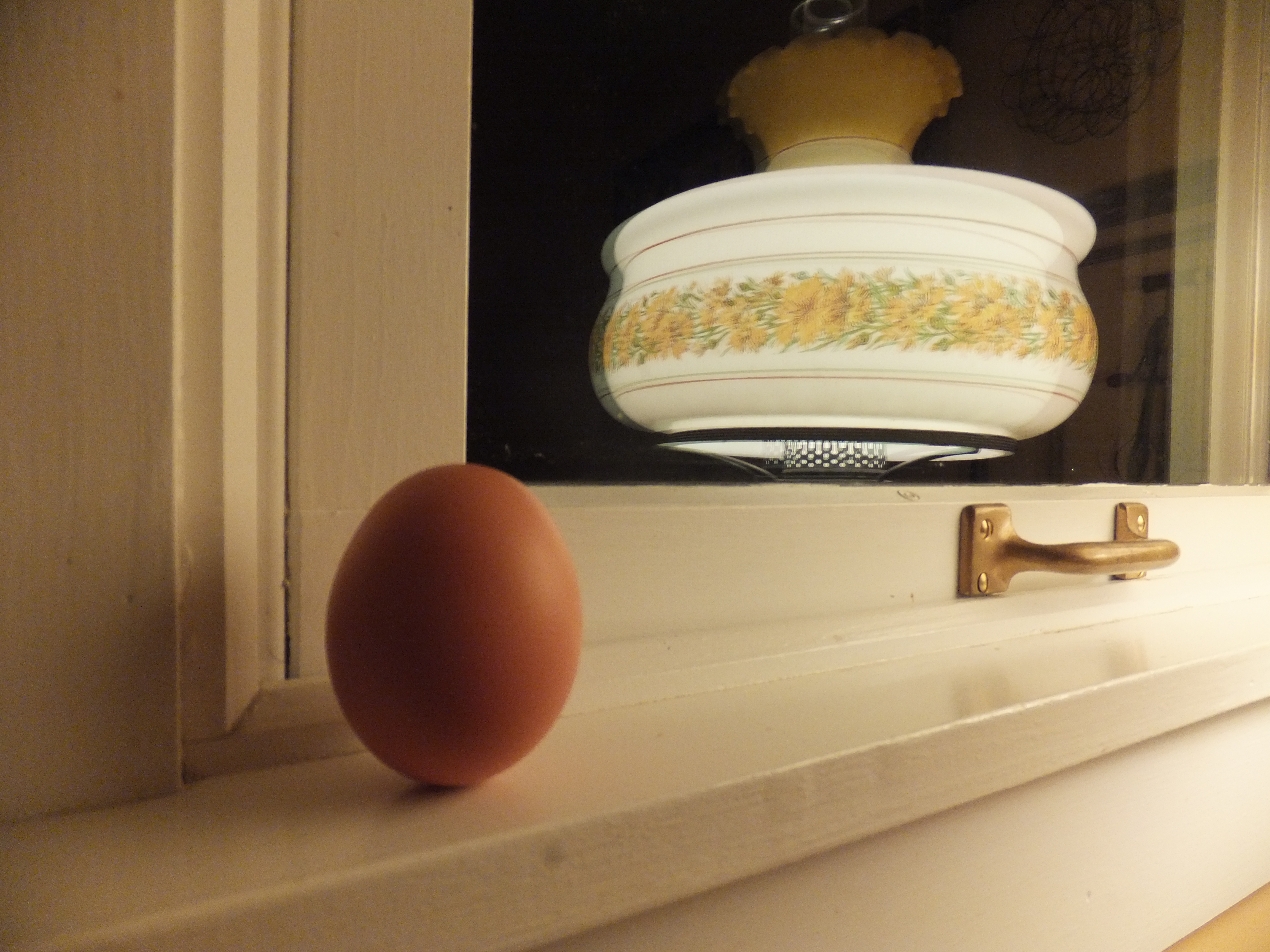
The bottom photo shows a tradition in my family of balancing an egg during the spring and fall equinox.  Egg balancing research says that this is a myth and eggs can be balanced any time of year.

We’ve tried it various times, and it’s so easy now, yet so difficult at other times, I find it difficult to believe science.  Experts speculate my delusion fuels my success, and I’m open-minded enough to admit they may be right, but I’d rather be a successful delusional than a know-it-all failure.  Cheers!

DSCF1632


First Snow, Fall 2013

November 11, 2013

DSCF1522

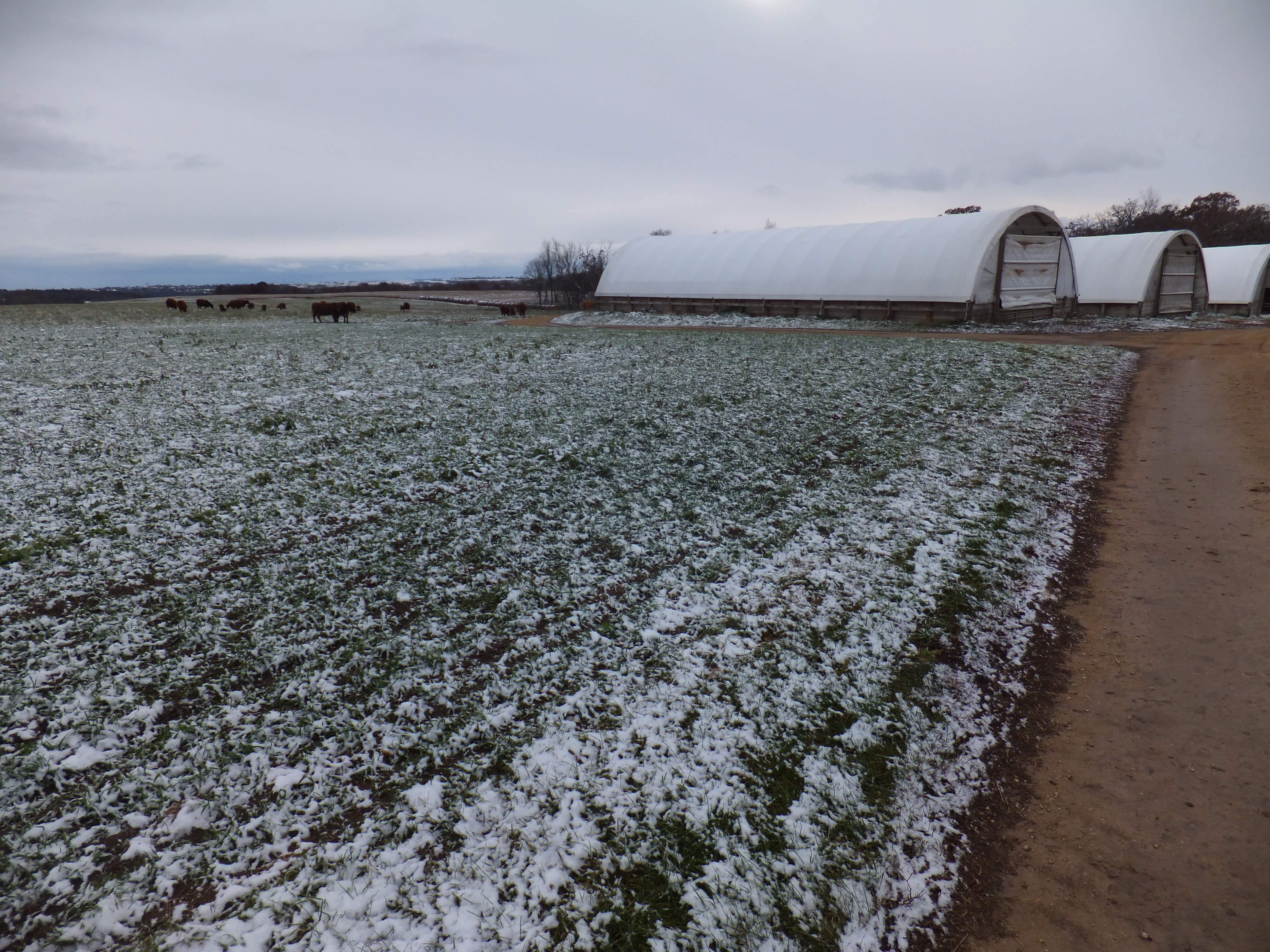
November 11th, 2013.  Here is another photo of the rye, now at six weeks.  It hasn’t grown much since it was two weeks old.

In the background you can see my fall-calving cows with calves.  I moved them home from the summer pasture and now they’re grazing hay fields on the south side of my farm.  The bull in the photo has been with the cows for a week, which will give us August and September calves next year.


Rye Cover Crop at 2 Weeks

October 11, 2013

DSCF1492

This is my cereal rye cover crop, 2 weeks after planting.  It’s an impressive plant, already 5 inches tall, with most of that growth coming in the last week.  Temperatures have been in the 70’s for highs and 40’s to 50’s for lows.

DSCF1493


Rye Cover Crop, Old Pig Pasture

October 2, 2013

DSCF1479

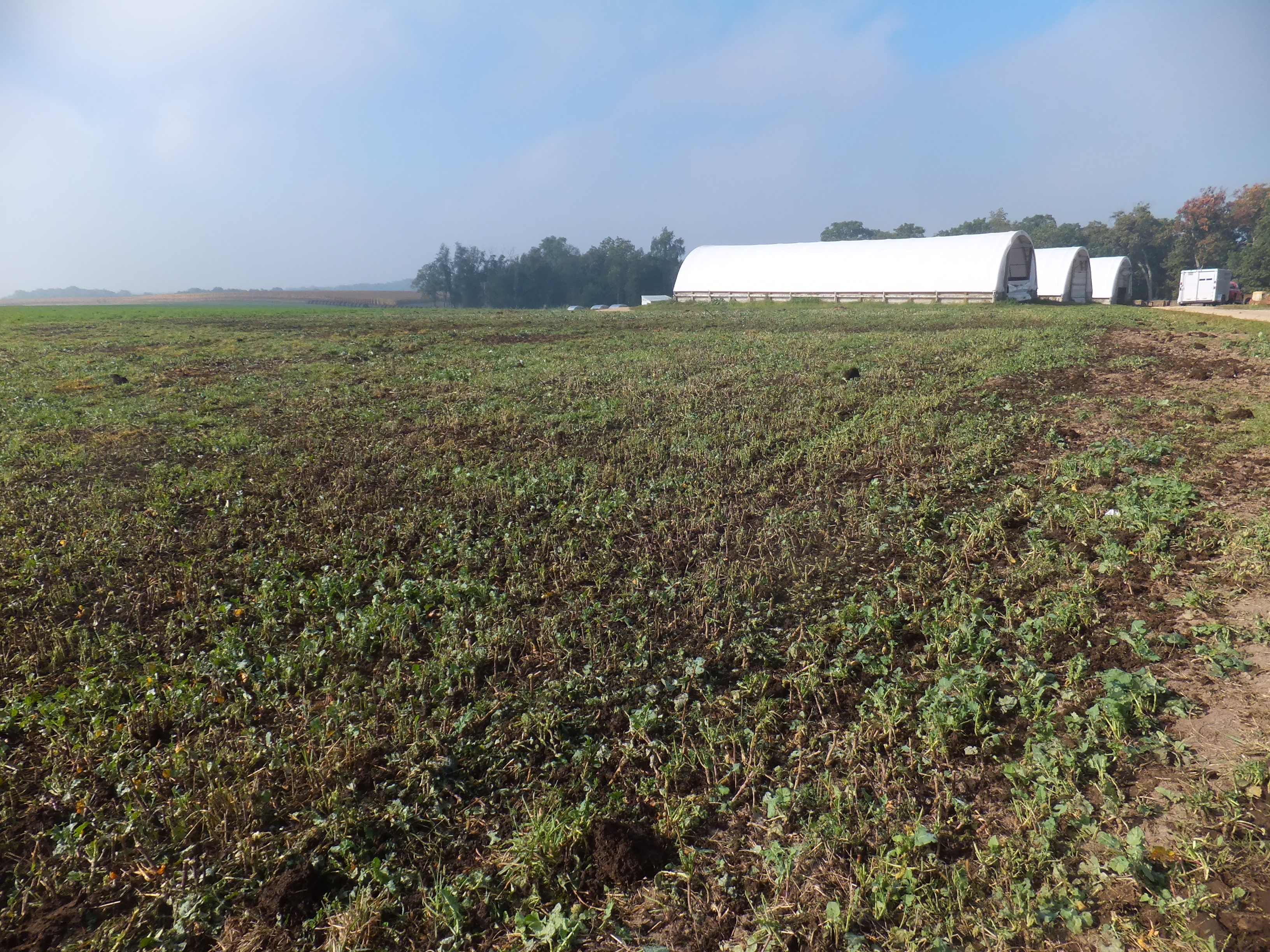
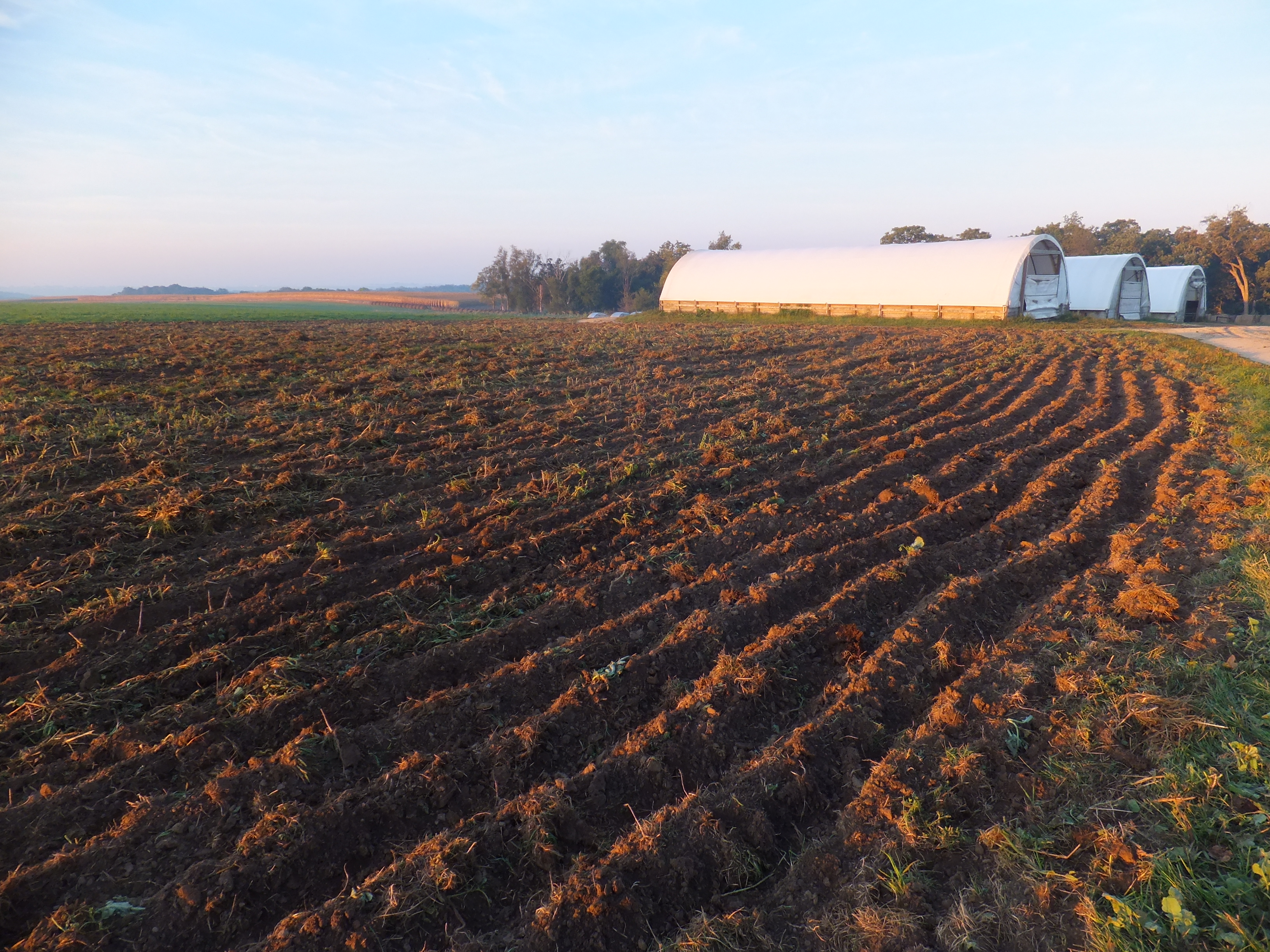
I moved the remaining farrowing huts and mowed the rape and old hay on one of my pig pastures.  I filled in the wallows and other places the pigs rooted with my loader.  I then scraped up the manure from a hay feeding area for my cattle, and spread three loads of this manure on the pasture.

DSCF1476

I used an old soil cultivator  to work up the soil.  This implement is more for finishing tillage rather than starting it, but I own it and I just wanted to lightly and quickly till to mix in the manure and to ensure good soil-to-seed contact.  I had to raise the implement up a few times when some long stems of rape bunched up.  Otherwise it did fine.

DSCF1480

My plan is to grow organic sweet corn here next year.  I’m concerned about weeds, so I talked to an old organic farmer in my area.  He told me to plant cereal rye the fall before I want to grow organic corn.

Rye has an allelopathic effect on  other plants.  Rye releases compounds which inhibit the germination and growth of other plants.  This effect is greater on smaller-seeded plants like weeds, but less of an effect on a large-seeded plant like corn.

I read an article in Progressive Forage Grower titled, “Monitoring nitrogen dynamics in cover-crop mixtures”.  The study showed how a nitrogen-fixing cover crop such as hairy vetch was able to improve yields when no nitrogen fertilizer was added as compared to a non-nitrogen fixing cover crop like rye.  Since I plan on adding no commercial nitrogen, I thought it may be good to include hairy vetch with the cereal rye.

Unfortunately, I read it a little late to incorporate the results into my planting.  I wanted to get the field planted before a rain to help germination.  I planted it last Friday, September 27th.  It rained that night.

However, my thinking is my plants will have more nitrogen available than in the study because I have manure to spread on the field.  The rye is known for sucking up the available nitrogen in the soil and will release it back into the soil in the spring when it breaks down.  The challenge as I understand it is to kill the rye and have it breaking down, releasing nitrogen to the newly growing crop as the crop needs it.

Rye can be a challenge to kill.  The earlier paper I cited said rye should be incorporated into the soil when it’s 12 to 18 inches high.  A wet spring can make this a challenge because rye is known for its fast growth.  I’m not sure what I will use for spring tillage.  Rotovating is more popular now, and my partners own a rotovator, so maybe I’ll use that.

Back to this year.  The photo below shows how I planted the rye.  I used my 12 ft. John Deere grain drill followed by a 12 ft. Brillion cultipacker.  The cultipacker helps to break down any clumps remaining and ensures good soil-to-seed contact.

I planted about two bushels or 110 lbs. of rye to the acre.  I checked the field today and the rye is shooting out of the soil less than a week after planting.  I’ll probably post some photos in the future to track its progress.

DSCF1481


2013 Corn Height, 4th of July

July 5, 2013

2013 Corn Height

Shepherd decided not to show and butcher hogs at the fair this year.  We decided sweet corn would be his project.  Here he is checking for ears, (not there yet).  The corn is just starting to tassel which you can see on the left.  Also check out the cloud face above his head.

We are trying a supersweet variety this year from Harris seeds.  There are three main types of sweet corn: su or normal, se or sugary enhanced, and sh2 or supersweet, along with many different hybrids among the types.  Supersweet needs to be isolated from other types of corn or the sugar turns to starch.  This happened to my family when I was a kid and we couldn’t eat the corn.


Contour Strip Cropping 2013

July 2, 2013

Contour Strip Cropping 2013

Cut hay is in the foreground.  The light green strip middle left is oats.  The dark green strips above it are corn.  The light green at the top is a hay strip I baled a couple of weeks ago.