Oats and Hay Seeding

May 11, 2011

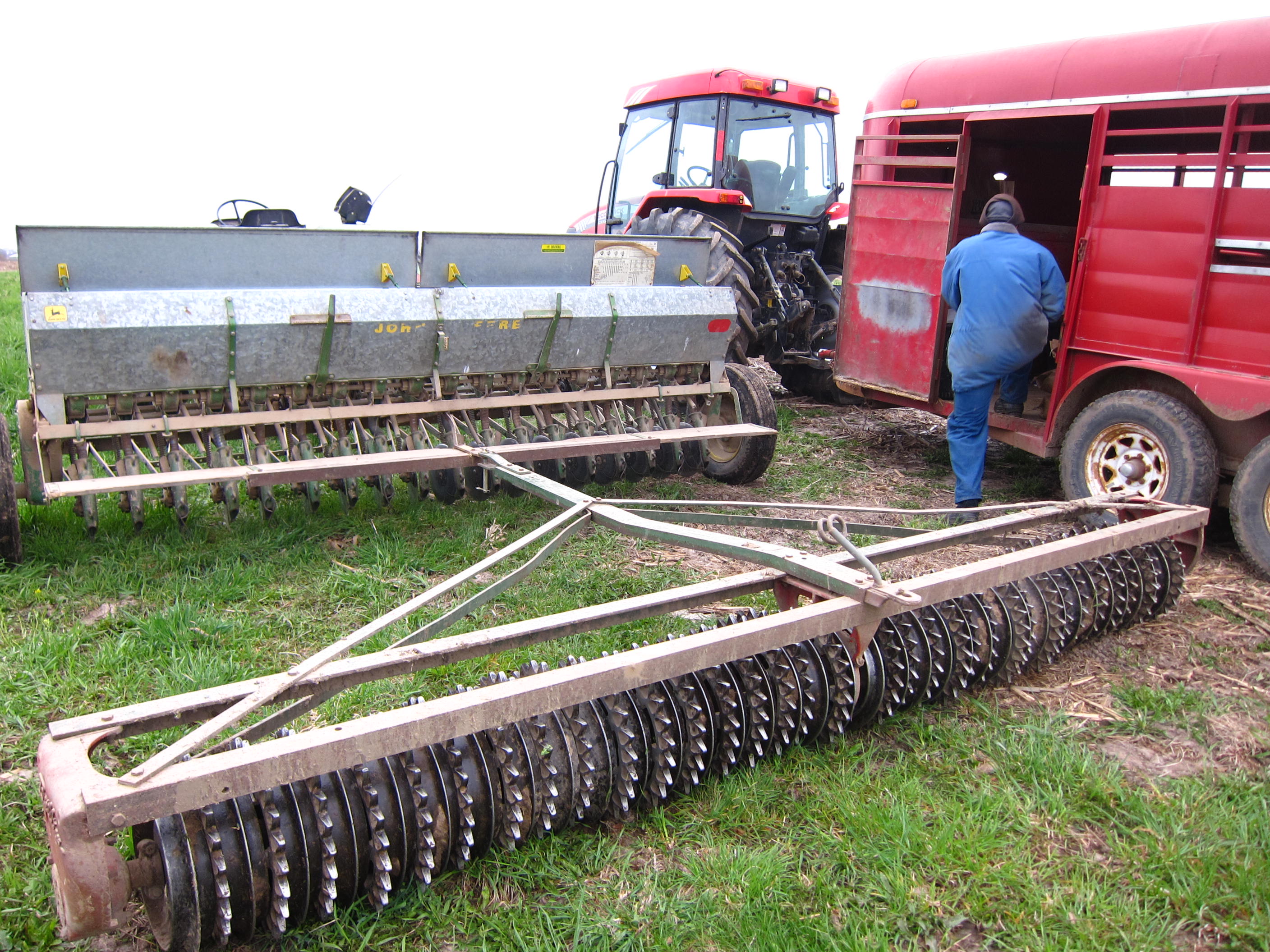
This is our oat drill with roller behind. It has two compartments for seeds, shown below.  The smaller one holds alfalfa and timothy.  The larger one holds oats and perennial ryegrass.
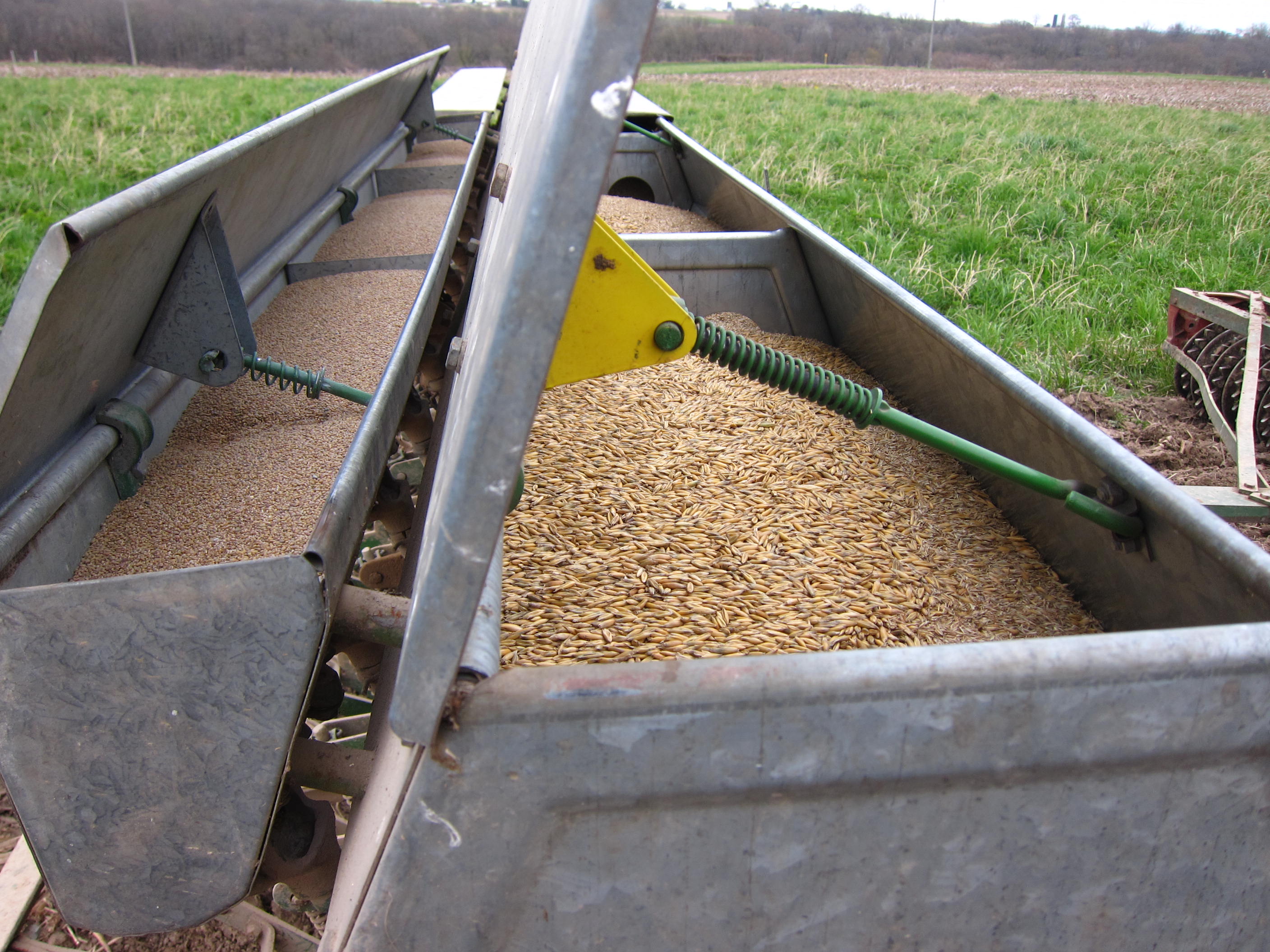
The oats and perennial ryegrass is dropped into the small furrow made by the disc blade.  The alfalfa and timothy is dribbled onto the ground behind the planter via tubes, not shown.

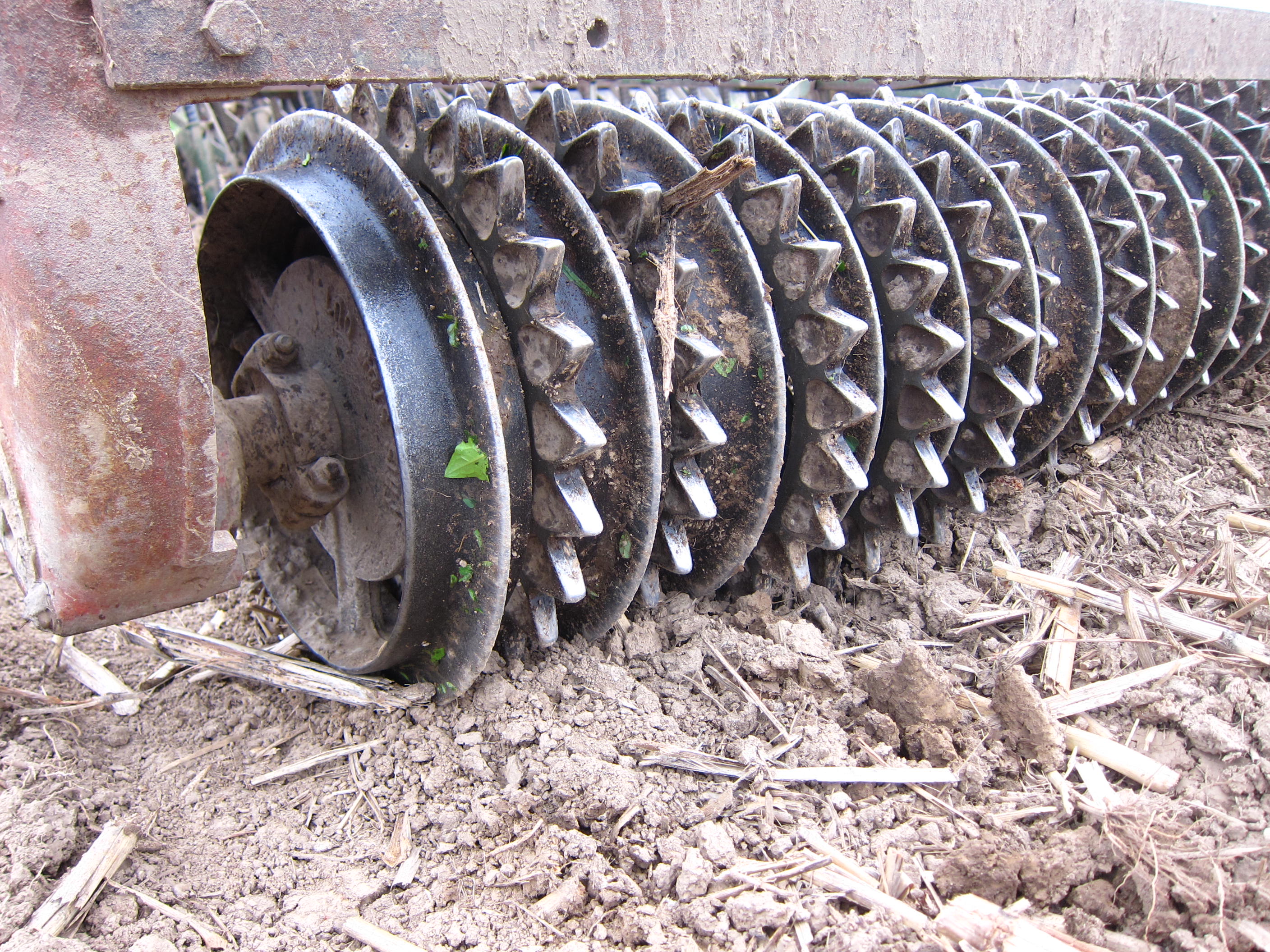
The roller breaks up more soil clods, and ensures a firm seed bed and good soil to seed contact.
Below is the planted seedbed.  This is also the picture I’m using for the May 7th square-foot saturday.
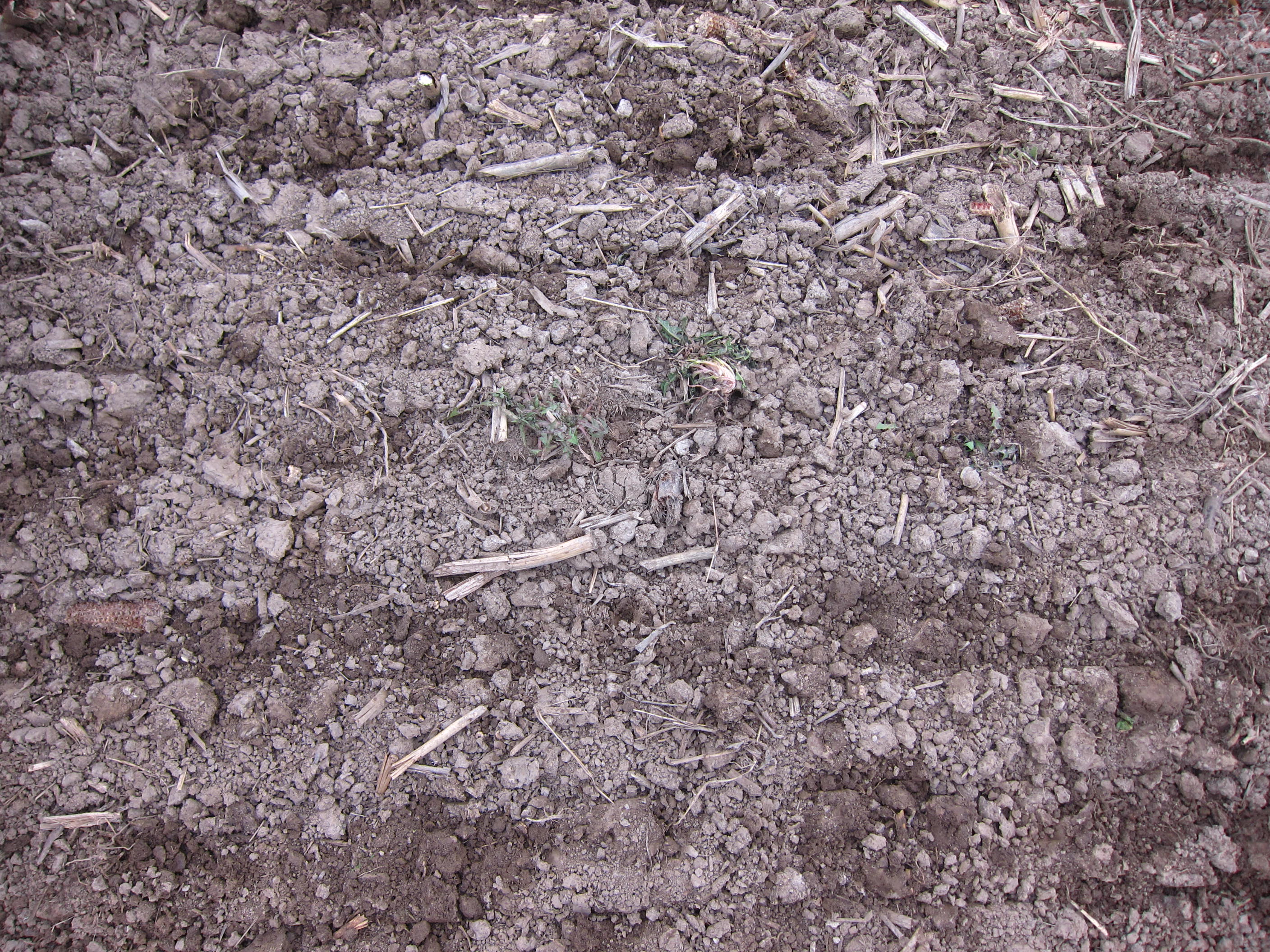
I planted this field, M6, on May 3rd.  That’s the latest I’ve ever planted oats, and exactly one month later than I finished planting oats last year.  I planned on showing a square-foot in this field, so I’m sticking with the plan, even though I’m not happy with the planting date.  Oats grow well in cool weather.

It was a late spring, but the truth is we missed a small planting window in April because we were in the middle of building a new barb-wire fence and didn’t want to stop.  We thought we would be able to plant a few days later, but a couple weeks of wet weather ruined that plan.

Farming is about windows.  You want to do the right job at the right time.  Work the soil and plant too wet, and you face compaction and yield reduction.  Plant late, and you miss valuable heat units and yield is reduced.

Check back every weekend and we’ll see how this field progresses.


Soil Testing and Fertilizer

May 1, 2011

We tested the soil in a few of our fields last week.  Pictured is the probe, laying on its side, which is pushed into the soil vertically, and then pulled back up, removing a small core of soil which you can see in the bottom part of the probe. It takes five samples to fill a testing bag.  We sent our samples to AgSource Soil & Forage Laboratory, located in Bonduel, WI.

This is also the first picture in a series showing how this field changes throughout the year.  We call this field M6.  It was planted to corn last year.  It will be planted to oats this year.

We last tested this field in 2006.  It looks like our management has improved the soil profile in five years.  I’ll go through the soil test without much explanation.  If you have anything to add, please do.

Organic matter increased from 2.1% to 2.9%.  pH stayed constant at 7.4.  Cation exchange capacity increased from 10 to 11.

The next observations are all in parts per million.  Phosphorous increased from 38 to 41.  Potassium decreased from 109 to 97.  Calcium increased from 1285 to 1600.  Magnesium increased from 395 to 500.  Boron increased from .5 to .9.  Manganese increased from 4 to 6.  Zinc increased from 3.2 to 10.4.

Our soils are different types, based mainly on our management.  The soil close to my parents’ farm, next to the buildings, has had a lot of hog manure spread on it over the past thirty-plus years.  The soil on my farm has received a lot of hog manure since we built the three hoop buildings in 1996-1997.  The cowherd is usually fed hay in the winter on some of this land as well.  As a result, the soil is high in phosphorous, and optimum in potassium.

The soil on the east hills receives no manure except for when the cows graze the fields.  This soil tests low in both phosphorous and potassium.

The other farm soil receives some manure, so it’s optimum in phosphorous and low in potassium.

Our chosen fertilizer is manure.  The problem with manure is it is not perfectly balanced.  Our management of the manure and crop removal has caused  phosphorous to increase relative to potassium.  We are doing a few things to combat this.  1. Managing the spreading of manure better.  2. Feeding phytase, an enzyme which helps pigs digest phosphorous better, resulting in less phosphorous in the manure.  3. Fertilize with potash, 60% potassium, in the fall, when our budget allows.  We spread 200 lbs of potash on all the crop acres last fall.

Our plan for this spring. 1. Hog manure will be spread and tilled in to all 2nd-year corn fields.  Oat and hay fields on my farm and my parents’ farm close to the buildings will receive nothing.  2. Other farm and fields farther from my parents’ buildings received 200 lbs of potash to increase potassium.  3. East hills received 100 lbs of potash and 100 lbs of MAP, 52% phosphorous, to increase potassium and phosphorous.


March 2011, Fertilizer Prices

March 24, 2011

We priced fertilizers with our local dealer.  Nitrogen (N), Phosphorous (P), and Potassium (K) are the macro elements we are usually most concerned with.  I’ll list the fertilizer, the percent of each nutrient, and the price per ton.  The percent of each nutrient is listed in this order: Nitrogen, Phosphorous, Potassium, and Sulfur.

Urea 46-0-0-0 $462/ton

Ammonium sulfate 21-0-0-24 $343/ton

Monoammonium phosphate (MAP) 11-52-0-0 $673/ton

Potassium chloride (Potash) 0-0-60-0 $537/ton

Which source of nitrogen, Urea or Ammonium sulfate, is a better deal.  We need to calculate the nitrogen cost per pound.

What is 46% of a ton?  Multiply .46 times 2000 equals 920 lbs. nitrogen per ton of Urea.  Divide $462 by 920 lbs. equals $.50 per lb. of nitrogen.

Ammonium sulfate is 21% nitrogen.  .21 times 2000 equals 420 lbs. nitrogen per ton.  Divide $343 by 420 lbs. equals $.82 per lb. of nitrogen.

The Ammonium sulfate is higher priced per lb. of nitrogen.  Ammonium sulfate also contains sulfur, which is needed by plants, and it is more stable, releasing its nitrogen more slowly than Urea.  Urea will volatilize, turn into a gas, in hot, dry, conditions.  Urea is best spread before a rain, or when the ground is cool and moist.  So someone may want to use Ammonium sulfate even though it is more expensive.

I realized when I started writing, this is part of a much larger post about the philosophy of fertilizer.  For our farm, animal manure is our preferred fertilizer.  We just purchased a new manure spreader which I’m excited to use, and will show in a post soon.


Leaves of Grass

February 7, 2011

Timothy, Phleum pratense

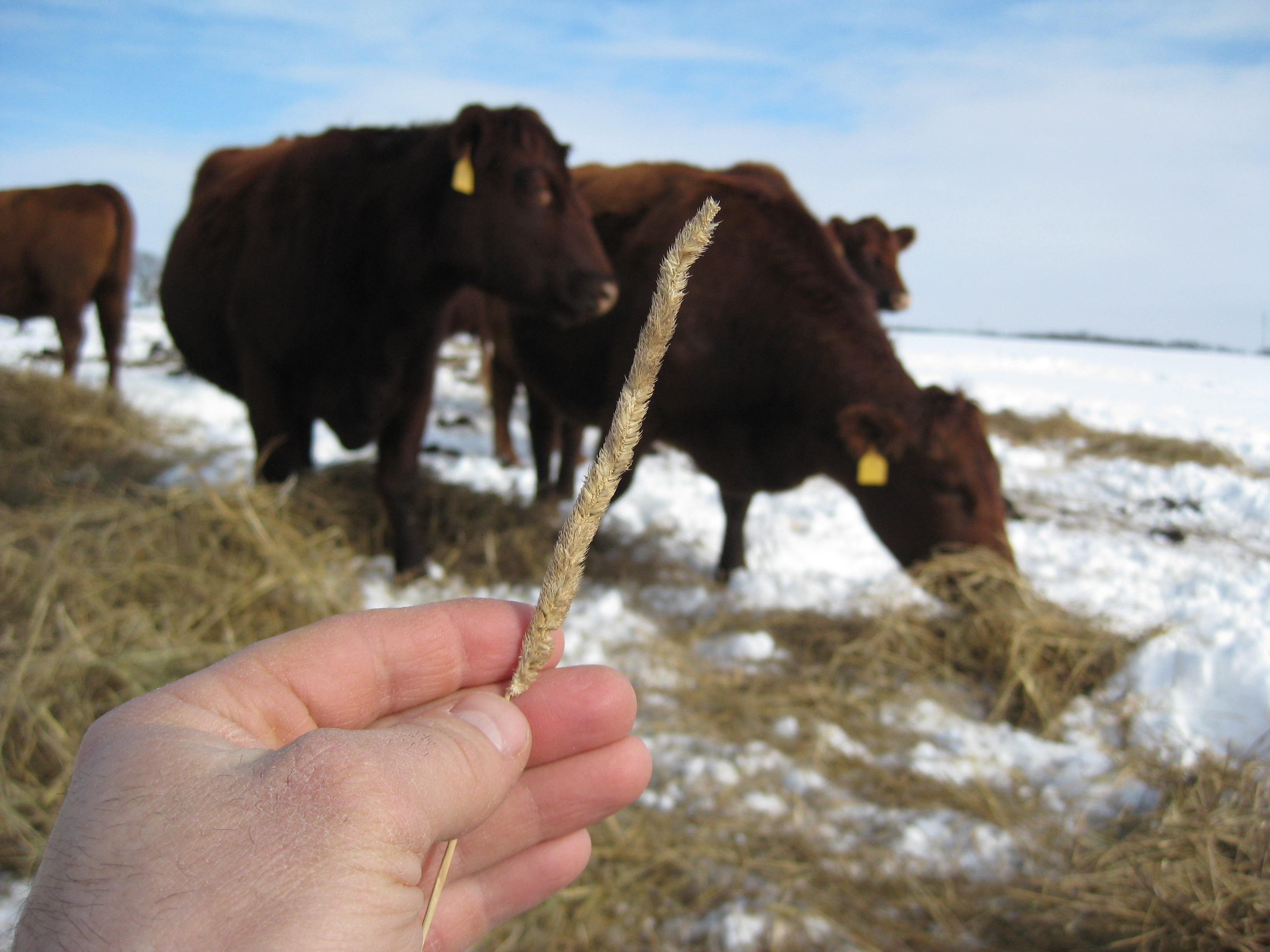
Timothy is one of my favorite grasses.  I mix its small seeds in with alfalfa, when I’m planting the new hay seeding in the spring.  Look at the broad, beautiful leaves.  Look at the seedheads, covered in pollen.

I’ll lay it down, sun-dry, rake, and roll up, into a big, round, bale.  Summer sun, tucked away, waiting to be fed on a cold, winter’s day.

I’ve often thought that I should like the poetry of Walt Whitman more.  He titled his epic book of poems, “Leaves of Grass.” This suggested a kinship with him that turned out to be  nonexistent. I recently learned that he titled his life’s work based on a pun, “Grass” was a term given by publishers to works of minor value and “leaves” is another name for the pages on which they were printed.

I do like his poem, “O Captain! My Captain!”, written about the assassination of Abraham Lincoln.  It’s more straightforward.

My favorite poet is Robert Frost. I plan on writing a post, inspired by one of his poems.  The first person to guess which poem, will win a $25 gift certificate to Kiva. One guess per person.  The poem is not “Mending Wall.” I’ll give you a hint, the post is about genetics.  Good luck!


Taking a Break, Making the Best of…

December 18, 2010

Red clover hay field.  This field is an example of making the best of a bad situation.

The cowherd winters on cropland, walking into the woods for shelter, and water out of springs.  We feed the cows by unrolling round bales of hay on the harvested corn fields.  This is a way to spread the fertility from the cows’ manure, and the damage from the cows’ hooves if the ground is not frozen.

The hayfield above was exposed to the cows, and even though we never fed them hay on it, they chose to stand on it often.  When the ground thawed, the cows did considerable damage to the alfalfa plants.

We monitored the field as everything started to green up in the spring.  We could see most of the alfalfa had been killed and it would not be a productive field.  We had three choices: 1. Do nothing and accept the reduced yield.  2. Till it and plant corn.  3. Plant another forage crop.

We didn’t need the corn acres, and it would mess up our rotation if we put it in corn this year.  It wasn’t slated to be a corn field until 2011.

We decided to plant another forage crop.  There are some grasses which people plant in this type of emergency: Italian Ryegrass, Teff grass.  We wanted a legume, though, which would fix nitrogen for next year’s corn crop, which is what the alfalfa would have done.

We chose Red Clover.  There are disadvantages to Red Clover.  It is short-lived, and it doesn’t dry well for hay.  The first reason didn’t matter in this case, and we decided to try to find dry times to make the Red Clover hay to take care of the second disadavantage.

The main advantage to Red Clover is it’s very easy to plant.  We broadcasted the seed with a small spreader from the back of a tractor, and pulled a chain harrow to cover the seed with a little bit of dirt.  We planted four pounds per acre.

It worked great!  Look at how thick the reddish flowers are in the picture.  We made the best of a bad situation.

And so, I can no longer put off addressing the title of this post.

I’m taking a break from blogging.  I’ve posted consistently for nearly two years.  I’ve met people, made friends, learned, shared, in short, it’s been a blast!  Thank you for visiting, commenting, and sharing.  Without you, a blog is a journal.  With you, a blog is a conversation.  Thank you for your conversation!

Merry Christmas and Happy New Year!


Final Harvest

November 6, 2010

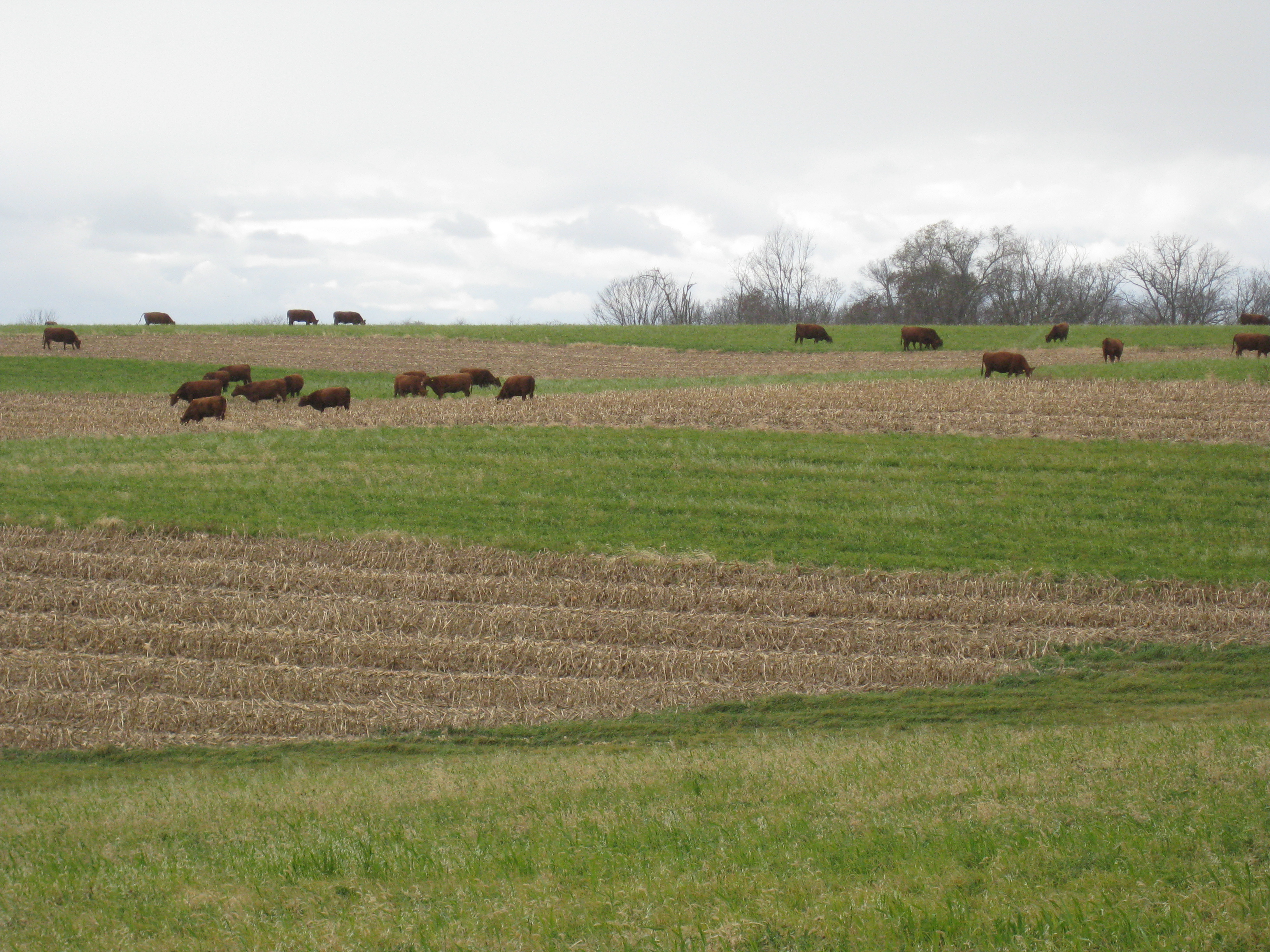
Cows harvesting the standing hay and cornstalks on my contour strips.  Here is a picture taken right before corn harvest.

The cows above are the ones the vet. confirmed pregnant when we pregnancy checked at the end of October.  I wrote about my expectations, and the problems we faced this breeding season.  90% of the cows and heifers ended up being bred with a 60 day breeding season for the cows, and a 45 day breeding season for the heifers.  10% open is normal for us and acceptable.  We have an excellent market for hamburger, so the cows that didn’t breed end up as beef.  We have appointments with our butcher over the next month.

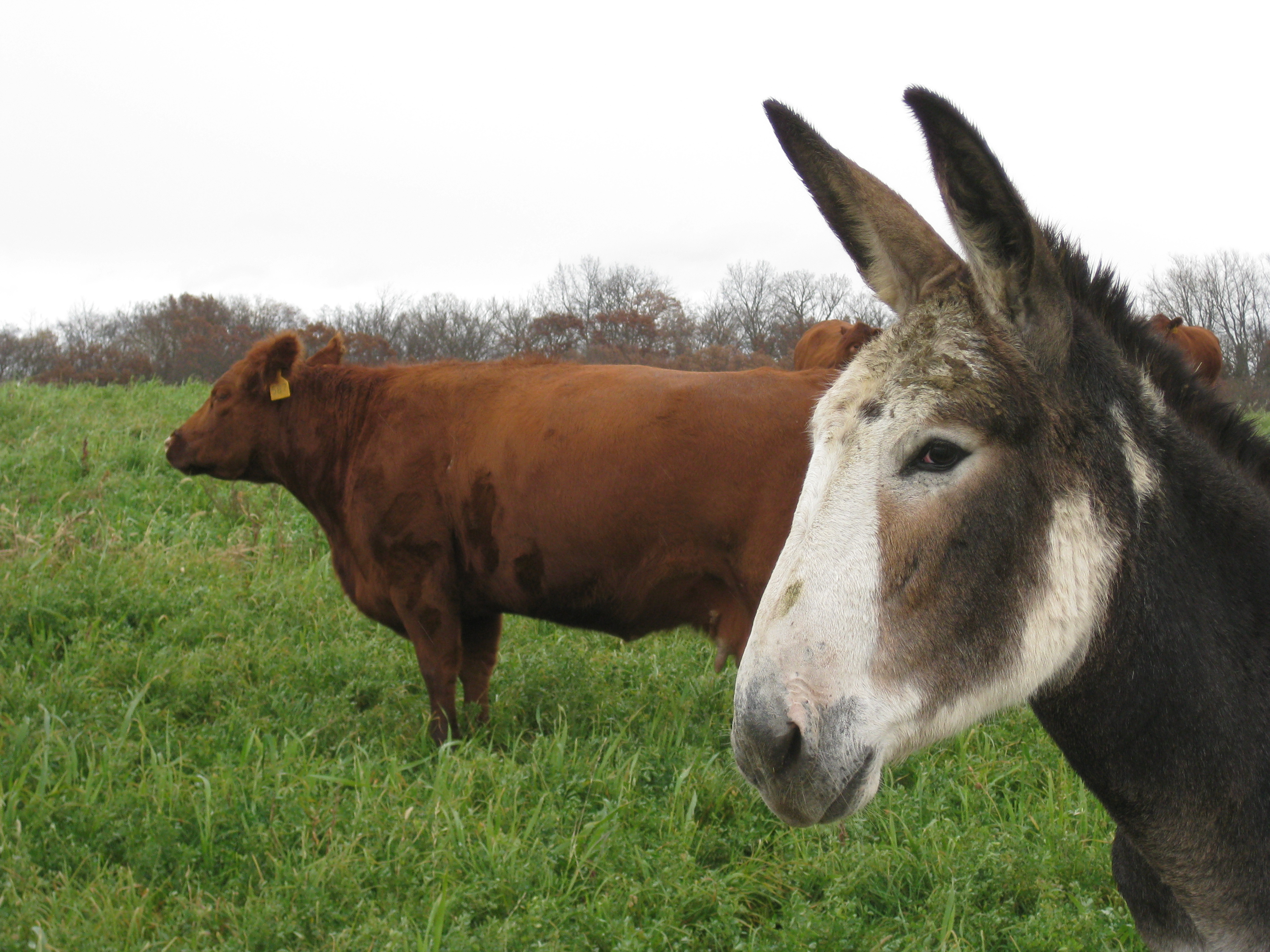
Below is a cow which didn’t breed, and Wilma, of course.  The open cows are grazing one of our best remaining pastures.  I was thinking about the life they lead.  I think it’s pretty good.  They get to be in a herd of peers, eating quality forage, moving weekly, breeding, raising young.  Up until the bolt-gun shatters their brain, it’s not a bad life.

We took the boys to a city-wide Halloween party.  A friend gave me the low-down on the best place to go trick-or-treating: the manor, or old-folks-home.  The residents are seated in a semi-circle, each holding a bucket of candy.  It’s funny, because whatever aversion a child has to old people is overcome by the lure of easy candy.

I don’t know what kind of life each person has had, but the ending can be difficult.  We all want to live a good life and die in our sleep.


Finished Corn Harvest

October 13, 2010

Contour strips before corn harvest. Other pictures of these strips are here, here, and here.

We finished harvesting corn, October 7th.  We think that is an early record.  It was dry, 16% moisture.  That is also a record.

What a difference a year makes.  Last growing season was so cool, the corn never dried below 23% in the field.

Every year is different.  If I live to a typical age, I probably only have about 50 growing seasons.  Each is special.


New Hay Seeding With Oat Companion Crop

August 15, 2010

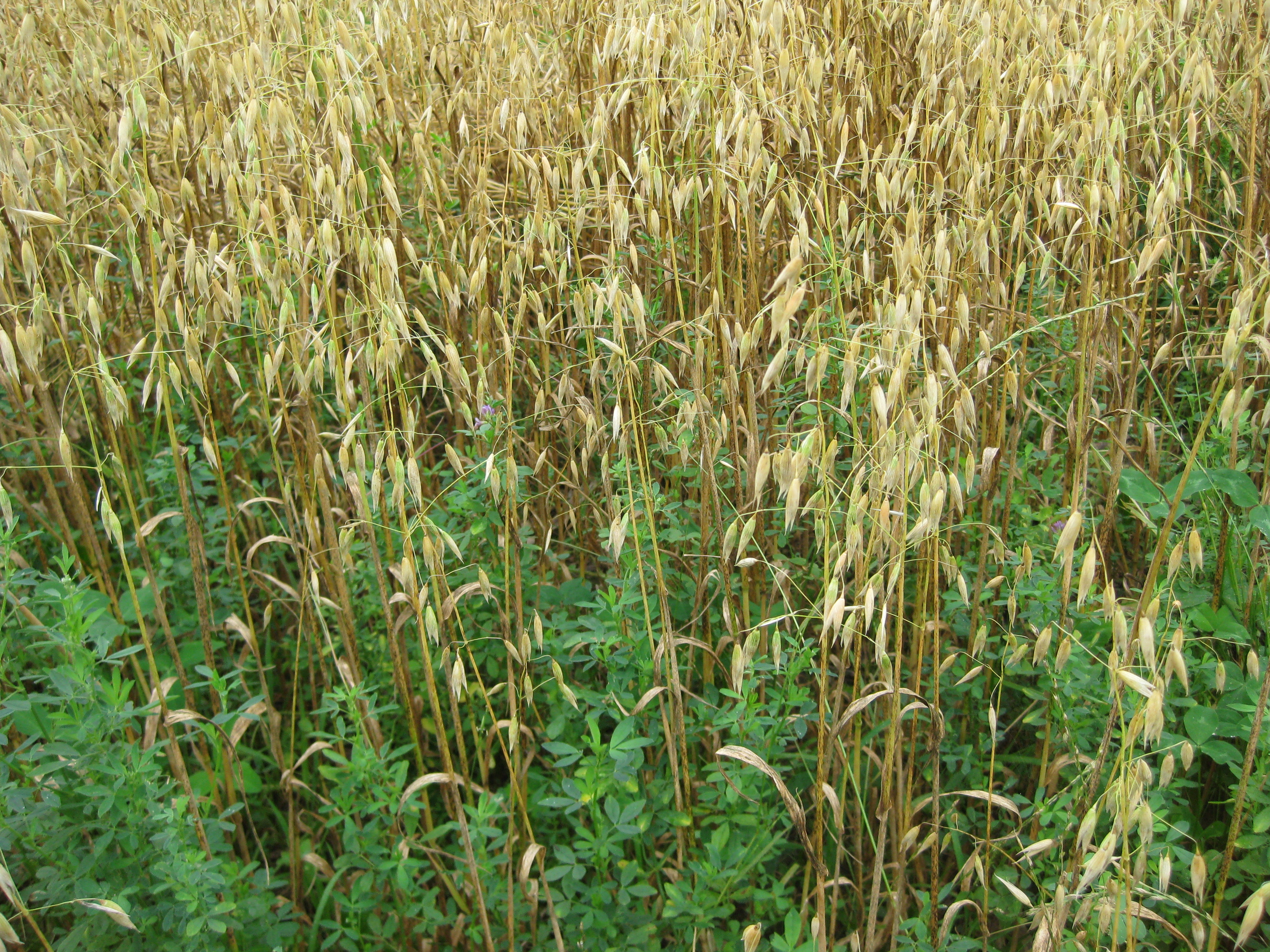
Oats and new hay seeding, early July.

I planted this field in early April.  I plant 2.5 bushels of oats, 10 lbs. of alfalfa, and assorted grasses.  Check out “2009 New Hay Seeding,” if you would like more detail.

We plant this mixture as soon as the ground is fit in early spring.  Oats are a fast starter and suppress any weeds that germinate.  The alfalfa and grasses are slow to start, but come on strong after the oats are harvested.

Many farmers are going away from planting a companion crop to their new hay seeding.  If the oats are not managed well, they may kill the new seeding.

Here are some tips we have found to prevent this.

1.  Spread no manure on the field during the preceding year.  My opinion is the nitrogen in the manure causes the oats to grow too tall and will lodge, (go down), as it matures.

2.  Plant an oat variety with strong standability.

3.  Plant an early-maturing oat variety.  The earlier the oats can be harvested, the better it is for the new seeding.

4.  If a field has had manure, or you feel the oats may lodge for any other reason, cut the oats as a forage crop in June.  This crop can be dried and baled, or ensiled.  It makes excellent feed for cattle.

We harvested our oats in late July and they will be mixed into the hog rations at an inclusion rate of 20-25%.  Gestation rations can include a higher amount of oats.

The straw will be dried and baled and used as bedding for hogs in the hoop buildings.

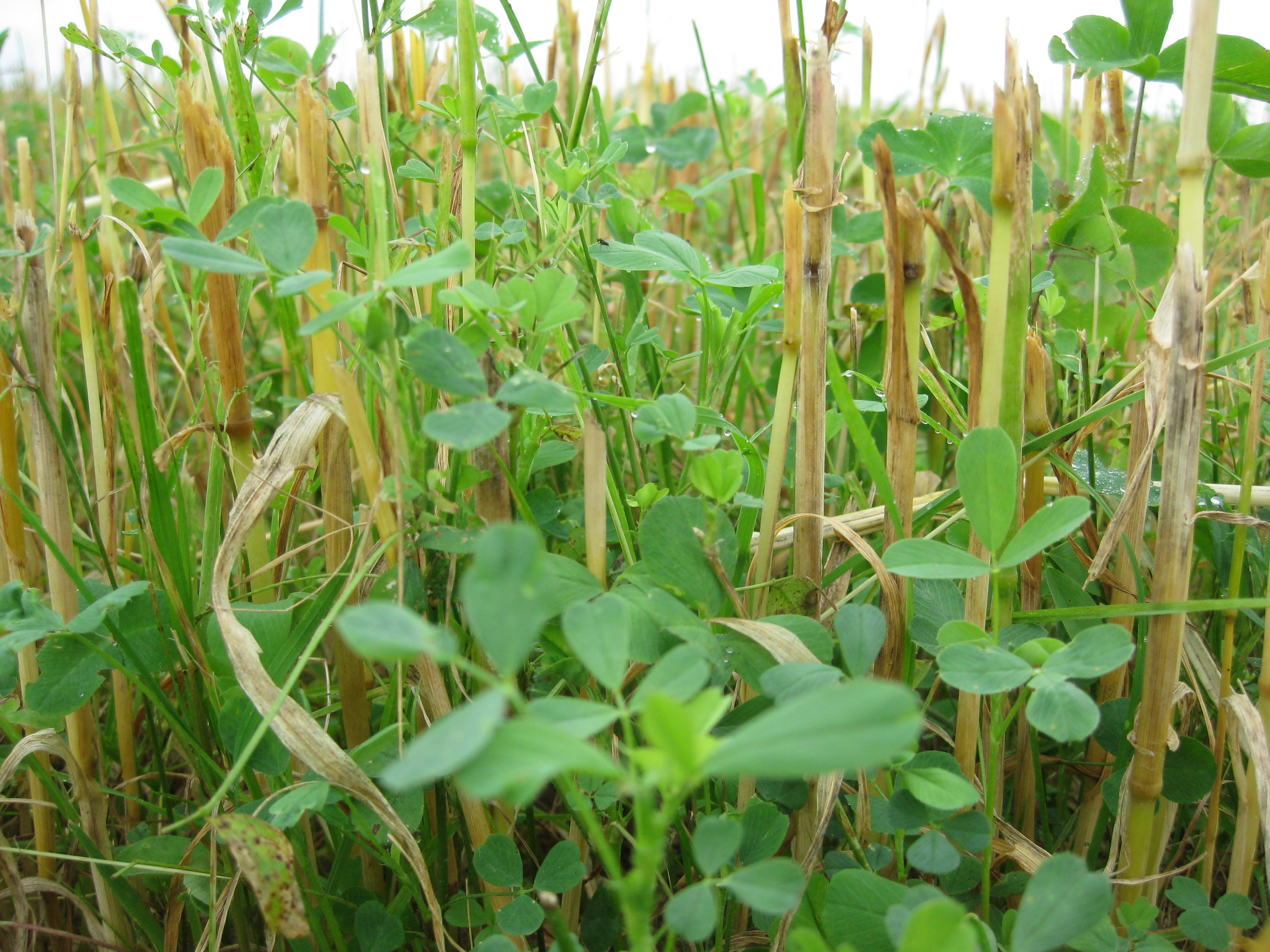
Oats can be an excellent companion crop for new hay seeding.  If everything goes well, look at the beautiful alfalfa, clover, and grasses, green and growing after the oats are harvested.


Round and Square-Baling Straw

July 29, 2010

Baling square bales of straw.

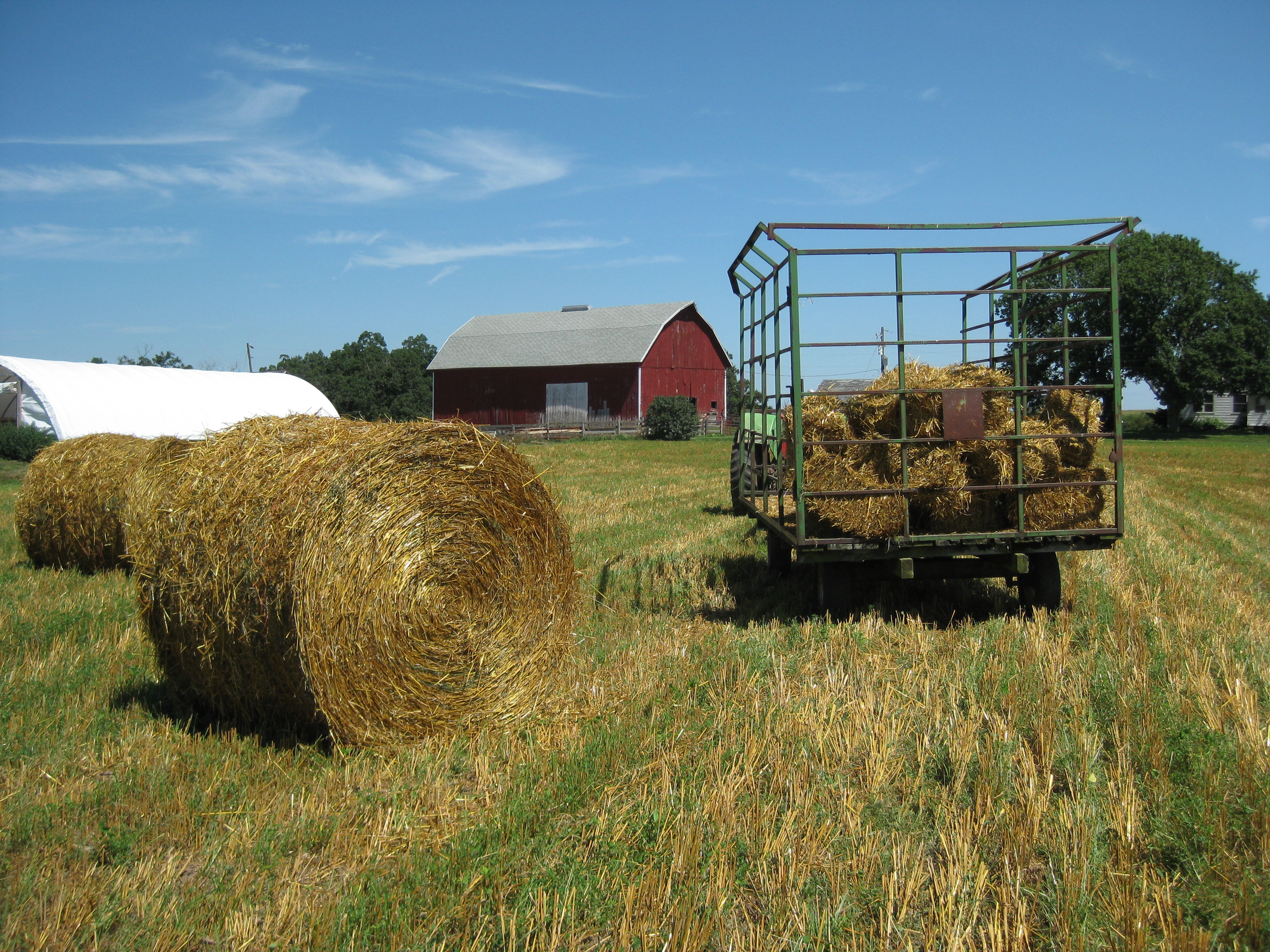
After the oats are harvested with our combine, the straw dries in the field for a day or two and is raked into rows and baled.

Most of the straw is round-baled.  This is much easier than small square bales because all of the work is done mechanically.with round bales.  The round bales are used in the hoop buildings to bed the pigs.

We bale a couple of loads, (250 bales), of small square bales.  These bales are used to bed the sow shelters or to bed the trailer when we take animals to the butcher.

Square bales have to be unloaded by hand and stacked in the barn.  I always appreciate the round-baler more after finishing this job.


Why Corn is So Productive

July 25, 2010

Corn (Zea mays)

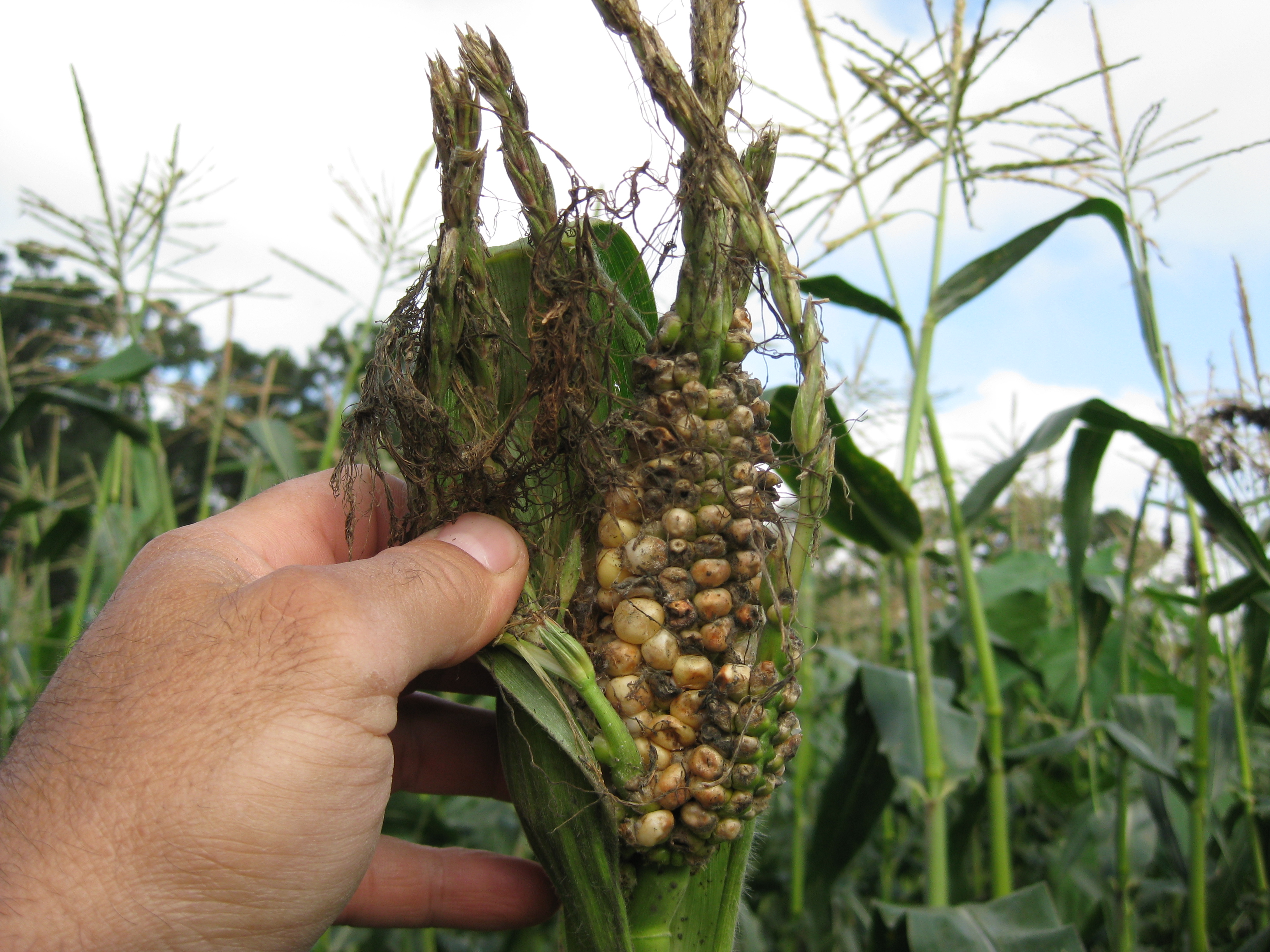
I found this plant in my sweet corn patch.  It captured my attention, because the ear is at the top of the plant with the tassel.  It must be a genetic throwback to when corn was just another tall grass.  Normally, the ear is located one-third to one-half way up the stalk.

And I realized this is the reason corn can be so productive compared to other grains such as wheat, oats, or barley.  On our farm, corn can produce more than 9,000 lbs. per acre.  Oats only produces about 3,000 lbs. per acre.

Corn carries all of the grain weight lower on the stalk.  All other grasses and grains that I know of carry their grain weight at the top of the stalk.  This causes them to be susceptible to lodging or breaking over.

Here is a picture of some of our lodged oats. More of a challenge to harvest, but we finished harvesting the oats last Wednesday.