Electric Fence for Piglets

October 24, 2014


DSCF1993


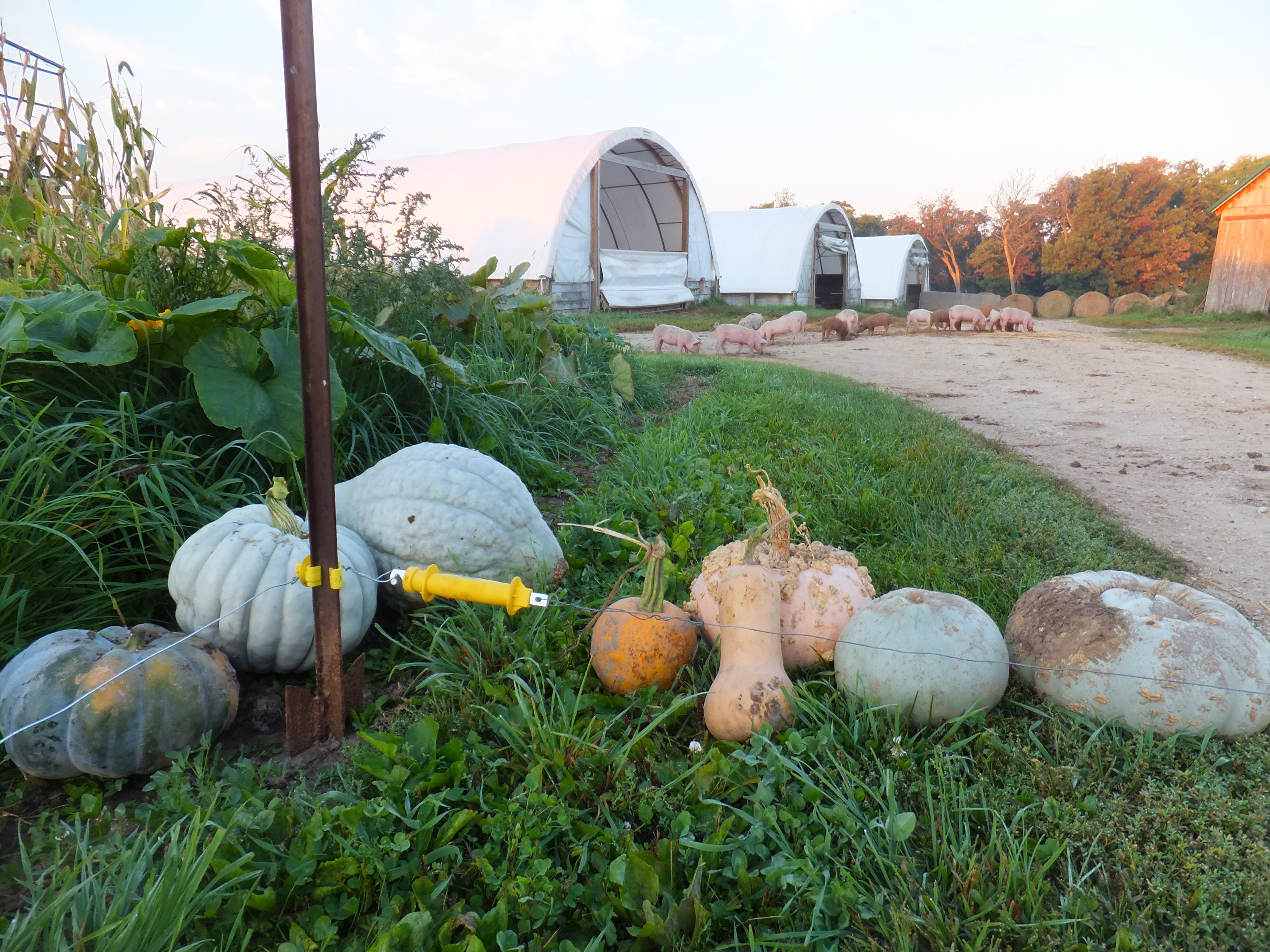
My goal is to have more animals on pasture, more of the time.  This was supposed to be a celebratory post about how I am accomplishing this, but now it’s the middle of October with cold rains and mud, and I’m starting to appreciate the concept of confinement.

The piglets are four to ten weeks old.  Old enough to wean, but I didn’t need to rebreed the sows yet, waiting until November in order to have March litters.  So I wanted to wait, but the piglets were starting to turn into gremlins.

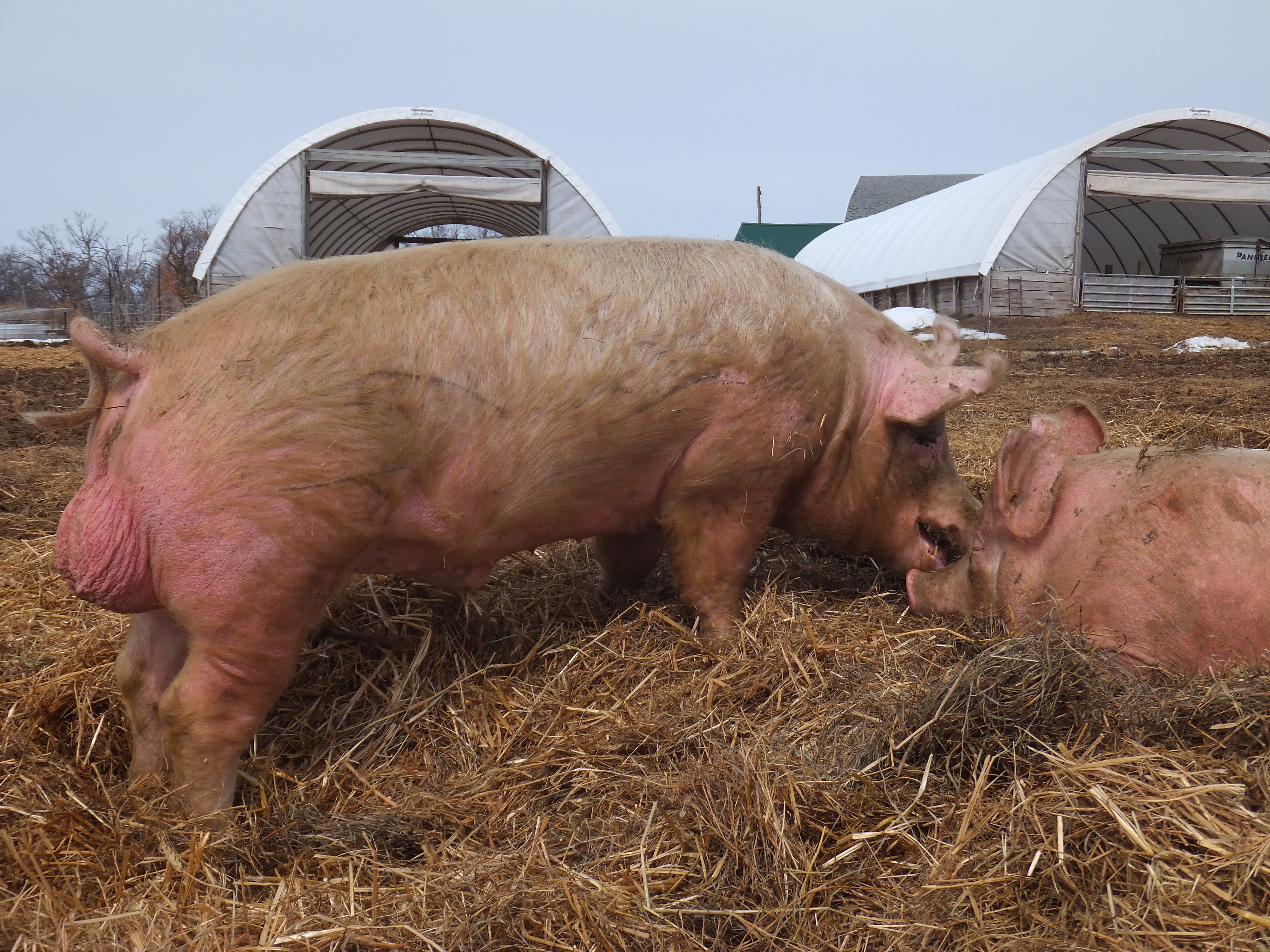
Hence, the low electric fence you see in the photo.  It runs along my driveway keeping the piglets “confined” to sixty acres or so on the south side of my farm.  In reality, they probably only use about six acres surrounding the two acres which their moms are confined in.  I’m taking advantage of the piglets’ natural inclination to stray only so far from their moms.

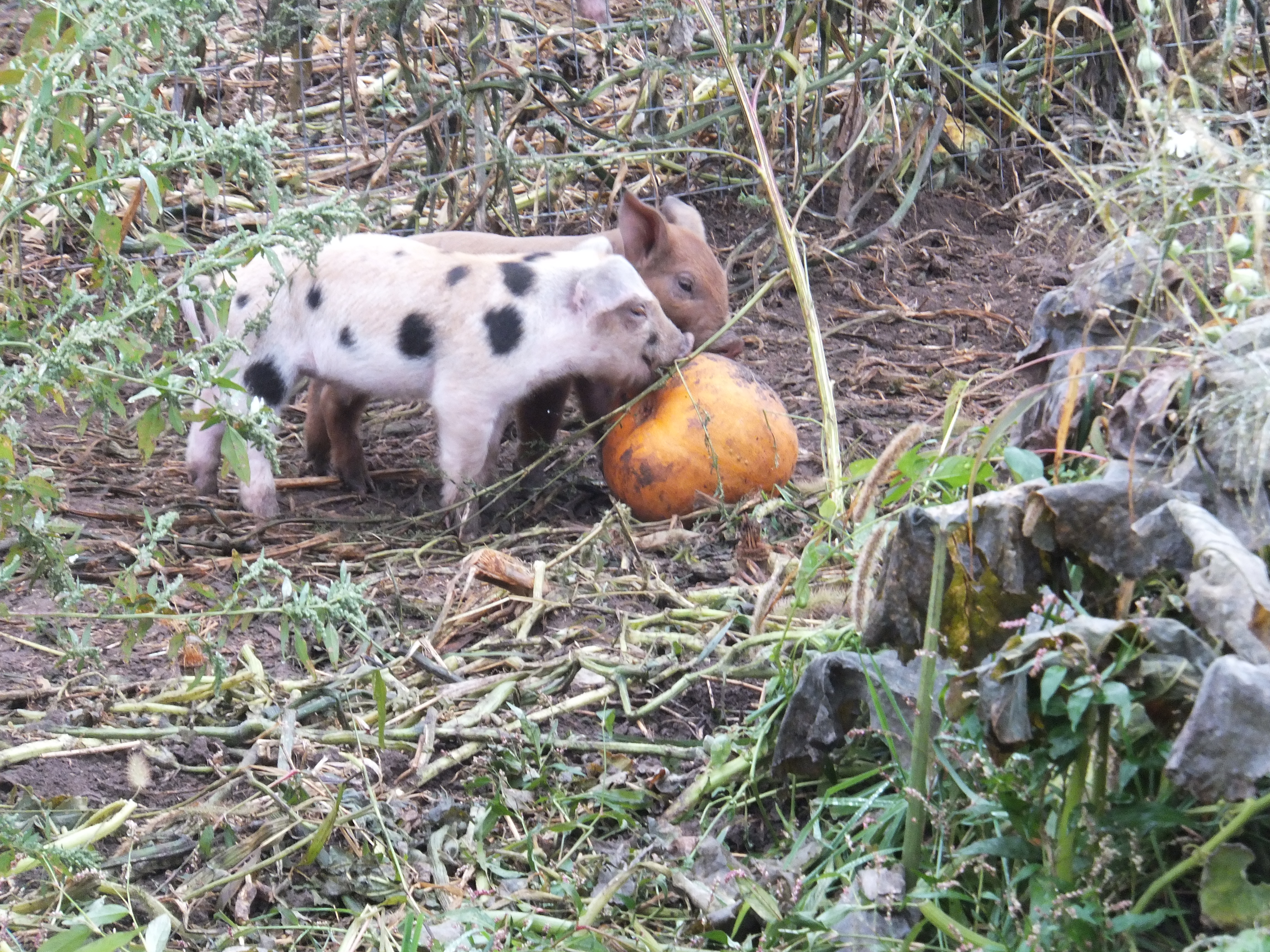
I gave the piglets their own shelter in the sweet corn patch and their own feed and water.  They really started eating grain, but continued to nurse and graze and eat other stuff like pumpkins.  They were doing very well, with the biggest ones weighing over fifty pounds.  They were so big in fact, a litter of ten was unable to all fit around their mom’s udder.

But I started having some problems.   The sows began to come into heat, (they were cycling to breed), at about eight to ten weeks into their lactations.  Interestingly this is about when our cows return to heat after calving.

A single electric fence separated the sows and litters from the gestating sows and Taiphan, the boar.  Until they came into heat, the single electric fence had  been enough to keep them apart.  But the desire to mate must have caused one sow to go through the fence.  The boar was too rough with her, and I found her the next morning barely able to walk.  So I put the sow into a recovery pen, essentially weaning her litter.

That litter, and the other big piglets found a way to go through the cattle lot and into the barnyard where they started desodding the yard very quickly.  The cold rains made mud, which they tracked into their feeder.  It started to look a lot less like piglet nirvana, so I made the decision to wean and house the piglets in a hoop barn.
 

DSCF2034


After bedding the hoop barn with straw and hay, I made a run from the lactating sows pen to the hoop barn, and in 24 hours had all the sows locked into the hoop barn.  I put an electric fence across the gate opening at sow height, allowing the piglets to come and go as they pleased.

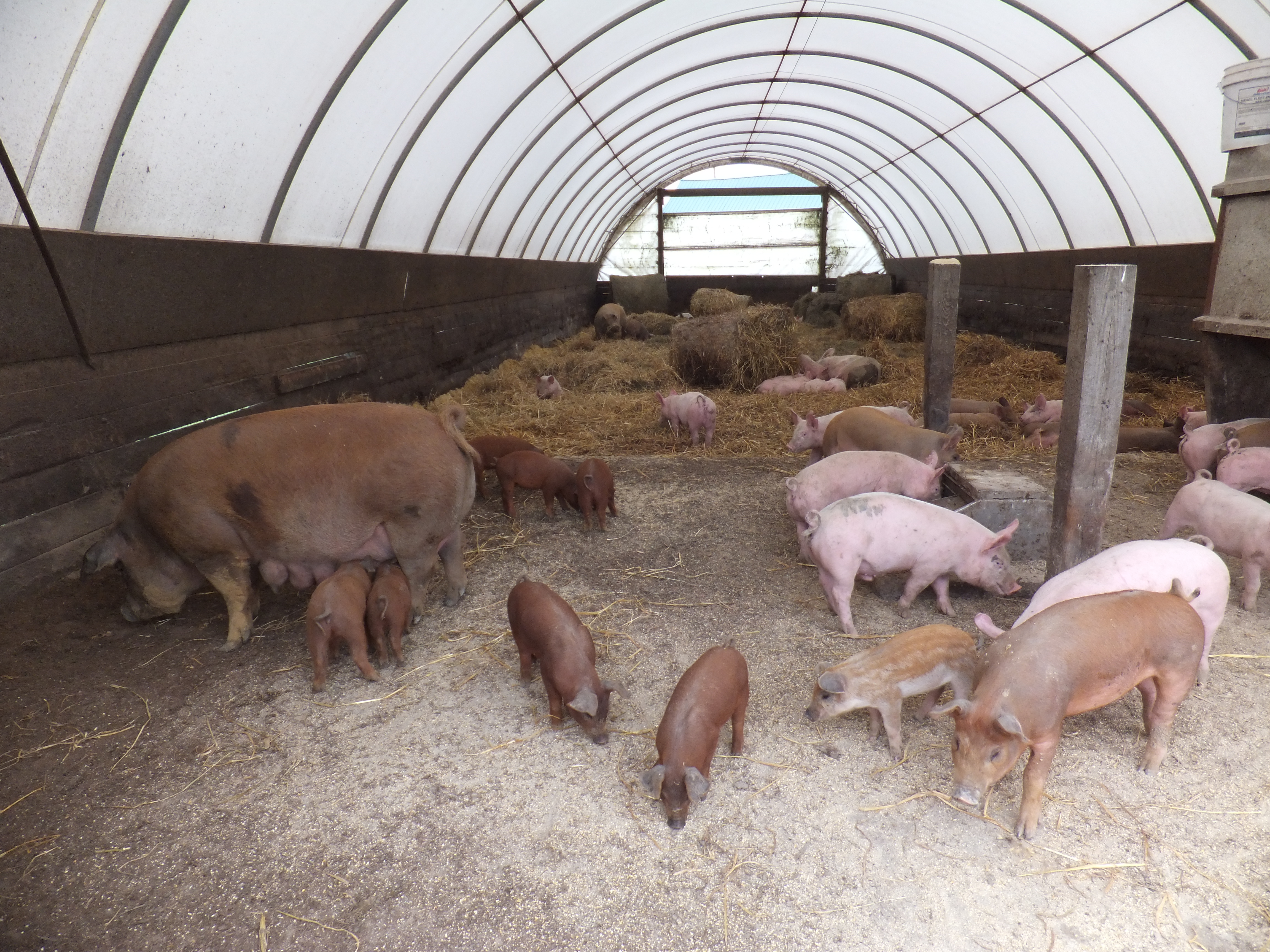
The next morning I shut the gates and all but three piglets were in the hoop building.  I caught the three piglets with my hydraulic trailer and then sorted the sows out of the hoop barn and they were weaned.  Below you can see a photo of a sow and different ages of piglets in the hoop barn.

The piglets are doing very well in the hoop barn.  They are warm and dry.  They have food and water.  They have straw and hay to manipulate as they please.

But I’m conflicted because they are no longer able to run where they please, dig, graze.  It’s a tradeoff and balancing act, something I’ll have to continue to work on as I strive toward my goal of more animals on pasture, more of the time.
DSCF2052


It’s All There!

September 18, 2014


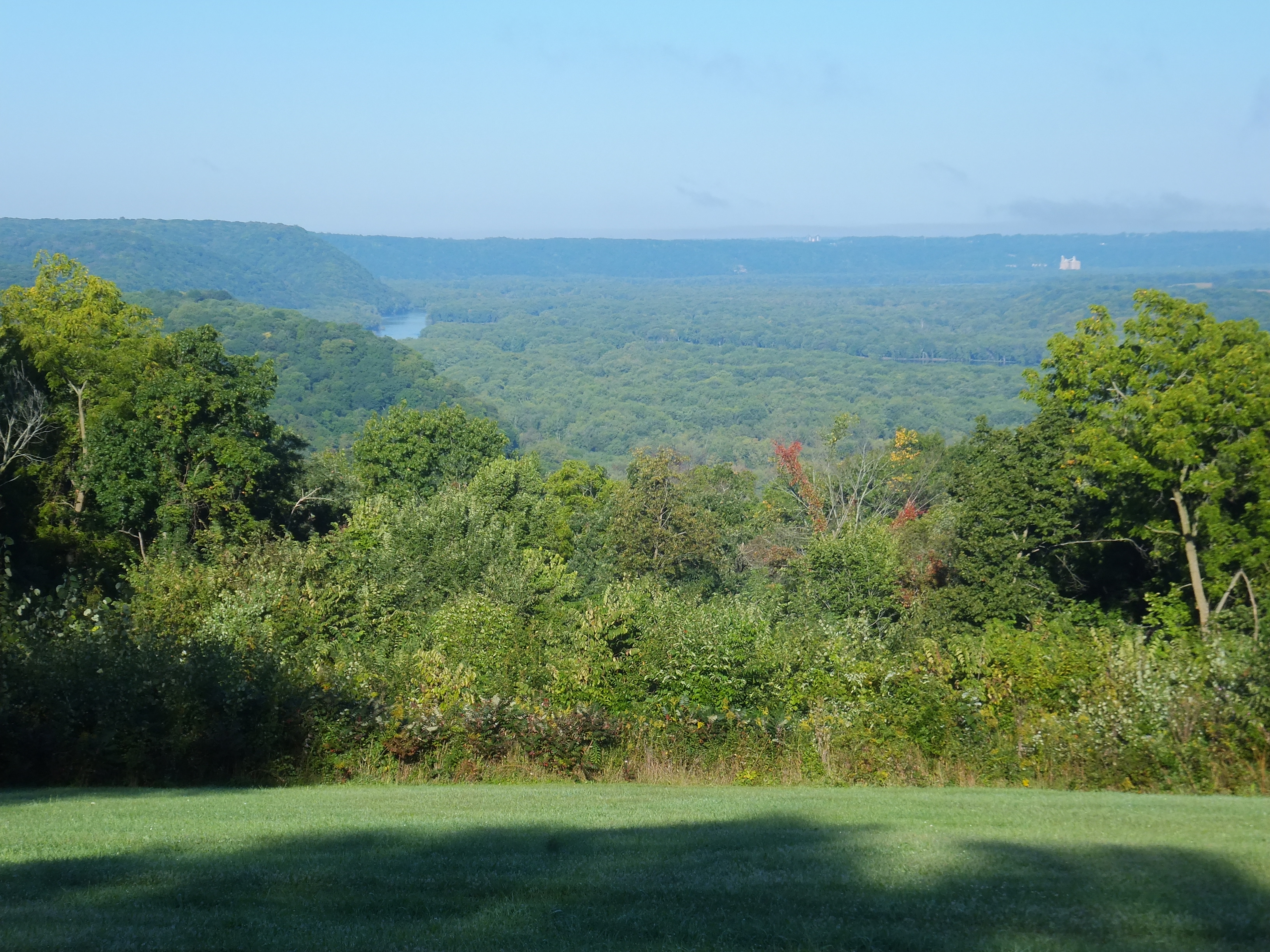
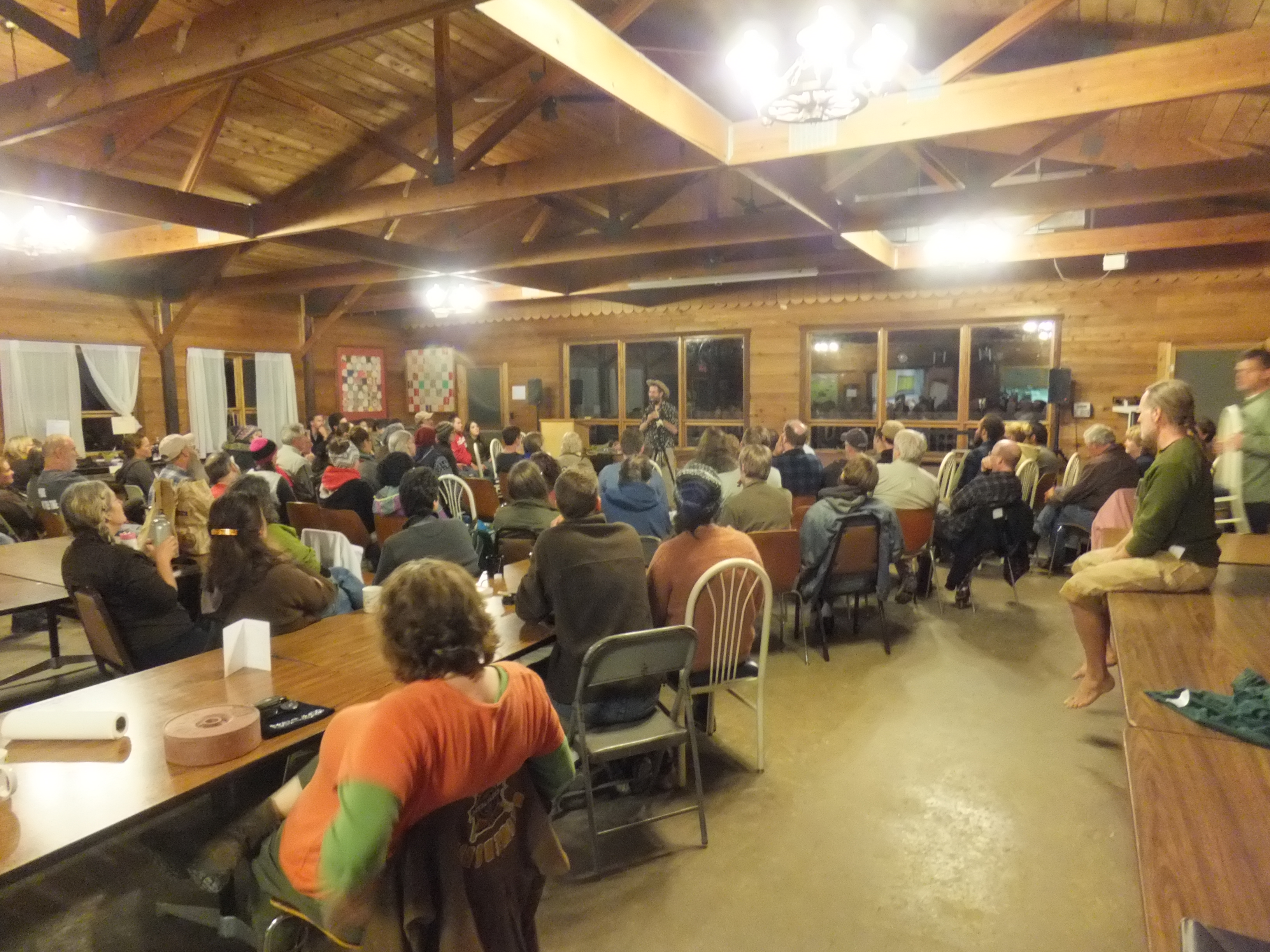
DSCF1925The 2014 Midwest Wild Harvest Festival was held at Badger Camp, overlooking the Wisconsin river valley.  I loved it.  The people were friendly and excited to learn.  The instructors were inspiring.

I learned about food preservation from Leda Meredith.  Sam Thayer was his usual irreverent self.  And Doug Elliot was as entertaining as he was informative.

Below is the largest poison ivy vine I’ve ever seen.  Doug said loggers used to eat a little bit to immunize themselves against its effects.


DSCF1915


I visited with Doug over the course of the weekend and I heard him say, “It’s all there,” several times.  It’s a vague enough saying you can use it just about anywhere.  I think the first time I heard him say it was out on a nature walk, and the next time was in exclamation of the excellent chili, (great food, by the way).

It’s all there, that’s your motto isn’t it?” I asked.

“Well I don’t know if it’s my motto,” Doug said.  “But’s it’s not a bad one to have.”

“It just about says it all,” I said.  “I think I’m going to make it my motto.”

And I am.

I think about my boys who used to love to put lego projects together.  We would scissor open the bags containing all the tiny pieces, and they would follow the instructions step-by-step, ending up with the prescribed toy.  I remember the drama that would ensue if one piece was missing, as now it wasn’t all there, and everything was ruined.

Now we have a drawer filled with loose lego pieces.  My five-year-old nephew makes a bee-line to that drawer when he comes over.  He happily builds something excellent, and then we let him take it home.  We joke that we are slowly transferring the contents of the drawer to my sister’s house.

But we never worry about drama with the lego drawer.  I think it’s the combination of  passion with autonomy, and the sense that it’s all there.  Nothing is missing, and they are confident in their abilities to create something cool.


DSCF1923


Attracting Native Pollinators

September 8, 2014


DSCF1866

I lost my mind for a couple of months this past spring.  I purchased and planted, weeds.  As with many insanities, mine started with the premise of a good cause.

I’ll admit to being a sucker for good copy, and the marketing department at Prairie Moon Nursery has got to be one of the best.  They don’t even call their spring catalog a catalog:

“Native Gardner’s Companion. Presented by Prairie Moon Nursery. Seeds and Plants of Authentic North American Wildflowers for Restoration and Gardening.”

There isn’t even the word catalog anywhere on the cover.  They aren’t in business to sell me something.  They want to partner with me to restore North America.

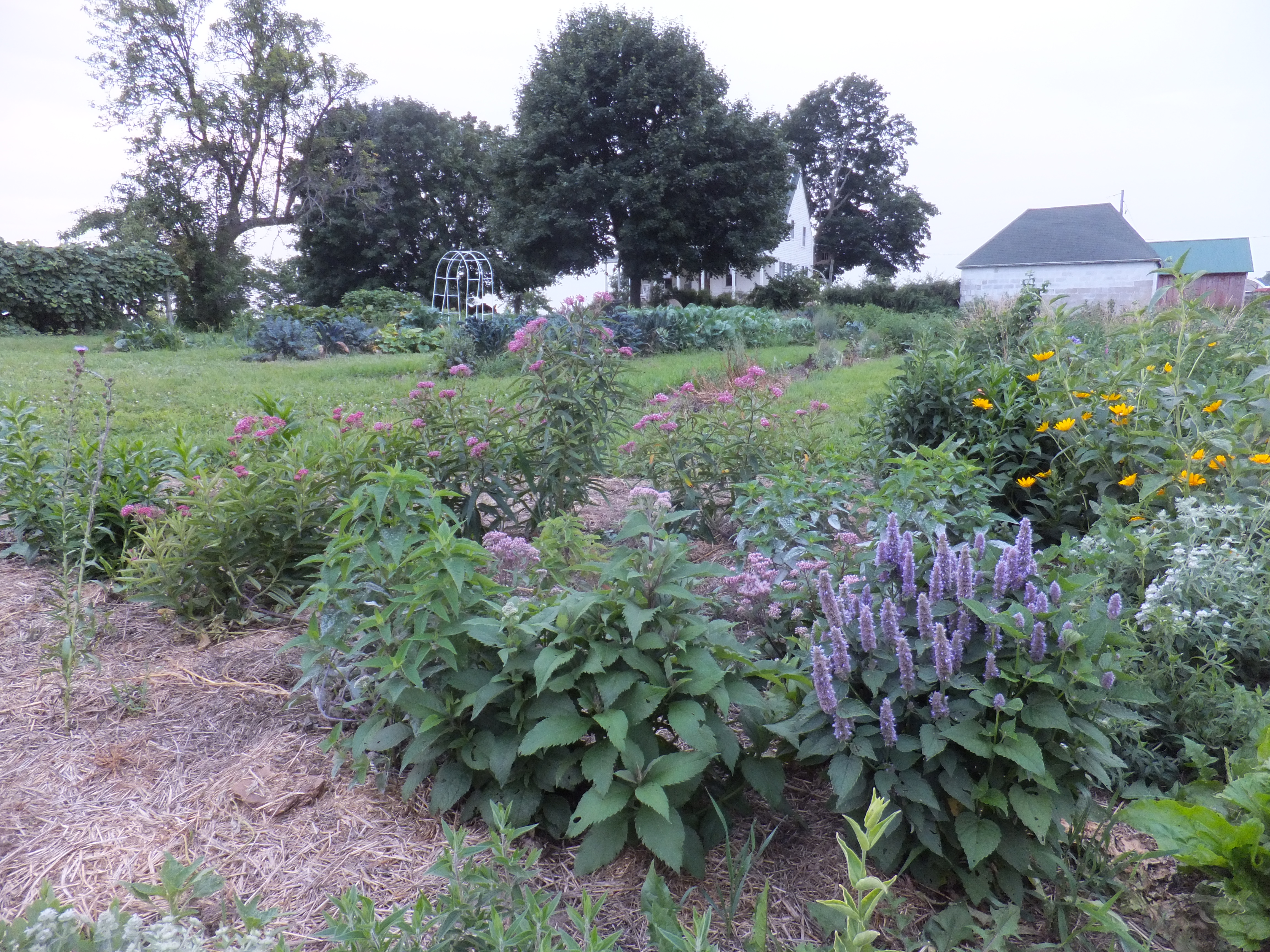
I had an open area in my permaculture windbreak which could use something, but I didn’t want large trees or bushes.  So, in the interest of restoring North America, I purchased the “Butterfly and Hummingbird Kit for Moist Soils” from Prairie Moon.  Below is a photo taken June 20th, a couple of weeks after planting and mulching.


DSCF1752


This next photo was taken August 10th.  It was fun to see results so quickly.  The flowers are already attracting many native pollinators.


DSCF1855

Attracting Native Pollinators” is a book published by the Xerces Society.  The Xerces Society works for invertebrate conservation.  I read their book and I studied the Prairie Moon Nursery catalog and website, as well as the Prairie Nursery catalog and website.

As a consequence of all this learning, I now see flowers.  It amazes me every time I learn something new and my vision changes.  We see with our brains, not our eyes.

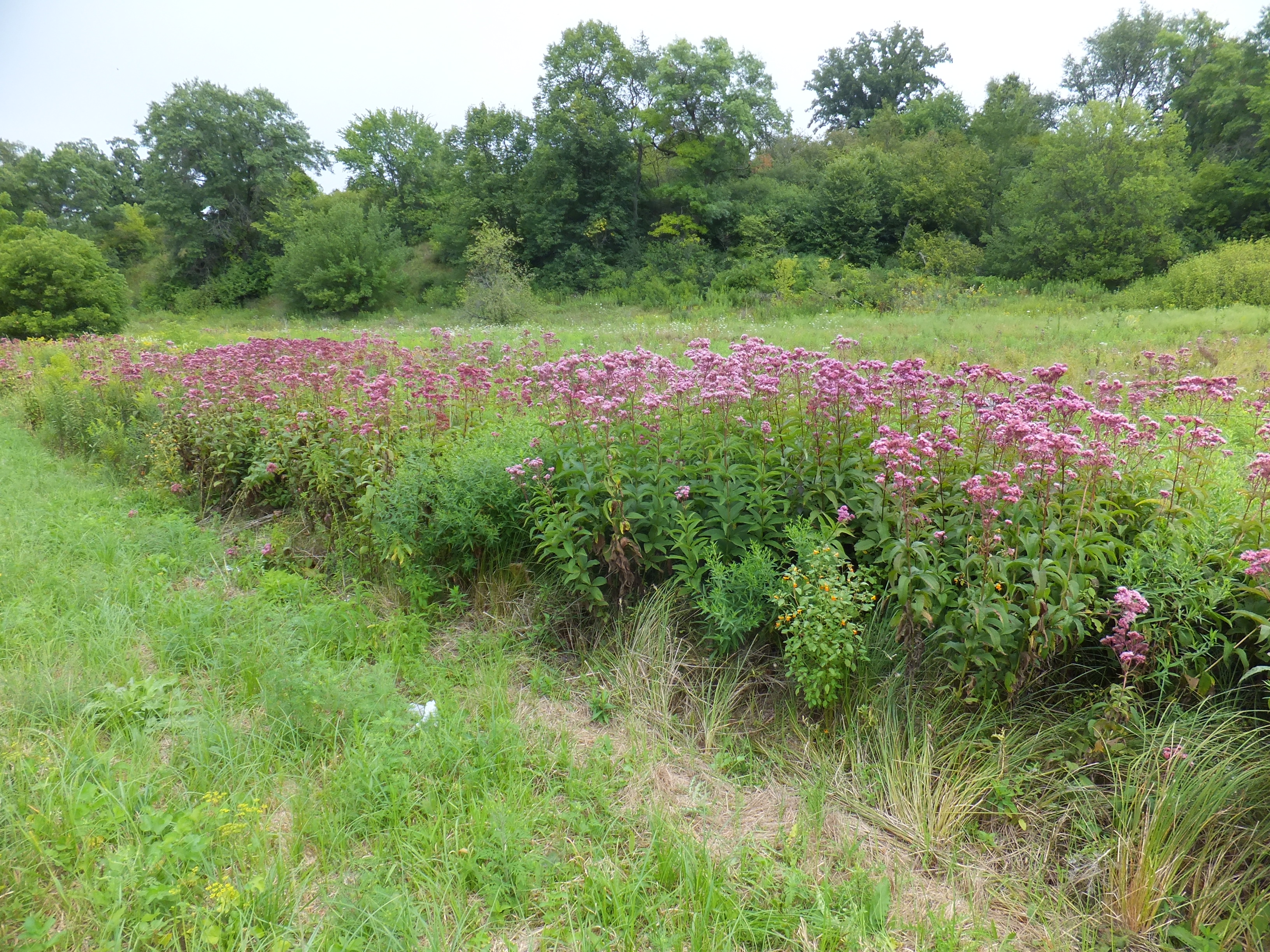
So I couldn’t help but notice this huge colony of pink flowers along Highway 23 between Darlington and Mineral Point.  It’s Joe Pye weed, a great flower for native pollinators.  The top photo in this post gives you a closer view.

And I realized how crazy it is for me to plant wildflowers thinking I’m helping the native pollinators.  If I really wanted to help the pollinators, I would start a movement to stop cutting and spraying herbicide along the roadsides.  There are acres and acres of excellent habitat alongside every road.


DSCF1869


Sweet Corn Summary and Links

August 27, 2014

DSCF1863


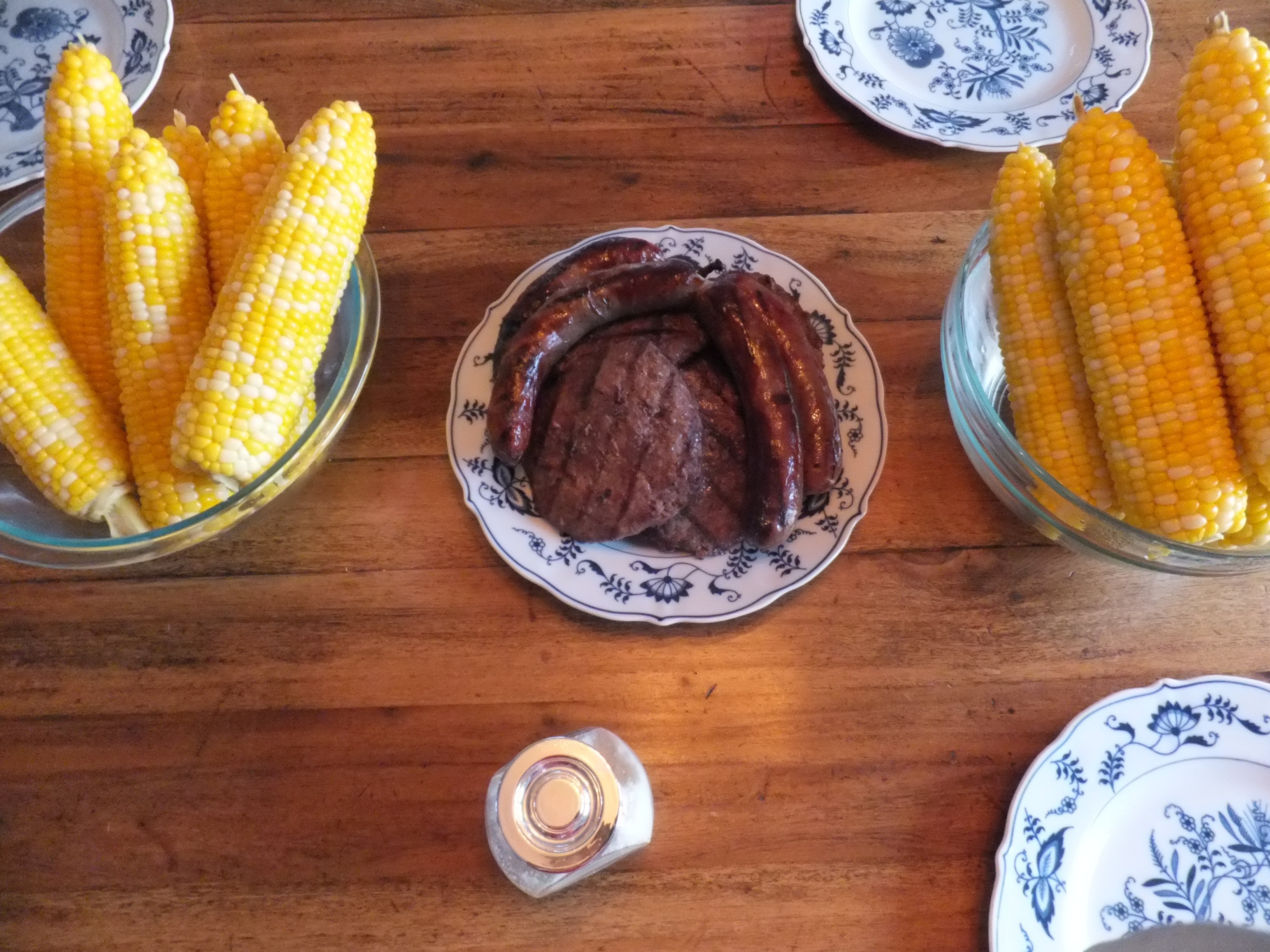
My go-to meal for the last three weeks.  The sweet corn was raised without herbicides or pesticides.  It’s a wonderful experience when a successful experiment results in such good eats.

I planted a rye cover crop last fall, rotovated twice in the spring, rotary hoed twice after planting, and cultivated twice, keeping the corn ahead of the weeds long enough to produce a good ear of corn, even though the weeds are thriving now.

The last time I tried to raise sweet corn without herbicides was a disaster, with the weeds getting ahead of the corn, resulting in production losses.  That time I only chisel plowed, disced, and cultivated once.

My plan for next year is to use the same protocol as this year, except possibly not using the rye cover crop.  That may prove to be a mistake as the rye has alleopathic properties.

I wonder if I should be looking at weeds differently.  Instead of a problem to overcome, maybe I should consider them as a volunteer crop.  Instead of weeding, maybe I should be harvesting.

Tama Matsuoka Wong is a businessperson who has taken her interest in wild edibles to a new level.  She partners with restaurants to put wild edibles on the menu.  Her website is  Meadows and More.  Discovering the way Ms. Wong approaches wild edibles is invigorating my thinking about weeds.

Finally, while I’ve spent the summer thinking about sweet corn, I wonder how much corn I’m getting from other sources.  “Children of the Corn” is an interesting infograph if you’ve ever wondered about the corn industry.

The one problem I have with the infograph is when they talk about water usage.  Sure, corn uses water, but it gets cycled back into the atmosphere.  It’s not like it’s being used up, never to be seen again.

Comment if you have any thoughts about these topics.


2014 Midwest Wild Harvest Festival

August 21, 2014

m, swinging

I’m all signed up and excited to attend the Midwest Wild Harvest Festival, September 12th-14th at Prairie Du Chien, Wisconsin.  It’s three days and two nights of foraging fun at Badger Camp.  I can’t believe it’s been seven years since I attended something like this.

Below is a photo from a foraging weekend near Lacrosse, Wisconsin.  Sam Thayer is in the left of the photo.  He and his wife Melissa, are two of the organizers of this festival.  A fun added benefit for me, and for the rest of the campers, he said modestly, is that my pork will be served at some of the meals.

I don’t think it’s too late to sign up.  If you are interested in wild edibles, this will be a weekend you won’t forget.  I hope to see you there!

matt-in-the-water.jpg


Herd Boars

August 16, 2014

DSCF1618

Tater, the best boar I’ve ever raised, and the pinnacle of my attempts to create an Oxford Sandy and Black for the midwest.  Alas, Tater had one crucial problem.  He was sterile.  Or at least he was functionally sterile.  He would make a few feeble attempts, but quit before achieving the proper insertion.

When I told me son about Tater, he said, “If he’s so good, couldn’t you collect his semen and use it to artificially inseminate.”

“I think that’s what has contributed to this problem.  Twenty-plus years of artificial insemination has led to the rise of problem breeders,” I said.

My memory may be fooling me, but it seems like boars used to do a better job with natural service.  Part of the problem may be I don’t keep enough boars around.  You would think I would be smarter than this with close to forty years of experience.  We always said it starts with the boars.  If you don’t get the sows bred, you are out of the livestock business.

Fortuitously I had kept a backup boar, just in case Tater didn’t work.  Chris is pictured below, half Yorkshire, half Landrace.  He sired all the winter/spring litters.

DSCF1625

And then we come to Taiphan, pictured below.  Mean, ugly, difficult to be around, and he gets the job done.  I forgot what a truly aggressive breeding boar is like.

When a boar is sexually aggressive, you have to worry that he gets enough to eat.  I remember boars from years ago that we had to remove from the breeding herd to let them gain some weight.

Taiphan was in the first litter born in 2013 in a snowstorm.  Most of his littermates froze, so we know he’s tough as well as aggressive.  His dam was a Duroc sow and his sire was DRU semen from SGI.  So he’s 3/4 Duroc and 1/4 French Muscolor.  He sired the early summer litters.

DSCF1663I have some new litters out of Duroc and Landrace semen.  They look ok so far.  I kept quite a few boars, hoping I can keep from running short in the future.

It’s not easy.  You have to have some redundancy in case something goes wrong.  And if everything happens to be perfect, pour yourself a glass of lemonade and enjoy the two or three minutes while they last.


Dewalt Level, Making a Permaculture Swale

August 12, 2014

DSCF1692


I continue to study permaculture, and swales are very popular within the permaculture community.  A swale is a ditch which holds water, instead of moving it from one place to another.  A swale is dug on the contour of the land, and its purpose is to slow the runoff of rain water, so it infiltrates into the surrounding soil instead.  The Permaculture Research Institute has an excellent post if you want to learn more.

Last year we had a couple of landscaping consultants come to the farm, and while they were here, I asked them to help me lay out the contour where I wanted to plant my permaculture windbreak.  They used a builder’s level.  I was glad they did, because my eye would have made a lot different contour than what the tool said.

This year I knew I wanted to plant my evergreen windbreak on the contour,and I also wanted to make a swale.  The consultants charged me enough last year that I knew I wanted to do it myself if at all possible.  I needed a level.

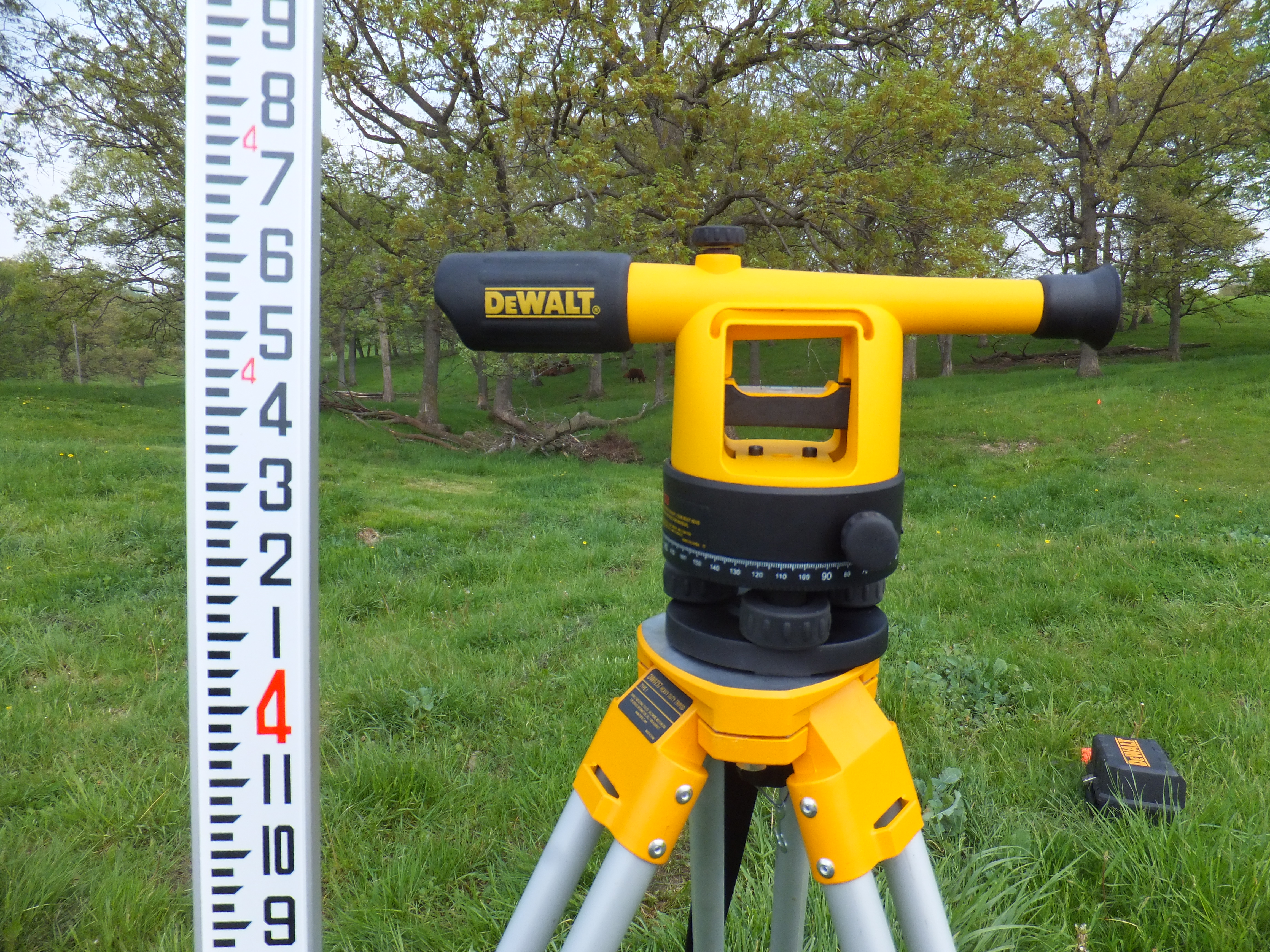
I looked at some of the plans to make an Aframe level.  It seemed doable, but slow to use.  I looked on Amazon and started researching levels.  I decided to purchase the Dewalt DW090PK level.

I could have spent more and purchased a laser level, which would mean I could do the job by myself.  But I thought it would be quality time to lay out contours with my sons.  I could have also purchased a transit level, which I guess would have allowed me to do vertical angles.  I didn’t have any experience with this stuff, so my understanding may be off.

So after much research, I got my level and started practicing with it.  It turned out to be a good purchase.  I really enjoy using it, and am amazed at how far off my eye is.

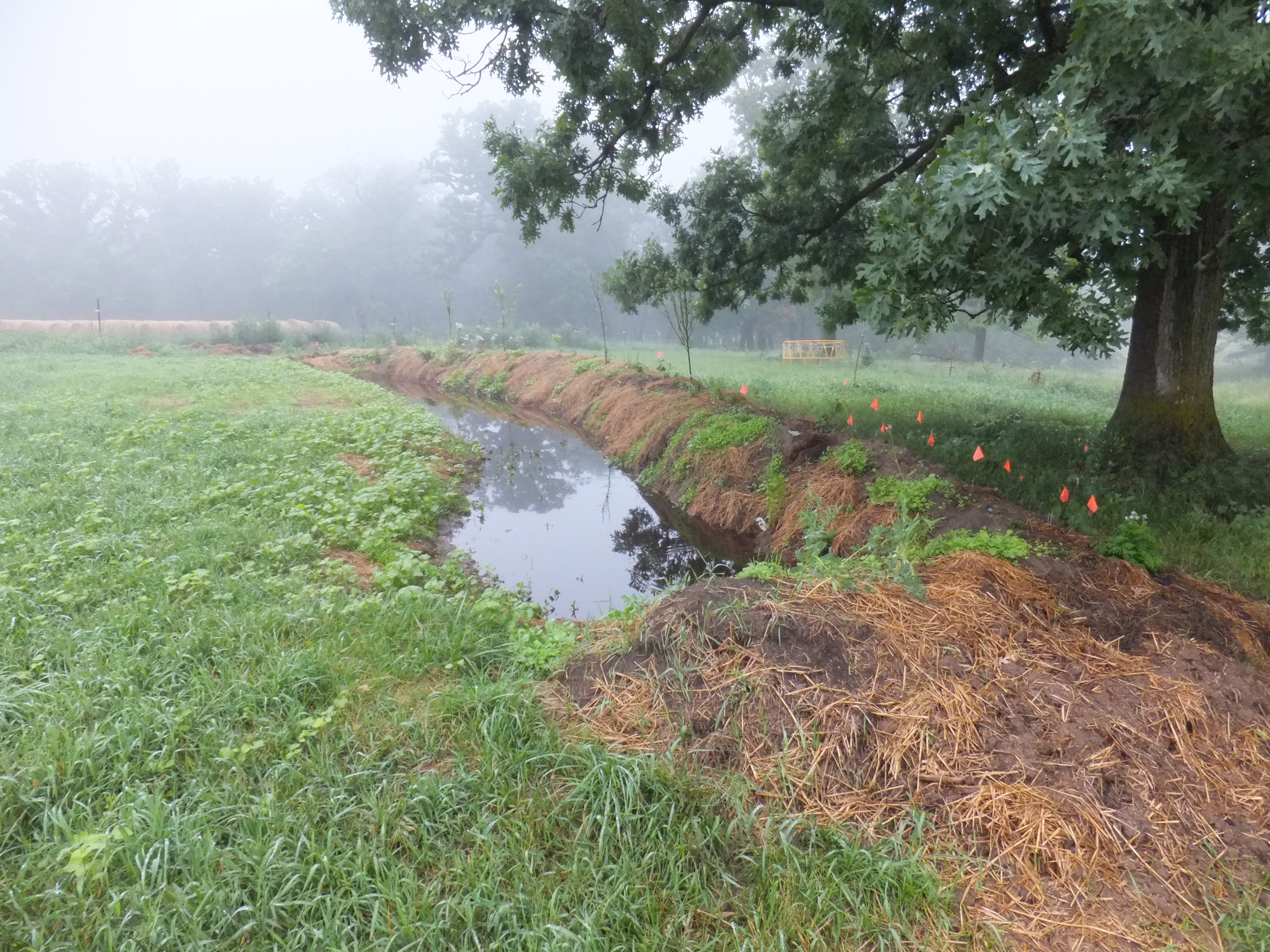
Below is my first swale.  After flagging out the contour with my level, I built it with my loader.  It’s about 100 feet long.  Five plum trees and six currant and jostaberry bushes are planted along the ridge. I mulched with hay to keep the sides from eroding.

It got dry after I made the swale and I wanted to see how much water it would hold, so I filled my Dad’s liquid manure spreader with water and put it in the swale.  It can safely hold over 1000 gallons of water.  We have also had rains of over two inches and it had no problems taking that amount of rainfall.

No matter how wet we have been, almost all the water has soaked in after 24 hours.  And all of it has soaked in after 48 hours.  I haven’t had to water the plantings, and we’ve gotten pretty dry in August, so it appears that the concept is working.

I’m not sure how practical swales are.  I like the concept, as I hate to think of rain water running off the land.  I think they work best for smaller-scale agriculture.  As I plant more trees, I think it would be wise to plant them on swale mounds as this will help with their watering needs.

DSCF1756


Kentucky Blue Pole Beans

August 5, 2014

DSCF1846


The jungle above is what happens when you plant pumpkins too close to pole beans.  I planted Kentucky Blue Pole Beans, my first try with pole beans as I never thought I wanted to mess with a fence.  But it turns out they weren’t much work, and grow well here.

I planted them in a row and after they were up and growing, I weeded and mulched with loose hay chaff from the barn.  Then I put a five-foot high fence right beside them.  They took to the fence rapidly and would have grown higher if my fence had been taller.

They were doing very well until the pumpkins, which were planted three and six feet away, made there way over to the fence and started climbing.  All the shade from the pumpkins may have hurt yield, but it doesn’t matter now as the sweet corn is ready.  We ate green beans every day, but now I realize they were just a place-holder on my plate until the sweet corn was ready.


Sweet Corn Planting Mistake

July 28, 2014

DSCF1839


I made a rookie-type mistake planting my sweet corn.  After planting my Dad’s field corn, I changed the population from 30,000 plants per acre down to 20,000 plants per acre, and I cleaned out each of the four seed hoppers in my John Deere 7200 planter.

I’ve owned this corn planter for over five years, and I’ve cleaned out the hoppers the same way every time, (dumping them upside down several times), but this time one of the hoppers had quite a bit of corn stuck down inside where I couldn’t see it.  Furthermore, when I started planting, that row was plugged and corn was not coming out.  Luckily, the monitor tells me when a row isn’t planting, so I wouldn’t have planted the whole field with a missing row.

I unplugged the row and finished planting the whole field, stopping once to add another variety of sweet corn.  I planted two varieties this year, both supersweet, but with different maturities.  I noticed there was more corn in the second hopper, but figured that must have been because it didn’t plant that one time across the field.

Fast-forward to a couple of months later.  I noticed that the rows of corn were developing differently, but figured that must have been the difference in variety.  Then we had a summer storm with strong winds.  Most of the corn was bent over from the strong wind, but some of the rows were not affected.  I still figured it was due to varietel difference.

Finally, when the corn started tasseling, with the taller rows not tasseling, a light bulb went on and I realized what had happened.  The tall rows were my Dad’s field corn.  The next thought I had was, “Oh no, my sweet corn is ruined.”  You see, supersweet corn needs to be isolated from other types of corn or the sugar in it turns to starch and it tastes terrible.  This happened once with our sweet corn when I was a kid, and it was inedible.

But then I realized that the sweet corn was tasseling, but the field corn was not.  So if the sweet corn could pollinate before the sweet corn tasseled, I would be fine.  I could have detasseled all the field corn to be safe, but you know me, my curiosity comes before my success.  So now we wait and see.

Next year I know exactly what I will do differently.  I’m going to upend each hopper, removing all the visible corn.  Then I will put the planter in the ground somewhere out of the way, and plant any remaining seeds until the monitor tells me each row is empty.

On a side note, you can see the pumpkin and squash is growing gangbusters.  In the foreground you can see a new purchase I made: Racoon Net from Premier fence.  The three-strand electric fence I always made in the past helped, but didn’t completely keep the raccoons out of the sweet corn.  I’m hoping this netting works better, and I’ll try to remember to let you know how it does.


Corn Roots in Rotovated Soil

July 21, 2014

DSCF1776


I expressed some concern when I rotovated the soil in the spring that the smeared soil at the bottom of the rotovated soil may prove difficult for corn roots to penetrate.  So I decided to dig up a plant to check.  If the roots had a difficult time they would be turned and/or short.

I took these photos June 24th, and am pleased to see that this corn plant appears to have had no problem.  By the looks of the rest of the field, its safe to say my fears were unfounded.

DSCF1779