Dewalt Level, Making a Permaculture Swale

August 12, 2014

DSCF1692


I continue to study permaculture, and swales are very popular within the permaculture community.  A swale is a ditch which holds water, instead of moving it from one place to another.  A swale is dug on the contour of the land, and its purpose is to slow the runoff of rain water, so it infiltrates into the surrounding soil instead.  The Permaculture Research Institute has an excellent post if you want to learn more.

Last year we had a couple of landscaping consultants come to the farm, and while they were here, I asked them to help me lay out the contour where I wanted to plant my permaculture windbreak.  They used a builder’s level.  I was glad they did, because my eye would have made a lot different contour than what the tool said.

This year I knew I wanted to plant my evergreen windbreak on the contour,and I also wanted to make a swale.  The consultants charged me enough last year that I knew I wanted to do it myself if at all possible.  I needed a level.

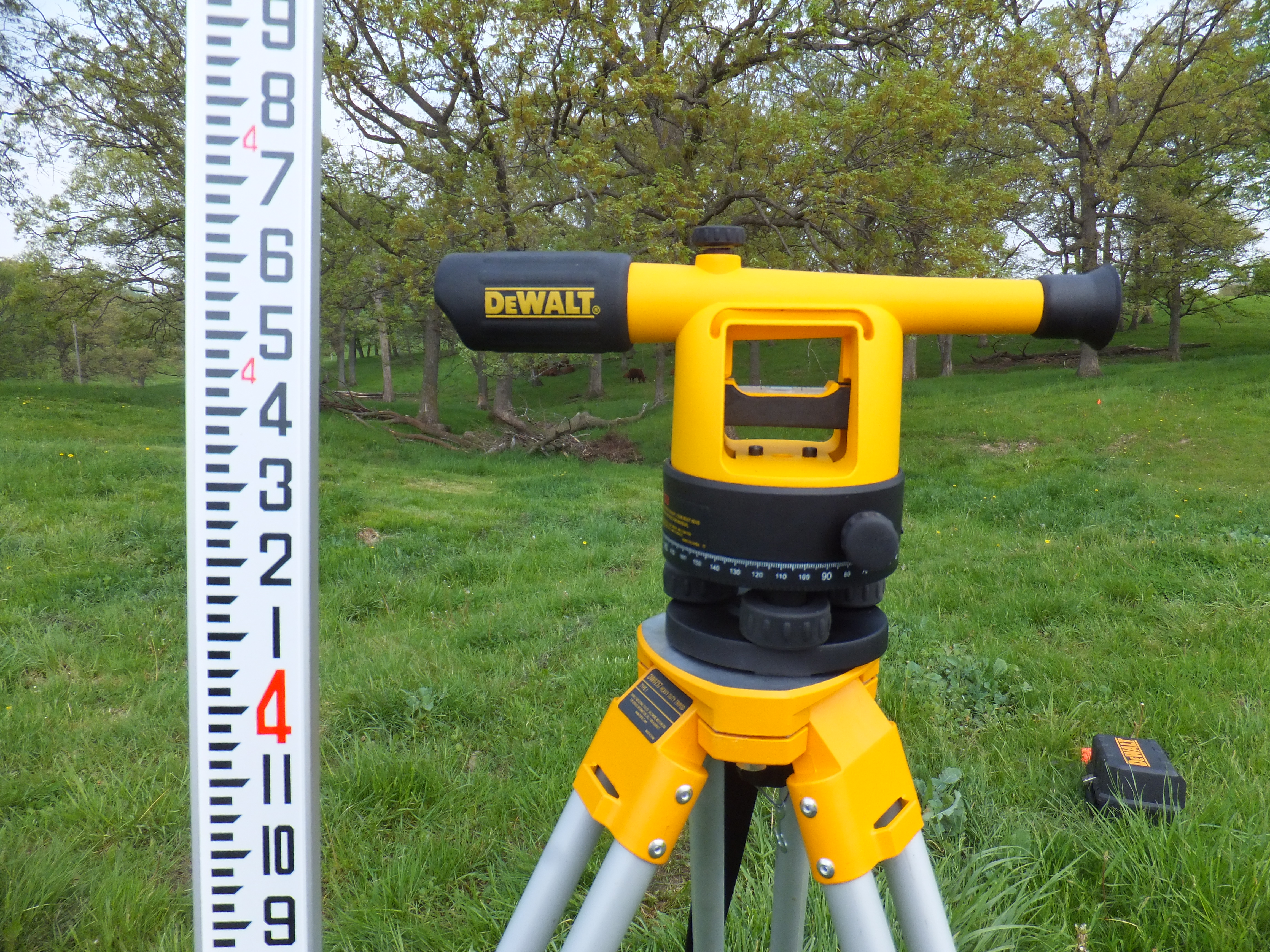
I looked at some of the plans to make an Aframe level.  It seemed doable, but slow to use.  I looked on Amazon and started researching levels.  I decided to purchase the Dewalt DW090PK level.

I could have spent more and purchased a laser level, which would mean I could do the job by myself.  But I thought it would be quality time to lay out contours with my sons.  I could have also purchased a transit level, which I guess would have allowed me to do vertical angles.  I didn’t have any experience with this stuff, so my understanding may be off.

So after much research, I got my level and started practicing with it.  It turned out to be a good purchase.  I really enjoy using it, and am amazed at how far off my eye is.

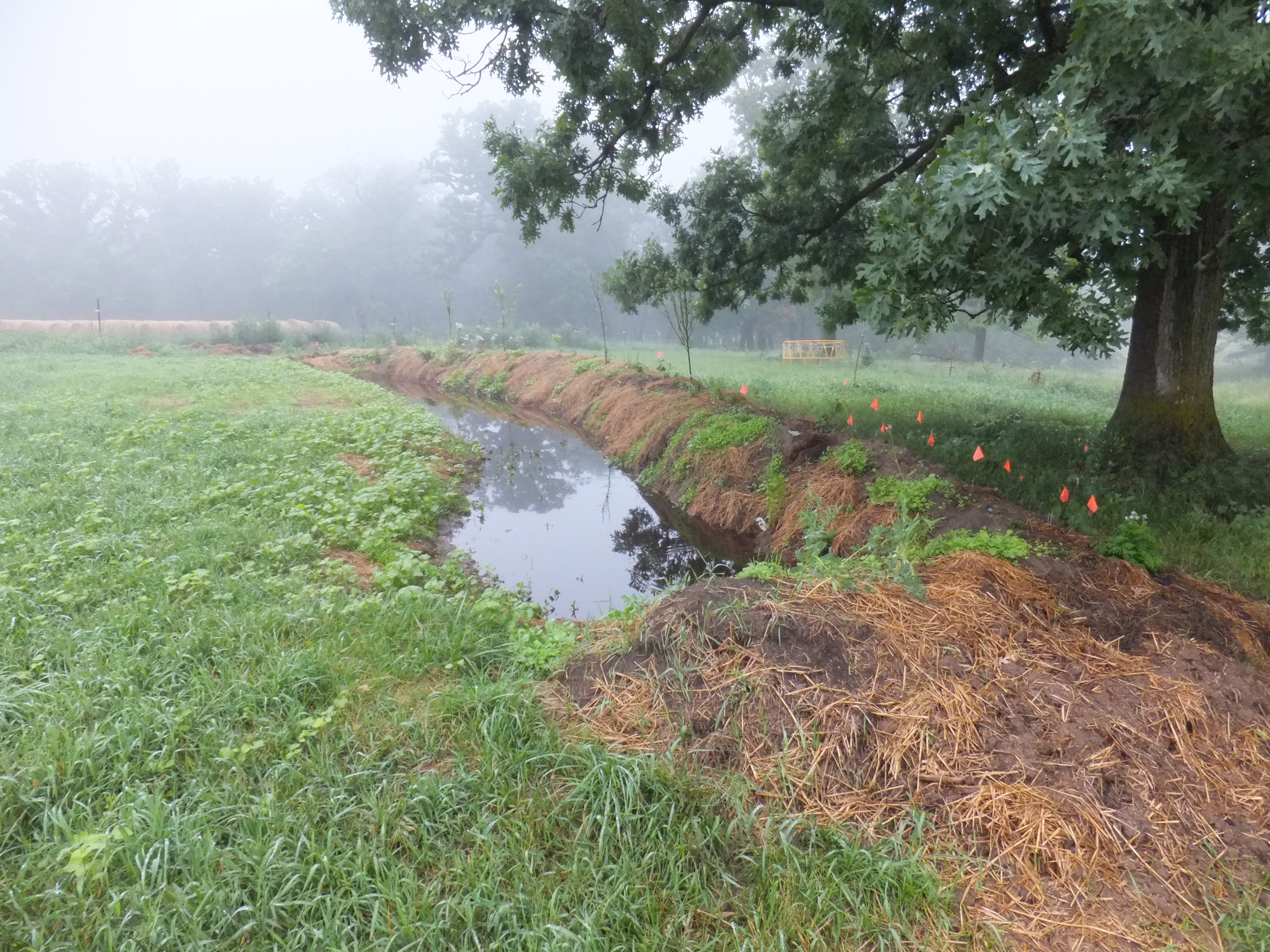
Below is my first swale.  After flagging out the contour with my level, I built it with my loader.  It’s about 100 feet long.  Five plum trees and six currant and jostaberry bushes are planted along the ridge. I mulched with hay to keep the sides from eroding.

It got dry after I made the swale and I wanted to see how much water it would hold, so I filled my Dad’s liquid manure spreader with water and put it in the swale.  It can safely hold over 1000 gallons of water.  We have also had rains of over two inches and it had no problems taking that amount of rainfall.

No matter how wet we have been, almost all the water has soaked in after 24 hours.  And all of it has soaked in after 48 hours.  I haven’t had to water the plantings, and we’ve gotten pretty dry in August, so it appears that the concept is working.

I’m not sure how practical swales are.  I like the concept, as I hate to think of rain water running off the land.  I think they work best for smaller-scale agriculture.  As I plant more trees, I think it would be wise to plant them on swale mounds as this will help with their watering needs.

DSCF1756


Kentucky Blue Pole Beans

August 5, 2014

DSCF1846


The jungle above is what happens when you plant pumpkins too close to pole beans.  I planted Kentucky Blue Pole Beans, my first try with pole beans as I never thought I wanted to mess with a fence.  But it turns out they weren’t much work, and grow well here.

I planted them in a row and after they were up and growing, I weeded and mulched with loose hay chaff from the barn.  Then I put a five-foot high fence right beside them.  They took to the fence rapidly and would have grown higher if my fence had been taller.

They were doing very well until the pumpkins, which were planted three and six feet away, made there way over to the fence and started climbing.  All the shade from the pumpkins may have hurt yield, but it doesn’t matter now as the sweet corn is ready.  We ate green beans every day, but now I realize they were just a place-holder on my plate until the sweet corn was ready.


Sweet Corn Planting Mistake

July 28, 2014

DSCF1839


I made a rookie-type mistake planting my sweet corn.  After planting my Dad’s field corn, I changed the population from 30,000 plants per acre down to 20,000 plants per acre, and I cleaned out each of the four seed hoppers in my John Deere 7200 planter.

I’ve owned this corn planter for over five years, and I’ve cleaned out the hoppers the same way every time, (dumping them upside down several times), but this time one of the hoppers had quite a bit of corn stuck down inside where I couldn’t see it.  Furthermore, when I started planting, that row was plugged and corn was not coming out.  Luckily, the monitor tells me when a row isn’t planting, so I wouldn’t have planted the whole field with a missing row.

I unplugged the row and finished planting the whole field, stopping once to add another variety of sweet corn.  I planted two varieties this year, both supersweet, but with different maturities.  I noticed there was more corn in the second hopper, but figured that must have been because it didn’t plant that one time across the field.

Fast-forward to a couple of months later.  I noticed that the rows of corn were developing differently, but figured that must have been the difference in variety.  Then we had a summer storm with strong winds.  Most of the corn was bent over from the strong wind, but some of the rows were not affected.  I still figured it was due to varietel difference.

Finally, when the corn started tasseling, with the taller rows not tasseling, a light bulb went on and I realized what had happened.  The tall rows were my Dad’s field corn.  The next thought I had was, “Oh no, my sweet corn is ruined.”  You see, supersweet corn needs to be isolated from other types of corn or the sugar in it turns to starch and it tastes terrible.  This happened once with our sweet corn when I was a kid, and it was inedible.

But then I realized that the sweet corn was tasseling, but the field corn was not.  So if the sweet corn could pollinate before the sweet corn tasseled, I would be fine.  I could have detasseled all the field corn to be safe, but you know me, my curiosity comes before my success.  So now we wait and see.

Next year I know exactly what I will do differently.  I’m going to upend each hopper, removing all the visible corn.  Then I will put the planter in the ground somewhere out of the way, and plant any remaining seeds until the monitor tells me each row is empty.

On a side note, you can see the pumpkin and squash is growing gangbusters.  In the foreground you can see a new purchase I made: Racoon Net from Premier fence.  The three-strand electric fence I always made in the past helped, but didn’t completely keep the raccoons out of the sweet corn.  I’m hoping this netting works better, and I’ll try to remember to let you know how it does.


Corn Roots in Rotovated Soil

July 21, 2014

DSCF1776


I expressed some concern when I rotovated the soil in the spring that the smeared soil at the bottom of the rotovated soil may prove difficult for corn roots to penetrate.  So I decided to dig up a plant to check.  If the roots had a difficult time they would be turned and/or short.

I took these photos June 24th, and am pleased to see that this corn plant appears to have had no problem.  By the looks of the rest of the field, its safe to say my fears were unfounded.

DSCF1779


Contour Strip Cropping, Farm Update

July 19, 2014

DSCF1817

There must be some sort of dubious record I am setting this year.  The top photo was taken July 6th.  It shows the contour strips, which is how we farm the hillsides in Wisconsin to prevent soil erosion.

The green in the foreground is a little strip of hay next to the road which was cut and baled in June.  Next up in the photo is very mature, cut hay.  Yes, the last of first cutting was made in July.  The green strip in the middle of the photo is hay which was cut and baled in May, and is now ready to be cut for a second time.  The light colored strip above that is my oats and hay new seeding which is cut and drying, waiting to be baled.

So, yes, I made first cutting hay in May, June, and July.  I know of no other farmer who is as on the ball, and behind, as myself.  At least I’m still laughing.

DSCF1782


The bottom photo shows my sweet corn on June 26th.  Beyond the sweet corn are the farrowing huts.  I’ve had 14 beautiful June litters.  Beyond the farrowing huts are my grass-finished steers.  I started them grazing hay fields at the end of June.


Hummingbird Moth Caterpillar

June 30, 2014

DSCF1795

The forage peas continued to grow, reaching over four feet in height.  They are flowering now and producing pods.  I snapped these photos when I turned the sows into fresh pasture.  The caterpillar in the bottom photo is a big one, and the second one I’ve seen, so I decided to try and identify it.

It looks like its a White-lined sphinx caterpillar, (Hyles lineata), commonly known as the Hummingbird moth.  This is exciting to me because I’ve only seen a Hummingbird moth once in my life.  They’re really cool because they look like a hummingbird, until you watch their movements and realize they’re too slow to be a hummingbird.

I read a book this winter, “Attracting Native Pollinators,”  by the Xerces society.  It’s all about what we can do to improve the habitat for our native pollinators.  In a future post I plan to share some of the fun plantings I’ve done this spring.

DSCF1797


Sweet Corn Update, June 2014

June 25, 2014

DSCF1773

I cultivated between the rows on June 16th.  The soil was quite dry.  We received five inches of rain over the following four days.  I snapped these photos the morning of June 20th.

Now the corn is too tall for mechanical cultivation, so we are left with hand weeding.  We’ve been doing some of that, especially around my garden area.  That’s the beautiful thing with organic production, I can plant other crops amongst the corn and not worry about the herbicide killing them.

The bottom photo shows where I ran out of corn for a couple of rows.  Instead of panicking, I planted pole beans and squash and pumpkin in the empty rows.  Since this picture was taken, I weeded and mulched and put up a fence for the pole beans to climb on and it’s looking pretty good.

DSCF1770


I have mixed feelings about the weed control.  On the plus side, I definitely think I controlled the weeds enough that the corn yield will not be limited.  Research shows that much of a corn’s yield potential is determined at a very small size, (around four leaves I think).

But I can see a lot of weeds coming now.  I wonder if I let them escape and go to seed will the weed pressure continually worsen?  Maybe I have let too many weeds go to seed in the past?

I can see the allure of using herbicide to achieve a “clean” field.  It’s just that I can also see that there is no such thing as “clean”.  Life is messy!


Sorghum/Sudangrass and Forage Peas for Pig Pasture

June 20, 2014

DSCF1719


I planted two forages for a pig pasture this spring which are new to me.  I’m very pleased with the forage peas.  I’m not happy with the sorghum-sudangrass, but don’t feel I utilized it correctly.

I no-till planted both into last year’s pig pasture on April 23rd.  I used my single-disc John Deere grain drill, which is not considered a no-till drill, but works great when the ground is mallow in the spring.  I planted about 25 lbs to the acre for each.

Above you can see what most of the pasture looks like.  Three-foot high forage peas growing thickly.  The warm-season sorghum-sudangrass has been overpowered by the cool-season peas.

Below you can see an open area where each plant is growing side by side.  The sorghum-sudangrass is thriving here.  It looks like corn.  The pea is the green and white leaf on the left.

The sorghum-sudangrass is called Surpass BMR 6, and is from Lacrosse Seeds.  I can’t even find the forage pea on their website.  It’s safe to say the pea did better, but I believe it’s all in how I used them.

Planting them together and early in the spring is an advantage for the peas, and the results bear witness.  I shouldn’t have planted them together, but I wanted to try both plants and wasn’t sure I would have another spot to plant in this year.  Waiting another year is just too much.

I also think the sorghum-sudangrass would have like to have been planted deeper, but no-till into mallow ground worked great for the pea.  On a side note, Buckwheat no-tills very well in the spring, although it is not supposed to tolerate frost.


DSCF1709


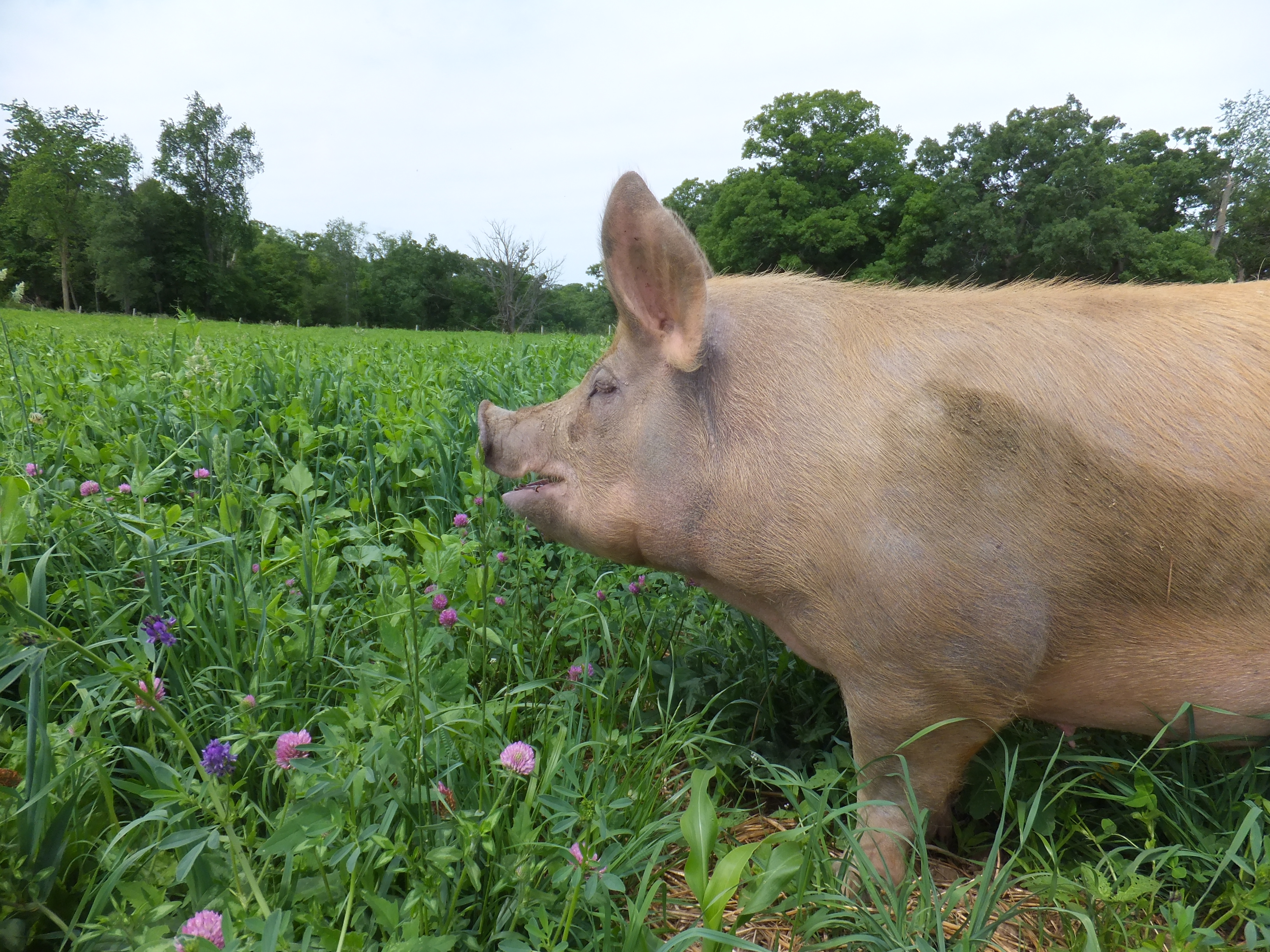
I couldn’t resist including the photo below with my model sow amongst the purple and red flowers of alfalfa and red clover.  The sow was pictured last September as a gilt with her beautiful litter.  She has large, erect ears, which make it seem as if everything is exciting to her.  Maybe everything is.

DSCF1715


Father’s Day, 2014

June 15, 2014

IMG_0853


Happy Father’s Day!

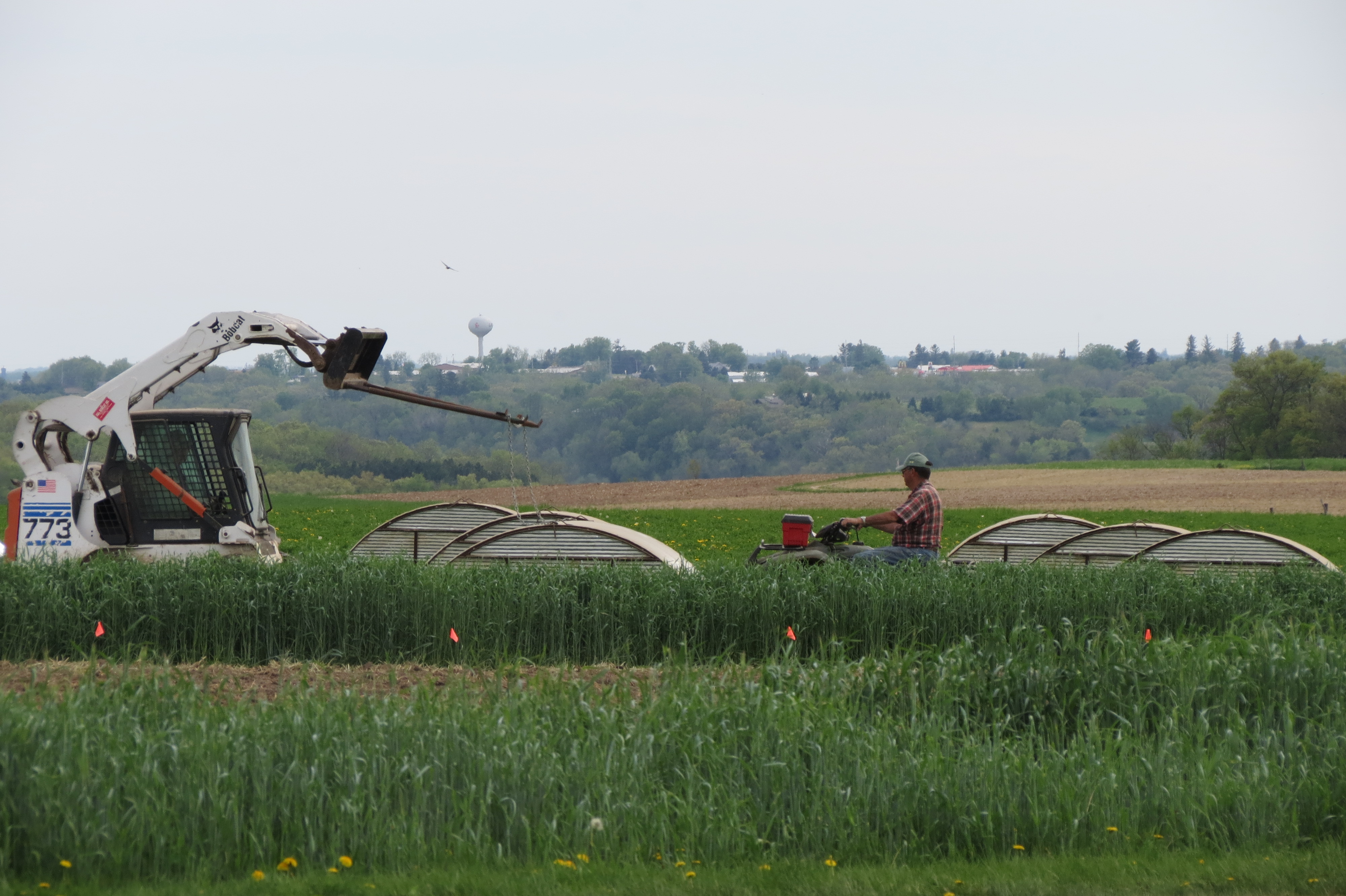
This is a photo our friend Jeanenne took of my Dad helping me move farrowing huts about a month ago.  Click on the picture to enlarge, and click again for more detail.  She has a nice camera and took the photo without us even knowing it.  Zooming in changed the perception, though.

The bare dirt in the background is my Dad’s corn field about a quarter mile away.  The white water tower with the Redbird on it is about three miles away as the crow flies.  In the foreground you can see how tall the rye bordering the sweet corn has grown.  There are some flags in the sweet corn field where I planted squash and pumpkins.

When Jeanenne gave me this photo she told me how nice it is to see family working together.  And she’s right, that’s one of the benefits of farming.  I’ve spent many hours working with my Dad.

There is also a little time for play.  I remember one Christmas, Dad  put up a basketball hoop in the barn.  My sisters being too little to play against me, I always bugged Dad to play.  He would usually indulge me in a quick game, especially after chores were done.

Thank you, Dad!


Rotary Hoeing Sweet Corn

June 3, 2014

DSCF1705


If a city person asks you if it will rain tomorrow, you couch your answer based on the likelihood of their plans being ruined. If a country person asks, you answer based on how dry or wet it is, and if we need rain or a break in the rain to get some field-work done.

We were getting dry, but it was moist enough for my sweet corn to germinate.  It was coming out of the ground about a week after I planted.  I rotovated a second time, then planted.

The second rotovating pretty much took care of the rye.  Unfortunately, whatever alleopathic properties the rye had also seemed to dissipate.  About a week after planting I could see small button weeds shooting up.

So I took the rotary hoe, pictured, and ran it over the field.  It took some of the weeds out, but not all.  Then we had some rain.

Yesterday I could see more weeds, (pigweed, lambsquarters, and foxtail), poking out of the ground.  I read online that you can rotary hoe until the corn is six inches high without much damage.  So I rotary hoed a second time.  It took out more weeds and didn’t damage the corn.  I’ll probably have to switch to cultivation between rows for weed control next.

My sweet corn is coming up uneven.  I dug and found some of the plants struggling to come out of the ground.  I think the ground was so mallow after two rotovatings I ended up planting too deep.  I had reduced the depth from my Dad’s field corn, but apparently not enough.  Sweet corn has a shrunken kernel when compared to field corn and it doesn’t appear to be as strong pushing itself out of the ground.  Learning.