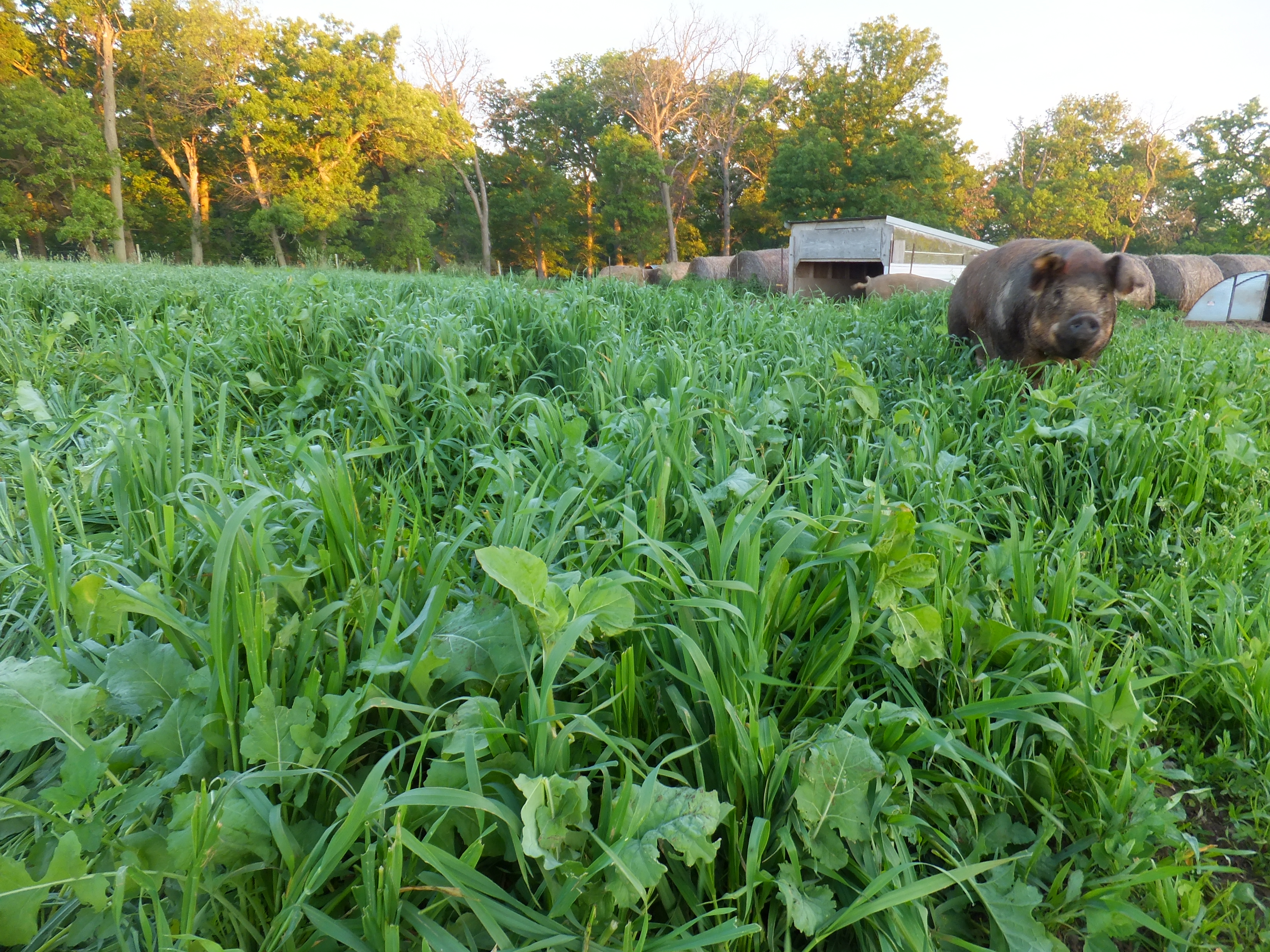
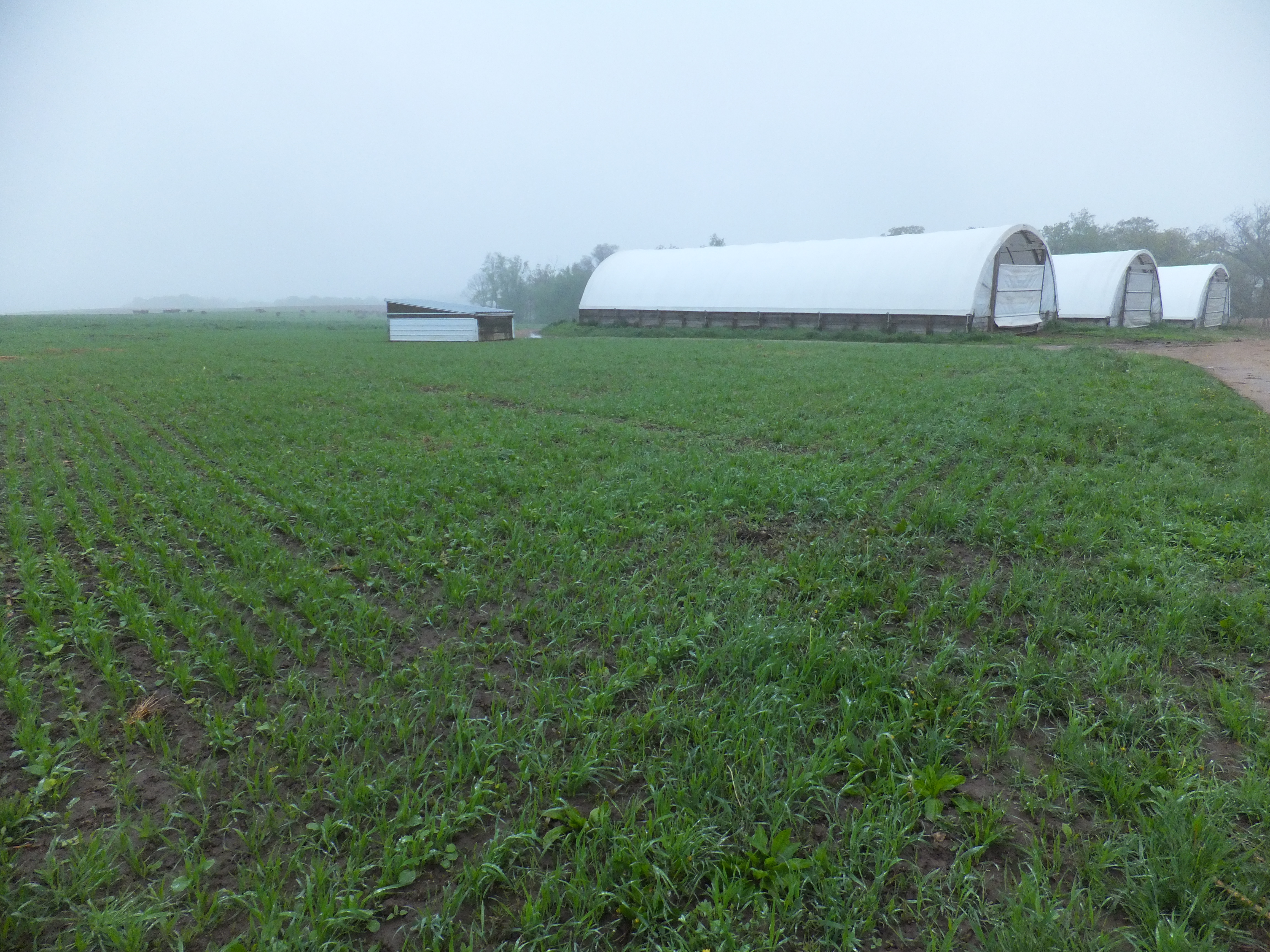
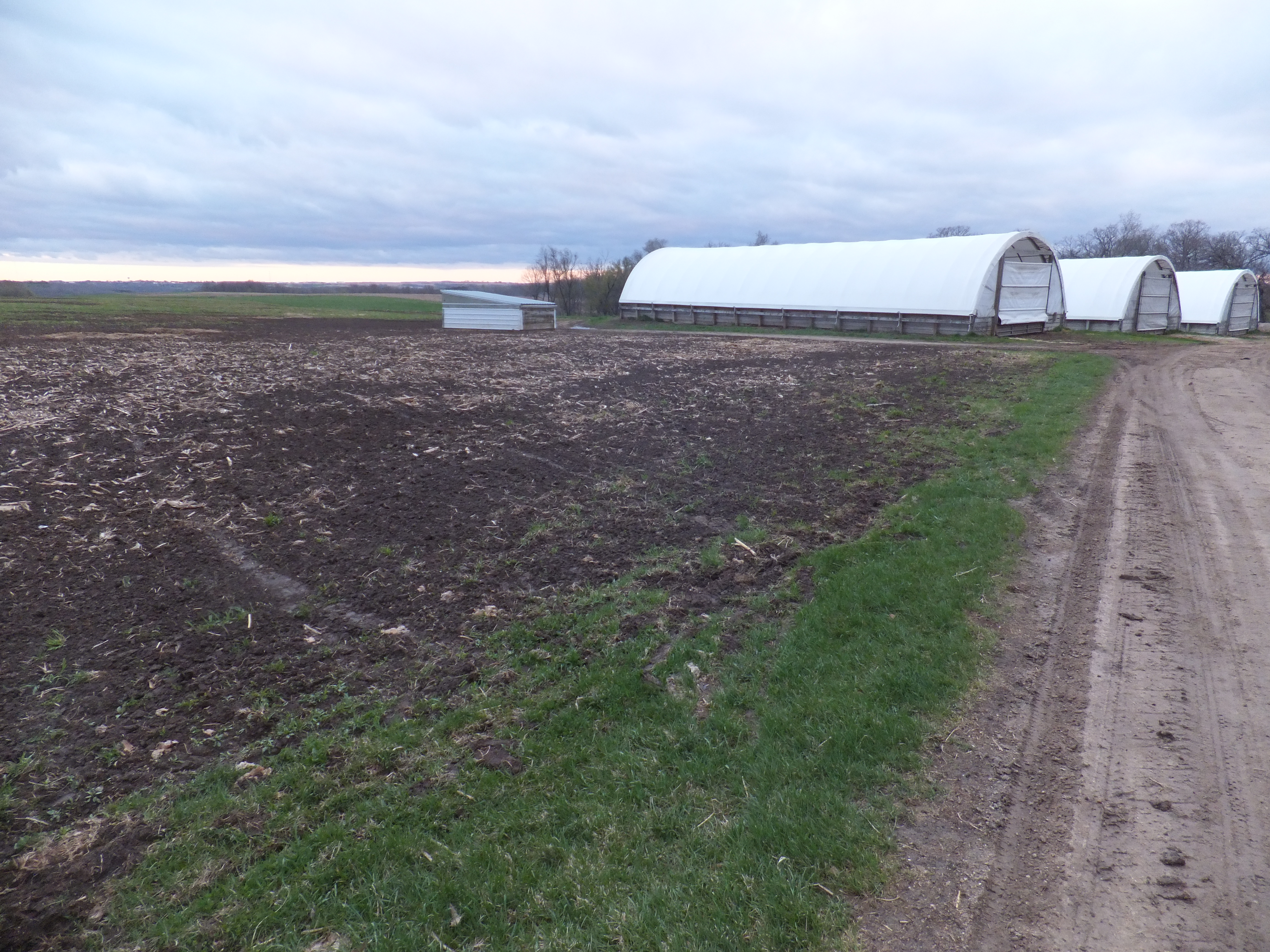
This is the conclusion of a contest to pick the best of four sows. The best defined as the sow with the most live piglets at one week of age. The previous two posts give you more background in case you missed them.
Previously I wrote that sow #3 had 13 live piglets and sow #1 had 10 live piglets. At a week of age, sow #3 still had 13 piglets and sow #1 lost one and had 9 piglets.
Since then, Sow #2 farrowed 11 piglets of which she has 9 left. The third photo is of her red piglets.
Sow #4 farrowed 17 beautiful, live, piglets, top photo. At 24 hours, she still had 15 live piglets and I was counting chickens and thinking about setting a new farm record and awarding the prize to Valerie who guessed sow #4 with 13 piglets. Sow #4 was also my guess so I was feeling a little smug.
But as is so often the case in farming, my celebration was short-lived. It rained all day and in another 24 hours, 13 of sow #4’s piglets had died from diarrhea. The next photo shows two live piglets and one dead.

Sow #3’s litter of 9 piglets.

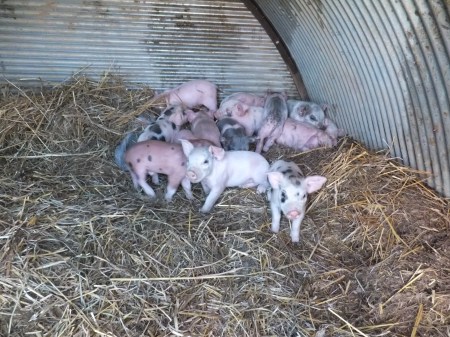
The two remaining piglets of sow #4 are doing fine. She has joined her litter with the other white sow #3’s litter. The photo below is of those 15 piglets.
The red sows are choosing to keep their piglets segregated as of now. Probably the longer they can stay apart from the herd, more of their piglets will live as some may be crushed or starve if competition is too great.
I really appreciate the pasture mothering ability of the red sows. The white sows are more unpredictable, but I like the extra numbers they produce, so I’ll probably keep some daughters and incorporate their genetics into my herd.
Thank you to everyone who participated in the contest. Congratulations to Gordon who picked sow #3 with 12 piglets. Gordon is a new farmer in Iowa. Edmund came in a close second, picking sow #3 with 11 piglets.
I decided to give a $25 Kiva gift card to each of them. Let me know guys if you don’t receive an email from Kiva or have trouble redeeming your card.


 Posted by Curiousfarmer

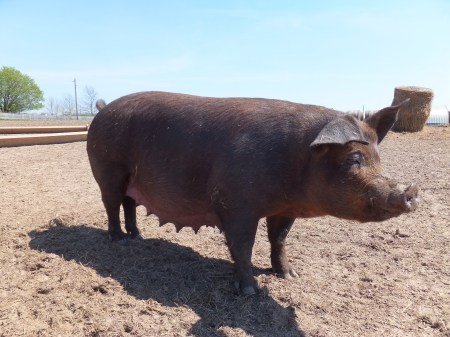
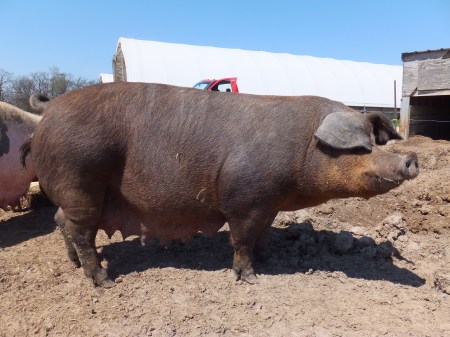
 #3: Drooping ear blue-butt
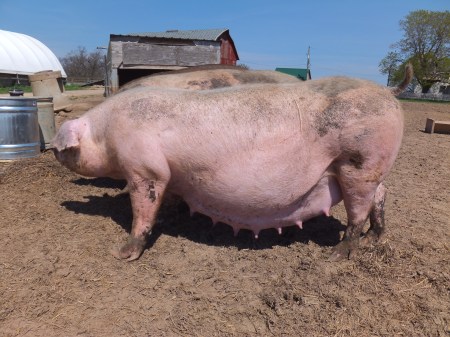 #4: Drooping ear white sow