I’m Still Foraging

May 31, 2013

011

I’ve known plenty of doctors and lawyers who want to be farmers.  I’m the only farmer I know who wants to be a hunter-gatherer.

I’m still foraging, but haven’t written about it lately because I haven’t added any new plants to my diet.  It’s intimidating and takes time to learn and harvest and try a new plant.  Sam Thayer says learning four of five new ones a year is a manageable goal.

The plants above took only fifteen minutes to harvest and prepare.  The greens on the left will be eaten in a salad.  The stems on the right will be diced and cooked with hamburger.

For the thrill of guessing, no prizes this time, what are the plants pictured above and the main one pictured below?  These wild edibles usually grow so profusely, they make our gardens look like a wasteland.

006


Permaculture Planting

May 25, 2013

003

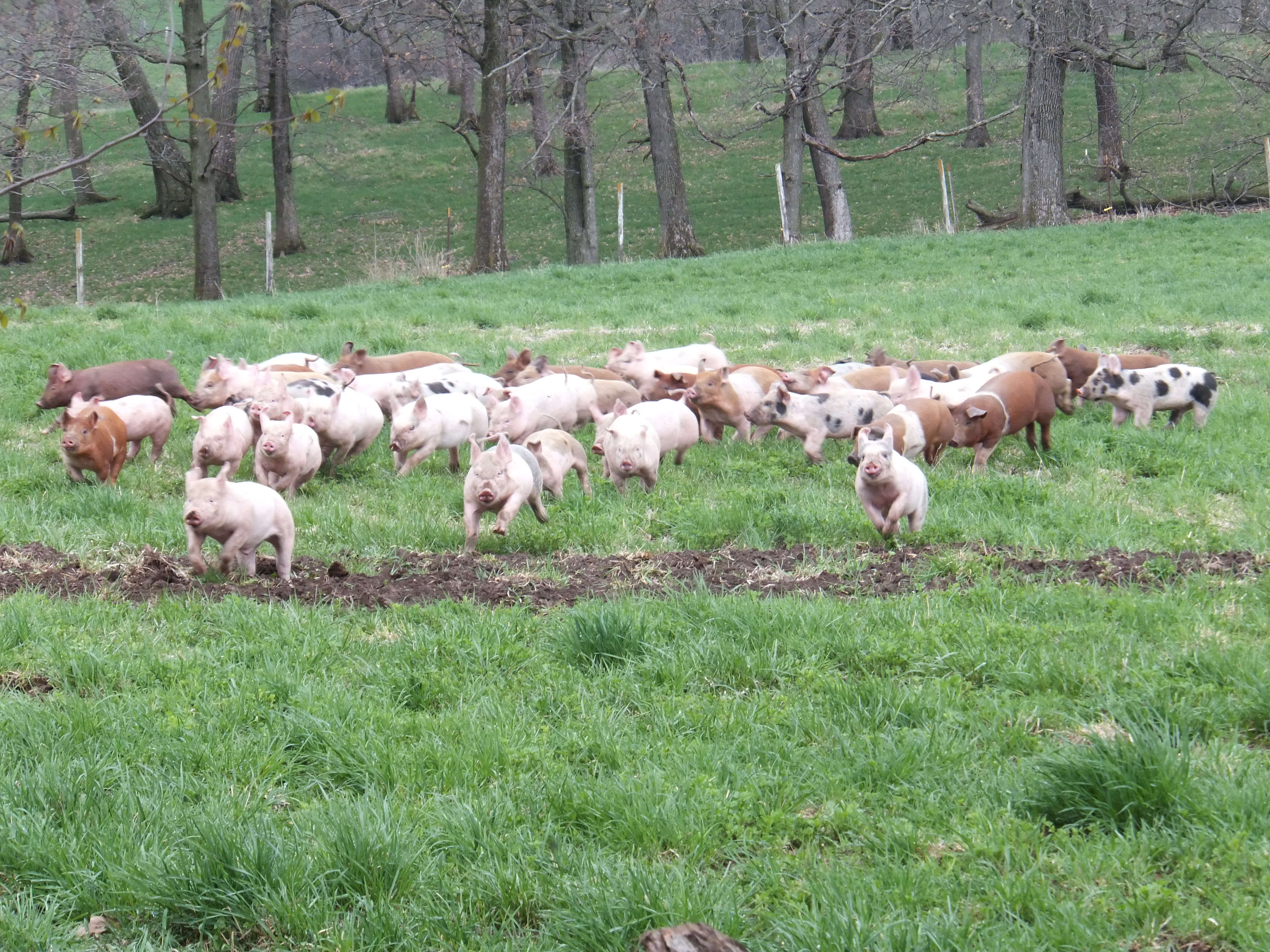
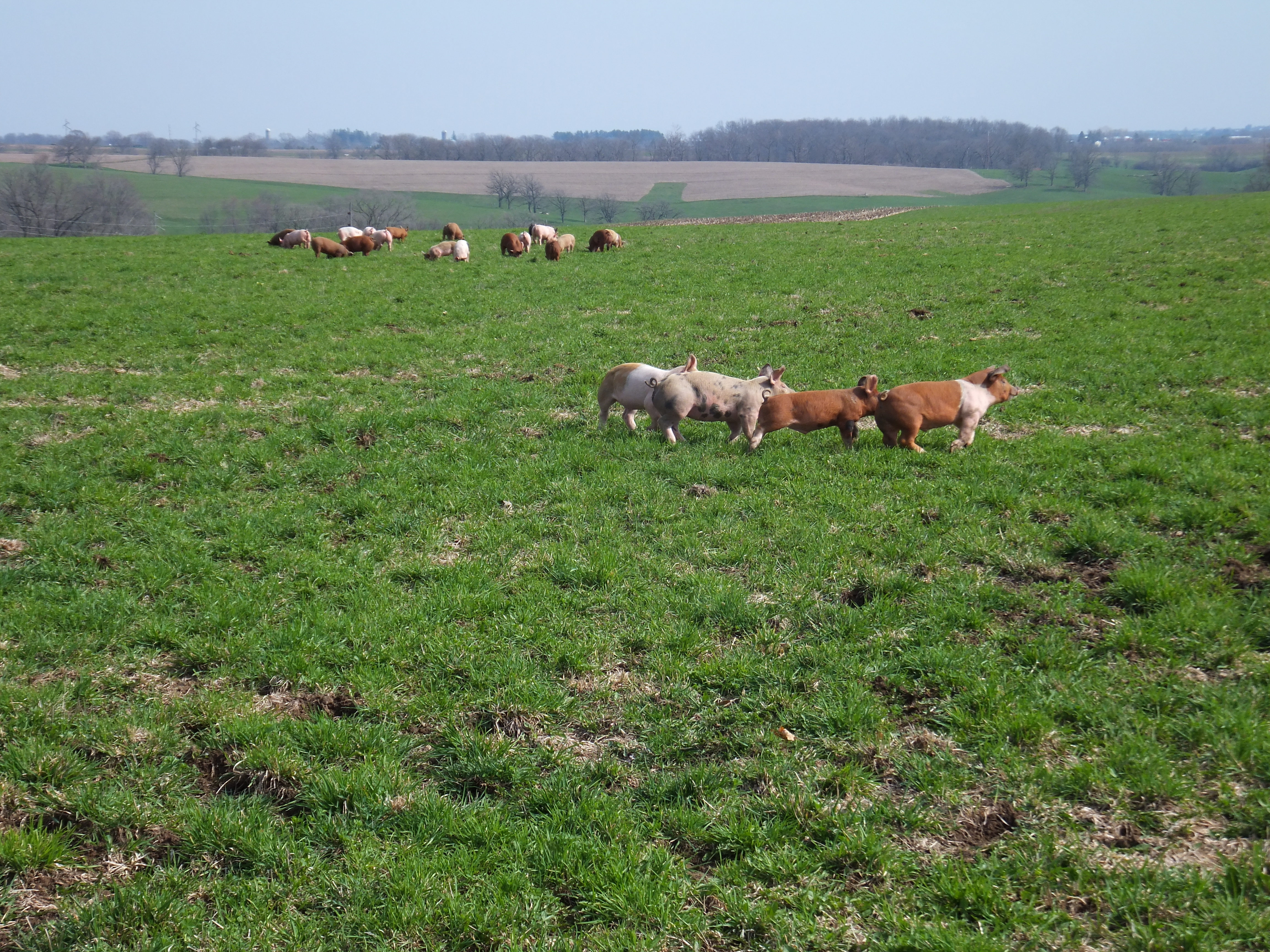
Piglets running across my Permaculture planting.  They dug up three Hazlenut before weaning.  I purchased a Jostaberry and a Blackberry from Jung’s to replace them.

All of my Permaculture reading this winter led me to want to play myself.  I’ve always wanted a windbreak north and west of my house, but I don’t like conifers.  So I designed what will hopefully grow into an edible windbreak.

In a short-bottomed Y, placed on the contour of the land, I chisel-plowed this spring, then planted the trees and shrubs I purchased from our county, Jung’s, and Chief River Nursery as they arrived.  I also dug a hole and placed a kiddie pool to collect rainwater for bucket irrigation when it turns dry this summer.

006

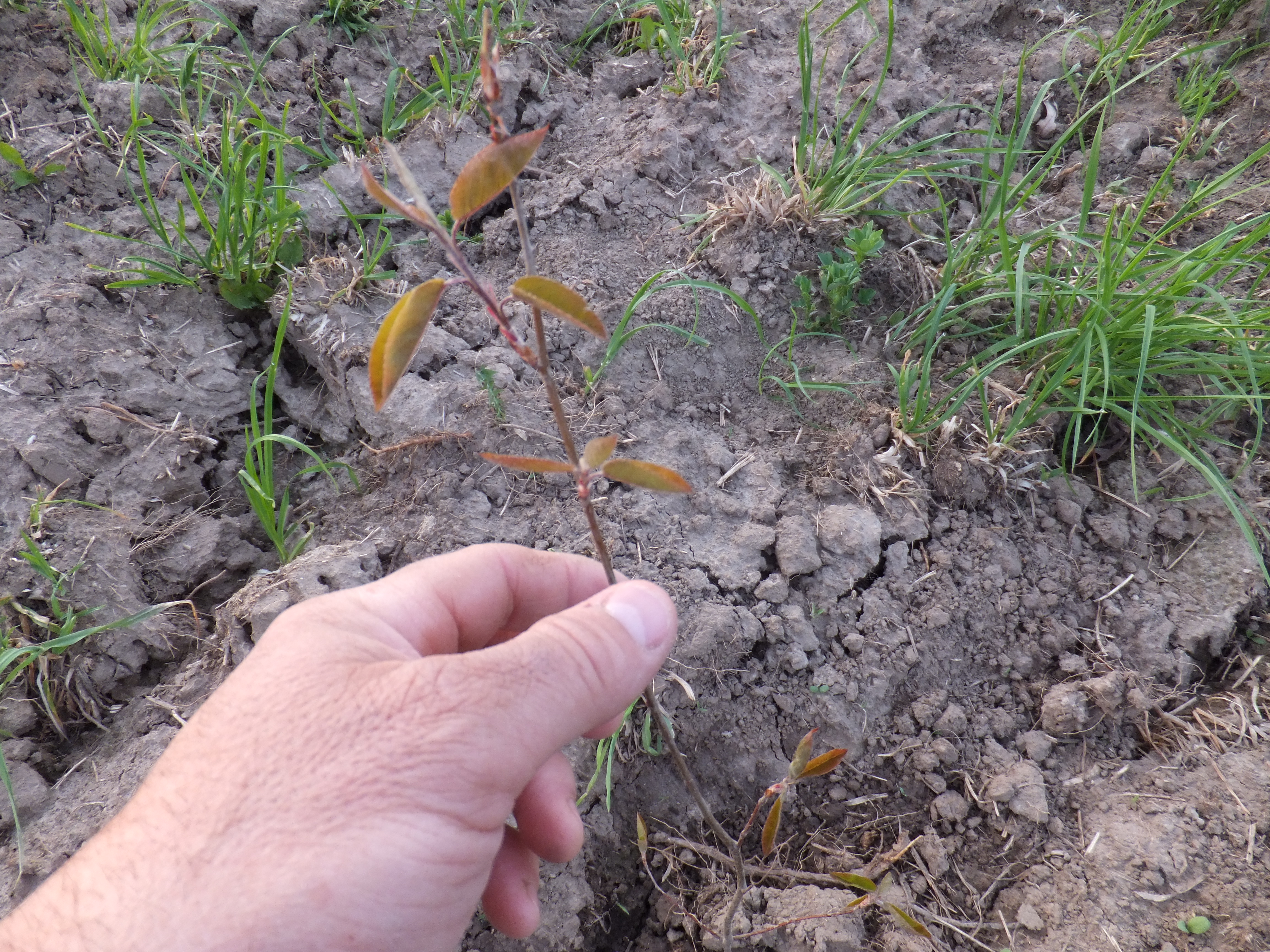
Below is a Juneberry.  I also planted Hazlenut, Highbush Cranberry, Jostaberry, and Blackberry bushes.  The trees I planted are Apple, Plum, Peach, Apricot, and Hackberry.  If this planting goes well, I have an idea to continue the bottom of the Y with the contour of the land and continue to farm each side of it.

It’s been said the best time to plant a tree is ten years ago, and the second best time is today.  The planting certainly doesn’t look like much today, but I hope I’m still blogging in ten years and can show you what it looks like then.

008


Sows Returning to Estrus While Lactating

May 13, 2013


012

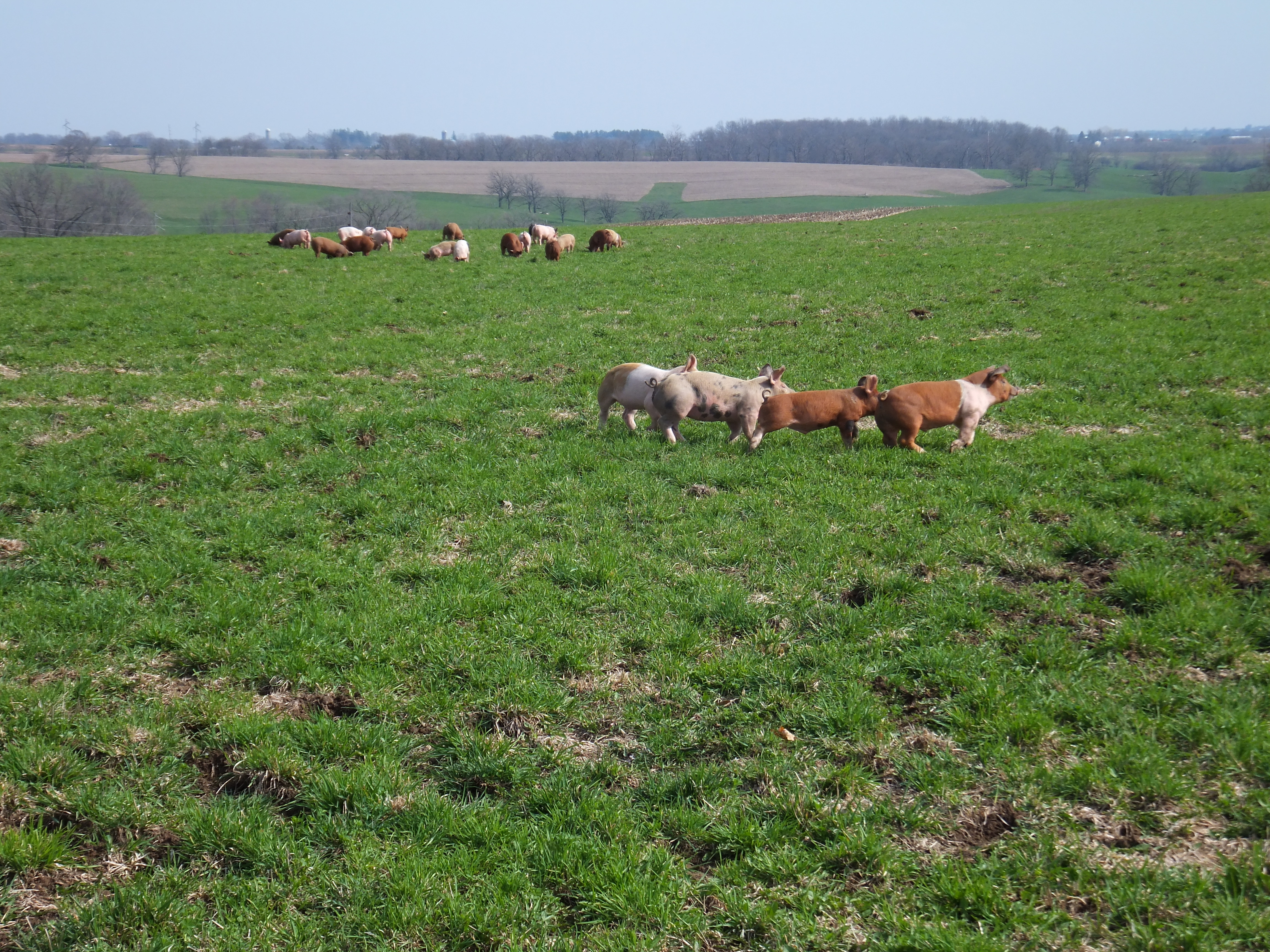
I weaned the piglets last Thursday.  The oldest litters had a nine week lactation, which is the longest ever for my farm.

Something I learned was the time it takes for sows to return to estrus while lactating, eight weeks. That’s the same as our beef cows when on good pasture.

Now the sows are my genetics and were ad libitum, (free access), fed a corn-soy diet.  Different genetics and/or a different environment may lengthen the return to estrus.  I’m betting it won’t be less, short of weaning, which is the typical stimulus for sows to return to estrus.

Most sows will show estrus five to seven days after weaning, which makes it fairly easy to plan breeding, even with artificial insemination using live boar semen which only lives for about a week.

I used Dru terminal boar semen from SGI to produce most of these piglets.  I’m very happy with the vigor and muscling of the piglets.  I’m hoping for excellent growth and meat quality as well.  Click on the photo below and click again to enlarge and you’ll see the excellent muscling of the piglets.

006


Cattle out to Pasture, May 1st

May 2, 2013

Cattle out to Pasture

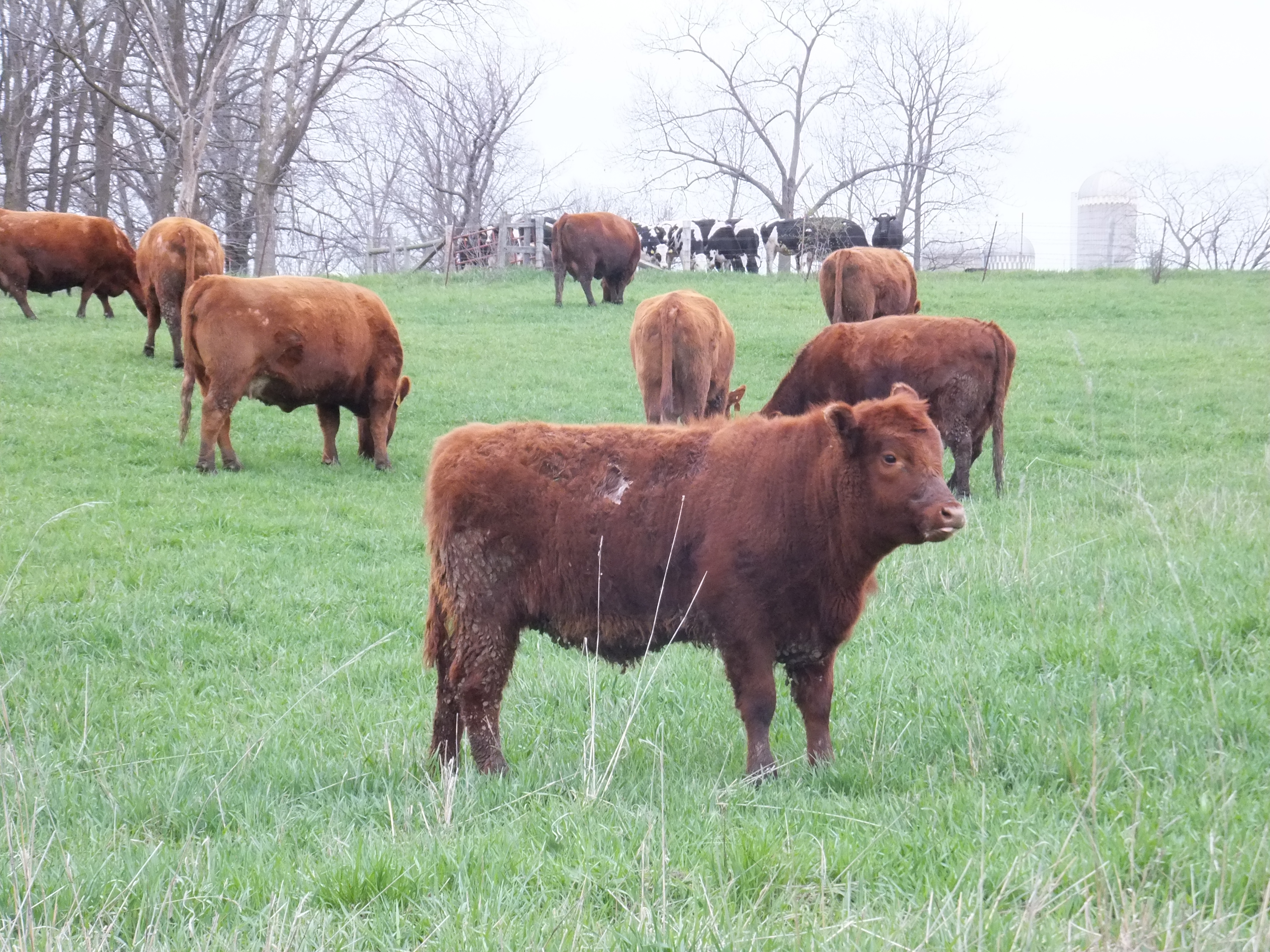
This spring has been as late as last spring was early.  The grass finally started growing and I turned them out yesterday.  The steers stayed on my pasture, and the fall-calving cows went to the rented pasture.  In the foreground you can see one of the fall heifer calves.  In the background you can see the neighbor’s dairy cows.

I wanted a few more cattle on the rented pasture, so I decided to try an experiment and kept the four fall heifer calves with their mothers to see if the cows would self-wean before they calved again in August/September.  The eight fall steer calves were separated from their mothers.  The cows and steers which were weaned are bawling for each other.  I don’t think the calves were getting much milk anymore, so the discomfort is probably psychological.


Cultivating Shitake Mushrooms

April 15, 2013

Mushroom Spawn

I studied Permaculture this past winter.  Reading fellow Wisconsinite Mark Shepard’s new book, Restoration Agriculture, inspired me to read all the books I could find in the Southwest Wisconsin Library system on Permaculture.

The pioneering books by Mollison and Holmgren are great, but the best book by far is Sepp Holzer’s Permaculture.  This Austrian farmer inspired me to try and cultivate mushrooms.  So I purchased a bag filled with mycelium plug spawn from Field and Forest Products. 

Drill a hole, hammer the plug in, then seal with wax.  Repeat every few inches until the entire log is covered.  Place in a shady place and keep moist.

If all goes well, the mycelium will spend the next year colonizing the rotting log.  The following year it will produce the fruiting bodies we call mushrooms.

I don’t know if this will work or if I’ll even like Shitake mushrooms, which is the variety I’m growing.  It looked like too much fun not to try, though.  Click on the bottom photo to enlarge and see better the tools of this project.

Mushroom Tools


Solar Fence Charger

April 9, 2013

Solar Fence Charger

I purchased a Parmak solar fence charger to power the electric fence around my farrowing pasture.  This is my first experience with a solar charger and it’s working fine.  I paid $200 at my local hardware store.

I hung it on the electric pole and grounded it to the ground running down the pole.  Does anyone know if this is a bad idea?


Piglet Fighting

April 1, 2013

Piglet Biting

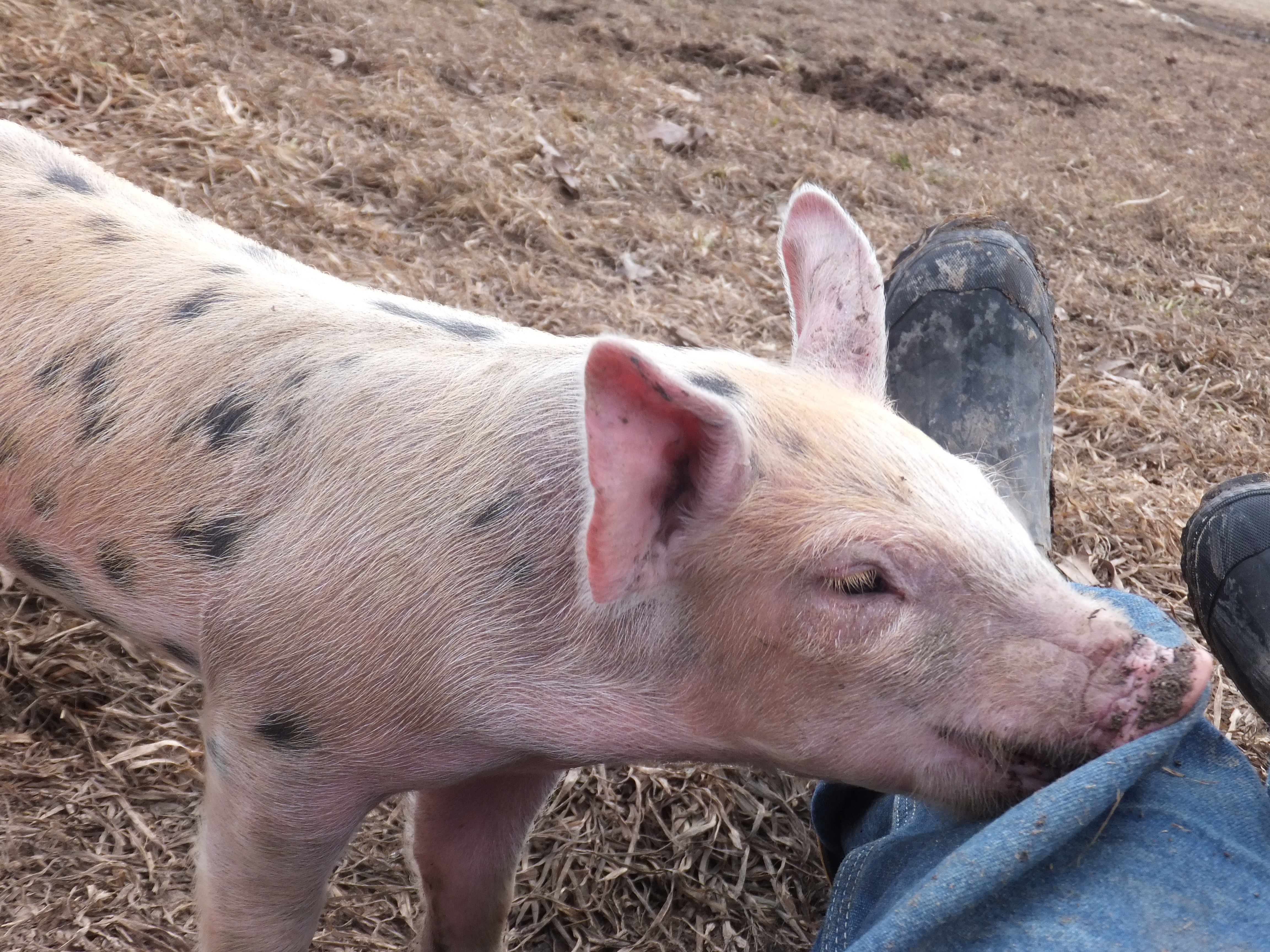
Three-week-old piglet biting my pant-leg.  We have probably all heard stories about people being fed to hogs.  I don’t doubt the veracity of the stories as hogs are omnivores and will eat just about anything.

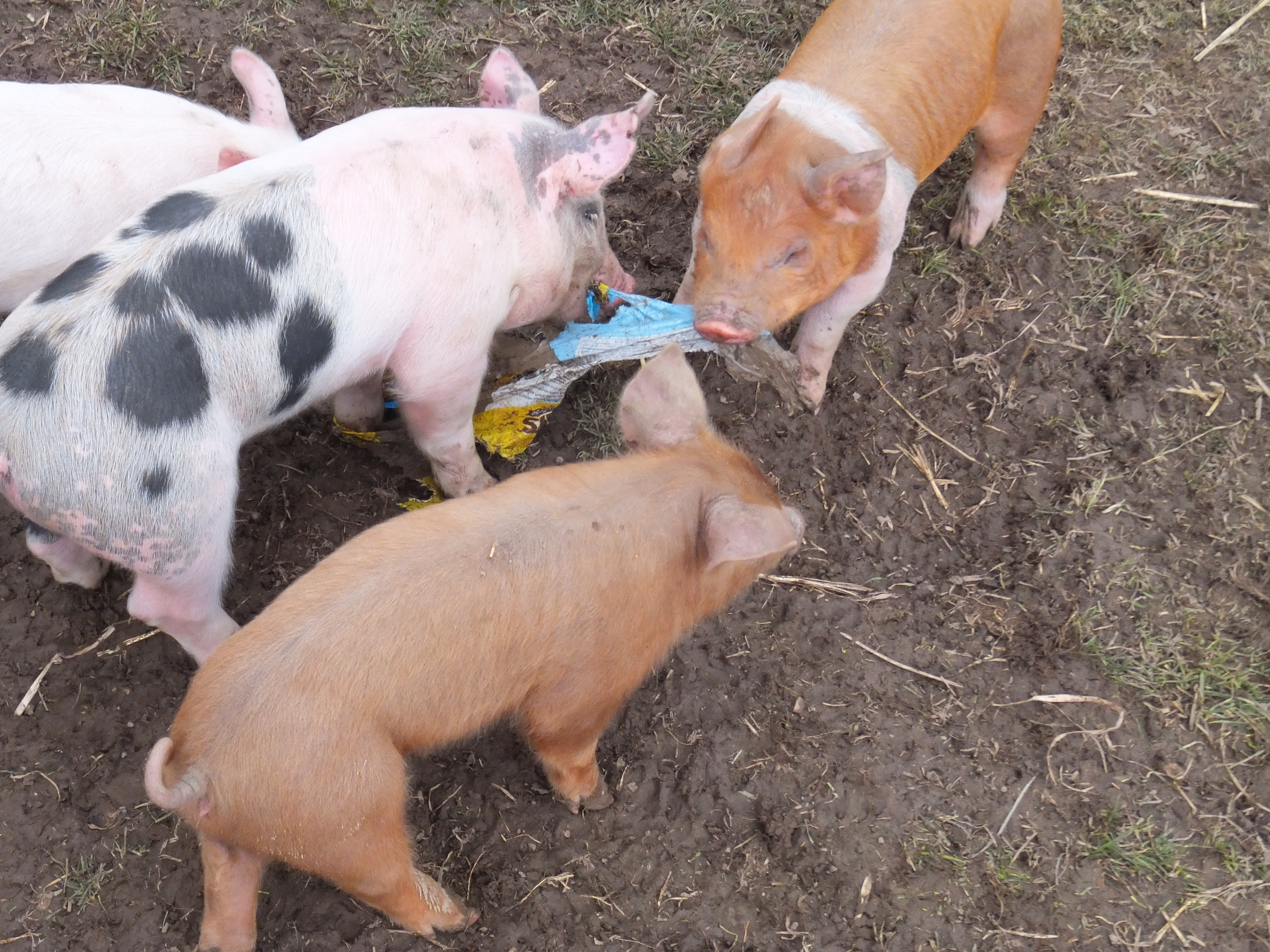
Piglets are also natural fighters.  Below you can see two piglets fighting over a scrap of plastic.  Imagine how viciously they would fight over something valuable.

And that must be how the cruel sport of Piglet Fighting started.  Two piglets fighting until exhaustion, the winner receiving warm milk.  Contact your representatives in Washington and urge them to enact legislation to ban Piglet Fighting now.

Piglets Fighting


2013 Spring Farrowing Update

March 19, 2013

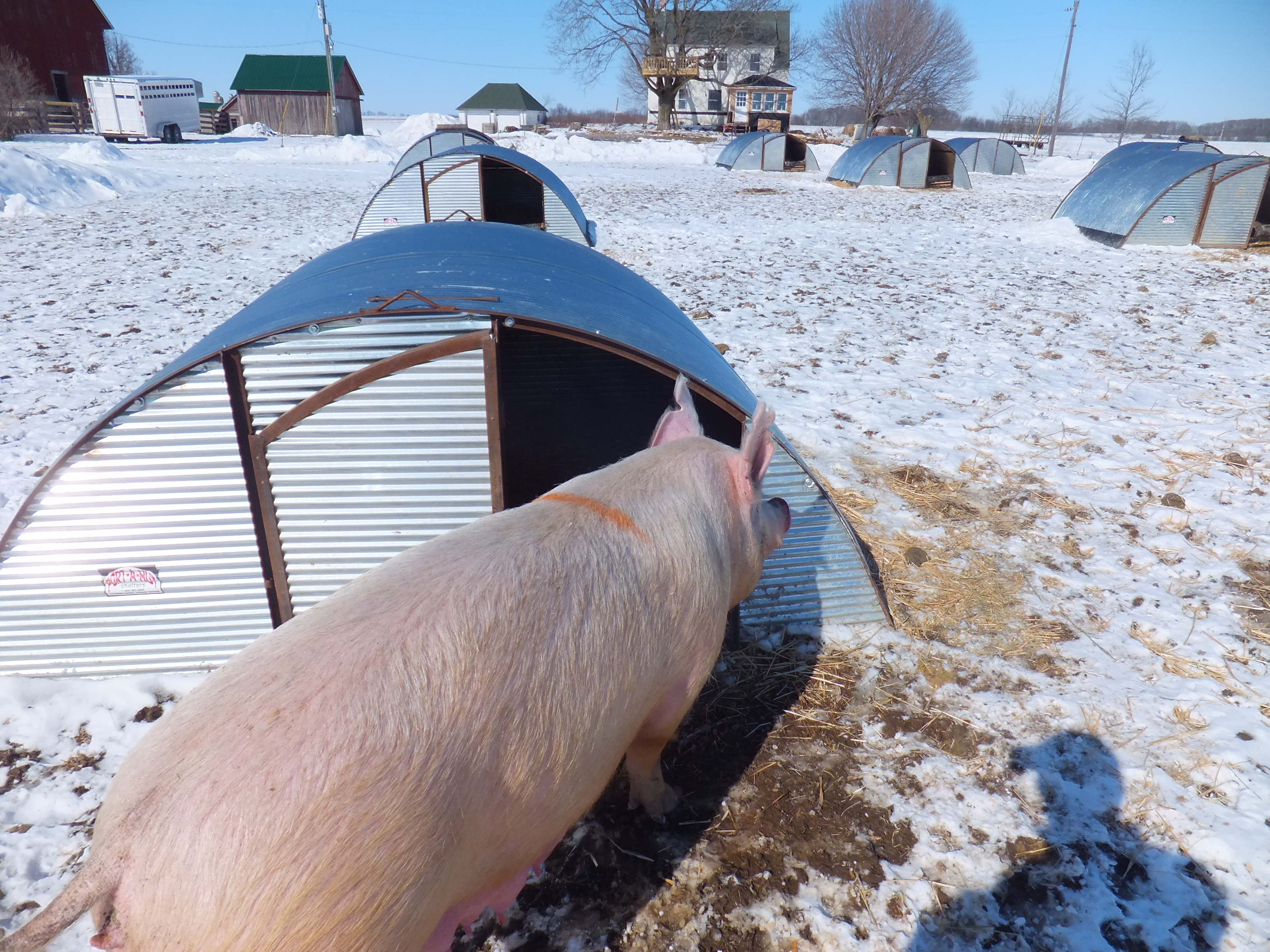
Sow at Farrowing Hut

Spring starts at 7:02 AM tomorrow and 10 F is predicted with 16 MPH winds putting the wind chill below zero.  Last year it was 80 F.  With so much of my life revolving around it, the Weather is never boring.

The litters are doing well.  Less than a handful of piglets have died after the first trouble.  I’m using more straw now instead of wood shavings for warmth and adding a couple of slices daily.

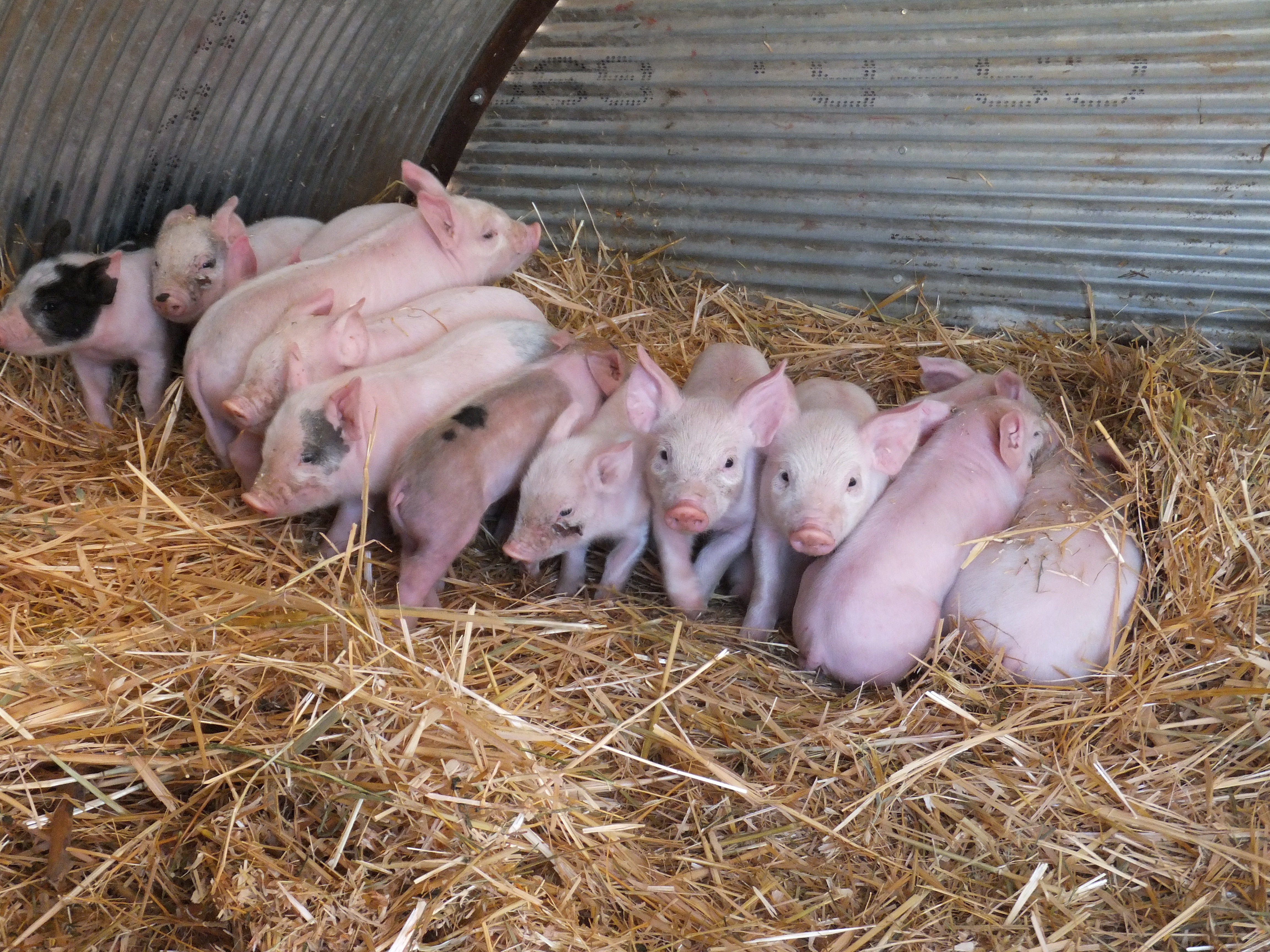
In the photo below you can see scabbing on some of the piglets faces.  This is caused by fighting among the littermates.  Piglets are born with eight very sharp “needle” teeth.  It’s common in the industry to clip the tip of each tooth off with a sidecut pliers.  Sometimes the open wounds can lead to an infection.  I don’t clip the teeth and it doesn’t seem to be a problem other than the scabbing.

Piglets in Farrowing Hut


Trouble-Spring Farrowing 2013

March 10, 2013

002

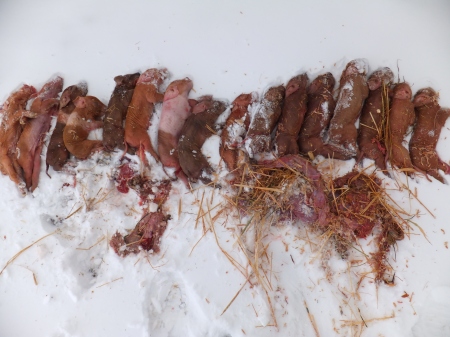
17 of the first 22 piglets born to my spring litters.  I guess labeling them as spring litters alludes you to my delusions, which the past six days have exposed.

I thought farrowing in a hoop building in January would be the most difficult farrowing I would ever experience.  Farrowing in huts in 30ish F weather in a blizzard followed by over an inch of rain has proven more difficult.  I guess Jude Becker purchased insulated farrowing huts for a reason.

I put one bag of wood shavings in each shelter along with a couple slices of straw.  I thought I could add straw for warmth as needed.  What I didn’t think about was the frozen ground underneath.  Last year farrowing in the hoop building I had the advantage of a bedding pack for warmth, not frozen ground.

On Tuesday a couple of sows acted like they were ready to farrow.  A blizzard was forecast for that night.  I locked one sow up in a shelter and for some reason I can’t remember did not lock up the other one.  At first light I checked on the sows.  The sow who was locked up had four out of twelve piglets alive.  The other sow had one out of ten alive.  The problem was moisture along with cold.  Snow had blown into the shelters, especially the open-door one.  I transferred the lone piglet to the litter with four.  All five piglets are still alive.

I realized I needed more bedding and it needed to be absorbent.  So I started buying wood shavings and have probably put at least four bags of wood shavings in each shelter over the past five days.  I knew the piglets needed to get dry if they were going to resist the cold.

It has been raining the past two days.  Below is a picture of a shelter I abandoned because I didn’t need it.  The rain is not soaking into the frozen ground so instead is pooling.

001

So I keep adding wood shavings trying to build a little dry hill for the sow and piglets.  It seems to be working.  If a piglet lives the first day, really the first couple of hours, it is staying alive.

This has been another learning experience for me.  Yesterday as the rain fell I despaired, but today I’m back to my optimistic self.  Below is probably the best litter so far.  I’ll let you know how many piglets are weaned from this difficult farrowing group.

002


Spring Farrowing 2013

March 1, 2013

Spring Farrowing 2013