
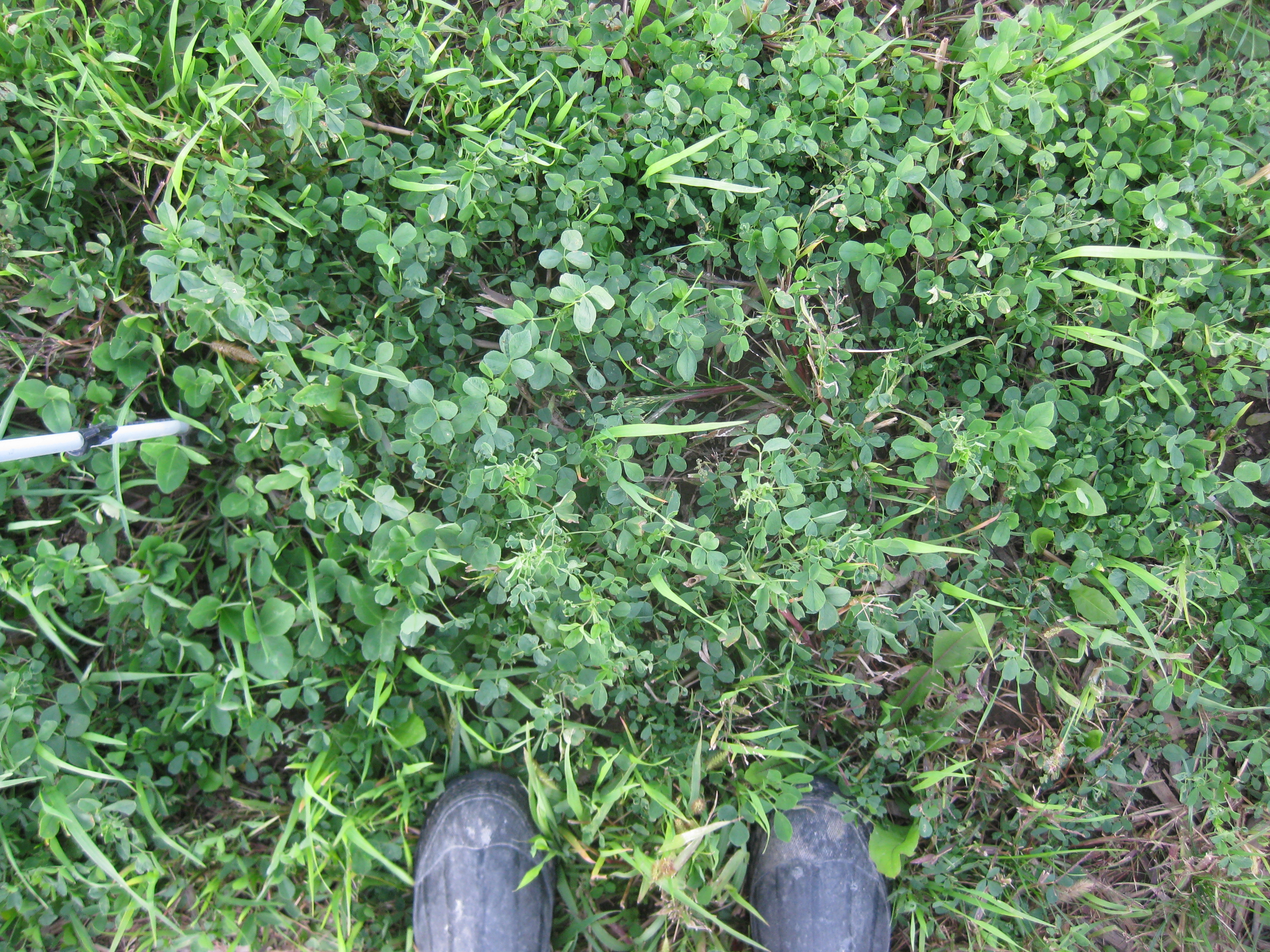
I put gates at the end of the lane and an electric fence around the house and barnyard, and turned the cows into the fields for the fall grazing. The cows ate the new hay seeding, (Square-Foot Saturday), as low as they could, pictured below.

I put gates at the end of the lane and an electric fence around the house and barnyard, and turned the cows into the fields for the fall grazing. The cows ate the new hay seeding, (Square-Foot Saturday), as low as they could, pictured below.
 Leave a Comment » |
  Curious Square-foot |
  Permalink
 Posted by Curiousfarmer
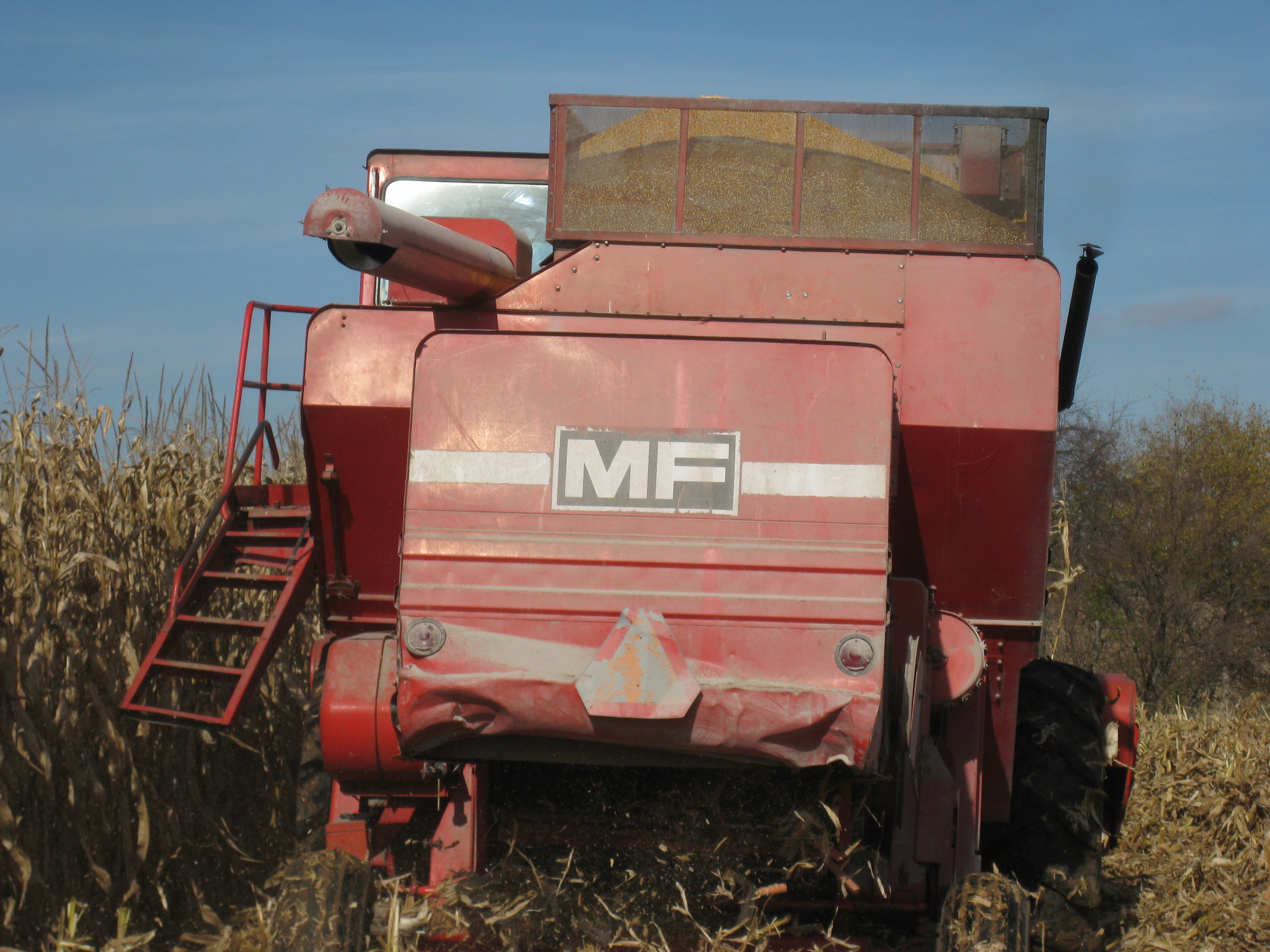
The hind end of our old Massey 750 combine, kicking out cobs.
You ever notice people driving down the road with a dent in their car, and then the driver does the maneuver, (tailgating, veering into the other lane, etc.), which probably caused the previous dent?
The dents on this combine tell a similar story, except we have an excuse, it’s impossible to see directly behind. If you ever find yourself behind a combine, look out.
—
I have several people looking out for me, and it’s nice. When they find an article they think may be of interest to me, they tweet or email. Thank you. I appreciate it.
Leave a Comment » | Curious farmer, Curious living | Permalink
Posted by Curiousfarmer

Grass-finished steer, ready for butcher. The four steers we butchered this week averaged 1160 pounds live weight, and 615 pounds carcass weight. This means they gained an average of roughly a pound and three quarters per day since weaning, October 2010.
I’m very happy with this performance. Our customers are as well. We’ve been butchering these yearling steers every few weeks since July, and we haven’t had a complaint, with much repeat business.
In July, the steers have been gaining rapidly as they transitioned from winter/late spring hay to the lush May/June pasture. The biggest weigh around a thousand pounds. As the pasture slumps in the heat of summer, the steers are rotated into orchardgrass/alfalfa hay fields to keep their consumption and daily gain up.
Below you can see the level of finish, or fat, in the brisket of this steer. By industry standards this steer is not fat, nor ready to butcher. Most would recommend a few months of corn feeding. But the marbling in the meat is near the select grade. And the meat is tender. And like I said before, we have tons of repeat business.

Below is a steer we sold to a farmer who corn-fattens. This photo was taken in September. The steer weighs about 300 pounds more than the steer pictured above. Look at the amount of fat in this steer’s brisket. This is the amount of finish the industry demands. The farmer sold this steer shortly after the photo was taken, and topped his local market. Each of us produced the animal, and meat, our market demanded.

8 Comments | Curious cattle, Curious direct-market, Curious marketing | Permalink
Posted by Curiousfarmer
The bull had scurs, stubby horns which Hal held onto as the yearling Holstein bull tried to push Hal into the soft spring mud. Hal felt ribs breaking every time the bull pushed into him, but he figured if he let go, and the bull was able to get a head of steam, it would be all over.
—
Hal’s bull started out life like most dairy calves. Separated from his mom shortly after birth and placed in a calf hut with a circle of wire panel in front of the hut. The bull spent its first months socializing only with its human caretaker, who fed it milk replacer.
Hal’s bull was further socialized with humans because he was chosen to be a show calf by a local 4-H member. The bull was taught to lead with a halter, washed and combed, fed and watered. The bull grew to enjoy the attention from humans, and would even approach them to get his head scratched.
—
When the bull lifted his head, Hal called for Babe, the Blue Heeler dog he had received as a puppy in exchange for filling his neighbor’s silo.
Babe didn’t slow as she approached Hal, and attacked the bull’s heels with fury. Hal let go as the bull bounded over him. Babe didn’t stop to check on Hal, but kept the bull on the run, through the fence, and into the next pasture.
—
Just about every living dairy farmer has a story about a close call with a bull. Most farm animals are dangerous, but dairy bulls are killers, and they can flip into killer mode in a moment.
3 Comments | Curious stories | Permalink
Posted by Curiousfarmer
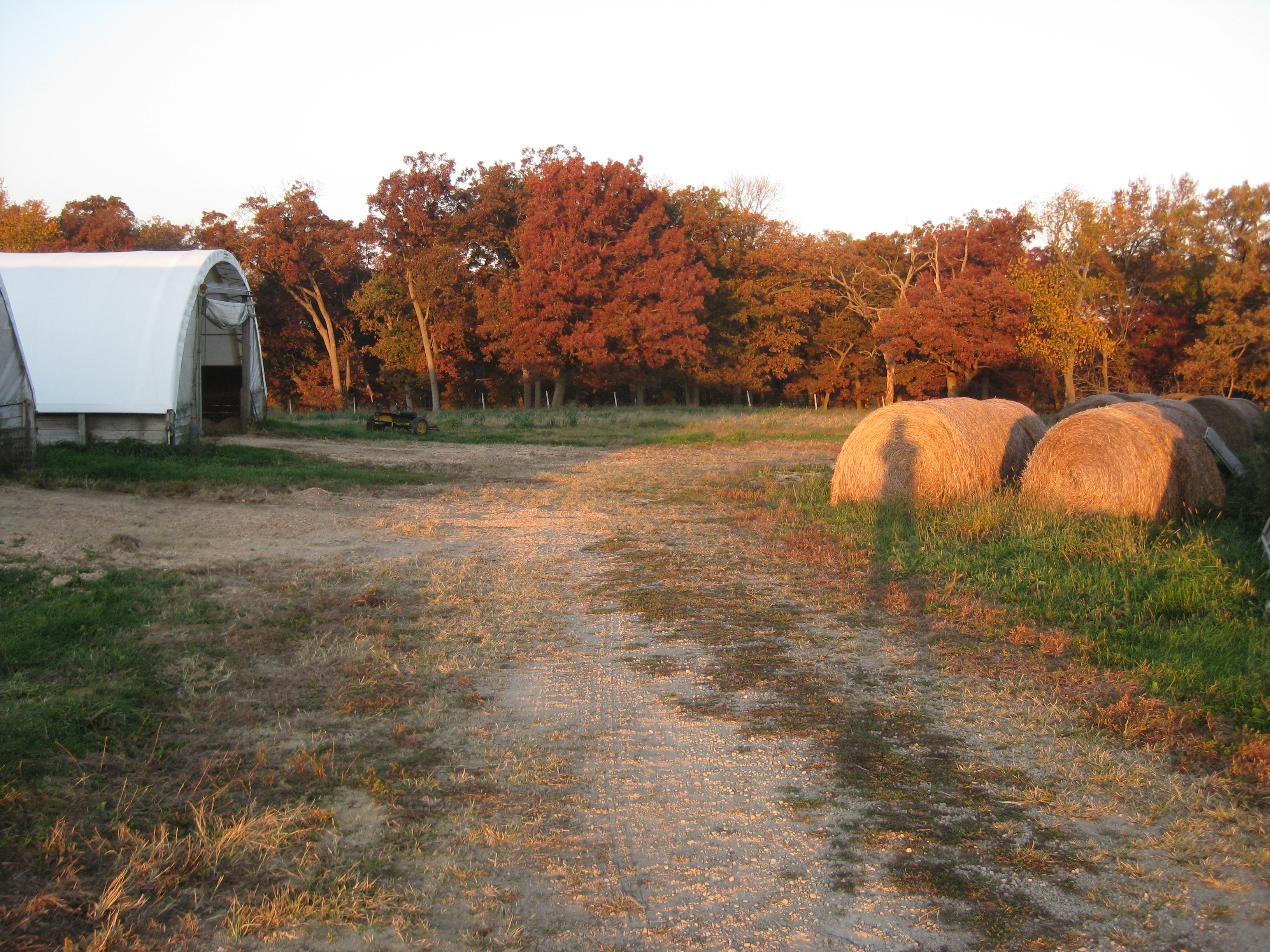
We had a short, yet brilliant, season of fall colors.
I’m going to give Square-Foot Saturdays a rest, checking in occasionally if anything changes. We are expecting a hard frost tonight, so the growing season is pretty much over.
3 Comments | Curious Square-foot, Curious weather | Permalink
Posted by Curiousfarmer

My friend Mark came over on Tuesday and helped me sort the cows away from the calves. Then we ran them through the chute and gave them their second round of vaccinations.
We like to leave them in the corral for a couple of days until the bawling slows. If you move them right away, the cows will go through about any fence just to stand next to their calf. It’s probably driven by milk hormones. After three days the cows are ready to go to greener pastures.
Unfortunately we received two inches of rain on Wednesday. The corral dirt turned into slop, and Dad and I had to slog through the mud to sort and move the calves. The steers are now at my farm, and the heifers are at my parent’s farm.
We still haven’t had a hard frost. The light frost of a few weeks ago only browned the pumpkin and squash leaves.
Leave a Comment » | Curious Square-foot | Permalink
Posted by Curiousfarmer

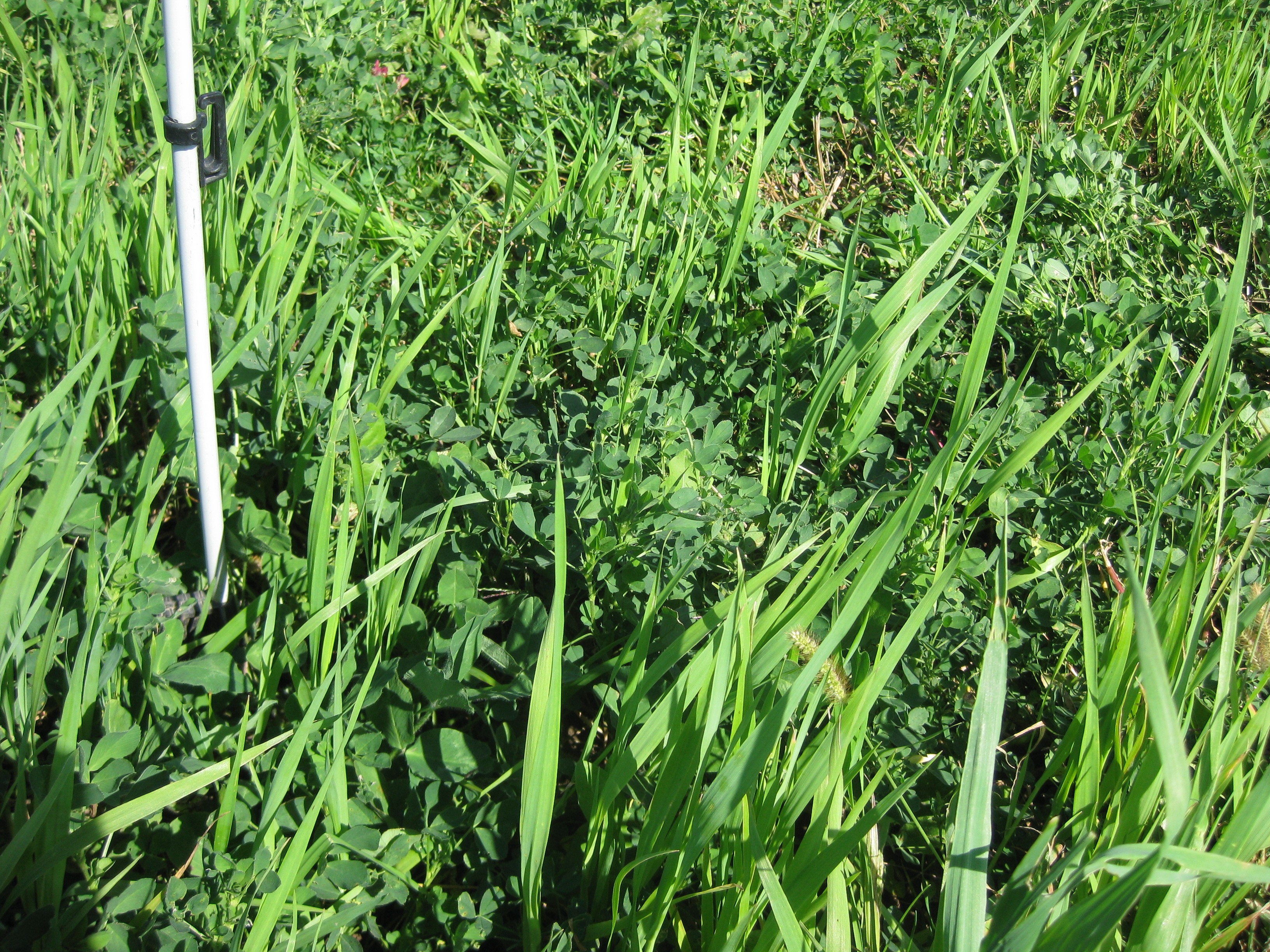
I took three cutting off this hay field, and it’s ready to be cut or grazed again at the end of September. I’ll wait until after a hard frost, but before the snow gets deep, to graze this field with cattle.
If I grazed this field now, the alfalfa may use most of its root reserves to initiate regrowth. If a hard frost shuts down the alfalfa at this point, it may have a difficult time surviving the winter because its root reserves are too low. Grazing or cutting after the plant has gone dormant has little effect. The time I avoid cutting or grazing is from about September 15th to October 15th, for this climate.
—
Justin, formerly of Midwestern Bio-Ag, took two forage samples, one from first cutting, and one from second cutting. The samples were taken from square bales, stored in the barn. First cutting was baled June 1st. Second cutting was baled July 8th. The alfalfa was full-bloom both times.
I don’t understand forage testing very well. If you want an in-depth explanation, check out this excellent article from the University of Kentucky.
These were the first forage tests I’ve ever taken on my farm. I’ll share some of what I learned.
Even though both cuttings were taken when the alfalfa was full-bloom, 2nd cutting was considerably higher in quality than 1st cutting. The cattle’s preference confirms this. 2nd cutting was higher in protein, (17.28 to 16.58), lower in ADF fiber, (31.96 to 37.23), higher in TDN total digestible nutrients, (57.06% to 51.13%), and higher in RFQ relative feed quality, (143.91 to 108.68).
I’ll summarize what these numbers mean to me. Cattle can maintain their weight eating the first cutting hay, and gain some weight eating the second cutting hay.
Some other interesting findings, calcium was low, lending credence to the importance of added calcium, which I have not done. Manganese was fine, which is strange because my soil tests show low manganese. Potassium was high, which is also strange because I didn’t add any potassium in the spring, eliminating the theory of luxury consumption, and the soil tests show medium potassium.
If you have any thoughts about this, please share.

3 Comments | Curious crops, Curious fertilizer, Curious forage | Permalink
Posted by Curiousfarmer

We buried a family friend yesterday. Sgt. Jakob J. Roelli was killed in action in Kandahar province, Afghanistan. He was 24.
I remember talking to a friend in the late 80’s. He had joined the National Guard to help pay for his college. We thought there was no way he would ever see active duty, because the US was done with war. Vietnam was still fresh, and the Soviet Union was collapsing. He ended up seeing active duty in the first Iraq war.
Now this young man who I’ve known since he was a baby is dead. We’ve been in Afghanistan for ten years. The original intent as I understood it, was to oust the Taliban and bring Osama Bin Laden to justice. I don’t know what our goal is now. I’m sad.
5 Comments | Curious Square-foot | Permalink
Posted by Curiousfarmer
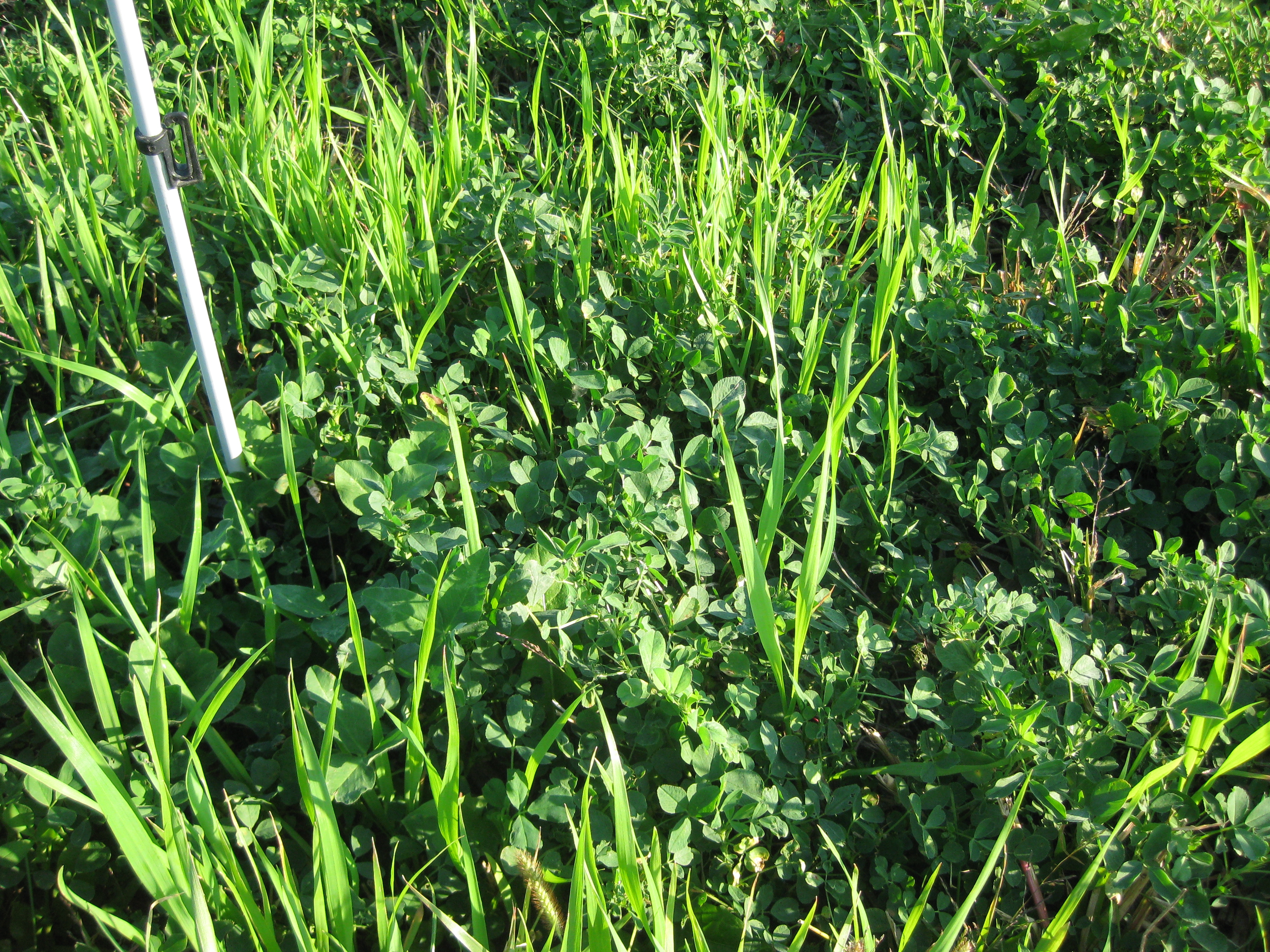
Still growing.

2 Comments | Curious Square-foot | Permalink
Posted by Curiousfarmer

I cut the spring garden peas. They regrew and flowered. I don’t recall the flowers being this pretty in the spring.
—-
“Do you ever see piles of junk around a winery?” Jude Becker asked.
“No.”
“And why not? Because the wine people decided that a visit to their farm would be a wonderful part of the wine experience. That’s what I want to do here.”
We stood in the loft of his remodeled barn, surrounded by his Dad’s beautiful wood projects, including a depiction of the twelve apostles, commissioned by a church but never paid for. We leaned against the bar.
“Why can’t pork be the same as wine? This is where I want to have tastings.”
I thought about what Jude said, and I realize he’s right. Pork should have more prestige than wine. Somehow we’ve commoditized this animal, and took away anything special, anything which could enrich our life rather than just sustain it. And in so doing, we’ve commoditized the farmer.
Jude strives to differentiate his pork from commodity pork. Why shouldn’t his pork be different from mine also? We could celebrate the terroir of pork. We could celebrate the seasons. We could celebrate the in-season feeds.
Citygirlfriend grew celery this year. It was dense, dark-green, and full of flavor. I raved, “This is nutrient-dense celery. I never want to eat store-bought celery again.”
I know all of this sounds artisanal, and it is. I’m going further down the artisanal road, and probably won’t be able to ever return to commodity food production. So be it, I’m not a commodity, why should my food be?
10 Comments | Curious farmer, Curious garden | Permalink
Posted by Curiousfarmer
 Curiousfarmer