The Protest in Madison, Wisconsin

March 13, 2011

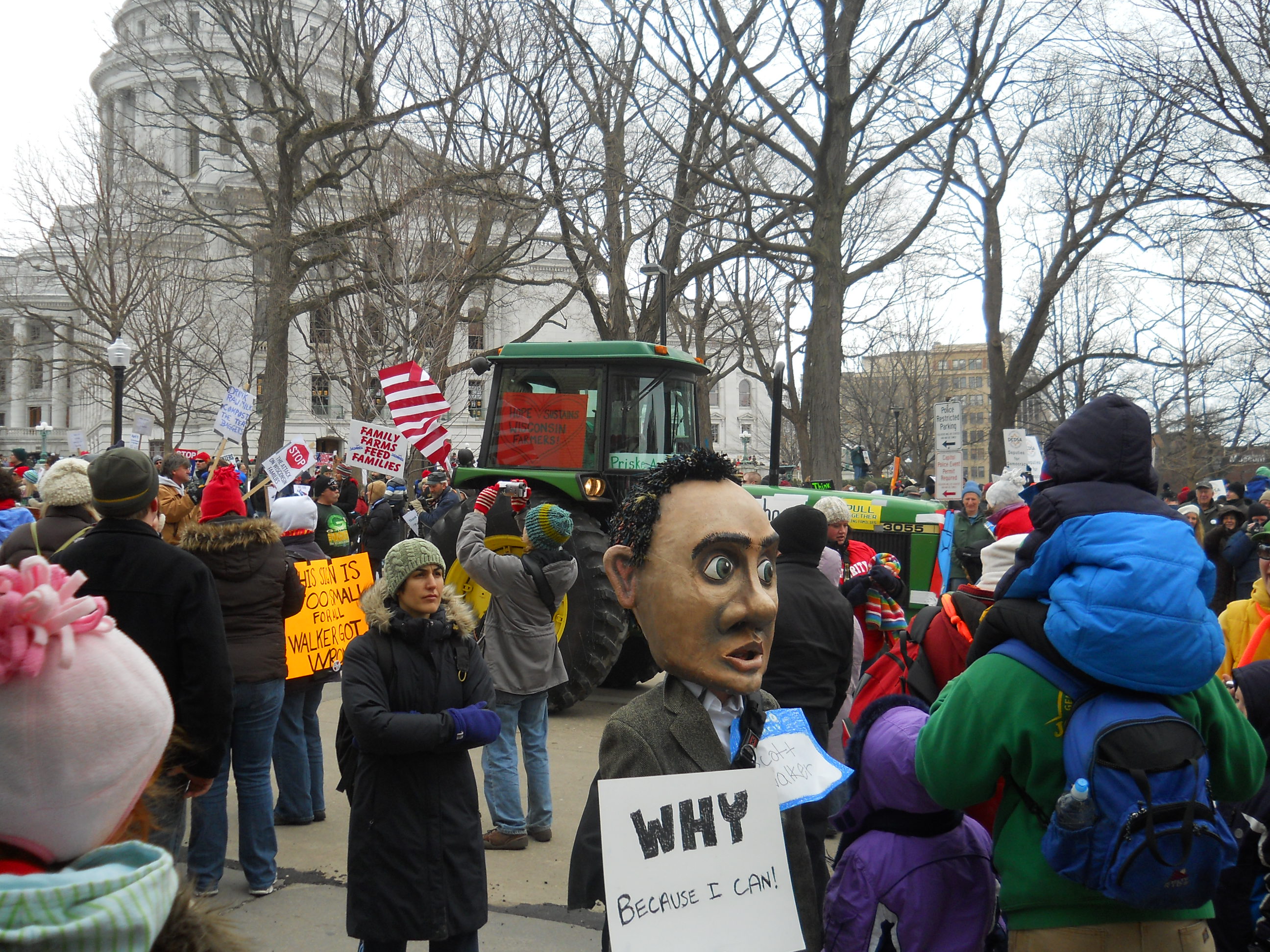
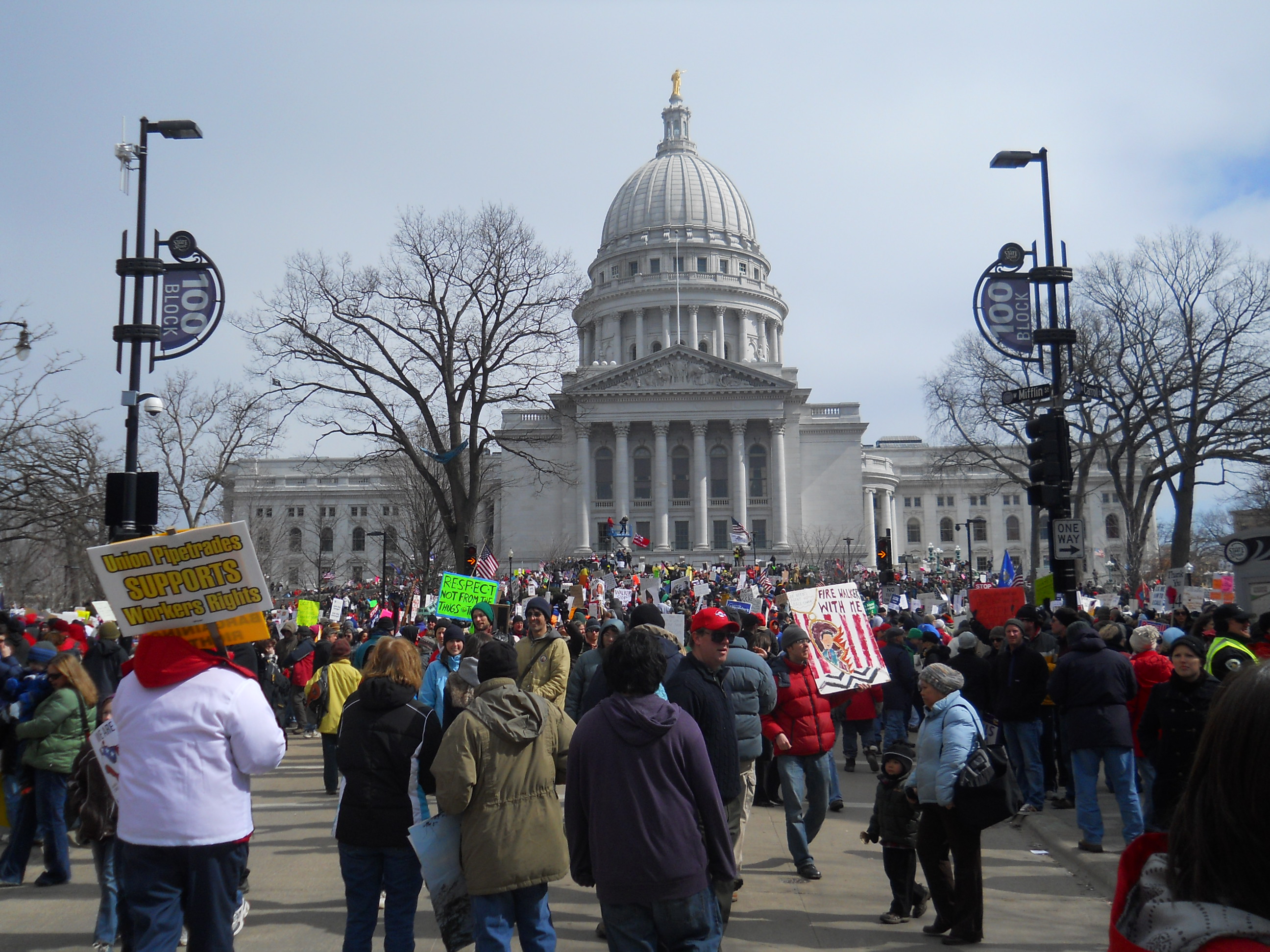
I took the boys to the protest in Madison.  This is the 26th day.  There was a “Farmer Labor Tractorcade” in the morning.

At first the boys didn’t understand what was happening, but they liked the excitement.  Children pay attention when adults are excited about something.  I did my best to explain the complicated issues to the boys without simplifying too much.

The way Governor Walker is ramming his agenda down our throats is probably what riles the people of Wisconsin the most.  He has always claimed it’s about the budget, but when he couldn’t get the 14 Democrat senators who fled the state to return to make a quorum, the bill to eliminate collective bargaining was stripped from the budget bill, and passed in two hours.

The last few years has seen the rise of the Tea Party, which is considered Right Wing.  This movement would be considered Left Wing.  They are approaching the problems from different angles,  but it boils down to Americans concerned about their future and the future of their country.

I’m so glad to live in a country that allows peaceful protests.  My favorite chant of the day says it best:

“Tell us what democracy looks like.  This is what democracy looks like!”


Chicken Pictures for WSB

March 9, 2011

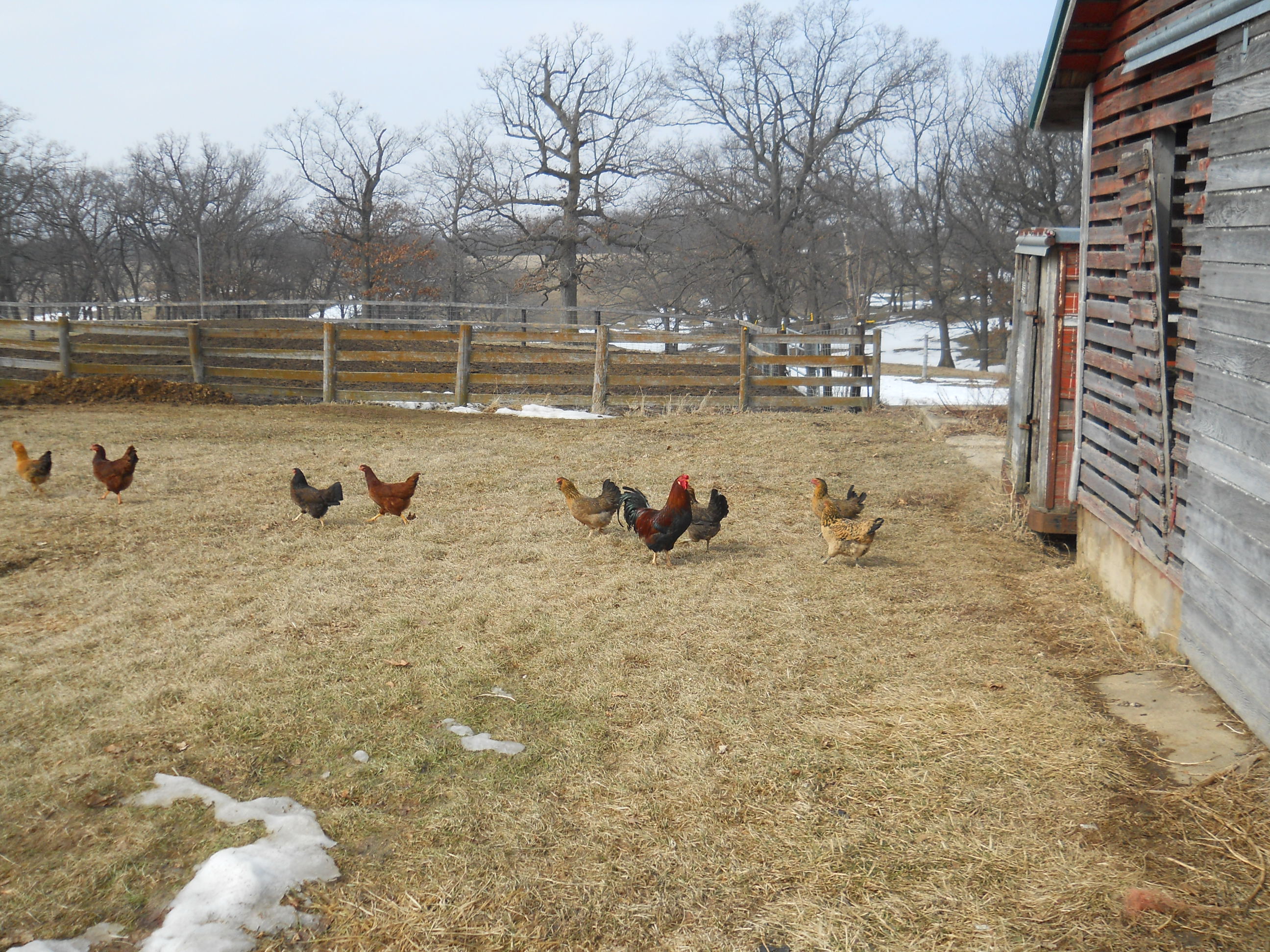
In, “Chicks, Fun and Trouble,” I told about the new chicks we received by mail.  WSB asked for more pictures when they were grown.

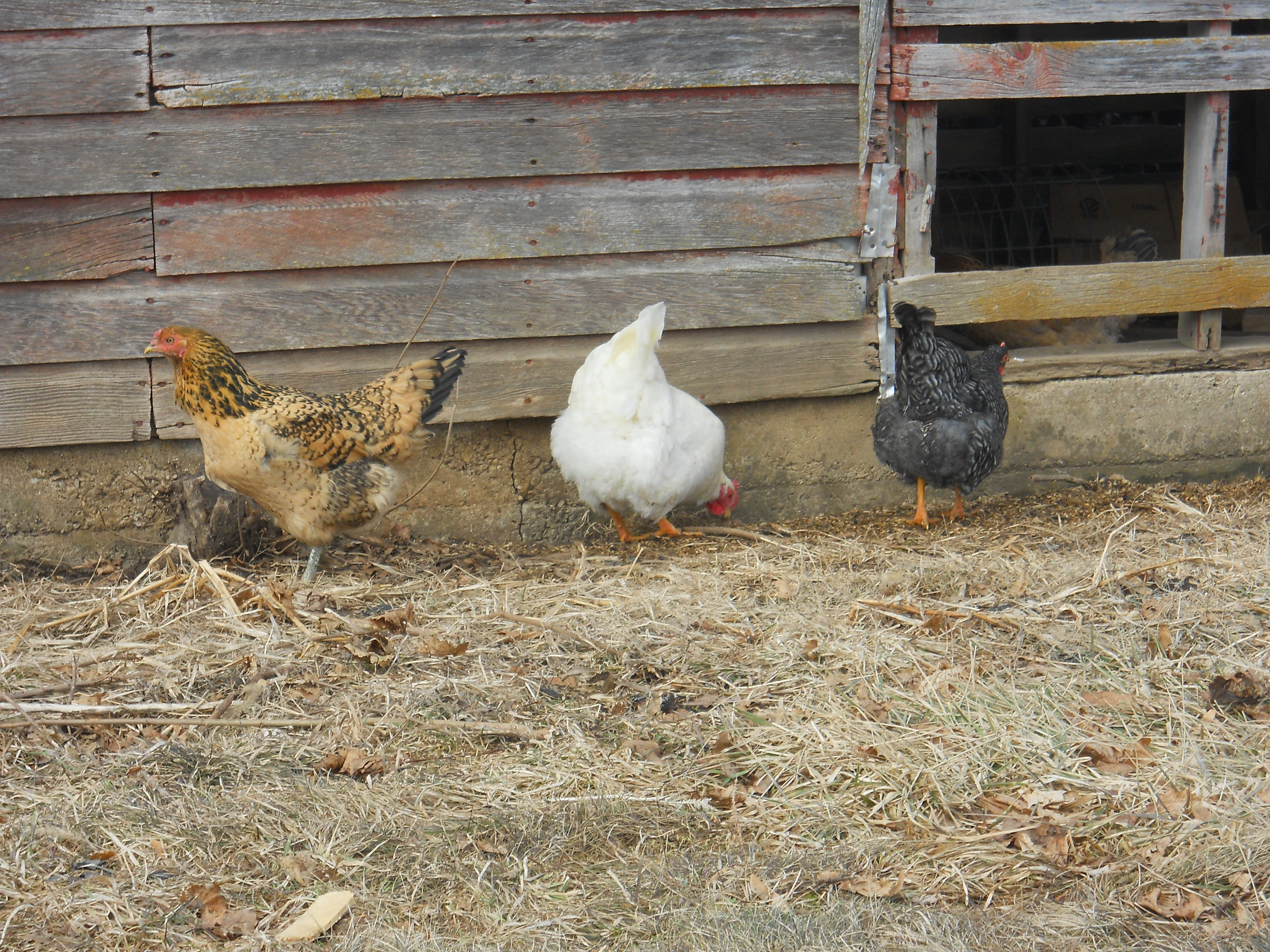
I took these pictures yesterday.  The chickens are enjoying getting out of the barn, scratching, grazing, picking up rocks for their crop.  It’s been a long winter, stuck in the barn.

Today we have a snowstorm and school is canceled.  Seems like Mother Nature always teases us.  What’s the saying?  “Robins always get three snows on their backs?”

Below are three of the chicks, grown.  An Araucana, White Rock, and Barred Rock.  They are laying beautiful, little, pullet eggs.

Also, I want to say thank you to all the women in my life.  Today is the 100th International Women’s Day. It was started in 1911 to honor the Suffragettes, who fought for womens’ right to vote.


Robert Frost: A Blue Ribbon at Amesbury

March 6, 2011

How can a poem, written years before, capture the way I feel?  In “A Blue Ribbon at Amesbury,” Robert Frost writes my thoughts, my feelings.

“A Blue Ribbon at Amesbury” describes a young man’s mind, as he observes his blue-ribbon winning hen.

Excerpt:

The one who gave her ankle-band,
Her keeper, empty pail in hand,
He lingers too, averse to slight
His chores for all the wintry night.

He leans against the dusty wall,
Immured almost beyond recall,
A depth past many swinging doors
And many litter-muffled floors.

He meditates the breeder’s art.
He has a half a mind to start,
With her for Mother Eve, a race
That shall all living things displace.

The cattle on my farm can be traced back over fifty years, the hogs over thirty, the chickens over ten.  We are always selecting, always monitoring, always striving.

Thank you Quantum Devices, Inc. for your guess. Since you were the only one to guess which Frost poem is my favorite, you win the $25 gift certificate to Kiva.


Icehouse/Icebox

February 20, 2011

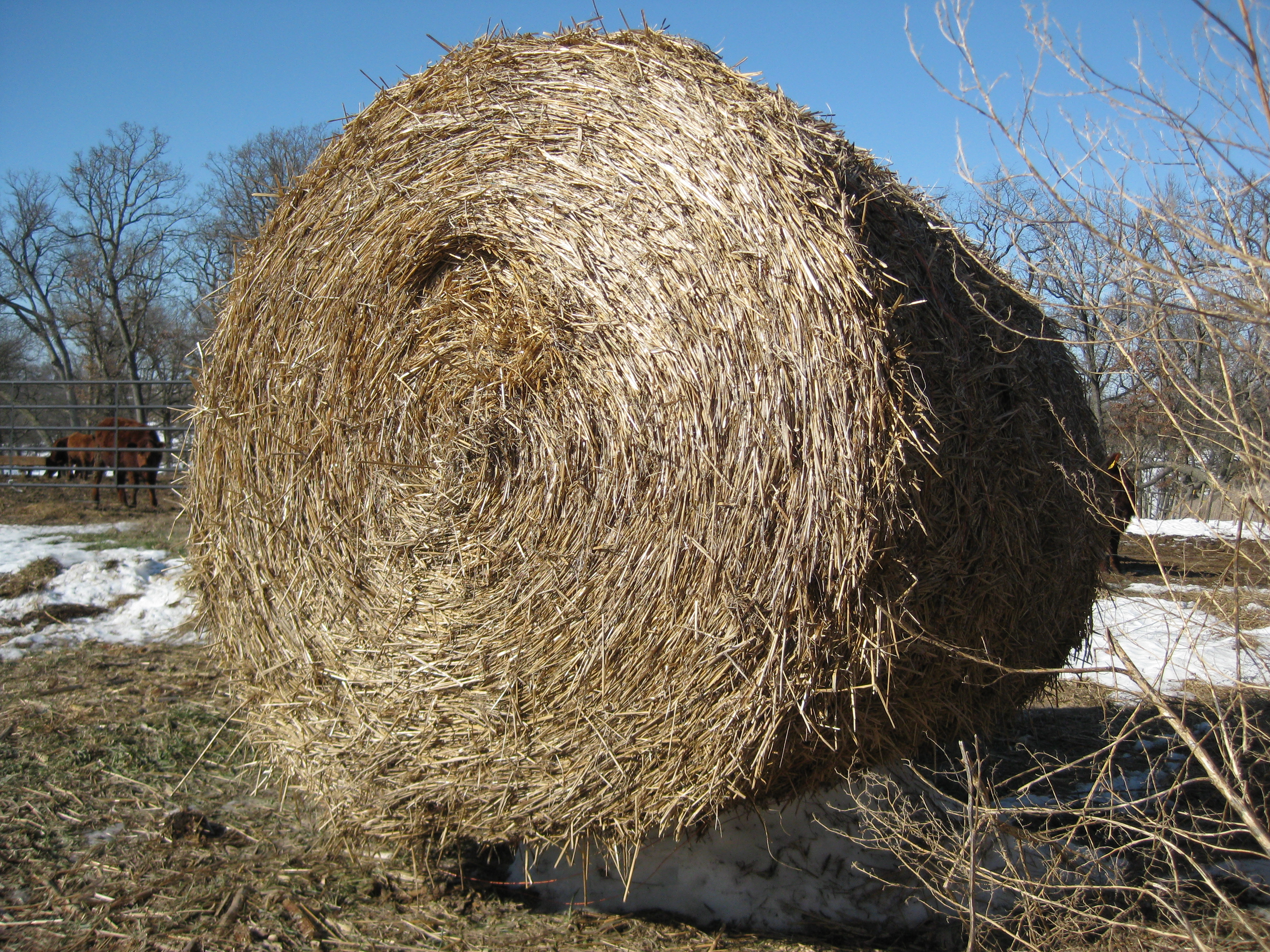
I set this round bale of straw down after the big snow.  We had a big melt this past week and all the snow around it melted, leaving the bale sitting on its own block of ice.  It got me to thinking about the insulating properties of straw.

There is an old building on my Dad’s home farm.  The building is called the Icehouse.  Back in the days before rural electrification, people would cut chunks of ice out of lakes or streams and put the ice into their icehouse.  Then they would insulate the ice with wood shavings or straw.

People had an Icebox in their house to keep food and beverages cool.  There was a place to put a block of ice.  When one block of ice melted, they would go get another one.  Maybe you’ve heard someone refer to the refrigerator as the icebox.

In Henry David Thoreau’s classic, “Walden,” he tells about the time he let a young man warm up in his cabin.  He had fallen in the cold water of Walden Pond when he was out cutting ice.

Thoreau provides details about the process of cutting out ice, which he observed 100 men doing over a span of 16 days.  They made a stack of ice weighing 10 tons.  They covered the stack with hay and boards for insulation, and didn’t open until July.  Even after it was exposed to the air and sunshine, Thoreau says the stack didn’t fully melt until September of the following year.


February 2011 Price of Hog Feed

February 15, 2011

Historically high, and going up!  Karen asked what the price of soybeans is, and that got me to thinking, I haven’t calculated the price of hog feed lately.  I sat down and did some figurin’, and was shocked at the price.

Our basic hog feed mix is corn, soybean meal, and a vitamin/mineral/amino acid premix.  Corn is $7.17 for a 56 lb. bushel.  Soybeans are $14.16 for a 60 lb. bushel.  Dividing the cost by the lbs. gives us the price per lb.  Corn is $.128/lb., and soybeans is $.236/lb.

We buy soybean meal, which is soybeans with the oil removed and sold.  Our last bill for soybean meal was $.20/lb.  Our premix is around $.40/lb.  And we will use the $.128 market price for corn.

What is the breakdown of our hog feed?  80% is corn, 16.5% is soybean meal, and 3.5% is premix.  Let’s figure out what 100 lbs. of feed costs.

80 lbs. of corn multiplied by $.125 equals $10.24.  16.5 lbs. of soybean meal multiplied by $.20 equals $3.30.  3.5 lbs. of premix multiplied by $.40 equals $1.40.  Adding the three together totals $14.94 per 100 lbs.  So that gives us a price of almost $.15 per lb.

Our whole herd feed conversion is 4.  This means that it takes 4 lbs. of hog feed to produce 1 lb. of pork.  So if we multiply 4 lbs. times the $.15/lb gives us the cost of feed to produce 1 lb. of pork, $.60/lb.!!!!! I remember when the whole herd feed cost was $.30/lb., and all costs were $.40/lb.

The commodity hog  market price is around $.60/lb.  We used to think we were making great money at $.60/lb.  Now…?

Don’t cry for Curiousfarmer,  it’s not as bad as it seems.  While we buy the soybean meal and premix, and these are the actual prices we are paying, we grow our own corn, so it costs us whatever it costs us to grow it.  The $7.17 per bushel is  the opportunity cost to feed corn to hogs.  I haven’t figured lately, what it actually costs us to grow corn, but it’s probably less than half of the $7.17 market price.

So why are we still raising hogs, when it’s a break-even business this year?  Consistency.  Pa always said, “farmers who jump in and out of things never catch up.”  We feel it’s better to choose what we do, and work to do it well.  We make major changes based on our needs, and the longer-term fundamentals.

That doesn’t mean we won’t modify our operation.  We are selling all of our less productive sows and our older boars.  We will still have plenty of pork for our direct-market customers, but we won’t have as many hogs to sell on the commodity market.

Longer-term, what are these markets going to do?  How long will it take for the livestock markets to catch up to the grain markets, so  livestock farmers can make some money?  How much will food prices increase?

Thank you Karen, for a great question, which led to more questions.

Leaves of Grass

February 7, 2011

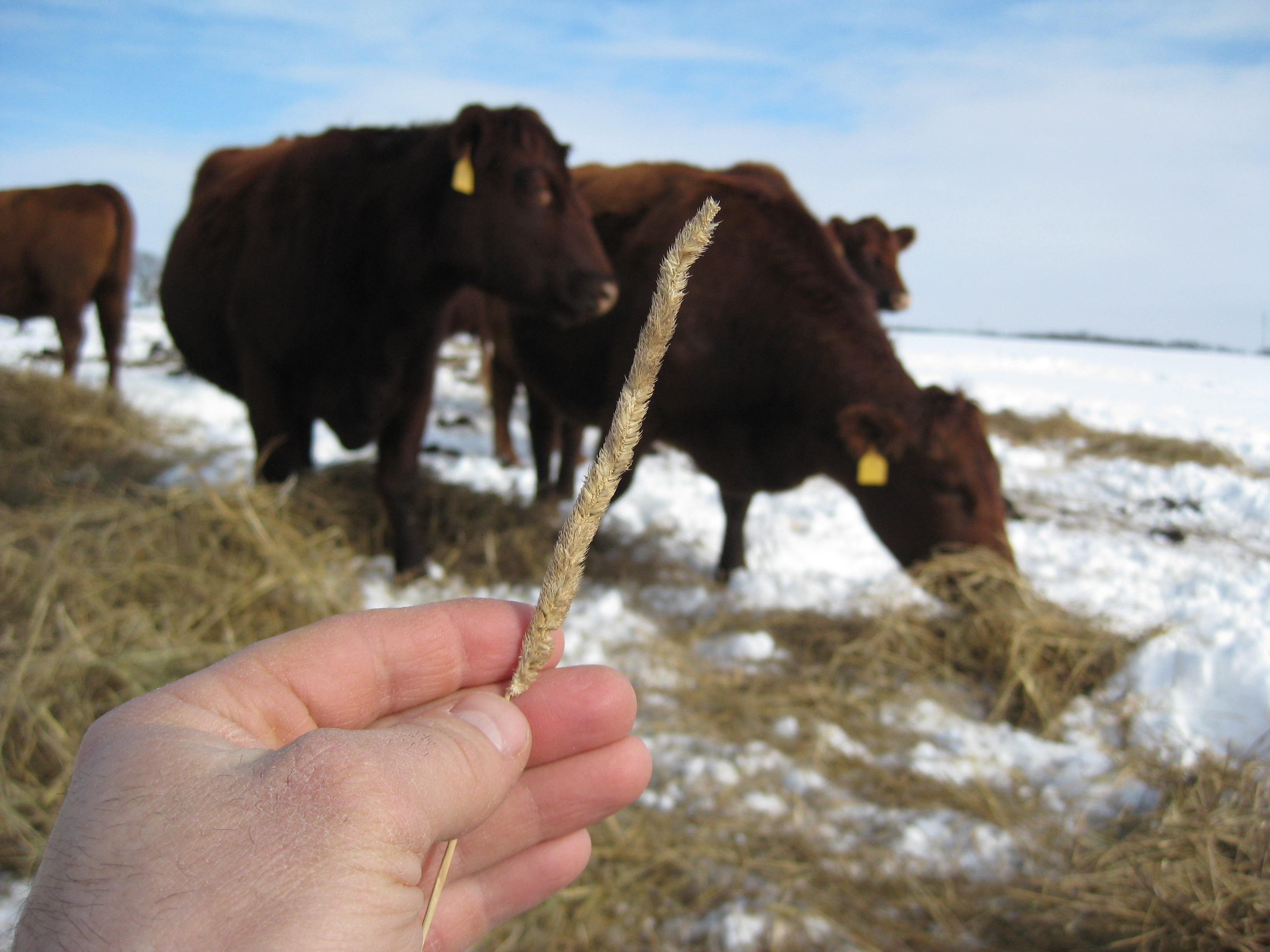
Timothy, Phleum pratense

Timothy is one of my favorite grasses.  I mix its small seeds in with alfalfa, when I’m planting the new hay seeding in the spring.  Look at the broad, beautiful leaves.  Look at the seedheads, covered in pollen.

I’ll lay it down, sun-dry, rake, and roll up, into a big, round, bale.  Summer sun, tucked away, waiting to be fed on a cold, winter’s day.

I’ve often thought that I should like the poetry of Walt Whitman more.  He titled his epic book of poems, “Leaves of Grass.” This suggested a kinship with him that turned out to be  nonexistent. I recently learned that he titled his life’s work based on a pun, “Grass” was a term given by publishers to works of minor value and “leaves” is another name for the pages on which they were printed.

I do like his poem, “O Captain! My Captain!”, written about the assassination of Abraham Lincoln.  It’s more straightforward.

My favorite poet is Robert Frost. I plan on writing a post, inspired by one of his poems.  The first person to guess which poem, will win a $25 gift certificate to Kiva. One guess per person.  The poem is not “Mending Wall.” I’ll give you a hint, the post is about genetics.  Good luck!


I’m Stuck

February 1, 2011

School started two hours late today, let out an hour early.  My 4-wheel drive SUV made it half-way down my quarter-mile lane before the snow proved too deep.  My Dad pulled me out with the tractor, and pulled us back in.  It’s supposed to start snowing again tonight, with wind.  If you want to visit, and you don’t have a snowmobile, you’re going to be walking.  We’re stuck.

I’m stuck with this blog, and having trouble getting restarted.  There is a reason I post every week, and it’s not because of popular demand.  It’s how I’m wired. I like starting every day with chores.

And so, I’m publicly announcing my intention to post every week, even though I still feel stuck.

I think this blog works best when I’m answering a question.  Some questions I want to answer:

How much wood does my outdoor wood boiler use?

How much fuel does my farm use?

What is the feed efficiency of my hogs from 250 to 300 lbs.?

Why can hogs digest acorns without processing?

How long did the “wild west” last?  Side note: I think a major contributor to the wild west was post-traumatic stress disorder from the civil war veterans.

Another thing I want to look at more closely is how a square foot of land changes throughout the year.  I think I know, but forcing myself to look every week, and take a picture, may prove eye-opening.

Until next week, stay warm.


Taking a Break, Making the Best of…

December 18, 2010

Red clover hay field.  This field is an example of making the best of a bad situation.

The cowherd winters on cropland, walking into the woods for shelter, and water out of springs.  We feed the cows by unrolling round bales of hay on the harvested corn fields.  This is a way to spread the fertility from the cows’ manure, and the damage from the cows’ hooves if the ground is not frozen.

The hayfield above was exposed to the cows, and even though we never fed them hay on it, they chose to stand on it often.  When the ground thawed, the cows did considerable damage to the alfalfa plants.

We monitored the field as everything started to green up in the spring.  We could see most of the alfalfa had been killed and it would not be a productive field.  We had three choices: 1. Do nothing and accept the reduced yield.  2. Till it and plant corn.  3. Plant another forage crop.

We didn’t need the corn acres, and it would mess up our rotation if we put it in corn this year.  It wasn’t slated to be a corn field until 2011.

We decided to plant another forage crop.  There are some grasses which people plant in this type of emergency: Italian Ryegrass, Teff grass.  We wanted a legume, though, which would fix nitrogen for next year’s corn crop, which is what the alfalfa would have done.

We chose Red Clover.  There are disadvantages to Red Clover.  It is short-lived, and it doesn’t dry well for hay.  The first reason didn’t matter in this case, and we decided to try to find dry times to make the Red Clover hay to take care of the second disadavantage.

The main advantage to Red Clover is it’s very easy to plant.  We broadcasted the seed with a small spreader from the back of a tractor, and pulled a chain harrow to cover the seed with a little bit of dirt.  We planted four pounds per acre.

It worked great!  Look at how thick the reddish flowers are in the picture.  We made the best of a bad situation.

And so, I can no longer put off addressing the title of this post.

I’m taking a break from blogging.  I’ve posted consistently for nearly two years.  I’ve met people, made friends, learned, shared, in short, it’s been a blast!  Thank you for visiting, commenting, and sharing.  Without you, a blog is a journal.  With you, a blog is a conversation.  Thank you for your conversation!

Merry Christmas and Happy New Year!


First Snow

December 7, 2010

The first snow is met with enthusiasm by children, snow-plow drivers, and snowmobilers.

The beauty of snow on the farm is tempered by the extra work.

As soon as it stops falling, we push it, pile it, and shape it to our will.


Outdoor Wood Boiler III

November 24, 2010

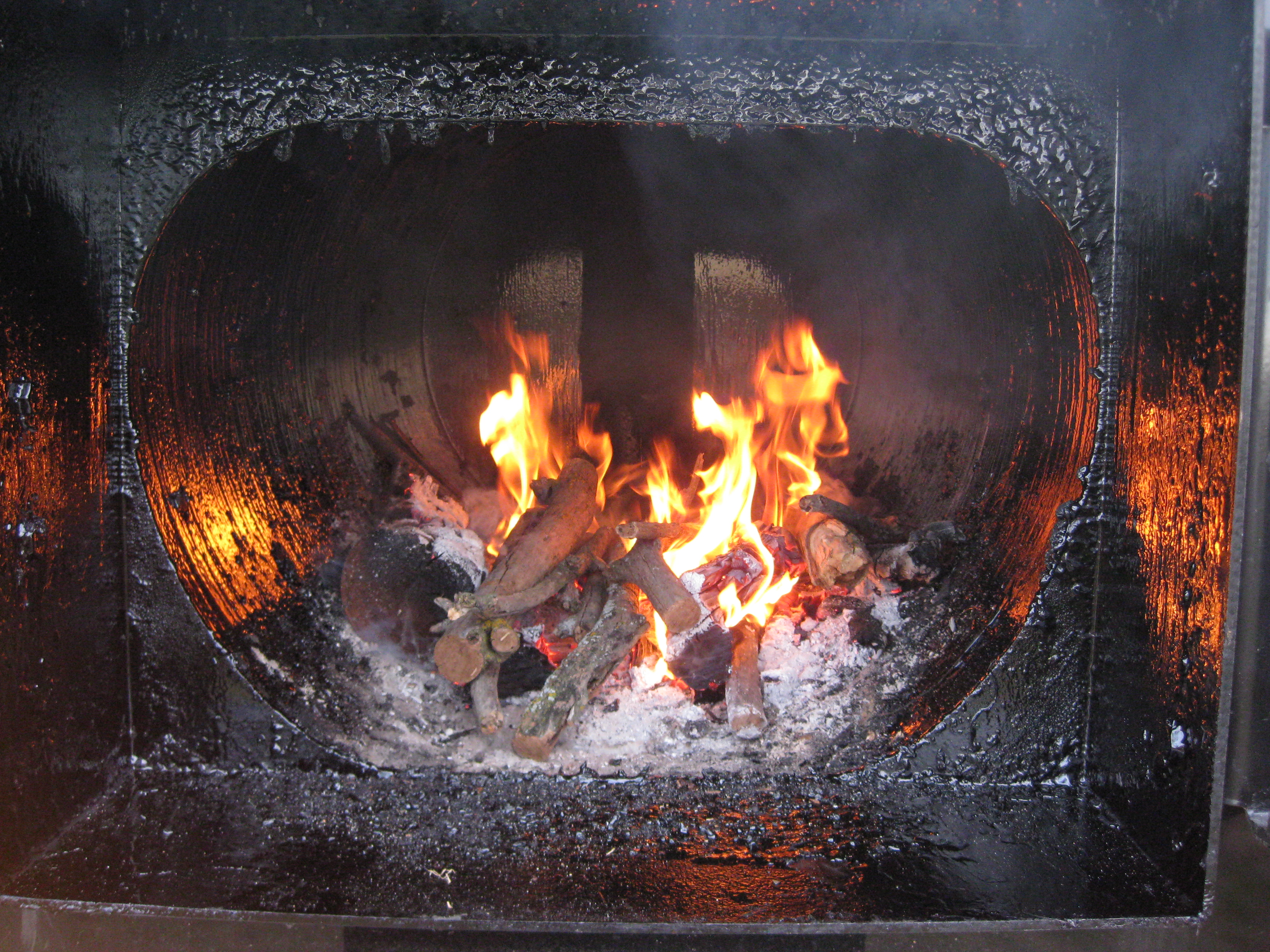
The firepit.  I haven’t let the fire go out since I started it about a month ago.  I’ve gone 14 hours between fills.

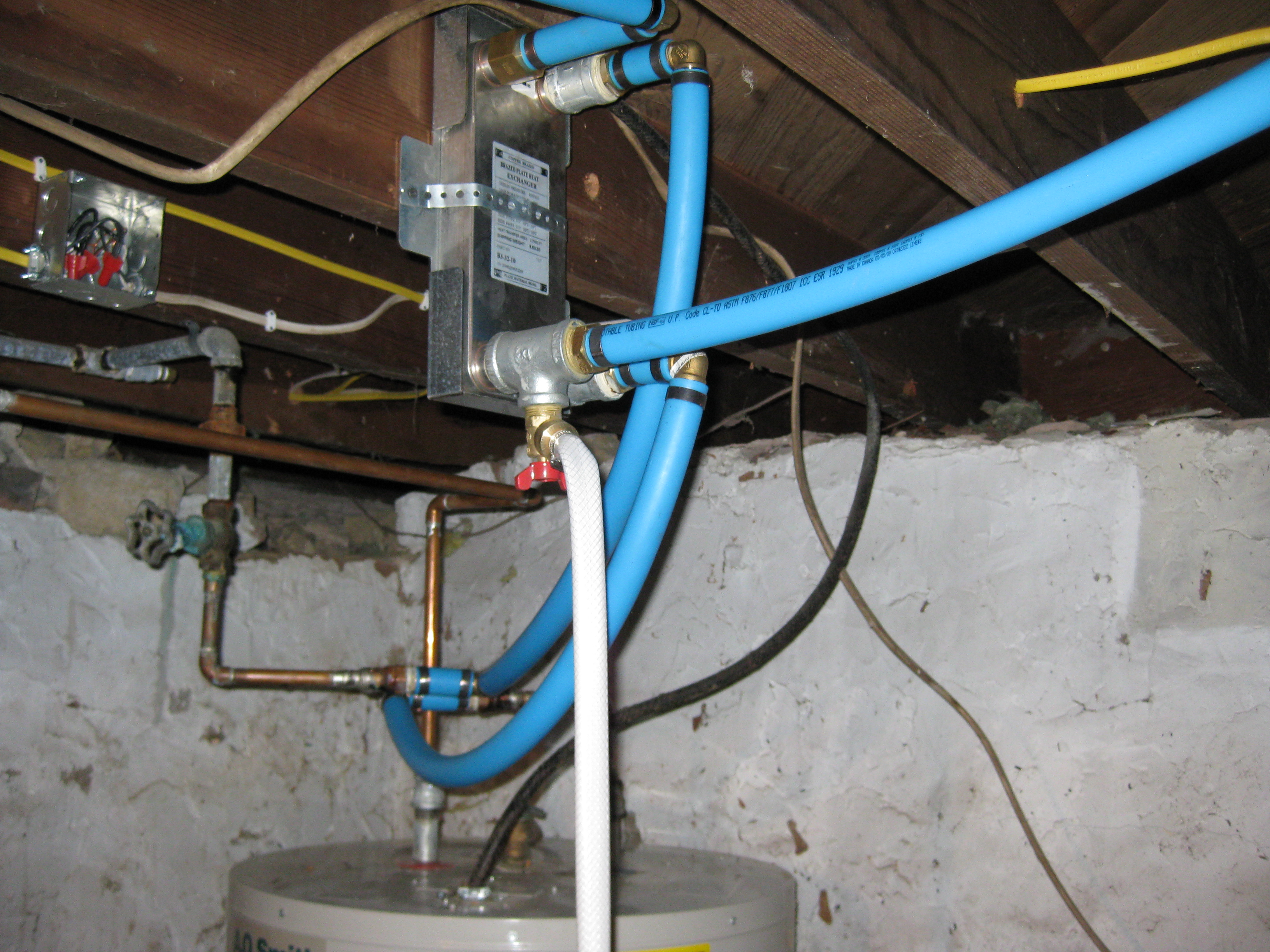
The hot water goes to a heat exchanger above the water heater, first.  I’m hoping this will save on my electric bill.

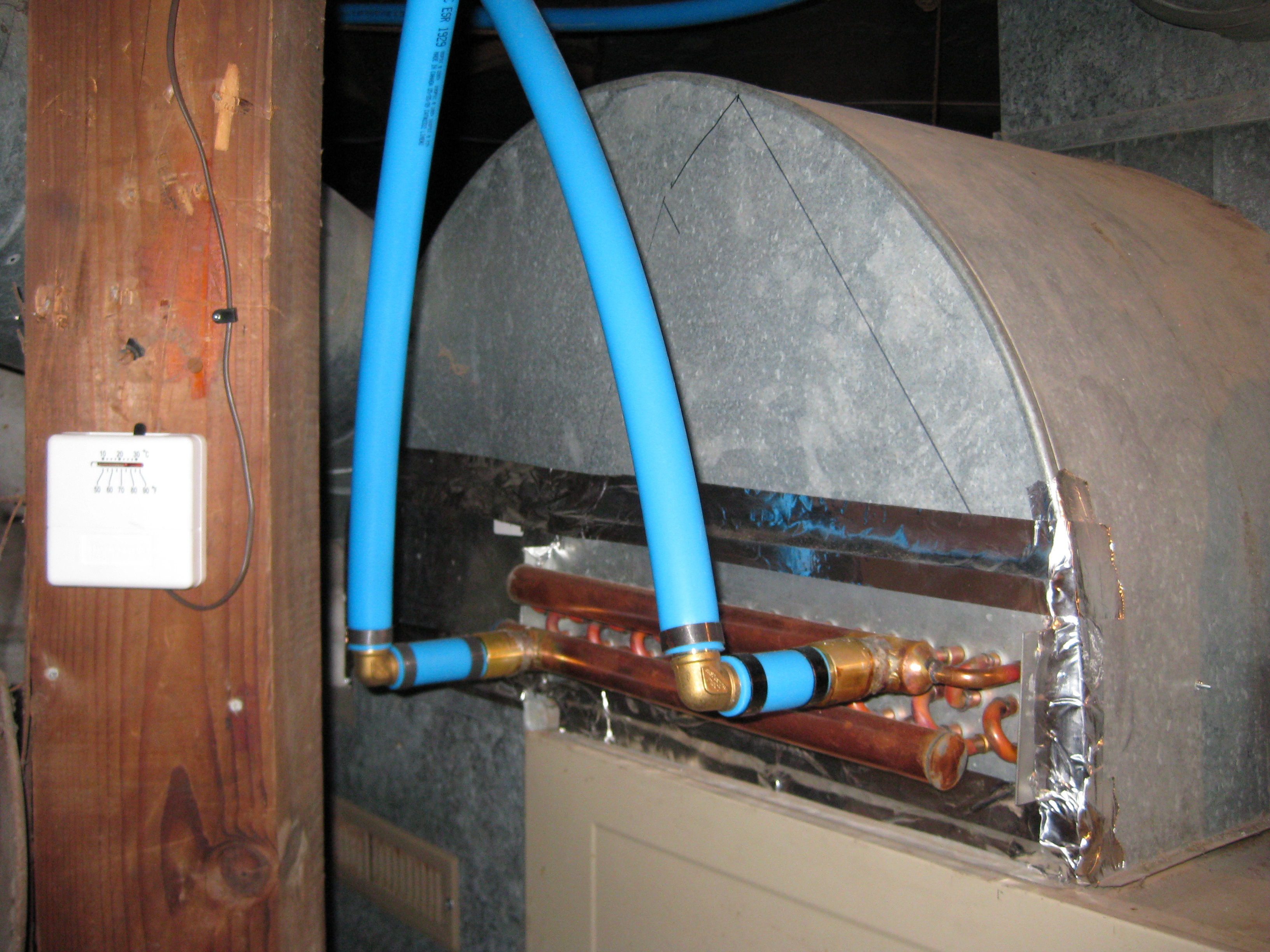
The hot water then travels to a radiator which was placed in the plenum of my original furnace.  The fan from the furnace blows air across the radiator when heat is needed.

The blue pipe is something which is new to me,  Pex pipe.  I appreciated how fast and easy it is to work with.

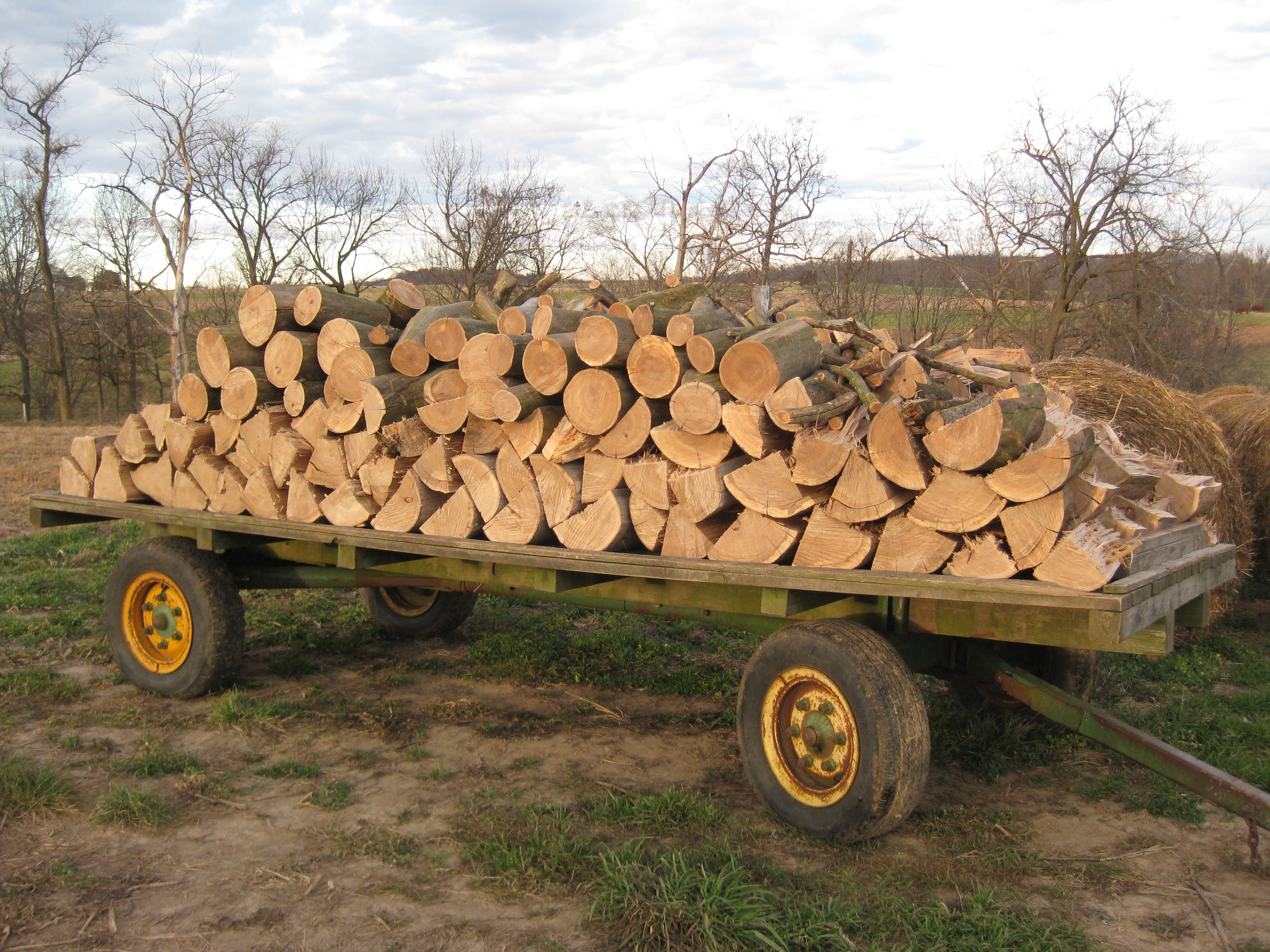
Now I just need more of this!  Happy Thanksgiving!