Outdoor Wood Boiler II

November 23, 2010


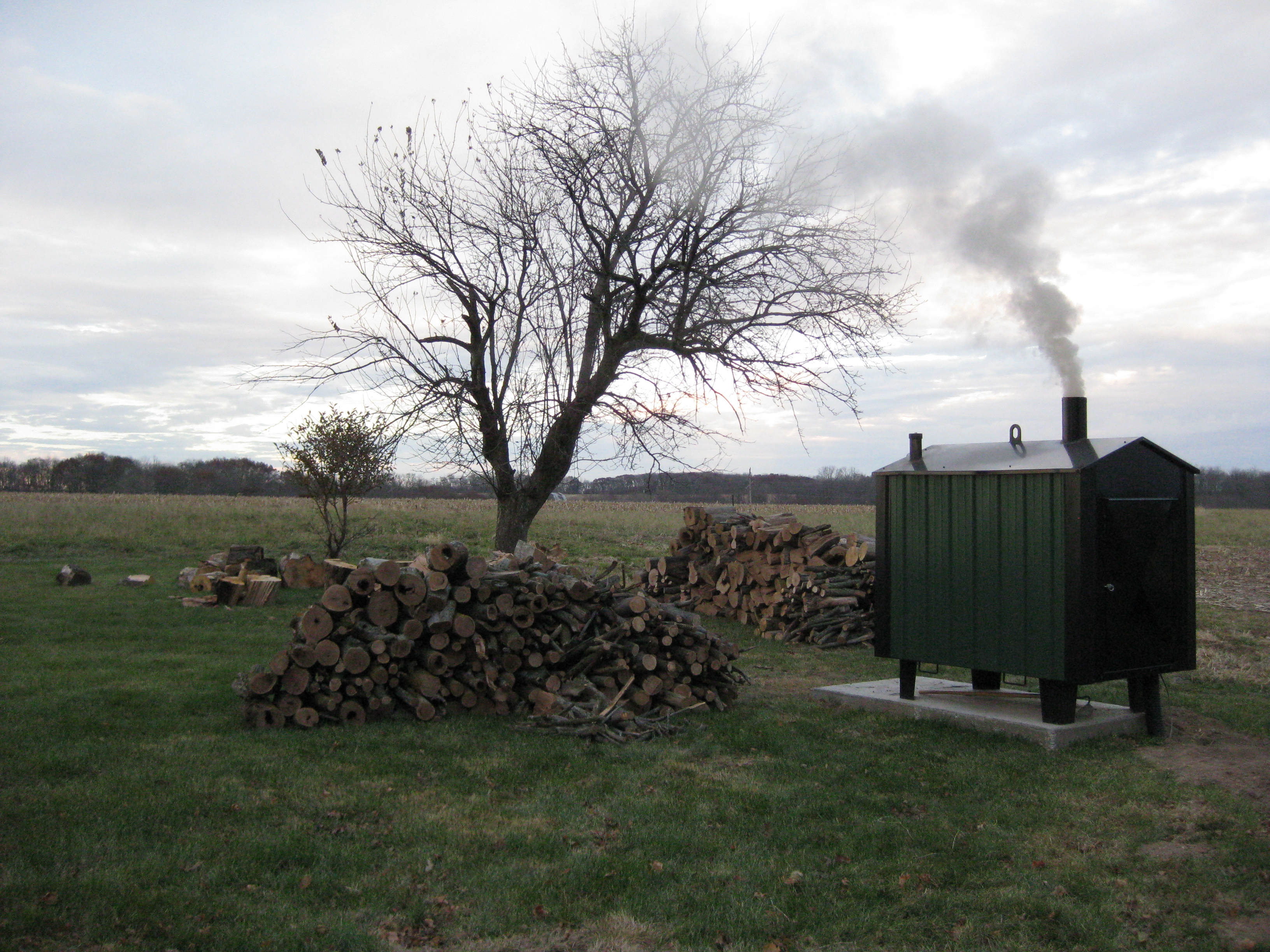
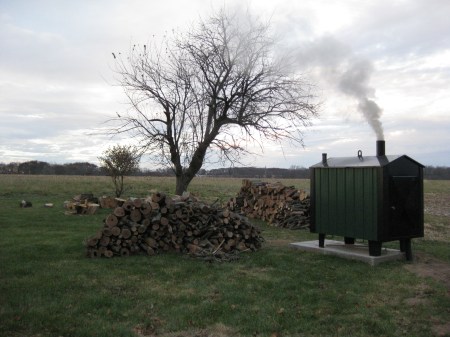
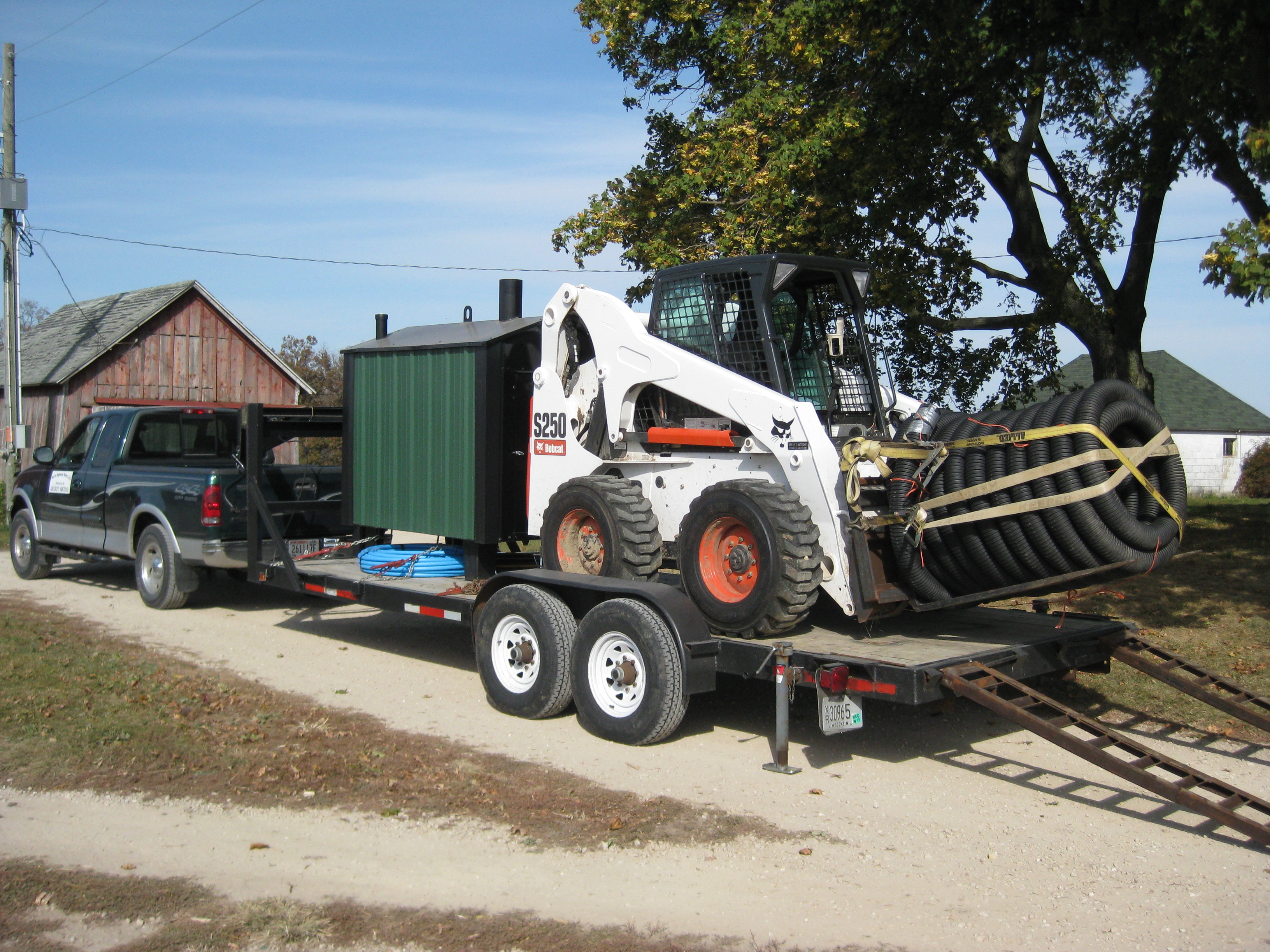
Outdoor wood boiler, ready to unload.  Mel uses his bobcat to set it into place.  At the front of the bobcat is the water line in black, plastic pipe. 

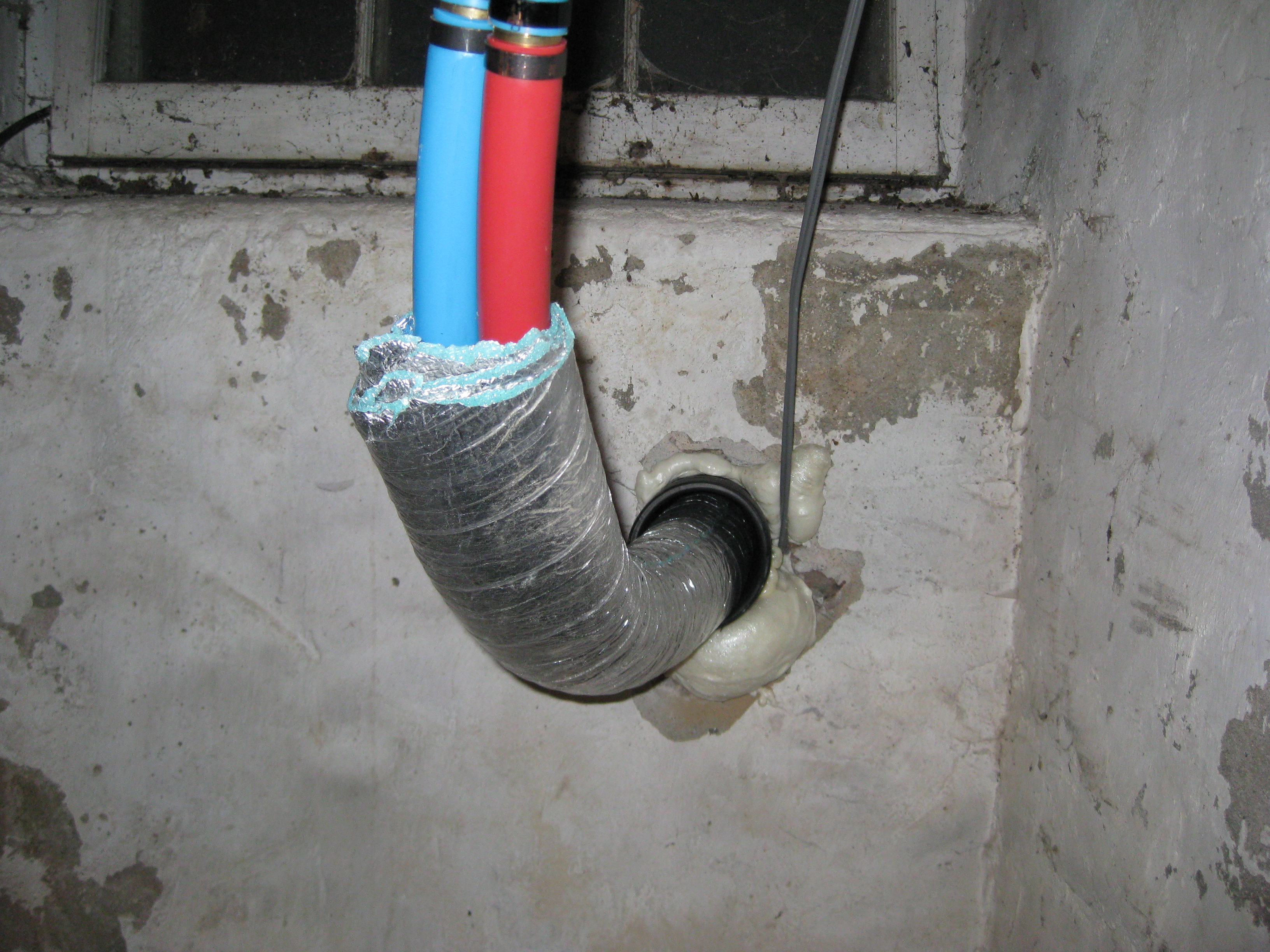
There are two water lines within the black pipe.  Incoming in red, and outgoing in blue.  The hot water continually circulates via a pump.  The water lines are also covered in insulation within the black pipe.  It was a real pain to drill through the basement wall.

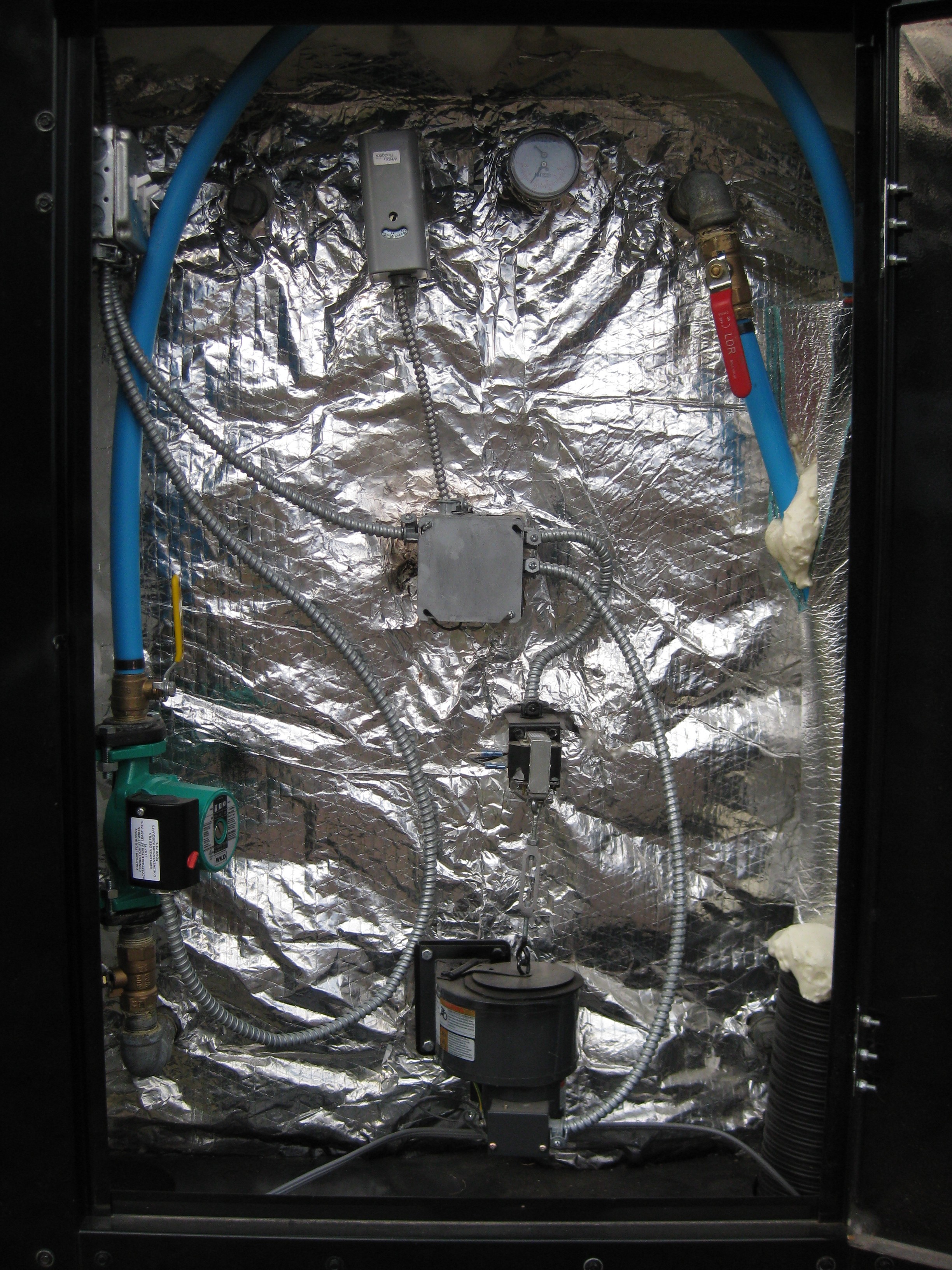
The water pump is on the left.  Bottom center is the fan, which kicks in when the temperature of the water decreases to a certain level.  I can adjust the temperature of the water.  Right now, the fan shuts off when the water temperature reaches 145 degrees F.


Outdoor Wood Boiler I

November 22, 2010

I purchased and helped install an outdoor wood boiler to heat our house.  I purchased the 250 gallon model from Nature’s Comfort, mainly due to the sales and service of Mel Flogel.  It wasn’t cheap.  The basic unit was $6500, but including everything pushes the cost close to $10,000.  It will take a few years to pay back over the heating oil I used before, but I’ll feel better, keeping the house warmer for my family.
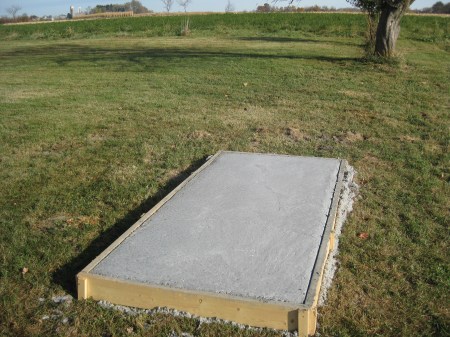
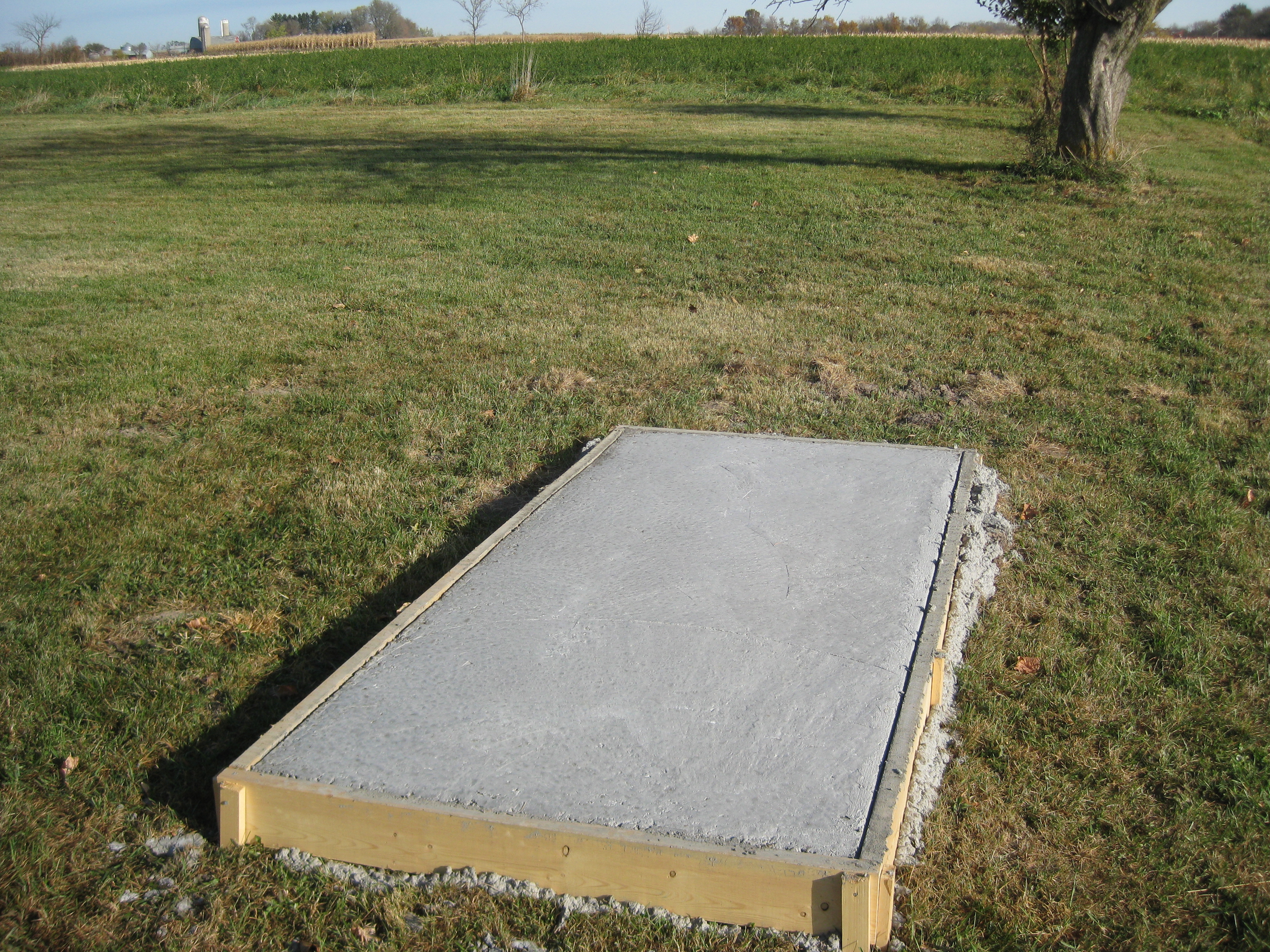
First I had to pour a pad of concrete.
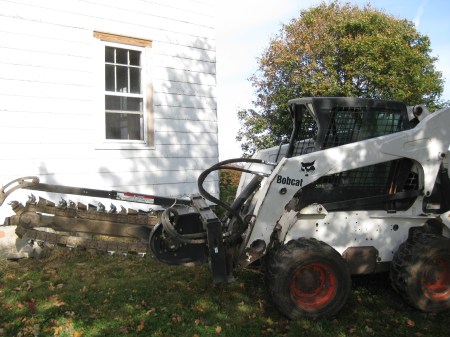
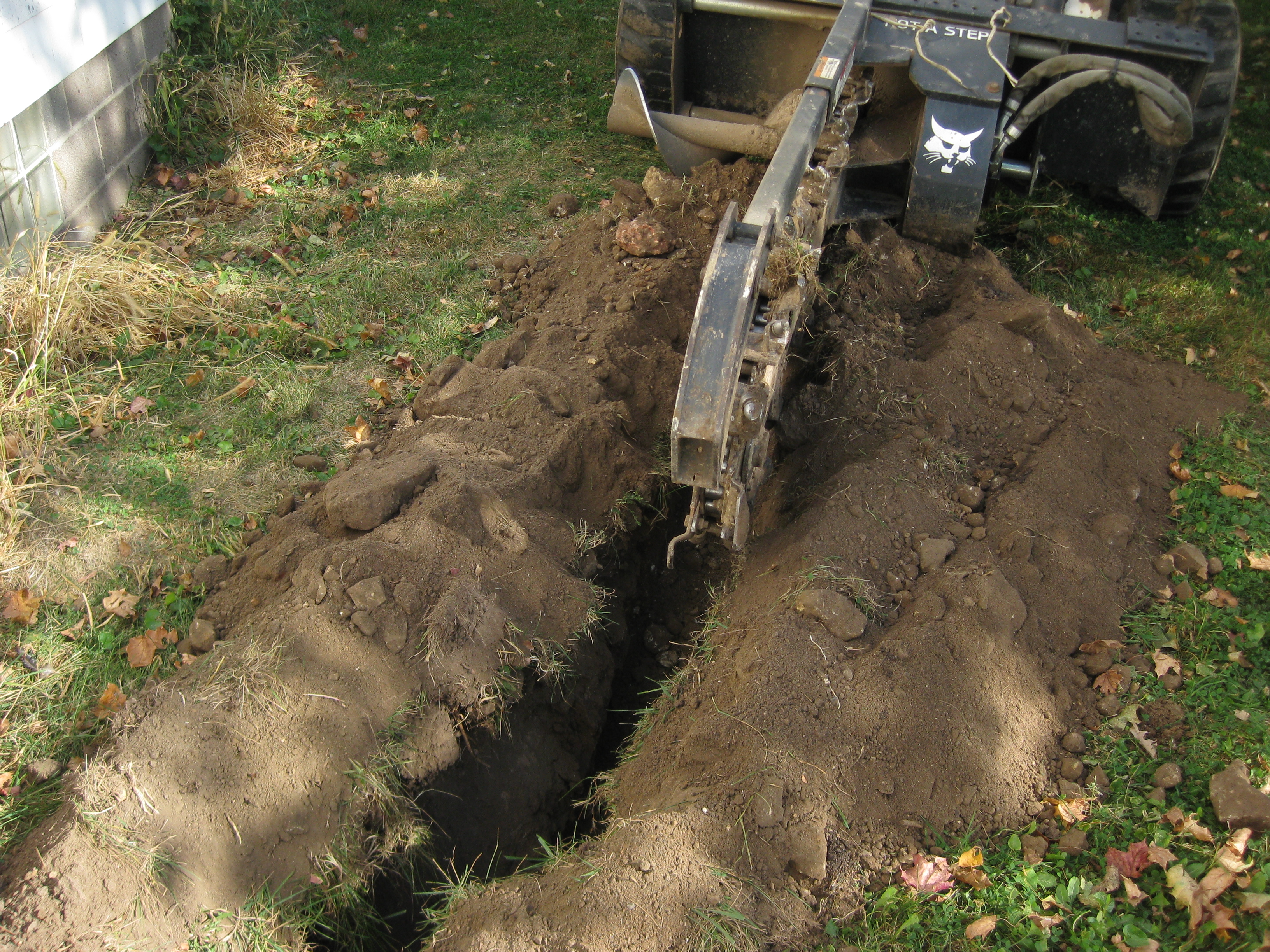
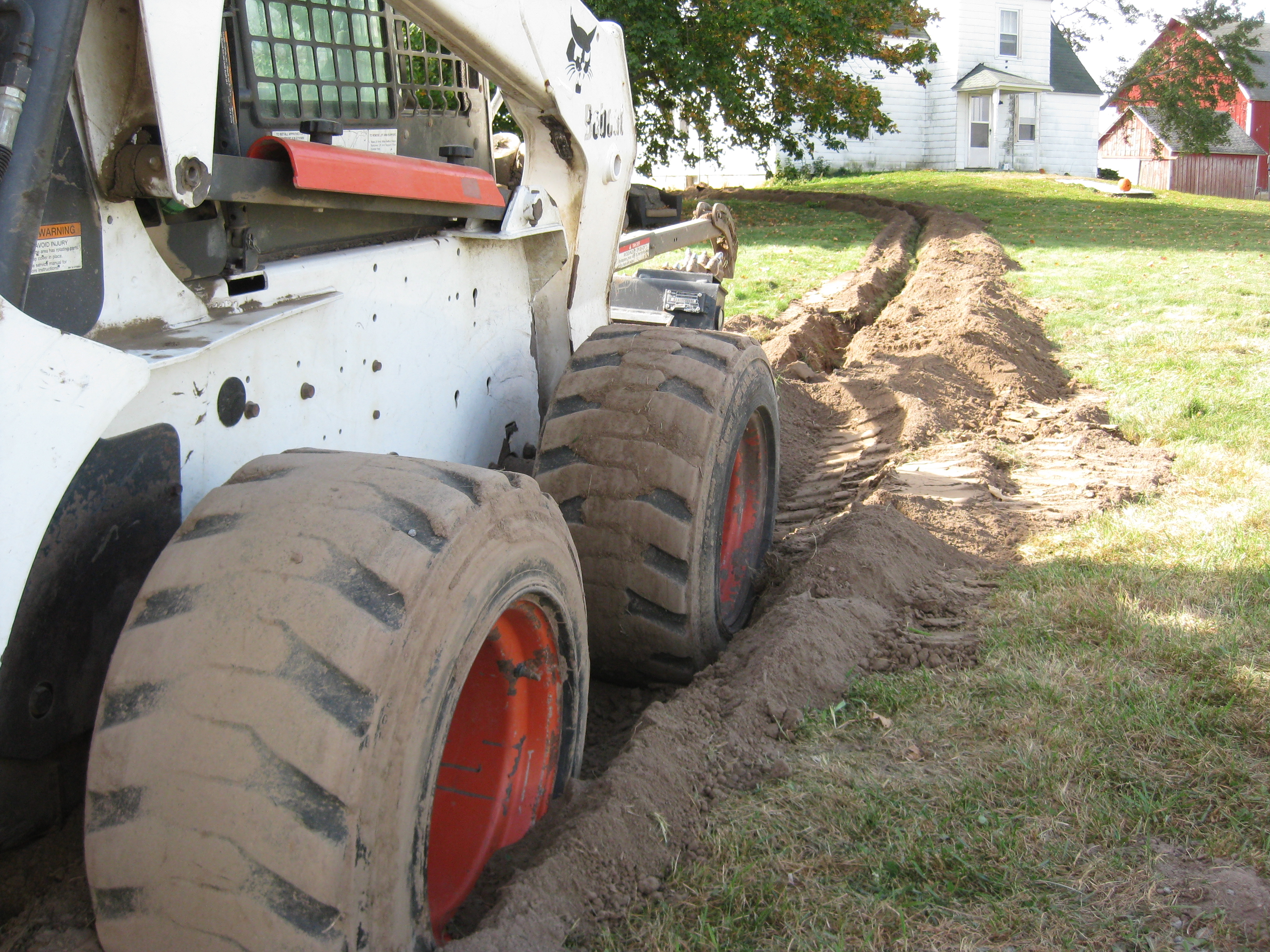
Then I had to dig a four foot deep trench for the water lines.  I rented a bobcat with a trencher attatchment from K&L Bobcat.

Citygirlfriend said, “Why didn’t you ask for a person to run it?  They have to deliver it right?  It probably wouldn’t have been much more expensive.”

“Because I want to run it.”

I figure if they are willing to turn me loose on a $50,000+ machine with very little instruction, I better take advantage.  When will I get another opportunity to run this bad boy?

It was tough-going by the house.  I think they backfilled with rock along the foundation.  After I got farther away from the house, though, it was easy.  Rich, black dirt, all the way down.
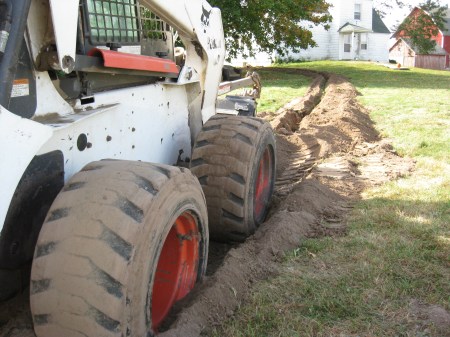
The one thing the trencher doesn’t do well, is turn.  So I had to lift the trencher, and manuever the bobcat on the curves.  Unfortunately, I found the trench on one of my manuevers and got the bobcat stuck.  No worries, Dad got a tractor and pulled me out.

I’ll have a couple more posts on this subject.

Artificial Insemination of Swine II

November 12, 2010

I wrote about how we use Artificial Insemination to bring new genetics into our swineherd in one of my very first posts, “Artificial Insemination of Swine.” Click on the link if you want to read about our AI protocol.

I didn’t use any pictures in the beginning, because I didn’t have access to a camera.  My sister bought us a digital camera, and I’ve loved it.  So easy. When we AI’d some sows in October, I snapped a few photos.


Final Harvest

November 6, 2010

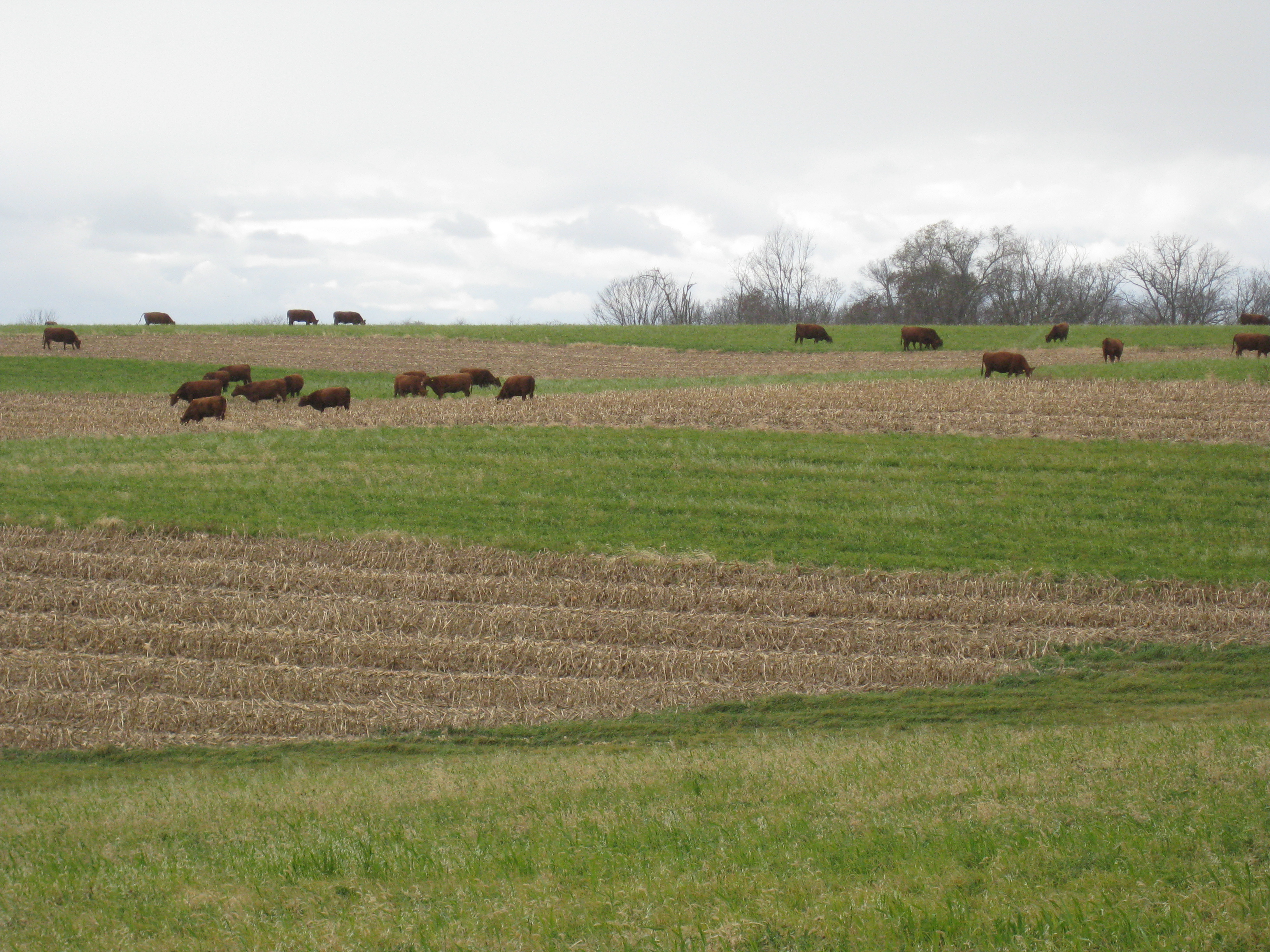
Cows harvesting the standing hay and cornstalks on my contour strips.  Here is a picture taken right before corn harvest.

The cows above are the ones the vet. confirmed pregnant when we pregnancy checked at the end of October.  I wrote about my expectations, and the problems we faced this breeding season.  90% of the cows and heifers ended up being bred with a 60 day breeding season for the cows, and a 45 day breeding season for the heifers.  10% open is normal for us and acceptable.  We have an excellent market for hamburger, so the cows that didn’t breed end up as beef.  We have appointments with our butcher over the next month.

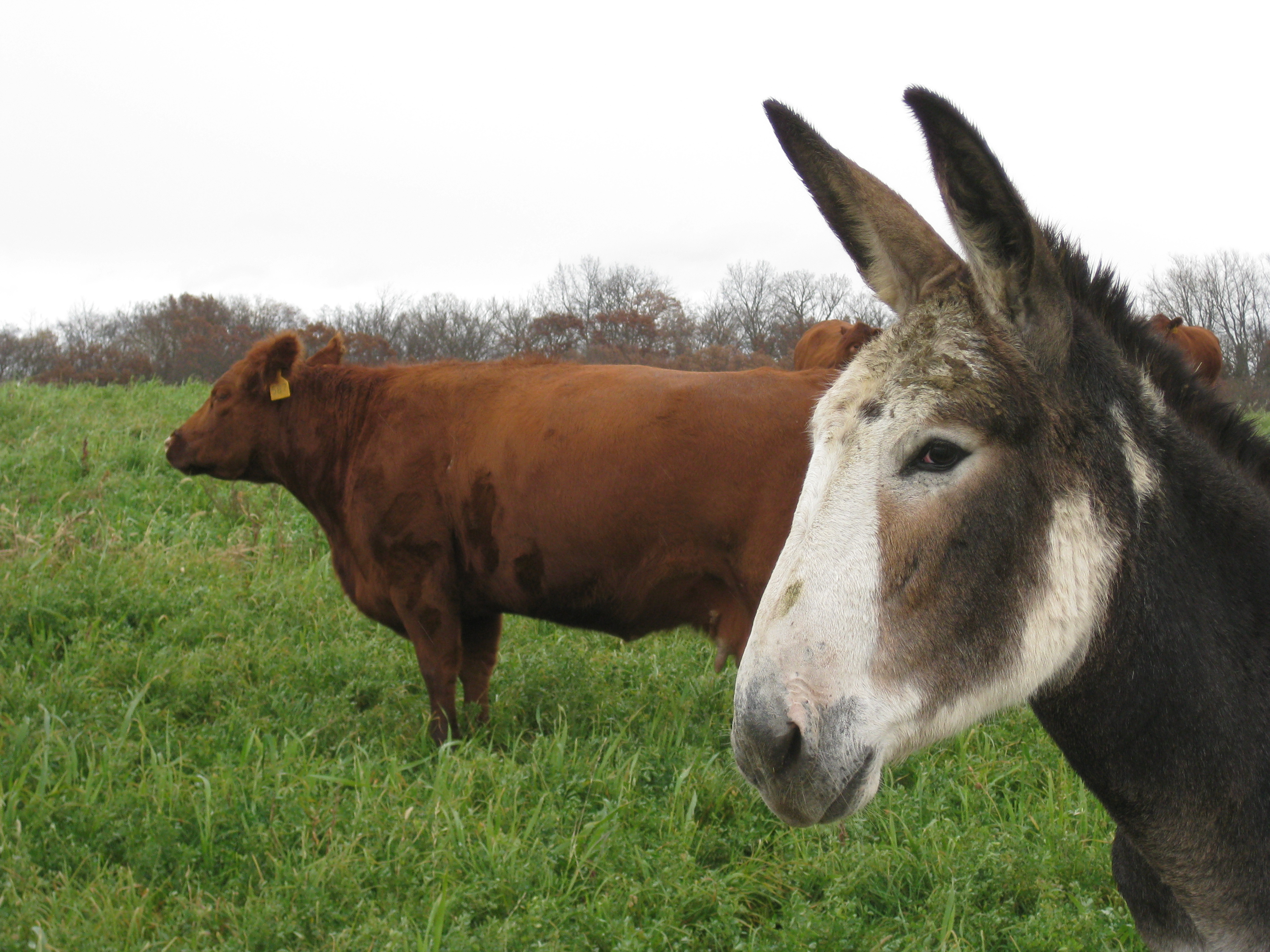
Below is a cow which didn’t breed, and Wilma, of course.  The open cows are grazing one of our best remaining pastures.  I was thinking about the life they lead.  I think it’s pretty good.  They get to be in a herd of peers, eating quality forage, moving weekly, breeding, raising young.  Up until the bolt-gun shatters their brain, it’s not a bad life.

We took the boys to a city-wide Halloween party.  A friend gave me the low-down on the best place to go trick-or-treating: the manor, or old-folks-home.  The residents are seated in a semi-circle, each holding a bucket of candy.  It’s funny, because whatever aversion a child has to old people is overcome by the lure of easy candy.

I don’t know what kind of life each person has had, but the ending can be difficult.  We all want to live a good life and die in our sleep.


Weaned Calves

October 21, 2010

Calves in the corral, separated from their mothers.  We weaned all of the calves, October 14th.

After sorting the cows away from the calves, we run the calves into the catch-chute one at a time to administer a couple of vaccine cocktails.  We use what our vet. recommends, and what is common in the industry.  Ultrabac 7/Somnubac is $1/dose.  Vira Shield 6 + Somnus is $2/dose.

The vaccines cover about a dozen diseases, or strains of a disease.  I have a difficult time believing one can get a good immune response to all.  But in the vaccine’s defense, we have lost a calf from Blackleg, but never after vaccinating.

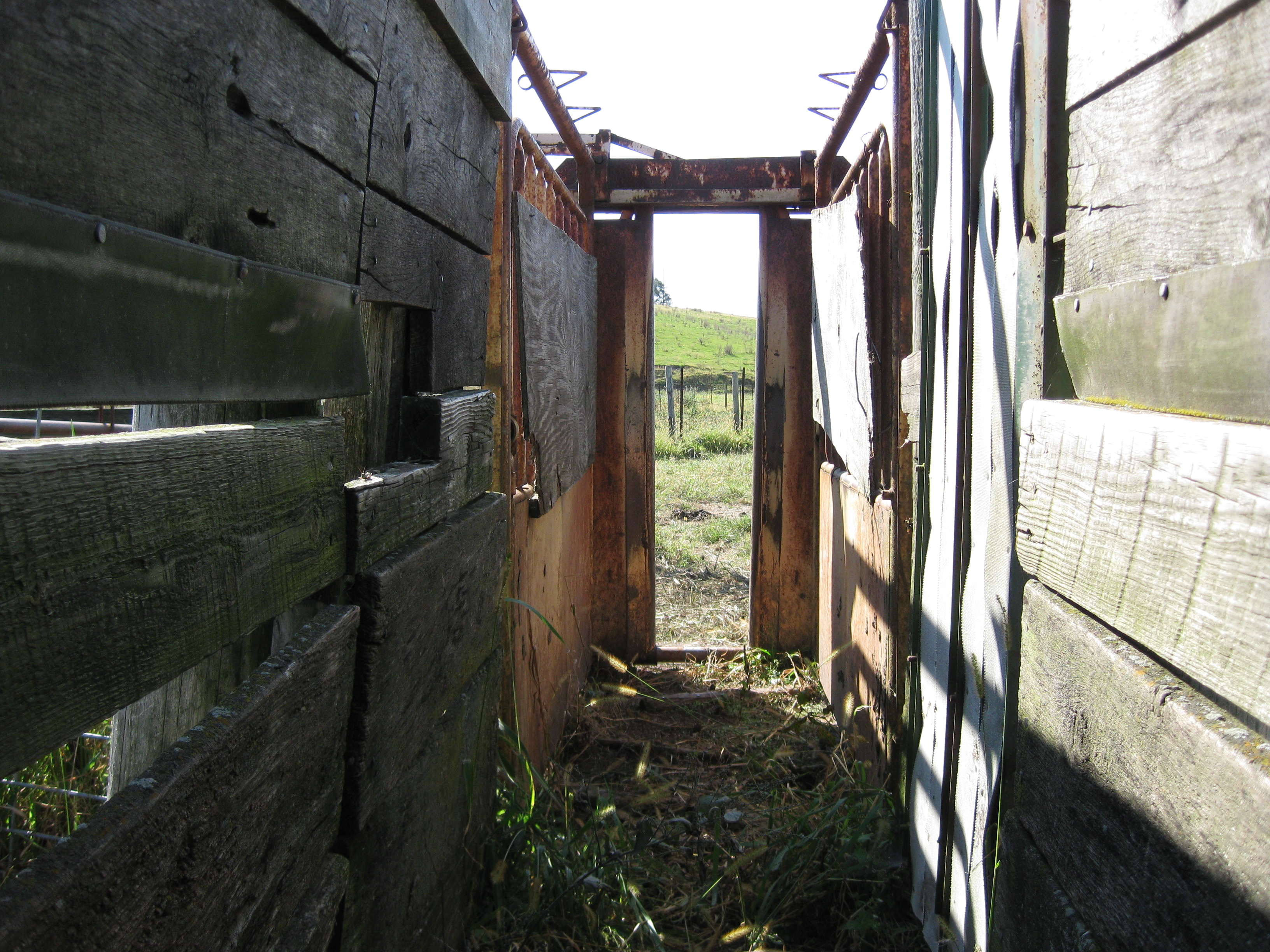
Below is a view down the alleyway leading to the catch-chute.


Finished Corn Harvest

October 13, 2010

Contour strips before corn harvest. Other pictures of these strips are here, here, and here.

We finished harvesting corn, October 7th.  We think that is an early record.  It was dry, 16% moisture.  That is also a record.

What a difference a year makes.  Last growing season was so cool, the corn never dried below 23% in the field.

Every year is different.  If I live to a typical age, I probably only have about 50 growing seasons.  Each is special.


Swarm of Bees

October 1, 2010

Swarm of bees in a tree in the yard, earlier this summer.  This is only the third time I have seen a swarm.  I got close to snap this picture, because I have heard that swarming bees are not aggressive.  If they noticed me, I couldn’t tell.

I looked up swarming bees on Wikipedia.  When a hive becomes large enough to make new queens,  the old Queen leaves with about 60% of the worker bees.  They spend a few days scouting out new locations for their hive.

I thought about trying to capture the swarm in a box, and starting my own apiary.  By the time I  worked up my courage, they had flown away.


Versatile Hoop Buildings

September 25, 2010

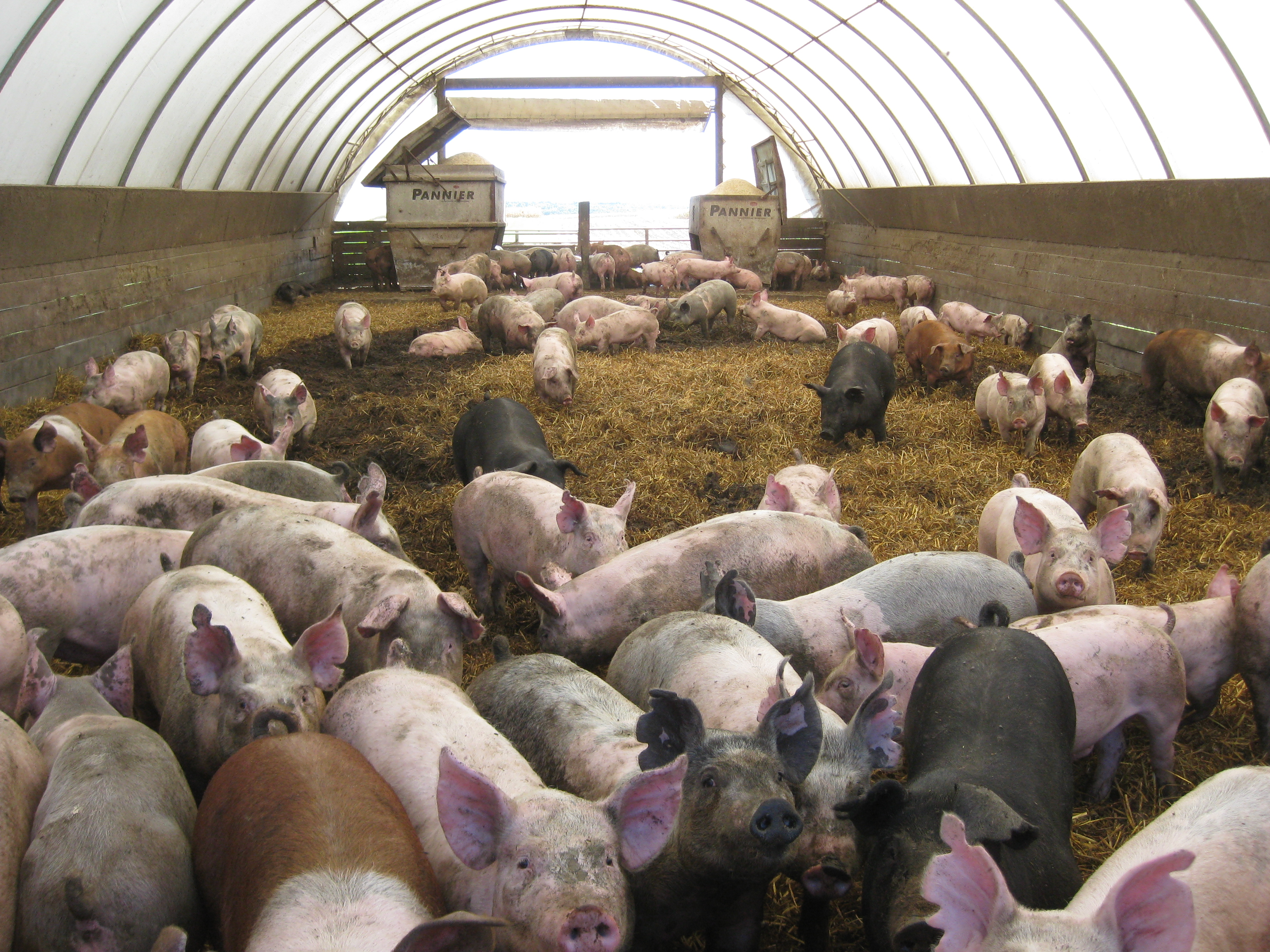
Hogs in a hoop building.  This is the typical and intended use of the hoop buildings on our farm.

Hoop buildings are a single-arch structure covered with a tarp-like material that is stronger than a typical greenhouse.  They are an economical and efficient way to raise hogs.

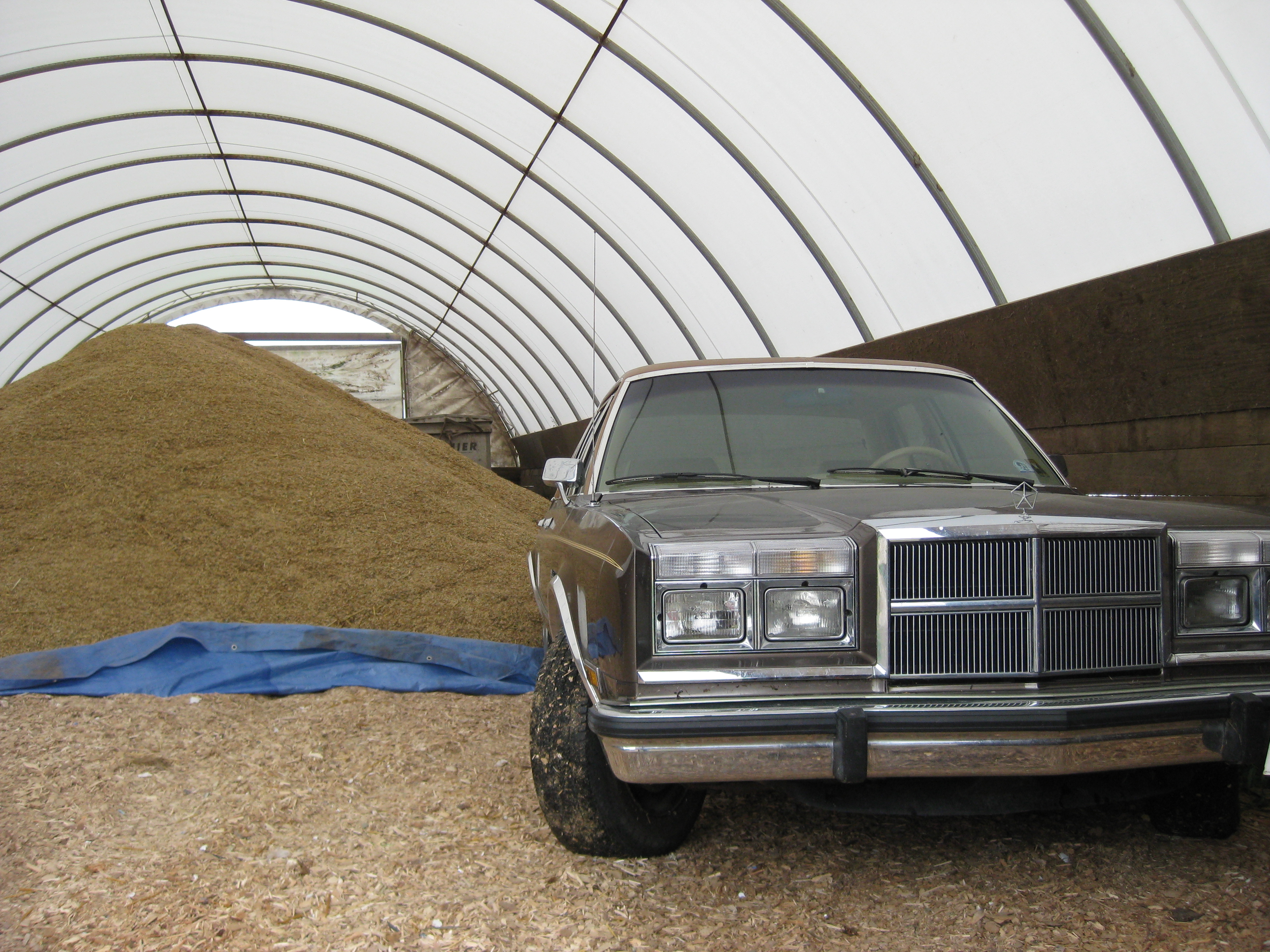
Another draw is their versatility.  They make great storage for machinery, hay, or even grains.

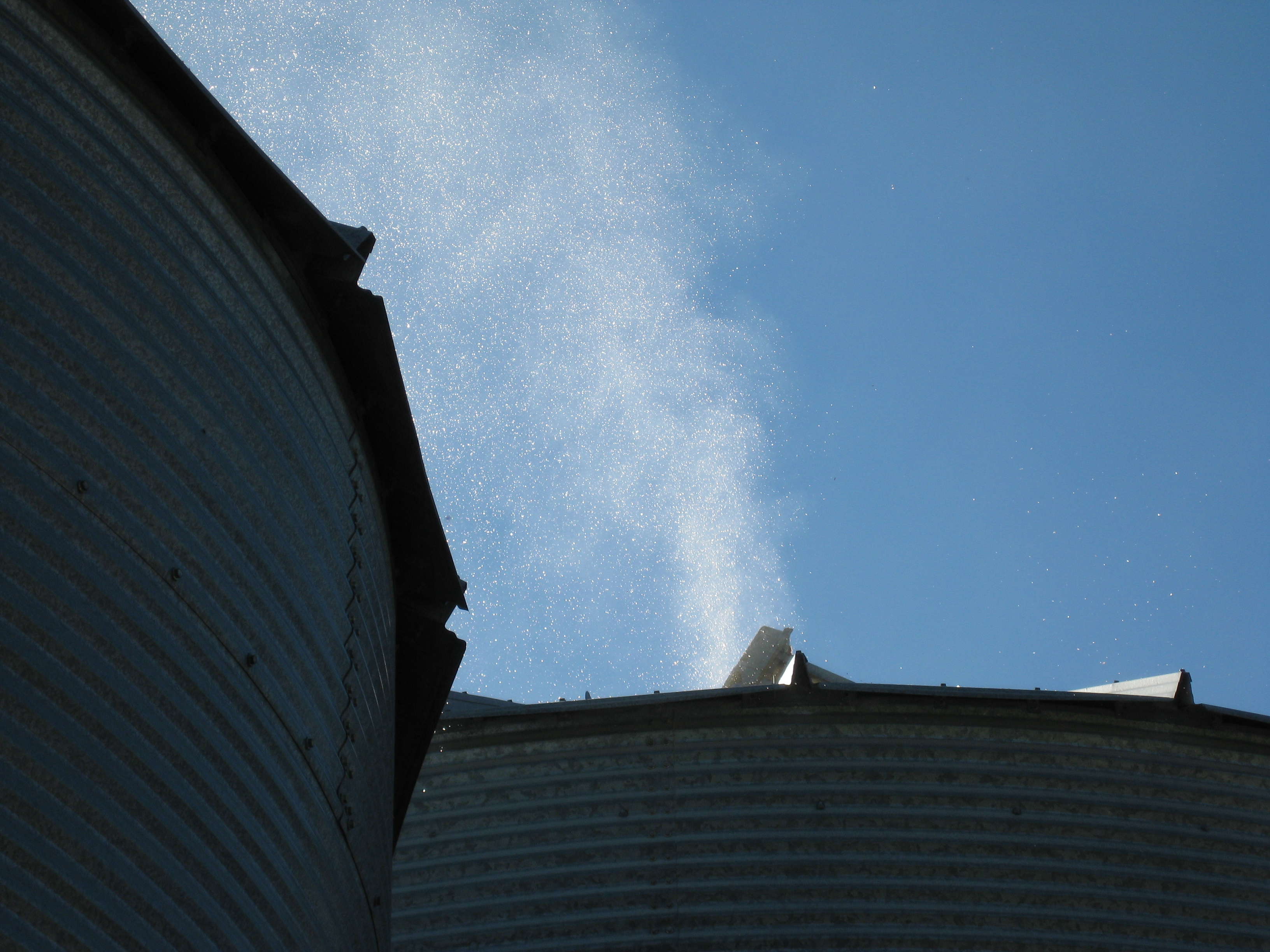
We had an excellent oat crop this year and needed to make room for corn in our bins.  We put a tarp down to keep the ground underneath dry, then we augered the oats into the building.

I like how the stream of oats undulates, as it falls.  Below is a picture of the mountain of oats after we finished.


Car For Sale

September 18, 2010

I’m selling my 1987 Dodge Diplomat.  It doesn’t have shoulder restraint seat-belts in the backseat, hence, not safe enough for the boys.

I have owned two Plymouth GranFury cars before this.  They are basically the same car, with the same, .318, V8 engine.

Now I drive a four-wheel drive, GMC Jimmy.  It’s more practical for family and farm, but I’m going to miss the Diplomat.


Giant Foxtail, Hogs in the Mist

August 20, 2010

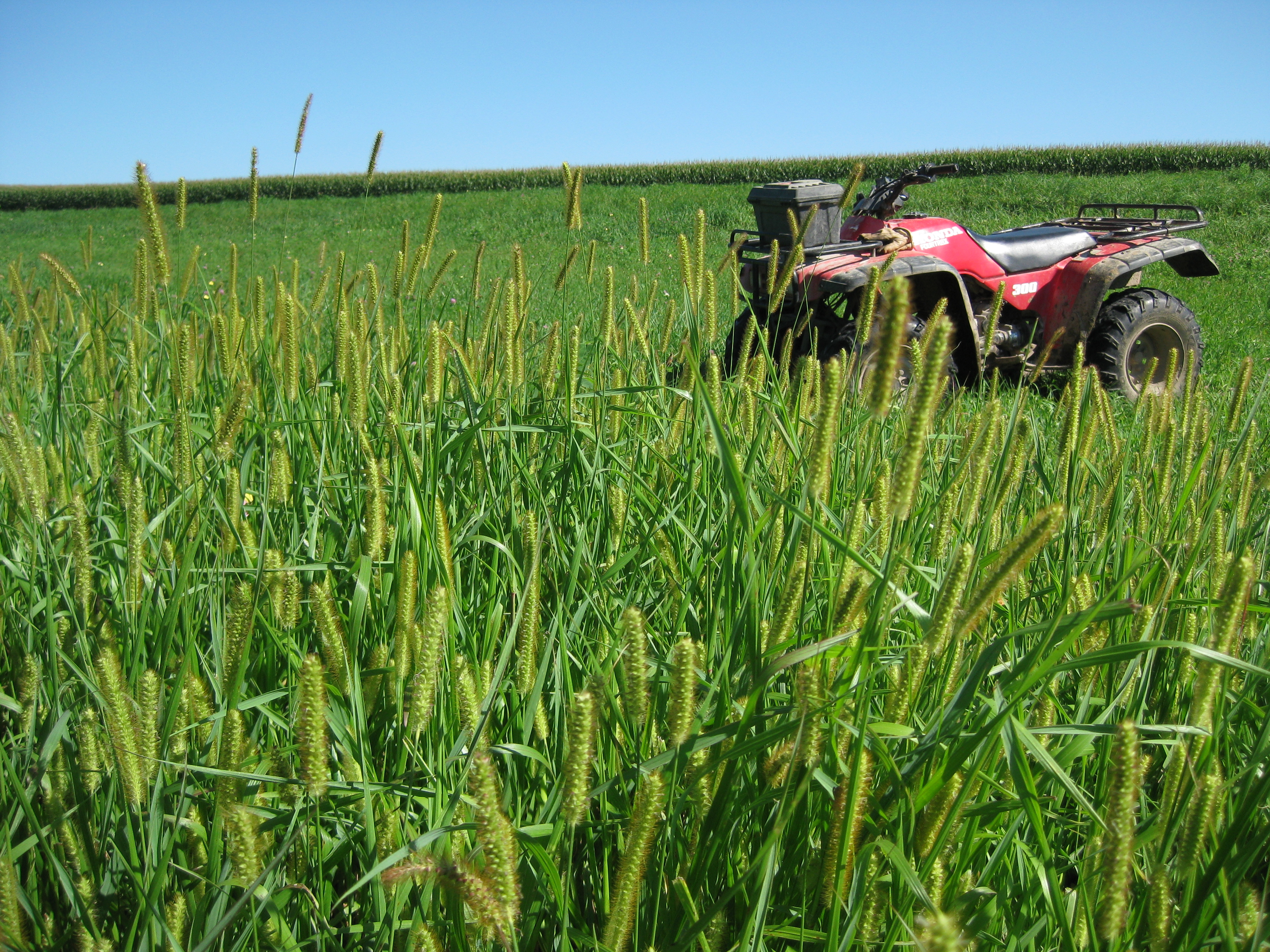
Giant Foxtail, (Setaria faberi).

Giant Foxtail is an invasive weed from Asia that we have entirely too much of on our farm.  It prefers high ph soils that have been compacted.  Our soil, mere feet above a limestone base, is consistently neutral to alkaline.  This picture was taken where the cows compacted the soil, last march.

I had some hogs in what I thought was a secure pasture.  I was encouraged, because they were nibbling on the foxtail, as well as the other grasses and forbs.  If hogs would eat it, maybe I could tolerate it.

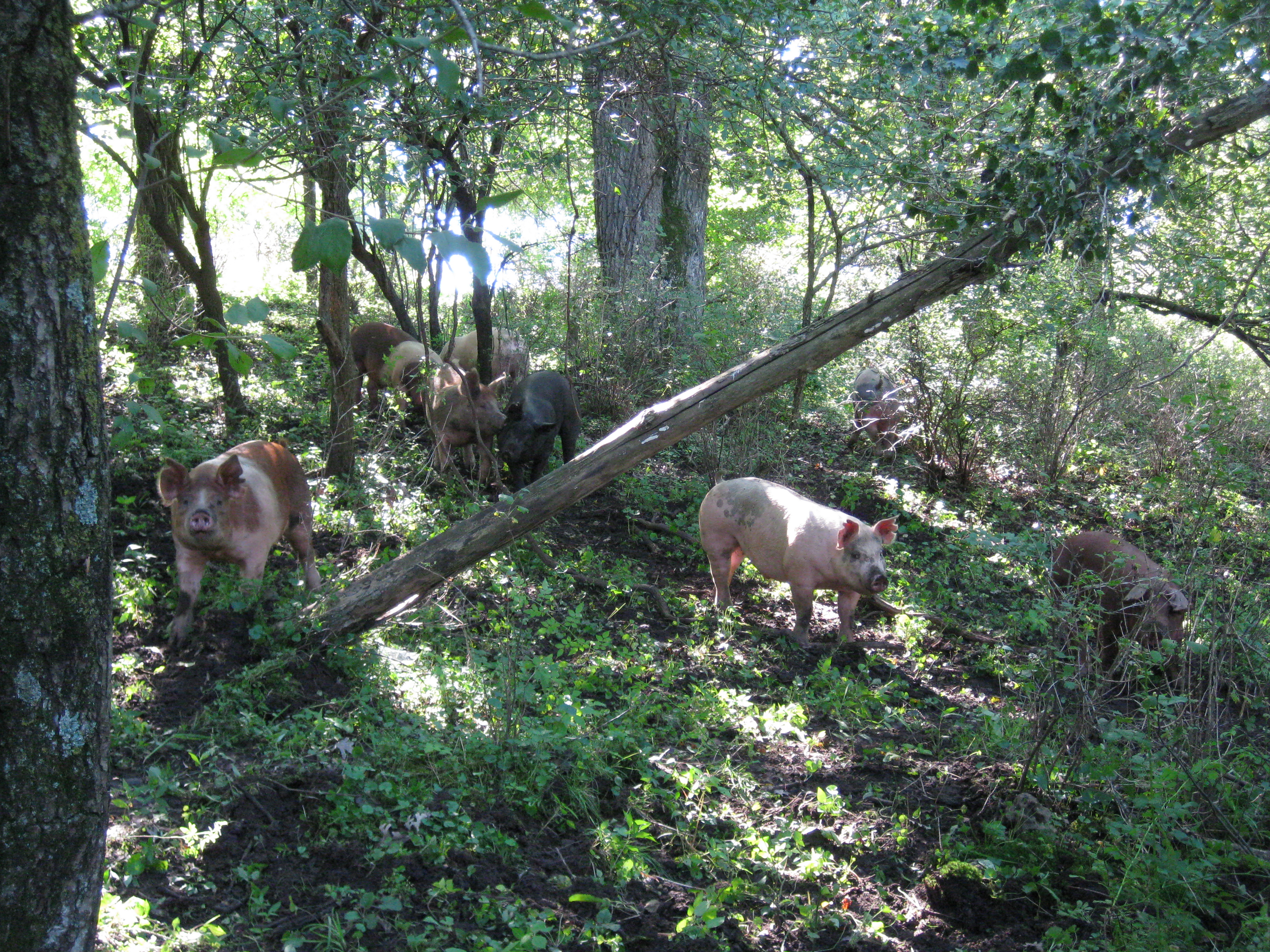
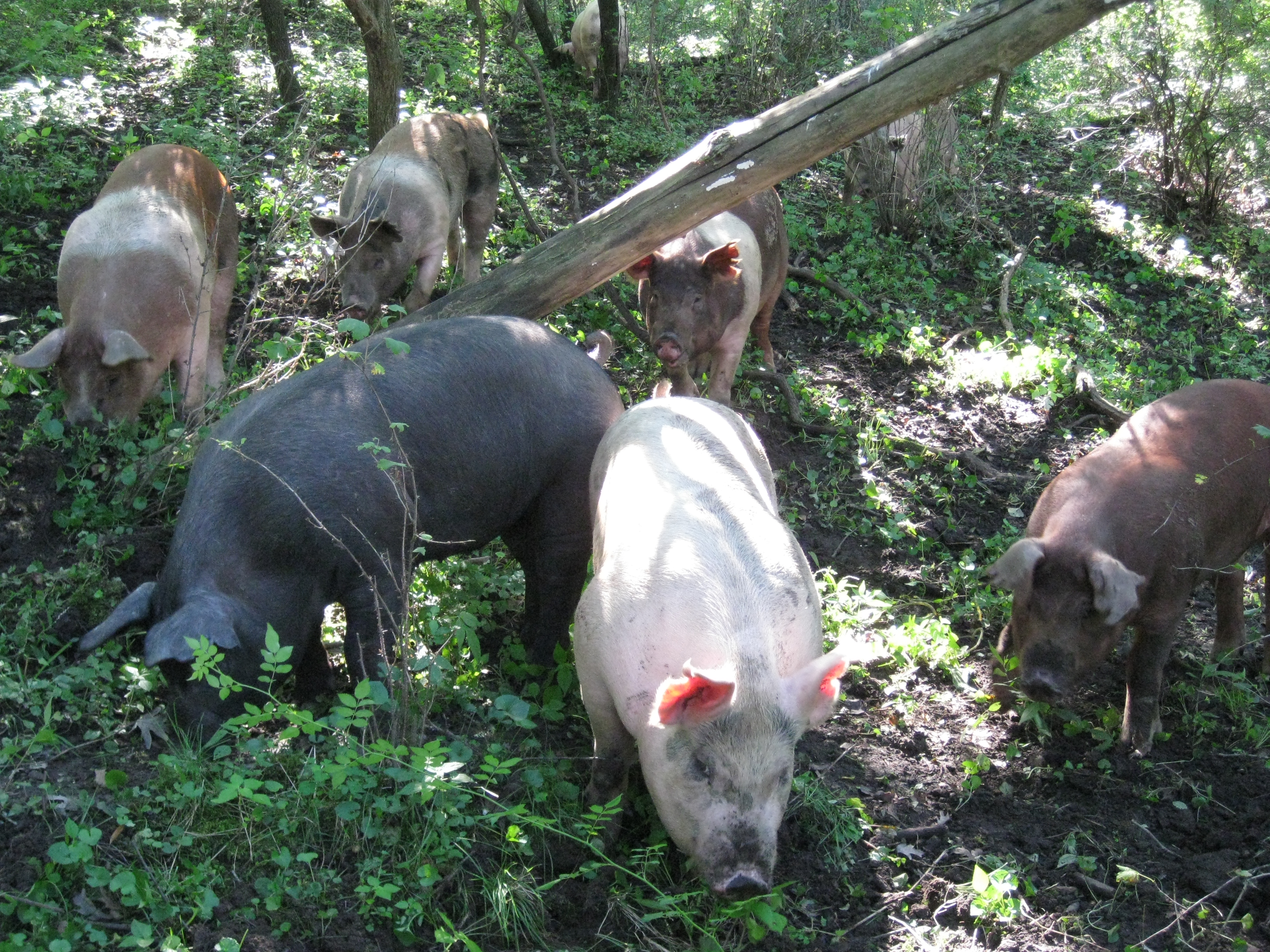
Unfortunately, one morning I found a gate popped off its hinges and some of the pigs gone.  I locked up the other pigs and set off into the woods looking for them.  This is what I found.

I felt like Dian Fossey, the first time she observed gorillas in the wild.  Hogs like hoop buildings and alfalfa/grass pastures, but they love the woods.

But alas, the fence surrounding this woods is not hog-secure, and I’m not going to be known as the farmer who introduced wild hogs to Lafayette County, so I herded them back to their pen.

Wild hogs are nothing but trouble.  A guy released some in Crawford County, Wisconsin and they survived the Wisconsin winter and have become a real problem.

But I like the idea of fattening hogs on apples and acorns.  Joel Salatin does it. Why can’t I?