Finished Corn Harvest

October 13, 2010

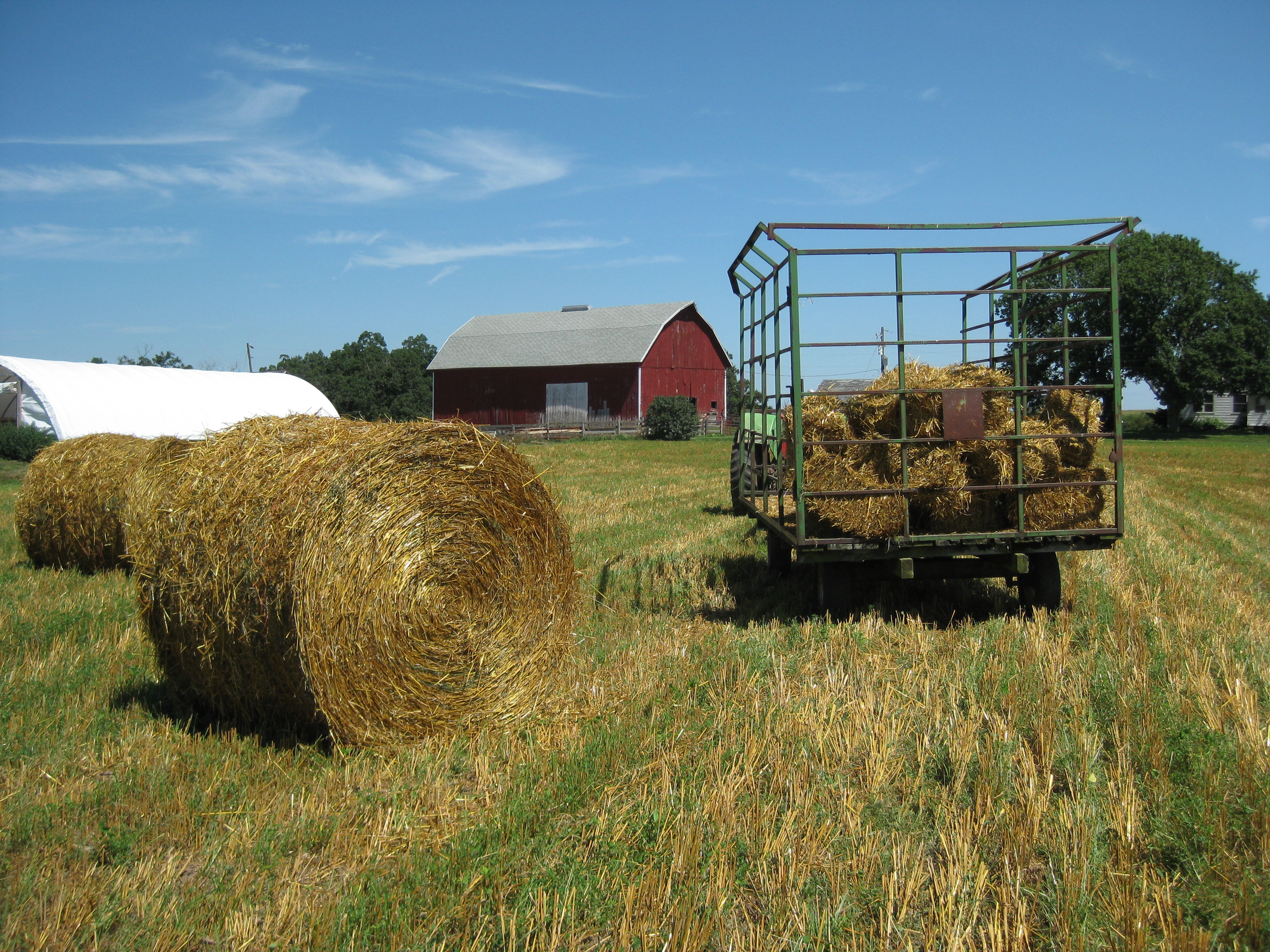
Contour strips before corn harvest. Other pictures of these strips are here, here, and here.

We finished harvesting corn, October 7th.  We think that is an early record.  It was dry, 16% moisture.  That is also a record.

What a difference a year makes.  Last growing season was so cool, the corn never dried below 23% in the field.

Every year is different.  If I live to a typical age, I probably only have about 50 growing seasons.  Each is special.


Swarm of Bees

October 1, 2010

Swarm of bees in a tree in the yard, earlier this summer.  This is only the third time I have seen a swarm.  I got close to snap this picture, because I have heard that swarming bees are not aggressive.  If they noticed me, I couldn’t tell.

I looked up swarming bees on Wikipedia.  When a hive becomes large enough to make new queens,  the old Queen leaves with about 60% of the worker bees.  They spend a few days scouting out new locations for their hive.

I thought about trying to capture the swarm in a box, and starting my own apiary.  By the time I  worked up my courage, they had flown away.


Versatile Hoop Buildings

September 25, 2010

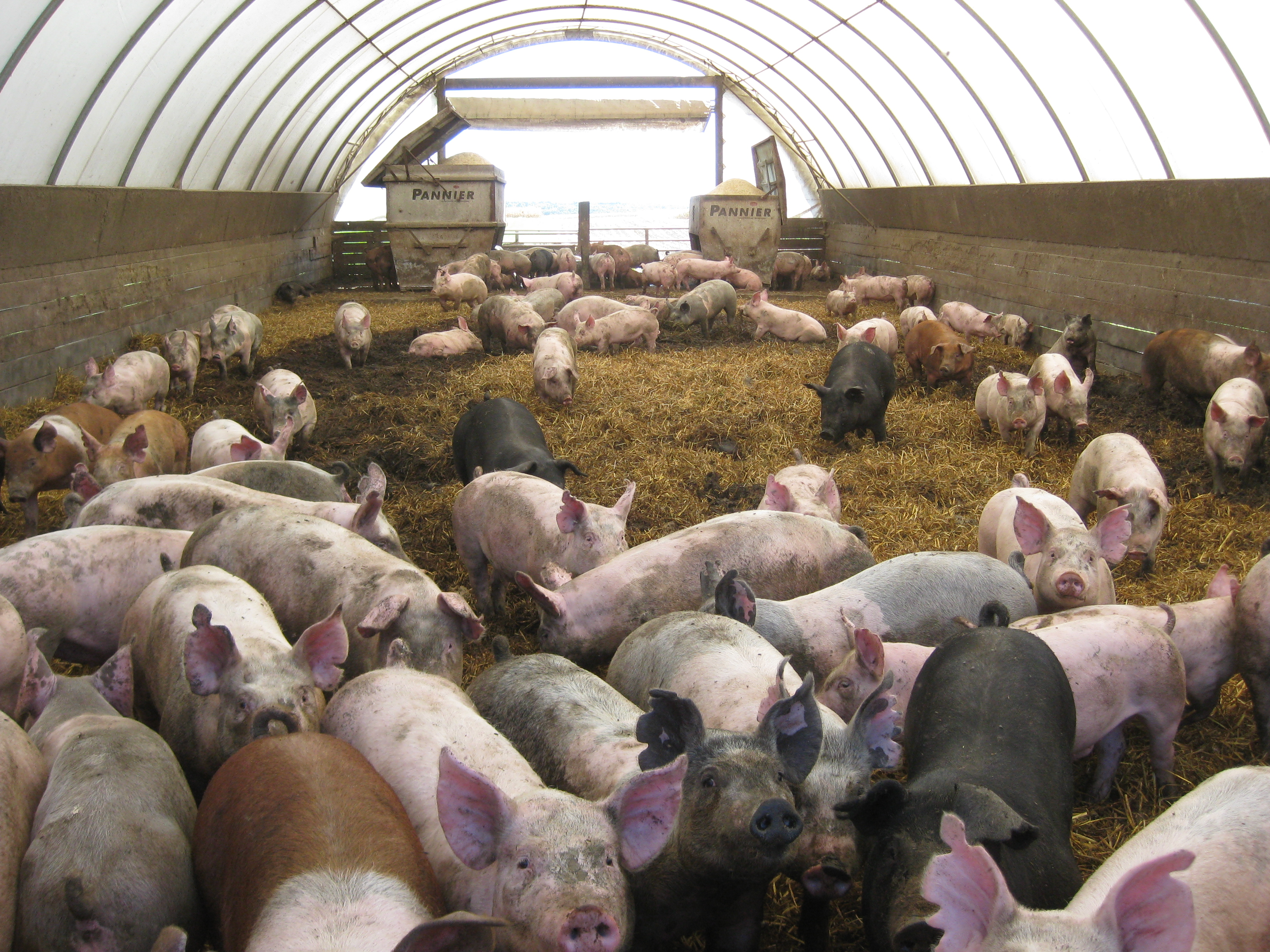
Hogs in a hoop building.  This is the typical and intended use of the hoop buildings on our farm.

Hoop buildings are a single-arch structure covered with a tarp-like material that is stronger than a typical greenhouse.  They are an economical and efficient way to raise hogs.

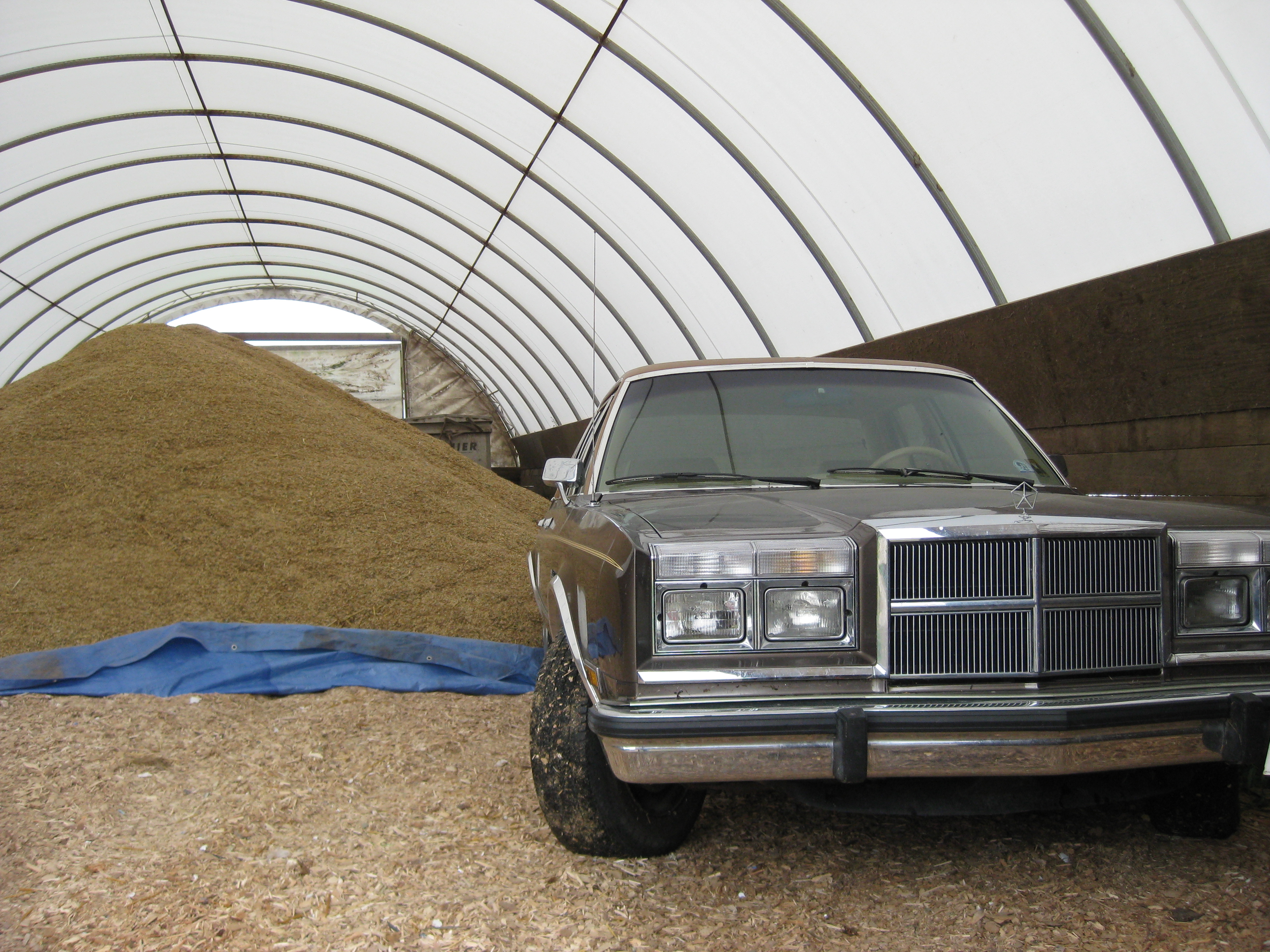
Another draw is their versatility.  They make great storage for machinery, hay, or even grains.

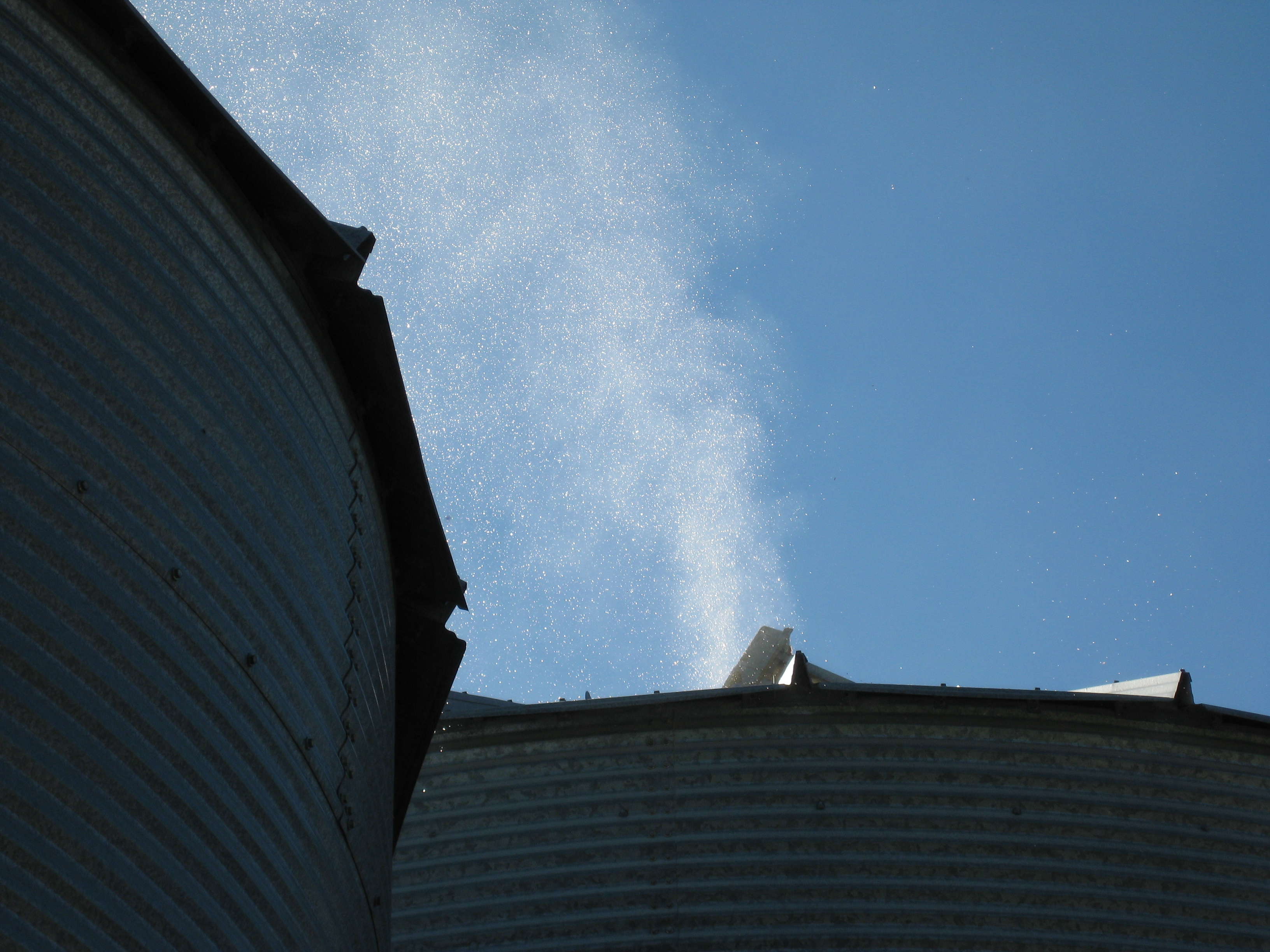
We had an excellent oat crop this year and needed to make room for corn in our bins.  We put a tarp down to keep the ground underneath dry, then we augered the oats into the building.

I like how the stream of oats undulates, as it falls.  Below is a picture of the mountain of oats after we finished.


Car For Sale

September 18, 2010

I’m selling my 1987 Dodge Diplomat.  It doesn’t have shoulder restraint seat-belts in the backseat, hence, not safe enough for the boys.

I have owned two Plymouth GranFury cars before this.  They are basically the same car, with the same, .318, V8 engine.

Now I drive a four-wheel drive, GMC Jimmy.  It’s more practical for family and farm, but I’m going to miss the Diplomat.


Giant Foxtail, Hogs in the Mist

August 20, 2010

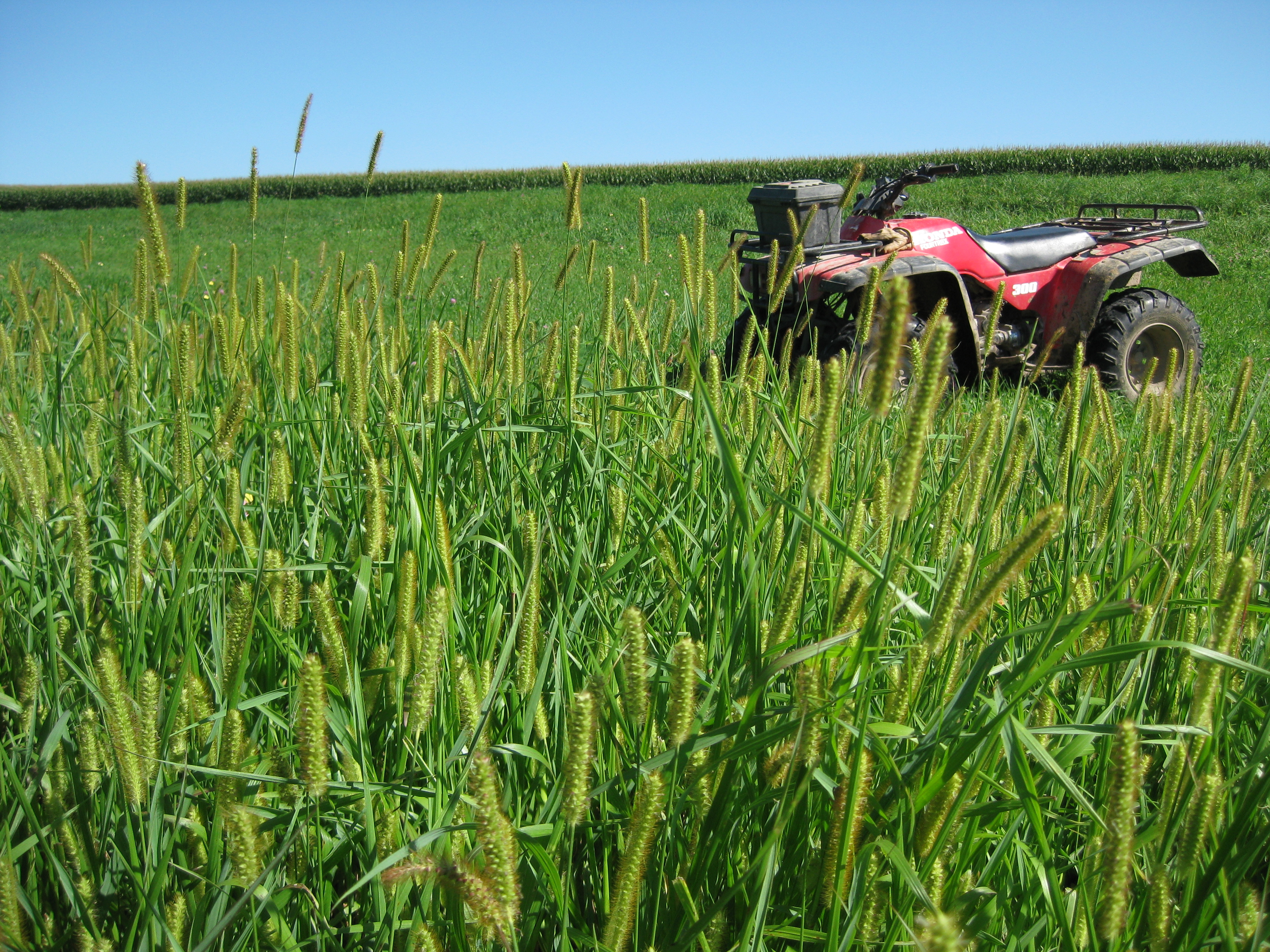
Giant Foxtail, (Setaria faberi).

Giant Foxtail is an invasive weed from Asia that we have entirely too much of on our farm.  It prefers high ph soils that have been compacted.  Our soil, mere feet above a limestone base, is consistently neutral to alkaline.  This picture was taken where the cows compacted the soil, last march.

I had some hogs in what I thought was a secure pasture.  I was encouraged, because they were nibbling on the foxtail, as well as the other grasses and forbs.  If hogs would eat it, maybe I could tolerate it.

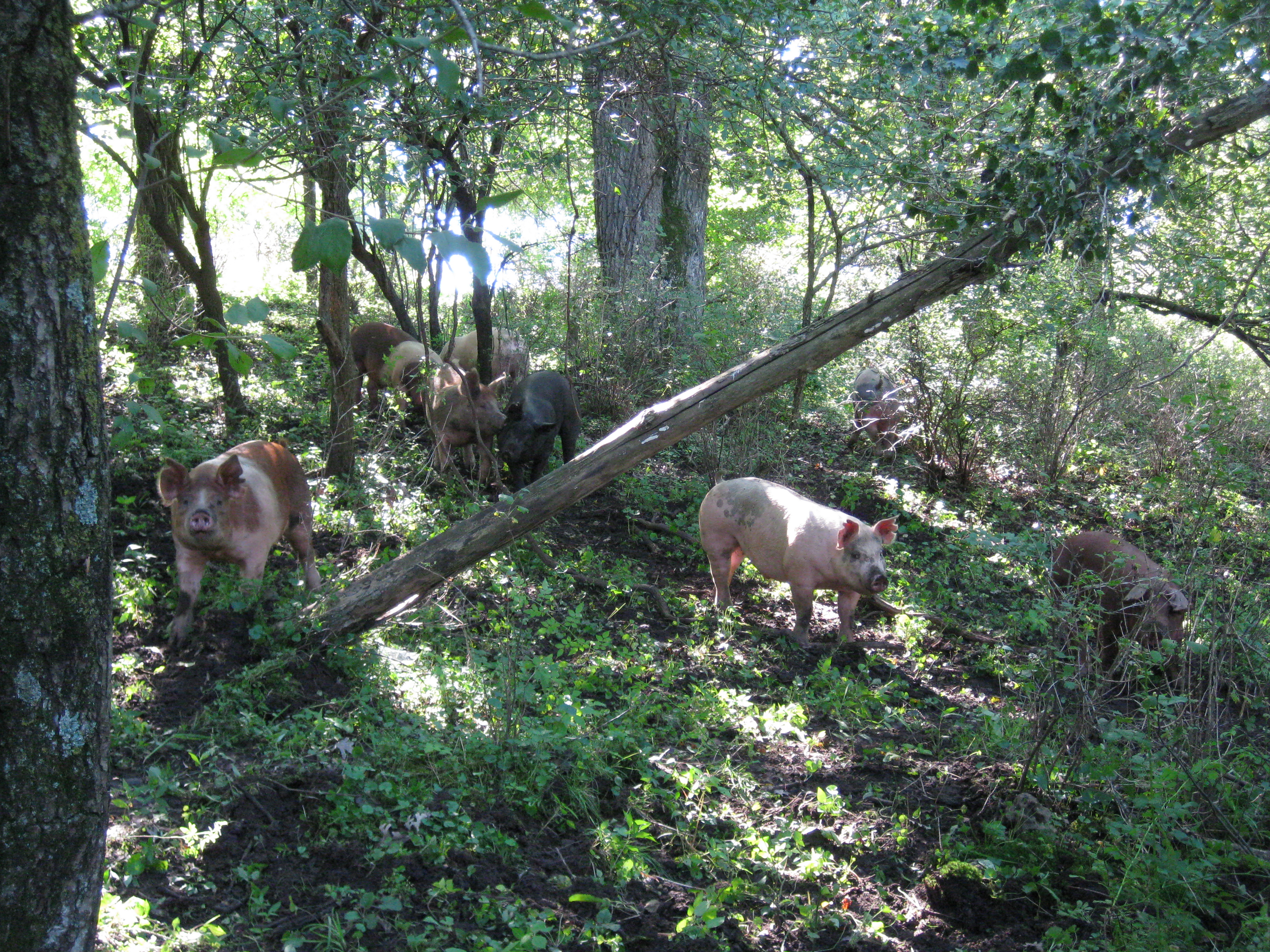
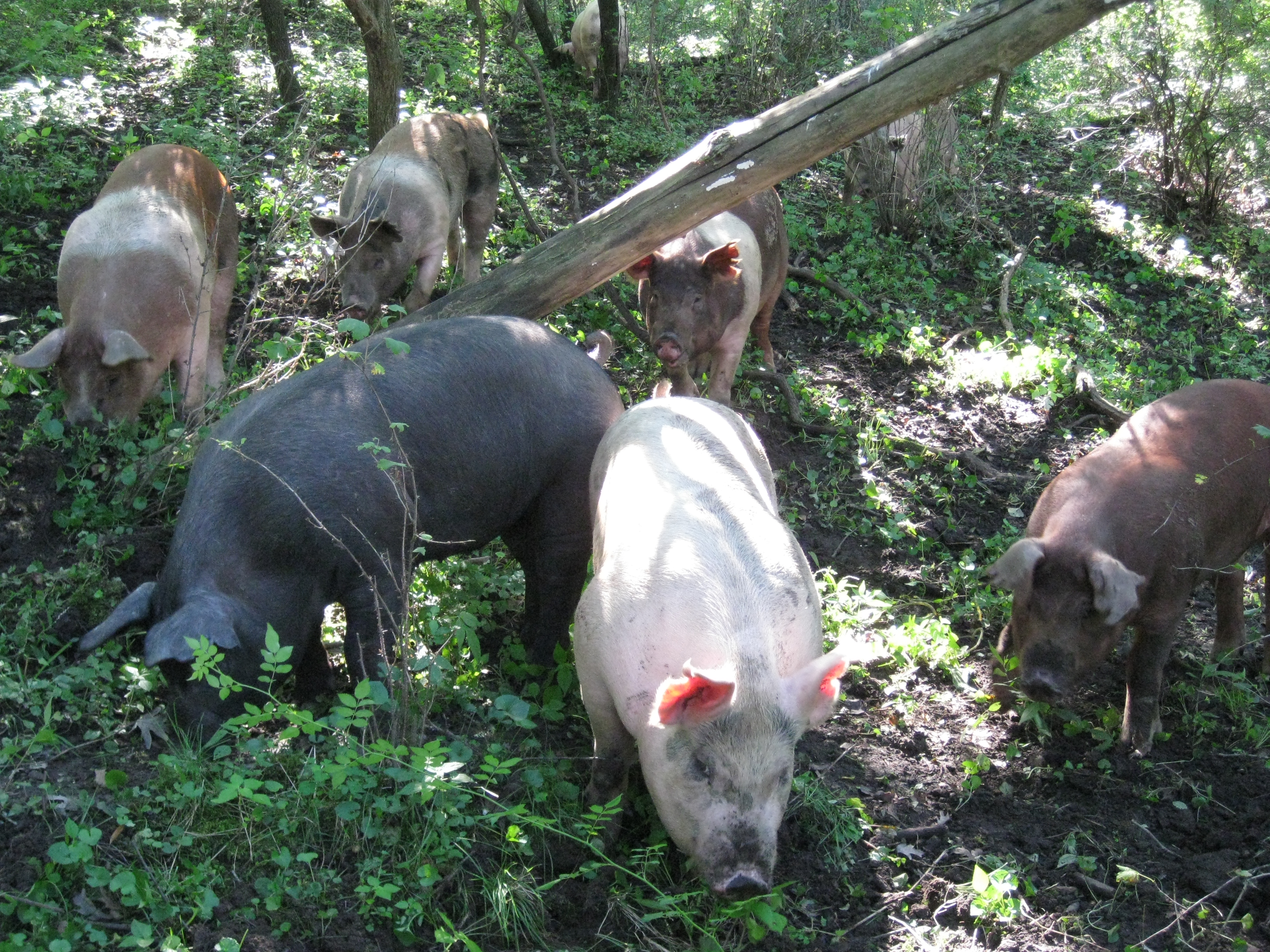
Unfortunately, one morning I found a gate popped off its hinges and some of the pigs gone.  I locked up the other pigs and set off into the woods looking for them.  This is what I found.

I felt like Dian Fossey, the first time she observed gorillas in the wild.  Hogs like hoop buildings and alfalfa/grass pastures, but they love the woods.

But alas, the fence surrounding this woods is not hog-secure, and I’m not going to be known as the farmer who introduced wild hogs to Lafayette County, so I herded them back to their pen.

Wild hogs are nothing but trouble.  A guy released some in Crawford County, Wisconsin and they survived the Wisconsin winter and have become a real problem.

But I like the idea of fattening hogs on apples and acorns.  Joel Salatin does it. Why can’t I?


New Hay Seeding With Oat Companion Crop

August 15, 2010

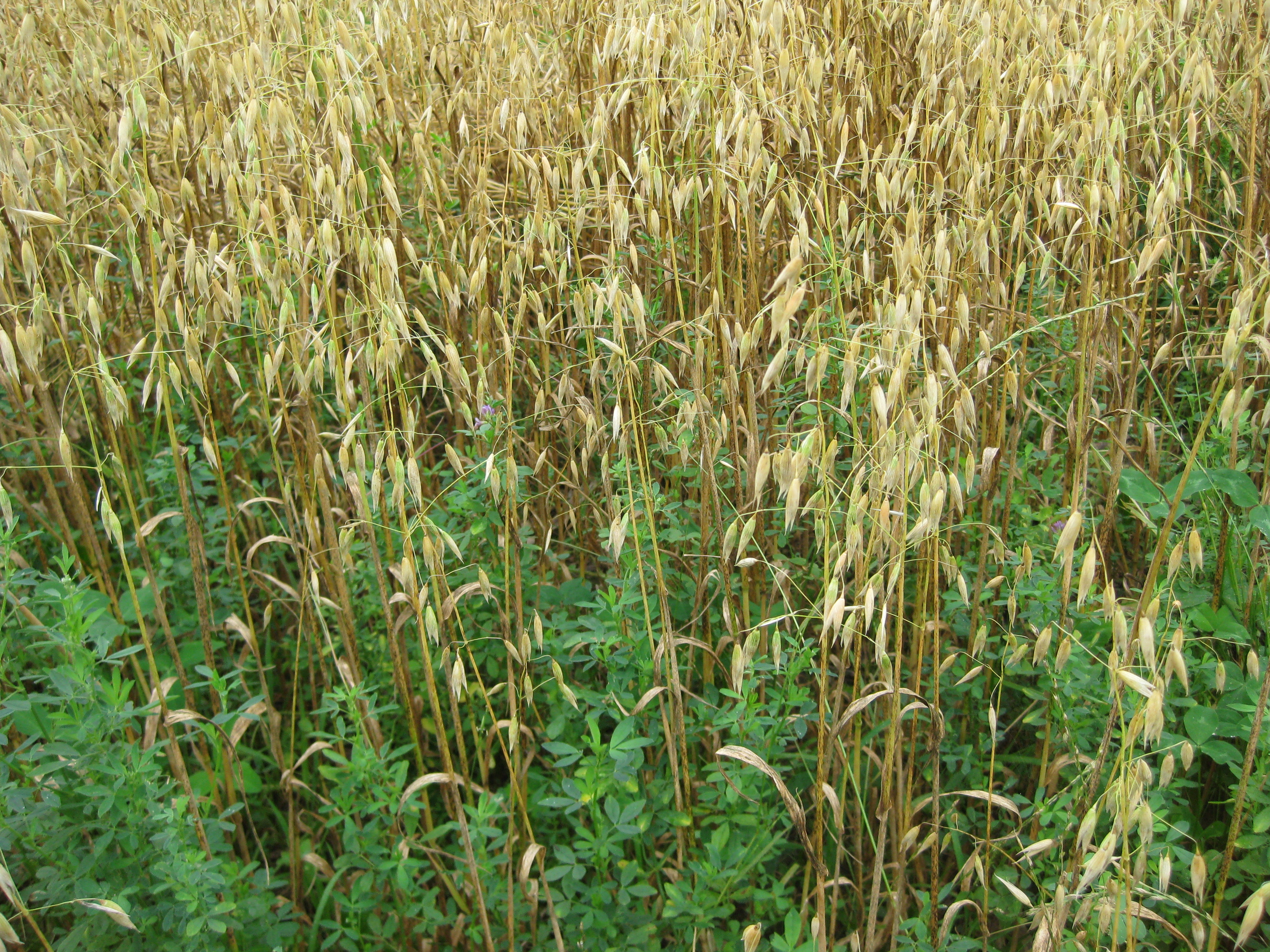
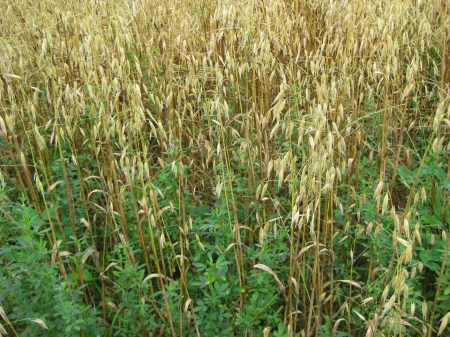
Oats and new hay seeding, early July.

I planted this field in early April.  I plant 2.5 bushels of oats, 10 lbs. of alfalfa, and assorted grasses.  Check out “2009 New Hay Seeding,” if you would like more detail.

We plant this mixture as soon as the ground is fit in early spring.  Oats are a fast starter and suppress any weeds that germinate.  The alfalfa and grasses are slow to start, but come on strong after the oats are harvested.

Many farmers are going away from planting a companion crop to their new hay seeding.  If the oats are not managed well, they may kill the new seeding.

Here are some tips we have found to prevent this.

1.  Spread no manure on the field during the preceding year.  My opinion is the nitrogen in the manure causes the oats to grow too tall and will lodge, (go down), as it matures.

2.  Plant an oat variety with strong standability.

3.  Plant an early-maturing oat variety.  The earlier the oats can be harvested, the better it is for the new seeding.

4.  If a field has had manure, or you feel the oats may lodge for any other reason, cut the oats as a forage crop in June.  This crop can be dried and baled, or ensiled.  It makes excellent feed for cattle.

We harvested our oats in late July and they will be mixed into the hog rations at an inclusion rate of 20-25%.  Gestation rations can include a higher amount of oats.

The straw will be dried and baled and used as bedding for hogs in the hoop buildings.

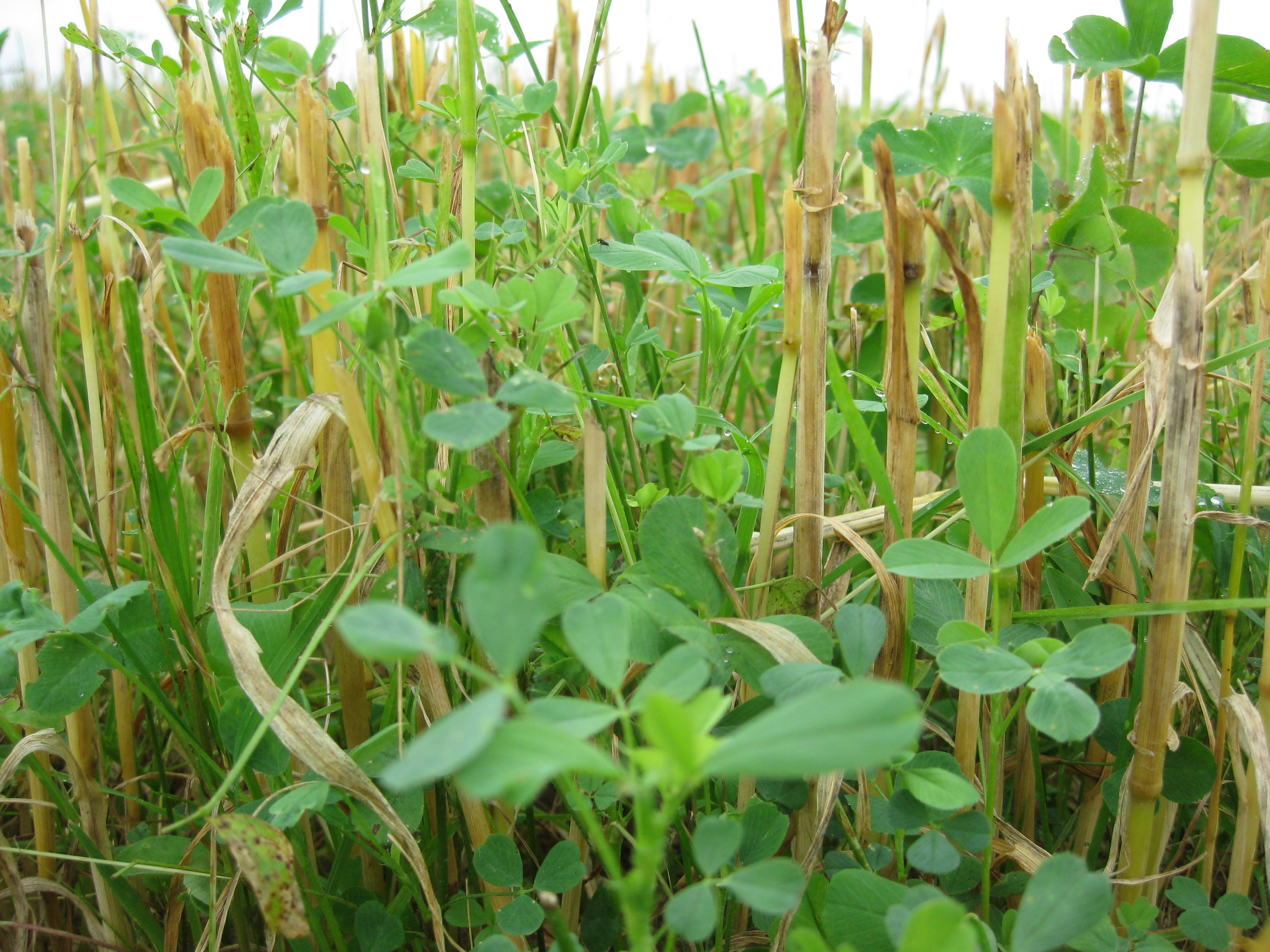
Oats can be an excellent companion crop for new hay seeding.  If everything goes well, look at the beautiful alfalfa, clover, and grasses, green and growing after the oats are harvested.


Breeding Season II: Problems

August 10, 2010

My early July post, “Breeding Season Starts”, was full of optimism.  We started breeding season with five, virile bulls, breeding 131 beautiful cows.  We now have one, extremely popular bull, with 131 cows.

The bull in the bottom of the picture above, “New Chapter”, fought with the other bulls instead of breeding the cows.  We took him to market after he hurt the other five-year-old bull, “New York.”  “New York” is refusing to rejoin the herd and is recovering his confidence in the back pasture.  “Red Direction” and “Judge” are lame and limping along with the herd.

But “Julius”, “Julius” is thriving!  Look at him in action!

Even though he’s busy, he still makes each cow feel special after he puts a kink in her tail.

We’ve kicked around some options to make sure the cows get bred.  We could take the yearling bulls out of the heifer pasture and put them with the cows.  We could buy bulls, but we may not find quality bulls on short notice.

We’ve decided to watch and wait.  We aren’t seeing many cows “in heat” now.  We think the bulls settled many of the cows during the first heat cycle.  A cow’s cycle is 21 days.  We are nearing the end of the 2nd heat cycle, so a decision needs to be made because the 3rd cycle is their last chance to get bred.  All cows that don’t breed are butchered.

We won’t know for sure what percentage of the cows are bred until November when a veterinarian pregnancy checks them.  I’ll let you know how we did, then.


Lafayette County Fair: Swine Ultrasound

August 6, 2010

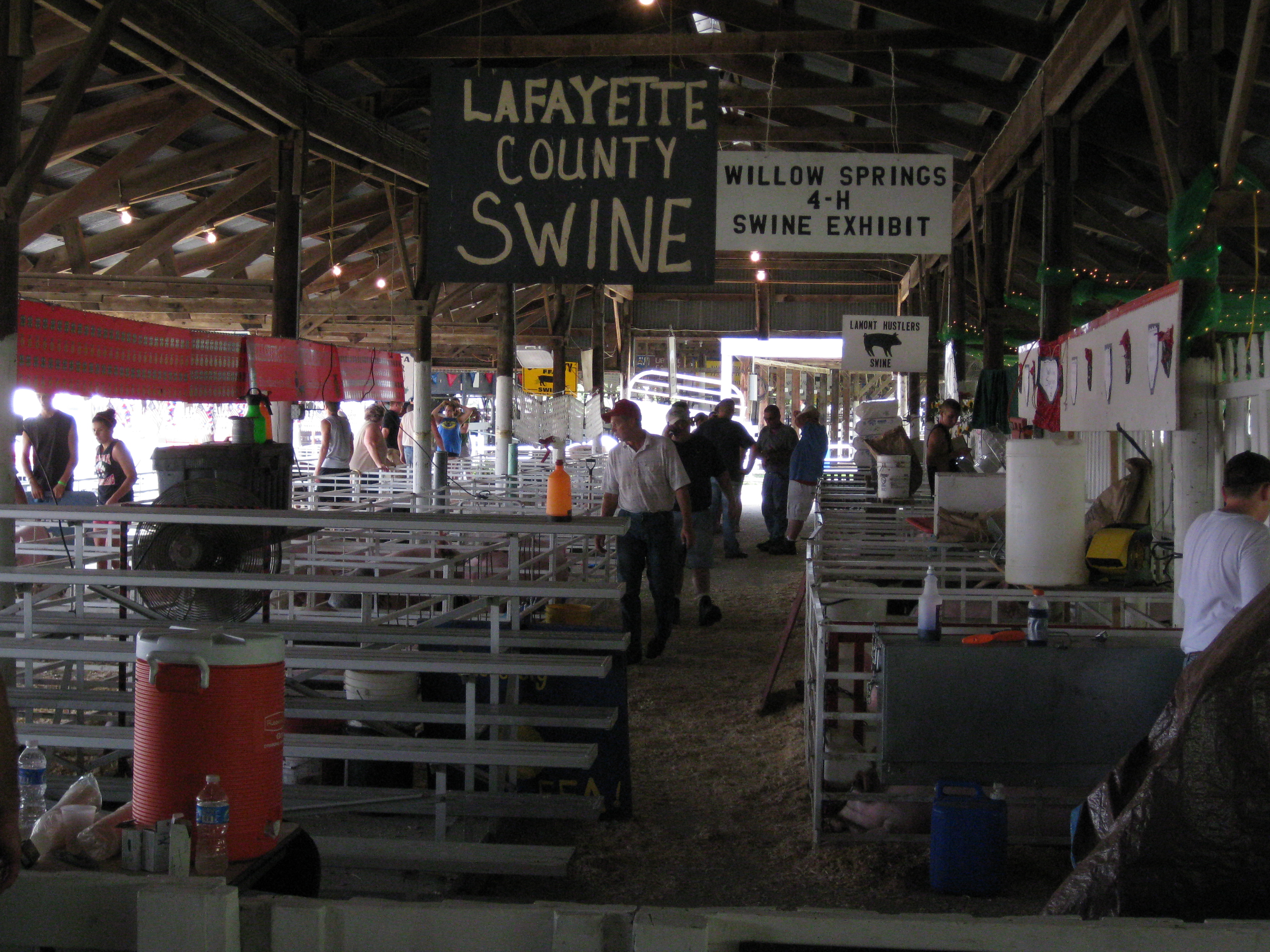
Swine barn, Lafayette County Fair.

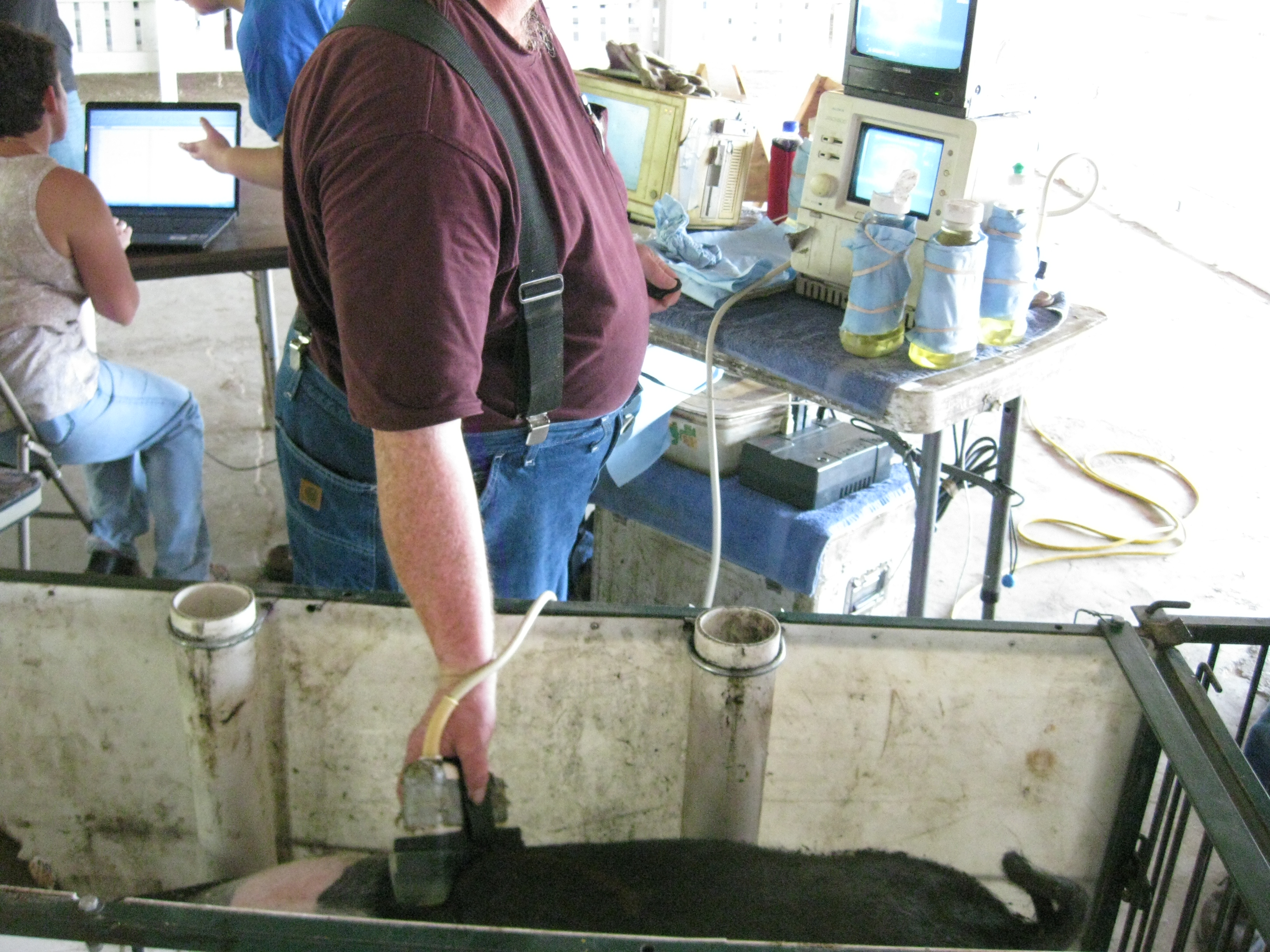
Because of my background as a certified swine ultrasound technician, the fair superintendent asked me to line-up a technician.  Ultrasound is used to evaluate a hog’s carcass.  Below is a picture of the technician with the probe on a hog’s back.  The information is entered into a computer and a formula is used to rank the hogs on percent lean.

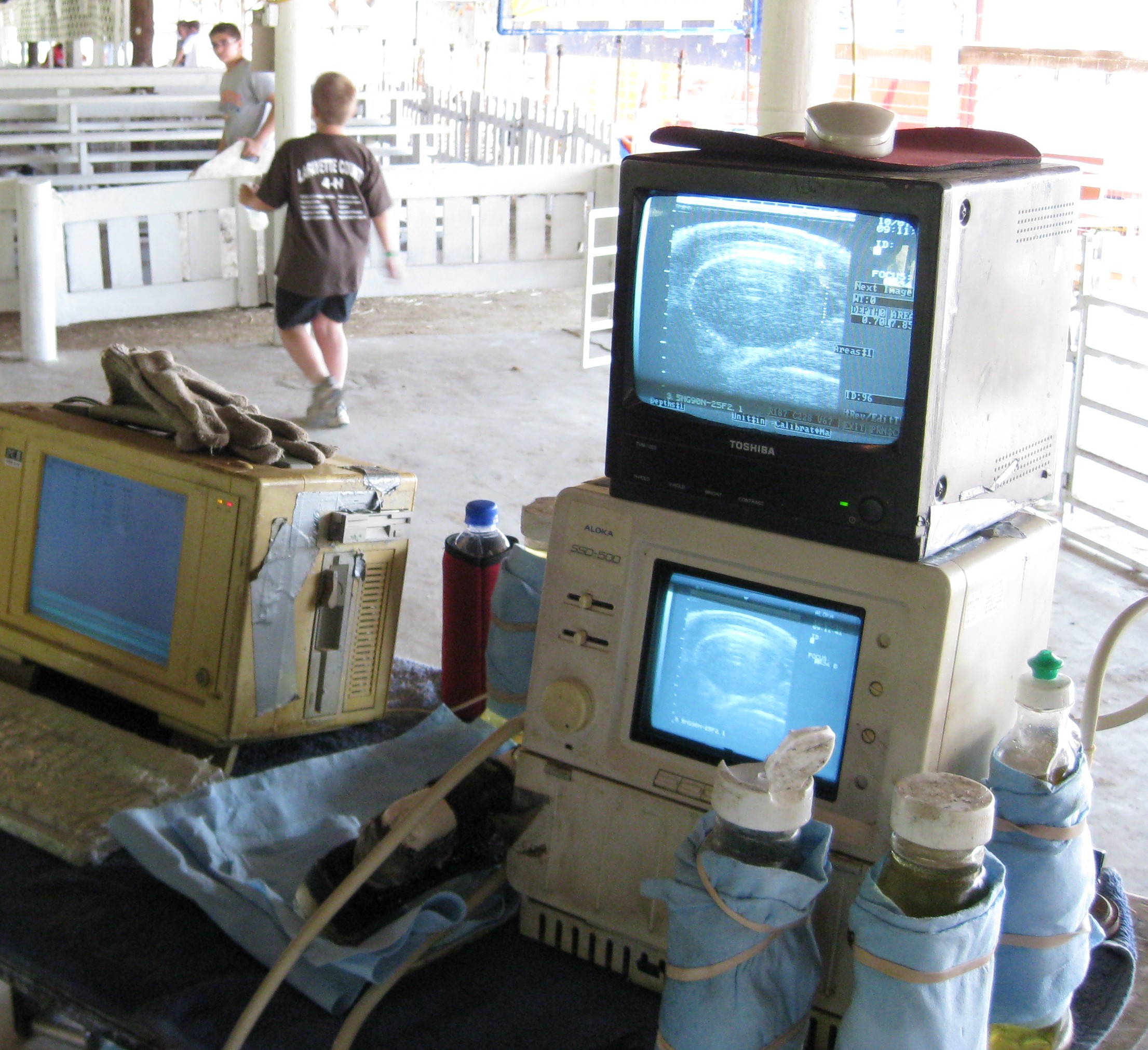
The measurements taken are backfat and loin muscle area.  These two statistics, along with the weight of the hog, are used in the percent lean formula.  Look at the screen in the picture below and see if you can see the layer of backfat above the roundish loin muscle area, (pork chop).  Also visible is a rib in the lower right-hand corner.

Even though I used to be an ultrasound technician, I miss the old days when we actually measured the carcass.  We would show our hog at the fair on Friday.  Sell it at the auction on Saturday.  Load it onto the trailer on Sunday.  And see it’s carcass hanging on the rail on Wednesday.

One summer my sister went to band camp and as introductions were made, each camper told what they had been doing this summer.  When it was my sister’s turn, she said, “I got a blue ribbon at the carcass show.”


Milkweed and Monarch Caterpillar

August 1, 2010

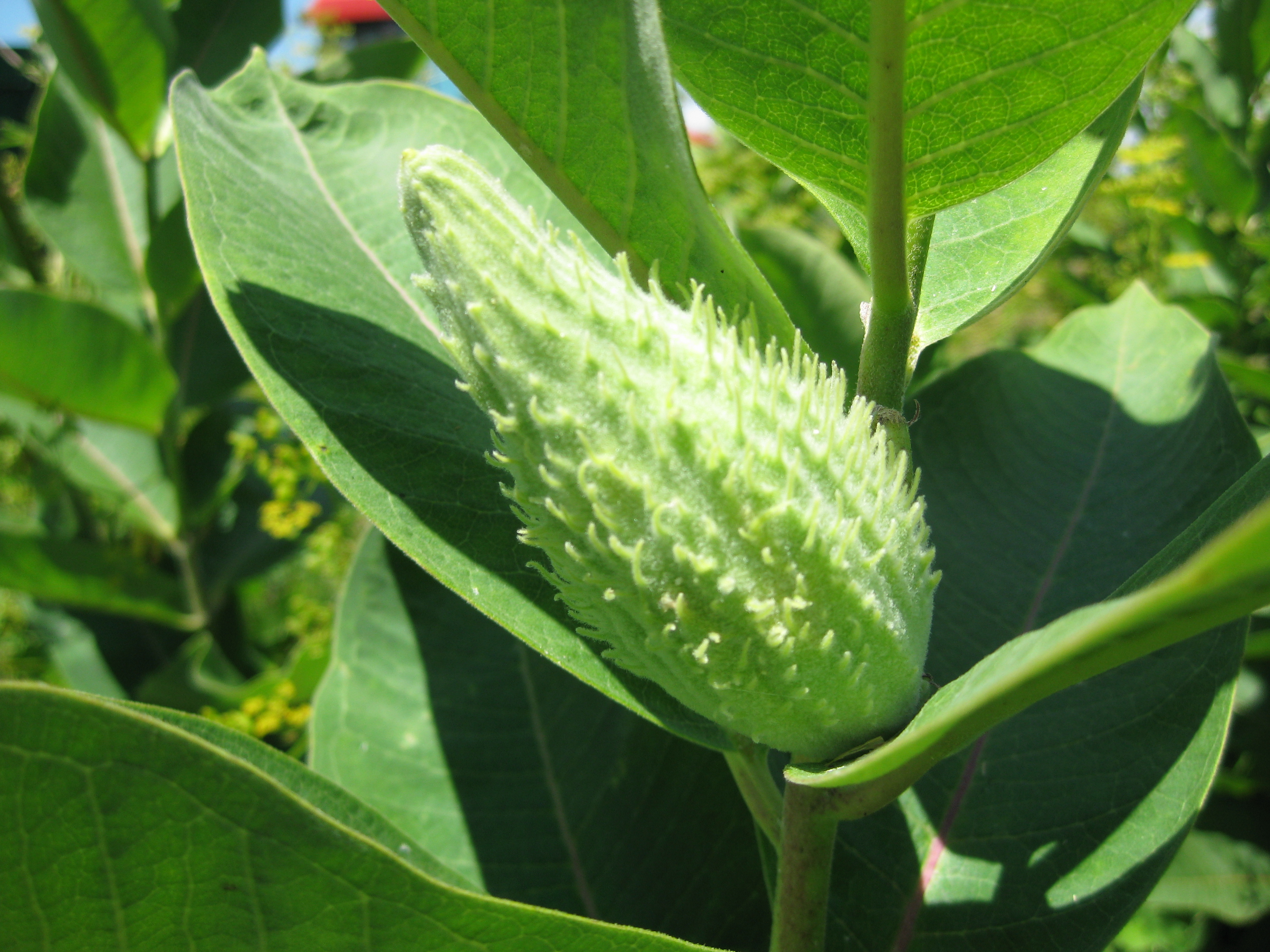
Common Milkweed (Asclepias syriaca) pod.

Milkweed is an incredible plant.  According to Sam Thayer, there are six vegetables available from Milkweed, (shoots, leafy tops, flower buds, flowers, immature pods, and white).  I’ve only eaten shoots, flower buds, flowers, and pods.  It’s fun to mark the summer season as one part of the plant goes out, and another comes in.

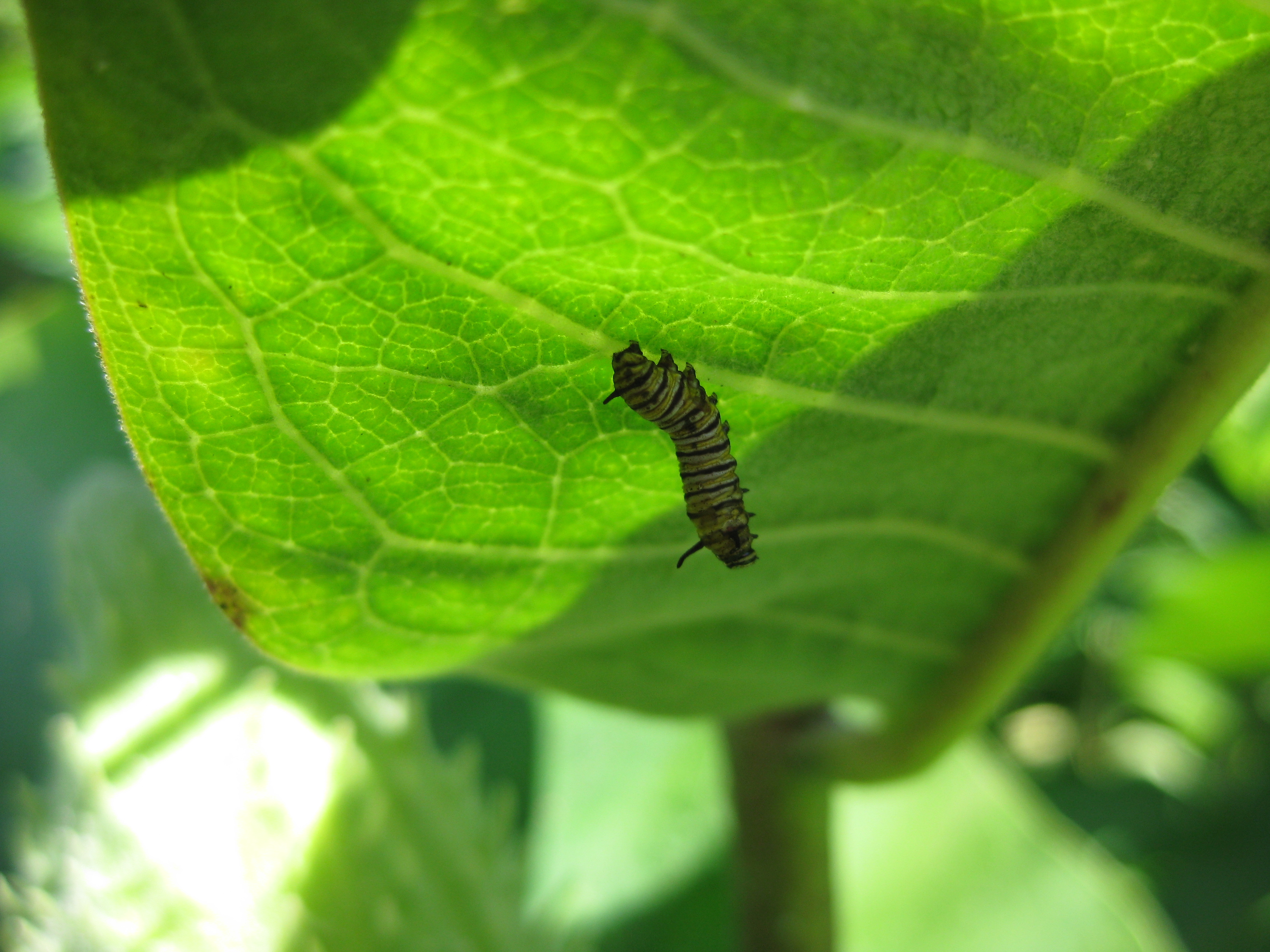
It’s also fun to look for monarch caterpillars (Danaus plexippus).  Look at the little guy in the picture below.

What an amazing life he is going to have.  All he does now is eat and poop.  Pretty soon he’ll form a chrysalis and take a nap for a fortnight.  Then he’ll crawl out and wait for the new things on his back to dry.  Then… fly!


Round and Square-Baling Straw

July 29, 2010

Baling square bales of straw.

After the oats are harvested with our combine, the straw dries in the field for a day or two and is raked into rows and baled.

Most of the straw is round-baled.  This is much easier than small square bales because all of the work is done mechanically.with round bales.  The round bales are used in the hoop buildings to bed the pigs.

We bale a couple of loads, (250 bales), of small square bales.  These bales are used to bed the sow shelters or to bed the trailer when we take animals to the butcher.

Square bales have to be unloaded by hand and stacked in the barn.  I always appreciate the round-baler more after finishing this job.