Found Frogs: Gray Tree Frog

May 8, 2010

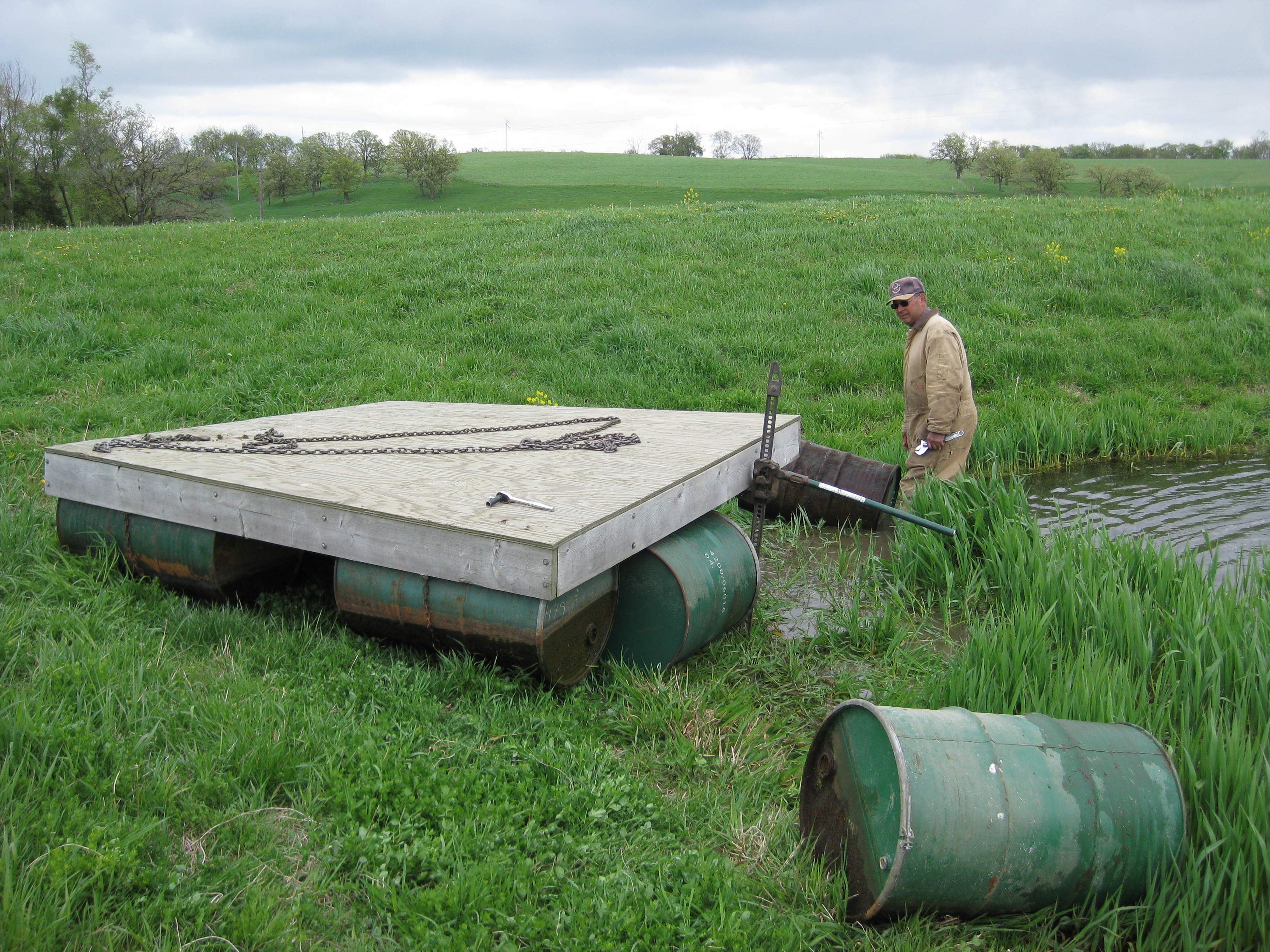
Two of the barrels under one corner of the raft were leaking.  We pulled it out of the pond with a tractor, jacked up the corner, unbolted the barrels, and paused, because we heard something.

“Wait a minute.  Do you hear that?  It sounds like frogs.”

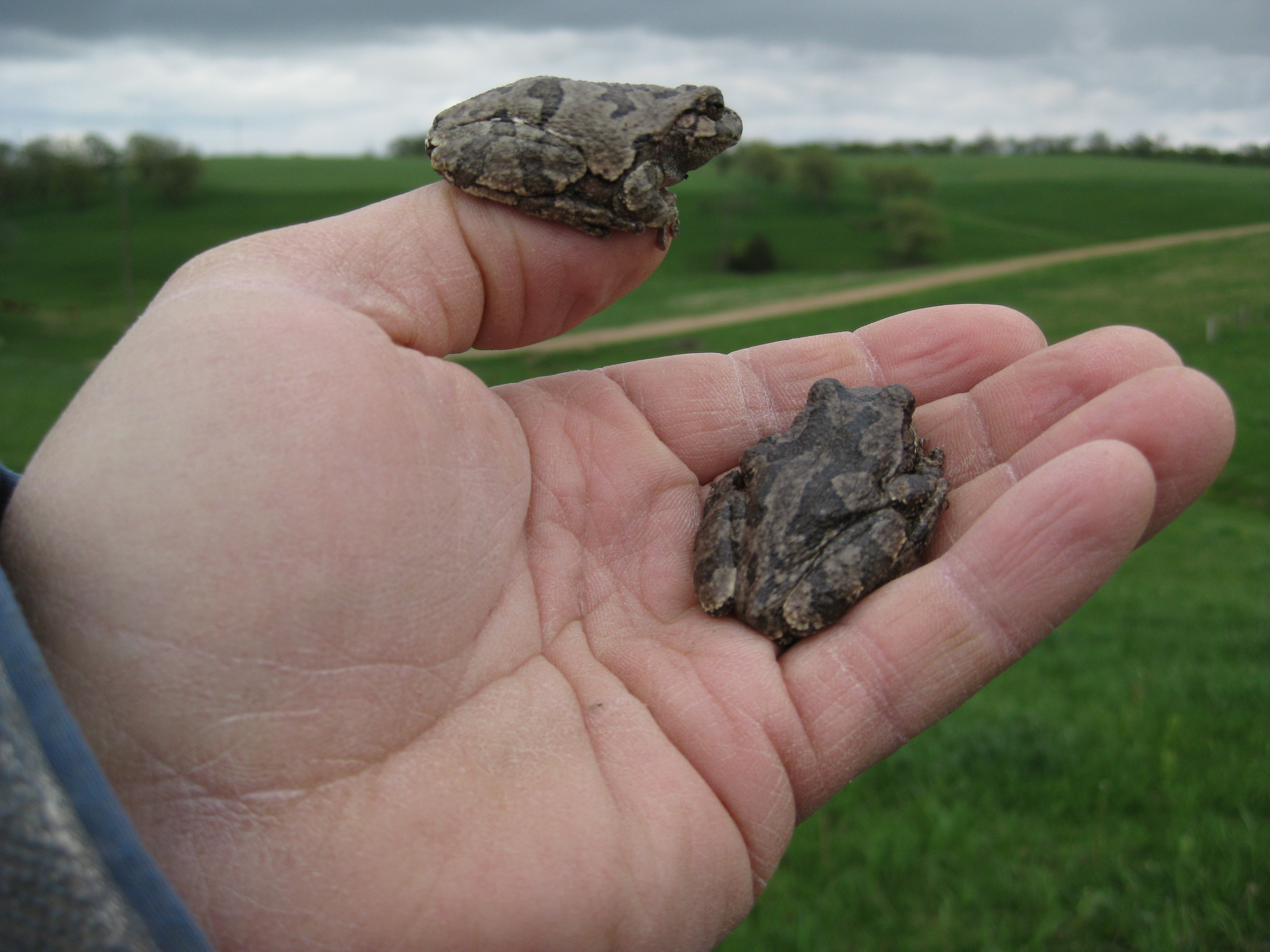
I kicked a barrel loose and two Gray Tree Frogs fell on the ground.  They must have climbed up onto the barrels underneath the raft. 

So now I’m thinking the frog eggs in the last post belong to the Gray Tree Frog. 


Toads and Frogs, Living and Loving

May 6, 2010

I love toads and frogs.  The first week of May always finds me searching for eggs and tadpoles. 

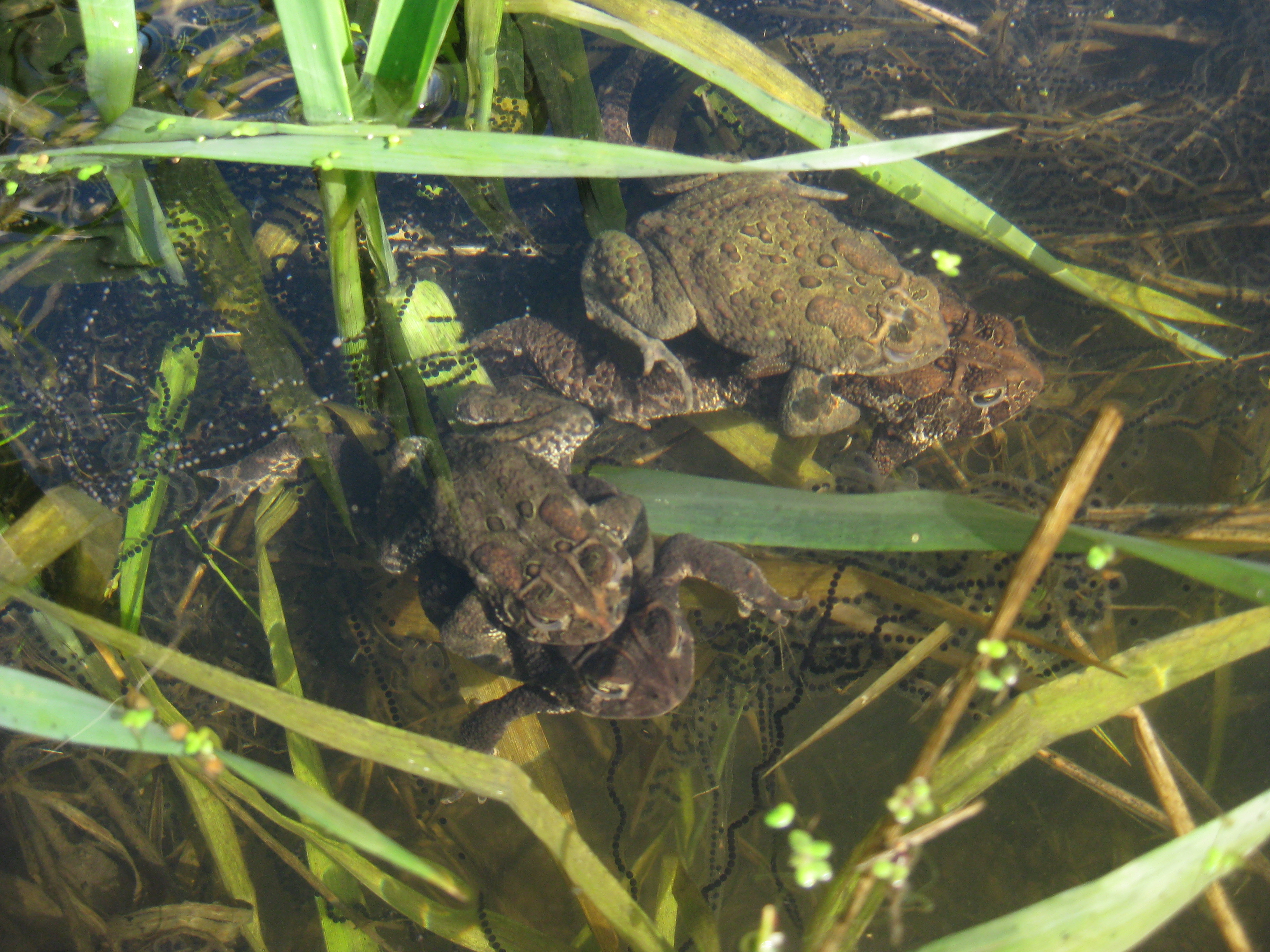
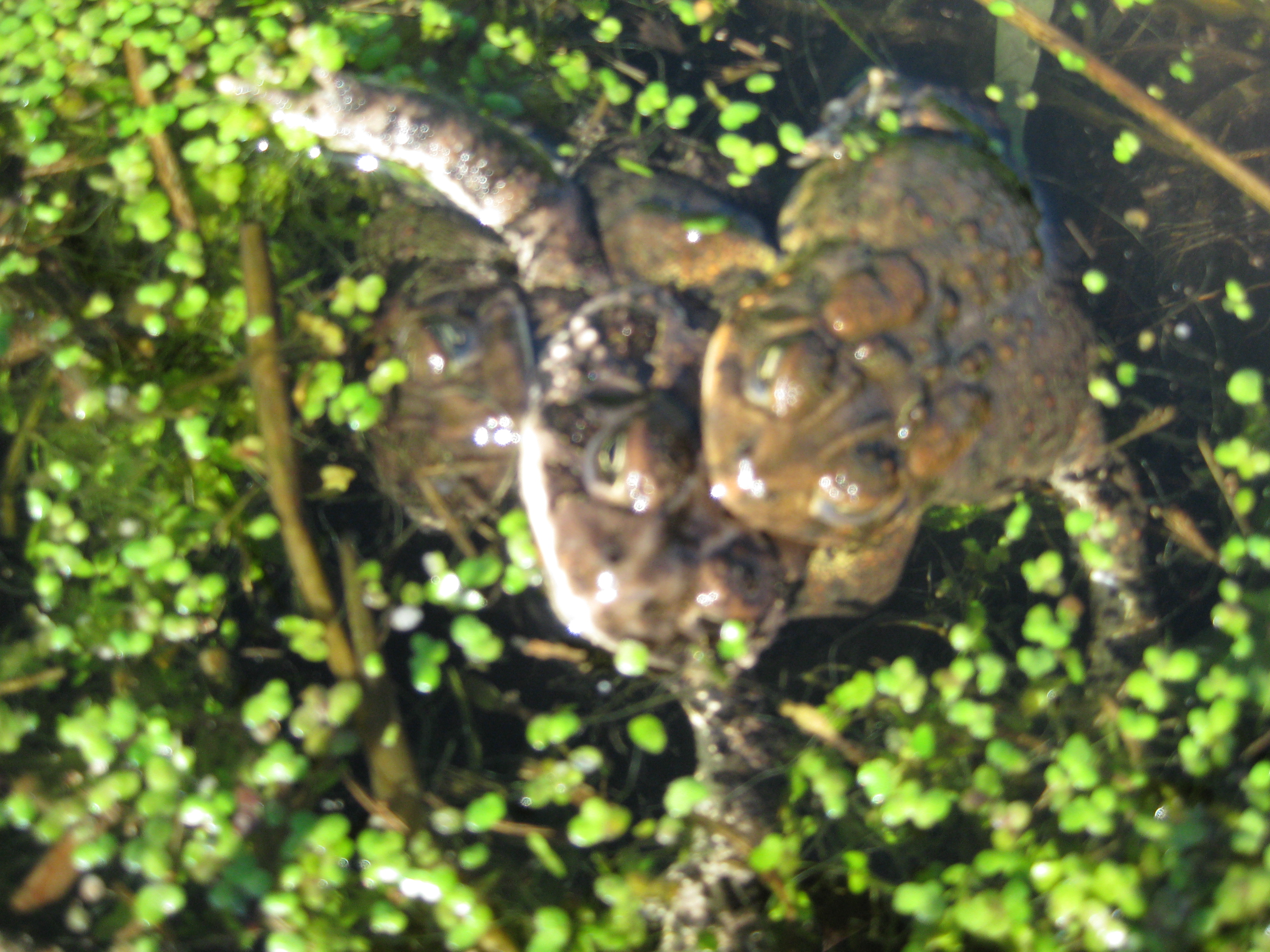
Look at the mating toads surrounded by eggs.  The male is smaller than the female.  Sometimes they have a threesome.

Frogs seem more discrete in their mating behavior.  I have often heard their mating call; but have never seen them coupled.

Toad eggs are in long strings.  Frog eggs are in clumps, like grapes.  Look at the frog eggs below.  Don’t frogs just seem more organized?  Is nature organized?

I don’t know which species of frog I should attribute these eggs.  They may be the eggs of the Spring Peeper.  They may also be the eggs of the Bullfrog.

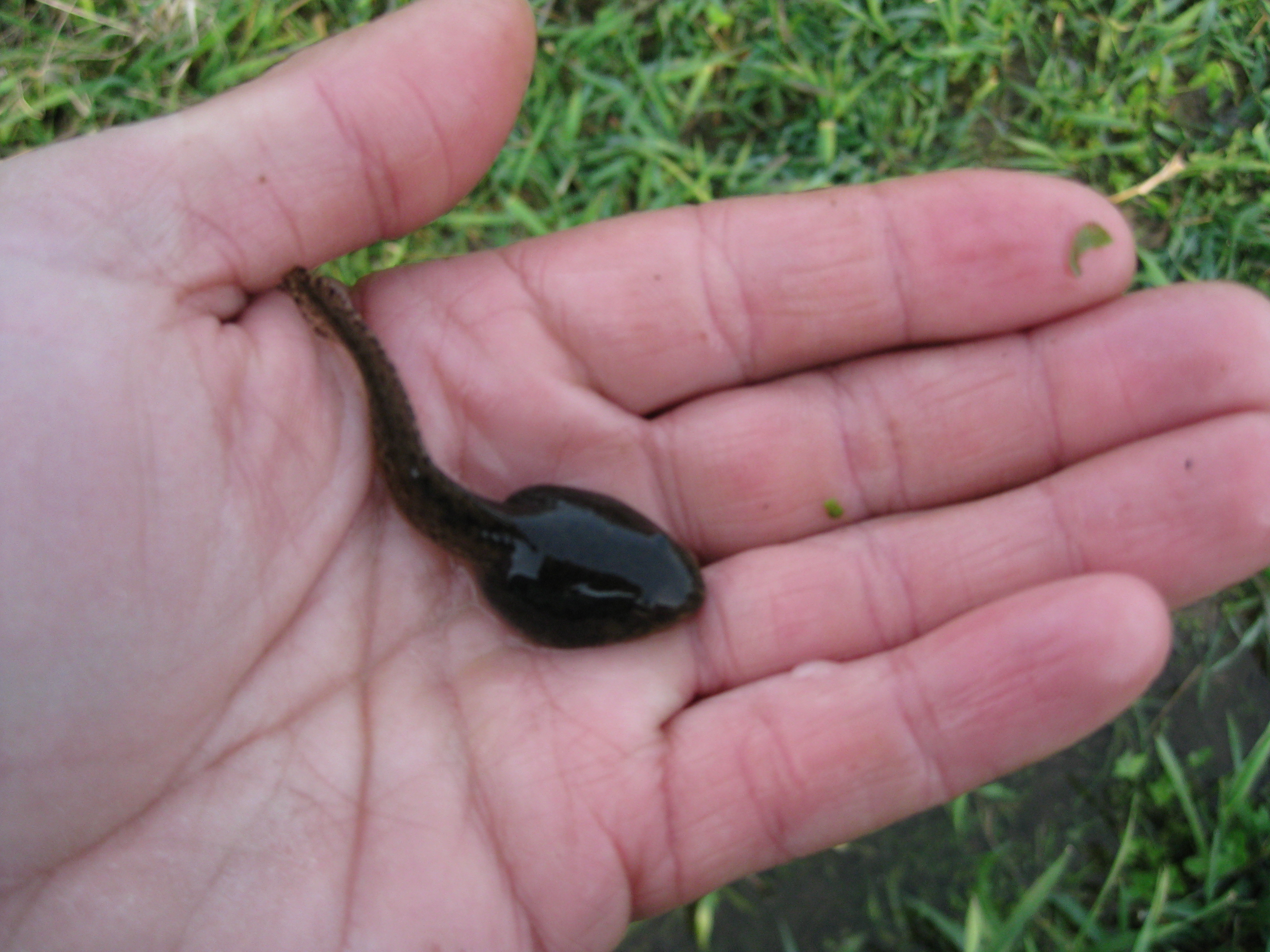
Bullfrog tadpoles are unique.  Instead of working to get out of the water fast, like toads, bullfrog tadpoles spend the first year of their life chillin’ in the water, and change into frogs their second summer.

Below is a bullfrog tadpole I caught along the water’s edge.  Maybe I will post some more photos throughout the summer as their legs lengthen and their tail shortens.  Would you like that?


Camouflage

May 1, 2010

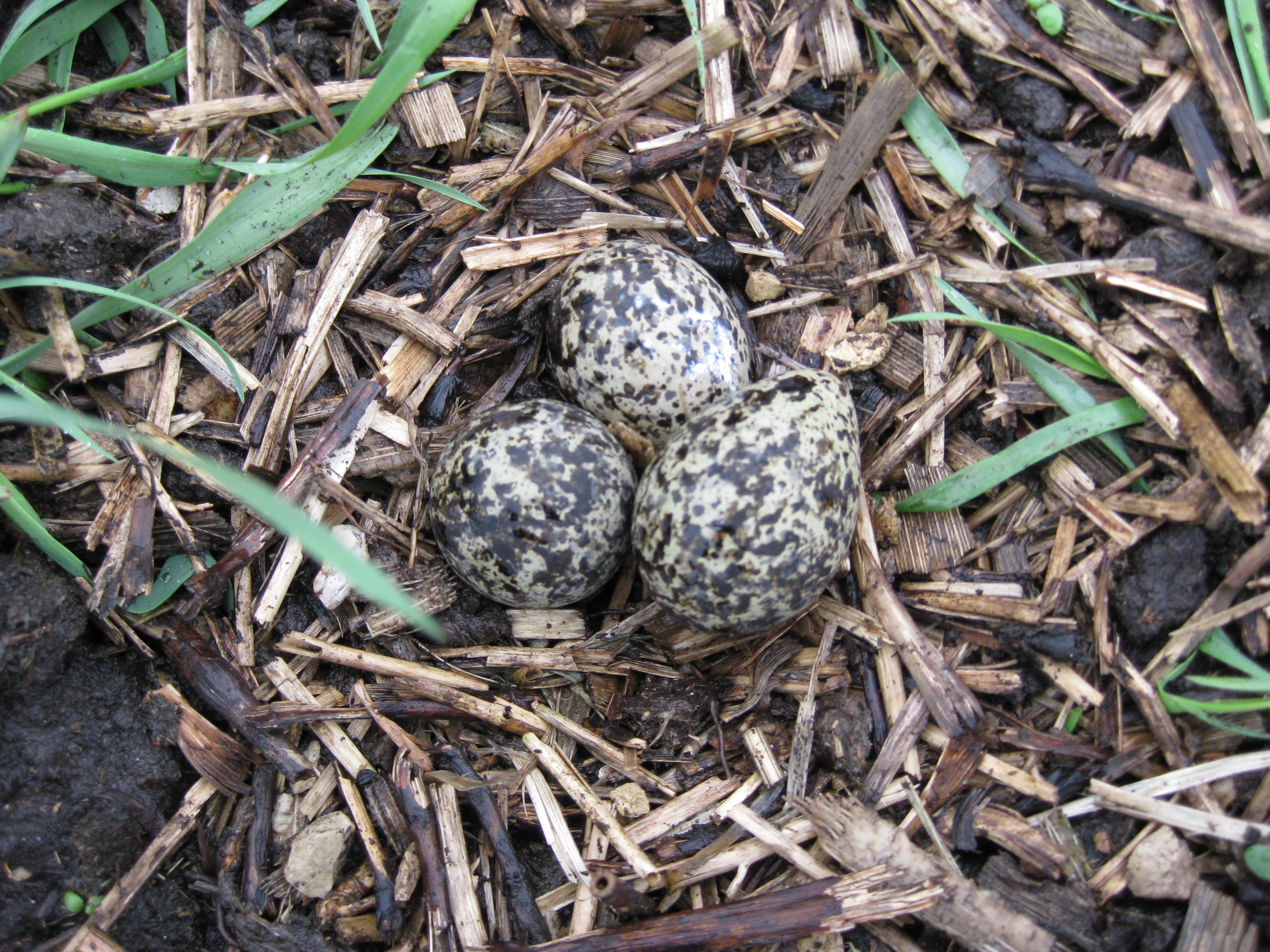
Killdeer nest.  Can you see the nest in the center of the photo below?  I took this picture at eye level, standing a few feet away.

I found the nest because the mother moved off of it as I walked by her.  I stuck a stick in the ground to help me find it again.  Even with the stick, it takes me awhile to find the nest.  The eggs almost seem invisible.

Killdeer parents are tenacious and almost annoying in defense of their young.  They employ a broken-wing strategy in combination with a distress call to lure predators away from the nest or their precocial chicks.  I know this because they do this to me all the time, thinking I’m a predator.

I got to thinking about camouflage.  Killdeer begin life as wallflowers; but need to step out of that role  to raise a family.


Early Spring: Finished Planting Corn

April 27, 2010

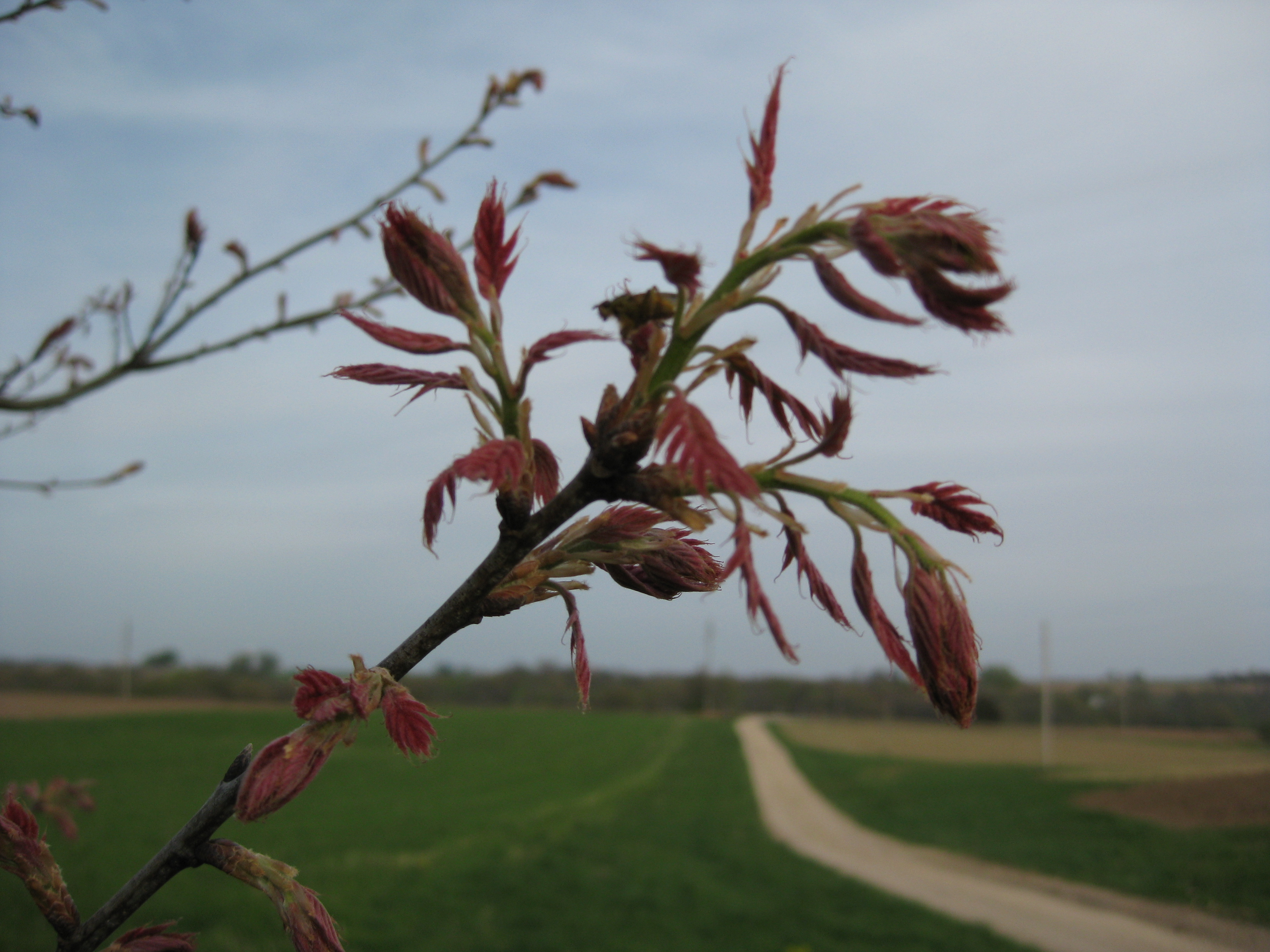
“When the oak leaf is the size of a squirrel’s ear, it’s corn planting time.”  Old farmer saying.

I finished planting corn last week.  April 23rd  is the new record.

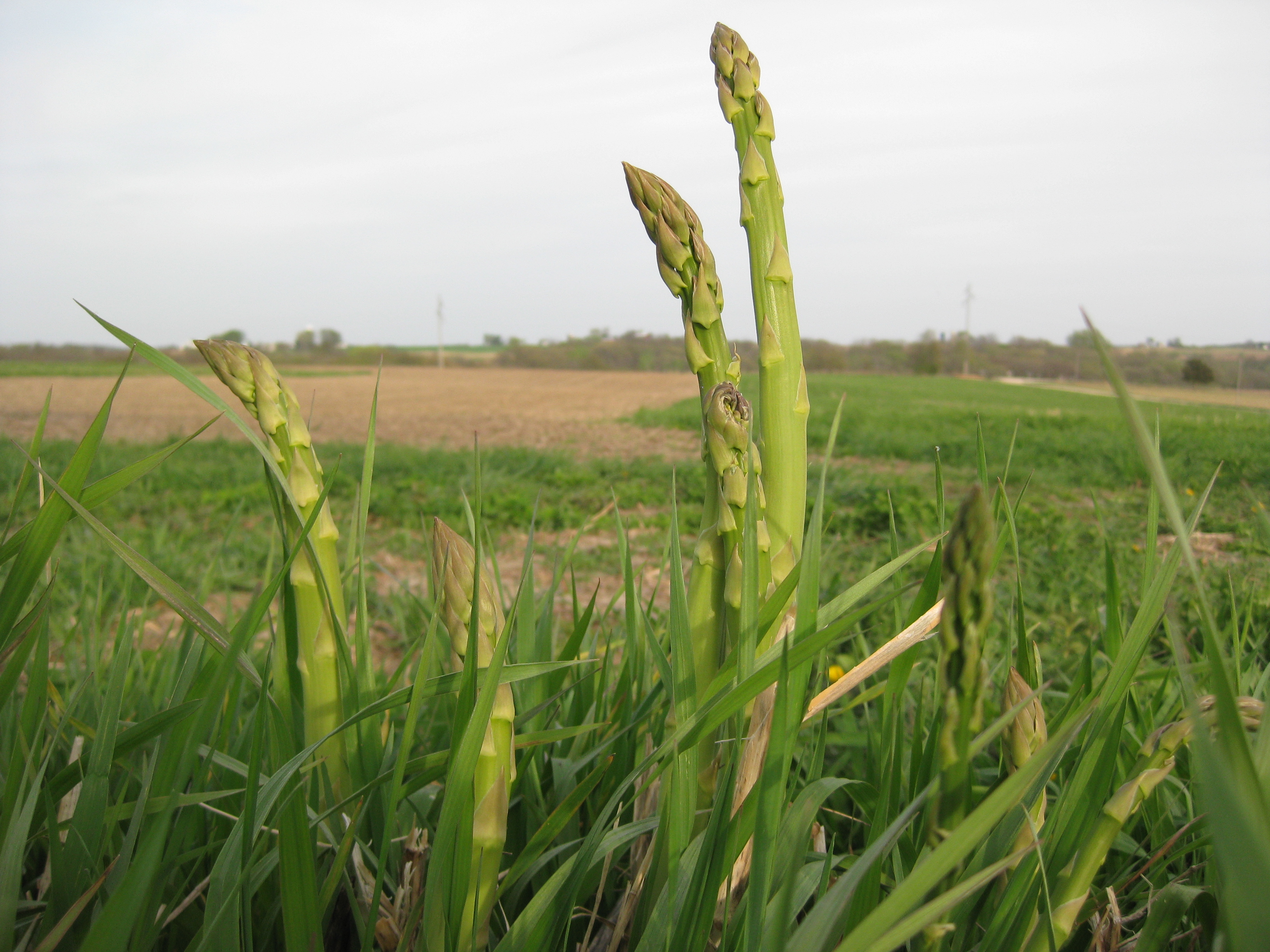
It is an early spring.  Look at the asparagus in the old fence row.


Mothers and Farmers Always Appreciate a Good Poop

April 25, 2010

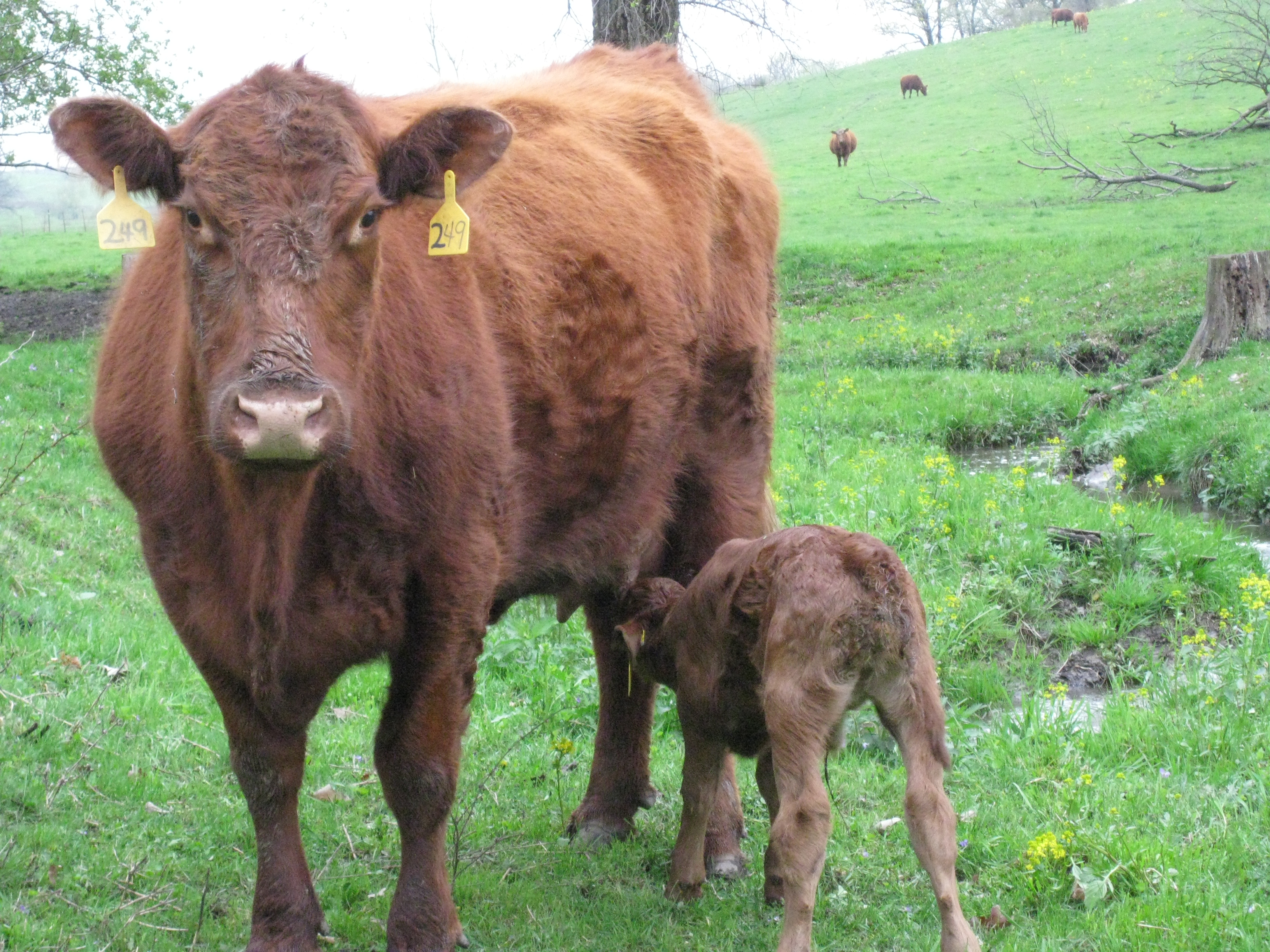
We had a cold, hard rain last night.  249 wasn’t with her calf that was born yesterday.  She was looking in the next pasture.  I drove around in the next pasture.

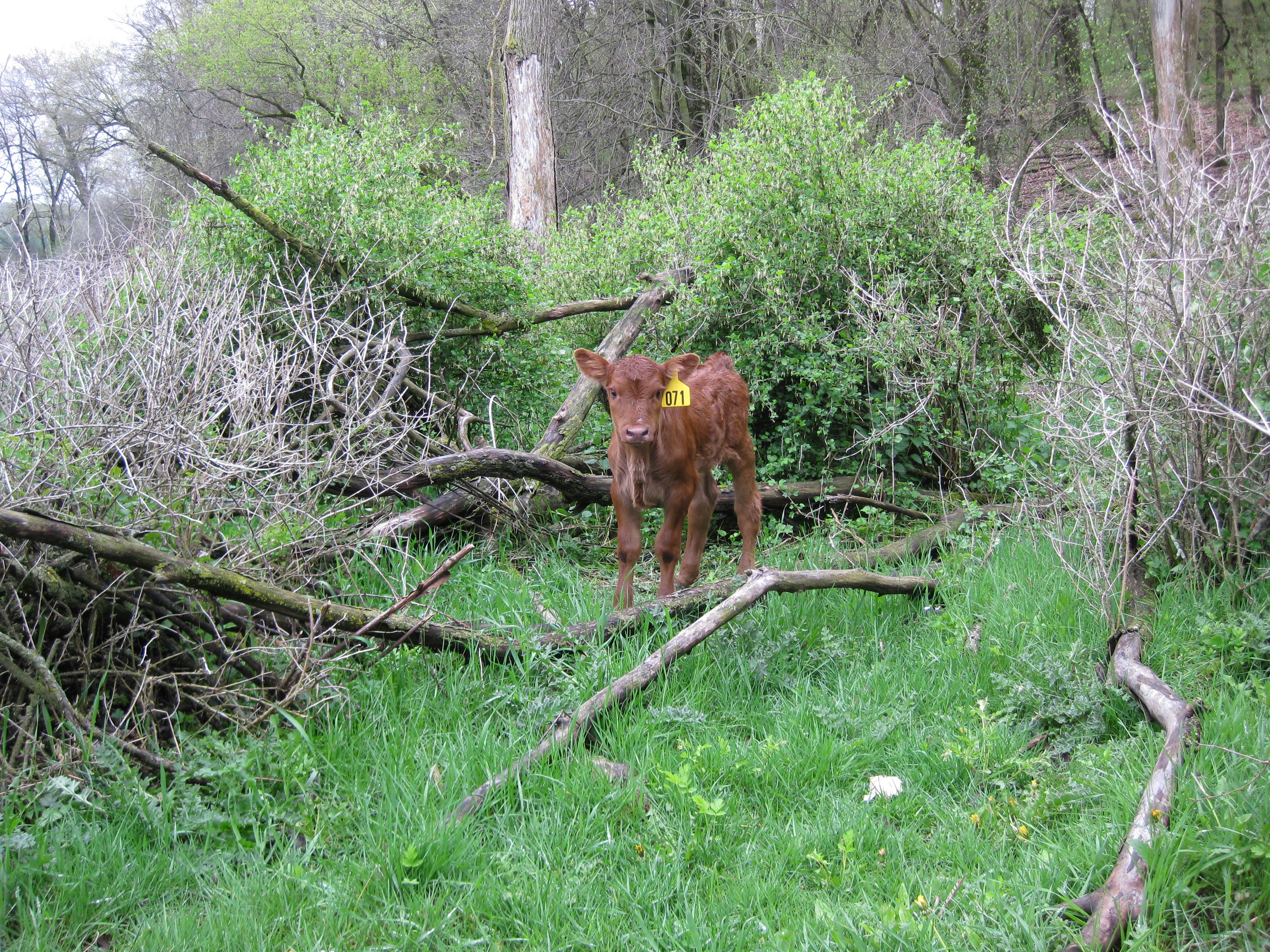
Sure enough, the little shit had gotten separated and went throught the barb-wire fence in the storm.  He was smart enough to find this cozy spot in the bushes.  I caught him and carried him over to the fence and put him under.

He went right to nursing.  I stuck around long enough to see him take a healthy milk poop.

The insect on the manure is Scathophagidae, or Common Yellow Dung-fly.  I have known this insect my whole life;  but until I researched  this post, I didn’t know its name.


A Weekend During Calving Season

April 15, 2010

“We don’t have a problem-free herd yet,” I said.

Dad and I locked 534 in the catch chute in the corral.  We opened up the side gate and put the calf up to its mother’s teat.  It was 24 hours old and no longer had a great desire to nurse.

Dad worked 534’s teat with his hand. He squirted milk onto and into the calf’s mouth, which he held open with his other hand.  The warm milk stimulated the calf and this time he latched onto the tip of the over-large teat when Dad placed it into his mouth.

—–

“I’ll bring the 4-wheeler into the corral if you open the gate,” I said.

I was moving 672 into a side pen with her twins so that we could get 619 into the catch chute and pull her calf, which was coming breach.  672 was a protective mother; which also made her difficult to move on foot.

—–

“How’s everything,” I said.

“Fair,” Dad said.

“What do you mean?”

“Well, 3127 had a calf yesterday afternoon.  I swear it had white on its legs.  Tismorning 3127 had a red calf with her.”

“You think she had twins and left one?” I said.

“Yeah, I was just looking for it.  But maybe I saw the placenta and it looked white on the calf’s legs.”

“Which was it?”

“I don’t know.”

“Let’s go look again.”

The calf with white on its legs was laying alone in the woods where it was born.

“I’ll pick it up and you can carry it on the 4-wheeler.  Are you going to take it to the barn or to the corral?”

“The barn.  I’ll tube it first.  Then we can decide what to do with it.”

—–

“We lost a calf in the creek last night,” Dad said.

“Shit.  Which one?”

“103.  She walked all around the pasture yesterday and had to have it next to the creek last night.”

“And that cold rain didn’t help.  Do you want to put the twin on her?”

—–

Our corral was full.  103 was in a pen with her foster calf.  672 was in a pen with her twins.  534 was in a pen with her calf.  619 was in the alleyway with her calf.


Farmer Genius

April 12, 2010

This is a guest post from my good friend, James Miller.  James grew up on a hog and dairy farm near Wiota, Wisconsin.

James authors the blog Quantum Devices Inc.

Comment and let James know what you think of his Dad’s ingenuity.

“How much do you want for the radiator out of the old Chevelle?”

This was my Dad, so I’d like to be able to say that I told him he could just have it.  After all, he was the man who milked cows twice a day, every day, to feed and raise us. He was also the man who paid the $326 for the speeding ticket when I was pulled over for doing 96 miles and hour in the family Bonneville.

I’d like to tell you that I just gave it to him, but I was a kid and went more like:

“How’s twenty bucks sound?”

I never even bothered to ask why he wanted it.

The next day I noticed that there was a section of garden hose strung from the old well to somewhere down in the basement of the house.  Another long section of hose ran back out of the basement into a dry dusty field.

I walked out into the field and saw the hose had been punctured so that, instead of water gushing out the threaded brass end of the hose, it trickled out evenly all along it’s length.

Dad was using the water from the old well to irrigate the field.

I walked back to where the hoses entered the basement and flipped on the cobweb covered ceramic light switch.  I followed the two hoses down the steep and narrow concrete steps. They led to the furnace where they both connected to the old radiator.  The radiator was temporarily fastened to the air intake of the furnace.  The furnace’s blower was running, drawing air in past the fins of the radiator and distributing the cold air though the house.

Dad had made a poor man’s version of air conditioning.

Here were the problems Dad had faced:

It was a particularly hot, dry summer, and it was difficult for mom to cook large “meat and potatoes” meals for the field help in the sweltering kitchen.

There was the even larger problem of no rain, which besides making it difficult to grow the crops, could also lead to wind erosion of the top soil.

Some people may have spent some money on a window air conditioner, or even converted the furnace over to central air.  Some may have even paid someone to come in and irrigate the field.

But Dad, like most good farmers, was both thrifty and clever.  I think that all those who tend to land and cattle have to have a certain level of farmer ingenuity that, in its higher moments, borders on genius.

So what is Farmer Genius?

Farmer Genius doesn’t check out a library book, know how to play an instrument, or the difference between Shakespeare and Voltaire. Since animals can’t read, Farmer Genius doesn’t really concern itself with spelling. I remember mom pointing out an ice cream bucket in the machine shed, saying “Look at that bucket of ‘NIALS’” over there.

Farmer Genius doesn’t know what happens when two vowels go walking.

Instead, Farmer Genius tends to be one of physicality and inherent understanding of math and physics, where one can mentally work out the right answer but not be able to prove with paper and pencil. Farmer Genius understands how a discarded shopping bag blowing across a field can frighten cattle into running through fences.  Farmer genius knows whether an engine is running rich or lean by the smell of the exhaust.  Farmer Genius doesn’t pay too much attention to the labels given to “screwdriver” and “hammer”; but instead sees everything and anything can be part of his toolbox.

During calving, Farmer Genius knows the moment when you need to tie the twine to the calf’s front legs to assist in pulling it from the mother; and do it in a manner that causes no harm to the calf or the cow.

The Farmer has a strict sense of right and wrong, but Genius is the part that always chooses to do right.

Dad’s Farmer Genius solved the problems a hot summer presented by using only what was on hand; an old well, some garden hoses, and a kid who would give up a radiator for twenty bucks.
Pruning to Improve Fruit Production

April 8, 2010

John 15:1-2  Jesus speaking.  “I am the true vine, and my Father is the gardener.  He cuts off every branch in me that bears no fruit, while every branch that does bear fruit he prunes so that it will be even more fruitful.”

Luke 6: 43-45  Jesus speaking.  “No good tree bears bad fruit, nor does a bad tree bear good fruit.  Each tree is recognized by its own fruit.  People do not pick figs from thornbushes, or grapes from briers.  The good man brings good things out of the good stored up in his heart, and the evil man brings evil things out of the evil stored up in his heart.  For out of the overflow of his heart his mouth speaks.”

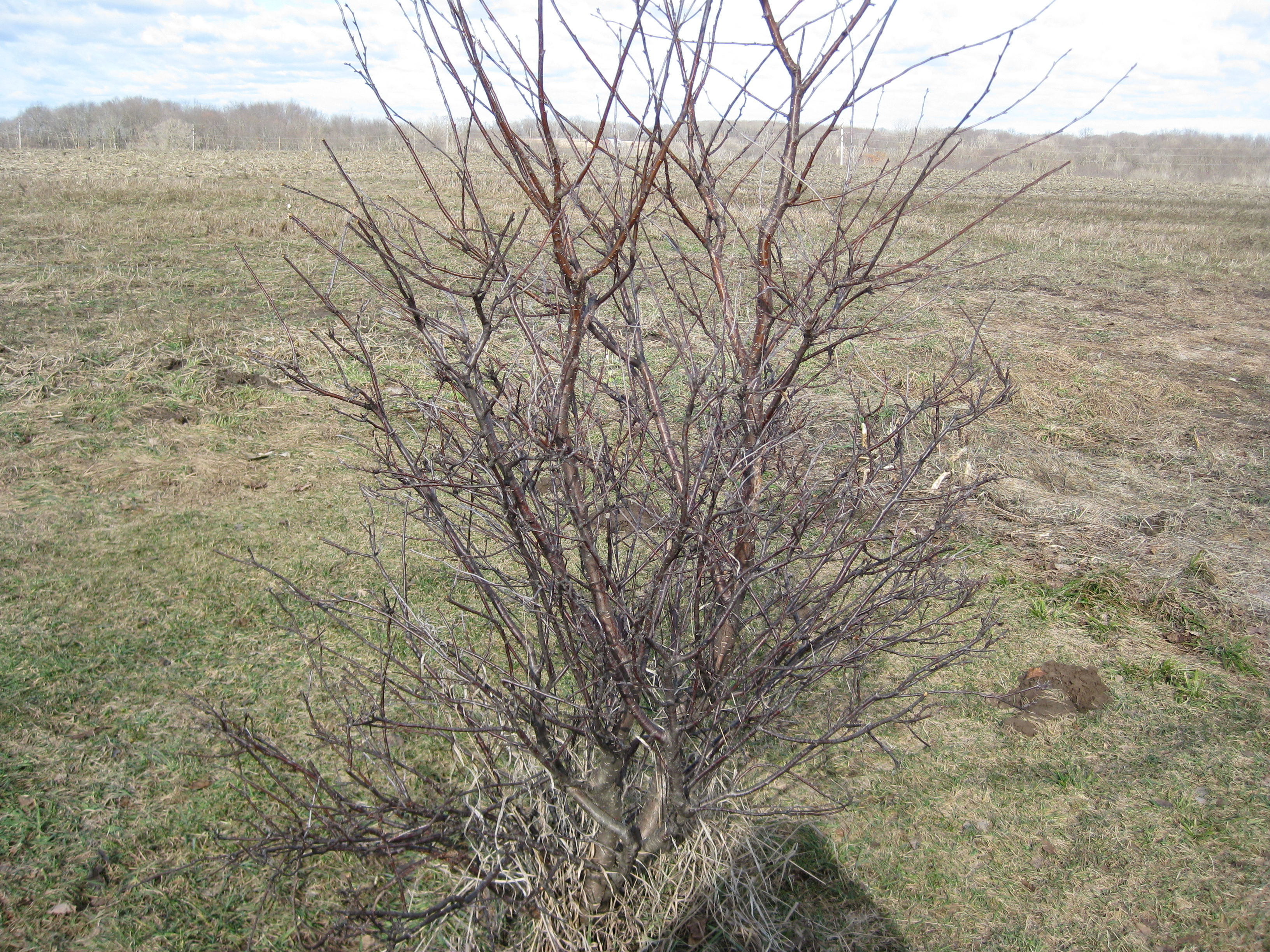
I’m 41 years old and I’m pruning, for the first time in my life.  I freely admit that I’m not sure what I’m doing; but I’m glad to be doing it.

I may be pruning too much or incorrectly; but so little fruit was produced, I no longer feel much pressure.

I like that success will be measured by the fruit that is produced.


My Mammoth Ass Saved My Butt!

April 1, 2010

“Yow!” I said, as Wilma bit my arm.

Wilma is a Mammoth Ass.

Wilma’s been with me for a year and she was starting to grow on me. But a donkey that bites…

I held back tears as I drove to the local clinic.

“It’s funny Doc.  I was gonna come in and have you take a look at this spot on my arm, but I never got around to it.”

“It’s kind of hard to see with the injury and all, but I think we’ll take a sample just to be on the safe side.  You get a lot of sun, don’t you?”

Turns out I had Basal Cell Carcinoma. A little anesthesia and a snip and I was good as new.

I got to thinking about Wilma and the way she acted before she bit me.  She likes to nuzzle my arms and stick her nose in my armpit.  This time she seemed nervous and kept sniffing the spot on my arm.

I did a little research.  Turns out dogs are being used to sniff out some types of cancer.

My entrepreneurial spirit took over.  I placed an ad in the local “Shopping News.”

“Skin cancer screening while you wait!  Convenient, affordable!  Matthew Walter, phone.”

So far, Wilma and I have had five clients at 20 bucks a pop.  All  have been benign; although we had one false positive.  A guy had a pack of “Juicy Fruit” in his shirt pocket.


Red is the New Black

March 29, 2010

“RANG Heifers?  What kind of breed is that?” Dad said.

“No idea.  Maybe it stands for range?”  I said.

We were looking at a sale report from March 19th for Monroe, Wisconsin.

The best-selling Angus heifers brought $93.50 per hundred lbs. at an average weight of 682 lbs.  The best-selling Angus steers brought $99 per hundred lbs. at an average weight of 750 lbs.  The best-selling Crossbred heifers brought $93 per hundred lbs. at an average weight of 682 lbs.

The RANG cattle blew them out of the water.  653 lb. heifers brought $102 per hundred lbs.  757 lb. steers brought $105 per hundred lbs.  That’s about 50 dollars higher per head.

We had topped the March 12th sale at Bloomington, Wisconsin.  Our red heifers brought $102.50 at an average weight of 666 lbs.

Our heifers are not purebred.  Dad raised Shorthorns all his life as his Dad did before him.  We grew disgusted, however, with the Shorthorn breed’s emphasis on the showring and the addition of Maine-Anjou genetics to the Shorthorn breed in the 90’s.  We tried using Maine/Shorthorn bulls; but decided to do something different when we found ourselves pulling big, dead, calves out of cows.

We started using Red Angus bulls.  Rah-rah Red Angus!  Calving ease improved and raising cattle was fun again.

We have been using Red Angus bulls exclusively for over the past ten years.  We have been using bulls from Leland Red Angus and James Red Angus for the past five years.  I wrote about our selection criteria in my post,  “Selection: A Force for Change.”

The bulb in my head lit up.  “I know what RANG stands for. Red Angus!”