A photo I posted about fencing was used in an Atlantic article on virtual fencing. It’s a little bittersweet because the caption is, “A fence in need of repair.” Another photo of mine was used in Progressive Forage Grower. It’s fun to see my photos in other places.
Photo in Atlantic.com
February 10, 2013
 6 Comments |
  Curious farmer |
  Permalink
 Posted by Curiousfarmer
Contest Update: Week 1
February 8, 2013
Photo taken after six days.
Here are your contestants:
Doug, 7 days
John Roelli, 14 days
Walt, 16 days
Hubbard, 17 days
Gordon Milligan, 20 days
Brygy, 24 days
Toasted Tofu, 28 days
For the record, I would have guessed 28 days, which looks now to be more of a wish than an estimate. As I tell my sons, an estimation is not a wish. If you consistently under or over estimate, you’re wishing.
It’s good that I’m doing this. I really need to get a handle on use. I estimated the large pile I built up over the summer would last 3 to 5 months. Not a very precise estimate.
It looks like it’s going to last about three months as I didn’t start using it until the middle of December. Until then I was cutting weekly loads because I had time and the weather was nice.
Thank you to our contestants. I’ll update again within a week.
Leave a Comment » | Curious farmer, Curious living | Permalink
Posted by Curiousfarmer
Contest: How Much Wood for Outdoor Wood Boiler?
February 1, 2013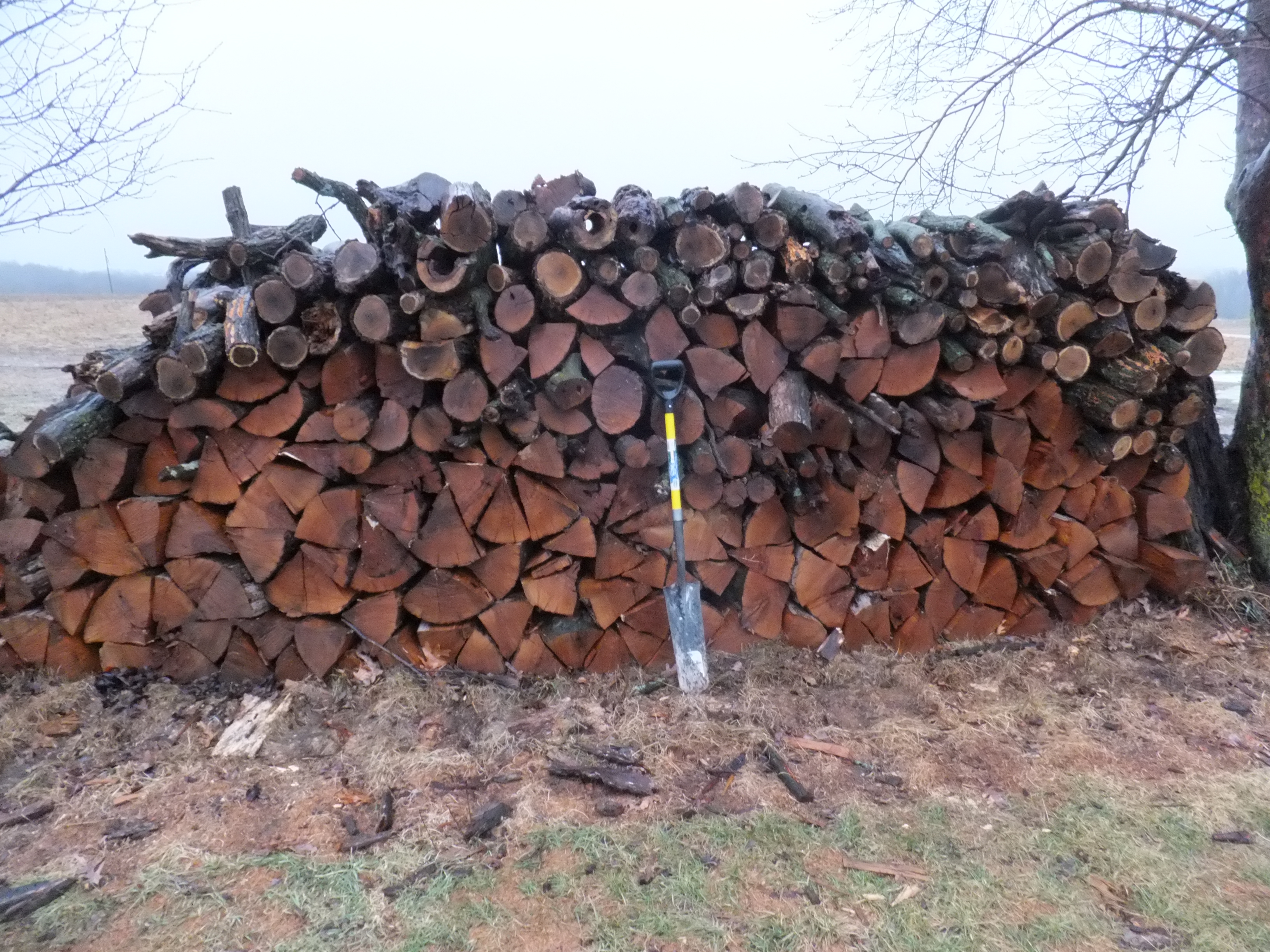
How many days to burn the row pictured? The dimensions are about five feet tall, by sixteen feet long, by sixteen inch logs. This is about eighty percent of a cord of wood which is 128 cubic feet, the industry standard for firewood.
It’s mostly dry oak, although it was rained on the day before I took this picture. And now another winter storm has dumped snow on it, but it still burns well.
You can look at this old post for hints. Also notice the changing color of the lawn.
I’ll start burning this row February 1st. You have a week to guess in the comments. The prize for the closest guess is negotiable. In the past I have given gift certificates to Kiva, and meat. Good luck!
I hope my old friends guess. I also hope some of the newer visitors will guess and introduce yourself. Ever since Bruce King put my blog on the sidebar of his excellent blog, I’ve had more international visitors.
Bruce raises chickens and hogs on some highly fertile bottom ground in the state of Washington. He also recently purchased a confinement dairy farm.

Click on this link if you want to read more about my Outdoor Wood Boiler. Below is a photo of the ash pan. That is the amount of ash after two days, which is about how often I remove the ash.

13 Comments | Curious farmer, Curious living | Permalink
Posted by Curiousfarmer
Another Set of Eyes
September 1, 2012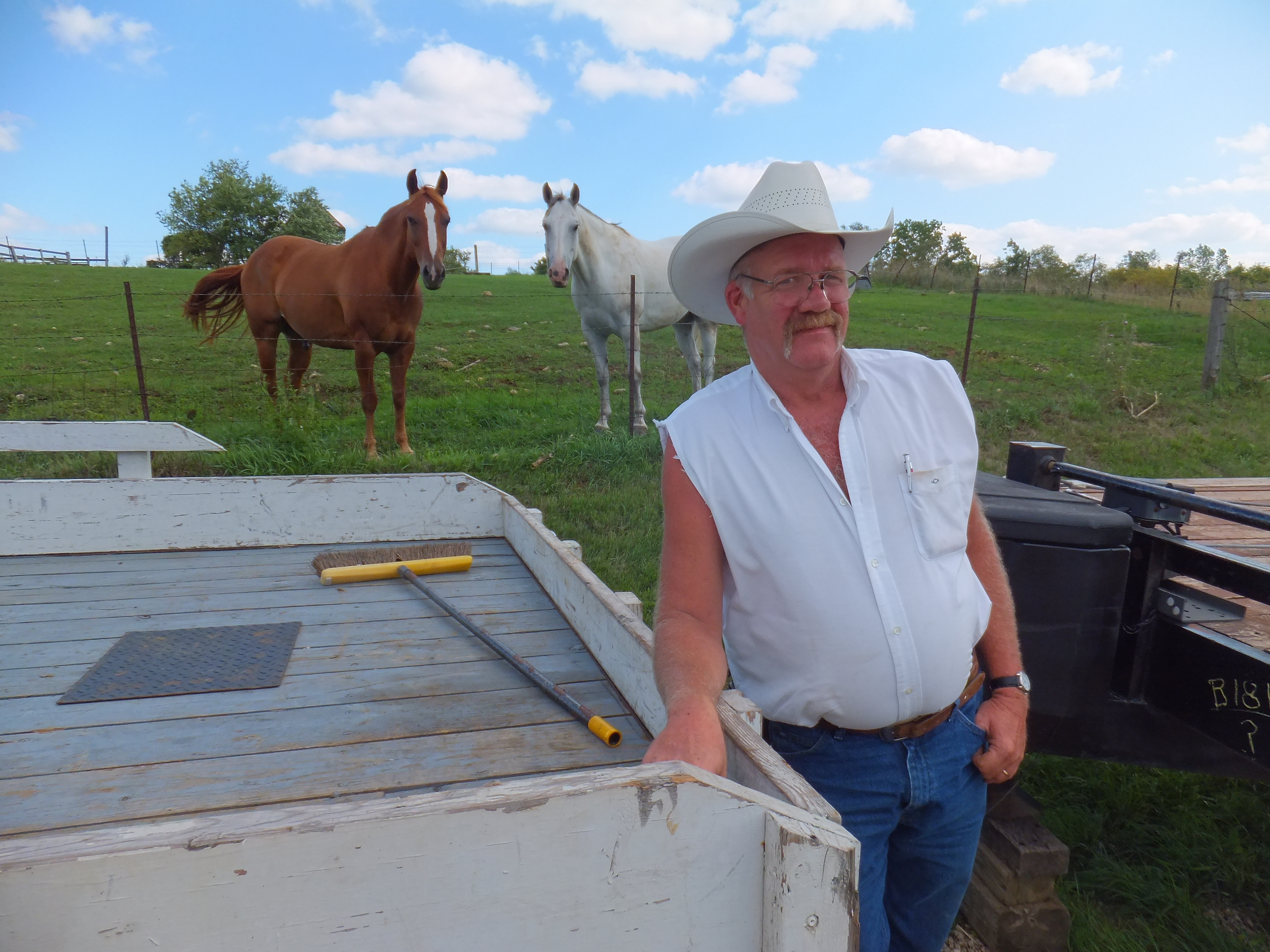
Frank, with his horses.
Frank is another set of eyes, checking on my fall-calving cowherd. He lives in the house which is situated near the middle of my rented pasture.
His yard protrudes into and is surrounded by the pasture on three sides. When he has his morning coffee on the front porch, he is checking my cows.
For me to check my cows, it’s a mile ATV ride. And if I get there at the wrong time, and they’ve gone into the woods for shade, I’m out of luck.
One day in August I only counted eleven cows. The next day the same cow was missing. I asked Frank to keep an eye out for her.
I started walking the woods looking for her. The woods is a jungle, pictured below. I realized, crawling under Multiflora Rose brambles, that the cows hadn’t even explored the whole woods.
I spent two days combing the woods looking for the missing cow. Frank rode his horse where he could, looking for the missing cow. I started using my nose, figuring the stench from a decaying animal would lead me to her.
On the fifth day, 949 nonchalantly walked out of the woods with a little black calf and rejoined the herd. At that point, I realized I can’t micromanage. Frank and I just count. We’re at seven black calves now.

2 Comments | Curious cattle, Curious farmer | Permalink
Posted by Curiousfarmer
New Splitting Maul
August 1, 2012
I started cutting wood in July. I woke up one cool morning after the heat broke, and went out in the woods and started cutting. This might be the year I have all my wood cut before the snow flies.
I only cut dead trees which are down. If you don’t cut and split the wood, it will start to rot. Rotting isn’t terrible, as many critters make a living out of decaying trees, but I figure it’s also a good way to heat my house. If I cut into a tree and its started to rot, I leave it for the critters.
I bought a new splitting maul, pictured. I don’t know why I scrimped with my old one for so long. This one works like a dream. It’s an eight pound maul made by Task.
4 Comments | Curious farmer, Curious nature | Permalink
Posted by Curiousfarmer
Outdoor Wood Burner, New Tractor Update
March 4, 2012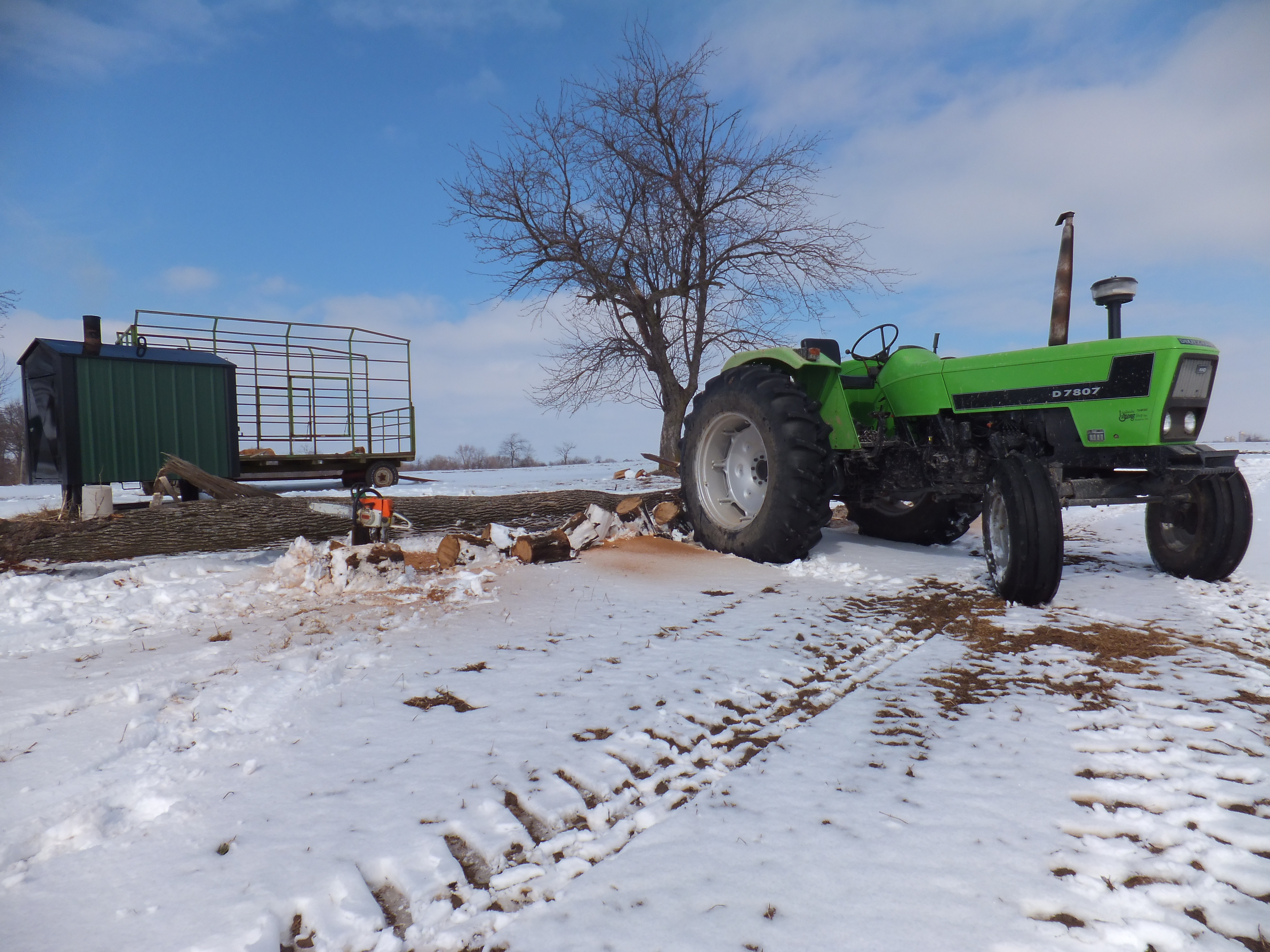
I’m back to cutting wood hand to mouth. It’s ok though. I had enough cut and split to get through January and February. Next year I plan on having more than enough for the entire wood-burning season by December 1st.
After using the outdoor wood burner for two seasons, I wouldn’t recommend one for most people. It isn’t as simple as chucking in wood and forgetting about it. It takes some fiddling, and it’s always asking for more wood.
Pictured is my tractor. I bought it last autumn. It’s a 1981 Deutz 7807. It has 78 horsepower, which is just enough for grinding feed, the most demanding horsepower job on my farm. I bought it from a dealer who sold it new. It has 4500 hours on it and I paid $8500 for it. I like it so far.
3 Comments | Curious farmer | Permalink
Posted by Curiousfarmer
Farrowing in Hoop Building in January
January 22, 2012
Splitting up farming with my parents means I needed to find a different way to farrow. We used a combination of crates and pens in a heated farrowing barn on my parents’ farm. It worked well. Last year we average 10 piglets born alive and 9 piglets weaned per litter.
I was excited to try farrowing in pens, because it’s a new challenge, and because I don’t like crates. Crates do save piglets from crushing, however, so the question is, can I raise enough piglets this way to be economically viable?
Pictured above, I built ten farrowing pens in one of my hoop buildings so each sow and litter could farrow in privacy. I used a combination of round bales of bedding and wire panels. I used the bedding bales to make the pens larger, and to have dry bedding accessible at all times.
I didn’t think it would work very well to farrow in an unheated barn in January. But I didn’t have many due to farrow, so I thought I would try it, so I could learn.
The first gilt farrowed two weeks ago when the temperature was in the 20’s. The air temperature in the hoop building is about ten degrees warmer than outside. She and the piglets did fine. She had eleven born alive and one stillborn. You can see the dead stillborn piglet mixed in with the placenta in the picture below. The gilt laid on four piglets during the first 48 hours. The younger the piglets are, the more vulnerable they are to crushing. The remaining seven piglets are doing well.

The next two gilts farrowed during an extremely cold time. Temps were around zero F with below zero wind chills. Those piglets didn’t do well. 18 out of 20 piglets froze or were crushed in the first few days.
Two more gilts farrowed last night. Temps are in the 30’s. They are doing well.
Pictured below is a behavioral trait I want to select for genetically. Instead of just flopping down and crushing piglets, the gilt scoops out a bowl in the straw with her snout, kneels on her front legs, thereby extending her udder all the way down into the straw, then lies down. Very few piglets will be crushed this way.

6 Comments | Curious farmer, Curious hogs, Curious livestock costs | Permalink
Posted by Curiousfarmer
Reality Review
January 1, 2012
Country Outfitter, a retailer of Dickies, sent me this Dickies premium insulated bib overall to review.
Adam from Country Outfitter asked if I would like to review a pair of boots. I checked out their site and regretted to inform them I don’t wear cowboy boots.
“How about something else?”
I found these insulated Bibs. So far I love them. They are super warm. I normally wear uninsulated Dickies with long underwear, but wanted to try something different when the weather is brutal.
I’m going to wait and wear them for a winter season before I give my final review.

2 Comments | Curious farmer, Curious living | Permalink
Posted by Curiousfarmer
Brotherhood of the Combover Men
December 18, 2011
I’ve started the “combover.” I wanted to document this moment in time and let you know that, speaking for all “combover men”, ‘yes, we know we are leaving our hair longer and combing it over thinner areas.’ We just want everyone to pretend it’s not happening. We think of ourselves as thick-haired studs, and would appreciate it if you would pretend to think that as well.
A woman was cutting my hair about ten years ago. I asked her if my hair was thinning. She said no, but too emphatically. I knew she was lying, and I think she knew I knew she was lying, but I realized the delicate dance which had just started for me and would not be finished until I was dead or shaved my head.
The last couple of years my barber has started leaving my hair longer in certain places, and it’s funny how it just falls into place across the thinner areas. And by ‘fall into place’ I mean, incessant stroking with my right hand in a diagonal, back-to-front motion. My barber never acknowledged he was doing this, and I never brought it up. I had joined the “brotherhood of the combover men.”
4 Comments | Curious farmer, Curious living | Permalink
Posted by Curiousfarmer
Sow and Calves, Getting Acquainted
December 12, 2011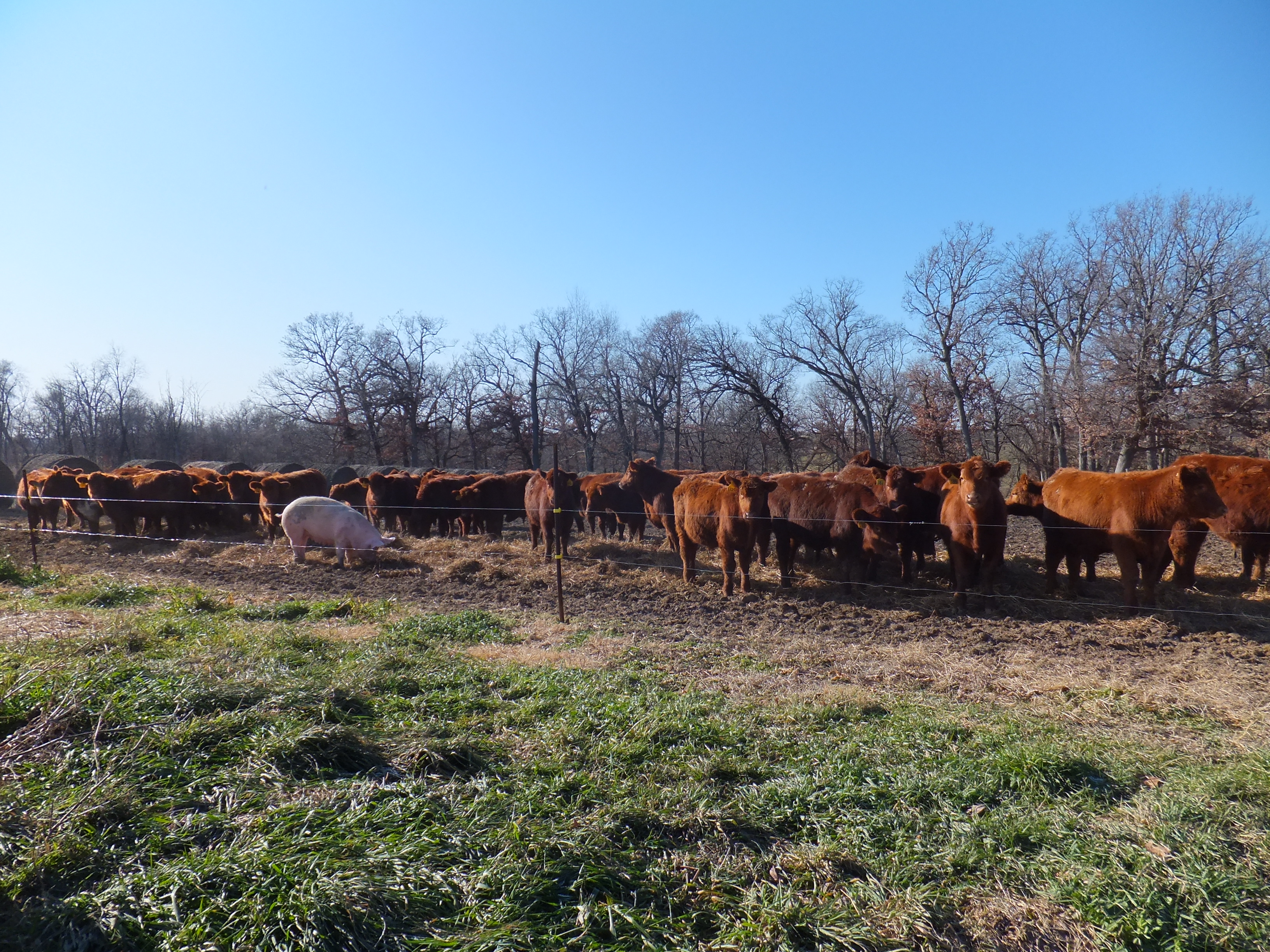
The steer calves, with one adventurous sow.
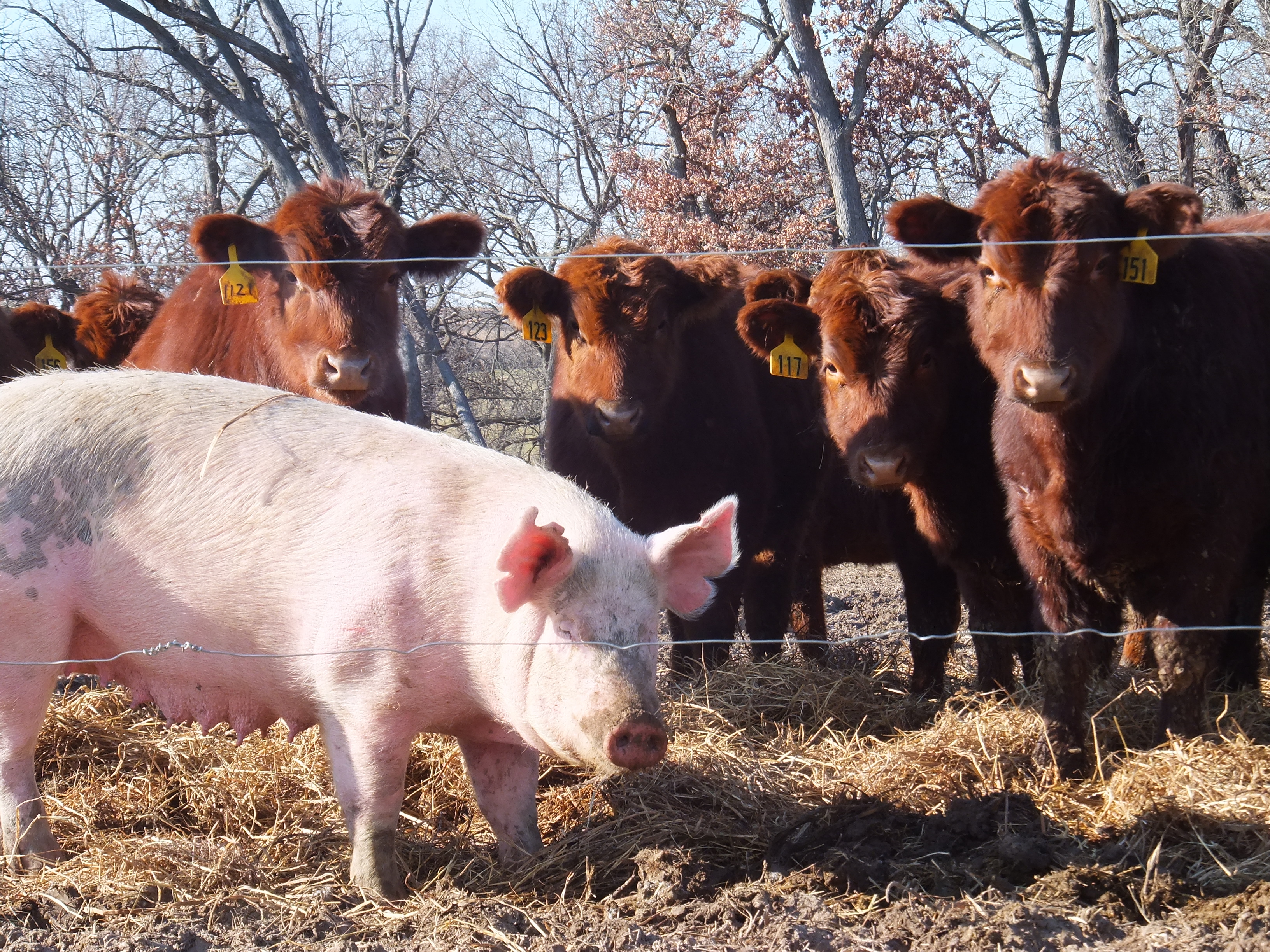
You can see the two-strand electric fence. In the industry we refer to this as a psychological fence. Hogs and cattle are easily trained to electric fence. The fence around the other lot is a physical fence, with five-foot high cattle panels and two boards, attached to wooden posts.
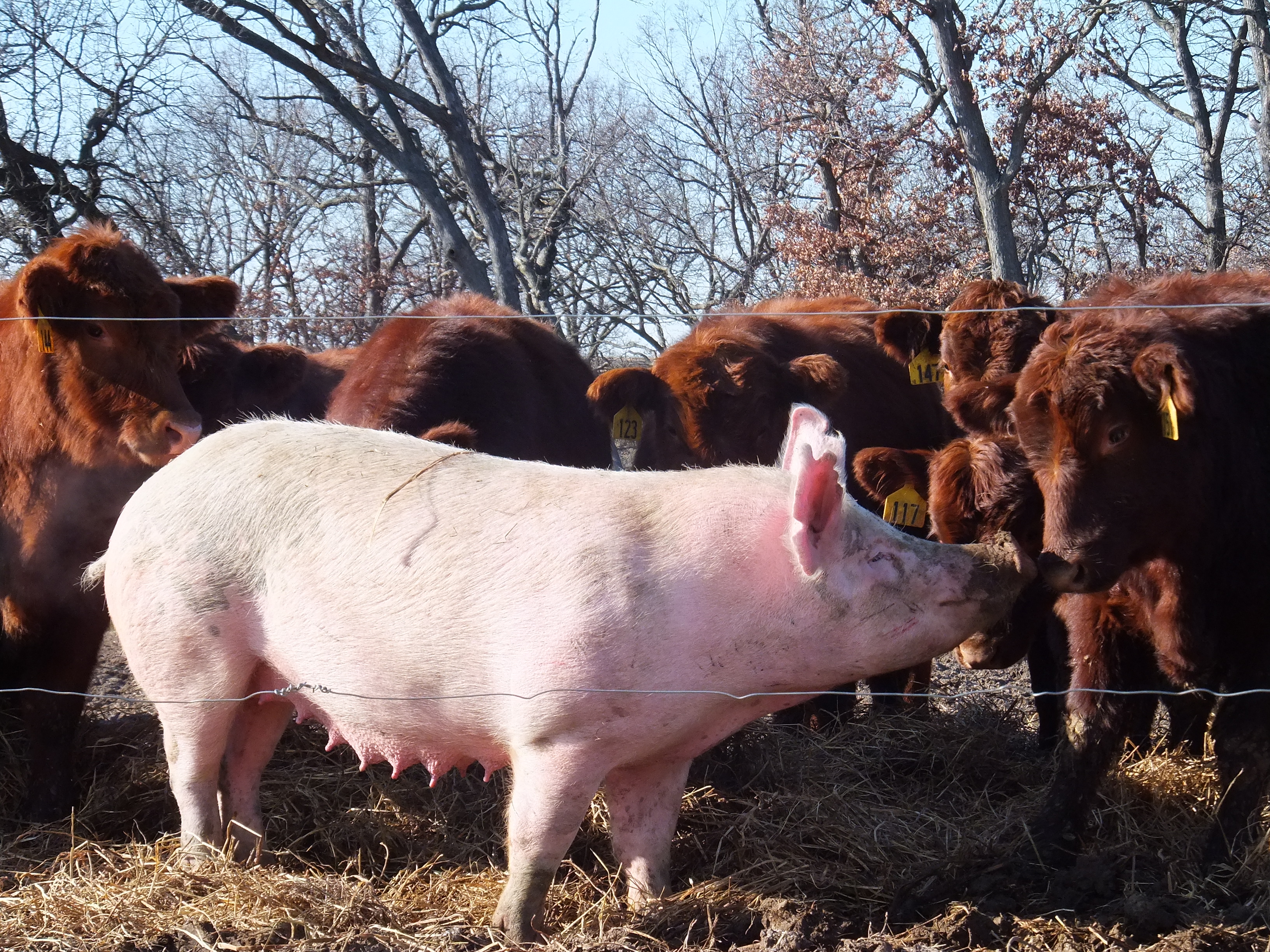
While I hate to anthropomorphize and say they’re friends, I will say they’ve gotten acquainted.
2 Comments | Curious cattle, Curious farmer, Curious hogs | Permalink
Posted by Curiousfarmer
 Curiousfarmer