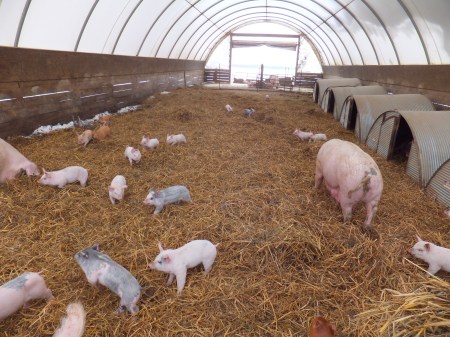
“I don’t know how you do it. We tried that years ago and it was terrible. The sows laid on most of their piglets. We’d have sows wean two, three piglets. We didn’t do that long. That’s when we got into beef cattle,” said the old farmer I was visiting with at a free lunch at the Bobcat dealership.
“We farrowed in A-frame huts. We made bumpers to keep the piglets away from the sow. We even had a corner where we hung a heat lamp. Nothing seemed to work.”

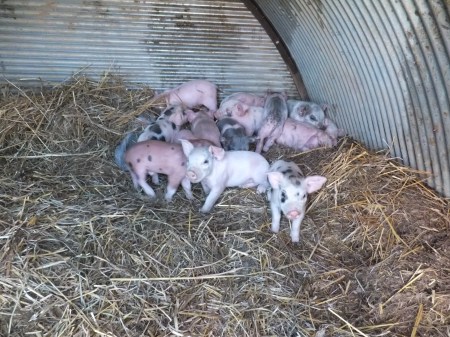
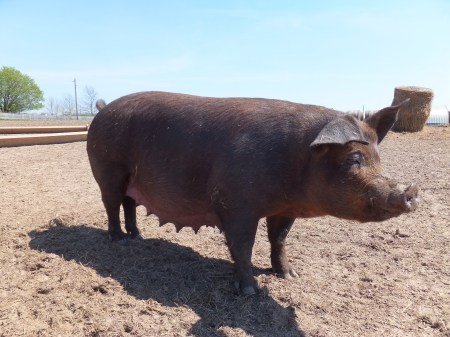
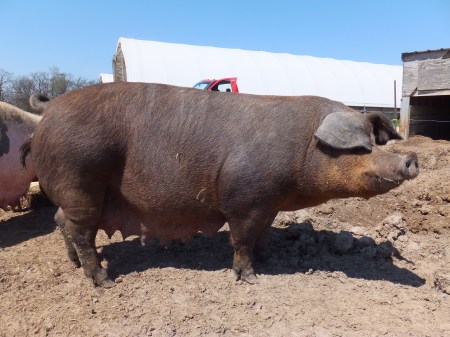
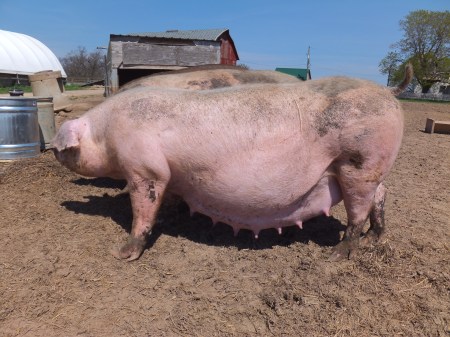
The sows in these photos average 11 piglets each. After hearing other farmers’ horror stories about not using confinement to farrow, I figured if I could average 7 piglets per sow I would be happy. It turns out that switching from confinement to farrowing huts has not come with any drop in production as my sows consistently average 9 piglets weaned. I have been pleasantly surprised and attribute this success to a few factors.
The one factor I think farmers think of first is the genetics of the sow. Even though I studied genetics in college, I think this factor is overrated. My Duroc sows, while not farrowing as many piglets as my Landrace, still wean a good average.
I think it is possible to find a line that doesn’t work well outside of confinement, as mainstream genetics are not being tested for farrowing success outside of confinement. Consequently, I look at genetics as more of a pass/fail type of trait.
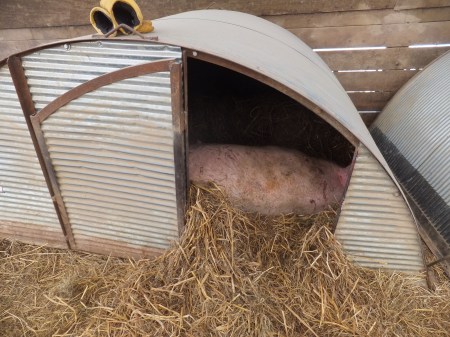
By far the bigger factor in my mind is giving the sows enough space, and getting out of their way. This is difficult for farmers, because we have a craving to control and a strong work ethic. Its taken me awhile to understand this, but I’ll explain my thinking.
First, I remember my Dad’s stories and my personal experience as a kid. Dad built A-frame huts and farrowed in them with little success. Dad transitioned to all farrowing crates in a heated former dairy barn. He would have to move the sows from their gestating pen/pasture to a farrowing crate before they farrowed.
Being busy, sometimes Dad would miss a sow and she would build a nest and farrow in the pasture. Remarkably, these sows would consistently raise large litters on pasture with no shelter. We always attributed the success to the quality of the sow.
I had an inkling that space could be a factor, so I purchased the English style farrowing hut, which is the largest I could find. They are 9 ft. by 5.5 ft, whereas the basic farrowing hut is 7 ft. by 4.5 ft.
I didn’t plan to use a heat lamp or bumpers to try and keep the piglets away from the sow and I’m glad I didn’t. As these “solutions” would just confine the sow more, and common sense tells you newborn piglets want to be as close to their mom as possible.
The final thing I do is allow the sow to build her own nest. Apart from making sure the bottom of the dirt hut is dry with a little bedding to absorb moisture, I place loose straw or hay outside the huts and watch as the sow carries mouthful after mouthful until she has determined the nest is ready.
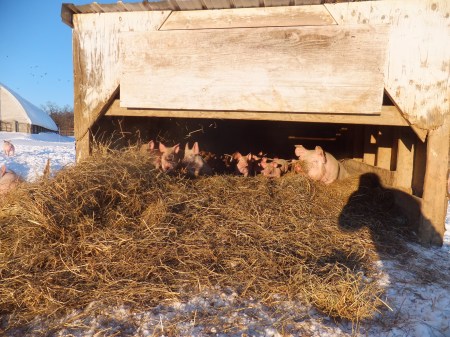
Sometimes it appears to me the sow has carried in too much bedding. The sow in these two photos built her nest and started farrowing sometime between 4 pm and 7 am. I found her with new piglets this morning as the thermometer read 11 degrees F. I actually had to remove a little bedding so I could fit the roller on the door of the hut.


 Posted by Curiousfarmer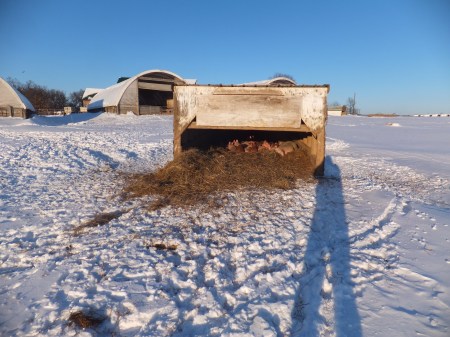




 #3: Drooping ear blue-butt
 #4: Drooping ear white sow



 Curiousfarmer