Planted Pig Pasture

May 11, 2012

This one acre field was used last winter for the steers.  I fed hay and bedded them down with straw.  Once I turned the steers out to pasture, I loaded the manure which had accumulated over the winter and spread it on the rye field which was then tilled and planted to corn.

After allowing the soil to dry, I tilled this field and then planted barley and rapeseed on April 27th.  The field doesn’t look like much now, but it will be beautiful in six weeks when its ready for grazing.

The unfortunately named rapeseed also produces a beautiful yellow flower.  Rapeseed has two leaves with two segments each, which almost makes it look a 4-leaf clover.  This is the same plant which Canola oil is made from.


English Style Farrowing Hut from Port-A-Hut

April 2, 2012

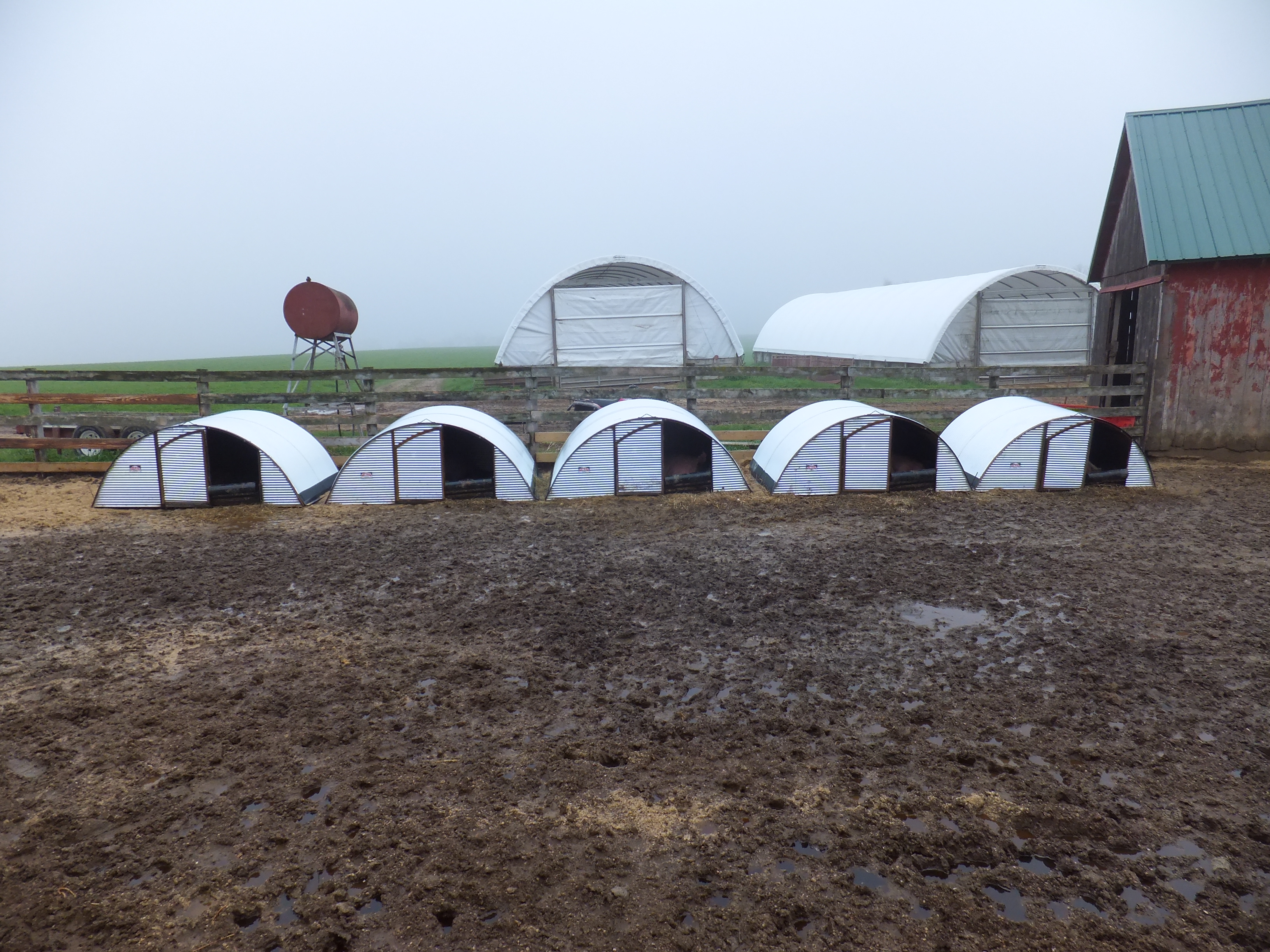
The English Style Farrowing Huts are working pretty well so far.  Four of the five sows farrowed, each in her own hut.

I probably should have spaced the huts farther apart.  I’m having some trouble with sows returning to the wrong hut after they leave to eat and drink.

It’s also going to be a challenge to process the piglets away from the sow.  Sows can be aggressive defending their young, and a squealing piglet sets them off.

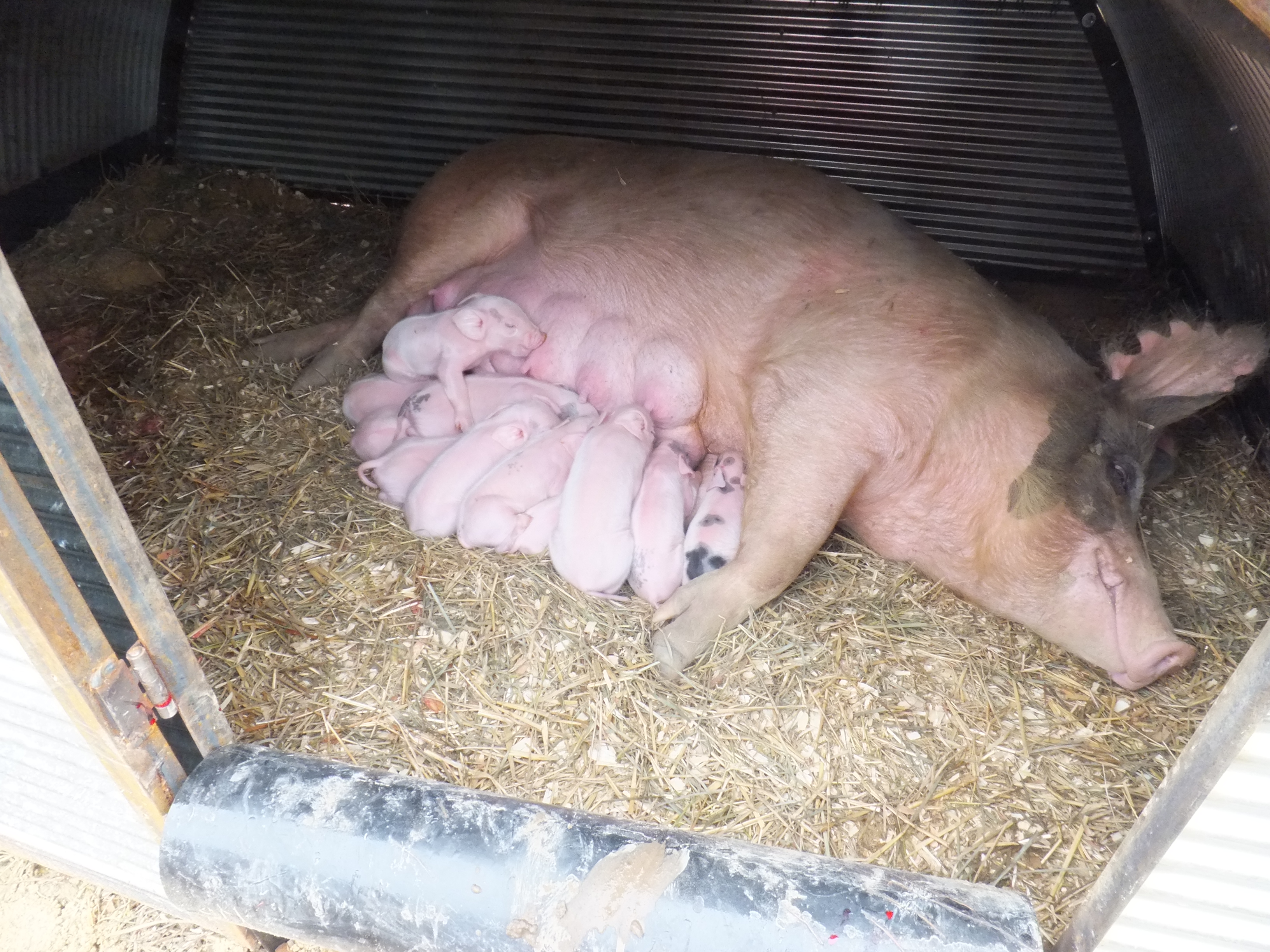
I’m glad I purchased the optional roller which fits in the doorway.  I’m able to leave the door to the hut open so the sow can come and go as she likes, but the roller keeps the piglets in until they are big enough to jump out.  The roller is the blackish thing in the bottom of the photo below.


Hoop Barn Farrowing Update

March 8, 2012

I learned a lot these past two months, and ended up with some live piglets.  Nine sows averaged seven piglets weaned per litter.  Two sows lost 18 of 20 piglets when they farrowed in below zero F weather.  So the total average is just under six piglets weaned per litter.

I found that if the temperature was 20 F or above, temperature wasn’t an issue.  My plan for next year is to avoid farrowing in December through February.  This will insure decent temps.

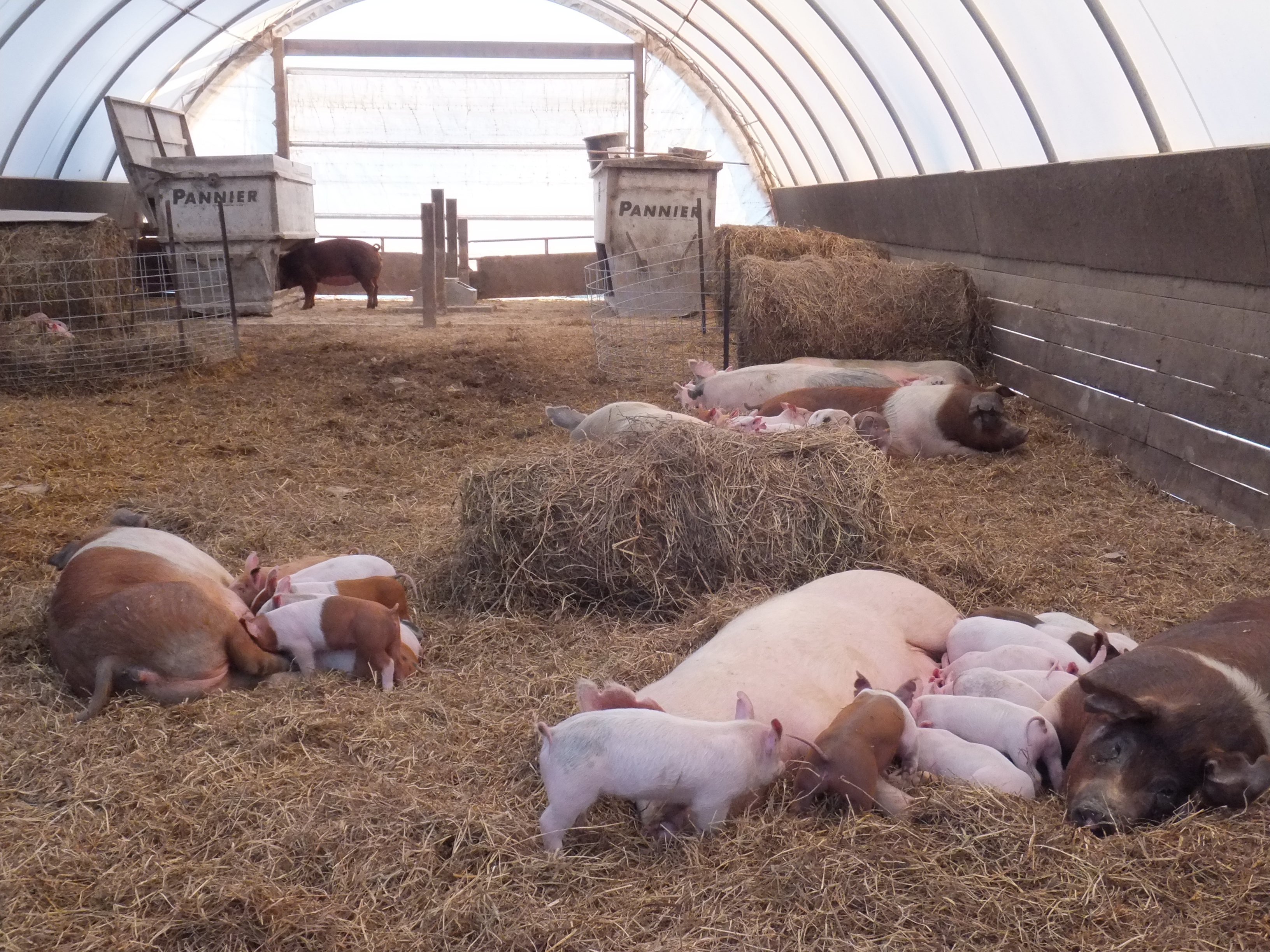
The pens I built worked fine.  I kept the litter confined for 7 to 10 days, letting the mother out for feed and water twice a day.  After that, I just took out the wire panel and let the litters co-mingle.  You can see that in the photo below.

The pens were about nine feet by nine feet.  I just purchased ten English style farrowing huts from Port-A-Hut.  I fear they may not be large enough, measuring nine feet by 5 and a half feet.  Time will tell.  The huts will give me more flexibility, allowing me to farrow outside of the hoop barns.


Piglet Processing

February 27, 2012

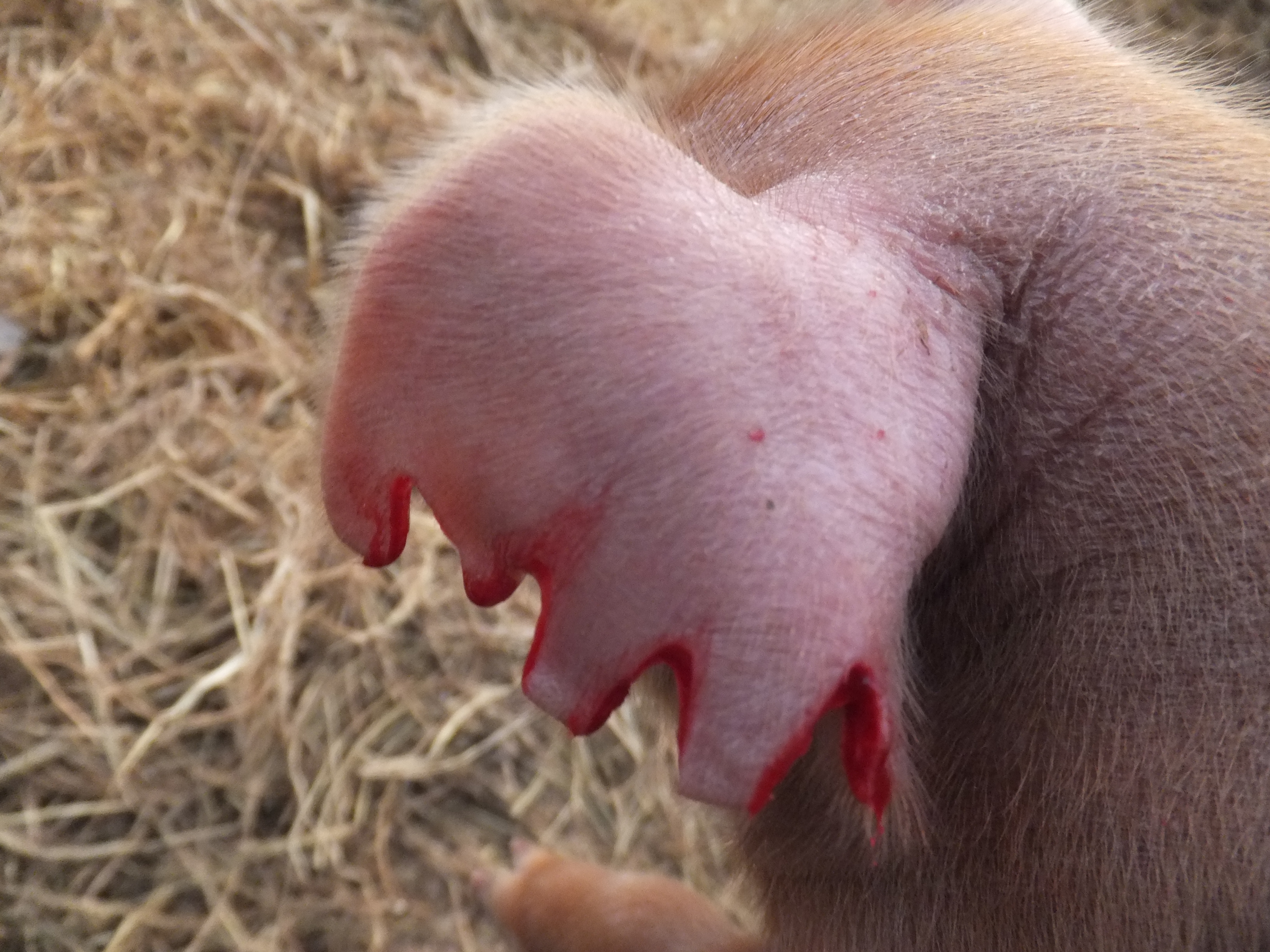
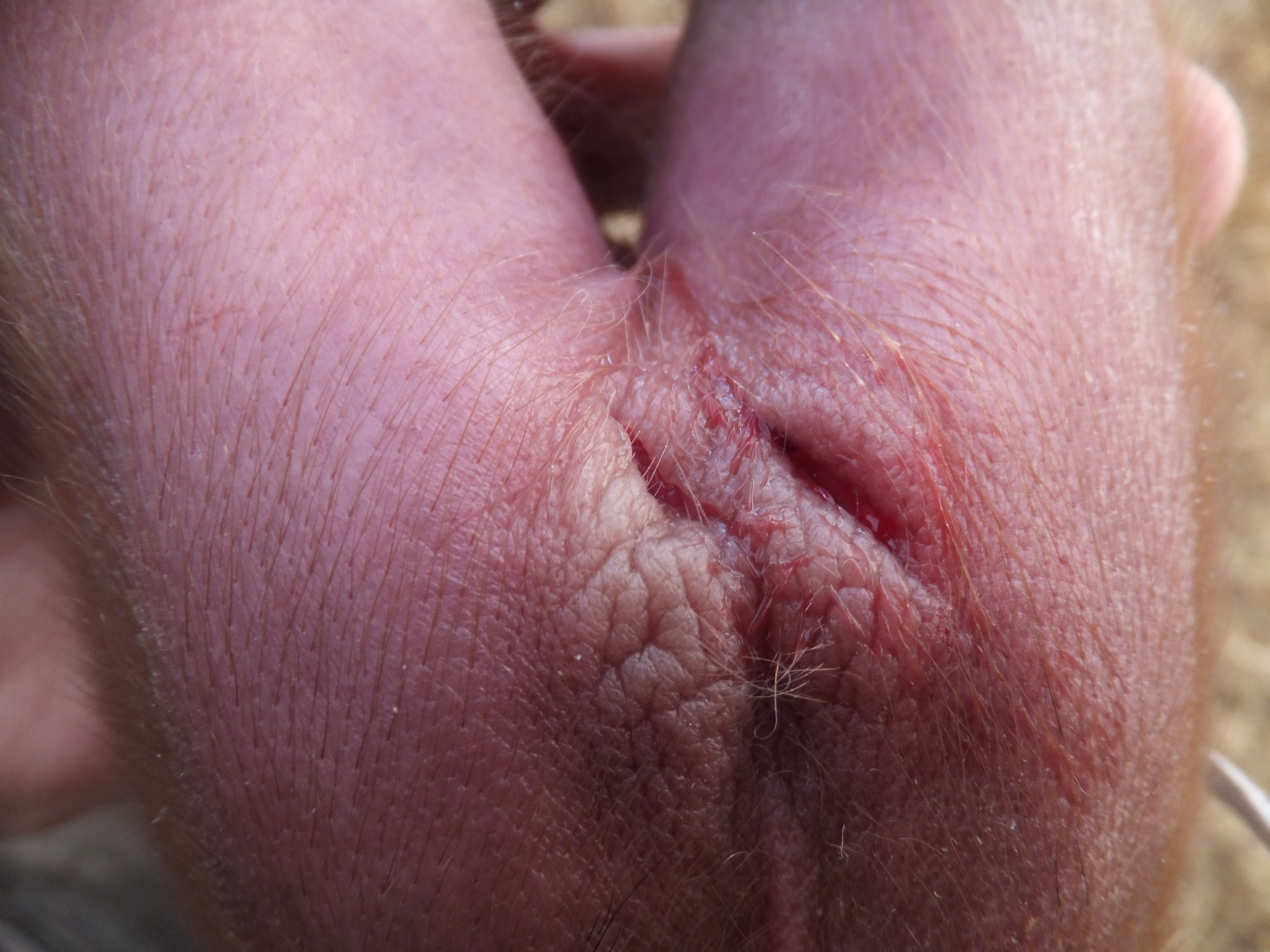
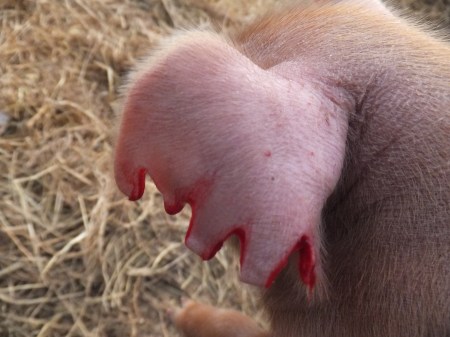
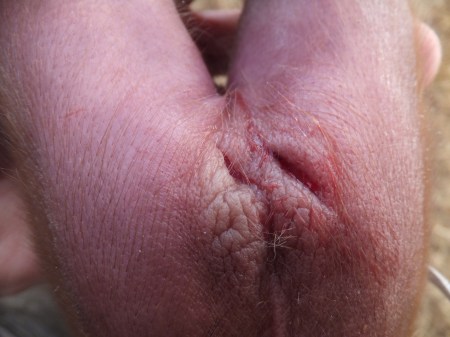
I do three procedures on the baby piglets when they are a couple of days old.  Pictured above is a freshly notched ear.  Pictured below are the castration incisions after pulling the testicles out.  The third procedure, not pictured, is an injection of iron into the neck muscle of the piglet.

The first procedure is done to individually identify each piglet.  The notch is easily readable for the rest of the pig’s life, so no other identification is needed.  I use the international system, with the right ear designating the litter, and the left ear designating the piglet within the litter.

I castrate the piglets to prevent “boar taint” in their meat.  Boar taint is an offensive odor, released when cooking pork which has high levels of androstenone and skatole.  Castrating piglets nearly eliminates the chance of boar taint.

Boar taint doesn’t occur in all males.  Some producers use genetic lines with little incidence of boar taint.  Some countries butcher intact males at a young age and lower weight to reduce boar taint.

I’m unwilling to risk selling the meat from an intact male because of the potential to lose so many customers at one time.  I also like to butcher my hogs larger and older than the industry average, believing this contributes to taste and marbling.  If I didn’t castrate, I would have to keep the boars separate from the gilts, or the boars would be breeding the gilts before marketing.

Sow’s milk is deficient in iron, so piglets will suffer from anemia if another source of iron isn’t available.  On pasture, that source can be soil.  Since my piglets are on bedding, I decided to continue to give an injection of iron.  Iron injections are ok under organic protocols.

I’ve given vaccines to my swine in the past.  It’s best to wait until piglets are three weeks of age or older to administer the vaccine, as this is when the passive maternal immunity is wearing off, and the piglet’s own immunity is developing.  As this would require catching piglets, I think I’m going to try not using any vaccines.

I would like to make a video of my piglet processing protocol and post it on Youtube.  I’ll let you know if I ever do.

New Ritchie Waterer

February 19, 2012

I put a new waterer in this past fall.  One disadvantage to my farm is I don’t have a dependable, natural source of water.  I do have a waterway in my pasture which always flows with water in the spring, dries up during the summer, and is frozen during the winter.

As I wrote in “Sow Housing,” I’m housing different species of livestock together, so it’s convenient to have a heated combination waterer to water both cattle and hogs.  I also have some cows which I wanted to keep separate from their calves after weaning, so it’s also convenient that the waterer has two sides.

What did I pay for all this heated convenience?  $1300 installed.

I put up a temporary fence for the winter so the cows could access the waterer from the yard.  They are being fed hay on the cornstalks.  Unfortunately, the winter has been so mild, the ground hasn’t stayed frozen, so they are damaging a hay field they need to walk across.

Below is a picture of the inside.  The water pipes and heating elements are easily visible.  The thermostat is the round knob towards the top.


2012 Price of Hog Feed

February 6, 2012

I did some figurin’ on hog feed prices.  I like to do this every year.  The current prices I’m using include: corn $.10/lb, soybean meal $.17/lb, pig premix $.40/lb, sow premix $.49/lb.  This is using $5.60 per bushel corn and $340/ton soybean meal.

I put 150 lbs. of sow premix in every ton of sow feed and 100 lbs. of pig premix in every ton of pig feed.

The sow gestation ration uses 250 lbs of soybean meal per ton.  The sow lactation ration uses 540 lbs of soybean meal per ton.  So if you do all the math, gestation ration is $.14/lb and lactation ration is $.15/lb.

The pig rations use anywhere from 250 lbs of soybean meal per ton for the largest pigs to 600 lbs of soybean meal per ton for the smallest pigs.  I adjust the amount of soybean meal based on my feed budget and the size of the pigs.

After all the math, the cheapest ration for the largest pigs is $.12/lb and the most expensive ration for the smallest pigs is $.15/lb, with the in between rations falling in between.

There are more expensive rations for smaller pigs, but with my new farrowing system I plan to let the piglets nurse longer, thereby eliminating the need for the more expensive starter pig diets.

These rations are near the historical highs, but not quite as high as last year.  I think these prices are the new normal and we will learn to live with them.

I plan on experimenting with more grazing and feeding forages and alternative feedstuffs this year.  I’ll have feed and production records to analyze next year at this time.


Swine Nesting Instinct

February 2, 2012

I knew sows make nests before they farrow.  I didn’t know they spend so much time and effort on their nests after they farrow.

Look at this gilt raking the bedding with her front foot.  The bedding was more or less even, but she took one side of the pen down to the lime chip layer, and elevated the other side a foot or more.  This had to take hours.

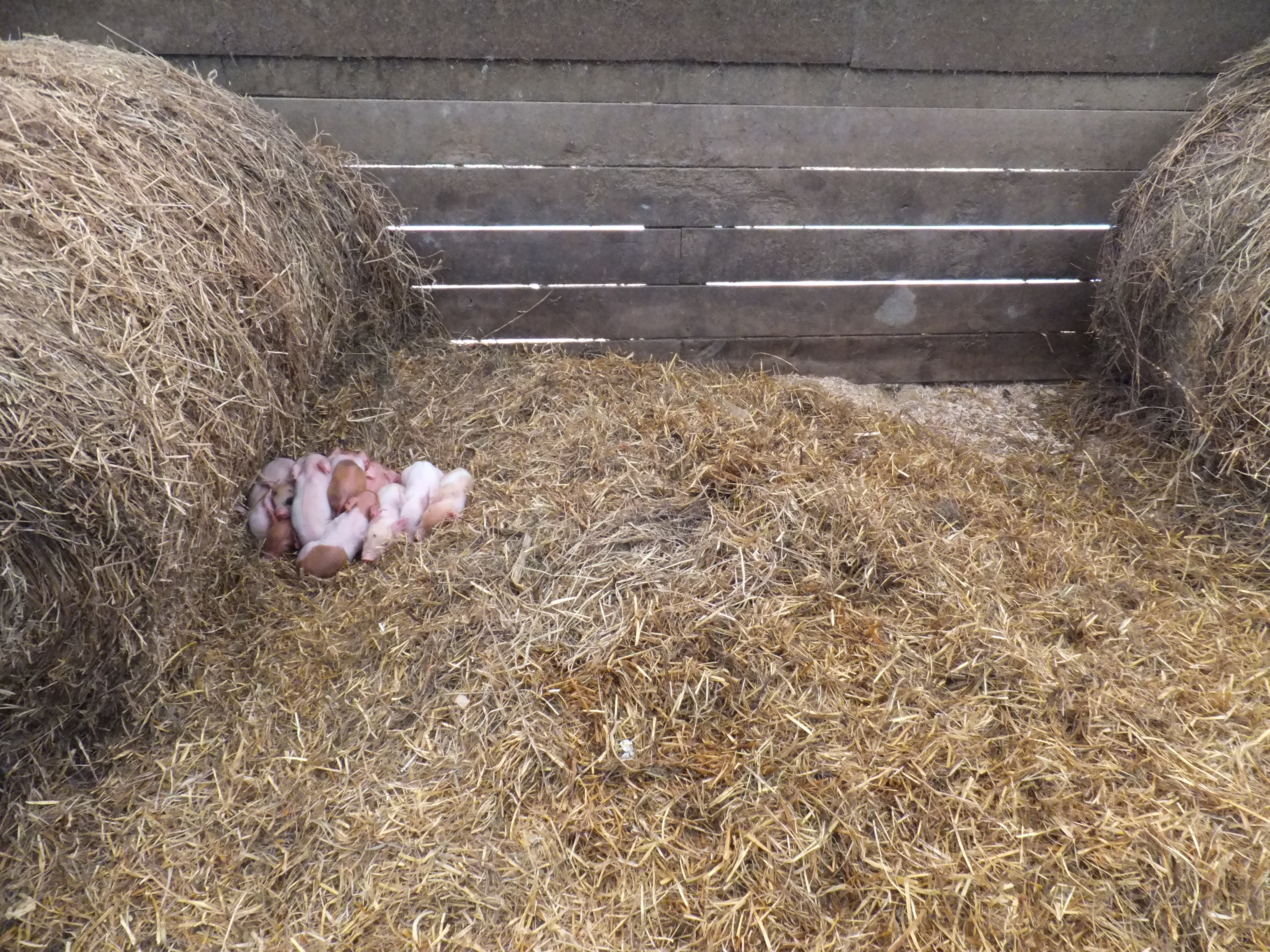
I watched one gilt tear bedding off a bale with her mouth and carry it to her nest.  All of them do it to some extent.  Below is another picture showing a litter in an elevated nest.


Forage for Swine: Oat Bale for Sows

February 1, 2012

Inspired by Walter Jeffries, who raises hogs with forage as the primary feedstuff, I decided to feed the sows a round bale of oats.  I baled these last summer when my oat fields blew down in a storm.

My plan had been to combine the oats, removing the oats from the straw, then bale the straw for bedding.  I had to use a backup plan, and cut the oats before they were ready to be harvested, and bale them as forage.

Cattle will readily eat this forage, but I hadn’t considered feeding it to swine until reading Walter’s blog.  It’s notable that I’m being inspired by the outliers.  Thank you, Walter.


Duroc Gilt, Nursing Piglets

January 24, 2012

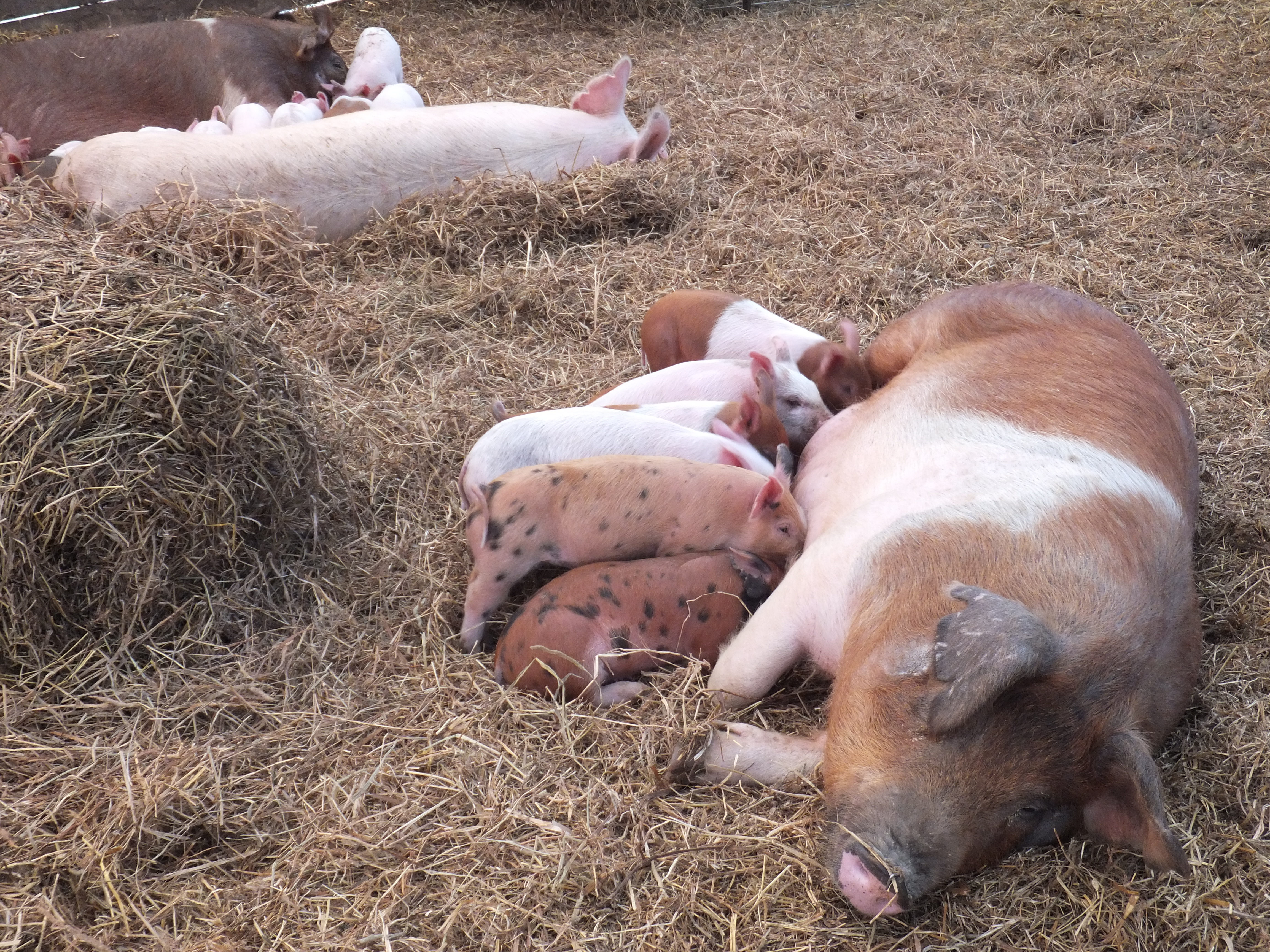
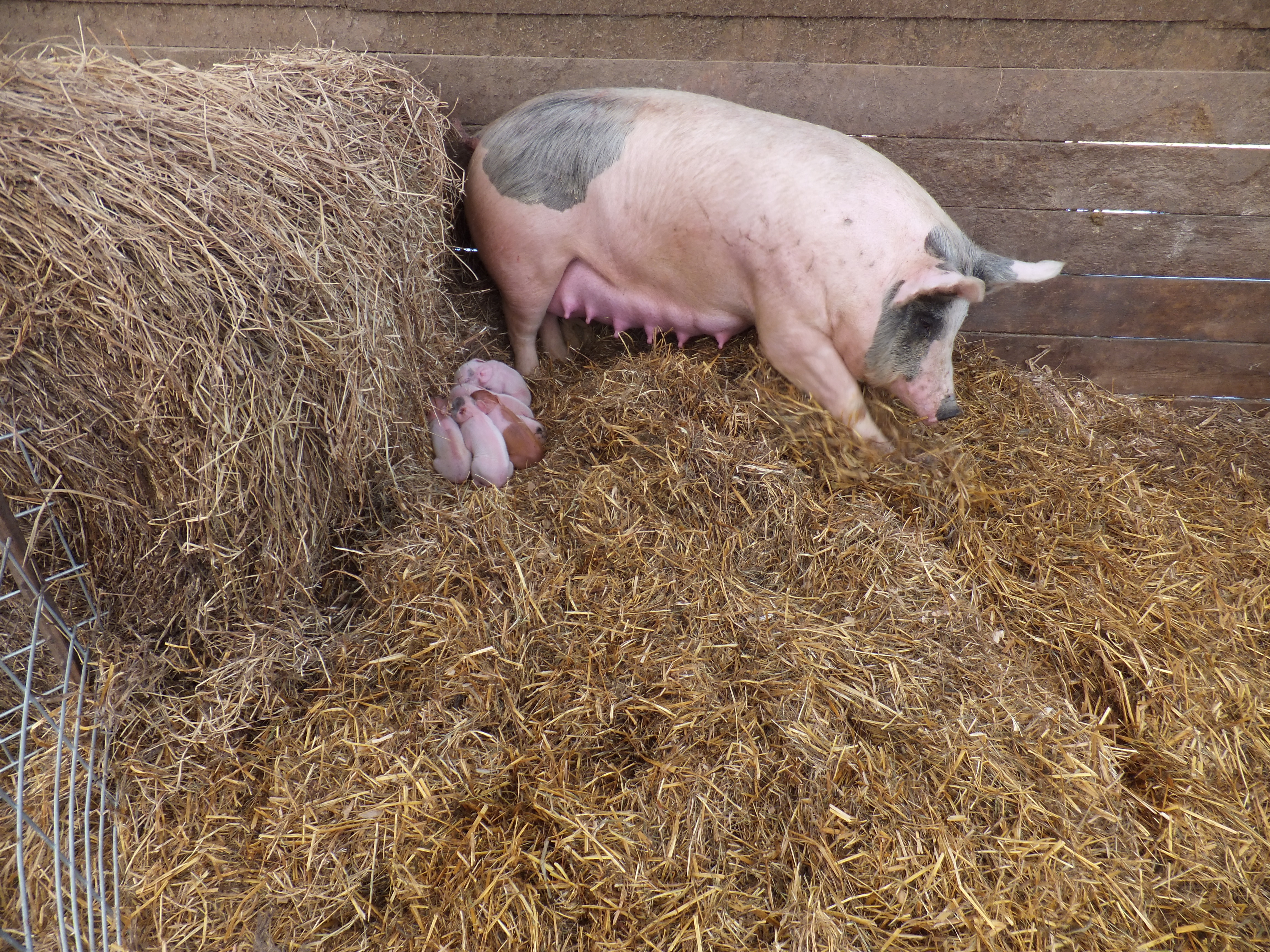
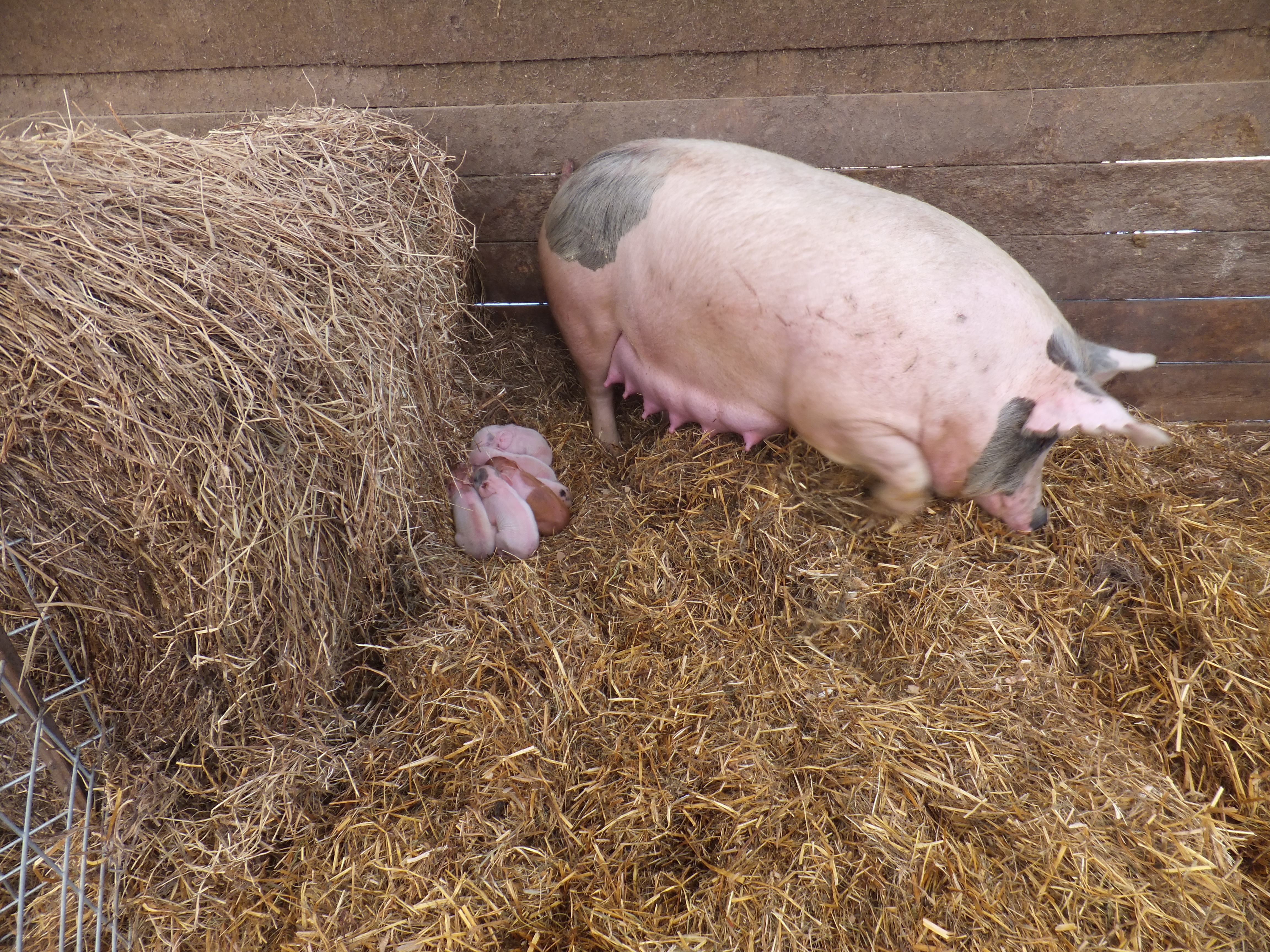
This is a picture of one of the most recent litters.  I’ve had three littermate Duroc gilts farrow.  Each is an excellent mother.

The Duroc breed is not considered good for mothering ability.  There are some genetic lines within the breed, however, which have been selected for mothering ability.  I’ve been selecting from within these genetic lines for a while.

Farrowing crates can mask poor mothering ability, and bring the worst performers closer to the mean.  Farrowing without crates allows a fuller expression of a sow’s maternal instincts.  I’m happy to see positive results from my years of selection.


Farrowing in Hoop Building in January

January 22, 2012

Splitting up farming with my parents means I needed to find a different way to farrow.  We used a combination of crates and pens in a heated farrowing barn on my parents’ farm.  It worked well.  Last year we average 10 piglets born alive and 9 piglets weaned per litter.

I was excited to try farrowing in pens, because it’s a new challenge, and because I don’t like crates.  Crates do save piglets from crushing, however, so the question is, can I raise enough piglets this way to be economically viable?

Pictured above, I built ten farrowing pens in one of my hoop buildings so each sow and litter could farrow in privacy.  I used a combination of round bales of bedding and wire panels.  I used the bedding bales to make the pens larger, and to have dry bedding accessible at all times.

I didn’t think it would work very well to farrow in an unheated barn in January.  But I didn’t have many due to farrow, so I thought I would try it, so I could learn.

The first gilt farrowed two weeks ago when the temperature was in the 20’s.  The air temperature in the hoop building is about ten degrees warmer than outside.  She and the piglets did fine.  She had eleven born alive and one stillborn.  You can see the dead stillborn piglet mixed in with the placenta in the picture below.  The gilt laid on four piglets during the first 48 hours.  The younger the piglets are, the more vulnerable they are to crushing.  The remaining seven piglets are doing well.

The next two gilts farrowed during an extremely cold time.  Temps were around zero F with below zero wind chills.  Those piglets didn’t do well.  18 out of 20 piglets froze or were crushed in the first few days.

Two more gilts farrowed last night.  Temps are in the 30’s.  They are doing well.

Pictured below is a behavioral trait I want to select for genetically.  Instead of just flopping down and crushing piglets, the gilt scoops out a bowl in the straw with her snout, kneels on her front legs, thereby extending her udder all the way down into the straw, then lies down.  Very few piglets will be crushed this way.