New Farm

August 25, 2011

Big news.  I’m splitting up farming with my parents.

A little background.  My parents own 510 acres with roughly 200 acres tillable, and 300 acres pasture.  I own 120 acres with roughly 80 acres tillable, and 40 acres pasture.  We have managed our farms as a collective farm for the past 17 years.

We raise beef cattle and hogs, pasturing and growing all the forages for the cattle, and growing all the corn and oats and straw bedding for the hogs.  Soybean meal is purchased for the hogs.

A few years ago, I started a partnership with a couple about my age to direct-market an increasing amount of our beef and pork in the Madison markets.  This is where my passion lies, and I want to continue this business.

So I’ve been spending a lot of brain power figuring out how to do this on my farm.  What I’ve decided so far is to buy steers in the fall and grass-finish them the following green season.  I believe I have enough pasture and forage to raise enough cattle to meet the demand of our direct-market.

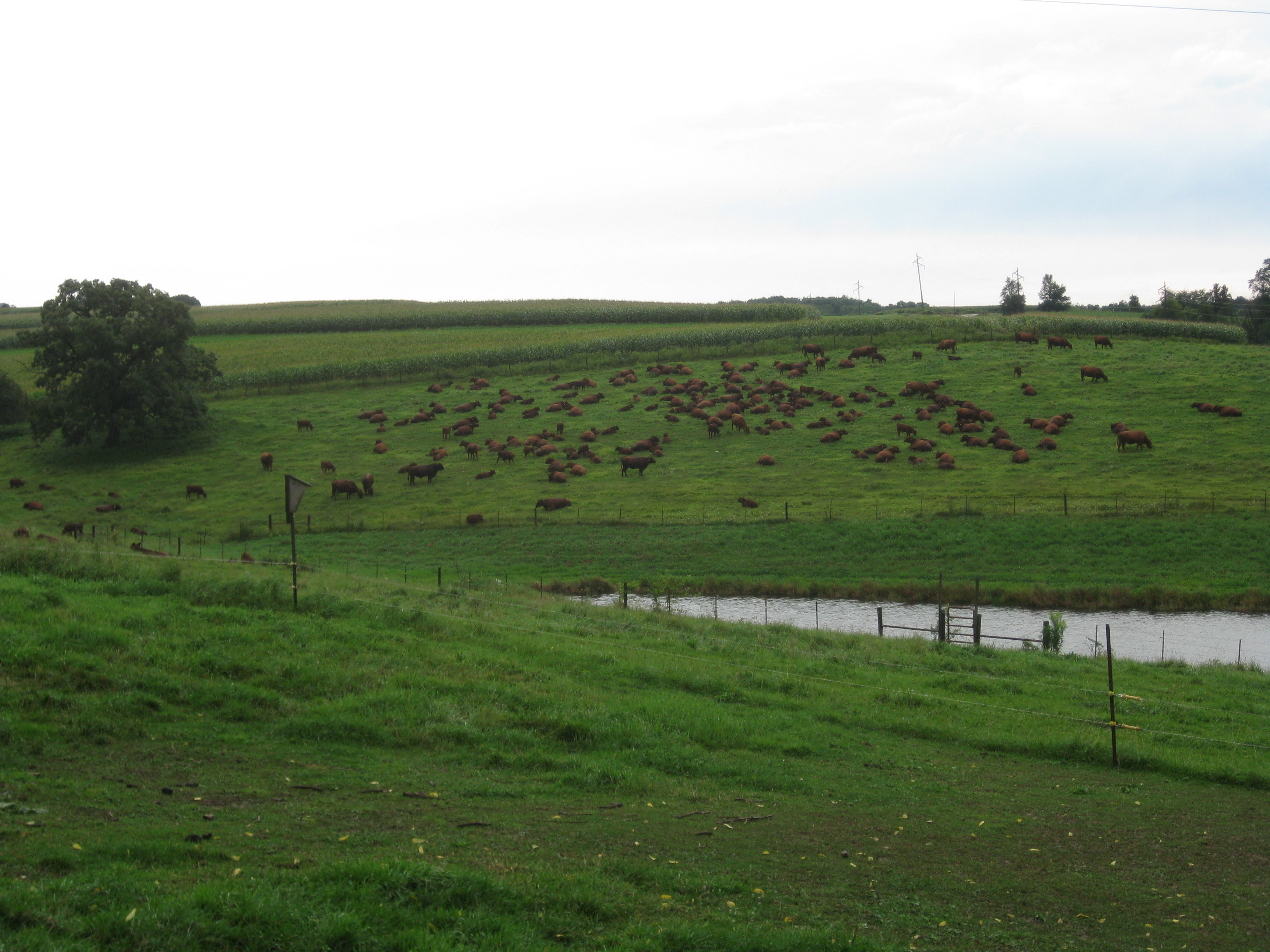
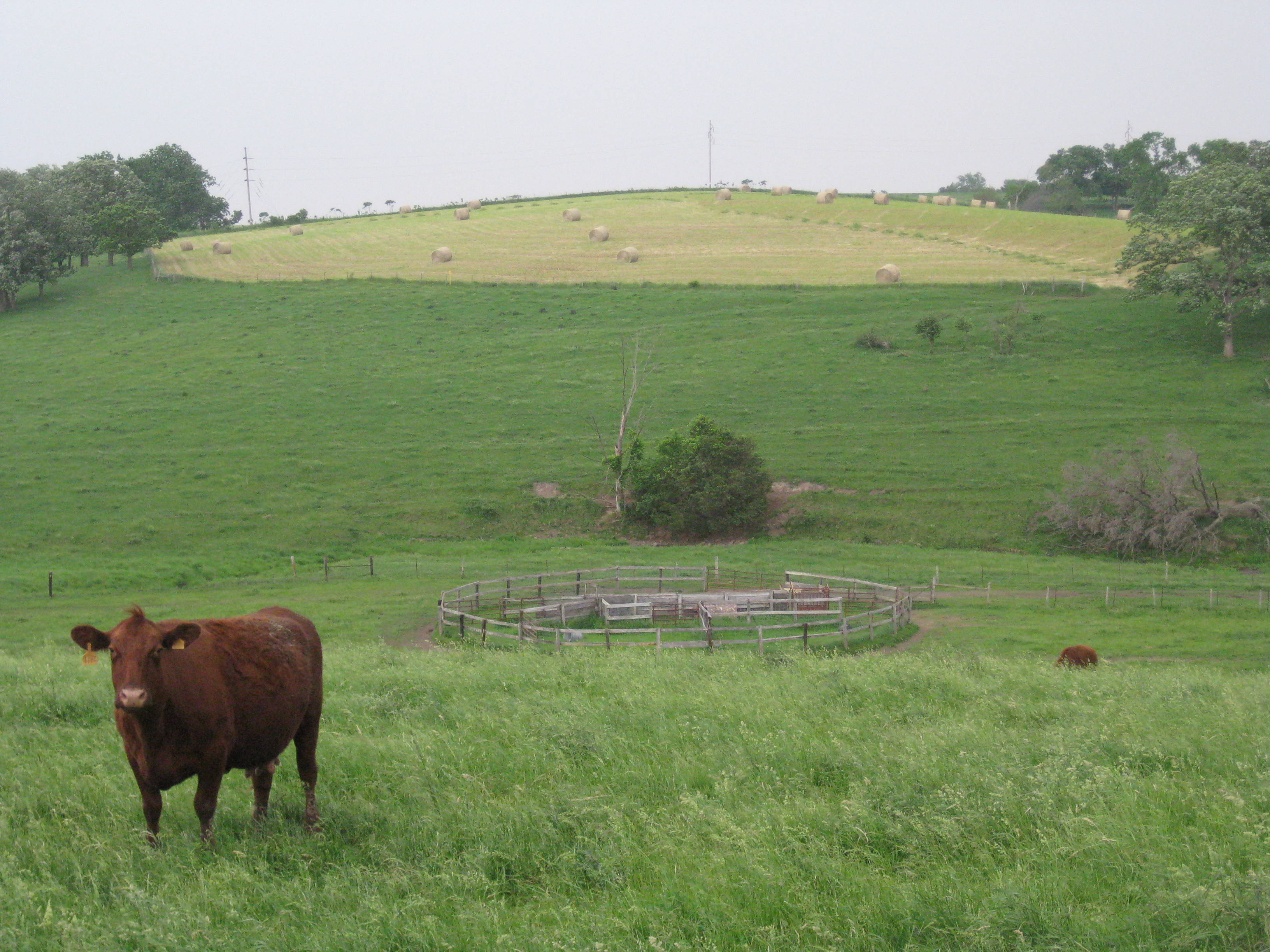
What I’m going to have to give up is the beautiful herd of cows and calves  pictured below.  I simply don’t have enough land to have everything.

I am going to continue to have my swine breeding stock.  Genetics is another one of my passions, so I have to continue to play with the genetics of something.  I plan on raising just enough hogs for my direct-market.  I’ll probably have to purchase more of the grain than I do now.

Pictured below is a Duroc boar I raised who will be the first herdsire on my new farm.  I haven’t named him yet, so I thought it would be fun if you have a suggestion to leave a comment.  I’ll pick the best name out of your suggestions.

This blog will be one of the biggest beneficiaries of this change.  Since I no longer have anyone’s privacy to protect but my own, I can be as open as I am brave.  I’m looking forward to sharing more.


Square-Foot Saturday 17, August 20, 2011

August 20, 2011

Ideal growing conditions with heat and plenty of moisture.


Like Sharks Circling a Chum Ship

August 14, 2011

Herald of spring,

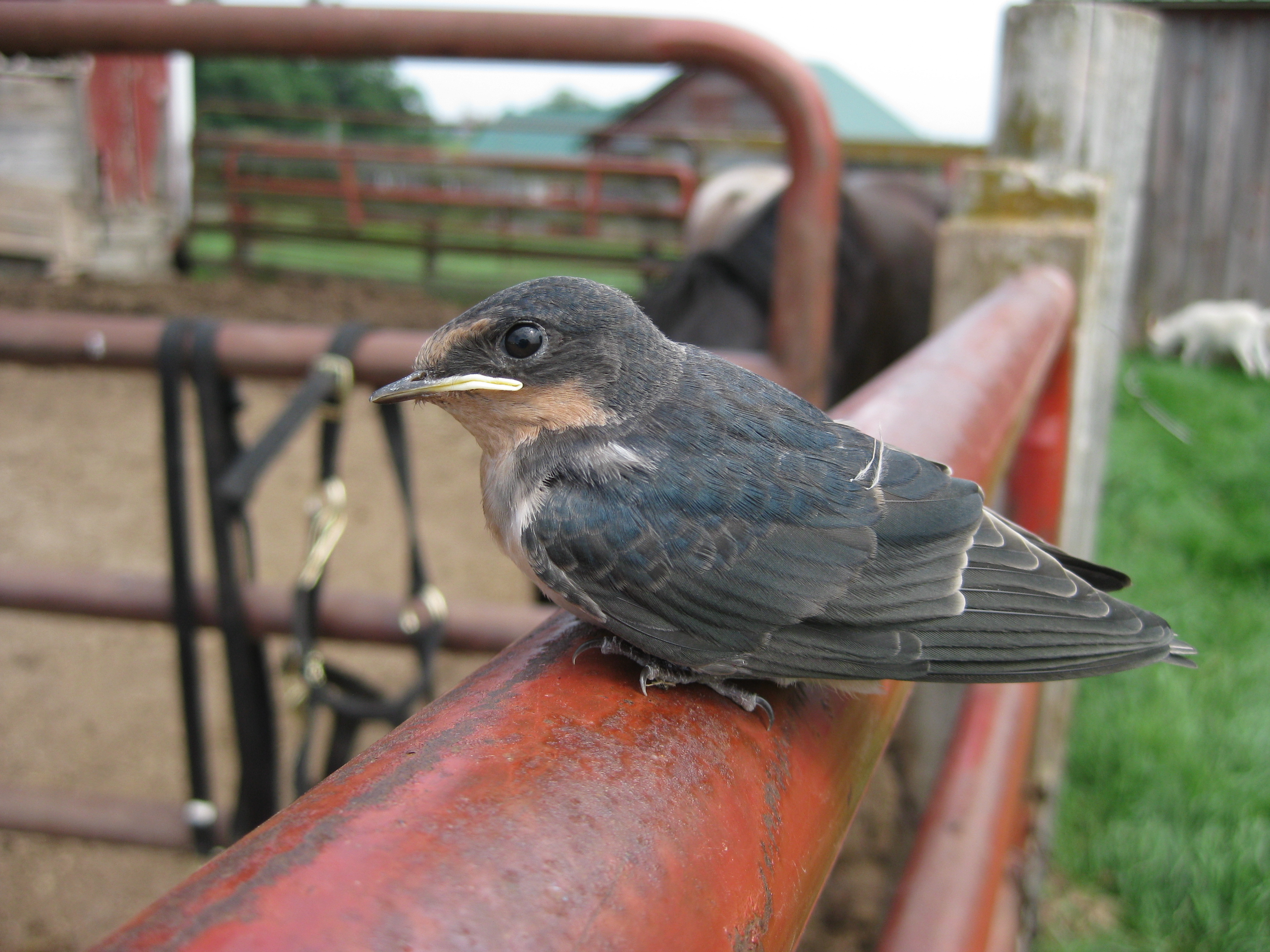
Barnswallows are back!

Tropical winters,

Wisconsin summers.

New mud nest,

Or top-mud the old one.

Two or three clutches,

Of insatiable young.

Dive-bombing children,

And curious cats.

Feeding their young,

Who wait on the line.

Finally feasting,

On Leafhoppers flying.

Circling tractor,

As I mow hay.


Square-Foot Saturday 16, August 13, 2011

August 13, 2011

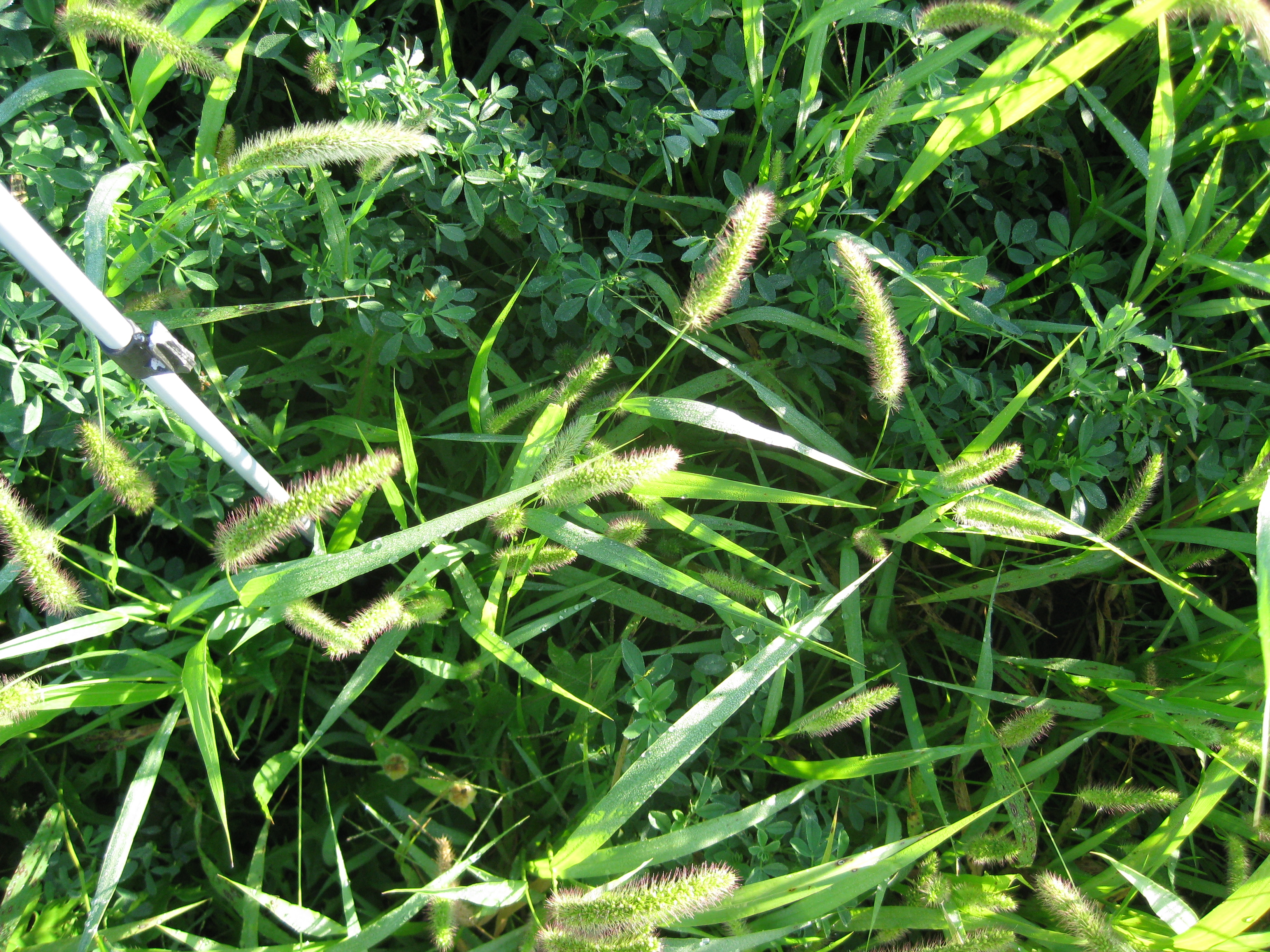
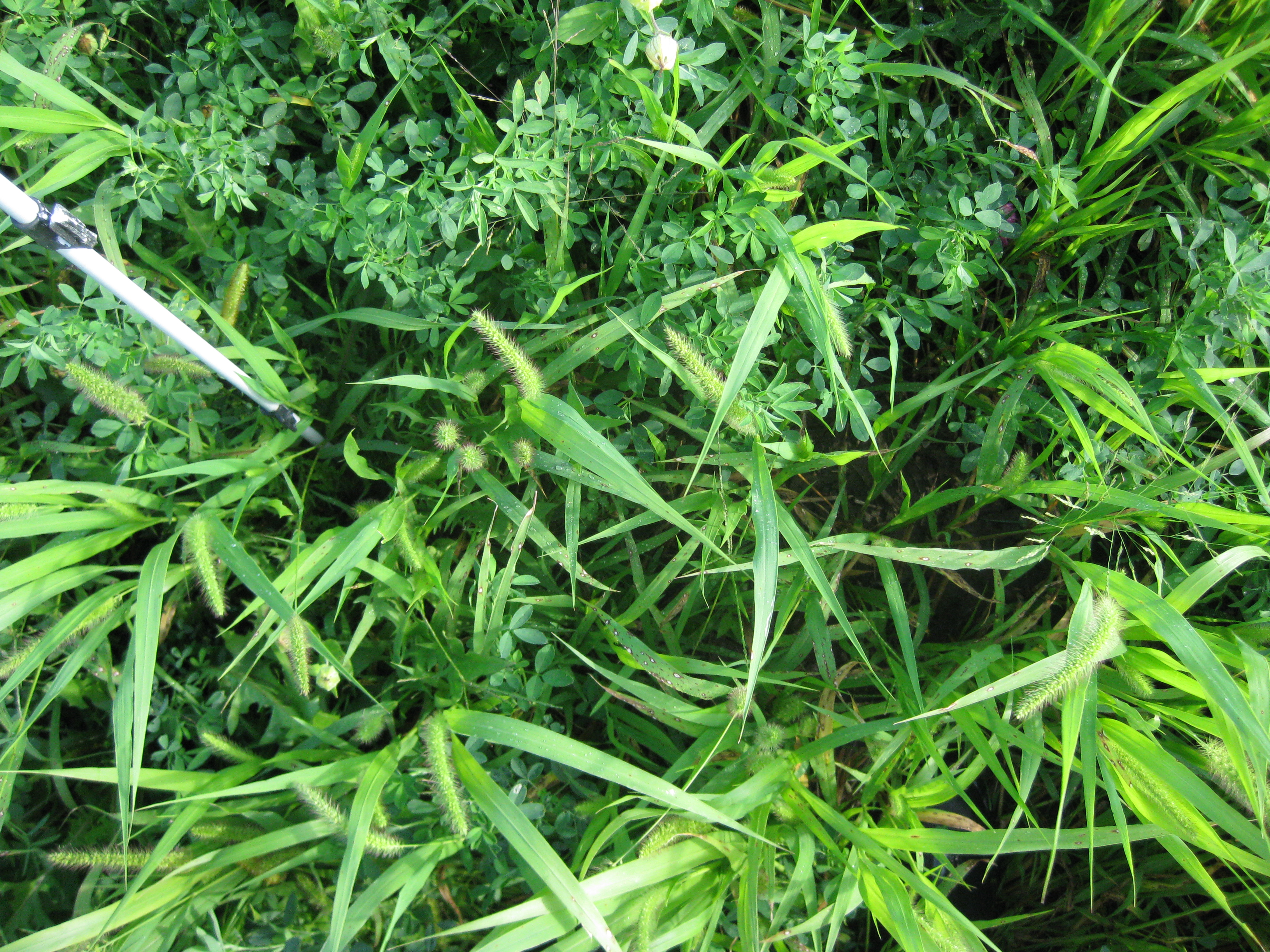
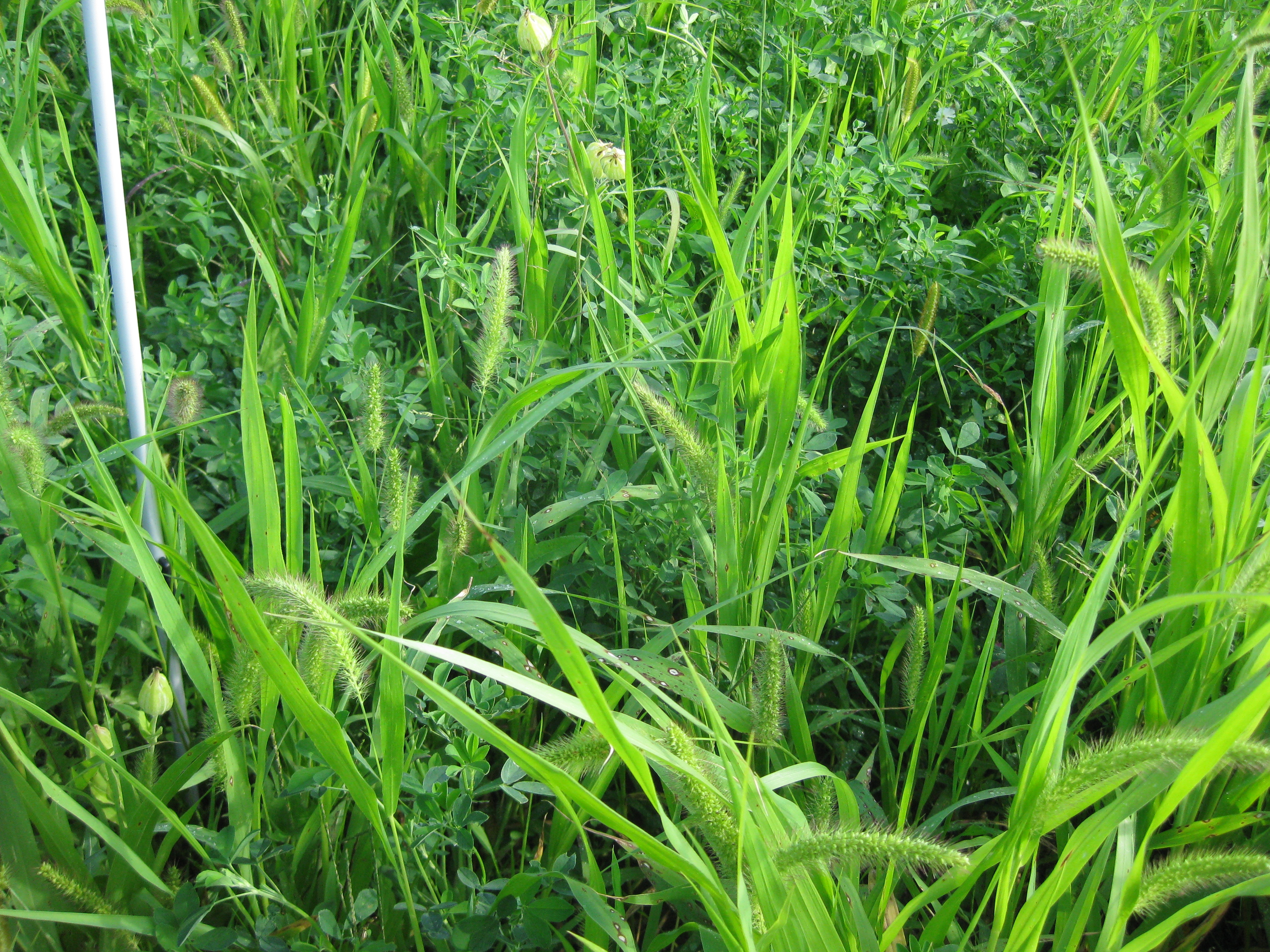
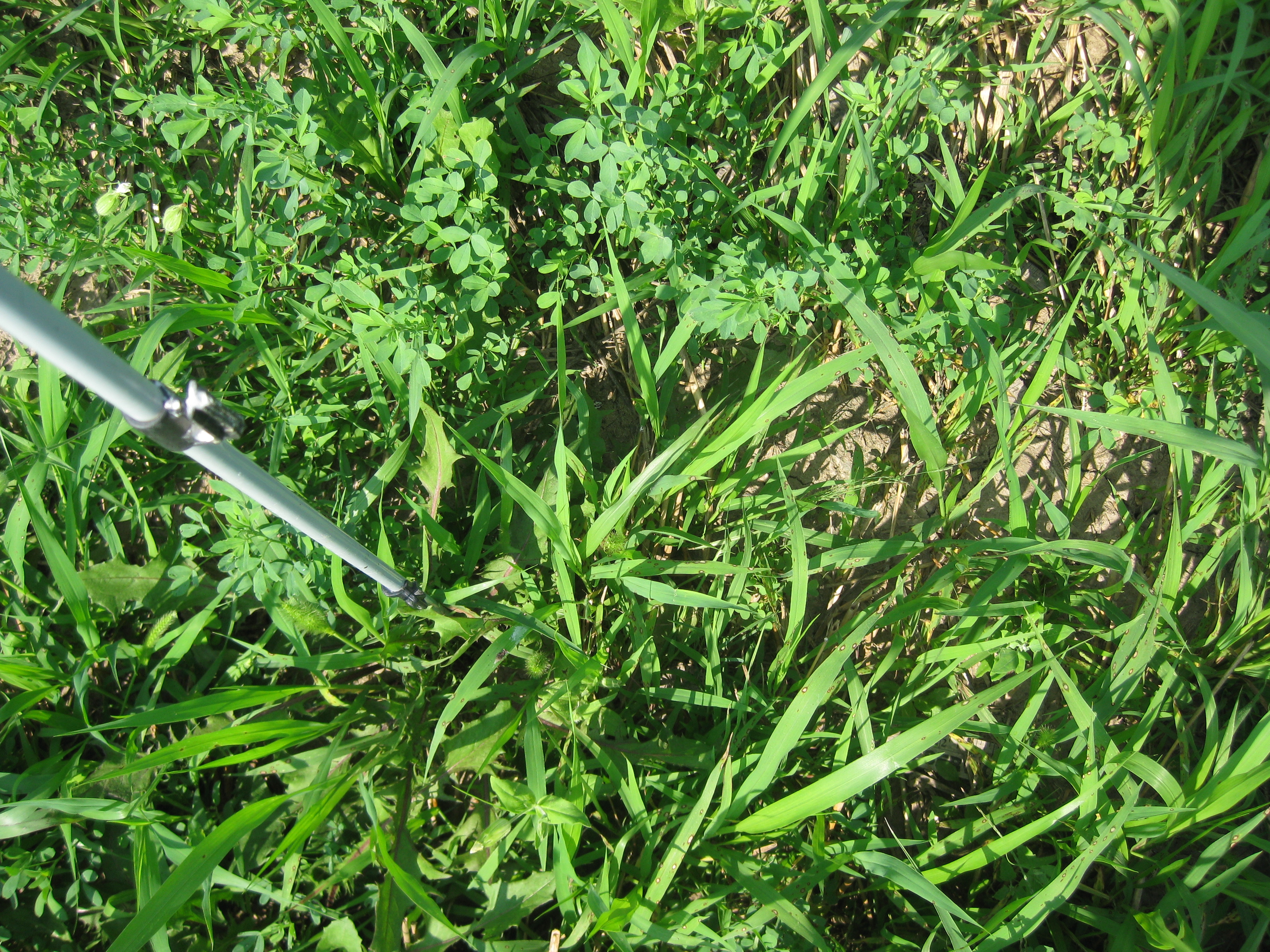
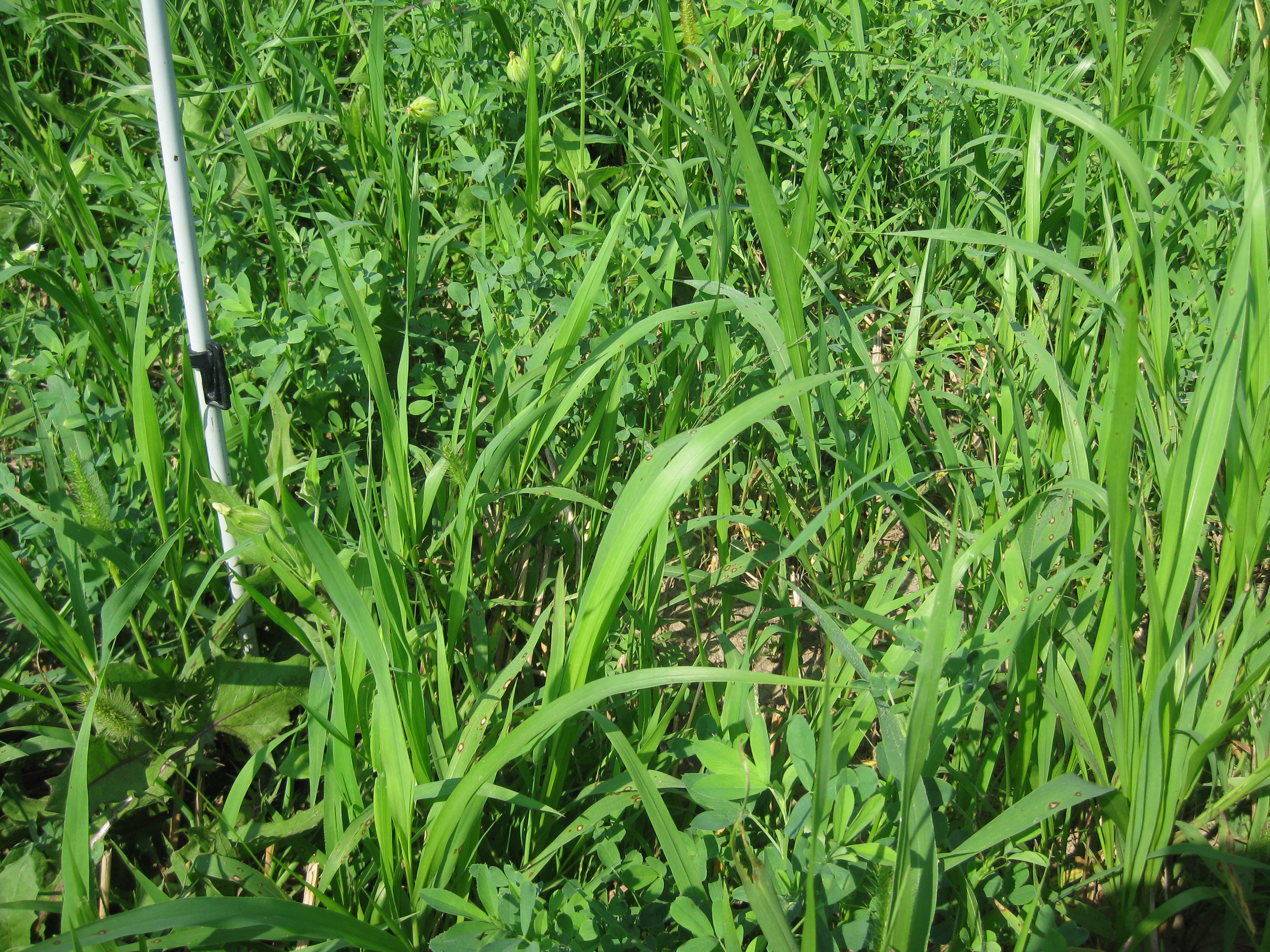
I’m disappointed in this alfalfa/grass stand.  There is as much Foxtail as alfalfa.

Looking at the positive though, I appreciate the rain which helped the alfalfa, grass, and weeds grow.  The farmers of Texas and the south probably haven’t had enough rain for weeds to grow.


Square-Foot Saturday 15, August 6, 2011

August 6, 2011

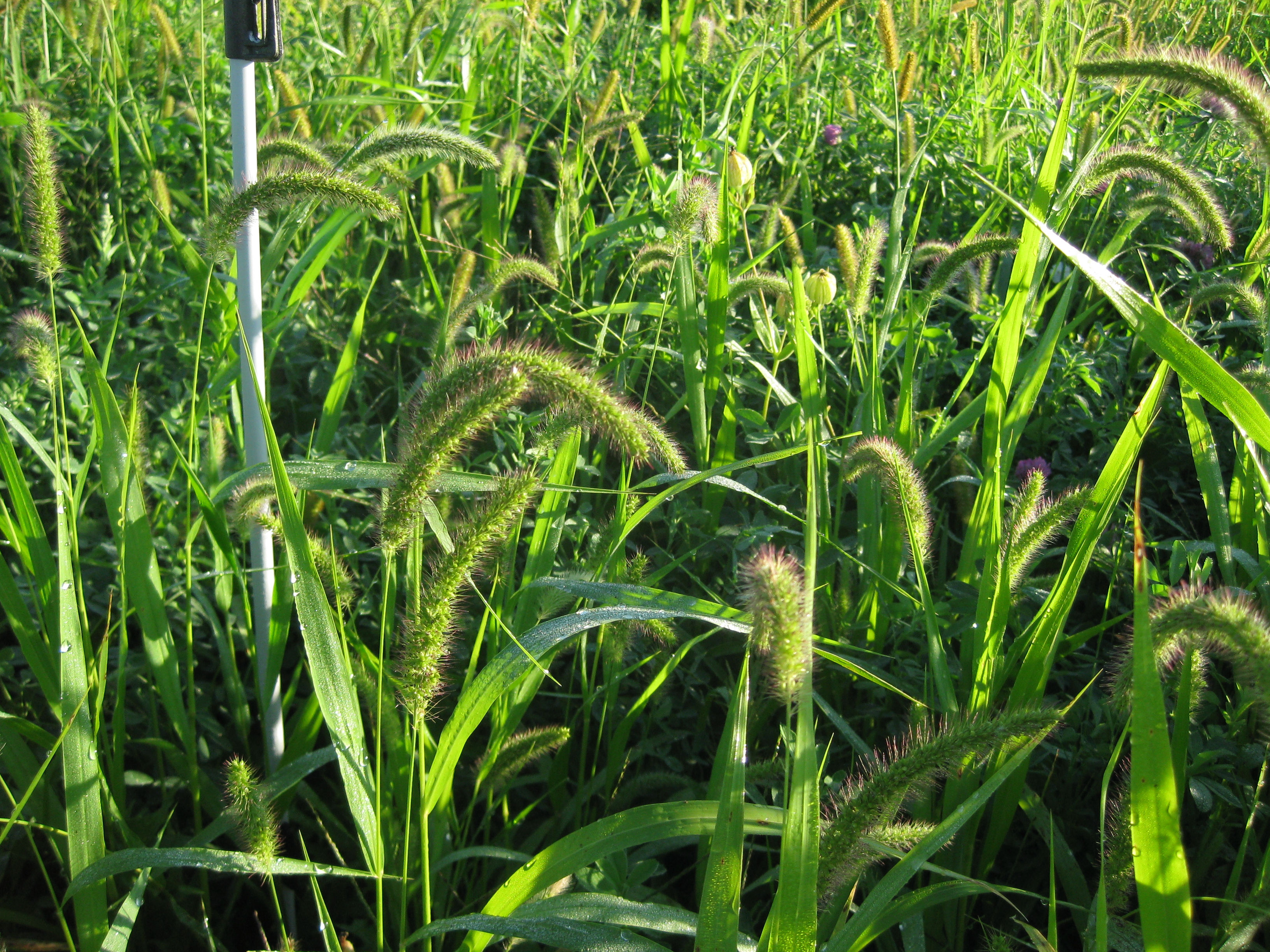
The alfalfa is growing, but so is the Foxtail, (weed).


Baling Hay

August 2, 2011

Field of baled hay.

Below is a picture of the Round Baler, unloading a finished bale.  Hay is picked up underneath the baler.  The belts keep tension on the hay as an ever-increasing amount is rolled up, resulting in a tightly-packed round- bale of hay.

Photo  by Melissa.

Each bale weighs about 1500 lbs. and feeds at least 50 cows a day in winter.  We feed the cows by unrolling the hay on the frozen ground so all the cows can eat at once.  They eat their daily allotment in a few hours.


Raking Hay

July 31, 2011

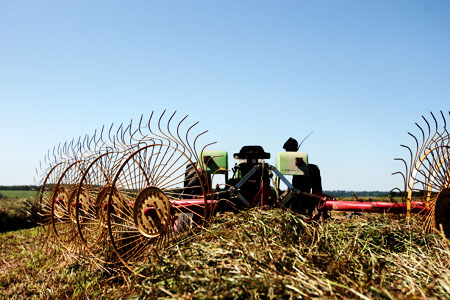
Field of raked hay.  After two to three days of drying, the mowed hay is raked into a double windrow, meaning two are merged into one, resulting in less time baling.  The hay continues to dry as the hay which was underneath is now exposed to the air and sunshine.

The picture below is of our wheel rake.  Each arm of wheels moves up and down hydraulically.  When the wheels are down, they turn along the ground moving the hay into the center.

Photo by Melissa.


Square-Foot Saturday 14, July 30, 2011

July 30, 2011


Square-Foot Saturday 13, July 23, 2011

July 23, 2011

The series without an ending.  Even after I’m gone, the land will still be here.

I have a box of arrowhead fragments, which the previous owner found during years of plowing and erosion.  Through conservation efforts, some of which he started, we no longer lose enough soil to find arrowheads.  But the box helps me remember we’re just here for awhile.


Down Corn

July 17, 2011

This was my worst field of down corn, Monday, after the severe storm.  We received close to three inches of rain in less than an hour.  Wind speeds of 70 mph were reported.

I was shocked when I looked out and saw the fields.  I examined it right away and figured it was a total loss, but held out hope because I only found one stalk snapped off.  Sometimes corn can pull itself back up if it’s early enough in the growing season.

And thankfully, that’s what our corn did.  The picture below is of the same field  on Friday.  The mud on the leaves shows how down it was.

Before me, Citygirlfriend had never known someone who actually talked about the weather.  I think she’s starting to see why we do.