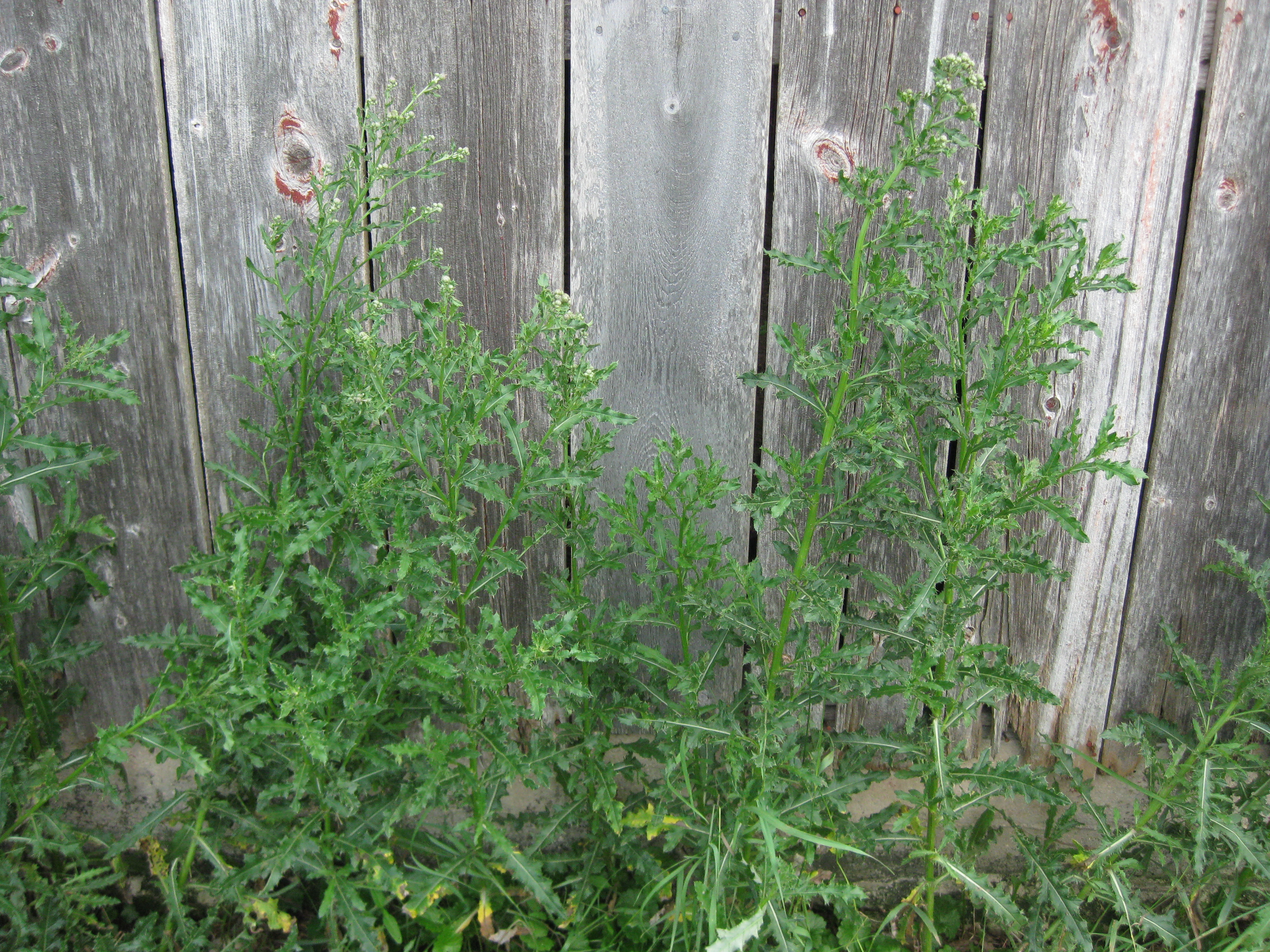
Canadian Thistle: Noxious Weed, Rhizome Example

July 7, 2011

Canadian Thistle (Cirsium avense)

Canadian Thistle is classified as a noxious weed in Wisconsin.  I love the way “noxious weed”  sounds.  I thought weeds that are the baddest of the bad are listed as noxious.  I found out it’s actually bad weeds, which are economically feasible to control.  I’m shocked.  It’s like the government having a most-wanted list with only relatively easy-to-catch criminals.

I can tell you why Canadian Thistle is a noxious weed on our farm.  Two words: Perennial and Rhizome.  Perennial means it comes up year after year in the same area.  Most thistles are biennial and relatively easy to control.  Don’t let the second year growth go to seed, and cut out the first year’s growth which is a rosette growing close to the ground, and you’ve got it licked.  A good herbicide applied around the first of June may kill two years worth of thistles, also.

A Rhizome is a root that travels laterally underground and sends up new shoots every so often.  This is a powerful weapon in a plant’s arsenal.  Kentucky Bluegrass is another example of a plant which uses rhizomes to expand.

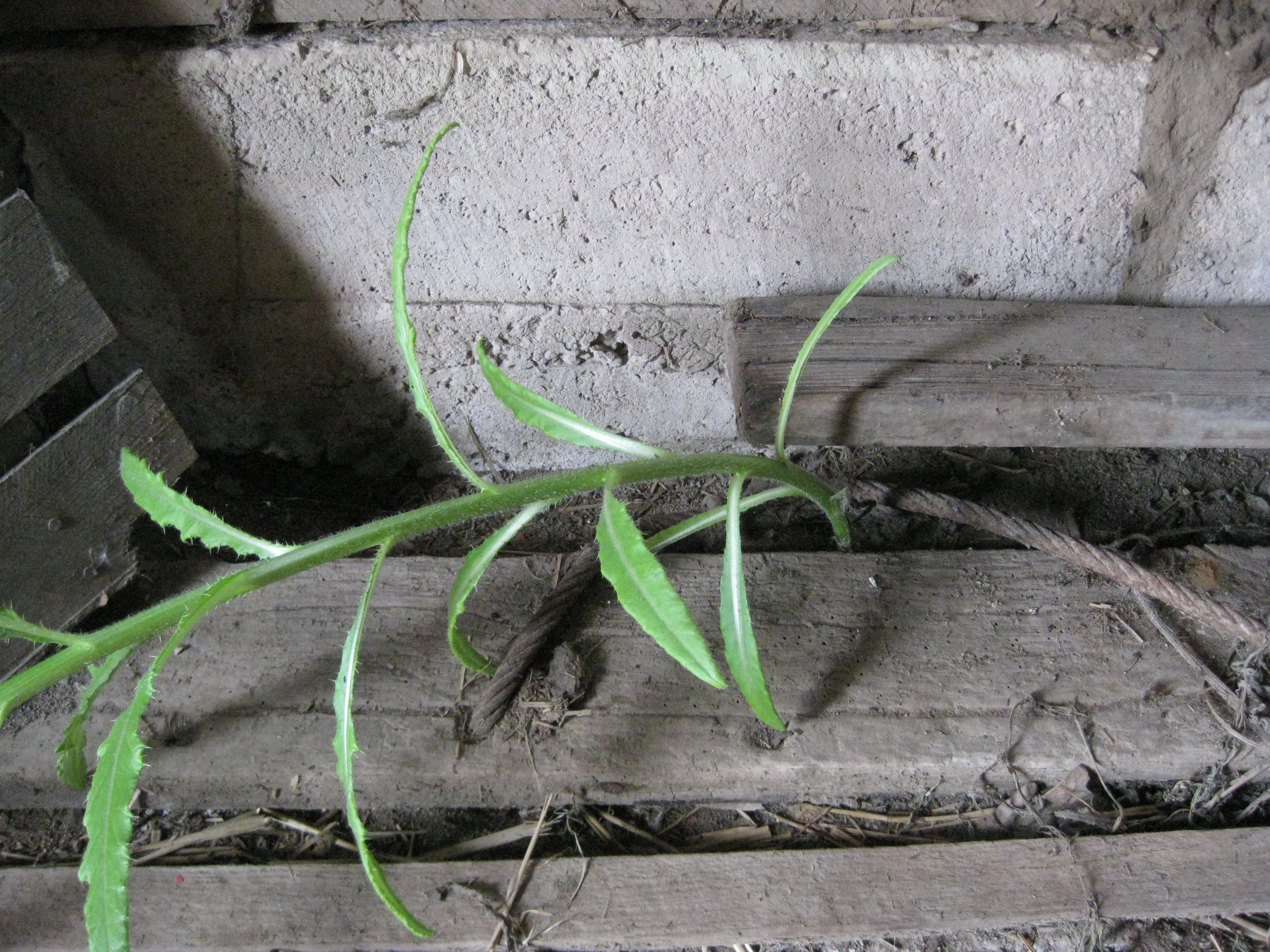
The picture below is a powerful example of rhizomes.  The Canadian Thistle growing along my machine shed found a crack in the concrete and pushed up a new plant inside the shed.
It’s a continual struggle to carve out a little space of our own.  Without us here, nature would overwhelm this place.  It reminds me of a poem I had to memorize in High School English.

Ozymandius

by Percy Bysshe Shelley

I met a traveller from an antique land
Who said: “Two vast and trunkless legs of stone
Stand in the desert. Near them on the sand,
Half sunk, a shattered visage lies, whose frown
And wrinkled lip and sneer of cold command
Tell that its sculptor well those passions read
Which yet survive, stamped on these lifeless things,
The hand that mocked them and the heart that fed.
And on the pedestal these words appear:
`My name is Ozymandias, King of Kings:
Look on my works, ye mighty, and despair!’
Nothing beside remains. Round the decay
Of that colossal wreck, boundless and bare,
The lone and level sands stretch far away”.


Alternate Pollinators

July 5, 2011

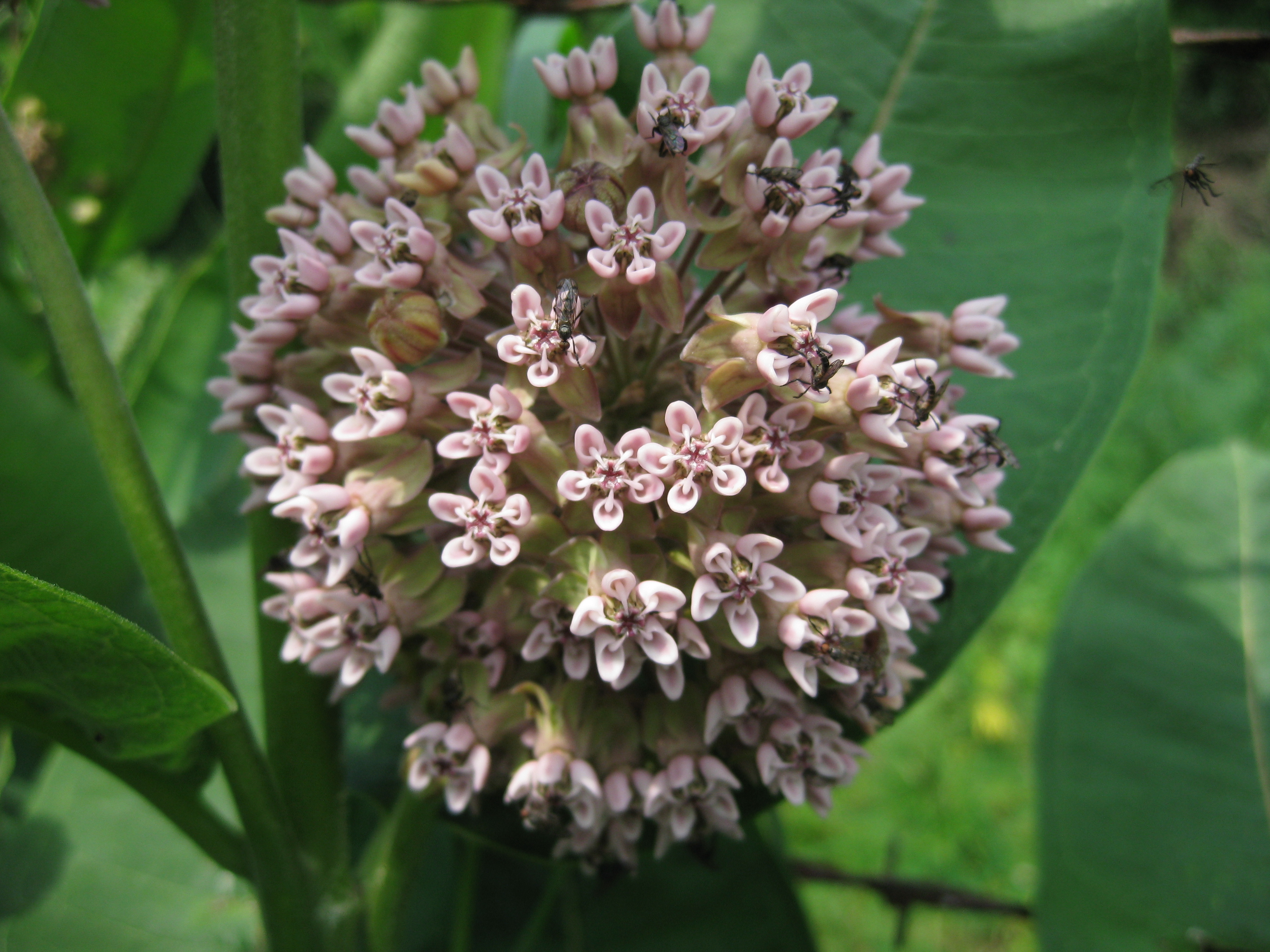
Common Milkweed (Asclepias syriaca)  flower.

If you click on the picture above, and blow it up, check out the winged pollinator flying in for a meal in the upper right corner.  The picture below shows a closeup of the flies.

This got me to thinking about alternate pollinators.  I shouldn’t even call them “alternate”, but that shows my thinking before I researched.  There are an estimated 200,000 wild pollinators, mostly insects, not one of them considers itself an alternate.

Everyone gives a lot of credit to honey bees, and the media was in an uproar over “Colony Collapse Disorder,” CCD, but I found out bees are not native to North America.  There are no native plants which require bees for pollination.

Bees are valuable for agriculture.  Some crops are highly dependent upon bees for pollination.  Some beekeepers are paid more to place their hives in Almond orchards than they receive for the honey produced.

A beekeeper friend of mine thought CCD was overblown.  He said, “Get the government to stop allowing the Chinese to import corn syrup mixed with honey, and the price of pure honey will go up, and beekeepers will find a way to combat CCD.  I for one don’t truck my hives all over the country chasing big dollars.  You know the bees mix with other hives and they come back home with every disease known to bees.”

The media turned a human economic problem into an environmental disaster.  The only real problem is to large-scale agriculture.  Plants will be pollinated, fruit will grow, some bees will survive.  To quote Jurassic Park, “Life will find a way.”


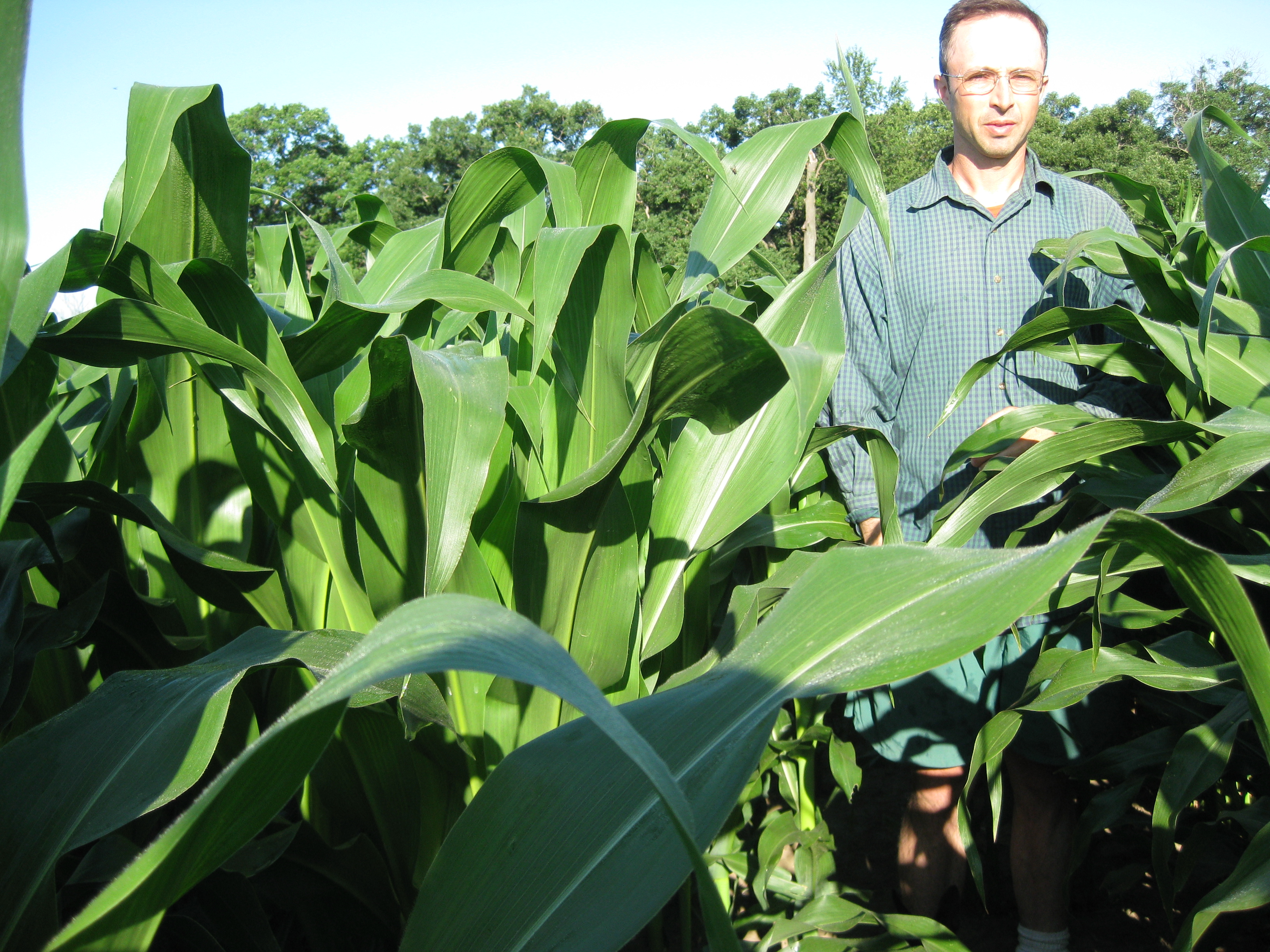
2011 Corn Height, 4th of July

July 4, 2011

This is a traditional 4th of July picture in my family.  Shepherd snapped the photo this year.  Links to the last two years are here and here.


Square-Foot Saturday 10, July 2, 2011

July 2, 2011

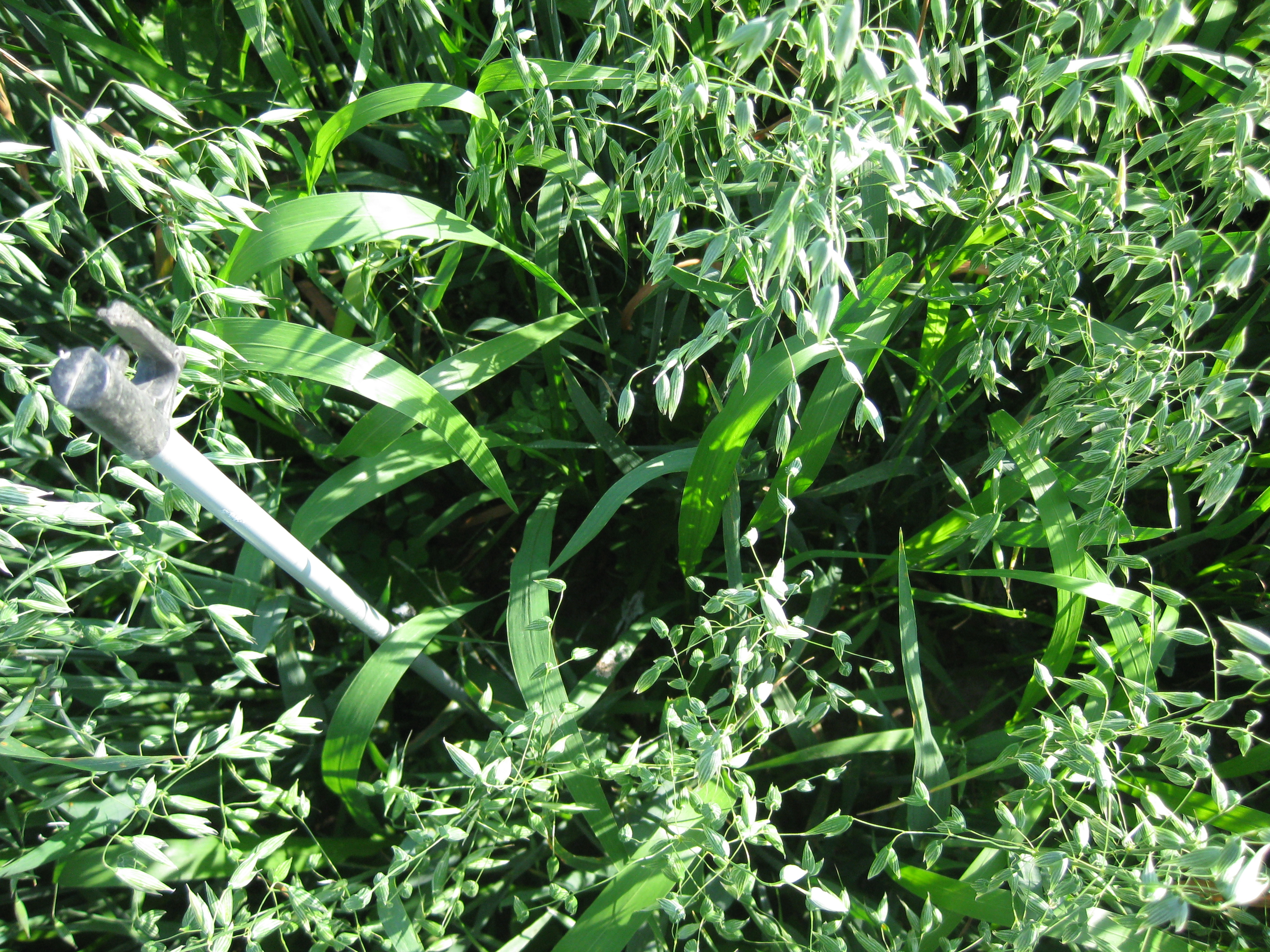
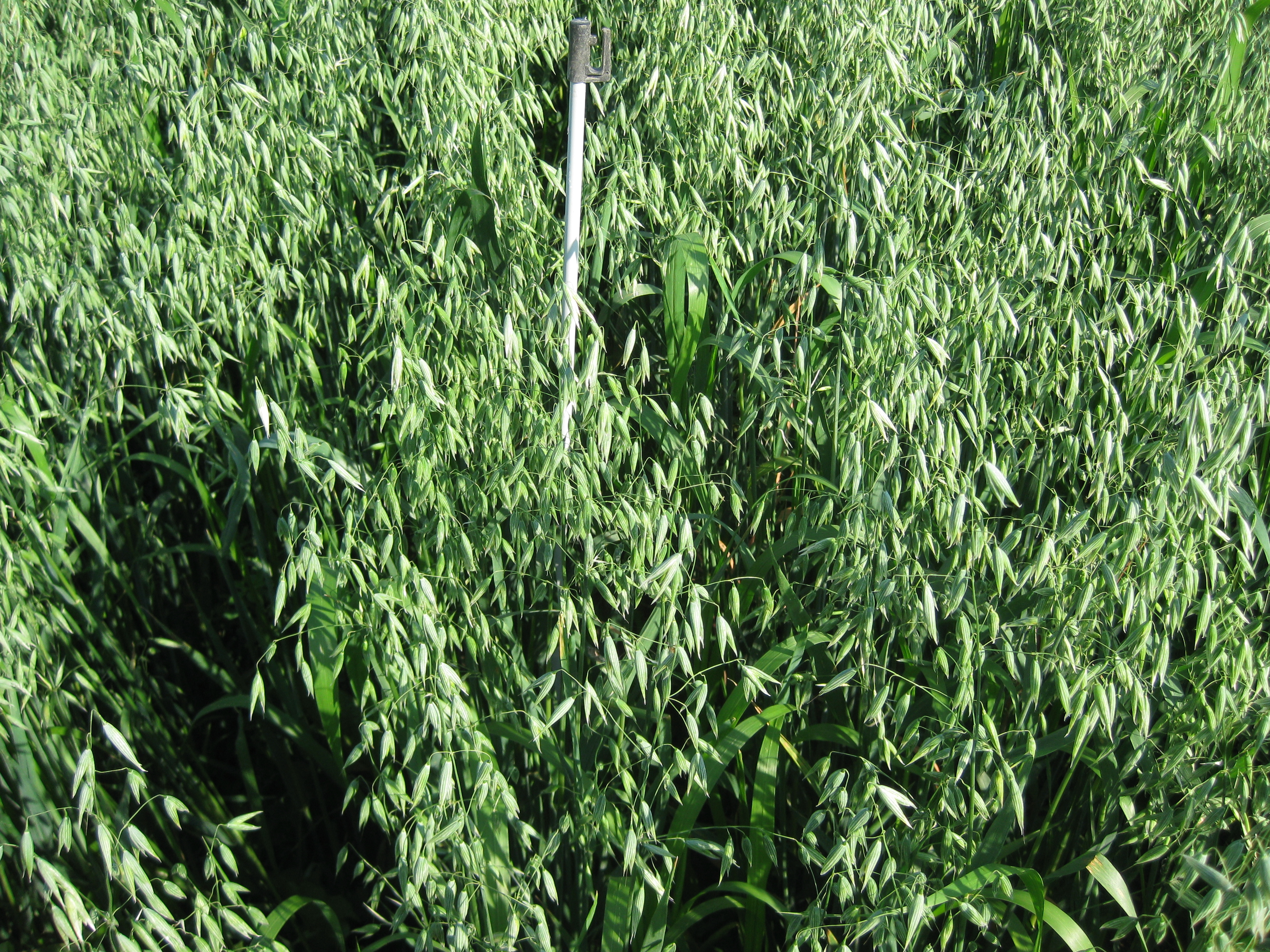
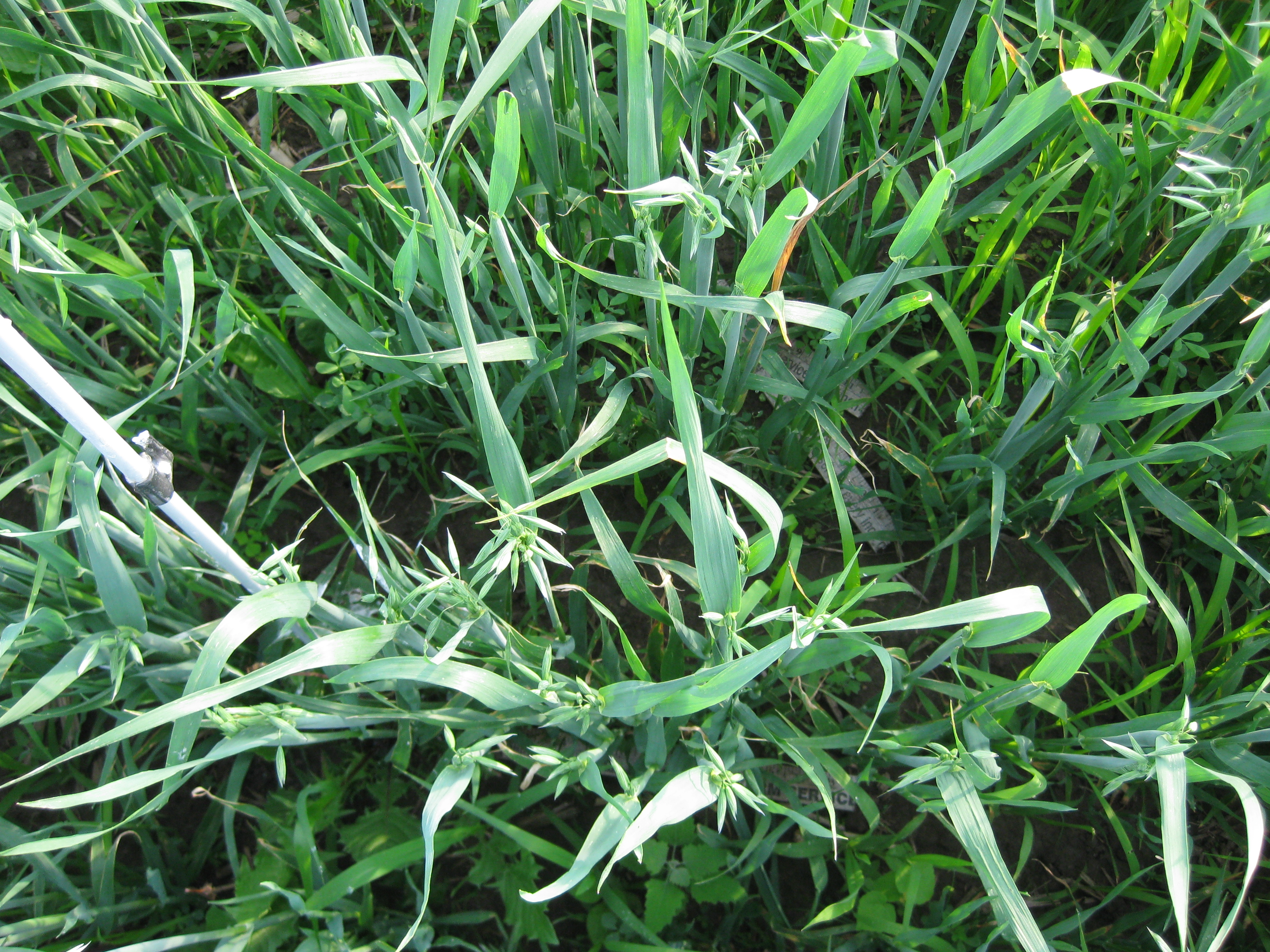
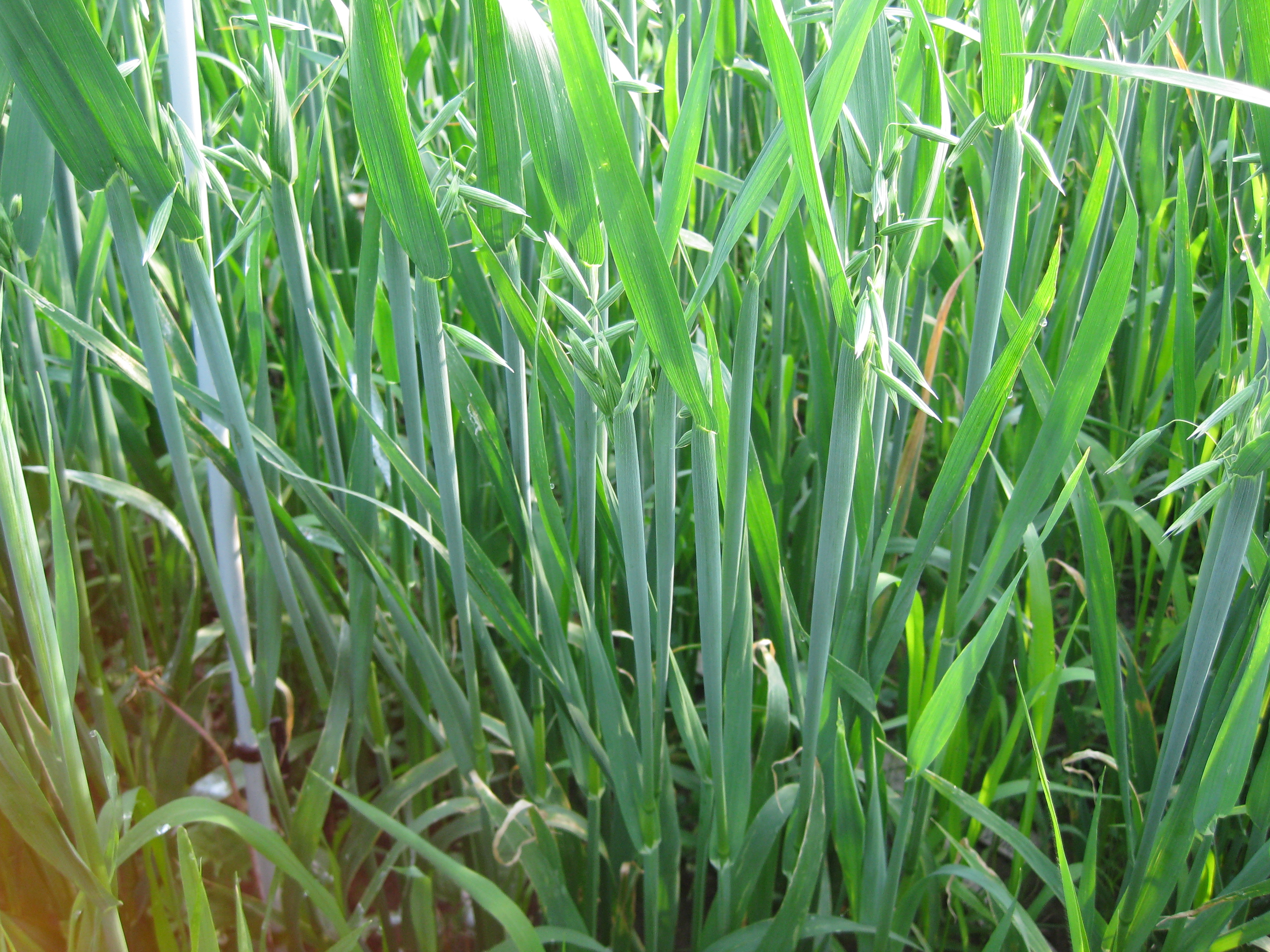
I took the second photo from a different angle.  I used to kneel, but the oats are taller than me kneeling, now.


Mowing Hay

June 28, 2011

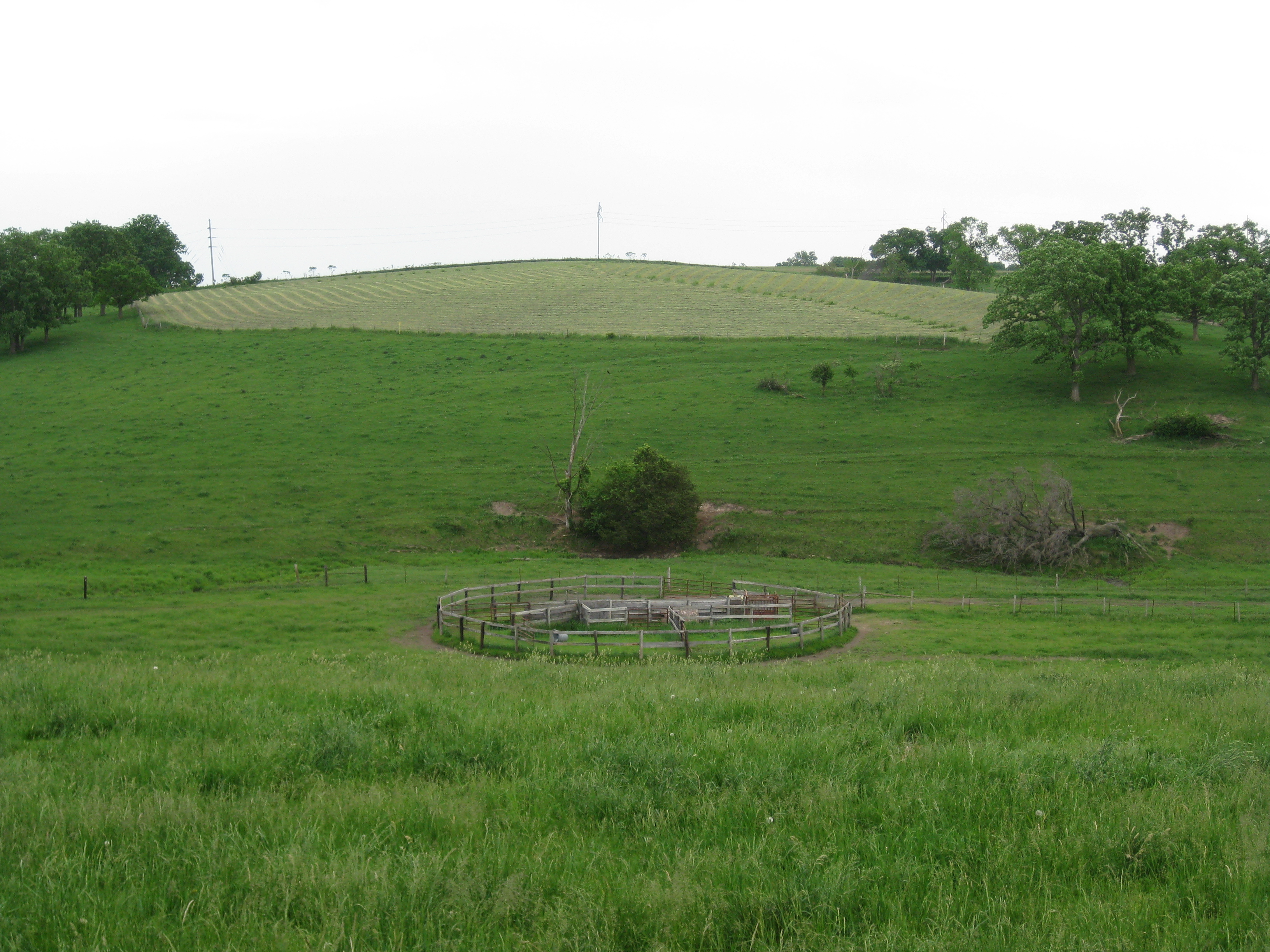
Ten acre field of mowed hay.  We mow around the outside edge of the field and work our way in, leaving concentric swaths of cut hay.

This is the front view of the haybine which cuts the hay.  Its power comes from a tractor which is ahead and to the left of the haybine.

This is the rear view of the haybine where the hay is thrown out in a swath.  We can control the width of the swath by moving a sheet of metal up or down.

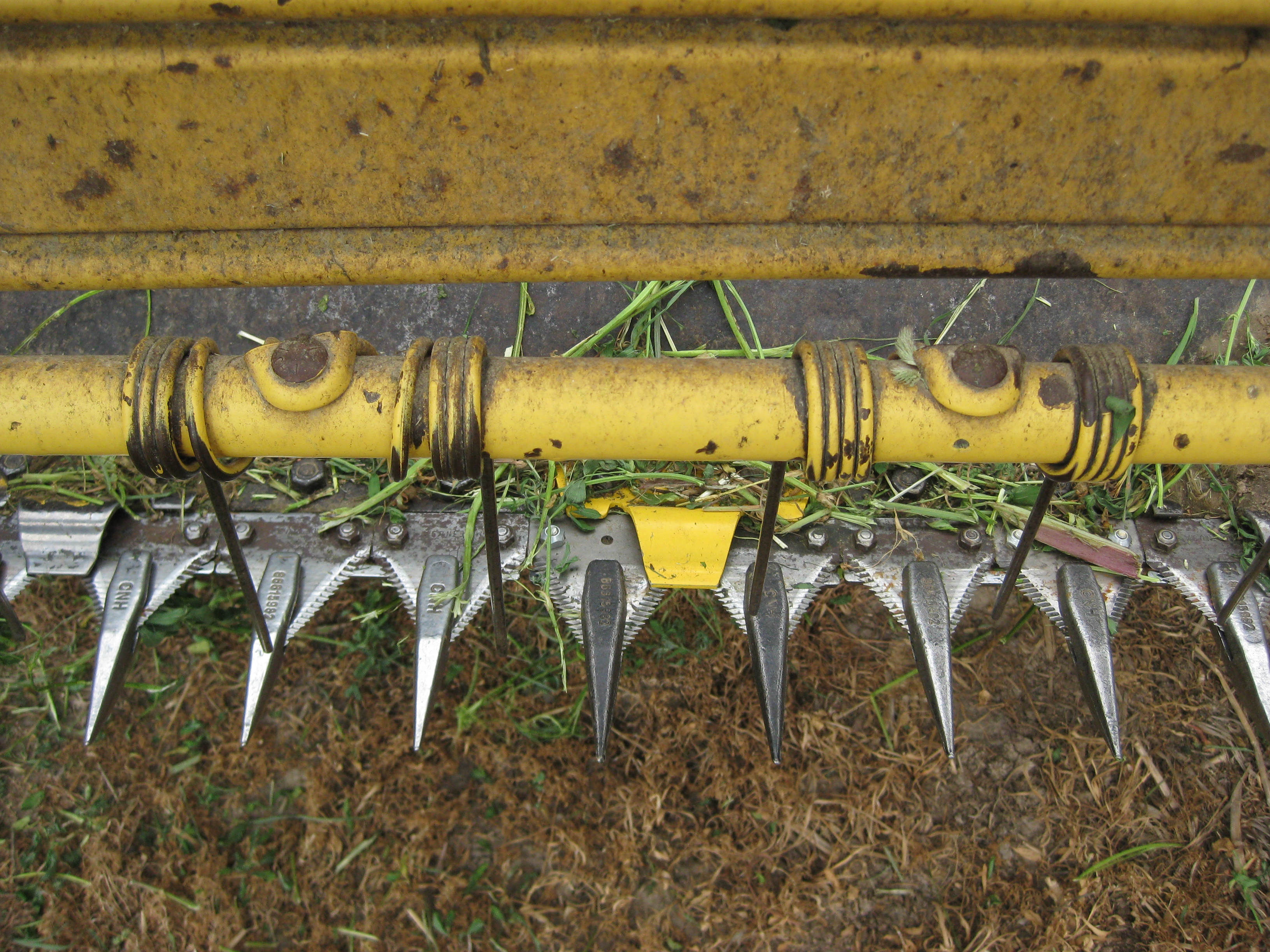
The sickle goes back and forth quickly, while the tines on the reel pull the hay towards the sickle.  The sickle is made of individual blades which can be changed if they are damaged.  The large metal points in front of the blades are called rock guards.  They can be changed if damaged as well.

This haybine is called a mower/conditioner.  The conditioning is performed by these two rolls.  The hay is crushed as it passes through the rolls, allowing the stems to lose moisture faster.  This helps with alfalfa, but isn’t necessary for grass.


Square-Foot Saturday 9, June 26, 2011

June 26, 2011

Welcome visitors.  This post is a day late.  Been laid up with lower back pain.  Coming off the Percocet.


Square-Foot Saturday 8, June 18, 2011

June 18, 2011

The oats are starting to head out.  We always plant an early-maturing variety.  “Badger” is the variety this year.

It’s interesting that even though we planted a month later than last year, it’s probably going to mature at about the same time.


Best Laid Plans

June 14, 2011

We built a small corral at the intersection of four pastures.  It’s way out back, and we never had a good way to catch a cow that needed help out there.

I checked the cows late one afternoon.  A cow was trying to calve, and looked like she had been straining for awhile, but nothing was showing.  We gave her an hour and checked her again.  Sure enough, one foot was sticking out, but not the other one.

We decided to get her in.  We were excited to use our new corral.  Two ATVs, a jeep, low-stress stockmanship, and we had her in the corral, barely.  She was starting to get hot.  She circled the corral a few times, charged at the gate I was standing by, put her nose over the top board, and jumped and pushed.  Once the board broke, her body weight broke down the wire panel, and she was over and out.

“Well, she’s on her own now.  No sense getting killed over her.”

The next morning, Dad drove back from checking the cows.

“Is she dead?”

“No, and she’s got a live calf, runnin’ around healthy.”

“Do you think we were just too early?”

“No, I think the calf got straightened out when she jumped the fence.”

Dad smiled.


Square-Foot Saturday 7, June 12, 2011

June 12, 2011

A day late.


Square-foot Saturday 6, June 4, 2011

June 4, 2011

We had over an inch of rain and cool weather until yesterday, which was in the high 80’s.