Breeding Season Starts

July 6, 2010

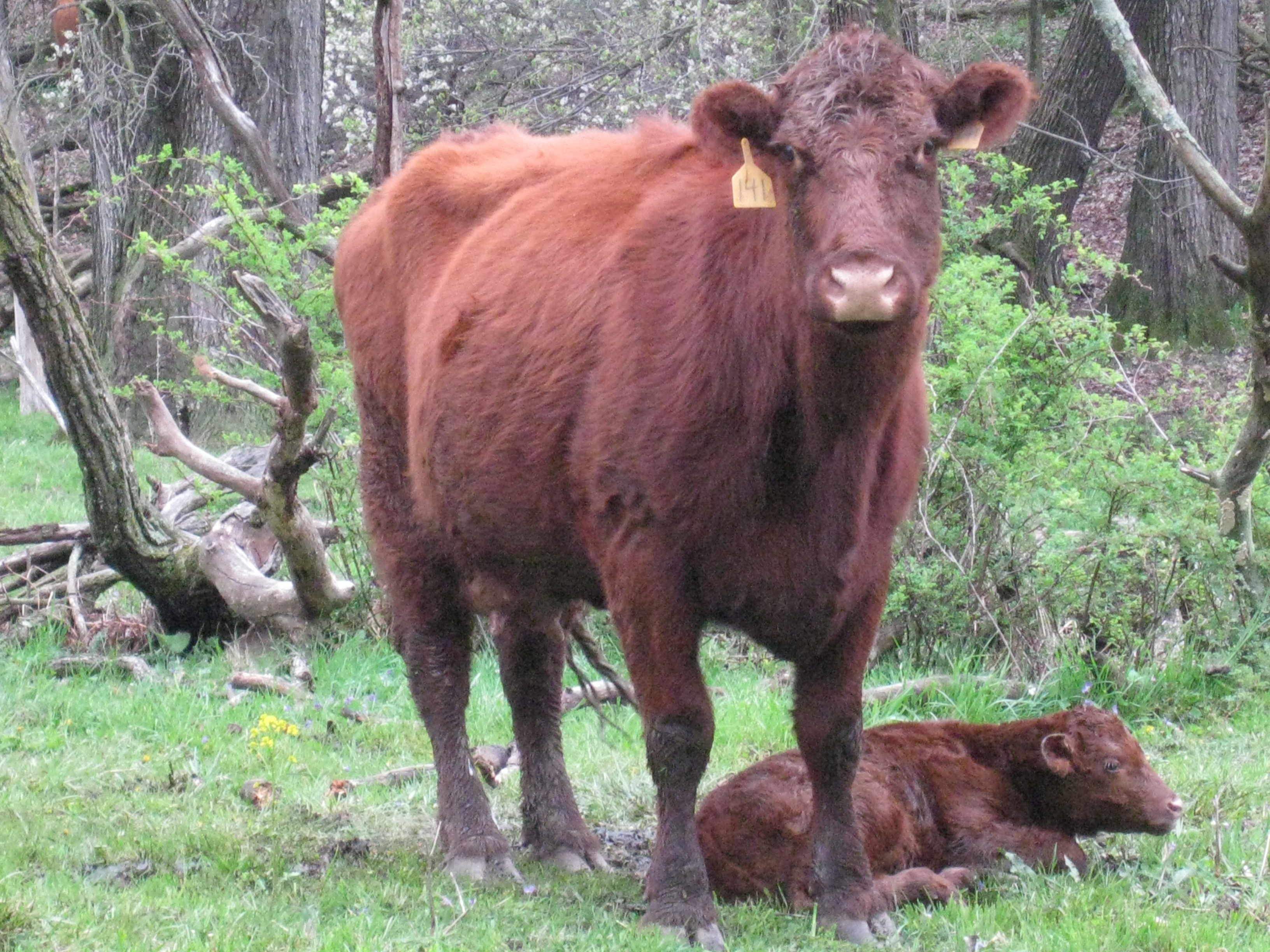
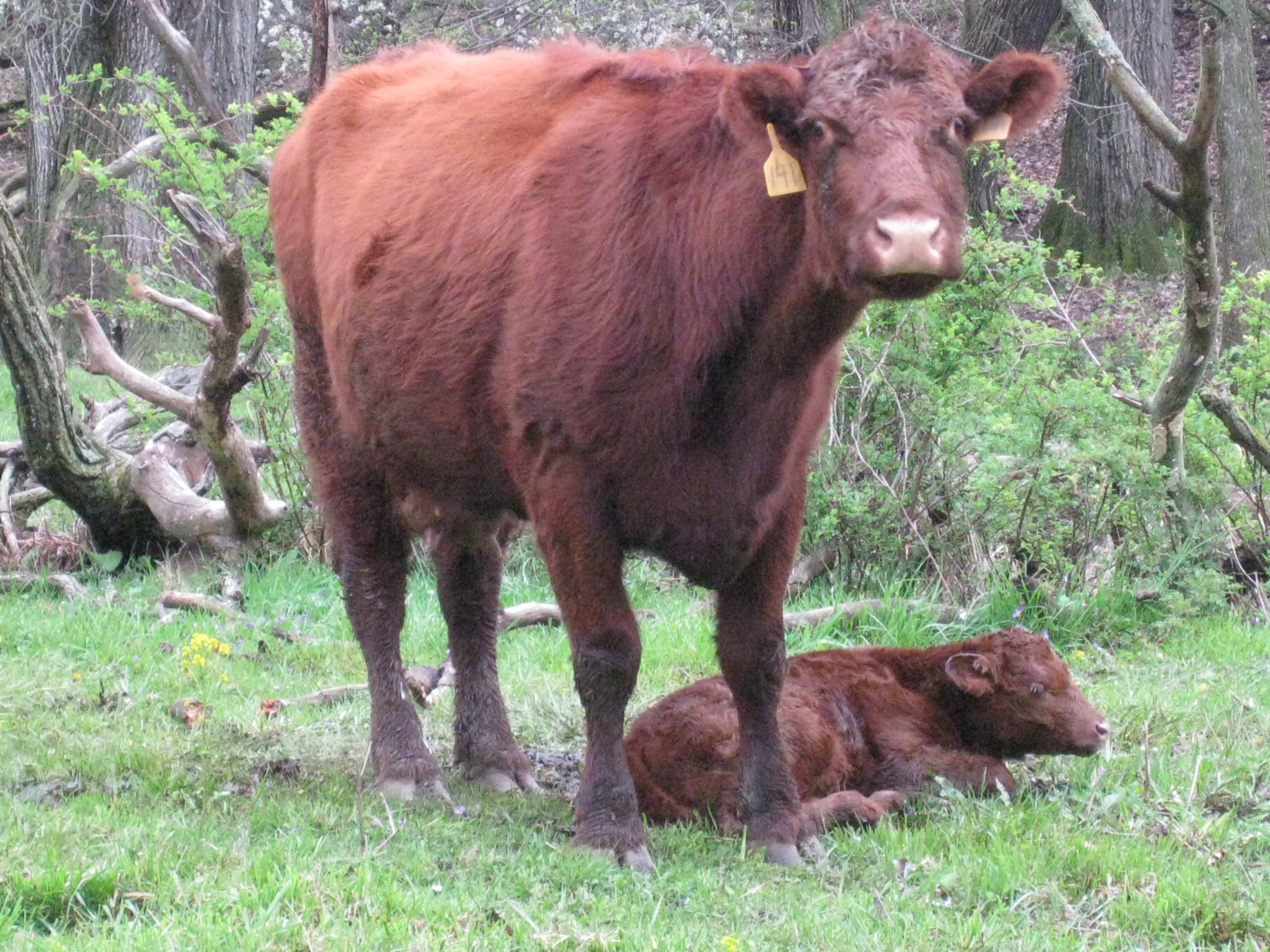
Our cowherd at the end of June.  We turned the bulls in with the cows on July 1st.  This means they are due to start calving about April 8th.  This is early enough for us as we remember early April snowstorms.

Cows have a tremendous ability to fluctuate their weight based mainly upon environmental conditions.  Low-cost managers time the peak nutritional requirements of the cow with the time of peak nutrition in the environment.  Put simply, calve in late spring.

May and June pastures in the driftless region are tremendous.  Our cows gain at least 100 lbs. from calving in April and May until breeding in July.

The picture below shows a cow in excellent condition in the foreground.  The background shows two cows engaged in homoerotic behavior.  This is common for cows when they are ‘in heat’.

This is a good sign, because it shows the cow is ovulating.  It takes good genetics and good management to keep cows on a yearly reproductive schedule. They need to calve, lactate, and have their reproductive tract return to normal so they can start cycling again.

Our breeding season last year was six weeks for the heifers and nine weeks for the cows.  We only had two cows calve in the last week of calving, so I’m thinking of shortening our breeding season to eight weeks.

Ian Mitchell-Innes is a South African rancher I heard speak at a Mob Grazing seminar.  He claims to have a 30 day breeding season.  I wonder how short of a breeding season we could have.


Corn Height: 4th of July

July 4, 2010

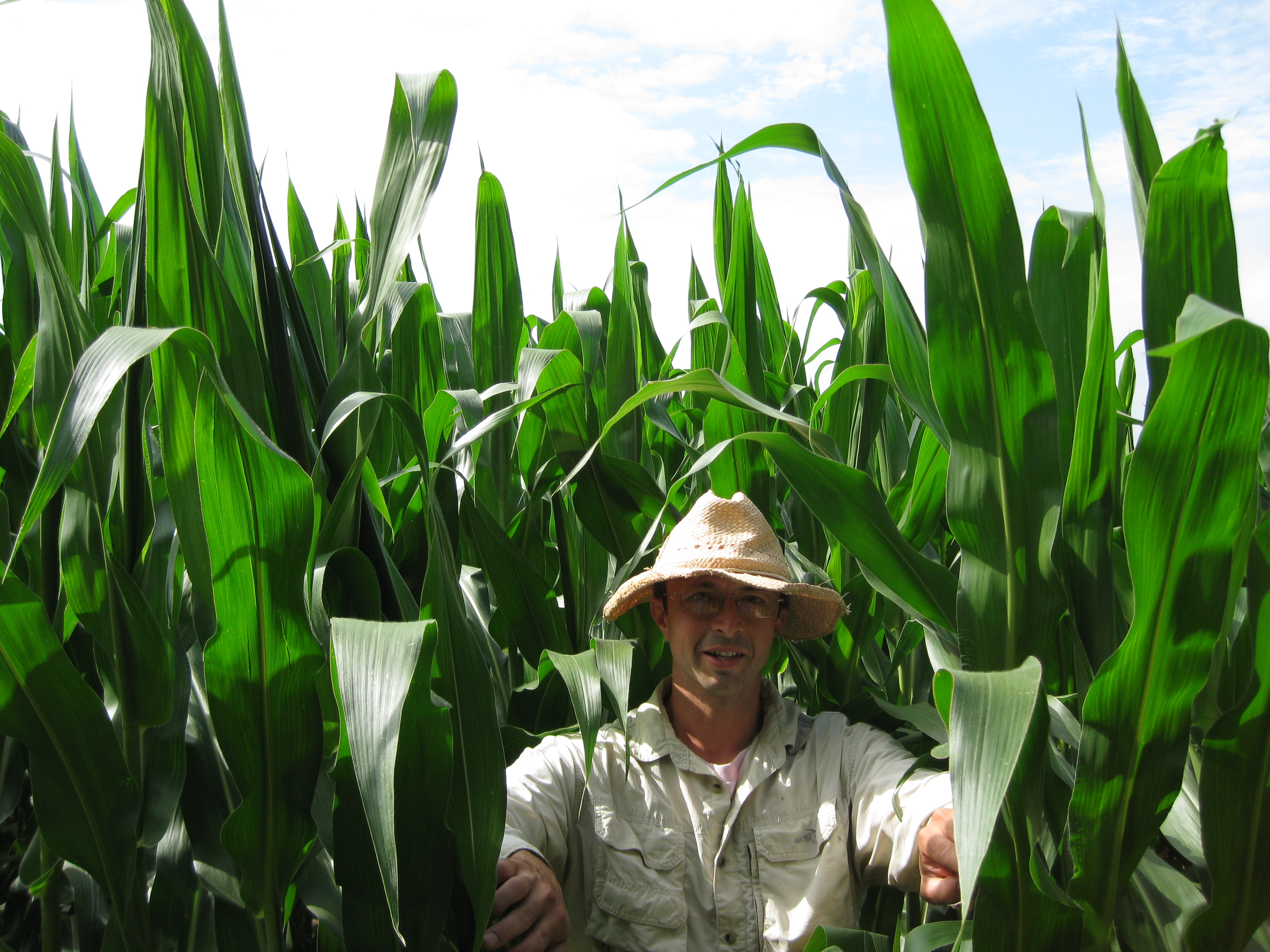
Our tallest corn.  We planted all of our corn April 19-23rd.  Growing conditions have been ideal, with rain every few days and a hot, very humid June.  I don’t know if we have ever had taller corn on the 4th.


Blackcap Pickin’

June 27, 2010

(Rubus occidentalis)

Come along with me we’re goin’ blackcap pickin’,
Put on long pants so you can push through the thicket.

Pick out all the black ones better leave all the red ones,
The red ones pretty sour, but the black ones are heaven.

Purple mouth and fingers, lets ’em know what we been doin’,
If they wanna get some, we can show ’em where we goin’.

If you got a bowl then you can fill it in a moment,
If you wait ’till next week, then you wait another year.


I See Circles

June 19, 2010

Following is an excerpt from “Circles” by Ralph Waldo Emerson.

“Our life is an apprenticeship to the truth, that around every circle another can be drawn; that there is no end in nature, but every end is a beginning; that there is always another dawn risen on mid-noon, and under every deep a lower deep opens.”


Brown Thrasher Eggs

June 14, 2010

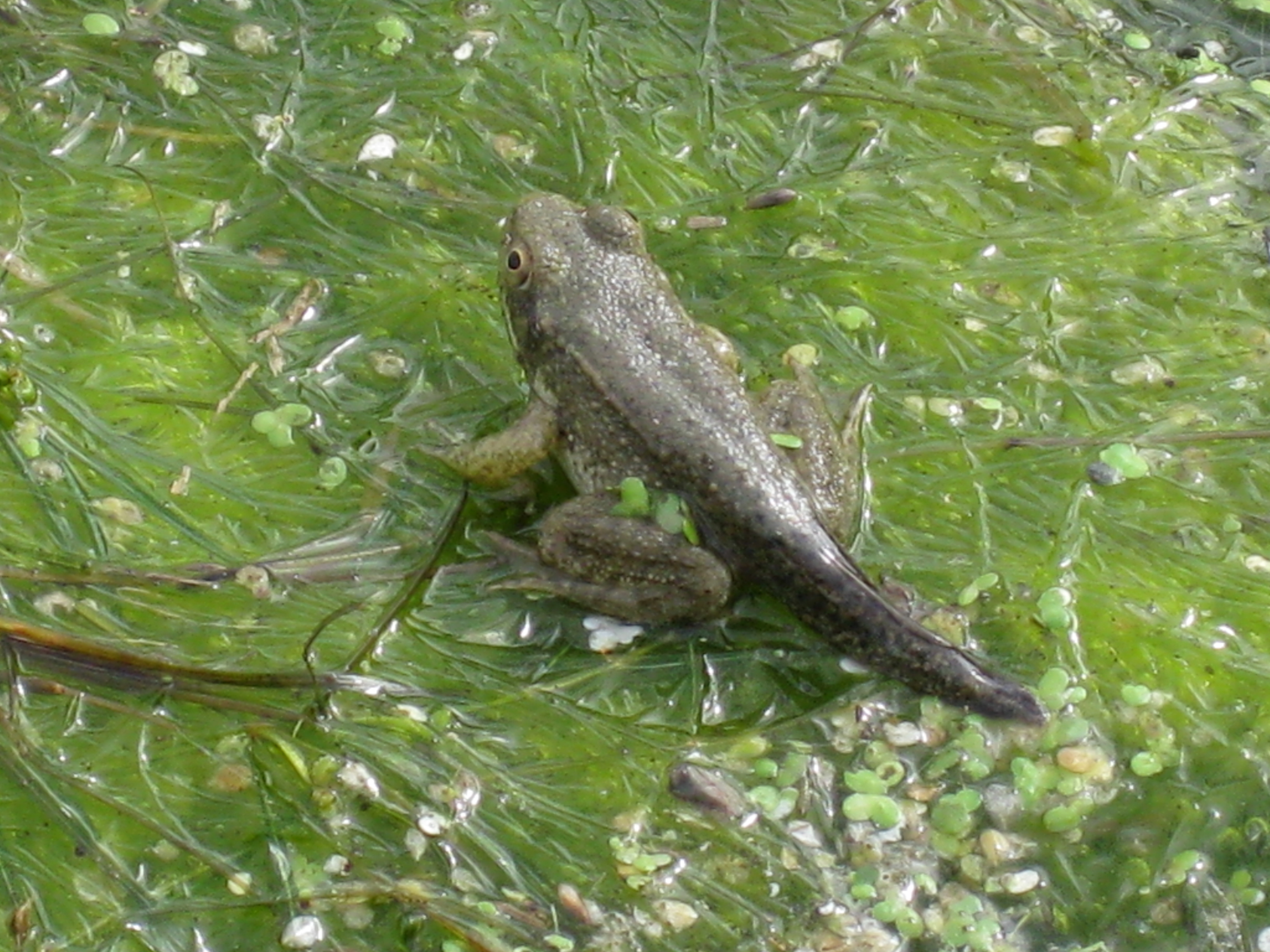
Bullfrog tadpole checking out the scenery above the water.  Look at how fast it has developed legs compared with the picture in the May 6th post, “Toads and Frogs, Living and Loving.”

Curiousfarmer started with an emphasis on Farmer, but over the first 100 posts, has evolved into an emphasis on Curious.  That’s good.  I can always be curious.

I started this blog to share what I know about farming.  I quickly realized how little I know, and how boring it is to only write what I know.  It’s way more fun and interesting to write what I am learning.

I made a mistake on the post, “Fragile Beginnings.” The eggs pictured were not from a Brown Thrasher.  The eggs pictured below are from a Brown Thrasher.

Because I wanted to write about the eggs pictured in “Fragile Beginnings,” I had to organize my thoughts.  I found out how little I knew, and what I did know was wrong.

I saw a Thrush fly out of the tall grass by the pond.  Then I saw the nest and assumed it belonged to the Thrush.  I snapped a picture and began to research Thrush on the internet.

Unfortunately, I couldn’t find any type of Thrush that resembled the bird I saw.  So I did some more research and came up with some suspects.  After a few more sightings, I knew the bird was a Brown Thrasher.  So I wrote the post.  There were no pictures I could find of Brown Thrasher eggs.

Today I was driving the ATV past a Gooseberry bush and a Brown Thrasher flew out of the middle of it.  I realized she may have a nest, so I checked it out.

“Crap!  This is what Brown Thrasher eggs look like.”

I returned and bothered the Brown Thrasher again and snapped a picture.  Now I know that there are Brown Thrasher eggs on the internet.


Placentophagy: Mammals Eating Their Own Placenta

June 10, 2010

Cow eating placenta, shortly after giving birth.  Why do they do this?  Many other mammals do as well.  It’s called placentophagy.

It’s becoming vogue for people to eat placenta.  There are purported health benefits.  Have you heard of this?

Here is a funny video of Joel Stein, my favorite writer for Time, watching his wife’s placenta being prepared for consumption.

“You’re not going to kiss me with that mouth, are you Mom?”


Building a New Fence III

June 1, 2010

This is the final fencing post.

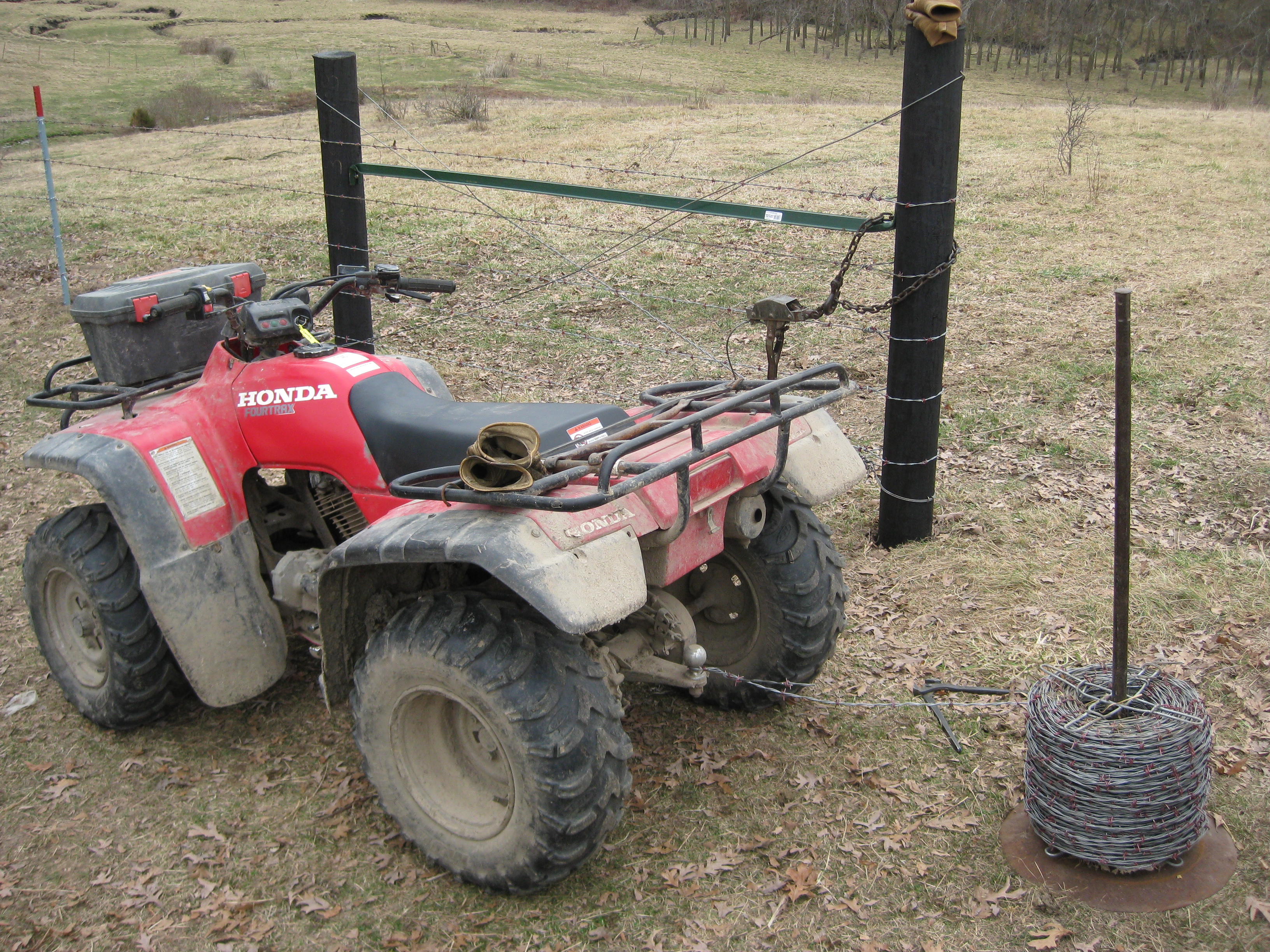
A metal rod is pounded into the ground and an old disc blade is placed on the ground to protect the soil.  The roll of barb-wire is placed on the disc and one end of the wire is tied to the ATV.  I use the ATV to pull the wire to the other end of the fence and tie it to the end post.

After your first wire is in place as a guide wire, pound the rest of your posts into the ground.  We use a ratio of five metal to one wooden.  Metal posts are cheaper and don’t rot; but wooden posts are stronger and resist cattle pushing on the fence better.

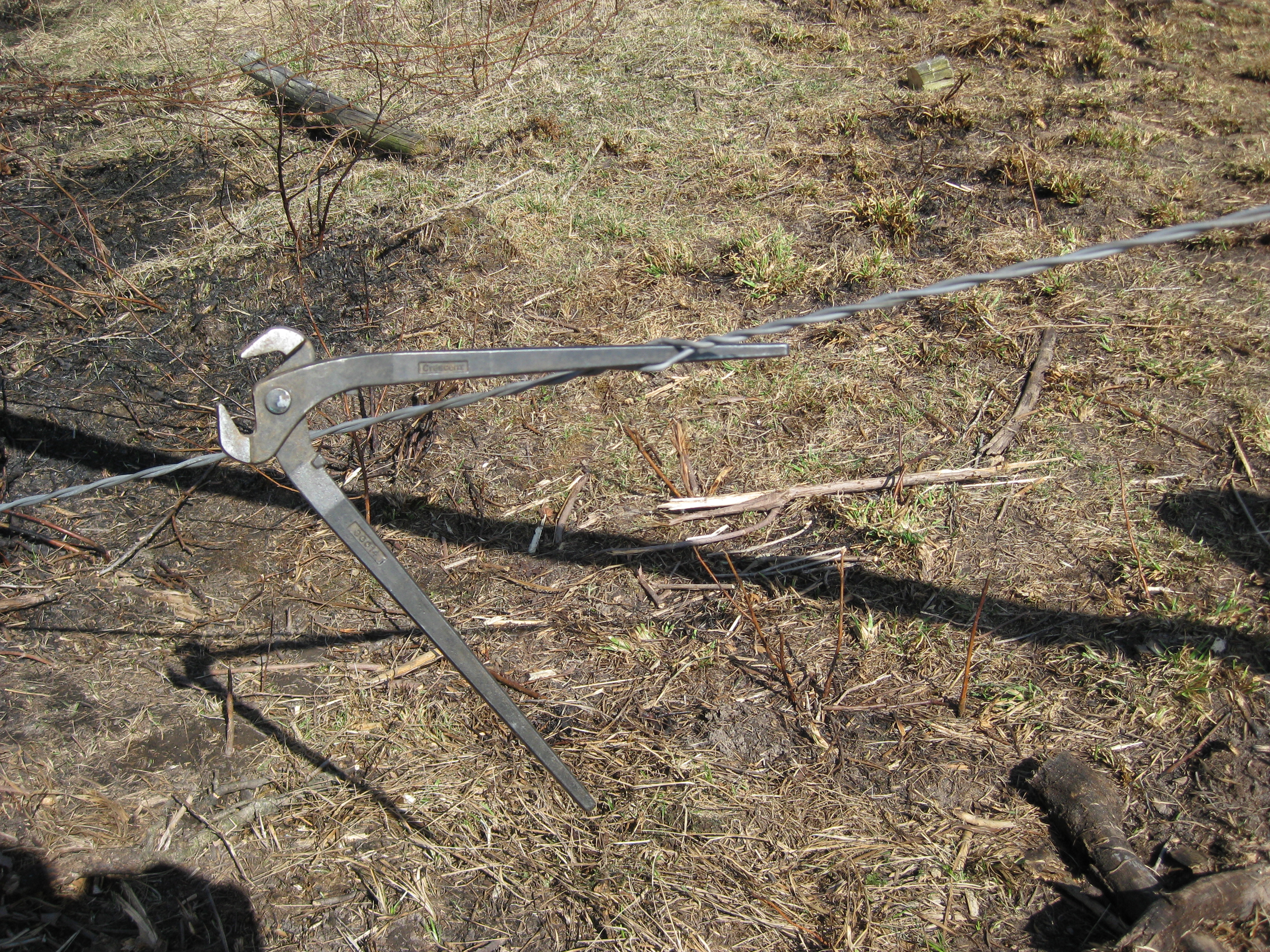
A fence-stretcher is attached to the wire.  As Dad cranks the handle, I make sure the wire is not caught on any brush and is in line with the fence.  I use a pliers because if the fence-stretcher slips off, the wire will slip quickly and cut through your hand.

Once the proper tightness is achieved, the wire is tied to the end post and the fence-stretcher is removed.

A clip is used to secure the wire to the steel post.  There are notches on the post and we use these as markers to make sure the wires are evenly spaced.

Staples are used to secure the wire to the wooden posts.

This concludes my fencing posts.  If you have any questions, please comment.


Building a New Fence II

May 25, 2010

Brace posts with metal brace and brace wire running diagonally from upper second post to lower end post.  Once you’ve decided where to put your fence, put your brace posts in.  You need a set of brace posts on each end of your fence in order to pull the barb-wire tight. 

You can also have more, based on your needs.  We put six sets of brace posts in this quarter mile of fence because we put a space for a gate, and had to fence across two valleys. 

We use six-inch diameter, eight-foot long, creosote-treated posts and pound them into the ground about three feet for our brace posts.  The posts in the interior of the fence are five-inch diameter, seven-foot long creosote-treated posts.  We have found no other wood treatment comes close to creosote for preserving wood from rotting.  It is frustrating to build a new fence and watch the wooden posts rot off in ten or fifteen years.

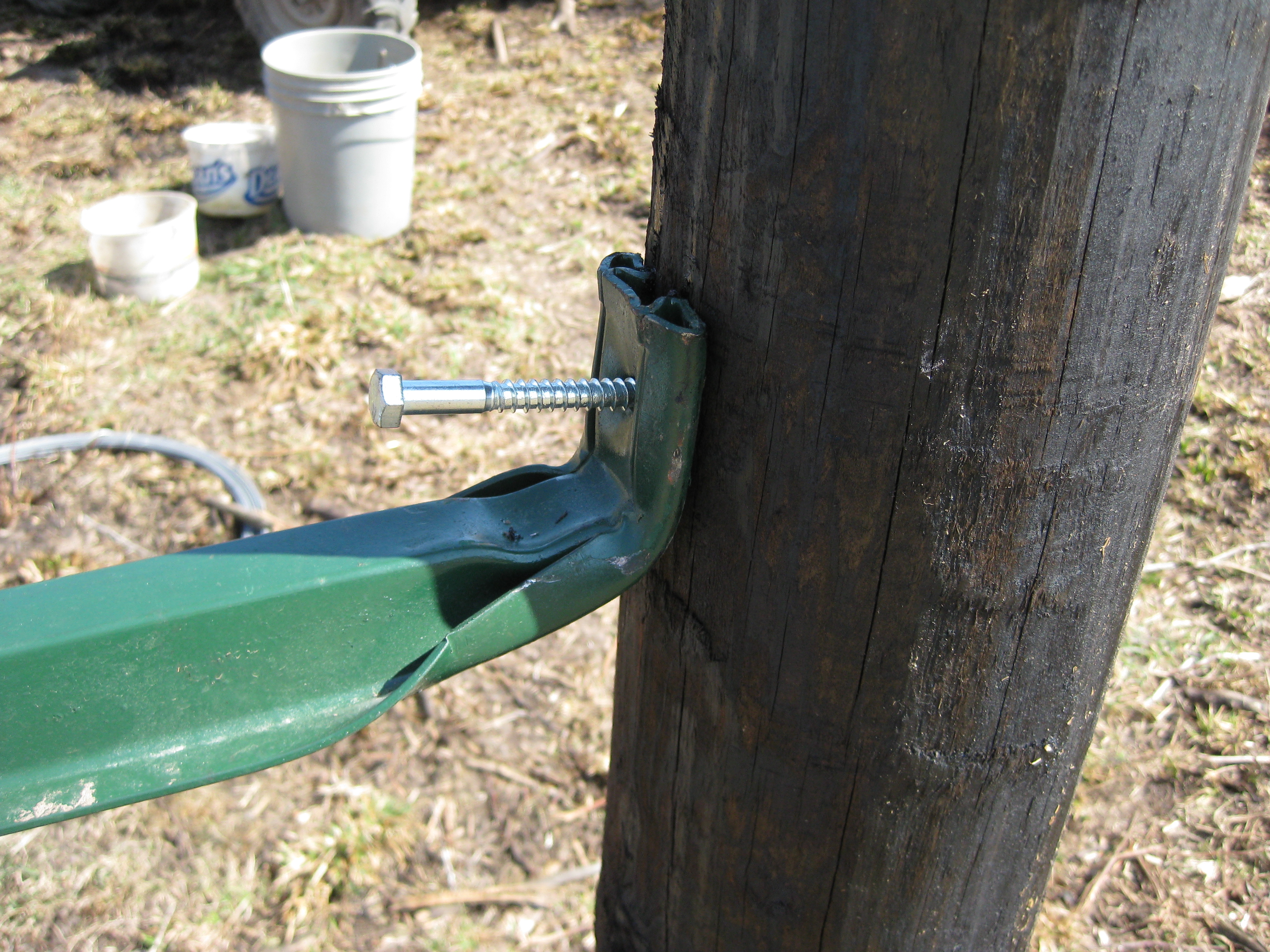
The metal brace is secured to the posts with a lag-bolt.  We put our brace in level, about two-thirds up the posts.  Many people are putting the brace at the top.  The old-fashioned way is to put the brace at an angle.  This has the tendency to pull one of the brace  posts out of the ground, though.

The brace wire is run through a staple at the top of the second post, around the posts, and through a staple at the bottom of the end post.  After it is tied, I use the handle of a fencing pliers to wind it, thereby tightening it.  This pulls the two posts together against the brace, making an excellent anchor to stretch barb-wire for your fence.


Body Language in Cattle

May 21, 2010

Citygirlfriend helped us move the herd to the next pasture.  The young calves are slow to move unless they are at their mother’s side.

Citygirlfriend did fine.  I didn’t go far from her, though.  I worried she wouldn’t recognize dangerous body language in the mother cows.

The cow above is protective of her new calf, but neutral.  When I approached her, look at how her body language changed.  She is telling me she won’t back off and I better.

What do you see? 


Building a New Fence

May 11, 2010

I’m finally getting around to posting the photos and writing about making our new fence.  We made the fence the week after my post, “Tearing Out Fence.”

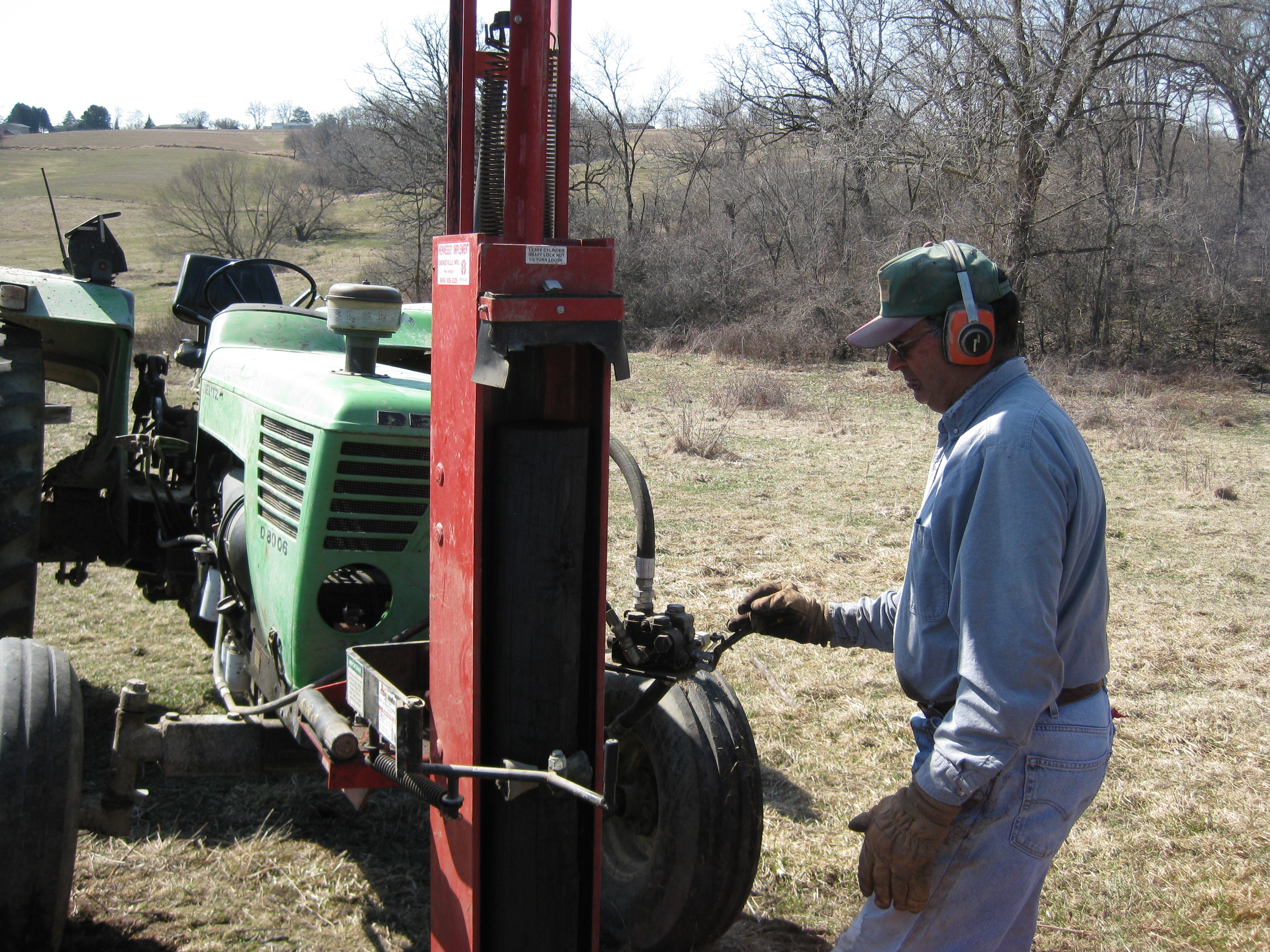
This is a quarter mile of fence.  Pictured above is the post pounder on the front of our tractor.  It is a machine that pounds posts into the soft ground without the need for digging a hole.  It saves a lot of time.  We purchased it new for $2,000 a couple of years ago.  It replaced the one we had used the previous thirty years.

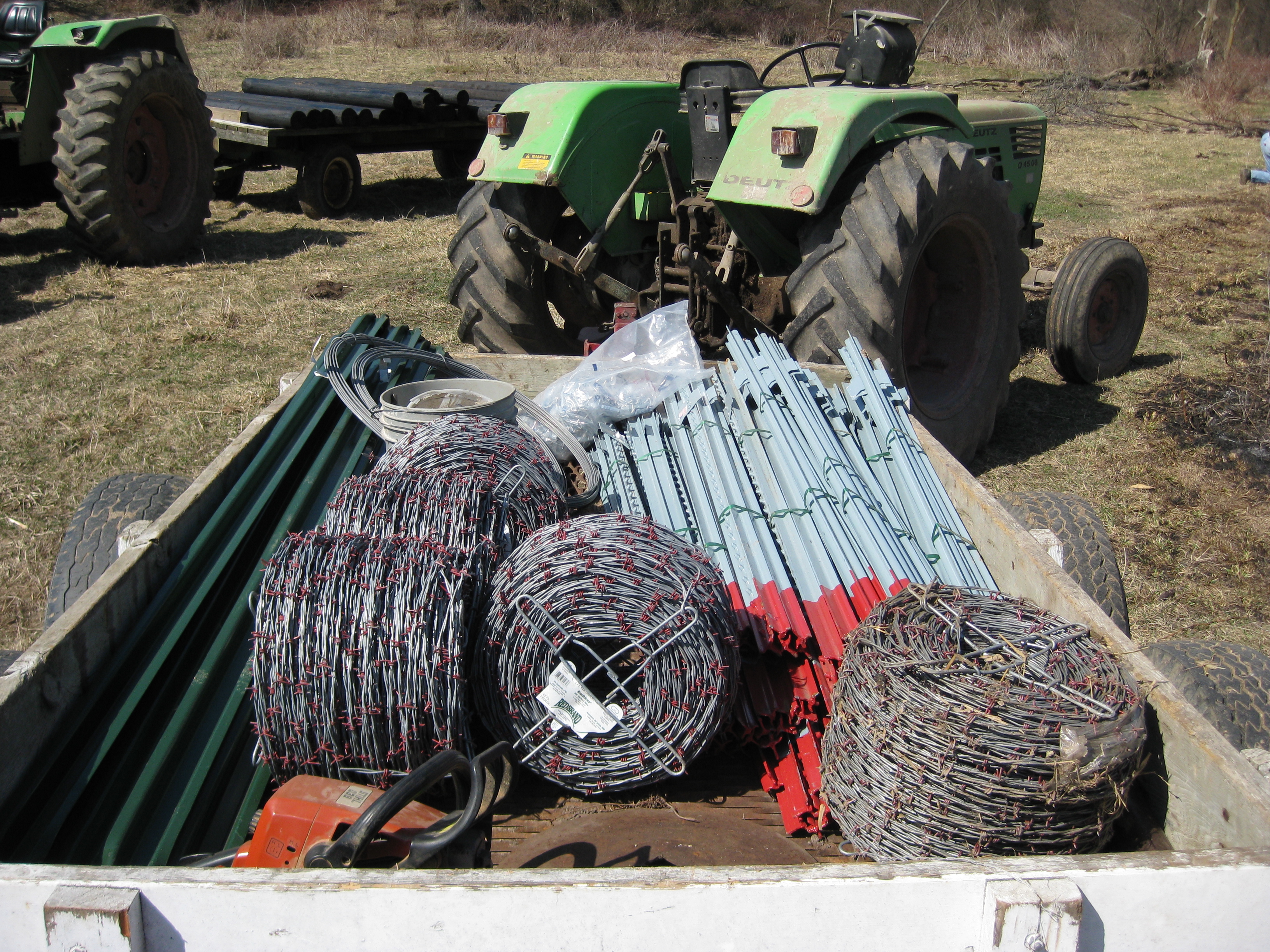
Most of the materials needed to build the fence are pictured below.  We used 100 steel posts, 15 5×7 wooden posts, 12 6×8 wooden posts, 6 ten’ steel braces, 1 roll of brace wire, 5 rolls of barb-wire, staples, and clips.

The costs for the materials are as follows.

100 steel posts @ $3.95 each, equals $395.

15 5×7 wooden posts @$12 each, equals $180.

12 6×8 wooden posts @$18 each, equals $216.

6 ten’ steel braces @$14.99 each, equals $90.

1 roll of brace wire @$10.99 each, equals $11.

5 rolls of barb-wire @$64.95 each, equals $325.

Clips are included with the purchase of the steel posts and staples are relatively cheap. 

So the grand total is $1217.  Multiplied times four equals the cost per mile, $4868.  Not a cheap fence, but we expect it to last thirty years. 

Will I be around to build its replacement?  Who will I be working with?

Following posts will go into more fence-building detail with pictures and explanations.

After and before pictures.