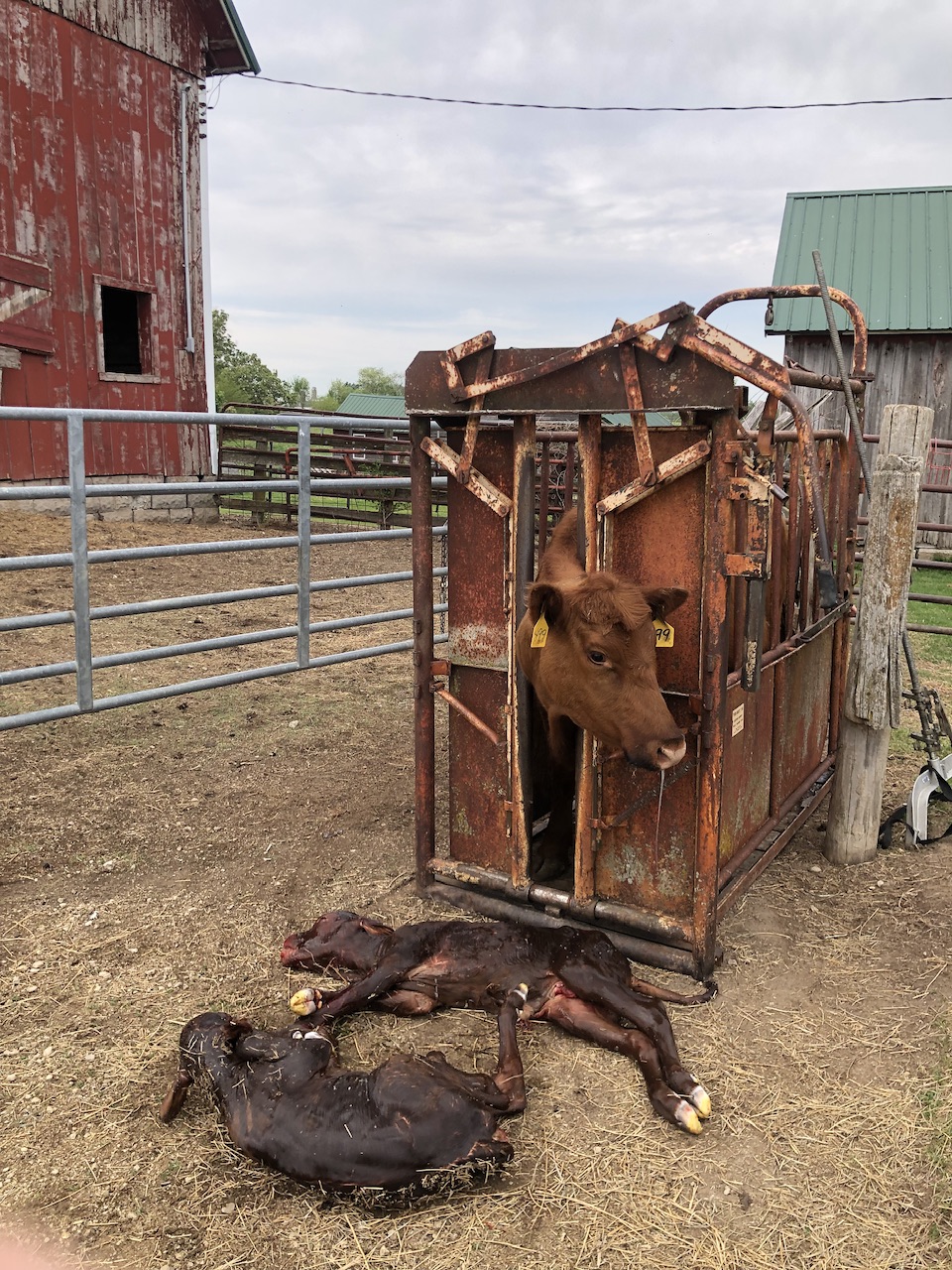
Last Saturday after farmer’s market I came home to find heifer 499 trying to calve. Isabel and Romeo had a birthday party to go to so I told them to go have fun, if I had trouble I would call Center Hill Vet.
Her water broke at 2 pm so I gave her until 4:30, and with no progress, and with this season’s calving history, (update to come soon), I called Center Hill Vet’s emergency service. Dr. Garret called me back and said he was on his way. We got her into the catch chute and he stuck his hand in her at 5 pm.
“Breech, he said.
Backwards is not good in cattle. Glad I had expert help.
Unlike the other heifers Isabel and I had helped this spring, this one was an easy pull. I put the calf in front of the heifer so they could bond while Dr. Garret stuck his arm into the heifer.
“Yep,” he said. “Twins.”
Wow! I can’t ever remember a heifer having twins. I asked Mom and she couldn’t recall one for our farm either. The grass must have been good last summer, though, because this was our sixth set of twins this spring, nearly matching our farm’s record of seven.
This calf was positioned correctly and Dr. Garret put chains on the front feet and we pulled it out. This one was a 65 lb bull calf. The first one was a 50 lb heifer.
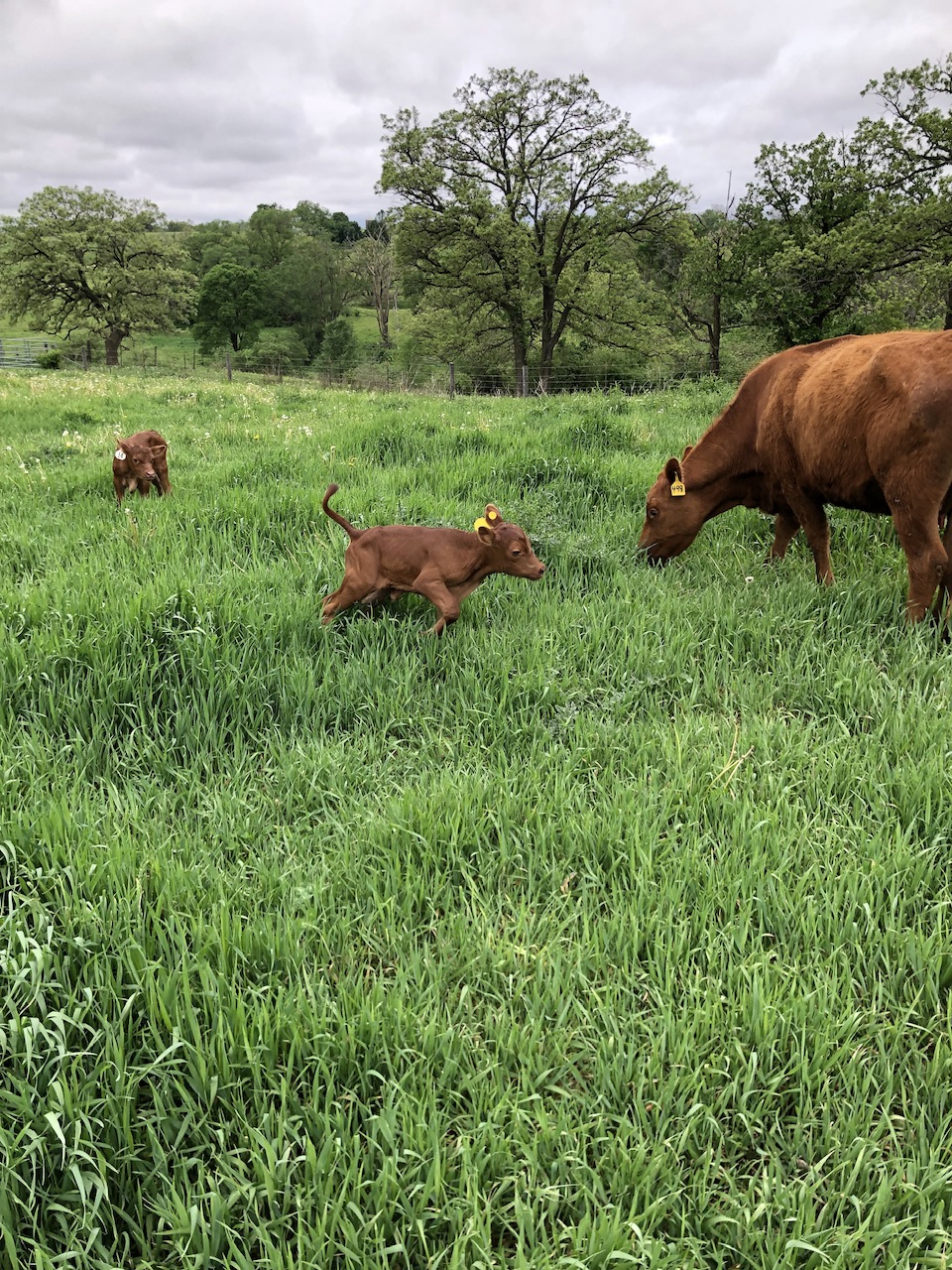
I realize the calves appear to be dead in the top photo so I took a few photos today of the twins with their mother enjoying grass.
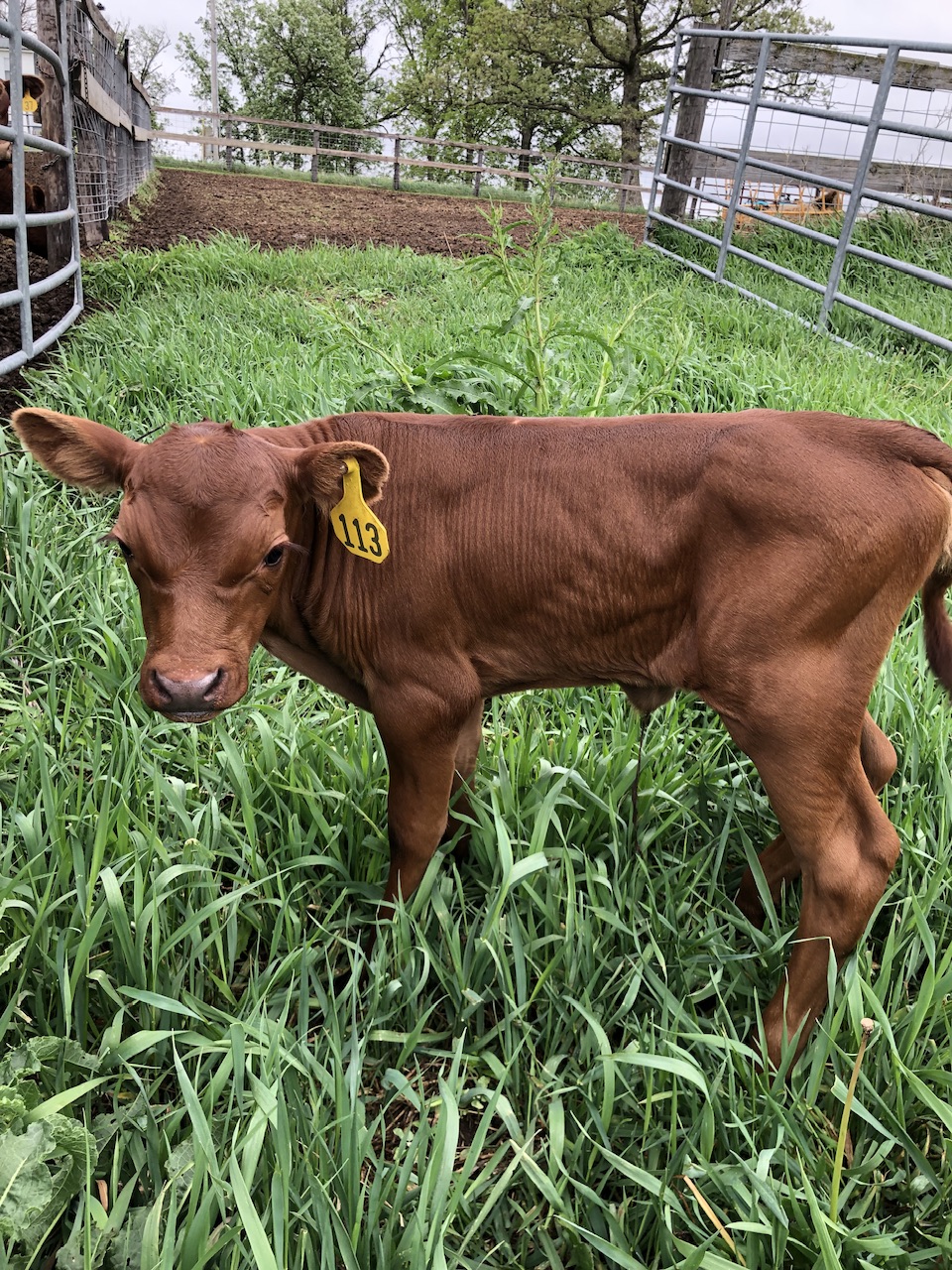
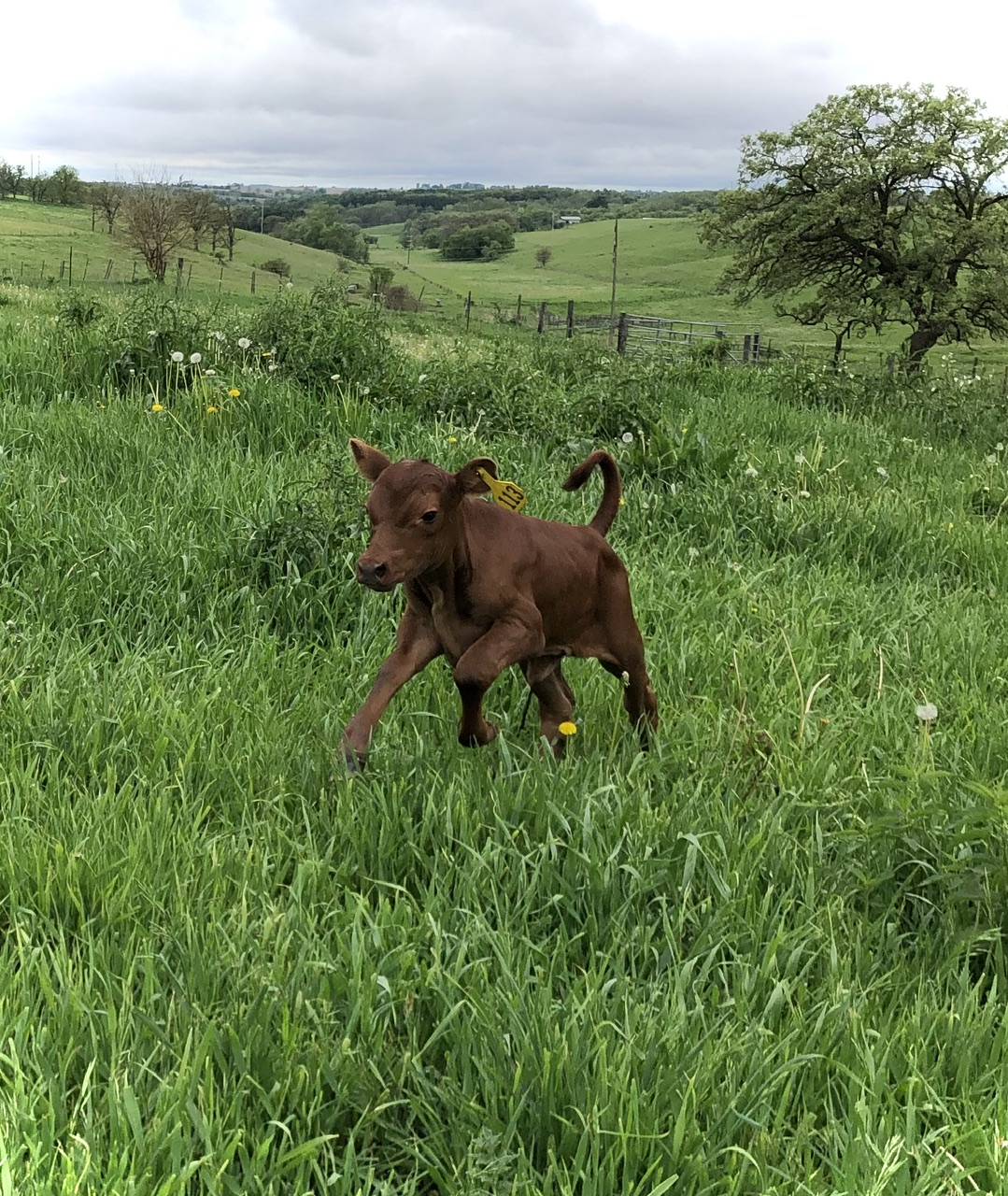
The bull calf is happy to walk around in the green grass, but his sister is wild! She doesn’t look like much, but boy can she run and jump. It’s hard to believe they are only three days old.
I don’t know that “hindsight is 20/20,” but I do think we work hard to understand our life. The past is neat, because we’ve reduced it to a story. What often isn’t talked about and largely forgotten after the fact, is the unsettled feeling we have when trying to make a decision in the present.
You look at anyone who’s been doing something for awhile and its easy to think that he or she has it all figured out, but if we’re being honest, I don’t think we ever have it all figured out. Whatever we’re doing in life, there’s going to be some level of uncertainty.
I think the important thing is to continue to make decisions, implement, observe and evaluate results, then reconfigure and make more decisions. Try not to beat yourself up about the decisions that didn’t work well. Did you learn something?
I was faced with making bull buying decisions after we got rid of half our herd bulls last fall. I knew I had time, we don’t turn our bulls out until the fourth of July, but I also knew I needed to work on this when I had more time during our slower winter season.
We had used four older bulls on our cows and two yearling bulls on our heifers. After culling, we were left with one older bull and the two yearlings. So I could add bulls to breed my cows or I could move my yearlings up to breed the cows as two year olds and buy younger bulls for my heifers. I figured I only needed to purchase two.
I got a line on a couple coming two year old Black Angus bulls from a local breeder friend of mine. They were priced right and big enough to use on cows. I drove south of town and took a Ranger ride with Matt and checked them out.
They were good bulls and would make good calves for me. I planned to use them as a terminal cross, selling all their offspring as feeders. But I wasn’t 100% sure of their disposition.
I asked Matt if I could show them to Isabel, that’s one of the benefits of buying bulls close to home, easier to observe, and we went back to the pasture they were in and looked at them again. Without Matt and the Ranger, their disposition was a little worse, so we decided we would keep looking. This was October, so we had time to be choosy. If it had been June, we would have purchased them and probably been happy.
I visited a Red Angus herd in southern Iowa and determined most of his cattle were too related to my own. I’m still glad I took the time to see his cattle as you always learn something when visiting with other farmers and ranchers. His bulls were my last best shot for bigger bulls to breed my cows.
I shifted my focus to look for bull calves to breed to my heifers, planning to use last year’s yearling bulls to breed my cows. I planned a trip to Missouri to visit a couple South Poll herds, but couldn’t make our schedule work. I watched a couple of Pharo Cattle Company bull sales online. I was interested in PCC’s Nebraska sale, but again couldn’t make our schedule work to visit the sale in person. I really didn’t want to buy a bull sight unseen.
But then I got an email from Kit Pharo saying they were waiving the delivery fee for the Red Angus bulls. I could buy a Red Angus bull online and have it delivered to Monticello Iowa, only an hour and a half from my farm. This was too good of a deal to pass up. I marked up my catalog and prepared to bid.
The day of the sale came and I bid on 26 bulls, but stuck to my budget of $5000. I guess I’m too cheap, as I didn’t get one. I was disappointed, but I knew I still had time, so I wasn’t panicking yet.
I visited Matt’s herd again to look at his weaned calves. Matt pointed out a bull calf whose birthweight was in the 50s and whose EPDs for calving ease and birthweight were in the top 1% of the Angus breed. Furthermore, the calf and his dam both had a gentle disposition. Disposition and Calving Ease are my top two traits, so I only needed a day to think about it and pulled the trigger and picked him up so I could grow him slowly.
Now I relaxed, as I had just enough bulls if I didn’t find another one, but I kept looking. The Missouri South Poll Association had a sale. I watched it online. The best cattle in the sale in my opinion came from Sassafras Valley Ranch. This was one of the farms I wanted to visit in Missouri.
I contacted Bruce Shanks, the owner of Sassafras Valley Ranch in February and he told me he had a South Poll bull calf which fit my criteria. I decided to take a flier on a South Poll bull, sight unseen, and met Bruce with my truck and trailer in Southern Iowa, saving me about six hours of driving. I’m super happy with this bull’s disposition and look forward to witnessing his progeny’s calving ease next spring.
And now we are nearly three weeks into our calving season. The yearling bulls I used last year did an excellent job breeding the heifers. Fifteen out of 23 heifers have calved, with four of them looking close. It looks like four heifers didn’t breed, as I experimented with a shorter 45 day breeding season. This is perfect for my grass-fed beef needs, so I’m super happy with that decision.
And I’m happy we are moving these bulls to breed cows this year, as their calves have been too large for my liking to breed again to heifers. I guess I would still call them calving ease though, as we haven’t had to pull any calves.
So we’re all squared away for this coming breeding season and excited to see the results in a year or so, but if you had told me a year ago that I would be breeding my heifers to a Black Angus and a South Poll I would have been surprised. Farming, just like life, is a journey.
2025’s heifers and calves are pictured in these two photos.


 Posted by Curiousfarmer

 Curiousfarmer