Decision Making

April 27, 2025

I don’t know that “hindsight is 20/20,” but I do think we work hard to understand our life.  The past is neat, because we’ve reduced it to a story.  What often isn’t talked about and largely forgotten after the fact, is the unsettled feeling we have when trying to make a decision in the present.

You look at anyone who’s been doing something for awhile and its easy to think that he or she has it all figured out, but if we’re being honest, I don’t think we ever have it all figured out.  Whatever we’re doing in life, there’s going to be some level of uncertainty.

I think the important thing is to continue to make decisions, implement, observe and evaluate results, then reconfigure and make more decisions.  Try not to beat yourself up about the decisions that didn’t work well.  Did you learn something?

I was faced with making bull buying decisions after we got rid of half our herd bulls last fall.  I knew I had time, we don’t turn our bulls out until the fourth of July, but I also knew I needed to work on this when I had more time during our slower winter season.

We had used four older bulls on our cows and two yearling bulls on our heifers.  After culling, we were left with one older bull and the two yearlings.  So I could add bulls to breed my cows or I could move my yearlings up to breed the cows as two year olds and buy younger bulls for my heifers.  I figured I only needed to purchase two.

I got a line on a couple coming two year old Black Angus bulls from a local breeder friend of mine.  They were priced right and big enough to use on cows.  I drove south of town and took a Ranger ride with Matt and checked them out.

They were good bulls and would make good calves for me.  I planned to use them as a terminal cross, selling all their offspring as feeders.  But I wasn’t 100% sure of their disposition.  

I asked Matt if I could show them to Isabel, that’s one of the benefits of buying bulls close to home, easier to observe, and we went back to the pasture they were in and looked at them again.  Without Matt and the Ranger, their disposition was a little worse, so we decided we would keep looking.  This was October, so we had time to be choosy.  If it had been June, we would have purchased them and probably been happy.

I visited a Red Angus herd in southern Iowa and determined most of his cattle were too related to my own.  I’m still glad I took the time to see his cattle as you always learn something when visiting with other farmers and ranchers.  His bulls were my last best shot for bigger bulls to breed my cows.

I shifted my focus to look for bull calves to breed to my heifers, planning to use last year’s yearling bulls to breed my cows.  I planned a trip to Missouri to visit a couple South Poll herds, but couldn’t make our schedule work.  I watched a couple of Pharo Cattle Company bull sales online.  I was interested in PCC’s Nebraska sale, but again couldn’t make our schedule work to visit the sale in person.  I really didn’t want to buy a bull sight unseen.

But then I got an email from Kit Pharo saying they were waiving the delivery fee for the Red Angus bulls.  I could buy a Red Angus bull online and have it delivered to Monticello Iowa, only an hour and a half from my farm.  This was too good of a deal to pass up.  I marked up my catalog and prepared to bid.  

The day of the sale came and I bid on 26 bulls, but stuck to my budget of $5000.  I guess I’m too cheap, as I didn’t get one.  I was disappointed, but I knew I still had time, so I wasn’t panicking yet.

I visited Matt’s herd again to look at his weaned calves.  Matt pointed out a bull calf whose birthweight was in the 50s and whose EPDs for calving ease and birthweight were in the top 1% of the Angus breed.  Furthermore, the calf and his dam both had a gentle disposition.  Disposition and Calving Ease are my top two traits, so I only needed a day to think about it and pulled the trigger and picked him up so I could grow him slowly.

Now I relaxed, as I had just enough bulls if I didn’t find another one, but I kept looking.  The Missouri South Poll Association had a sale.  I watched it online.  The best cattle in the sale in my opinion came from Sassafras Valley Ranch.  This was one of the farms I wanted to visit in Missouri.  

I contacted Bruce Shanks, the owner of Sassafras Valley Ranch in February and he told me he had a South Poll bull calf which fit my criteria.  I decided to take a flier on a South Poll bull, sight unseen, and met Bruce with my truck and trailer in Southern Iowa, saving me about six hours of driving.  I’m super happy with this bull’s disposition and look forward to witnessing his progeny’s calving ease next spring.

And now we are nearly three weeks into our calving season.  The yearling bulls I used last year did an excellent job breeding the heifers.  Fifteen out of 23 heifers have calved, with four of them looking close.  It looks like four heifers didn’t breed, as I experimented with a shorter 45 day breeding season.  This is perfect for my grass-fed beef needs, so I’m super happy with that decision.

And I’m happy we are moving these bulls to breed cows this year, as their calves have been too large for my liking to breed again to heifers.  I guess I would still call them calving ease though, as we haven’t had to pull any calves.

So we’re all squared away for this coming breeding season and excited to see the results in a year or so, but if you had told me a year ago that I would be breeding my heifers to a Black Angus and a South Poll I would have been surprised.  Farming, just like life, is a journey.

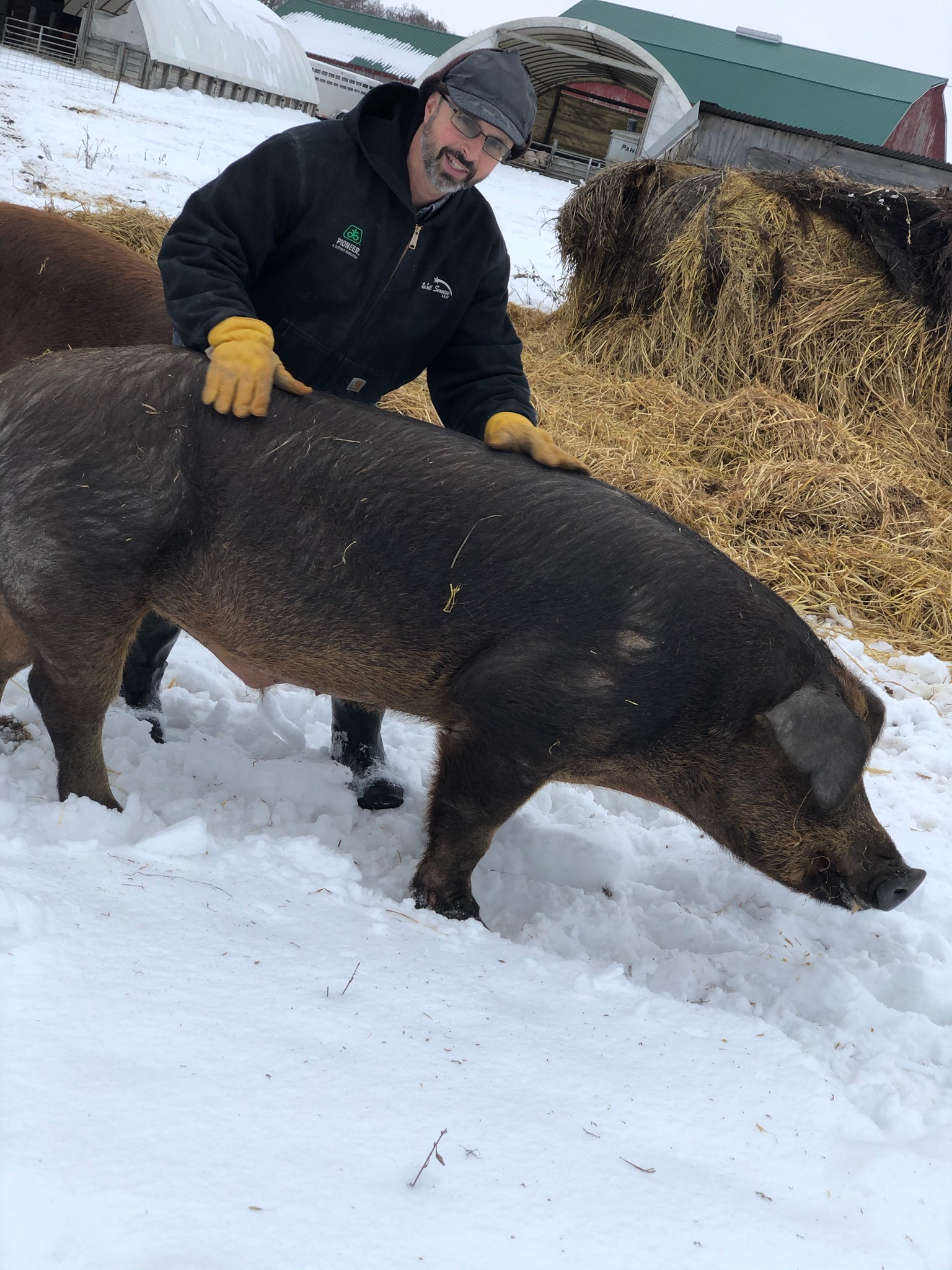
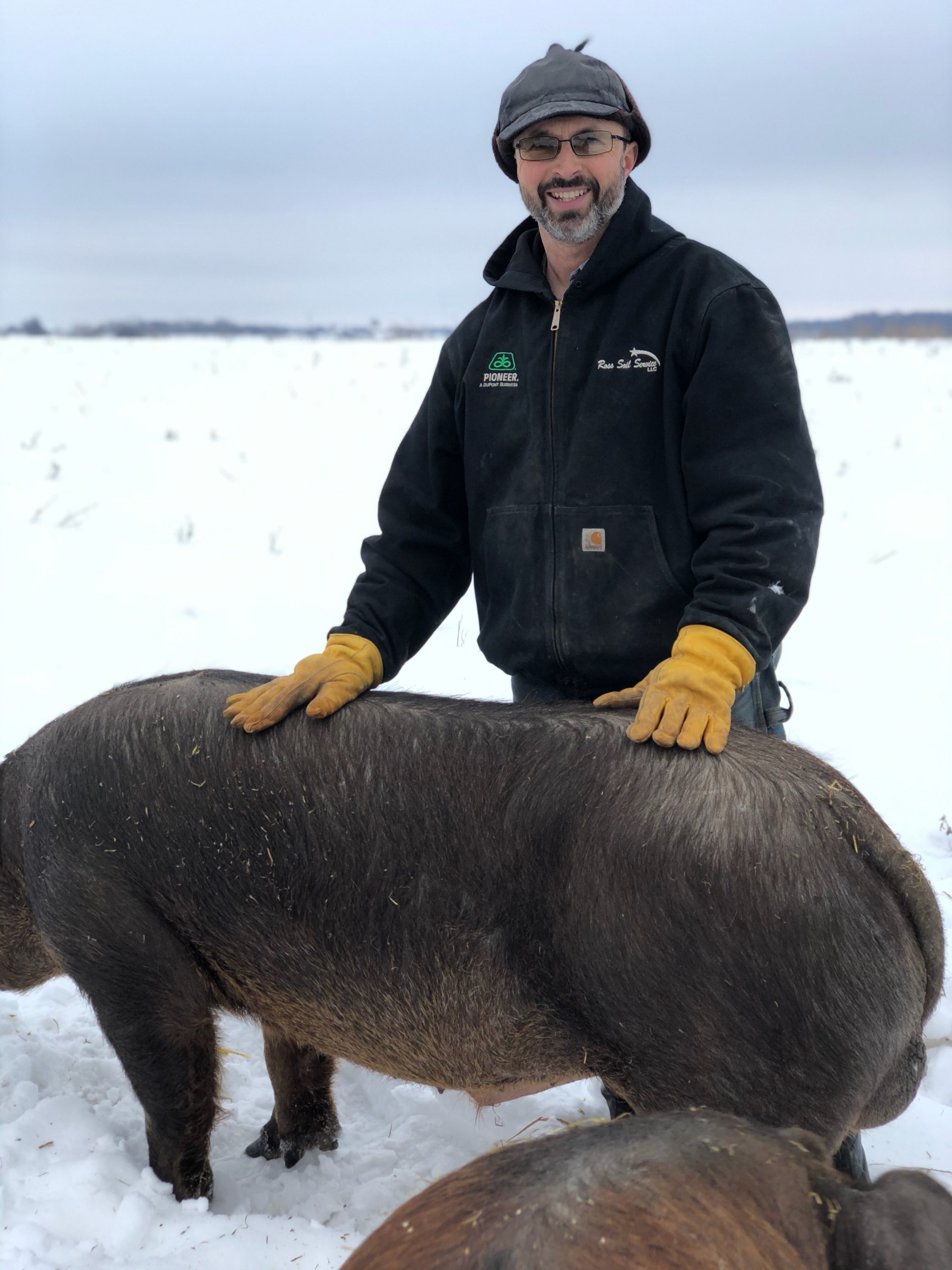
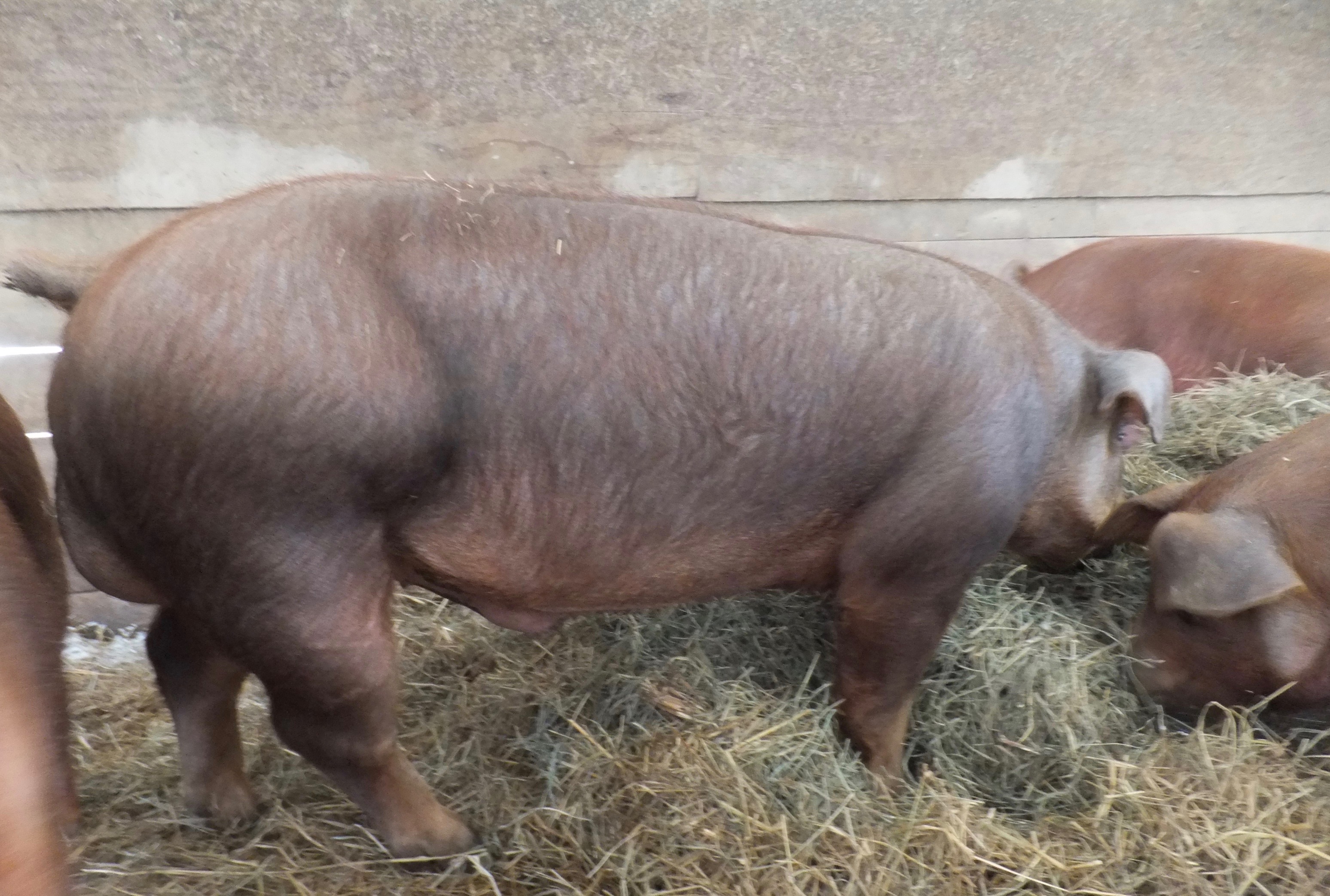
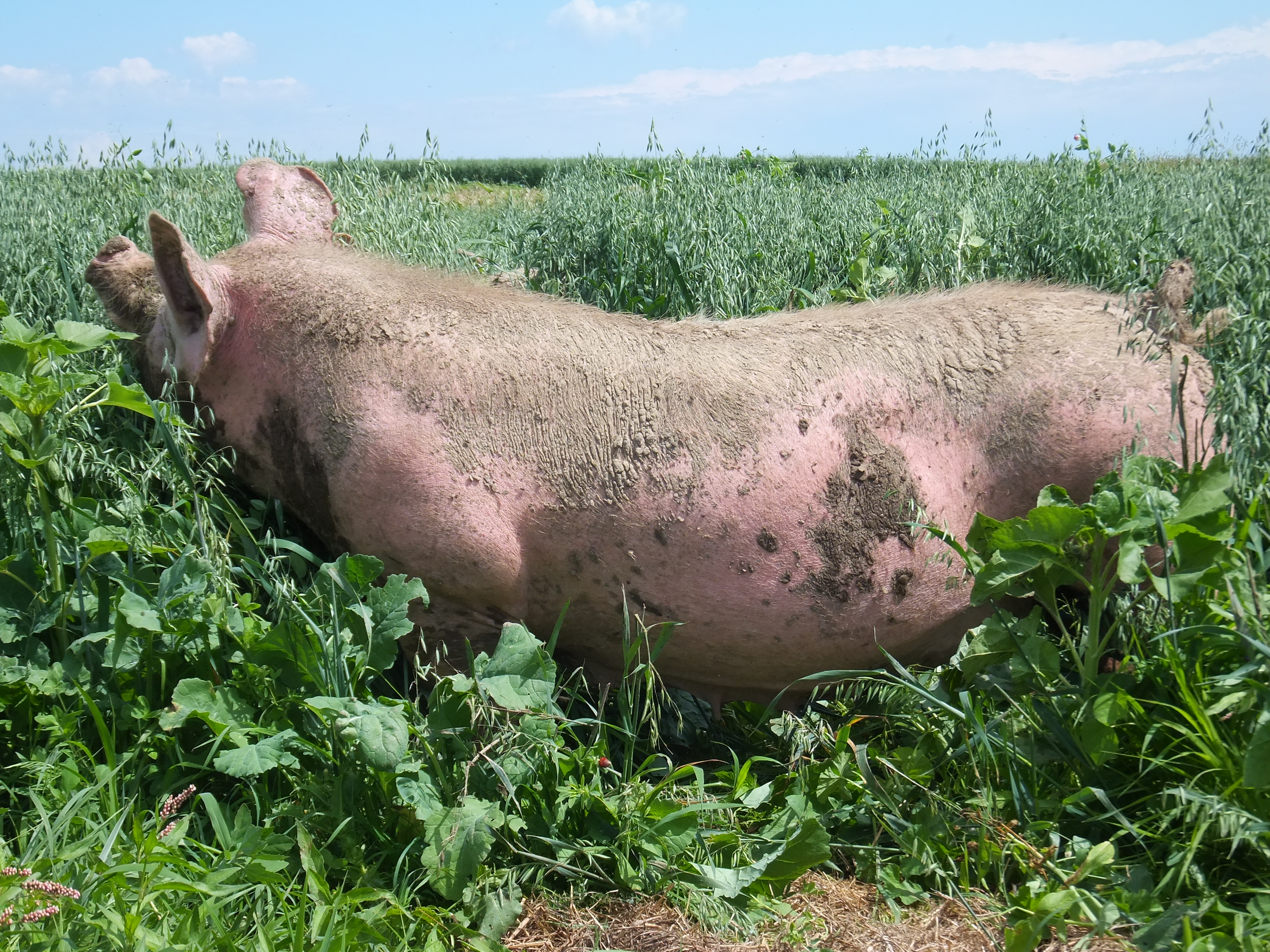
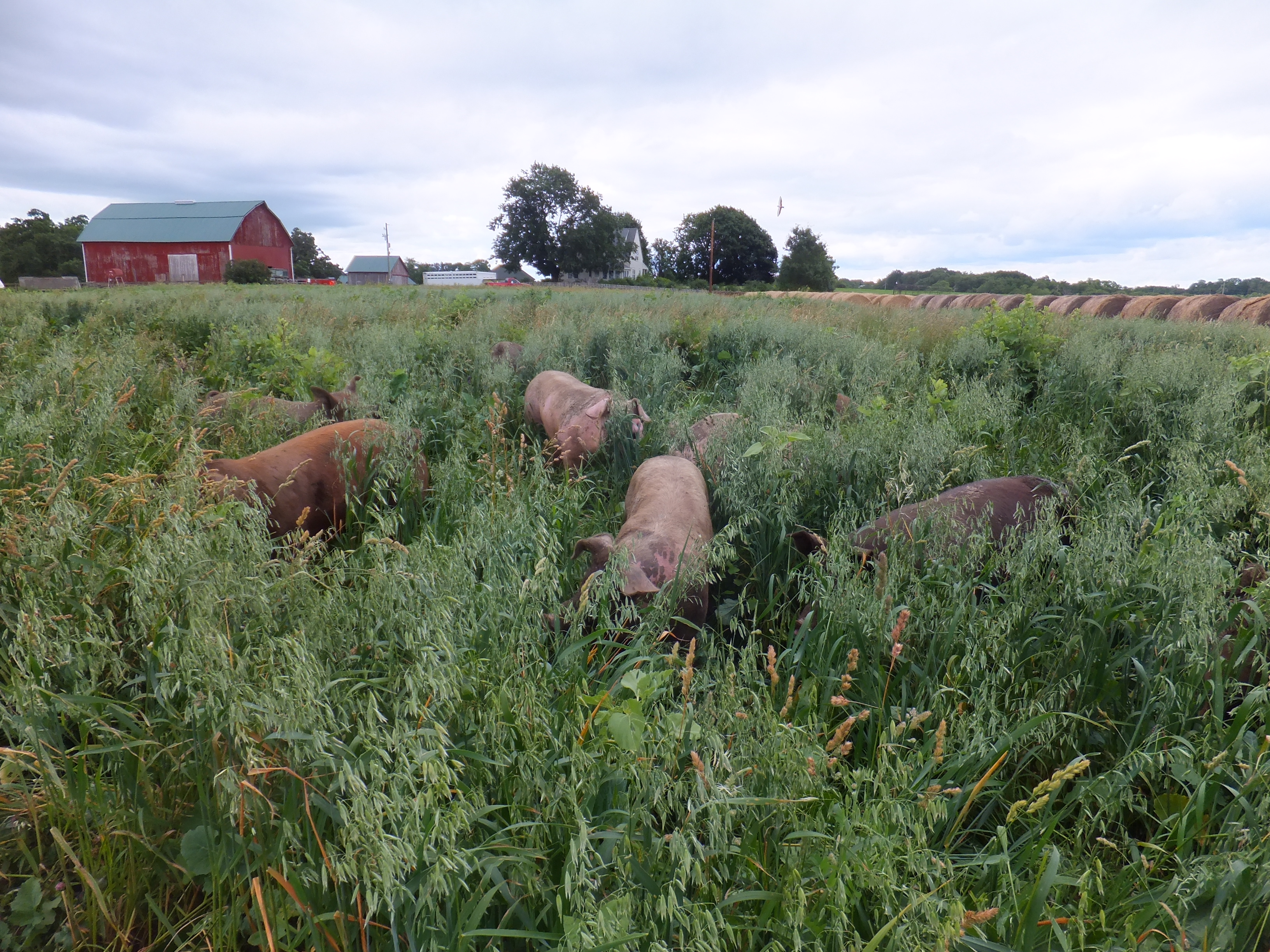
2025’s heifers and calves are pictured in these two photos.


Crossbreeding with 2 New Bulls

February 27, 2025

For the past 25 years we have been using Red Angus bulls exclusively. This year we still have 3 Red Angus bulls for our cows, but will be crossbreeding our heifers with two new bulls. The red bull with two white tags is a South Poll from Sassafras Valley Ranch in Missouri. The Black Angus behind him is from Rocky Road Farms Angus, right here in Darlington.

I’ve never been opposed to crossbreeding, but I needed to find the right bulls. These bulls are excellent for our top two traits, disposition and calving ease. I’m excited to get some hybrid vigor back into our cattle.

I plan to use them together to breed about 30 of our Red Angus heifers. I’ll have to wait until April of 2026 to get calves on the ground, but I plan to get birthweights on all the calves to compare South Poll to Black Angus. It won’t be scientifically significant, but it will be anecdotally interesting. It will be easy to determine parentage as black is a dominant color in cattle and since the Black Angus bull is homozygous black, any black calves will be sired by him. All the red calves will be sired by the South Poll bull.

Check back for results of this experiment in June or July, 2026.


New Herdsire

September 18, 2024

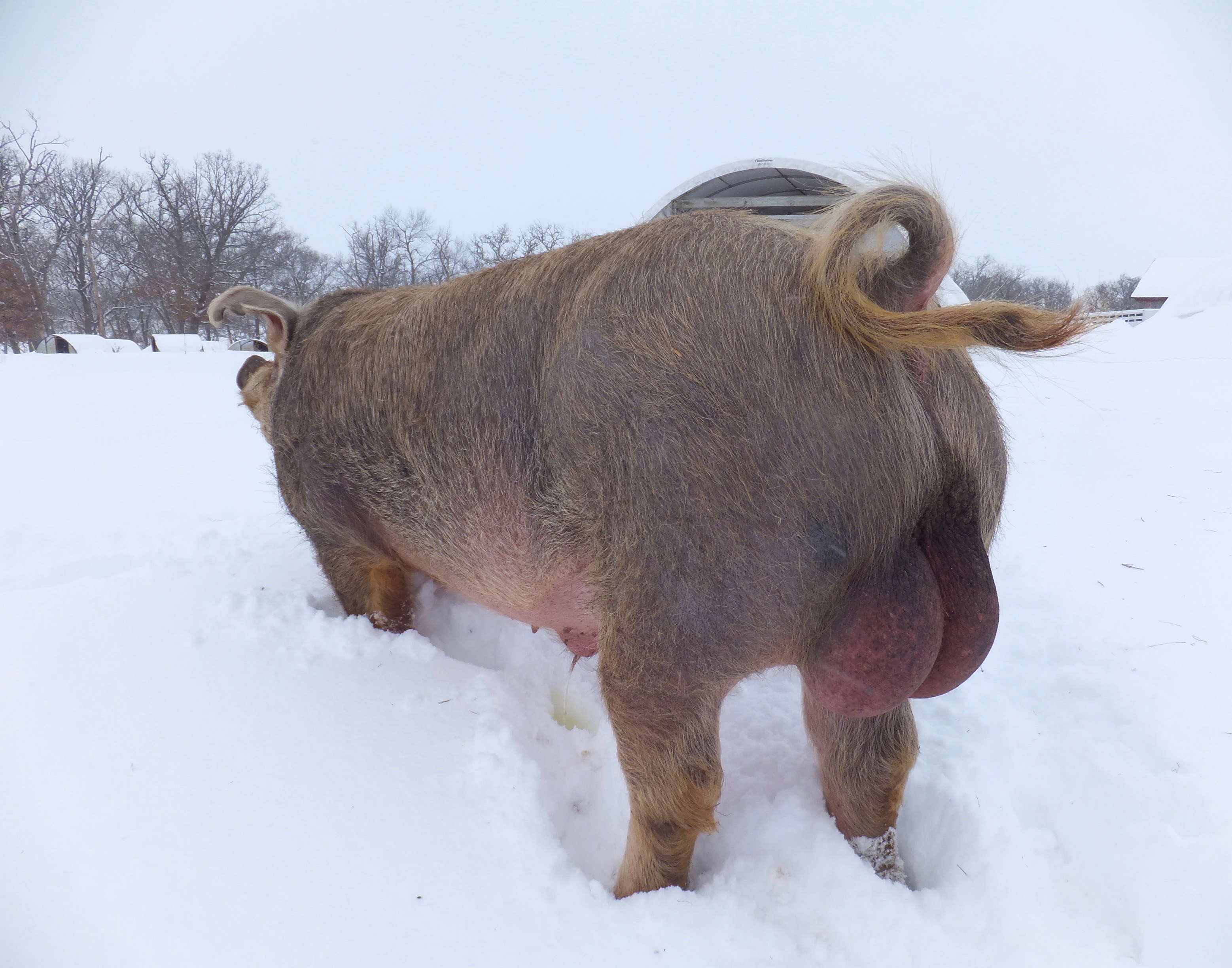
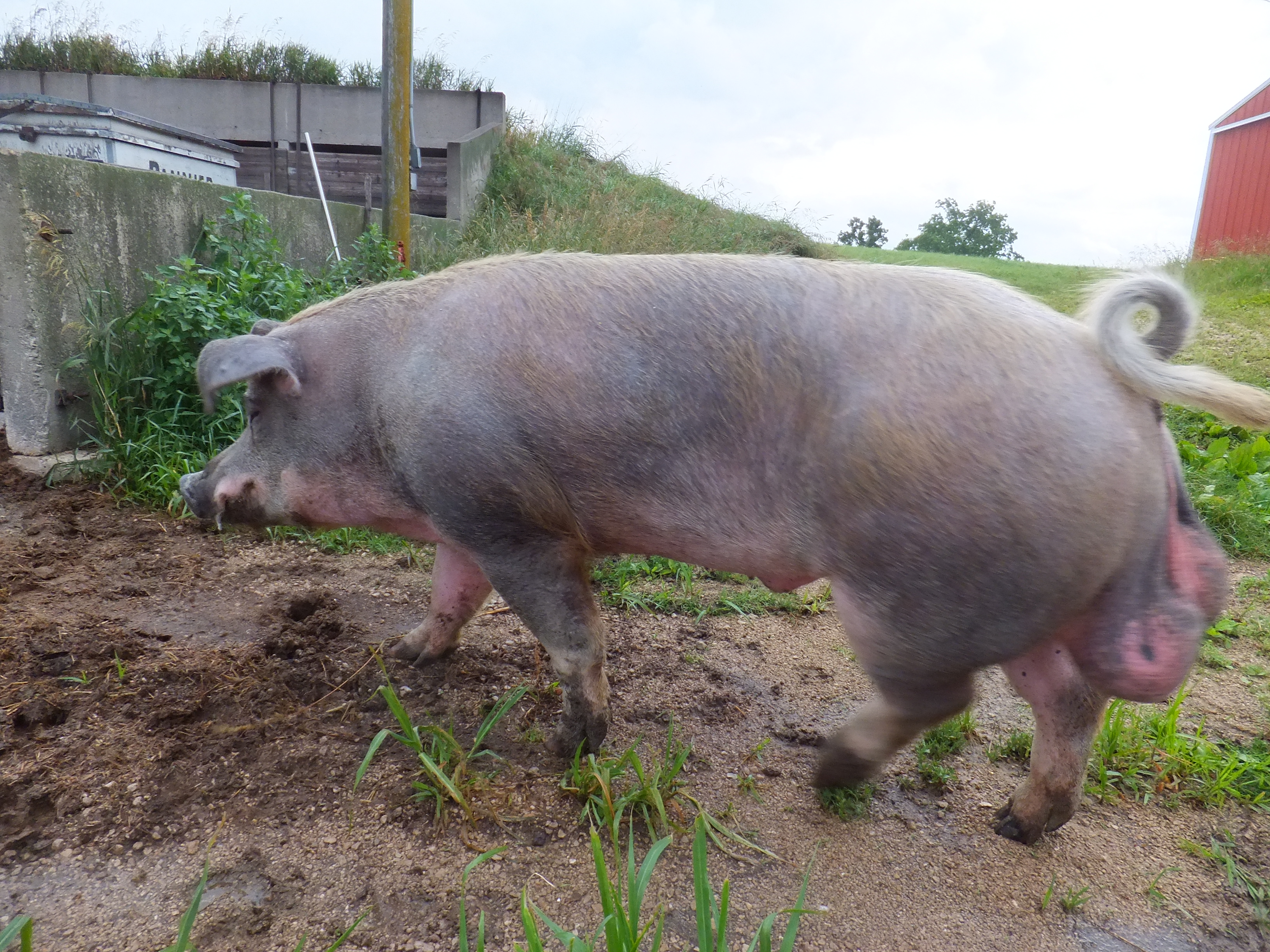
This is the boar I raised and plan to breed to the Landrace sired gilts from the previous post.

I love his dark color, he’s almost black, even though he’s mostly Duroc.


Landrace Swine

July 29, 2024

I’m officially going on record and saying Landrace are more intelligent than the other breeds I’ve worked with. I’ve long suspected it, but this latest group of half Landrace hogs confirms my suspicions.

First example is the way they deal with electric fence. Most hogs, once trained to electric fence, respect it like you respect a beloved mentor. But these trained Landrace hogs respect electric fence like you respect a younger sibling. Definitely some testing of limits and boundary pushing!

Second example is when I moved them to a new pasture. After only a day of exploring, I fed them grain in their new pasture and some of them were stuck in their old pasture. They had to move away from me and go around a corner in order to get to their new pasture. This would’ve been impossible for most of my hogs to figure out, but it took these guys about five seconds to figure it out.

I’m really impressed with this group of half Landrace hogs produced by artificial insemination and plan to keep two or three gilts out of the group. I was so happy to find another Boar stud, North Iowa Boar Stud. I used Swine Genetics International for nearly thirty years, but the last time I called I was informed they had sold all their maternal boars and only had showpig sires.

I was in shock. It’s like hearing Hershey no longer makes chocolate bars. But times change. I guess they no longer have the demand. Thankfully, North, Iowa Boar Stud has a lot of maternal and meat quality boars for me to choose from. I hope they stay in business for a long time.


Swine Genetics: Reminisce

January 26, 2022

UPDATE: Taking orders for delivery every other Saturday to Madison. Next date: March 5th.  Email Matthew with order and/or questions: oakgrovelane@yahoo.com. Thank you!

Blue, red, white, pink.  1st through 4th ribbons at the Lafayette County Fair.   We didn’t have participation ribbons.  Whatever you were showing, the judge told you where you stood.

We showed everything from cattle to crops, but my favorite to show was hogs.  Other than some success in showmanship, that’s where you’re being evaluated rather than the hog, I was stuck getting white and red ribbons with my hogs.

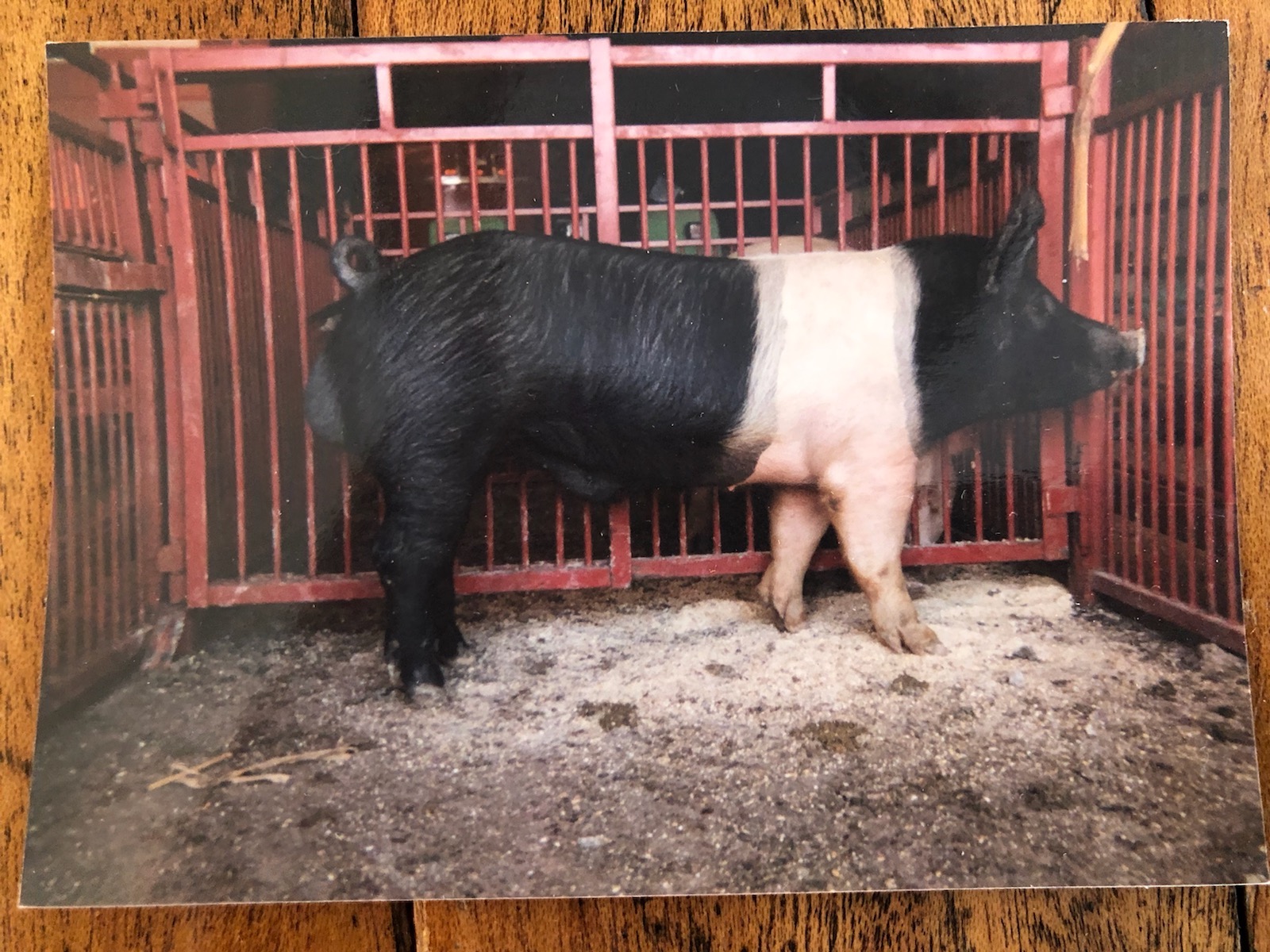
I always had an interest in livestock genetics and subscribed to the breed journals which I read cover to cover every month.  My favorite was “The Hampshire Herdsman” which covered my favorite breed, Hampshire.

Most of the journal consisted of breeder advertisements.  Even at a young age, I understood that much of a breeder’s success was based on perception.

It was interesting to see the different types within a breed and how type changed over time.  I understood that some change was based on the hopes of improvement of the breed.  And I cynically understood some change was based on the need for leaders to change type to stimulate demand for their stock.

One breeder who never wavered in the type of Hampshire he was striving for was C. Elliot Driscoll, of Waldridge Farms.  

I noticed his two page ad in every July issue, (the biggest and best, herdsire issue), of The Hampshire Herdsman.  He always had something to say and didn’t care about offending other breeders.

While it did seem he had a chip on his shoulder, Mr. Driscoll also displayed a sense of humor in his advertisements.  He listed his children and their various occupations, with the boys starting out as “sanitation engineers” and gradually moving up through the ranks to “apprentice breeders”.

I showed Waldridge Farms ad to Dad and asked if we could buy a boar from them in the hopes of improving our hogs.  Dad said sure.

Dad made the 3 hour drive in our Ford ton truck with the stock rack on the back.  Must have been a school day as I didn’t go with on this first trip.  I’m guessing it was around 1985 or 1986.

Dad brought home two boars.  I named them “Wolfman” and “Spock”.  Wolfman was a big, wide-belted boar.  Spock was an off-belt, almost black.  

We had a good base of maternal gilts sired by some good Yorkshire boars we purchased from local Yorkshire breeder, Larry Teasdale.  Wolfman and Spock went to work breeding those gilts.

We saw improvement in our hogs right away.  We went from white and red ribbons to blue, at the county fair.  But the biggest benefit to our farm was economically.  

Perhaps in response to the detrimental effects of the stress gene, I’m not sure, I was too young to know exactly why, breeders selected away from the lean and narrow hogs of the 1970s, and towards short, wide, and ultimately fat hogs in the 1980s.

I remember one Lafayette County Fair carcass show in which the judge kind of chewed out the hog producers as there were hardly any good carcasses and the worst carcass had about two inches of backfat and the loin, (pork chop) was smaller than the largest lamb chop.

Consumers were avoiding fat and starting to demand lean meat.  It was clear that type needed to change once again.

In an effort to promote and pay for lean muscle, pork processors started measuring individual hog carcasses for fat and muscle and paying the producer accordingly.

We were paid a premium for our Waldridge sired hogs.  And, in an effort to help other producers in the area, buying station managers started to promote our hogs to other producers.

Producers started to ask to purchase our Hamp-York gilts for replacement females.  So we obliged, charging $50 over market price.  Demand was good, and this became a nice sideline business.

We alternated Teasdale Yorkshire boars one year, and Waldridge Hampshire boars the next, into the early 1990s.    By this time, breeders had responded to the call for lean hogs and as usual, were taking it too far.

Waldridge hogs were no longer the leanest, meatiest boars available.  I remember discussing this with Mr. Driscoll.  He wasn’t worried, as he knew the type of hog he wanted to raise and wasn’t influenced by prevailing winds of change.

He said something to the effect that a hog with .8 inch backfat and a 6.5 square inch loin was always going to be a good hog.  That really stuck in my mind.  Whenever I’ve been confused about the direction of my hogs, I remind myself of that truth.

By 1994 when I came home from college, it was clear the swine industry was continuing to change.  Teasdale Yorkshires sold out before the market collapsed that year.  Many producers exited the business.  1998 and 1999 were two more brutal market years for the swine industry and many more exited after that.

In college I saw the benefits of artificial insemination and decided to close our herd to new stock, only bringing in new genetics via AI.  August of 1994 was the last time we brought new animals onto the farm.

While many producers had exited the swine industry, there were still enough producers left who needed boars that I started and developed my own business selling boars.  This was a good business for me from 1995 to around 2010.

By then, so many producers had left the industry, I could see the writing on the wall.  I only sell boars to two producers now.

I pivoted once again into selling meat direct to consumers in Madison.  This has been really enjoyable.  As a farmer, we know we are producing food, but I’m one of the lucky ones who actually get to know the consumers enjoying our food.

I guess I’ll end by thanking Waldridge Hampshires, Teasdale Yorkshires, and Swine Genetics International for providing the good swine genetics that help us produce good pork.  Thank you!


2020 Herd Boar: End Zone

January 29, 2020

IMG_0024

Last year’s post, “2019 Herd Boars”, talked about two of my all-time favorite herd boars, Zone and End Zone.  Father and Son, sadly, I decided to sell the Father as he got very big, over 800 lbs, and his son, End Zone, was breeding well.

And then, wouldn’t you know it, when I was down to one boar, End Zone got hurt.  I think he hurt himself in his mud wallow, as the mud had gotten very sticky.  This isn’t a problem confinement pork producers worry about.

I wasn’t sure if he would get better, but I separated him so he could rest and thankfully he did and is back better than ever.  I was able to use artificial insemination to breed one group of sows who will farrow in March.

I kept a white son of Zone and we will see how he develops.  I really like the confirmation of End Zone.  He has a lot of length and is close to perfect on his feet.  He is also easier to work with than his Father.  So I’m hoping I can keep him from getting too big too soon.

IMG_0023


2019 Herd Boars

February 12, 2019

DSCF3326


The best two herd boars I think I’ve ever had are Father and Son.  Zone, pictured above is out of an AI mating, Waldo Duroc, Red Zone.  I had been having trouble with my boars not having much mating desire, but Zone is excellent.  The only problem is he is also people aggressive, but I think I can continue to work with him if I’m careful.

He is being mated to Chester White sows out of an AI mating, Longevity.  They will farrow this spring and I’ll evaluate them again.  The Chester White gilts definitely had less piglets born and saved than my Landrace gilts in the past.

DSCF3310

End Zone is pictured above.  He is a son of Zone.  He is being mated to Rising Sun Duroc gilts for early summer litters.  The Rising Sun gilts have very friendly personalities, but we’ll see how they do as mothers.

DSCF3325


Another photo of Zone.  He has a lot of length.  He is also getting tall as you can see he has to duck to get out of his shelter, pictured below.

DSCF3315


Chester White Litter 2.0

November 8, 2018

DSCF3178

November, the last litter of 2018.  Cold as heck outside.  Warmer next to your momma.

This gilt was featured in one of my farm videos last year.  She is one of the piglets in the video.  I made the video because I was excited for new genetics.  This gilt and her siblings, were sired by Chester White semen I purchased from a boar stud in Iowa.

I wanted to try the Chester White breed because it is know for mothering ability and meat quality, two of the traits most important in my swine herd.  Also, Chester White is an American Heritage breed.

I love eating “General Tso’s Chicken” at the Chinese restaurant in town.  And I’m sure “General Tso’s Chicken” is heritage food to someone, but its not my heritage.  Farmers, let’s make our own heritage!

Back to this Chester White experiment.  I kept all five of the gilts from that litter and bred them to my Duroc boar.  They have done well, good mothers.  Interestingly, they don’t have as many piglets born as my Landrace genetics.  They seem to be very similar to my Duroc genetics, as I always select for mothering ability and meat quality when I purchase Duroc semen as well.

What’s nice is that I was able to conduct this experiment in a relatively short amount of time as the generation interval in swine is about a year.  The generation interval is the amount of time it takes for any species to reproduce itself.  In cattle its about two years.

The generation interval is important to geneticists and animal breeders because it adds a time element to any “progress” that can be made in a species.  I put “progress” in quotes because geneticists and animal breeders are people like you and me.  And like you and me, its way easier to make change for change’s sake, than to stop and figure out where exactly you want to go and why, and if its going to be a good when you get there.

Okay, if you’ve made it this far, comment and let me know what you think about “heritage” and “progress”.  And check out my youtube channel if you want to see more of our farm.  Thanks!


Outdoor Swine Genetics, Part 2

July 19, 2017


My livestock breeding philosophy is simple in theory and difficult in practice.  It can be summed up in two words: Problem-Free.  Problem-free livestock are under-appreciated and difficult to observe.  It often requires a problem to present itself before you can fully appreciate the absence of the problem.

The good thing about my 40 plus years experience in the livestock industry is the amount of problems I have observed and worked through.  And I always choose to work through problems as that is the way I was taught by my parents and makes the most sense.  I’ve never succumbed to the siren call of all-new breeding stock as common sense tells me I’ll just be trading known problems in my own stock for the unknown and possibly worse problems in the new stock.  Because all stock has problems, its just that very few problems are visible with one viewing.

I have had very good luck with herd health by practicing a modified closed system with breeding stock.  Meaning I never bring in animals from an outside herd, but I get new genetics through purchased boar semen.  There are some diseases that can be transmitted through semen, but the reputable boar studs regularly test the studs for those diseases.

I would practice a completely closed system if I could figure out a way I wouldn’t be losing too much efficiency from inbreeding depression.  Inbreeding depression is the tendency for animals that are inbred to perform worse than the average of their parents.  Conversely, crossbreeding results in hybrid vigor, which is the tendency for crossbred animals to perform better than the average of their parents.

However, I’m not afraid of linebreeding.  A fun definition for linebreeding is that it is successful inbreeding.  Practical examples of inbreeding and linebreeding in my mind are: a brother/sister mating is inbreeding, a first cousin mating is linebreeding.  This is just my own way of looking at it.  A geneticist will tell you that all linebreeding is technically inbreeding.

A geneticist can analyze the full pedigree of an animal and calculate the inbreeding coefficient, which is the probability that any one pair of genes is identical.  So it is expressed from 0 to 1.  For example, a full brother/sister mating if the parents of the siblings were completely unrelated, would have an inbreeding coefficient of .5, meaning there is a 50% likelihood that any pair of genes is identical.

So along with a modified closed herd, I practice my own unusual combination of crossbreeding and linebreeding.  I guess my curiosity makes me want to sample different genetics to see what I may be missing, but my practical side makes me want to not change my herd too rapidly, especially if I have no perceived problems.

What does this look like in practice?  The boar in the top photo is Drew, his paternal grandsire was Dru, terminal line semen from SGI.  Everyone knows what maternal is, but in livestock breeding we use the phrase terminal when we want to ignore the maternal side and concentrate on the meat traits.  Obviously no line is completely terminal or their would be no reproduction.

So I kept no gilts from the offspring of the Dru semen.  I did however keep a few boars.  The litters were born in the blizzard of March, 2013 when I was having a difficult time keeping the piglets from freezing.  Drew’s sire was one of three piglets which survived out of a litter of 12.  He looked good and I figured I had inadvertently selected for piglet survivability.  So I kept him as a boar and he turned out to be a great sire of robust, meaty piglets.

Drew’s maternal grandsire was the Landrace, True Blue semen I wrote about in my last post.  True Blue sired two litters, 30 and 31.  I kept about four gilts out of each litter and they’ve been excellent mothers, with the 31 litter gilts a little more to my liking phenotypically.

So I planned and kept four boars out of one of the 31 litter sows.  I sold a couple of boars to a local producer and I kept a couple and they were breeding fine.  A competitor at my farmers’ market called and said he really needed a working  boar.  Some people are very competitive at farmers markets, but I prefer to be collaborative as I feel our real competition is Walmart and the whole idea that cheap food is good.  So I sold him one of the boars.  I guess those genetics will be well represented in the pork at the Madison farmers markets.

How I linebreed:  I really like the 31 litter sows.  I have a planned mating with my favorite with Duroc semen, a Waldo boar called Red Zone.  I asked SGI for their most maternal Duroc and he’s what they gave me.  I plan on keeping all the boars from that litter and possibly adding a couple as sires.

I have another mating with various sows, some of which are the 31 litter sows, AId to a Chester White boar, Mr. Longevity.  I wanted to sample the Chester White as it is an American heritage breed.  I plan to keep gilts out of these litters if they meet my standards.

If all goes as planned I will be mating the Red Zone sons with the Mr. Longevity daughters, some of which will be a first cousin mating if each of their respective moms is a 31 litter sow as the 31 litter sows are full sisters of course.  This is as tight of linebreeding as I like to practice.

And while I will be evaluating the new genetics, which could still become a terminal line in my herd if I don’t like their performance, I’m also evaluating and looking for any genetic problems which are more likely to show up in the offspring of this first cousin mating.  Because even at this point I can choose to make the 31 litter a terminal line.

Larry, the boar in the photo below, represents my established genetics.  I am really happy with how these hogs perform, mostly because they are problem-free.  I have to keep reminding myself of this, though.  Because as geneticists we are taught to always be selecting and moving the genotype in some direction.

Well, I gave myself permission to stop thinking like a geneticist, and start thinking like a busy farmer who direct-markets meat on Saturdays and plays disc golf on Sundays.  I select animals for breeding within this herd based on what I like to look at, mostly interesting color patterns.  This has been one of the most difficult admissions I’ve made on this blog as my old geneticist buddies would be laughing or crying if they read this, but they know me, so they probably wouldn’t be surprised!

For a good example, Larry was selected because I missed a boar piglet when I was castrating litters.  I usually castrate at a couple days of age.  By the time I saw him, he was weaning age, and he looked pretty good, and he has this interesting brindle color pattern, and I realized I could use a boar about the time he would come of age…   Well Larry has been terrific, a good breeder, sires great pigs, and I’ll be keeping his first daughters back as breeders soon.

This concludes my two parter on Swine Genetics.  I hope its comprehensible for any of you who made it all they way through.  Any questions or comments as always welcome.


Outdoor Swine Genetics, Part 1

July 3, 2017


Kevin, a reader of this blog from Missouri, asked me for some pointers on outdoor hog genetics.  His son has been raising hogs and plans to expand his breeding stock herd to meet a new marketing opportunity.  Since he wants to expand quickly, he’s going to need to purchase females, either gilts or sows.

I recommended he find one herd to purchase from for health reasons instead of purchasing from several different herds.  For outdoor swine genetics in Missouri I recommended contacting Kelly Klober ,as he is the expert down there.  If he wanted to try conventional genetics, I’ve been pleased with the offspring from AI from Waldo Genetics in Nebraska.

I’m a believer in keeping your females from within your herd, usually out of your best sows.  I guess I’m also a believer in keeping your boars from within your herd, as the last time I brought in live breeding stock was August of 1994.  To get new genetics, I’ve purchased fresh boar semen, almost exclusively from SGI in Iowa.

I used to pick my AI boars based on figures and phenotype.  This is the more expensive option as SGI charges more if you pick the boar.  The last few years I’ve had the salesman pick the boar as I realized they know the boars better than I.  I almost always ask for mothering ability and meat quality.  A couple times ago I asked for an aggressive natural breeder and they selected a boar called Wonka, and sure enough, his sons were excellent breeders.

I’ve never had any problem with any line of hogs not wanting to graze, especially if they are limit fed.  If they are on full feed of grain, they will spend more time rooting out of boredom and less time eating forages.

The sows and gilts in these two photos are receiving three pounds of grain each.  This is roughly half of what they would need if they had no access to forage, and only a quarter of what they would eat if they were on full feed of grain.  So these hogs take grazing seriously and don’t spend much time rooting except for in their wallow.

I have however experienced gilts and sows who had poor instincts for outdoor farrowing.  Even with many generations farrowing outdoors on the mother’s side, the wrong AI boar can sire nervous, poor instinct, mothers.

The sow in the top photo is out of an AI Landrace boar called True Blue.  All the sows out of True Blue are excellent outdoor mothers, farrowing and raising large litters.  Samsung is an AI Landrace sire I used at the same time and added several of his offspring to my herd.  These sows however, farrowed large litters, but were nervous and crushed up to half of their offspring.  They also showed very little instinct for nest building.

That’s the problem with using AI from conventional producers.  It’s hit and miss.  There are so few producers farrowing and raising outdoor hogs, there is really no knowledge of these instincts.  I’m sure the daughters of Samsung would have worked fine in confinement.  Much better probably than my red sows which grow to over 600 lbs and would not even fit properly in the gestation and farrowing crates that most of the industry uses.

Maybe some sort of organization for outdoor swine breeders would be nice.  But I’m not much of an organizer.  I guess the best I can do right now is share my experiences and read about others’ experiences on their blogs.  My next post is going to go into more detail about my breeding philosophy.