Harvesting Oats/Barley

August 28, 2012

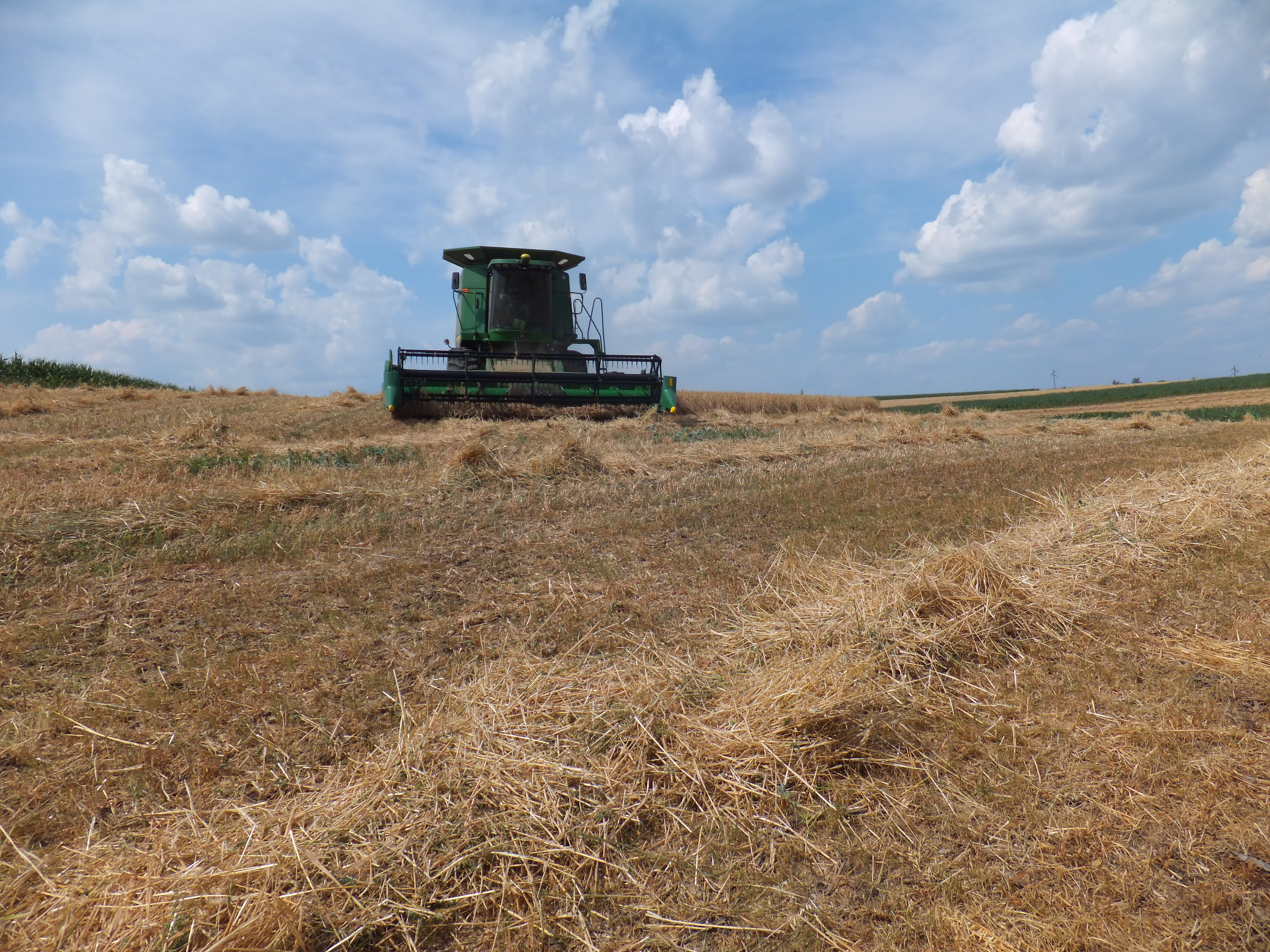
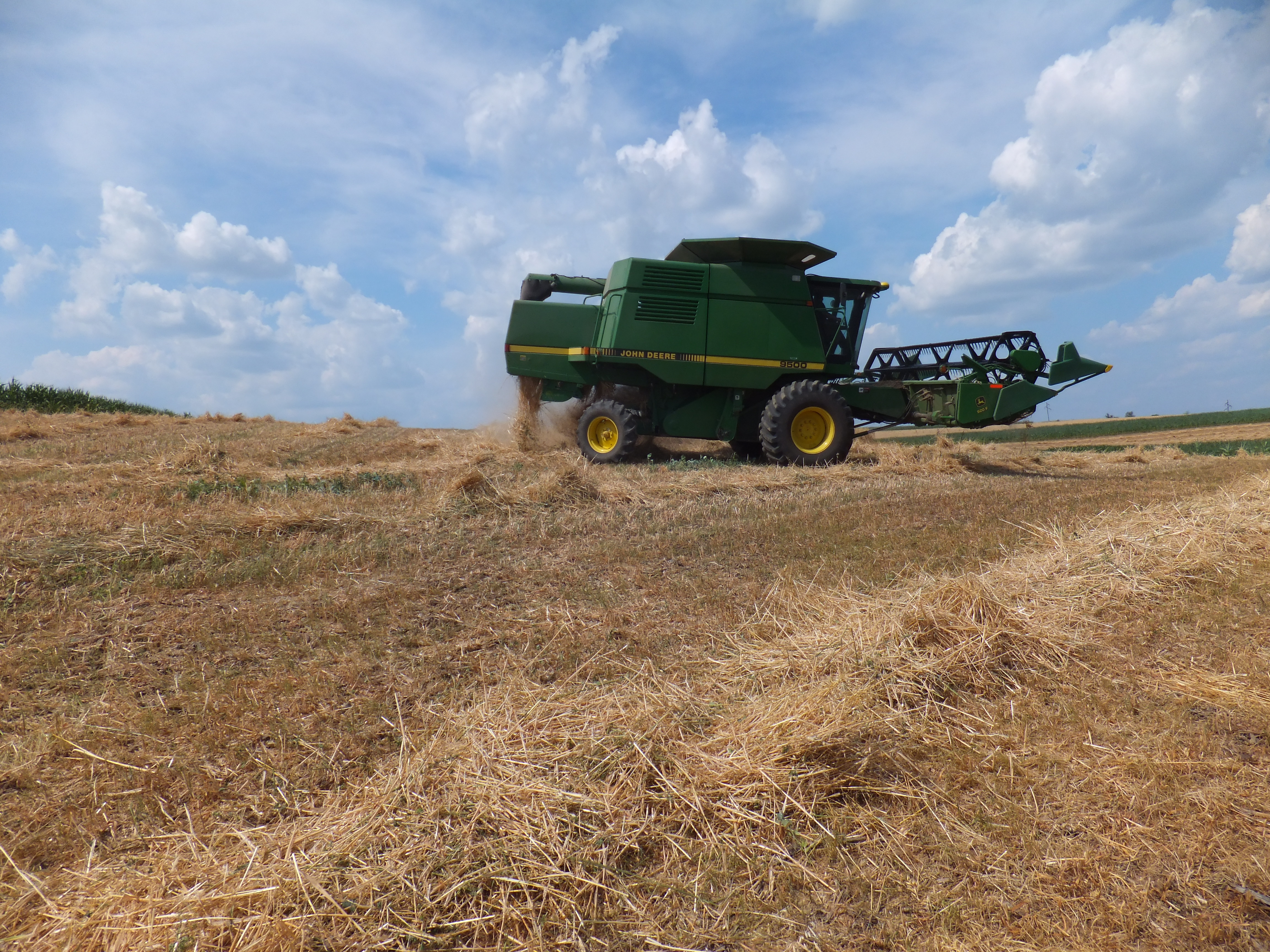
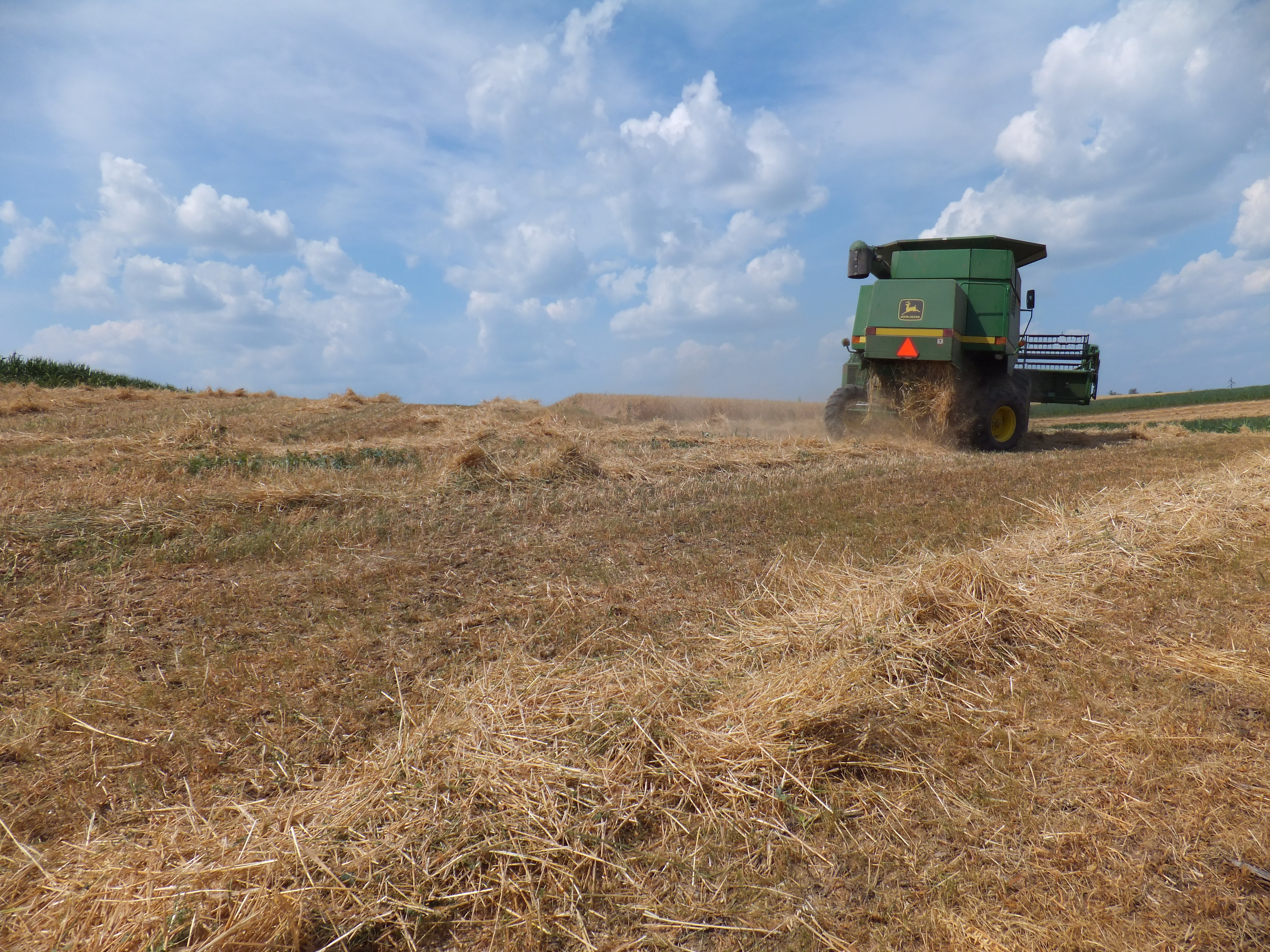
Back on July 15th my neighbor Joe combined my oats.  He has a John Deere combine.  His custom harvesting rate is $25 per acre.

The combine cuts the oats and takes it inside the machine where it separates the grain from the straw.  The grain fills a hopper while the straw is kicked out the back.  I waited a day and then raked and baled the straw to use for animal bedding.

The oats yielded ok, especially considering the drought.  74 bushels, or 2368 lbs. per acre.  They were super-dry, only 4% moisture.
I understand now why small grains like oats, barley, or wheat do so well in the near west.  Moisture in the spring helps the crop get a jump on the weeds, then when it turns dry it’s the only plant growing.  We struggle some in the midwest because we get more rain than they do out west, which is a blessing, but it also causes the weeds to grow up through the maturing oats, resulting in harvest troubles.

This year the oats were weed-free and stood perfectly.  Remember last year when a storm blew them flat? No troubles this year.

Grazing Buckwheat

August 24, 2012

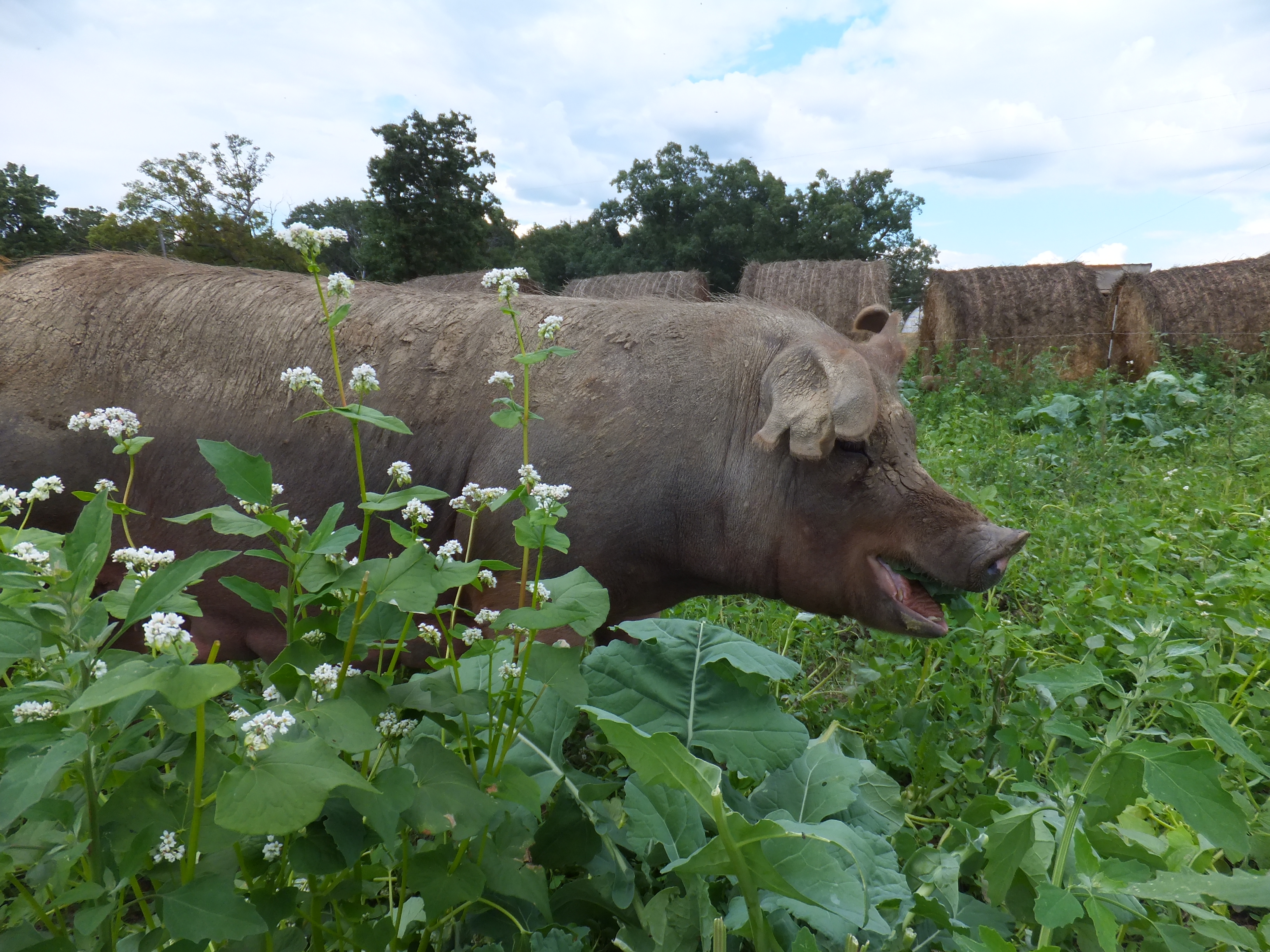
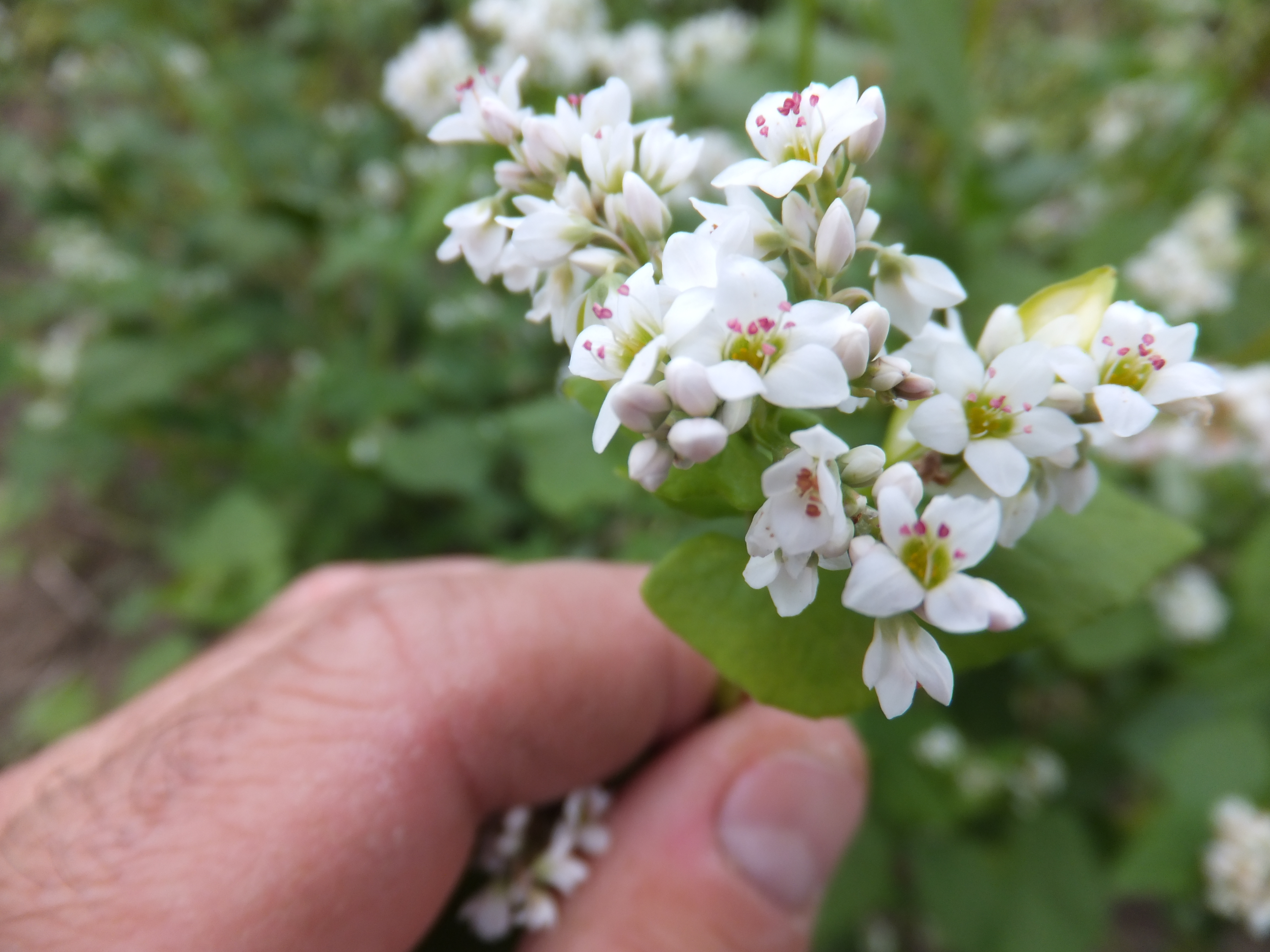
I needed the space, so I ended my Buckwheat experiment by grazing it with the hogs.  They liked it.  In the photo above, the plant with smaller leaves and white flowers is the Buckwheat.  The plant to the right with the larger, darker green leaves is Rape.  Even though I disced after grazing the Rape, some of it still survived.  By the way it grew in the drought, I wish I would have just let the Rape regrow and grazed that.

I apologize to those of you who wanted me to harvest the Buckwheat.  I enjoy planting and watching plants grow, but I don’t believe I have the patience to hand harvest.


Camouflaged Calf

August 20, 2012

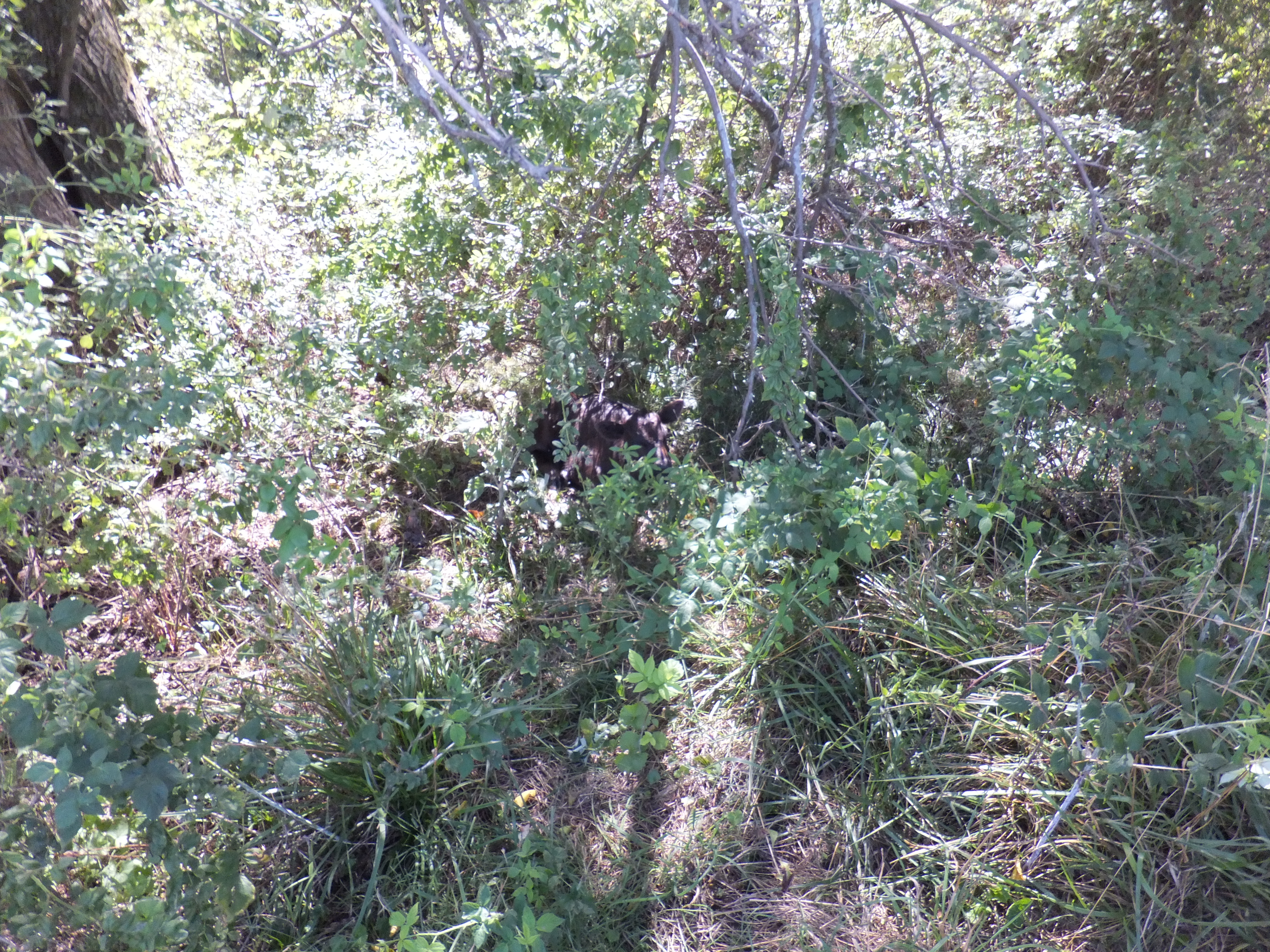
The cows have started calving.  I have a difficult time finding the calves because their mothers hide them.

There is a two-day old calf in the center of the photo above.  Below you can see a close-up of the calf.

The calves are coming out in shades of black even though their moms are red, because their daddy was a neighbor’s Black Angus which jumped the fence and hung out with the cows.  The calf below looks like a chocolate Lab.


Apples in Rented Pasture

August 16, 2012

I was fortunate to rent a pasture this year, close to my farm.  I had a vet preg-check my sixteen fall-calving cows this spring, then vaccinated and fly tagged the twelve which were bred, and put them in the pasture May 1st.

They have done really well, even in the drought, because  I under-stocked the pasture.  I wanted some experience grazing the pasture before I put too many animals in and then had to feed hay or destock.

Now they’re enjoying the wild apples which grow in the woods and in the open.  The cows have a route they walk everyday, checking for down fruit.

The tree above is strange.  Half of it has no apples, the other half is loaded with apples.

I usually eat a few every time I check the cows.  Each tree’s apples taste different, but they’re all good in their own way.


New Splitting Maul

August 1, 2012

I started cutting wood in July.  I woke up one cool morning after the heat broke, and went out in the woods and started cutting.  This might be the year I have all my wood cut before the snow flies.

I only cut dead trees which are down.  If you don’t cut and split the wood, it will start to rot.  Rotting isn’t terrible, as many critters make a living out of decaying trees, but I figure it’s also a good way to heat my house.  If I cut into a tree and its started to rot, I leave it for the critters.

I bought a new splitting maul, pictured.  I don’t know why I scrimped with my old one for so long.  This one works like a dream.  It’s an eight pound maul made by Task.


3rd Cutting of Hay by July 28th

July 29, 2012

I started the 3rd cutting of hay today, July 28th.  This is incredibly early for me.  Usually I’m taking the 3rd cutting towards the end of August.  The first two cuttings were taken May 22nd and June 20th.

I wrote earlier about how light the second cutting was because of the drought.  3rd cutting looks to be even lighter.  I’m grazing more of 3rd cutting where I can, because it’s more efficient than haying when the crop is light.  The field I cut is in an inconvenient place to graze, so I’m going to square-bale it.

We got an inch and a half of rain last week.  I’m hoping this signals the end of the drought and it will continue to rain regularly.  I may actually have a corn crop if that happens.  My hay fields and pastures will start to grow again as well.


New Farrowing Record / Tough Times

July 21, 2012

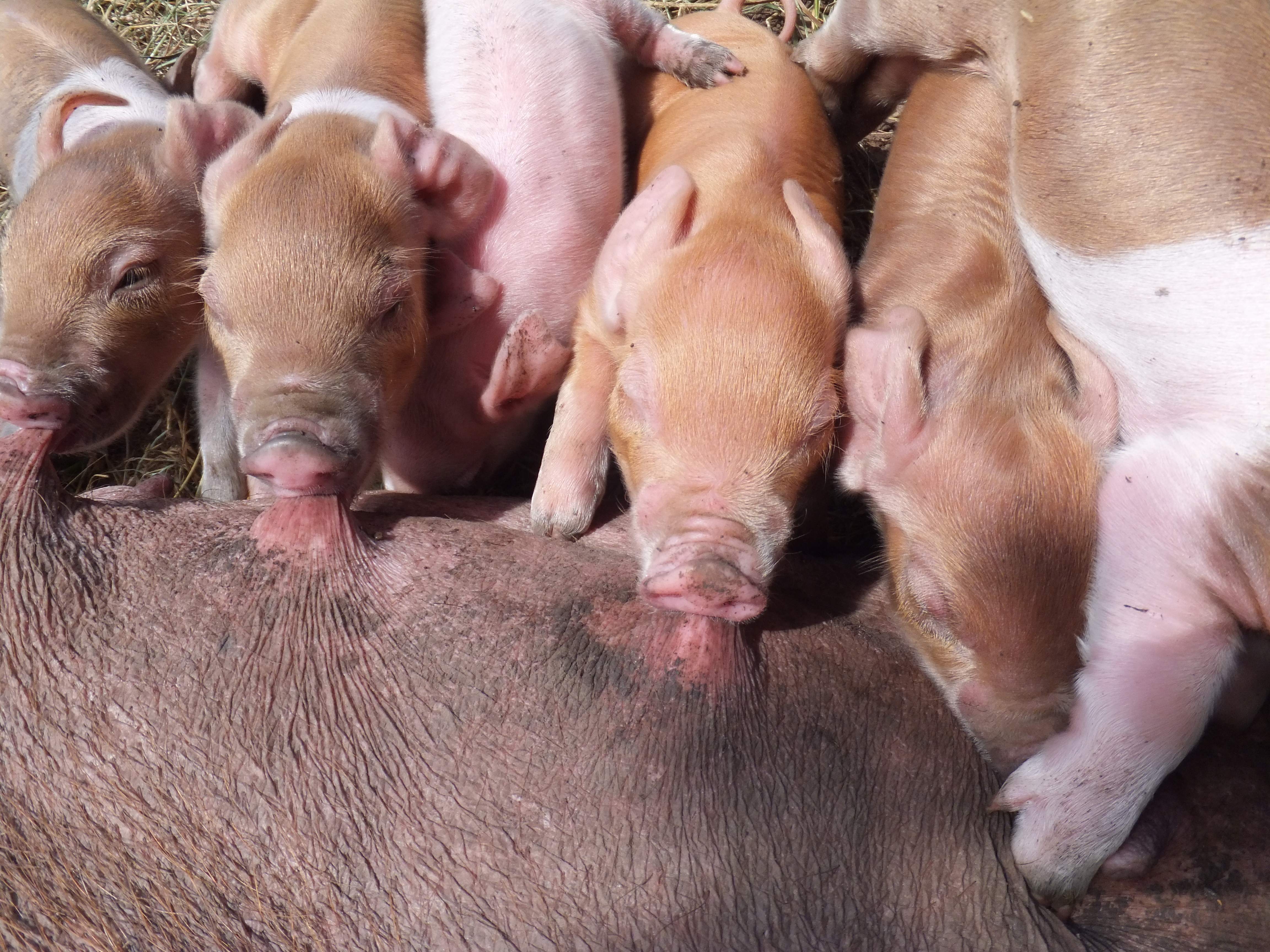
Sow 62-3 farrowed 19 live piglets and one small dead one for a total of 20.  This is the new record for our farm.

It’s too many.  She only has 14 teats, and the piglets are smaller than I like.  I won’t keep any of her offspring for breeding, as I would much rather have 10 to 12 larger piglets born per litter.  But it’s still nice to note a record.

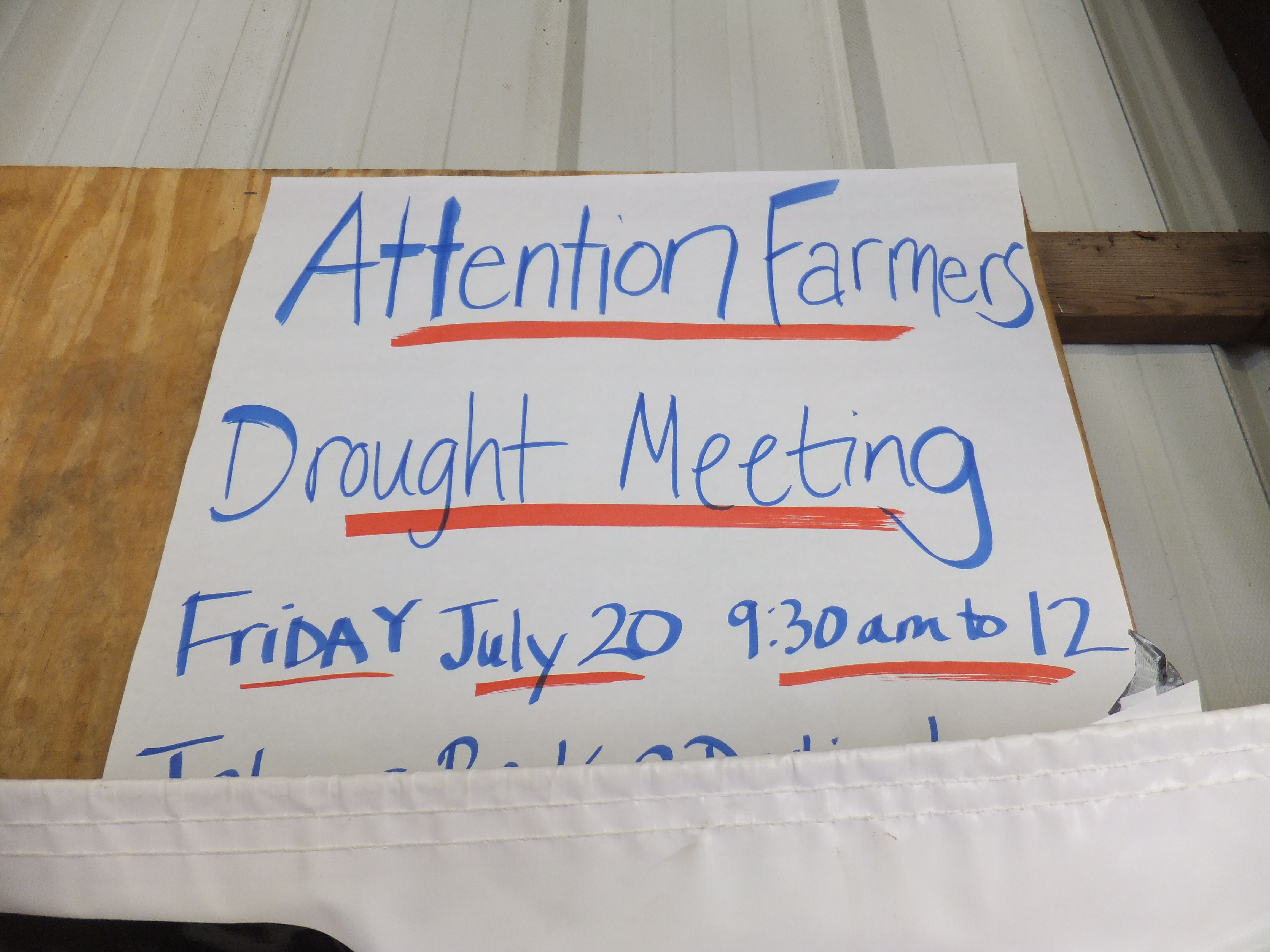
I went to an informational meeting on how crops are being affected by the drought, and how we can use the stressed crops.  The University of Wisconsin Agriculture agents lead the meeting.  It was well attended with many interested farmers.  The meeting was a little depressing, but my troubles were put into perspective as I drove home.

When I drove to the meeting I noticed a line of people on the sidewalk near the Catholic Church.  I wasn’t sure why they were lining up.  When I drove home, the line was huge and leading to a semi trailer which read something like “Catholic Mission” on the side.  The people were lined up to get food.


Able Died

July 19, 2012

My white herd boar, Able, was dead this morning.  He’s the one pictured breeding, above.

I don’t know for sure why he died, but it was probably heat related.  It reached 100 degrees here yesterday.  I had a sprinkler going for him and the sows, but there was a sow in heat.  I think he probably tried to breed and just got himself to worked up and was unable to cool down.  Once hogs get over-stressed in this kind of heat, it’s trouble.

The only good news is I kept a son of his this spring.  He’s looking pretty good.  He’s the white spotted one in the photo below.  I’m thinking of naming him Domino.


The 2012 Drought Continues

July 15, 2012

The great drought of 2012 continues.  It was the only thing people talked about during the 156th Lafayette County Fair this week.


Crinkly-Ear Sow Farrowed/Restaurant Visit

June 28, 2012

The sow I wrote about earlier, (let’s call her Crinkly-Ear), farrowed.  She picked out a shady spot under an oak tree, far away from the rest of the herd.  She had twelve beautiful piglets.

When a piglet is born, it is covered in a thin membrane.  It takes a few minutes to dry and rub off.  A healthy piglet shakes off the stress of birth rapidly, and is up and struggling with its siblings for a teat.

The chef and crew at Dayton Street Grille came for a visit.  I love when a restaurant comes for a visit.  It shows they aren’t just using the “local” angle for marketing, but really care about the food they’re serving.

I took them for a hayrack ride and showed them the cattle grazing and Crinkly-Ear’s litter.  They’re holding some day-old piglets in the photo.  I drove the tractor and Shepherd provided the color commentary.

Then they got the bonus tour because a sow was farrowing up near the barnyard.  They got to see me reach in and pull out a piglet that was coming backwards.  One guy even touched the slimy newborn.  Thank you Dayton Street Grille.