Summertime Drought

June 25, 2012

We’re in the midst of a summertime drought.  The second cutting of hay is considerably smaller than the first cutting.  The first field in my cutting schedule is seven acres.  Its yield decreased from 25 round bales of hay for first cutting to 3 and one third bales for second cutting.  Second cutting is always smaller than first, but this is abnormally so.

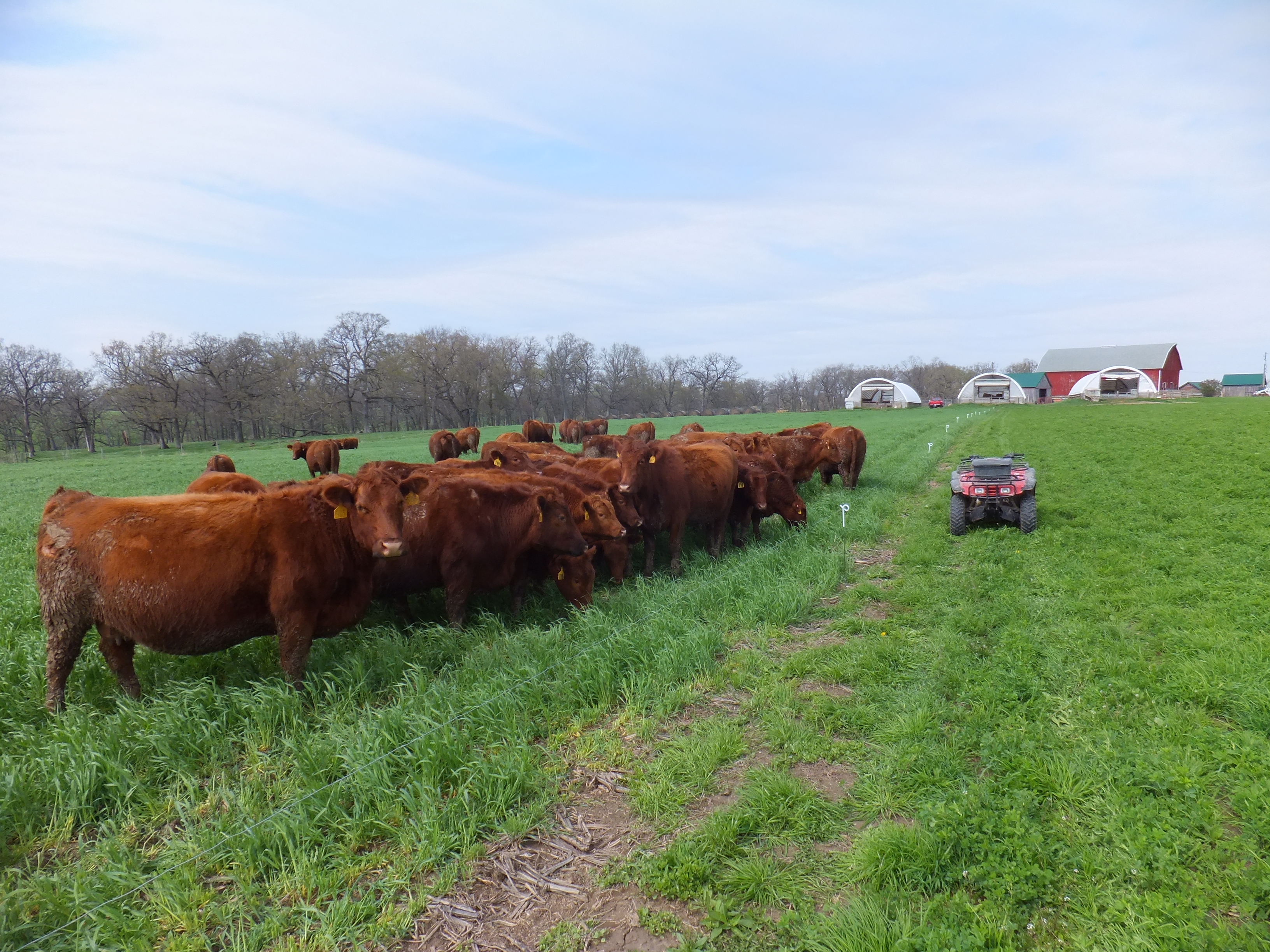
The permanent pasture my steers and hogs use is drying up fast.  My backup plan is to graze hay fields.  So I put a temporary electric fence in and started grazing a hay field, pictured below.

Summertime droughts are not uncommon here.  Rarely do we have crop failures, though.  So irrigation for crops is not used.  An exception is my partners, Carrie and Eric.  They rely so heavily on their pastures for chickens, sheep, and dairy cows, they’ve decided to put in a pasture irrigation system called K-line.  I’m interested to see how it works for them.


Grazed Barley/Rape Field

June 20, 2012

In the previous post, BC asked for more photos, and specifically what the field looks like when they’ve finished grazing.  This is the field, four days after turning in 31 steers and 30 hogs.  The field is about 3/4 of an acre.  The hogs received some grain besides.

In my next post, I’ll show what I did with the field now that they have finished grazing.


Cattle/Hogs Grazing Barley/Rape

June 18, 2012

This is the Barley/Rape field on June 15th as I turned the steers and sows in for grazing.  I planted it April 27th and posted pictures on May 11th.  Growth is slow the first couple of weeks, but really takes off after that.


Grazing Winter Rye II: All Business

April 8, 2012

Five days after turning the cattle into half the winter rye field.  They ate it down to nothing.  And I have a round bale of hay available at all times.  But they want the green stuff.

When I turned them into the field five days ago, they did some running around, feeling their oats.  This time they were all business.  They knew what rye was, and they wanted it.

I love turning cattle into a new field of luscious forage.  Imagine tucking into a really good meal, and you won’t run out of food, and you won’t lose your appetite for about four hours.  I imagine this is how the cattle feel.  Nice.

Happy Easter!


Grazing Winter Rye

April 5, 2012

I planted winter rye after corn silage harvest last fall.  I spreaded the bedding pack manure from one hoop building evenly over the field, disced the field lightly, and planted a bushel of rye per acre with my drill.

It came up nicely and gave me a few days of grazing last fall.  The real beauty of winter rye is that it stays green all winter.  When the snow isn’t too deep, it’s nice to find a sea of green in a dead and dormant winter landscape.

Winter rye also takes off growing in the spring faster than anything.  It has an alleopathic effect, meaning it’s competitive with other plants.  A quick glance in the field found no weeds.

In the photo above you can see the cattle in the rye, kept in  with a single electric wire.  The field with the ATV is alfalfa/grass.  The dead area is where I concentrated the driving of machinery, keeping the compacted/damaged area in one place, rather than scattered throughout the fields.

In the photo below you can see the saying is true, “grass is greener etc,” even when it’s not.  I’m amazed at cows’ body knowledge.  They will reach under an electric fence, mere inches from being shocked, and rarely get shocked.


New Ritchie Waterer

February 19, 2012

I put a new waterer in this past fall.  One disadvantage to my farm is I don’t have a dependable, natural source of water.  I do have a waterway in my pasture which always flows with water in the spring, dries up during the summer, and is frozen during the winter.

As I wrote in “Sow Housing,” I’m housing different species of livestock together, so it’s convenient to have a heated combination waterer to water both cattle and hogs.  I also have some cows which I wanted to keep separate from their calves after weaning, so it’s also convenient that the waterer has two sides.

What did I pay for all this heated convenience?  $1300 installed.

I put up a temporary fence for the winter so the cows could access the waterer from the yard.  They are being fed hay on the cornstalks.  Unfortunately, the winter has been so mild, the ground hasn’t stayed frozen, so they are damaging a hay field they need to walk across.

Below is a picture of the inside.  The water pipes and heating elements are easily visible.  The thermostat is the round knob towards the top.


Sow and Calves, Getting Acquainted

December 12, 2011

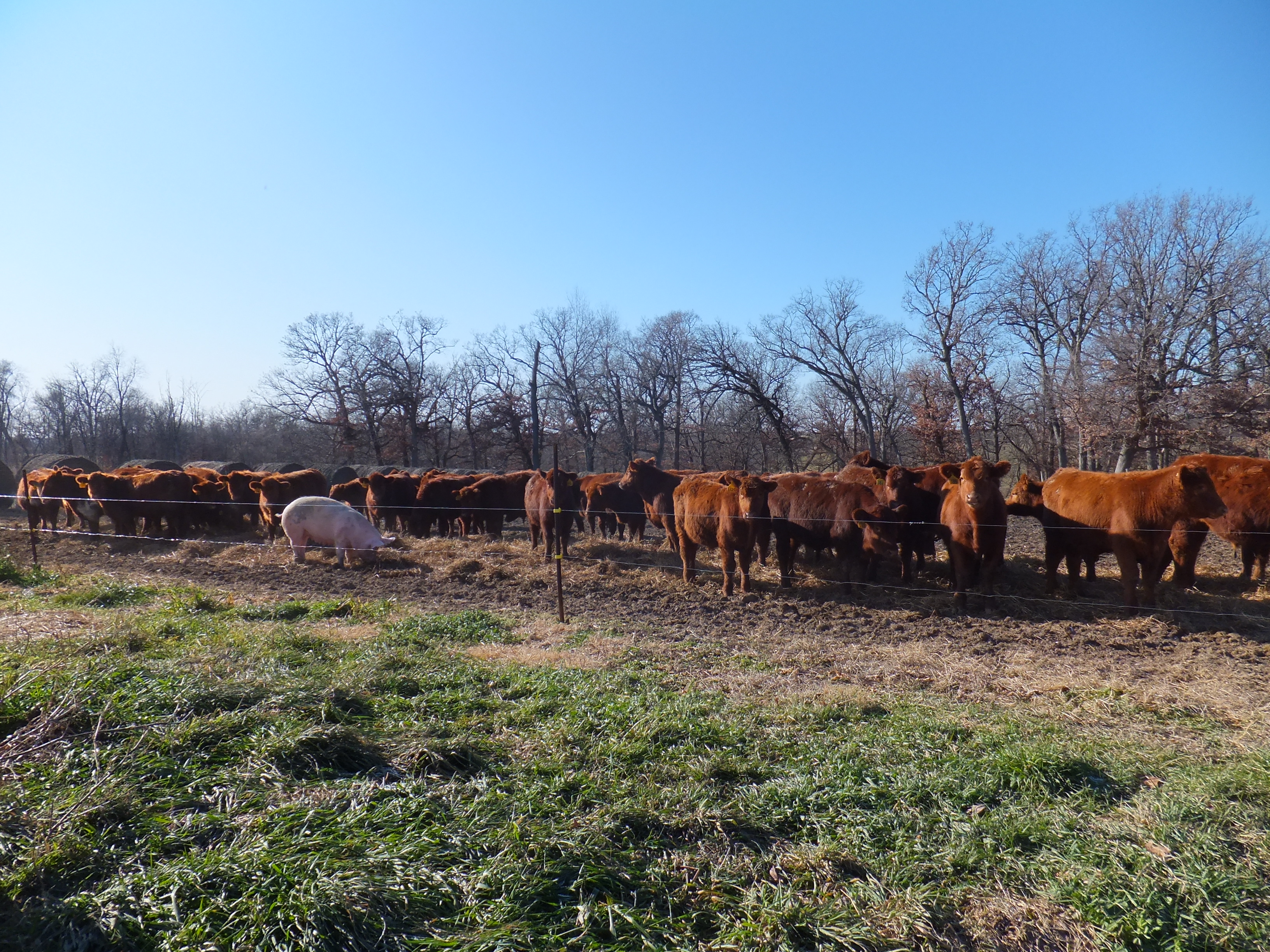
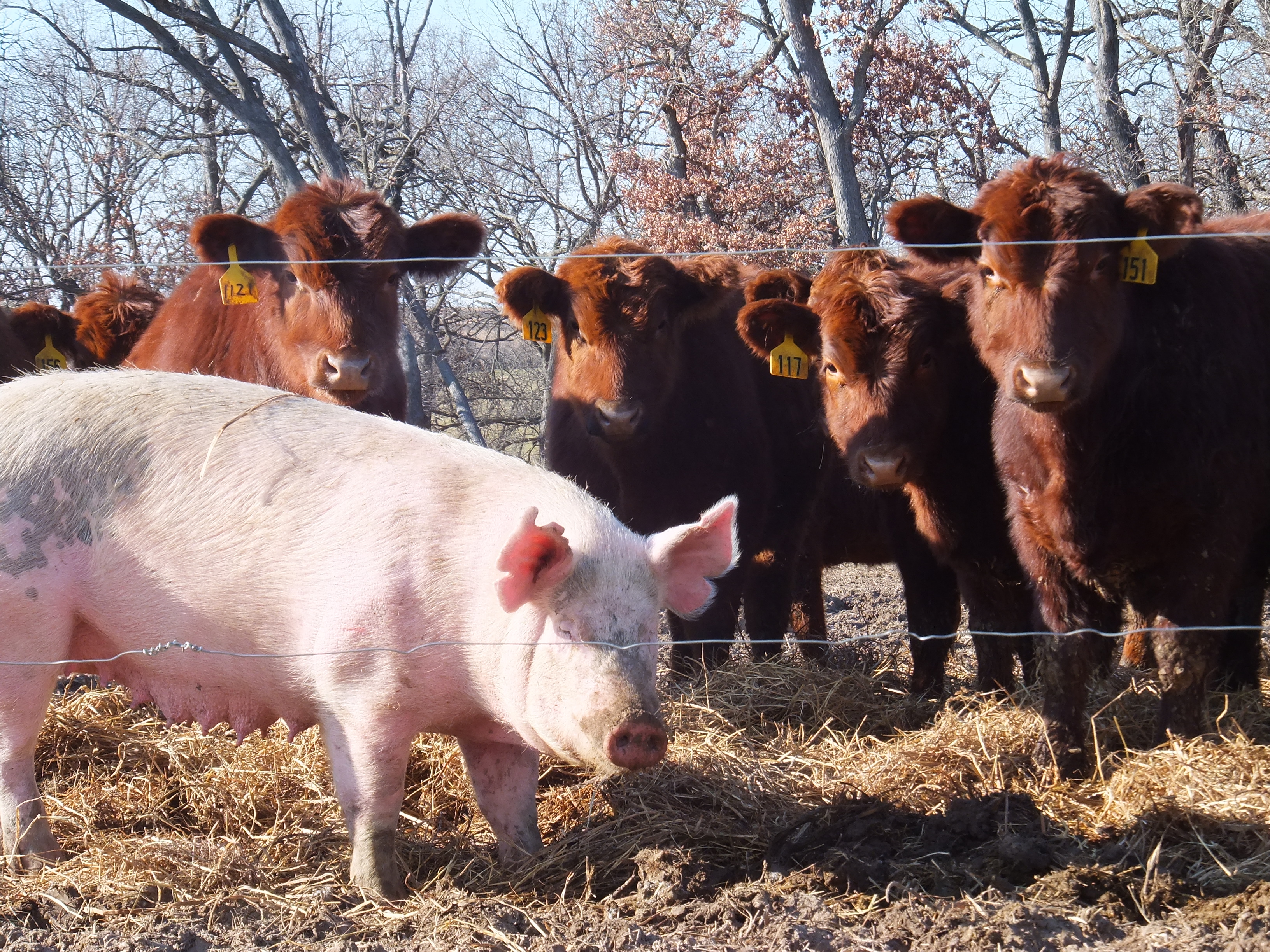
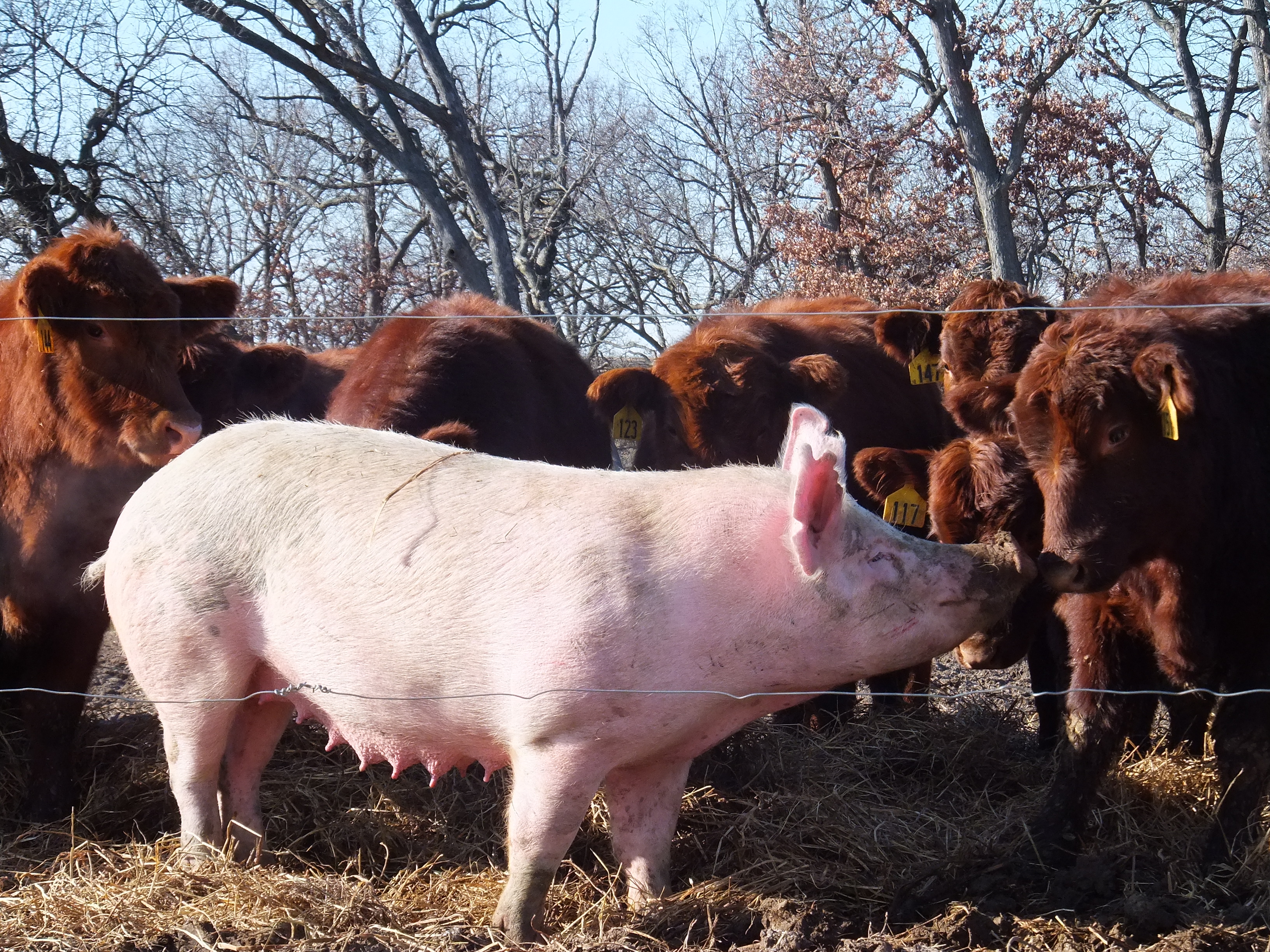
The steer calves, with one adventurous sow.

You can see the two-strand electric fence.  In the industry we refer to this as a psychological fence.  Hogs and cattle are easily trained to electric fence.  The fence around the other lot is a physical fence, with five-foot high cattle panels and two boards, attached to wooden posts.

While I hate to anthropomorphize and say they’re  friends, I will say they’ve gotten acquainted.


Sow Housing

December 10, 2011

Wednesday was a big day for my new farm.  We moved 17 sows and 2 boars to my farm.  The sows have always been housed on my parents’ farm, but since we are splitting up our farms, I needed to figure out sow housing on my farm.

I could have used the hoop barns, as I have used them for sows with litters and gestating sows, from time to time when I had room.  But I figured I would need all three hoop barns for growing pigs, so I brainstormed and decided to use the former dairy barn which is the bottom of  my big old red barn.

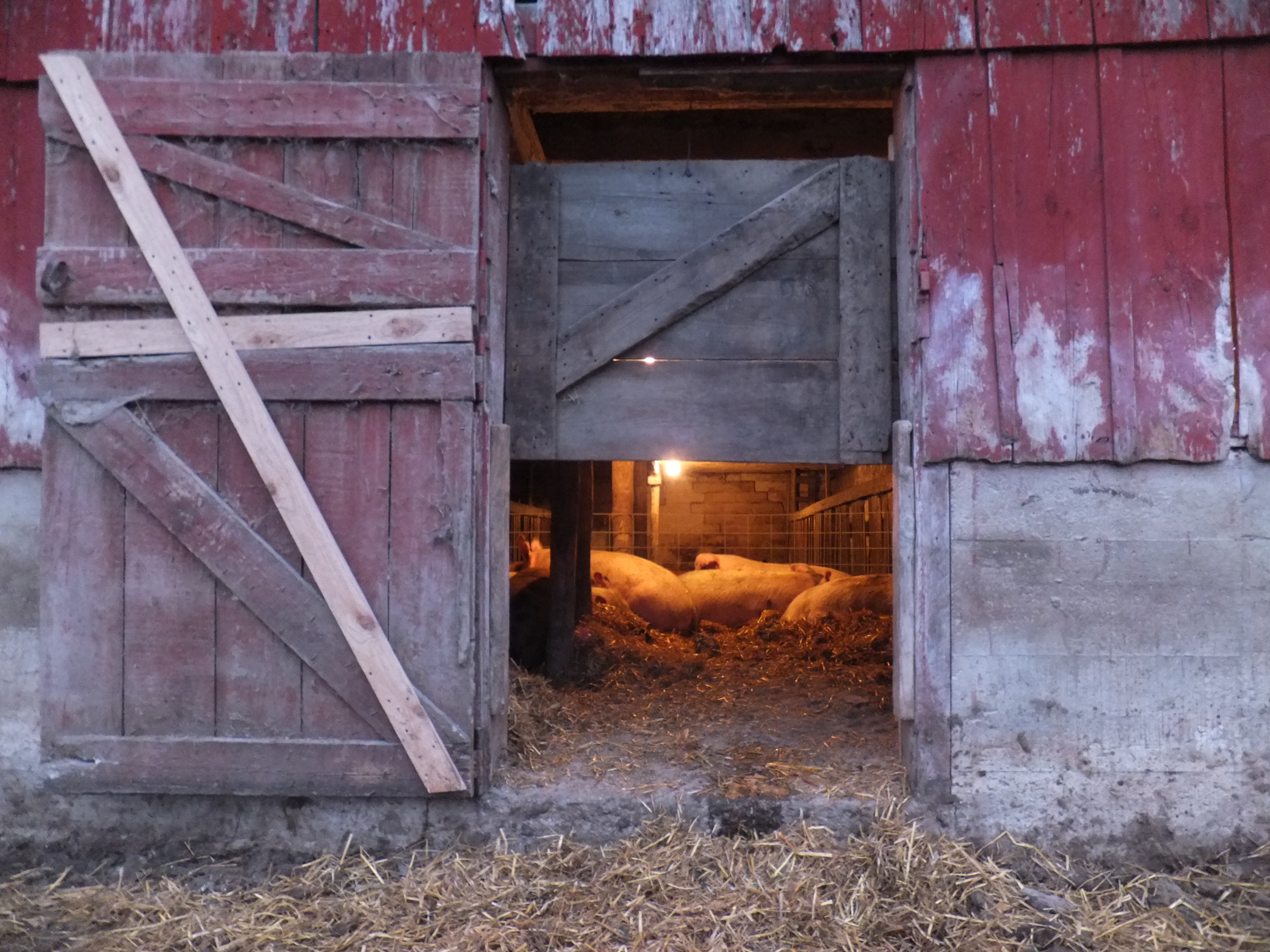
A carpenter friend helped me shore up the old barn door and build the sliding door you see pictured below.  I came up with that so I could lock the sows in or out securely, and I didn’t want a door which swung, because the bedding could pile up next to the door and make it difficult to operate.

The sows exit the barn into the cattle lot.  This is where the steer calves eat their hay and drink their water.  This lot is fenced securely, but I also built another lot to give the calves more room, which is fenced with a two-strand electric fence.

So the time had come to make the move, but I had no idea how it would work.  The variables I was unsure of included:

1.Would the sows find and go in the barn?

2. Would the cattle and sows get along, or would they scare each other through the fence?

3. Would the sows see the electric fence, get shocked, then back away instead of going through and destroying it?

This is how I managed the situation.  I kept the calves and sows separated during the morning.  I fed some grain in the entrance of the barn to lure sows in.

How did it work?  The sows found the barn and all but one were sleeping in it by night.  I couldn’t get the one to go in, so I left the door open all night.  The calves were scared of the sows, but in a curious way with no stampeding.  A few sows were shocked by the electric fence and retreated without destroying it.

What didn’t work?  The sows enjoyed lounging by the calves’ hay, so the calves wouldn’t eat their hay.  I moved the hay further away so the calves could eat.

An unanticipated problem was the automatic waterer was frozen.  I put in a new Ritchie so the sows could drink, which I’ll post about later. I panicked for a moment, but all I had to do was turn the thermostat up.

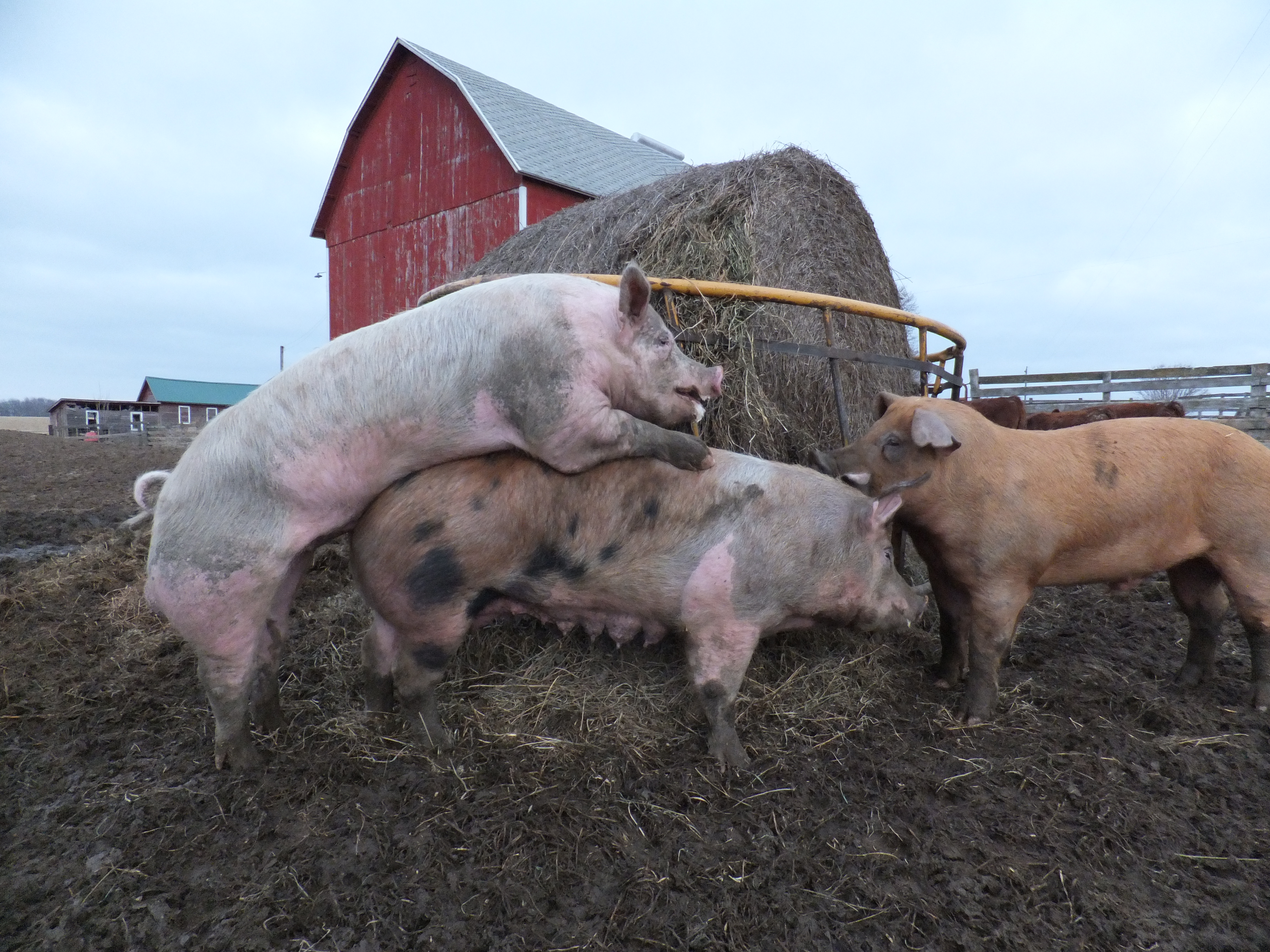
The photo above shows a boar I call “Able” breeding.  Standing at the front of the sow is “Bewilder”, my other herd boar I wrote about earlier in the year.

November 2011, Cull Cow Prices

November 25, 2011

We had a vet pregnancy check our cows.  We do this every year so we can sell the cows that aren’t bred, (open).  Winter hay costs are the most expensive part of keeping cattle, so it makes sense to sell before winter.

We sorted out five old cows to sell at the local sale barn.  In addition to selling open cows, we also sell old cows when it looks like they’ll have a difficult winter.  We want them to live a quality life, free from undue hardship.

These cows were going to be eleven next spring.  It was bittersweet selling them, because they were some of the first offspring after we started using Red Angus bulls in the year 2000.  They have been fine cows, raising a calf every year for the past nine years.  Before I become too pensive, here is their market information:

Weight Price per pound Total dollars
1385 .67 928
1365 .62 846
1355 .63 854
1325 .62 822
1215 .665 808

These are historically high prices for cull cows.  I can remember years when we received $400 for a cull cow.


Grass-Finished Steers vs. Corn-Finished Steers

November 4, 2011

Grass-finished steer, ready for butcher.  The four steers we butchered this week averaged 1160 pounds live weight, and 615 pounds carcass weight.  This means they gained an average of roughly a pound and three quarters per day since weaning, October 2010.

I’m very happy with this performance.  Our customers are as well.  We’ve been butchering these yearling steers every few weeks since July, and we haven’t had a complaint, with much repeat business.

In July, the steers have been gaining rapidly as they transitioned from winter/late spring hay to the lush May/June pasture.  The biggest weigh around a thousand pounds.  As the pasture slumps in the heat of summer, the steers are rotated into orchardgrass/alfalfa hay fields to keep their consumption and daily gain up.

Below you can see the level of finish, or fat, in the brisket of this steer.  By industry standards this steer is not fat, nor ready to butcher.  Most would recommend a few months of corn feeding.  But the marbling in the meat is near the select grade.  And the meat is tender.  And like I said before, we have tons of repeat business.

Below is a steer we sold to a farmer who corn-fattens.  This photo was taken in September.  The steer weighs about 300 pounds more than the steer pictured above.  Look at the amount of fat in this steer’s brisket.  This is the amount of finish the industry demands.  The farmer sold this steer shortly after the photo was taken, and topped his local market.  Each of us produced the animal, and meat, our market demanded.