Corn Silage

November 1, 2012

We finished corn harvest.  The drought and high temperatures resulted in yields a third to a half of normal.  That was on the best acres.  We custom-hired a neighbor to chop the whole corn plant on the worst acres and make silage to feed to the cattle.  Above you can see the machine which blows and packs the silage into a bag.

Silage is any forage which is harvested wet and stored in an anaerobic condition.  After ensiling, the crop goes through a fermentation process resulting in the sugars being converted to lactic and acetic acid.  This results in good feed for cattle.

Most of the time there is enough natural bacteria present to ensure good fermentation.  This year, because of concerns from the drought, we put an inoculate of bacteria on the silage.

One bad aspect of harvesting corn silage, because you remove the whole plant, the soil is left exposed.  Exposed soil is prone to erosion.

The next day I planted oats and rape with my grain drill.  With a little rain, these vigorous crops germinated.  Below you can see the oats on October 1st, next to standing corn waiting to be harvested for grain.

Oats continue growing well in cool weather.  Below is a photo taken November 1st.  When the temperature falls to 20 F, the oats will die.  They will not be a problem when it’s time to plant another crop next spring.


Harvesting Oats/Barley

August 28, 2012

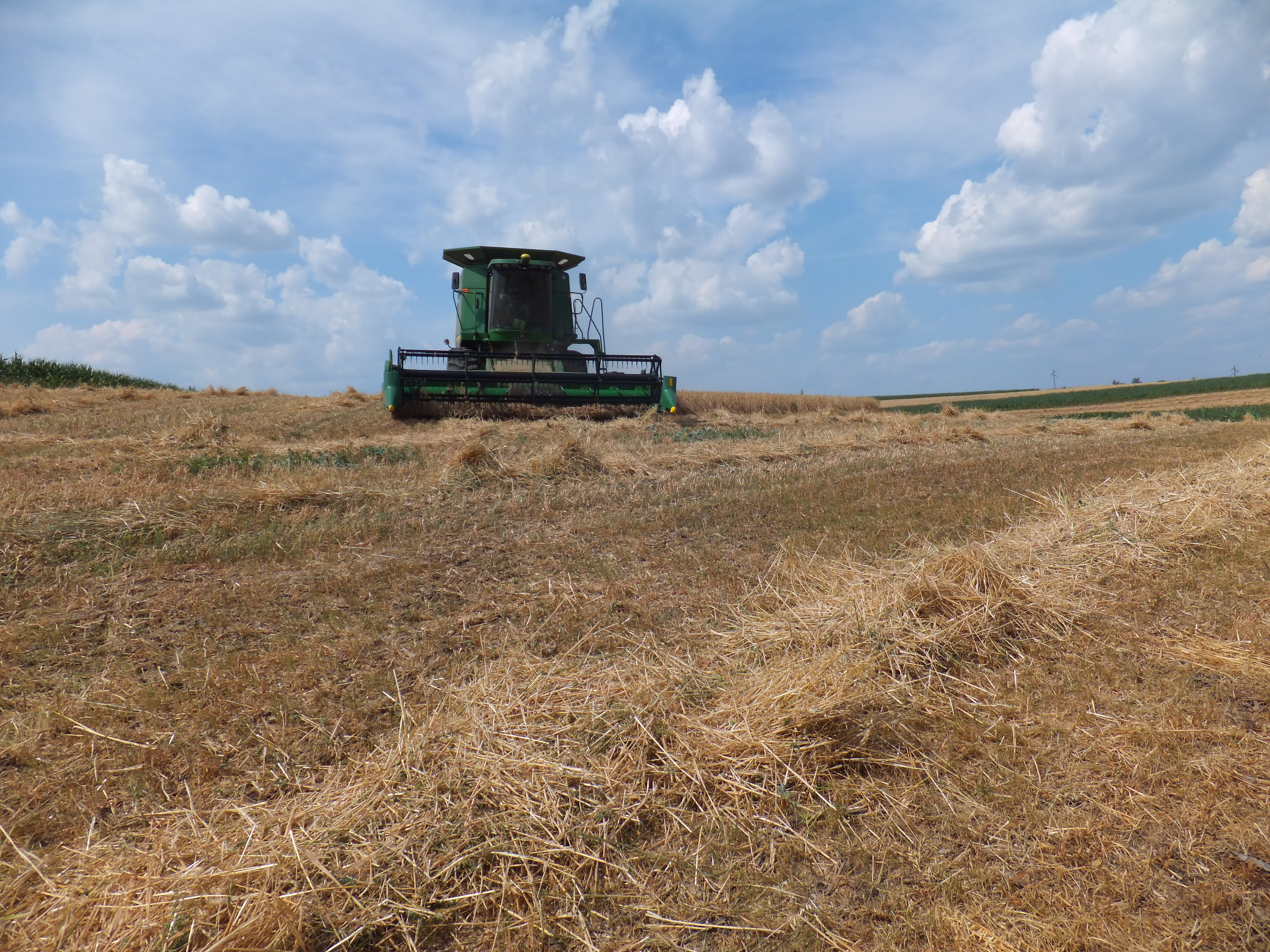
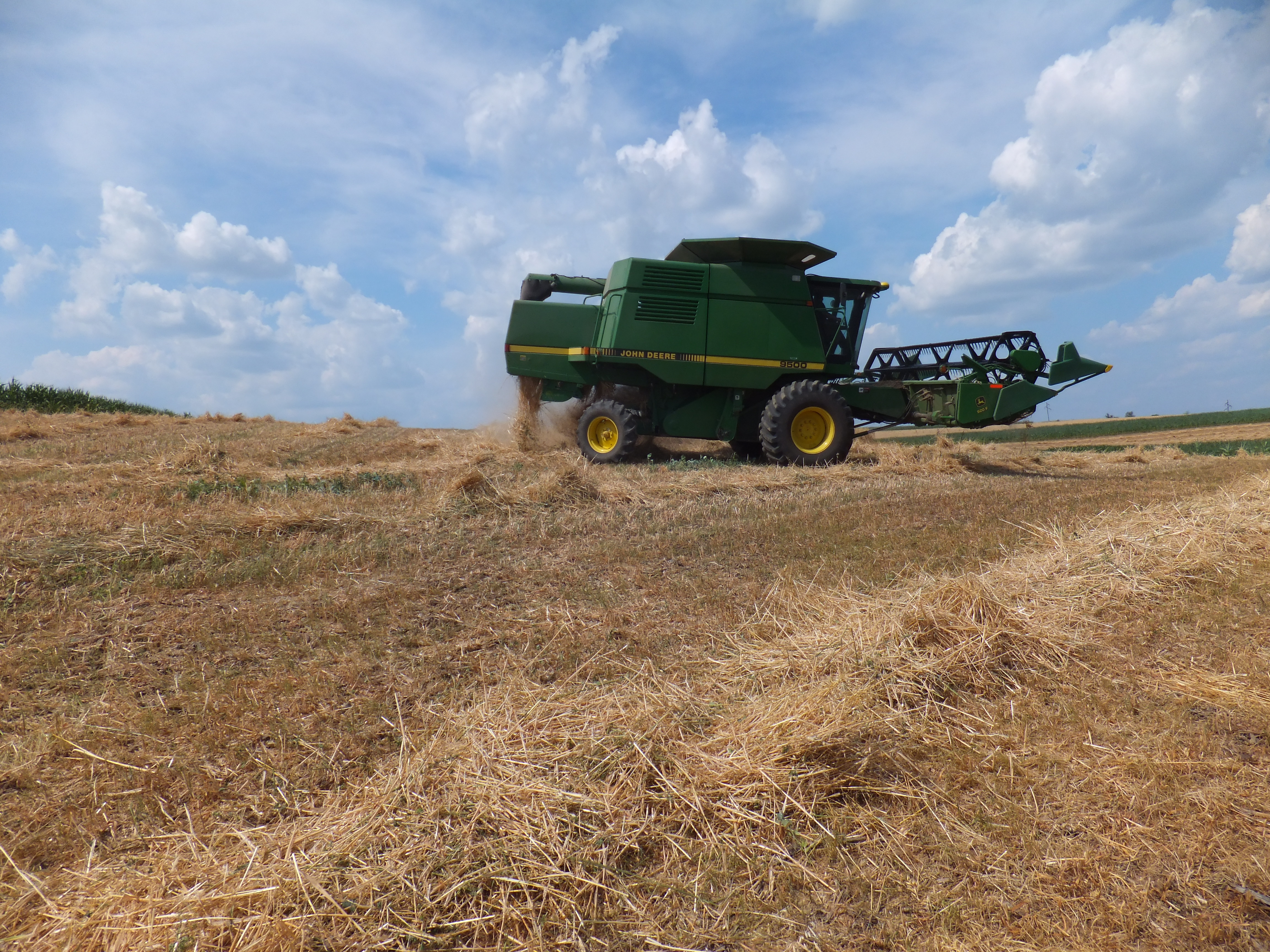
Back on July 15th my neighbor Joe combined my oats.  He has a John Deere combine.  His custom harvesting rate is $25 per acre.

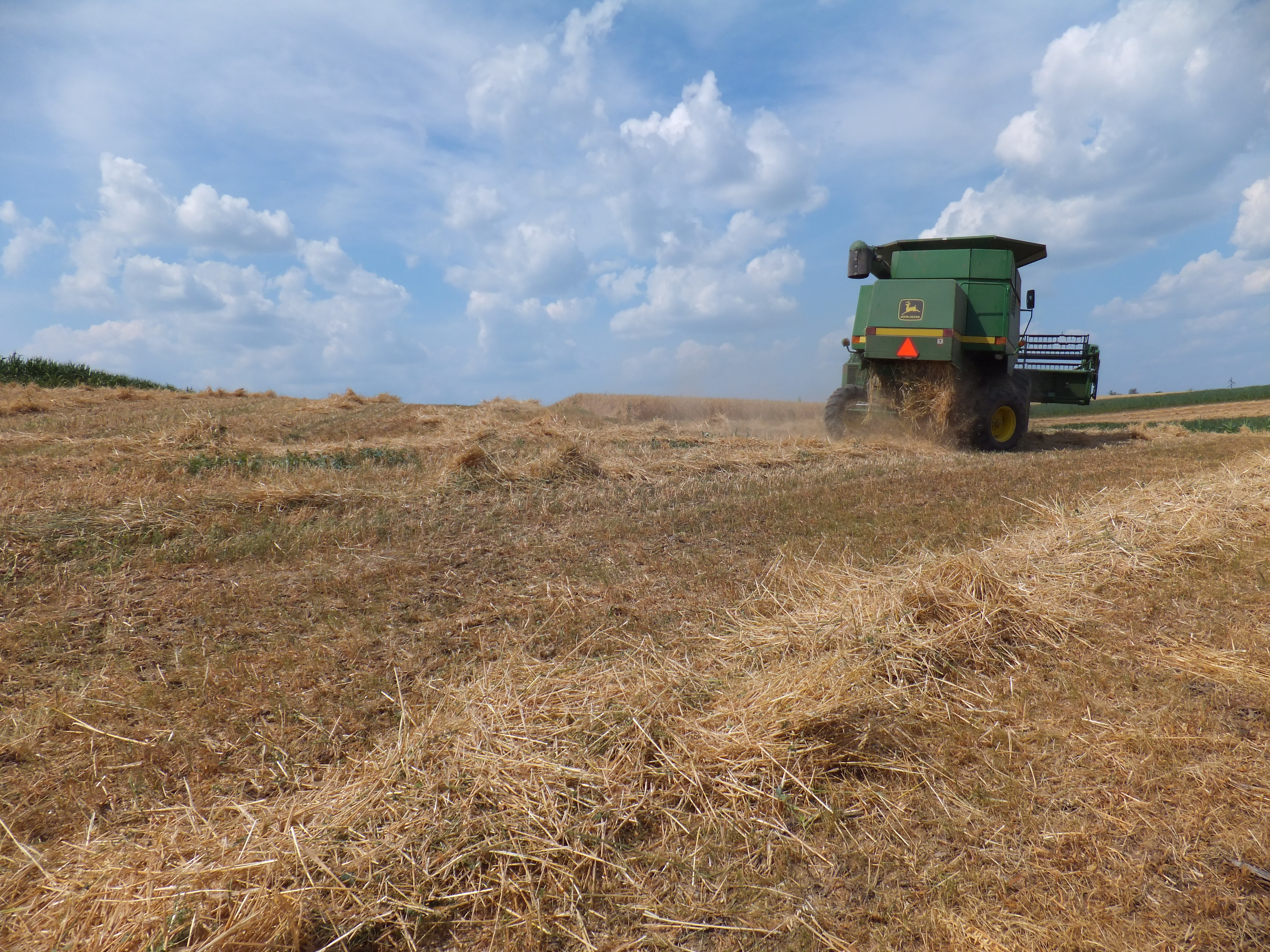
The combine cuts the oats and takes it inside the machine where it separates the grain from the straw.  The grain fills a hopper while the straw is kicked out the back.  I waited a day and then raked and baled the straw to use for animal bedding.

The oats yielded ok, especially considering the drought.  74 bushels, or 2368 lbs. per acre.  They were super-dry, only 4% moisture.

I understand now why small grains like oats, barley, or wheat do so well in the near west.  Moisture in the spring helps the crop get a jump on the weeds, then when it turns dry it’s the only plant growing.  We struggle some in the midwest because we get more rain than they do out west, which is a blessing, but it also causes the weeds to grow up through the maturing oats, resulting in harvest troubles.

This year the oats were weed-free and stood perfectly.  Remember last year when a storm blew them flat? No troubles this year.


Grazing Buckwheat

August 24, 2012

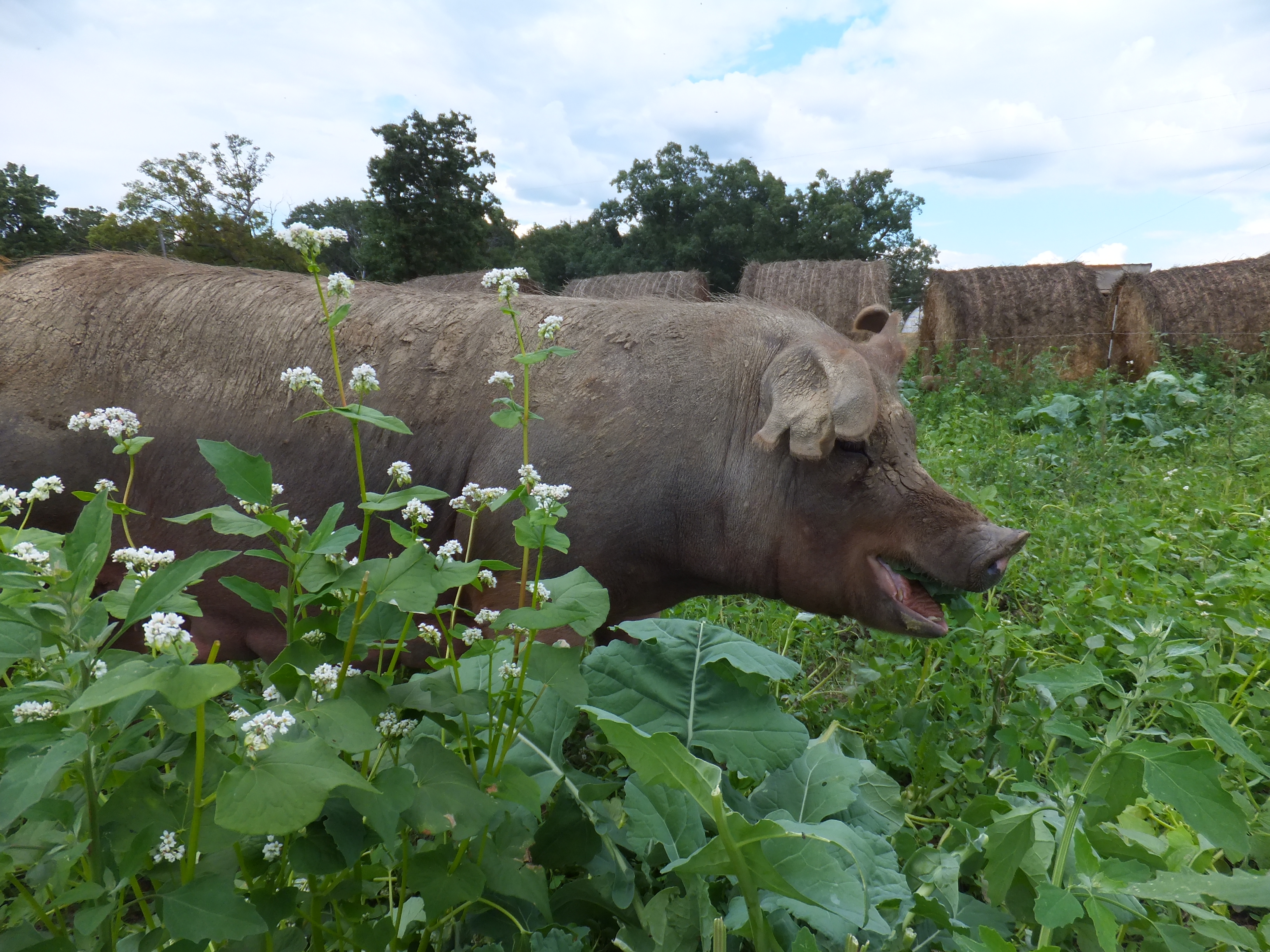
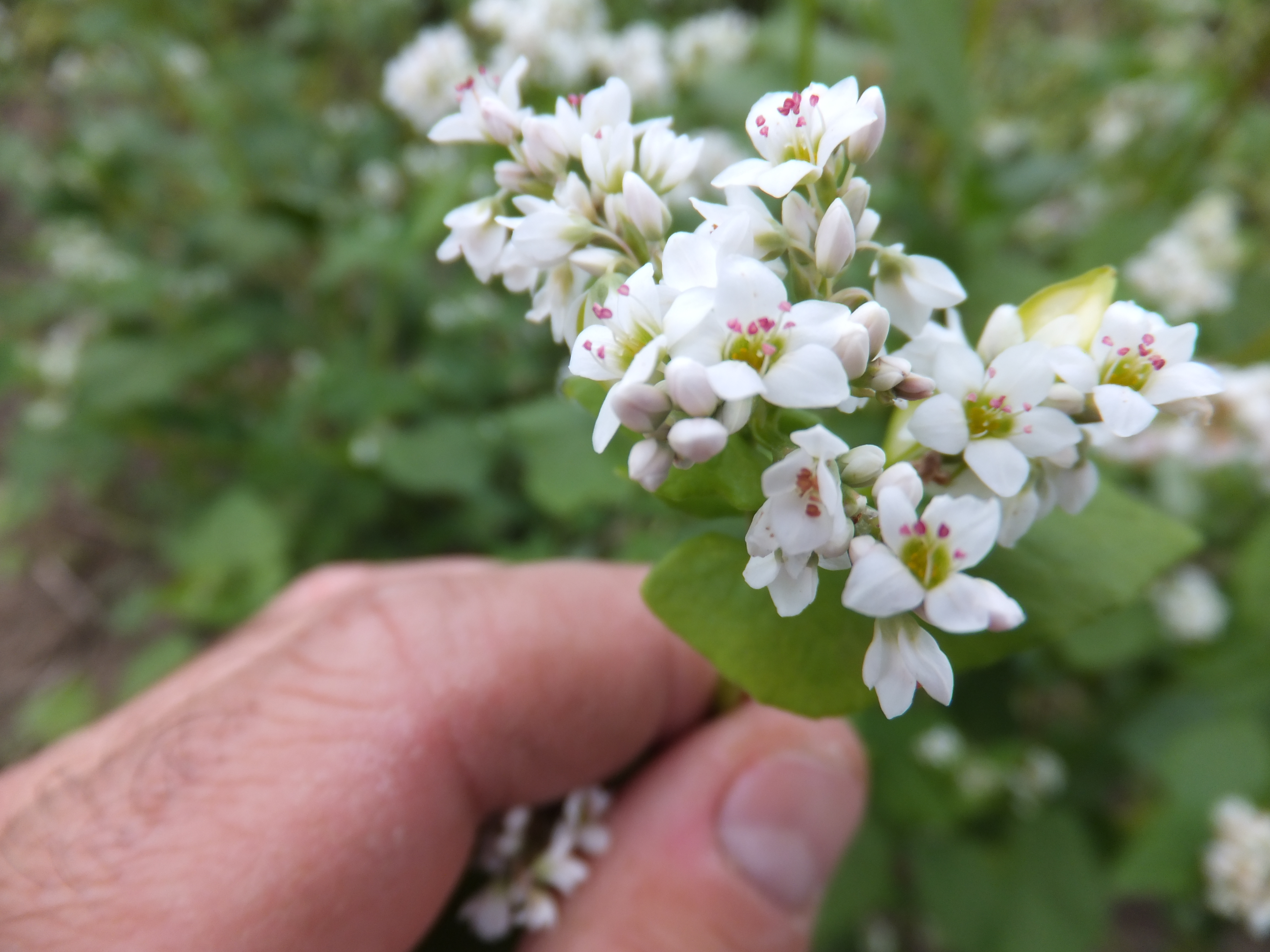
I needed the space, so I ended my Buckwheat experiment by grazing it with the hogs.  They liked it.  In the photo above, the plant with smaller leaves and white flowers is the Buckwheat.  The plant to the right with the larger, darker green leaves is Rape.  Even though I disced after grazing the Rape, some of it still survived.  By the way it grew in the drought, I wish I would have just let the Rape regrow and grazed that.

I apologize to those of you who wanted me to harvest the Buckwheat.  I enjoy planting and watching plants grow, but I don’t believe I have the patience to hand harvest.


3rd Cutting of Hay by July 28th

July 29, 2012

I started the 3rd cutting of hay today, July 28th.  This is incredibly early for me.  Usually I’m taking the 3rd cutting towards the end of August.  The first two cuttings were taken May 22nd and June 20th.

I wrote earlier about how light the second cutting was because of the drought.  3rd cutting looks to be even lighter.  I’m grazing more of 3rd cutting where I can, because it’s more efficient than haying when the crop is light.  The field I cut is in an inconvenient place to graze, so I’m going to square-bale it.

We got an inch and a half of rain last week.  I’m hoping this signals the end of the drought and it will continue to rain regularly.  I may actually have a corn crop if that happens.  My hay fields and pastures will start to grow again as well.


Summertime Drought

June 25, 2012

We’re in the midst of a summertime drought.  The second cutting of hay is considerably smaller than the first cutting.  The first field in my cutting schedule is seven acres.  Its yield decreased from 25 round bales of hay for first cutting to 3 and one third bales for second cutting.  Second cutting is always smaller than first, but this is abnormally so.

The permanent pasture my steers and hogs use is drying up fast.  My backup plan is to graze hay fields.  So I put a temporary electric fence in and started grazing a hay field, pictured below.

Summertime droughts are not uncommon here.  Rarely do we have crop failures, though.  So irrigation for crops is not used.  An exception is my partners, Carrie and Eric.  They rely so heavily on their pastures for chickens, sheep, and dairy cows, they’ve decided to put in a pasture irrigation system called K-line.  I’m interested to see how it works for them.


Planting Buckwheat

June 21, 2012

The barley/rape pig pasture, disced and planted with Buckwheat.  I planted on June 19th.  I planted it at a rate of about sixty pounds per acre.  A fifty pound bag cost me 55 dollars.

While researching alternative crops due to a crop failure this spring, (I ended up replanting corn), I came across Buckwheat.  I learned enough about it to make me want to try some.  I called my local seed supplier and they could get me a fifty lb. bag.  I wasn’t sure when or where I would use it, but I wanted to have it on hand in case I had an opportunity.  When I saw how well the cattle and hogs ate the barley/rape field, leaving very little crop residue, I decided this was my opportunity, and with perfect timing.  It’s recommended to plant Buckwheat after June 15th in Wisconsin.

I’m not sure exactly how I’ll use Buckwheat.  I’ll probably end up grazing it with the cattle and hogs.  Some of the things which intrigued me were its nutritional profile.  It’s very high in Lysine, which is the most limiting amino acid in a corn/soy diet for swine.

It also produces a very dark, strong flavored honey when bees use it as their primary nectar source.  One acre of Buckwheat can be used by bees to produce 150 lbs. of honey according to the source I found.  I would like to try some Buckwheat honey.  Maybe I can get my beekeeper friends to place a hive close.

According to Wikipedia, Buckwheat is not a grain, and can be eaten by people with gluten intolerance.  I wonder what Buckwheat pancakes taste like?


Grazed Barley/Rape Field

June 20, 2012

In the previous post, BC asked for more photos, and specifically what the field looks like when they’ve finished grazing.  This is the field, four days after turning in 31 steers and 30 hogs.  The field is about 3/4 of an acre.  The hogs received some grain besides.

In my next post, I’ll show what I did with the field now that they have finished grazing.


Cattle/Hogs Grazing Barley/Rape

June 18, 2012

This is the Barley/Rape field on June 15th as I turned the steers and sows in for grazing.  I planted it April 27th and posted pictures on May 11th.  Growth is slow the first couple of weeks, but really takes off after that.


Planted Pig Pasture

May 11, 2012

This one acre field was used last winter for the steers.  I fed hay and bedded them down with straw.  Once I turned the steers out to pasture, I loaded the manure which had accumulated over the winter and spread it on the rye field which was then tilled and planted to corn.

After allowing the soil to dry, I tilled this field and then planted barley and rapeseed on April 27th.  The field doesn’t look like much now, but it will be beautiful in six weeks when its ready for grazing.

The unfortunately named rapeseed also produces a beautiful yellow flower.  Rapeseed has two leaves with two segments each, which almost makes it look a 4-leaf clover.  This is the same plant which Canola oil is made from.


Grazing Winter Rye II: All Business

April 8, 2012

Five days after turning the cattle into half the winter rye field.  They ate it down to nothing.  And I have a round bale of hay available at all times.  But they want the green stuff.

When I turned them into the field five days ago, they did some running around, feeling their oats.  This time they were all business.  They knew what rye was, and they wanted it.

I love turning cattle into a new field of luscious forage.  Imagine tucking into a really good meal, and you won’t run out of food, and you won’t lose your appetite for about four hours.  I imagine this is how the cattle feel.  Nice.

Happy Easter!