
Spring Farrowing 2013
March 1, 2013
 4 Comments |
  Curious hogs, Curious weather |
  Permalink
 Posted by Curiousfarmer
Outdoor Farrowing Statistics
January 10, 2013My fear at switching from a heated barn with crates/pens to outdoor farrowing was unfounded. The first full year of outdoor farrowing averaged 7.8 piglets weaned per litter. The heated farrowing barn typically weaned 8.5 to 9 piglets per litter. So it appears I lost about a piglet per litter, but that’s not the full story. I’ll list the farrowing groups below.
Month Ave. Weaned
January 5.9
March 8.3
May 8.3
July 9.3
September 8.2
November 8.0
Look at how most of the months were in that 8 range. If I take out the two litters which froze in January, the average weaned for the year is bumped up to 8.1. If I take out all the January litters, the average weaned moves to 8.4. Now we’re getting close to my indoor numbers.
And I think I can do better this year. The first thing I’m doing different is I’m not farrowing during the worst winter months. My first group will farrow the beginning of March. The other thing is I experimented with sows making their own farrowing sites. Some chose the farrowing huts I provided, some chose their own spots in the woods or pasture. All of the sows did ok, and I don’t have data, but I’m pretty sure the sows in the huts weaned an extra piglet or so compared to the independent-minded sows. I’m going to encourage more hut farrowing this year, but will try to keep data on each.
All in all, it has been an interesting and enjoyable transition to outdoor farrowing. I would have a difficult time going back to indoor farrowing as the work environment is much nicer for me and the pigs seem happier.
1 Comment | Curious hogs | Permalink
Posted by Curiousfarmer
Grazing Buckwheat
August 24, 2012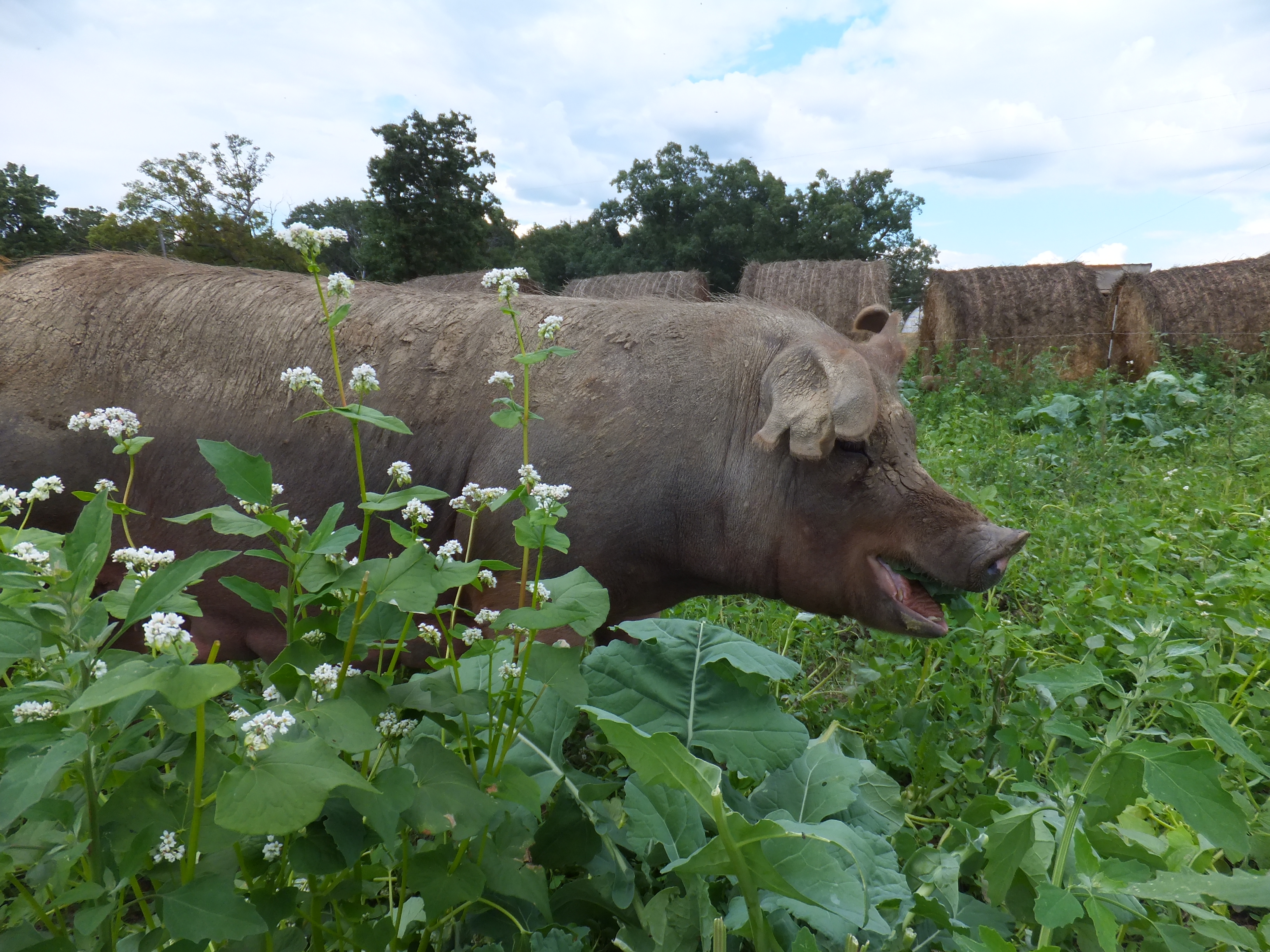
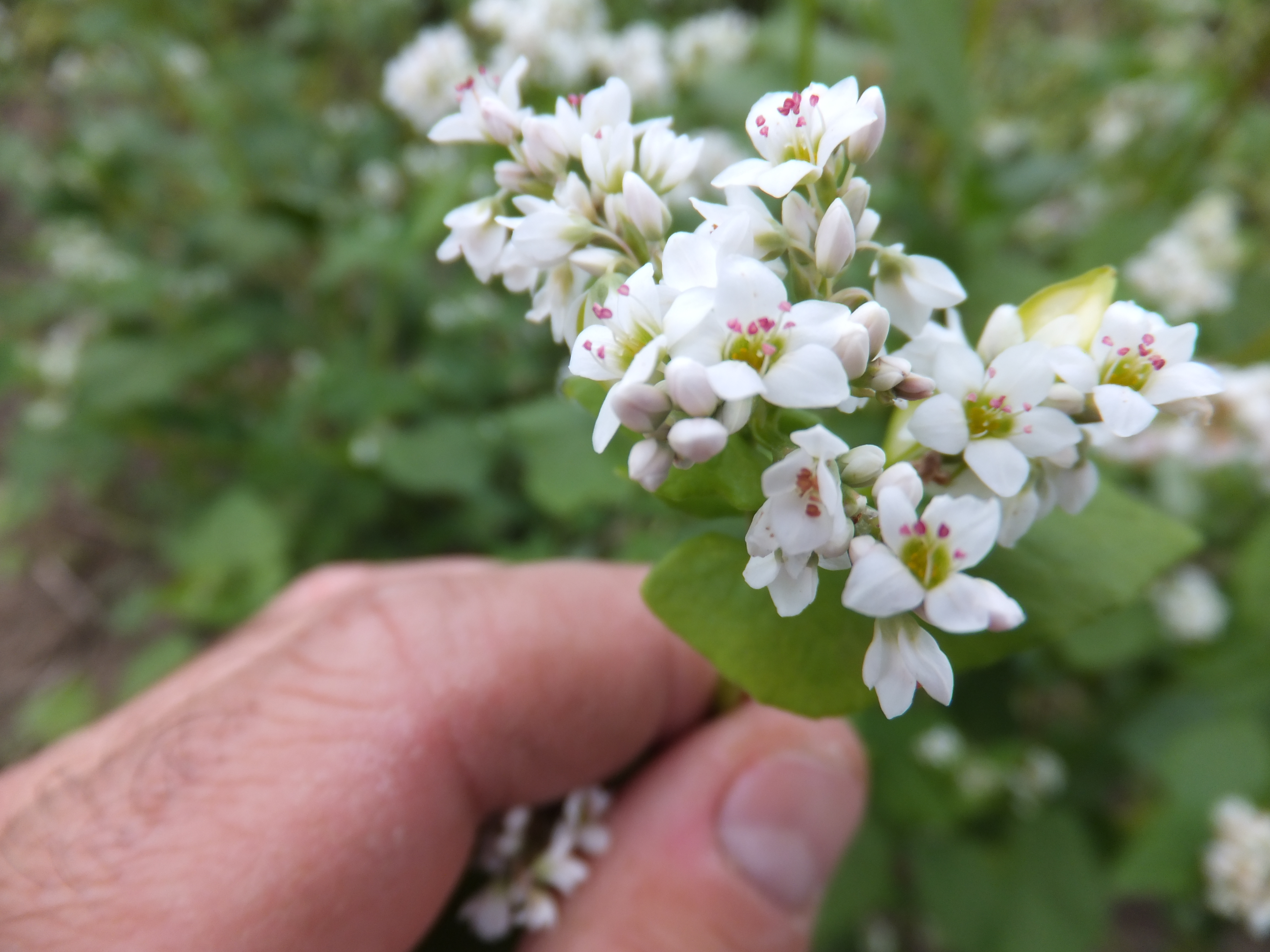
I needed the space, so I ended my Buckwheat experiment by grazing it with the hogs. They liked it. In the photo above, the plant with smaller leaves and white flowers is the Buckwheat. The plant to the right with the larger, darker green leaves is Rape. Even though I disced after grazing the Rape, some of it still survived. By the way it grew in the drought, I wish I would have just let the Rape regrow and grazed that.
I apologize to those of you who wanted me to harvest the Buckwheat. I enjoy planting and watching plants grow, but I don’t believe I have the patience to hand harvest.
1 Comment | Curious crops, Curious hogs | Permalink
Posted by Curiousfarmer
New Farrowing Record / Tough Times
July 21, 2012
Sow 62-3 farrowed 19 live piglets and one small dead one for a total of 20. This is the new record for our farm.
It’s too many. She only has 14 teats, and the piglets are smaller than I like. I won’t keep any of her offspring for breeding, as I would much rather have 10 to 12 larger piglets born per litter. But it’s still nice to note a record.
—
I went to an informational meeting on how crops are being affected by the drought, and how we can use the stressed crops. The University of Wisconsin Agriculture agents lead the meeting. It was well attended with many interested farmers. The meeting was a little depressing, but my troubles were put into perspective as I drove home.
When I drove to the meeting I noticed a line of people on the sidewalk near the Catholic Church. I wasn’t sure why they were lining up. When I drove home, the line was huge and leading to a semi trailer which read something like “Catholic Mission” on the side. The people were lined up to get food.

7 Comments | Curious hogs, Curious living, Curious weather | Permalink
Posted by Curiousfarmer
Able Died
July 19, 2012
My white herd boar, Able, was dead this morning. He’s the one pictured breeding, above.
I don’t know for sure why he died, but it was probably heat related. It reached 100 degrees here yesterday. I had a sprinkler going for him and the sows, but there was a sow in heat. I think he probably tried to breed and just got himself to worked up and was unable to cool down. Once hogs get over-stressed in this kind of heat, it’s trouble.
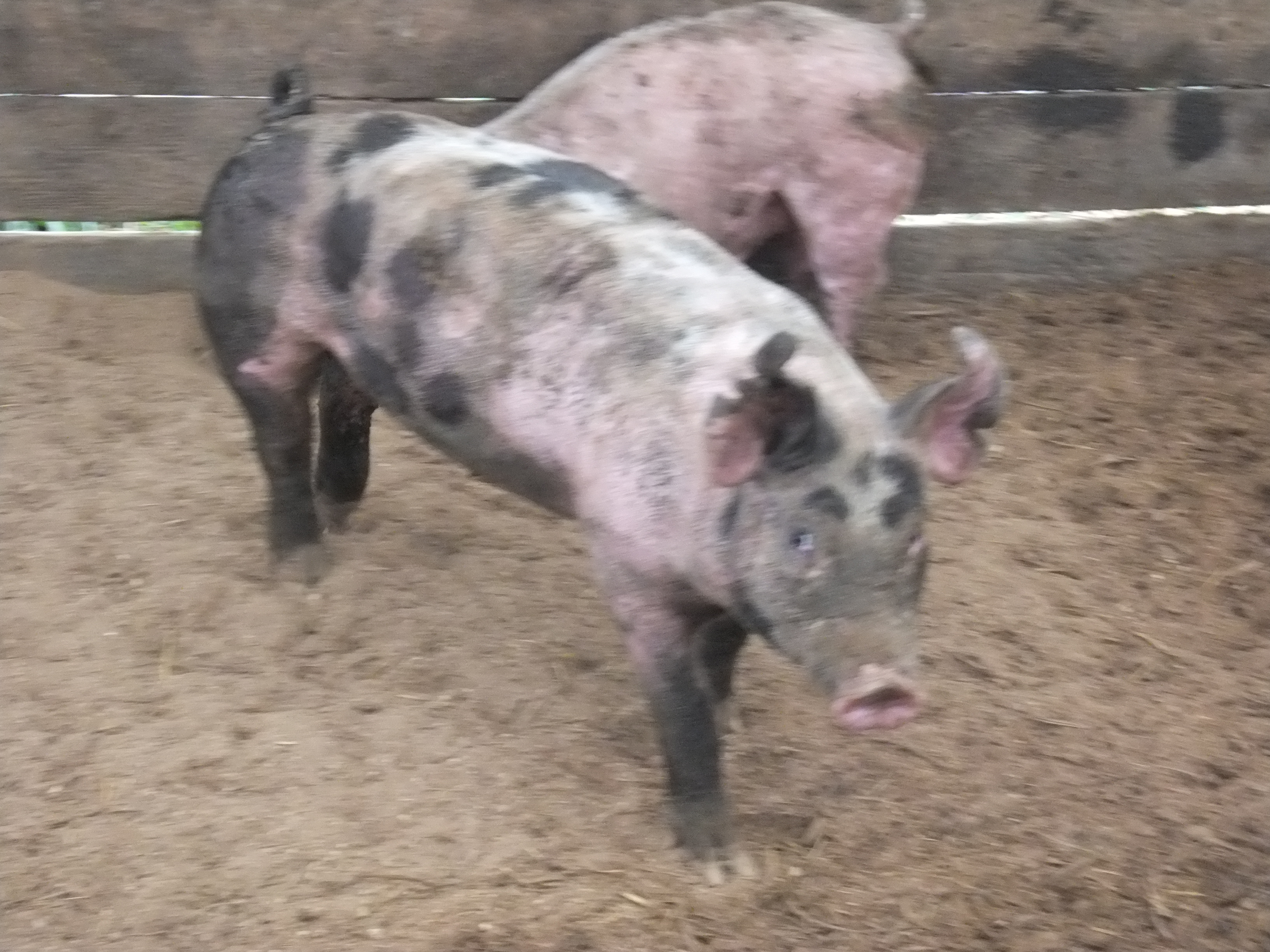
The only good news is I kept a son of his this spring. He’s looking pretty good. He’s the white spotted one in the photo below. I’m thinking of naming him Domino.
4 Comments | Curious hogs, Curious weather | Permalink
Posted by Curiousfarmer
Crinkly-Ear Sow Farrowed/Restaurant Visit
June 28, 2012
The sow I wrote about earlier, (let’s call her Crinkly-Ear), farrowed. She picked out a shady spot under an oak tree, far away from the rest of the herd. She had twelve beautiful piglets.

When a piglet is born, it is covered in a thin membrane. It takes a few minutes to dry and rub off. A healthy piglet shakes off the stress of birth rapidly, and is up and struggling with its siblings for a teat.
The chef and crew at Dayton Street Grille came for a visit. I love when a restaurant comes for a visit. It shows they aren’t just using the “local” angle for marketing, but really care about the food they’re serving.
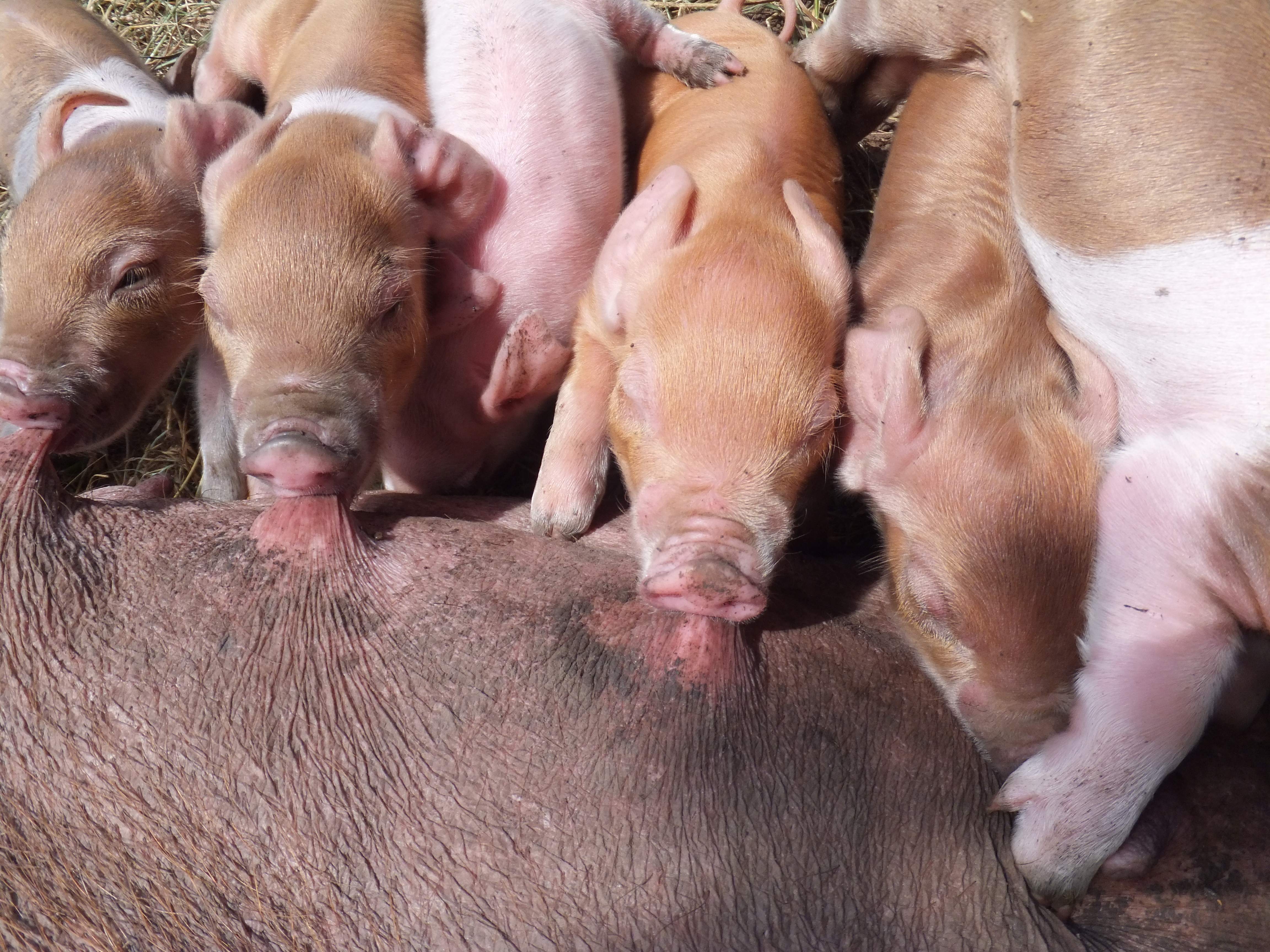
I took them for a hayrack ride and showed them the cattle grazing and Crinkly-Ear’s litter. They’re holding some day-old piglets in the photo. I drove the tractor and Shepherd provided the color commentary.
Then they got the bonus tour because a sow was farrowing up near the barnyard. They got to see me reach in and pull out a piglet that was coming backwards. One guy even touched the slimy newborn. Thank you Dayton Street Grille.

3 Comments | Curious direct-market, Curious food, Curious hogs | Permalink
Posted by Curiousfarmer
Summertime Drought
June 25, 2012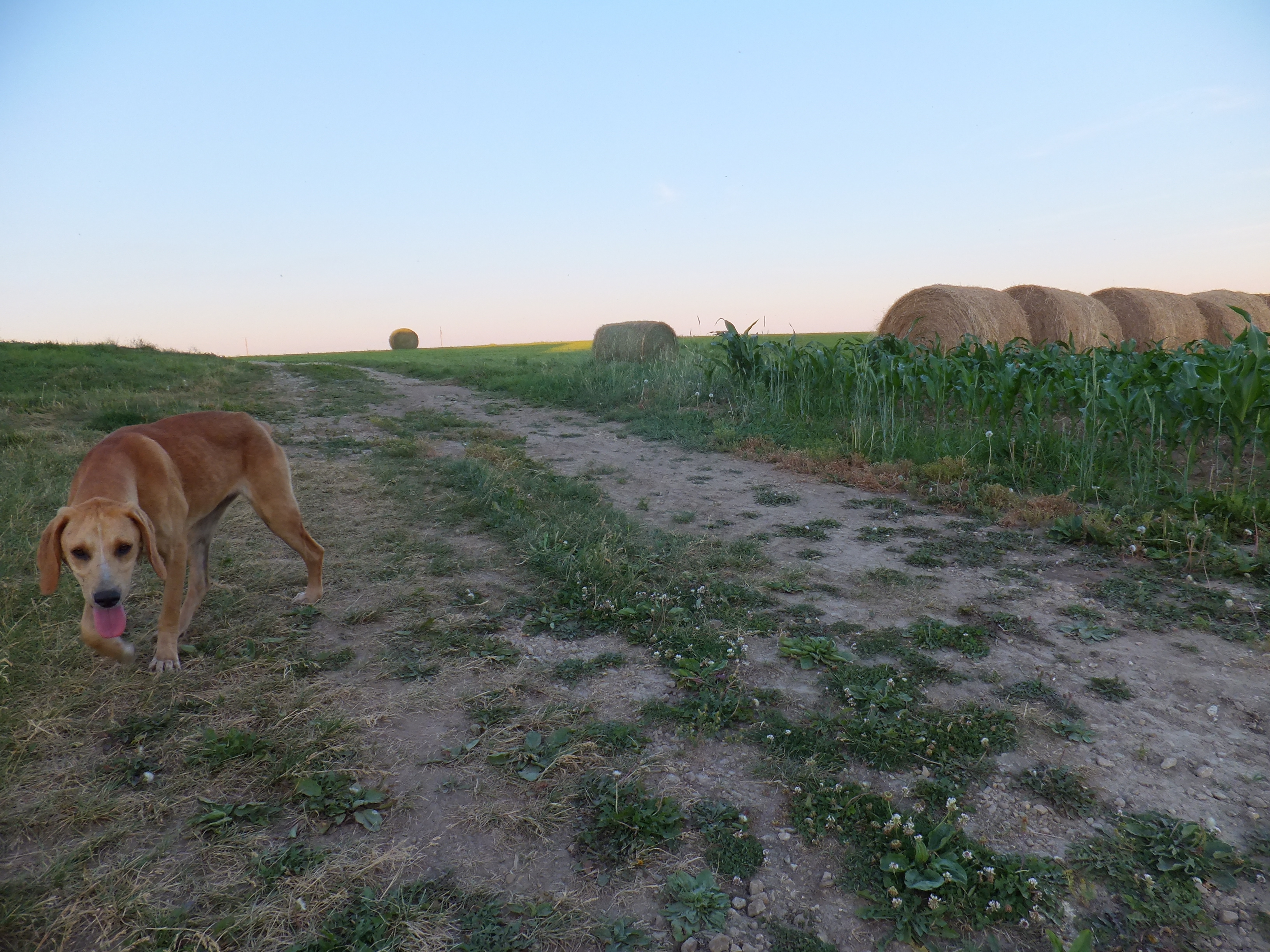
We’re in the midst of a summertime drought. The second cutting of hay is considerably smaller than the first cutting. The first field in my cutting schedule is seven acres. Its yield decreased from 25 round bales of hay for first cutting to 3 and one third bales for second cutting. Second cutting is always smaller than first, but this is abnormally so.
The permanent pasture my steers and hogs use is drying up fast. My backup plan is to graze hay fields. So I put a temporary electric fence in and started grazing a hay field, pictured below.
Summertime droughts are not uncommon here. Rarely do we have crop failures, though. So irrigation for crops is not used. An exception is my partners, Carrie and Eric. They rely so heavily on their pastures for chickens, sheep, and dairy cows, they’ve decided to put in a pasture irrigation system called K-line. I’m interested to see how it works for them.

3 Comments | Curious cattle, Curious crops, Curious hogs, Curious weather | Permalink
Posted by Curiousfarmer
Grazed Barley/Rape Field
June 20, 2012
In the previous post, BC asked for more photos, and specifically what the field looks like when they’ve finished grazing. This is the field, four days after turning in 31 steers and 30 hogs. The field is about 3/4 of an acre. The hogs received some grain besides.
In my next post, I’ll show what I did with the field now that they have finished grazing.
3 Comments | Curious cattle, Curious crops, Curious forage, Curious hogs | Permalink
Posted by Curiousfarmer
Cattle/Hogs Grazing Barley/Rape
June 18, 2012
This is the Barley/Rape field on June 15th as I turned the steers and sows in for grazing. I planted it April 27th and posted pictures on May 11th. Growth is slow the first couple of weeks, but really takes off after that.

1 Comment | Curious cattle, Curious crops, Curious forage, Curious hogs | Permalink
Posted by Curiousfarmer
Sows on Pasture
June 1, 2012
“Bewilder” the Duroc boar, with a Duroc sow. The sows are enjoying the pasture this spring. I used to house them at my parents’ farm in concrete and dirt lots.
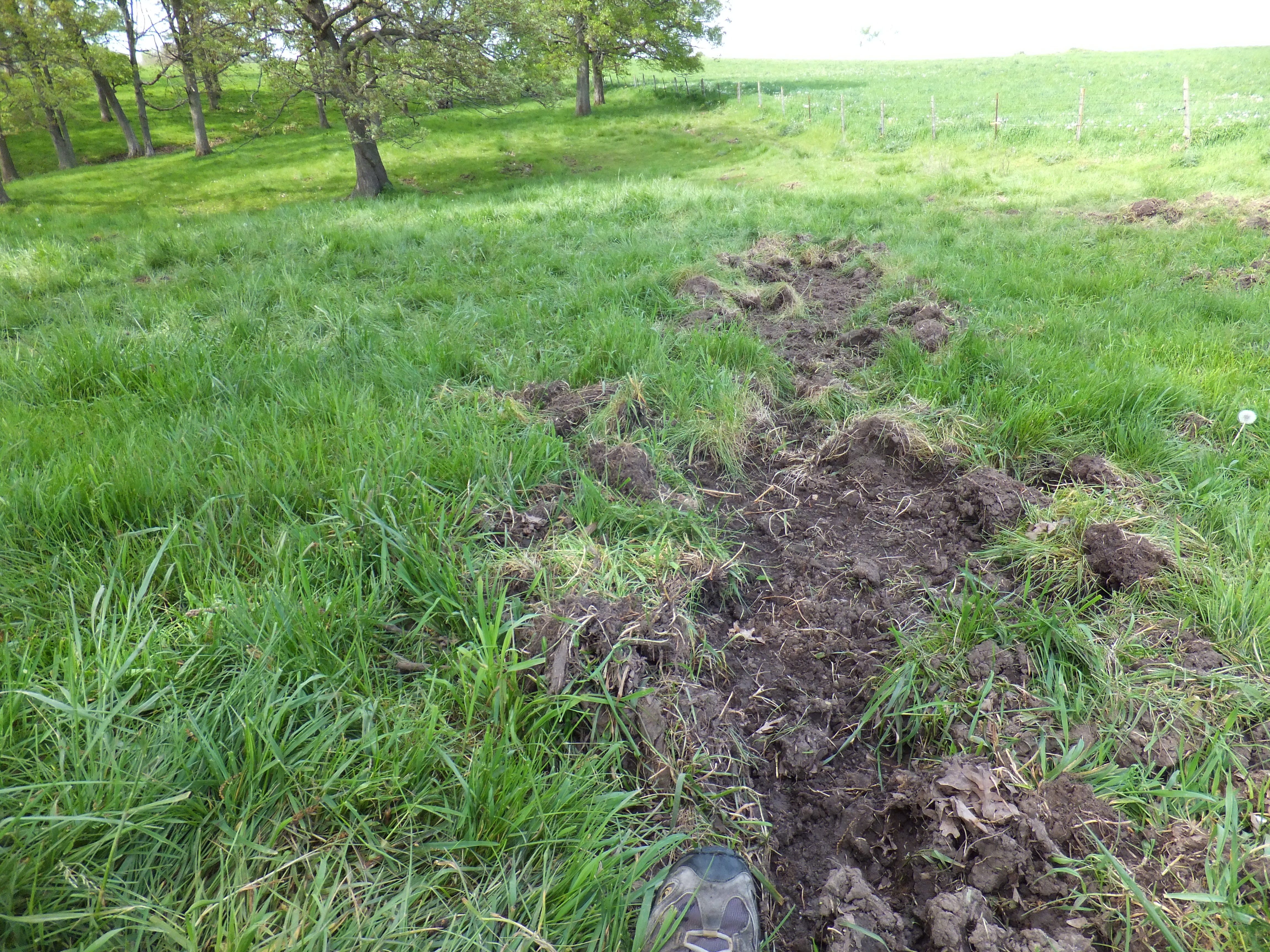
I’m still figuring things out. One of the problems is “rooting,” or the digging behavior pigs exhibit. Since this is permanent pasture, I hate to see the sod turned up, because I’m not sure how I’ll go about fixing it. A sow can do the damage you see in the picture below in fifteen minutes.
I’ve tried “ringing,” putting a piece of metal in their snout to deter rooting. It doesn’t seem to make much difference, and since it doesn’t seem very humane, I’m not doing that any more.
The biggest success I’ve had to reduce the rooting, is by reducing their daily grain feeding. I’m feeding half the grain I used to. The sows seem very satisfied to make up the difference grazing the pasture. They spend hours every day grazing. I think they were rooting more out of boredom. Now they are required to work much harder for their daily calories, walking around in the process, and when they are full, they sleep.
 I had to include one more picture of the Duroc sow below. Isn’t she a beauty? She is bred for her second litter.
Look at how well-muscled she is, yet still sound walking with femininity. She is also an excellent grazer. Thanks for indulging my bragging.

5 Comments | Curious hogs | Permalink
Posted by Curiousfarmer
 Curiousfarmer