Contest Finished: 12 Days

February 12, 2013

Contest Finale

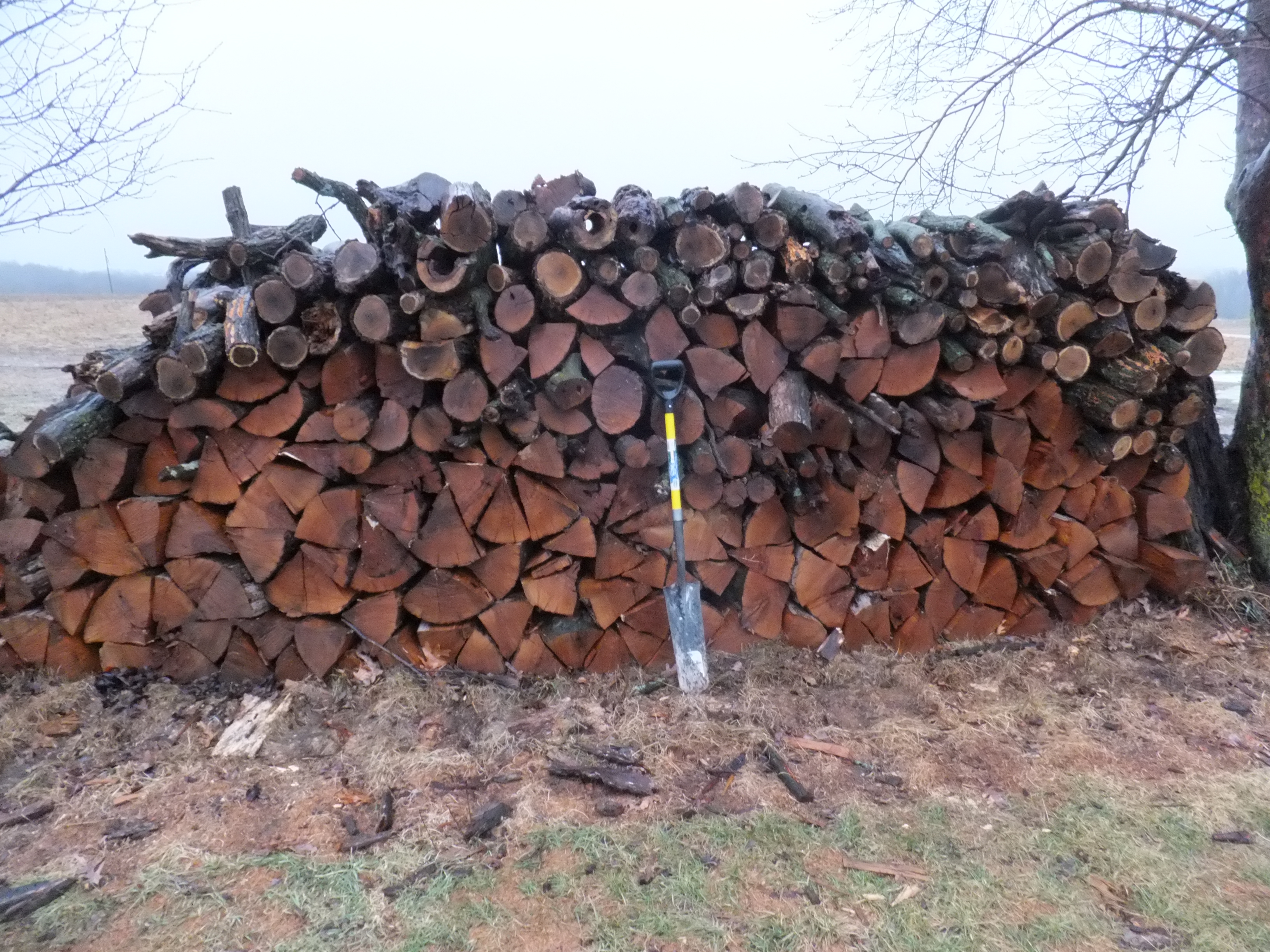
Congratulations to John Roelli!  He guessed 14 days and was the closest to 12 days, which is how long it took to burn one of my rows, which is about 80% of a cord of wood.  Since John is a neighbor, I’m going to run some chocolates over now, and sweet corn later  when it’s in season.

I’m glad I took the time to measure how much wood I’m using.  It’s about double what I thought.  At this rate, I’m using two cords of wood per winter month.


Photo in Atlantic.com

February 10, 2013

A photo I posted about fencing was used in an Atlantic article on virtual fencing.  It’s a little bittersweet because the caption is, “A fence in need of repair.”  Another photo of mine was used in Progressive Forage Grower.  It’s fun to see my photos in other places.


Contest Update: Week 1

February 8, 2013

Contest Update: Week 1

Photo taken after six days.

Here are your contestants:

Doug, 7 days

John Roelli, 14 days

Walt, 16 days

Hubbard, 17 days

Gordon Milligan, 20 days

Brygy, 24 days

Toasted Tofu, 28 days

For the record, I would have guessed 28 days, which looks now to be more of a wish than an estimate.  As I tell my sons, an estimation is not a wish.  If you consistently under or over estimate, you’re wishing.

It’s good that I’m doing this.  I really need to get a handle on use.  I estimated the large pile I built up over the summer would last 3 to 5 months.  Not a very precise estimate.

It looks like it’s going to last about three months as I didn’t start using it until the middle of December.  Until then I was cutting weekly loads because I had time and the weather was nice.

Thank you to our contestants.  I’ll update again within a week.


Contest: How Much Wood for Outdoor Wood Boiler?

February 1, 2013

Firewood

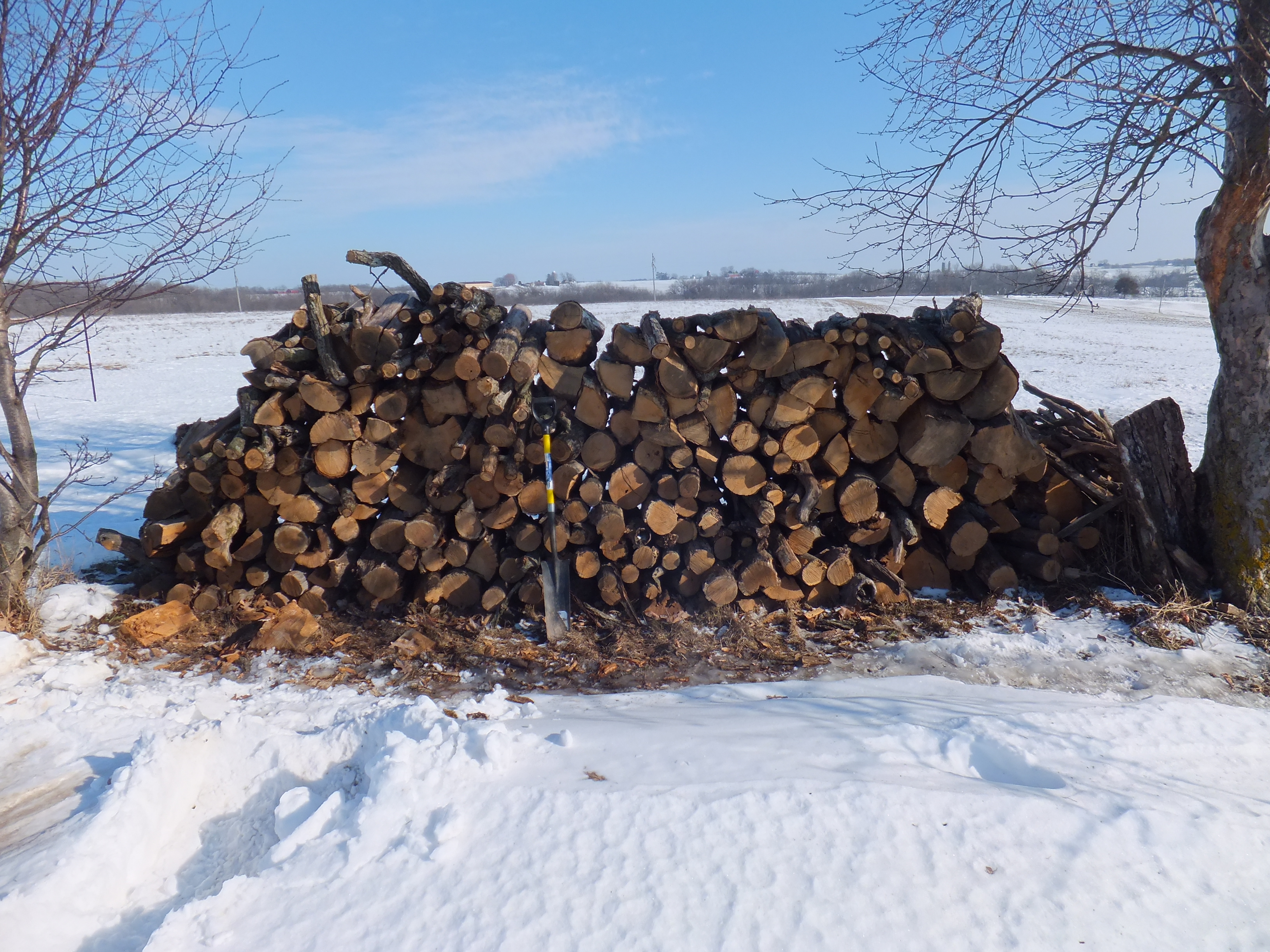
How many days to burn the row pictured?  The dimensions are about five feet tall, by sixteen feet long, by sixteen inch logs.  This is about eighty percent of a cord of wood which is 128 cubic feet, the industry standard for firewood.

It’s mostly dry oak, although it was rained on the day before I took this picture.  And now another winter storm has dumped snow on it, but it still burns well.

You can look at this old post for hints.  Also notice the changing color of the lawn.

I’ll start burning this row February  1st.  You have a week to guess in the comments.  The prize for the closest guess is negotiable.  In the past I have given gift certificates to Kiva, and meat.  Good luck!

I hope my old friends guess.  I also hope some of the newer visitors will guess and introduce yourself.  Ever since Bruce King put my blog on the sidebar of his excellent blog, I’ve had more international visitors.

Bruce raises chickens and hogs on some highly fertile bottom ground in the state of Washington.  He also recently purchased a confinement dairy farm.

Firewood and Snow

Click on this link if you want to read more about my Outdoor Wood Boiler.  Below is a photo of the ash pan.  That is the amount of ash after two days, which is about how often I remove the ash.

Ash Pan


Daily Winter Cattle Watering

January 14, 2013

Cattle Tank Waterer

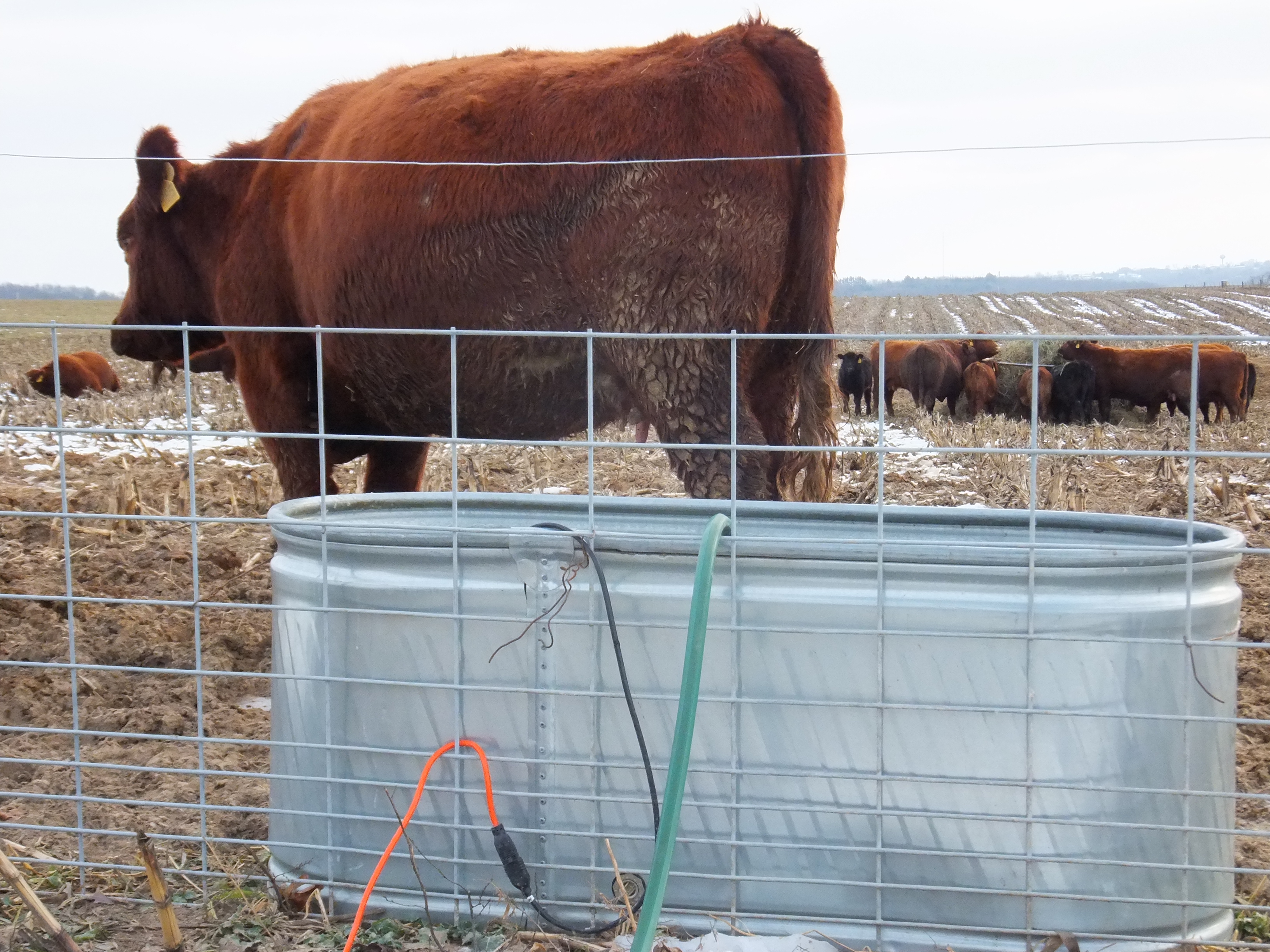
I wanted to house my fall-calving cows with calves on the south side of my farm this winter.  I couldn’t figure out a good way to walk them back over to where the heated Ritchie waterer is, so I purchased the 110 gallon tank, pictured above.

465 is the cow in the photo.  She is my oldest cow at nine years old.  Coincidentally, she was the model cow in last year’s post about the Ritchie waterer.

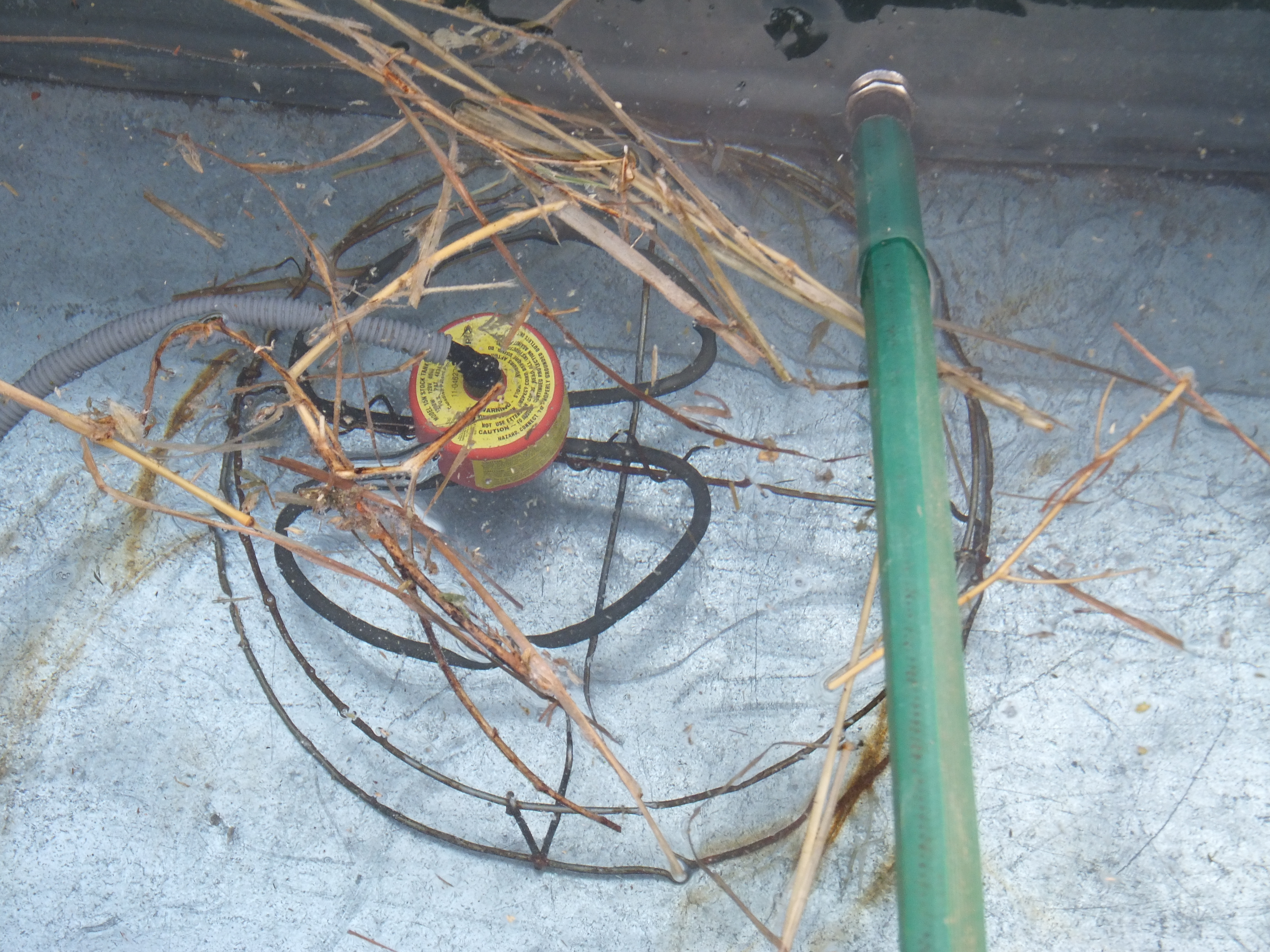
I needed a way to keep the water thawed.  So I purchased a sinking tank de-icer.  The first cold night it blew a 15 amp fuse.  I thought I was in for trouble, but I replaced it with a 20 amp fuse and it has worked flawlessly since.

Sinking Tank De-Icer

One drawback is I fill the tank with a hose at least twice per day, draining the hose well after each fill.  I figure each cow is drinking between 15 and 20 gallons per day.  I don’t notice the calves drinking much because they are still nursing their mothers.

In the photo below you can see the herd eating hay out of a feeder.  13 cows, 12 calves, and 1 bull are eating a half of a round bale of hay per day.  If similar quality hay is valued at $200 per ton, and a round bale is 1500 lbs, then the herd is eating $75 worth of hay per day.

Tank Waterer and Cows Eating Hay


Outdoor Farrowing Statistics

January 10, 2013

My fear at switching from a heated barn with crates/pens to outdoor farrowing was unfounded.  The first full year of outdoor farrowing averaged 7.8 piglets weaned per litter.  The heated farrowing barn typically weaned 8.5 to 9 piglets per litter.  So it appears I lost about a piglet per litter, but that’s not the full story.  I’ll list the farrowing groups below.

Month           Ave. Weaned

January         5.9

March            8.3

May                8.3

July                 9.3

September     8.2

November      8.0

Look at how most of the months were in that 8 range.  If I take out the two litters which froze in January, the average weaned for the year is bumped up to 8.1.  If I take out all the January litters, the average weaned moves to 8.4.  Now we’re getting close to my indoor numbers.

And I think I can do better this year.  The first thing I’m doing different is I’m not farrowing during the worst winter months.  My first group will farrow the beginning of March.  The other thing is I experimented with sows making their own farrowing sites.  Some chose the farrowing huts I provided, some chose their own spots in the woods or pasture.  All of the sows did ok, and I don’t have data, but I’m pretty sure the sows in the huts weaned an extra piglet or so compared to the independent-minded sows.  I’m going to encourage more hut farrowing this year, but will try to keep data on each.

All in all, it has been an interesting and enjoyable transition to outdoor farrowing.  I would have a difficult time going back to indoor farrowing as the work environment is much nicer for me and the pigs seem happier.


Hennessey Implement Auction/Winter Storm Draco

December 20, 2012

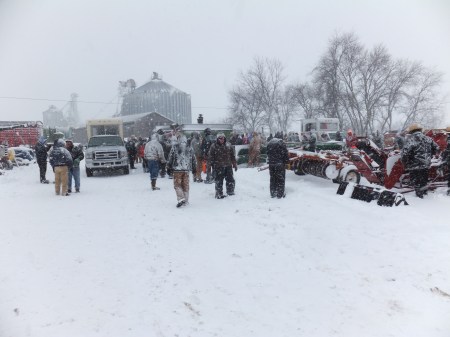
Hennessey Implement Auction

Despite Winter Storm Draco, I drove to the Hennessey Implement Auction this morning.  I purchased an old generator for $625 which will provide electricity for my farm during a power outage.  It takes its power from the PTO of my tractor.

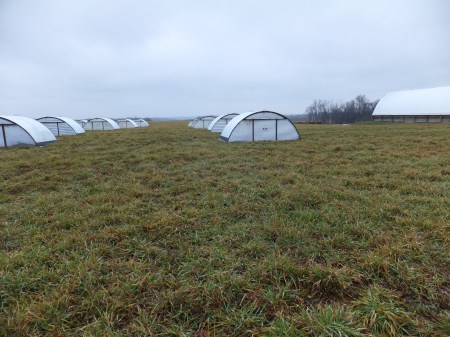
Farrowing Huts

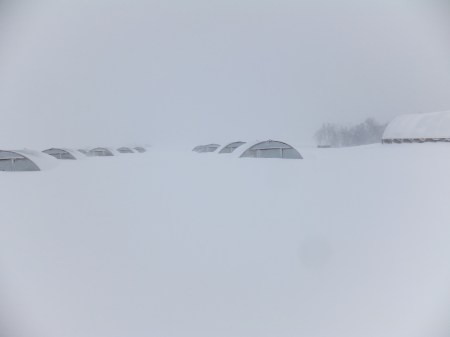
We knew this storm was coming, so I positioned  my farrowing huts in the hay field where I plan to have sows farrow next March.  I figured it may be one of those winters where the snow is still piled high in March.  I shut the door and window on each of the huts so at least there won’t be snow inside the huts.

Yesterday I took the photo above.  Today is below.

Winter Storm Draco


Goodbye to Cow 521

November 26, 2012

We pregnancy-checked my parents’ spring-calving cows a few weeks ago.  Cow 521 came up open.  I have always liked this cow and I posted a picture of her a couple of years ago, shown below.

I am tempted to add her to my fall-calving herd which is in the midst of breeding season now, but instead I chose to buy cow 447, which the vet said he thought may be pregnant, but only a month along.  447 is a better bet than 521 because it’s unknown why 521 is open.  She may have reproductive problems which render her infertile.

Still, it’s sad to see her go.


Corn Silage

November 1, 2012

We finished corn harvest.  The drought and high temperatures resulted in yields a third to a half of normal.  That was on the best acres.  We custom-hired a neighbor to chop the whole corn plant on the worst acres and make silage to feed to the cattle.  Above you can see the machine which blows and packs the silage into a bag.

Silage is any forage which is harvested wet and stored in an anaerobic condition.  After ensiling, the crop goes through a fermentation process resulting in the sugars being converted to lactic and acetic acid.  This results in good feed for cattle.

Most of the time there is enough natural bacteria present to ensure good fermentation.  This year, because of concerns from the drought, we put an inoculate of bacteria on the silage.

One bad aspect of harvesting corn silage, because you remove the whole plant, the soil is left exposed.  Exposed soil is prone to erosion.

The next day I planted oats and rape with my grain drill.  With a little rain, these vigorous crops germinated.  Below you can see the oats on October 1st, next to standing corn waiting to be harvested for grain.

Oats continue growing well in cool weather.  Below is a photo taken November 1st.  When the temperature falls to 20 F, the oats will die.  They will not be a problem when it’s time to plant another crop next spring.


Another Set of Eyes

September 1, 2012

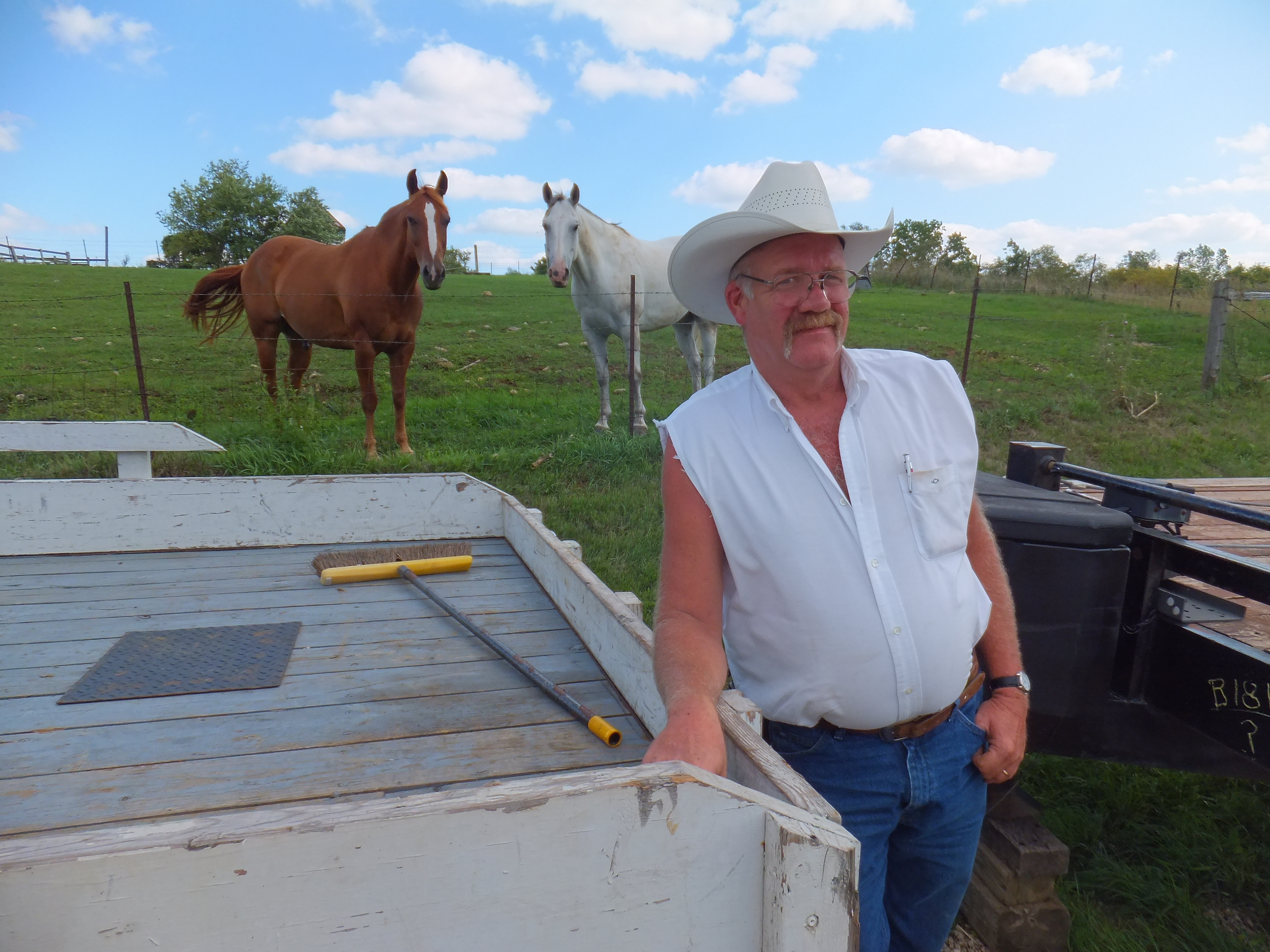
Frank, with his horses.

Frank is another set of eyes, checking on my fall-calving cowherd.  He lives in the house which is situated near the middle of my rented pasture.

His yard protrudes into and is surrounded by the pasture on three sides.  When he has his morning coffee on the front porch, he is checking my cows.

For me to check my cows, it’s a mile ATV ride.  And if I get there at the wrong time, and they’ve gone into the woods for shade, I’m out of luck.

One day in August I only counted eleven cows.  The next day the same cow was missing.  I asked Frank to keep an eye out for her.

I started walking the woods looking for her.  The woods is a jungle, pictured below.  I realized, crawling under Multiflora Rose brambles, that the cows hadn’t even explored the whole woods.

I spent two days combing the woods looking for the missing cow.  Frank rode his horse where he could, looking for the missing cow.  I started using my nose, figuring the stench from a decaying animal would lead me to her.

On the fifth day, 949 nonchalantly walked out of the woods with a little black calf and rejoined the herd.  At that point, I realized I can’t micromanage.  Frank and I just count.  We’re at seven black calves now.