Outdoor Farrowing Statistics

January 10, 2013

My fear at switching from a heated barn with crates/pens to outdoor farrowing was unfounded.  The first full year of outdoor farrowing averaged 7.8 piglets weaned per litter.  The heated farrowing barn typically weaned 8.5 to 9 piglets per litter.  So it appears I lost about a piglet per litter, but that’s not the full story.  I’ll list the farrowing groups below.

Month           Ave. Weaned

January         5.9

March            8.3

May                8.3

July                 9.3

September     8.2

November      8.0

Look at how most of the months were in that 8 range.  If I take out the two litters which froze in January, the average weaned for the year is bumped up to 8.1.  If I take out all the January litters, the average weaned moves to 8.4.  Now we’re getting close to my indoor numbers.

And I think I can do better this year.  The first thing I’m doing different is I’m not farrowing during the worst winter months.  My first group will farrow the beginning of March.  The other thing is I experimented with sows making their own farrowing sites.  Some chose the farrowing huts I provided, some chose their own spots in the woods or pasture.  All of the sows did ok, and I don’t have data, but I’m pretty sure the sows in the huts weaned an extra piglet or so compared to the independent-minded sows.  I’m going to encourage more hut farrowing this year, but will try to keep data on each.

All in all, it has been an interesting and enjoyable transition to outdoor farrowing.  I would have a difficult time going back to indoor farrowing as the work environment is much nicer for me and the pigs seem happier.


Hennessey Implement Auction/Winter Storm Draco

December 20, 2012

Hennessey Implement Auction

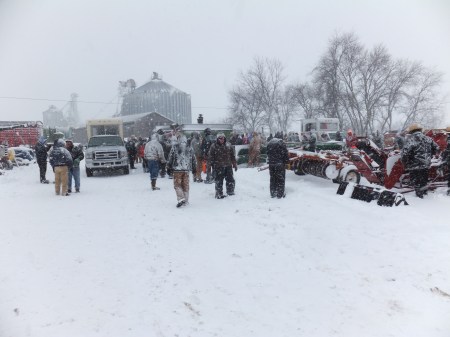
Despite Winter Storm Draco, I drove to the Hennessey Implement Auction this morning.  I purchased an old generator for $625 which will provide electricity for my farm during a power outage.  It takes its power from the PTO of my tractor.

Farrowing Huts

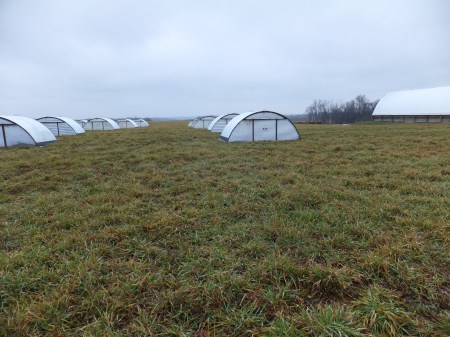
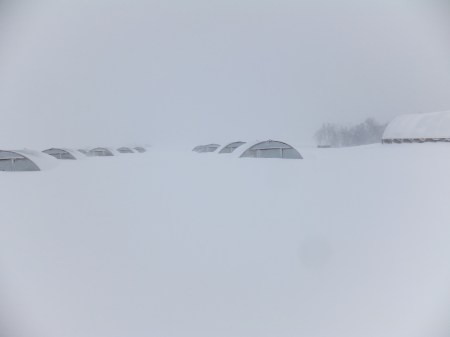
We knew this storm was coming, so I positioned  my farrowing huts in the hay field where I plan to have sows farrow next March.  I figured it may be one of those winters where the snow is still piled high in March.  I shut the door and window on each of the huts so at least there won’t be snow inside the huts.

Yesterday I took the photo above.  Today is below.

Winter Storm Draco


Goodbye to Cow 521

November 26, 2012

We pregnancy-checked my parents’ spring-calving cows a few weeks ago.  Cow 521 came up open.  I have always liked this cow and I posted a picture of her a couple of years ago, shown below.

I am tempted to add her to my fall-calving herd which is in the midst of breeding season now, but instead I chose to buy cow 447, which the vet said he thought may be pregnant, but only a month along.  447 is a better bet than 521 because it’s unknown why 521 is open.  She may have reproductive problems which render her infertile.

Still, it’s sad to see her go.


Corn Silage

November 1, 2012

We finished corn harvest.  The drought and high temperatures resulted in yields a third to a half of normal.  That was on the best acres.  We custom-hired a neighbor to chop the whole corn plant on the worst acres and make silage to feed to the cattle.  Above you can see the machine which blows and packs the silage into a bag.

Silage is any forage which is harvested wet and stored in an anaerobic condition.  After ensiling, the crop goes through a fermentation process resulting in the sugars being converted to lactic and acetic acid.  This results in good feed for cattle.

Most of the time there is enough natural bacteria present to ensure good fermentation.  This year, because of concerns from the drought, we put an inoculate of bacteria on the silage.

One bad aspect of harvesting corn silage, because you remove the whole plant, the soil is left exposed.  Exposed soil is prone to erosion.

The next day I planted oats and rape with my grain drill.  With a little rain, these vigorous crops germinated.  Below you can see the oats on October 1st, next to standing corn waiting to be harvested for grain.

Oats continue growing well in cool weather.  Below is a photo taken November 1st.  When the temperature falls to 20 F, the oats will die.  They will not be a problem when it’s time to plant another crop next spring.


Another Set of Eyes

September 1, 2012

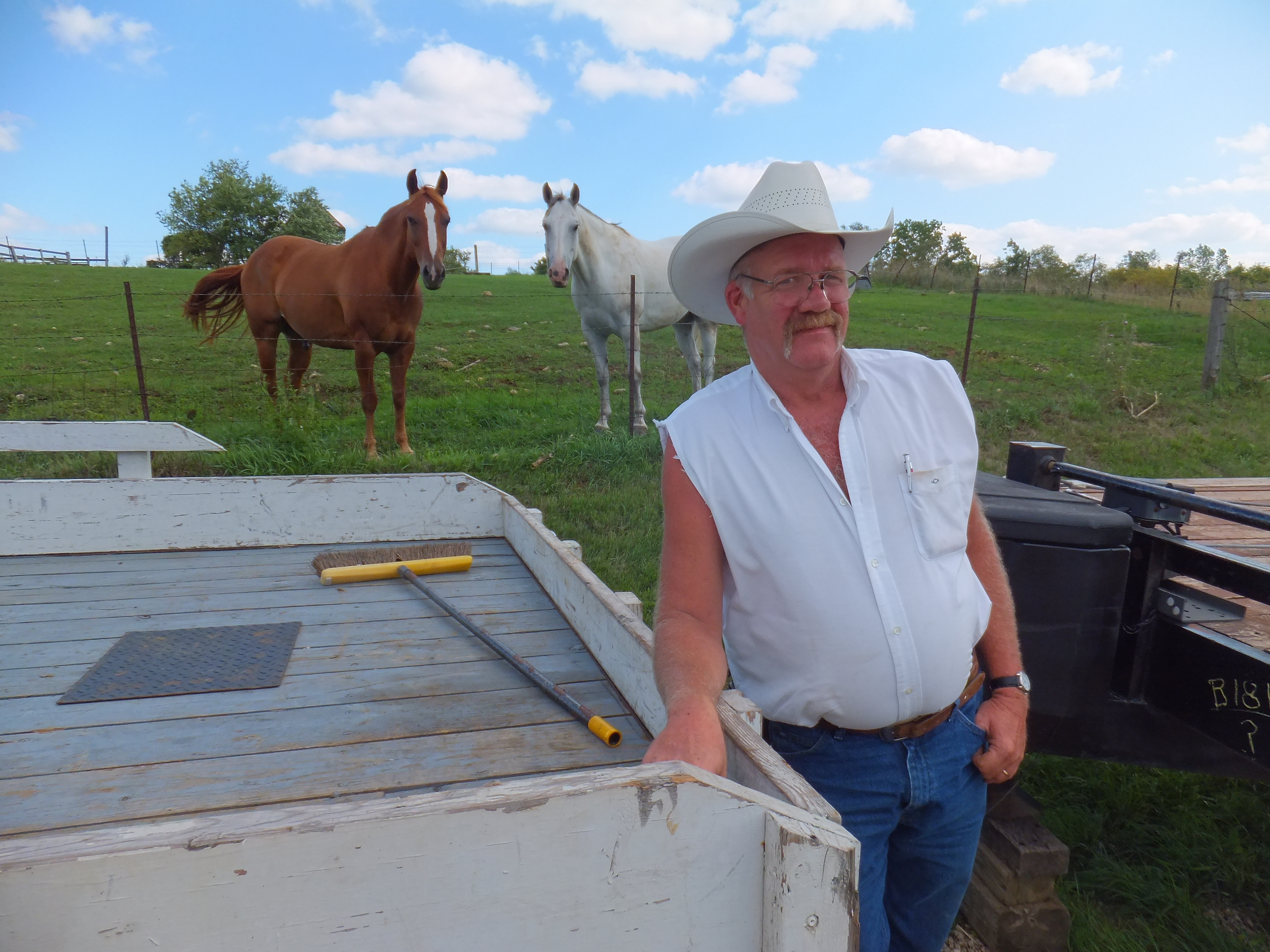
Frank, with his horses.

Frank is another set of eyes, checking on my fall-calving cowherd.  He lives in the house which is situated near the middle of my rented pasture.

His yard protrudes into and is surrounded by the pasture on three sides.  When he has his morning coffee on the front porch, he is checking my cows.

For me to check my cows, it’s a mile ATV ride.  And if I get there at the wrong time, and they’ve gone into the woods for shade, I’m out of luck.

One day in August I only counted eleven cows.  The next day the same cow was missing.  I asked Frank to keep an eye out for her.

I started walking the woods looking for her.  The woods is a jungle, pictured below.  I realized, crawling under Multiflora Rose brambles, that the cows hadn’t even explored the whole woods.

I spent two days combing the woods looking for the missing cow.  Frank rode his horse where he could, looking for the missing cow.  I started using my nose, figuring the stench from a decaying animal would lead me to her.

On the fifth day, 949 nonchalantly walked out of the woods with a little black calf and rejoined the herd.  At that point, I realized I can’t micromanage.  Frank and I just count.  We’re at seven black calves now.


Harvesting Oats/Barley

August 28, 2012

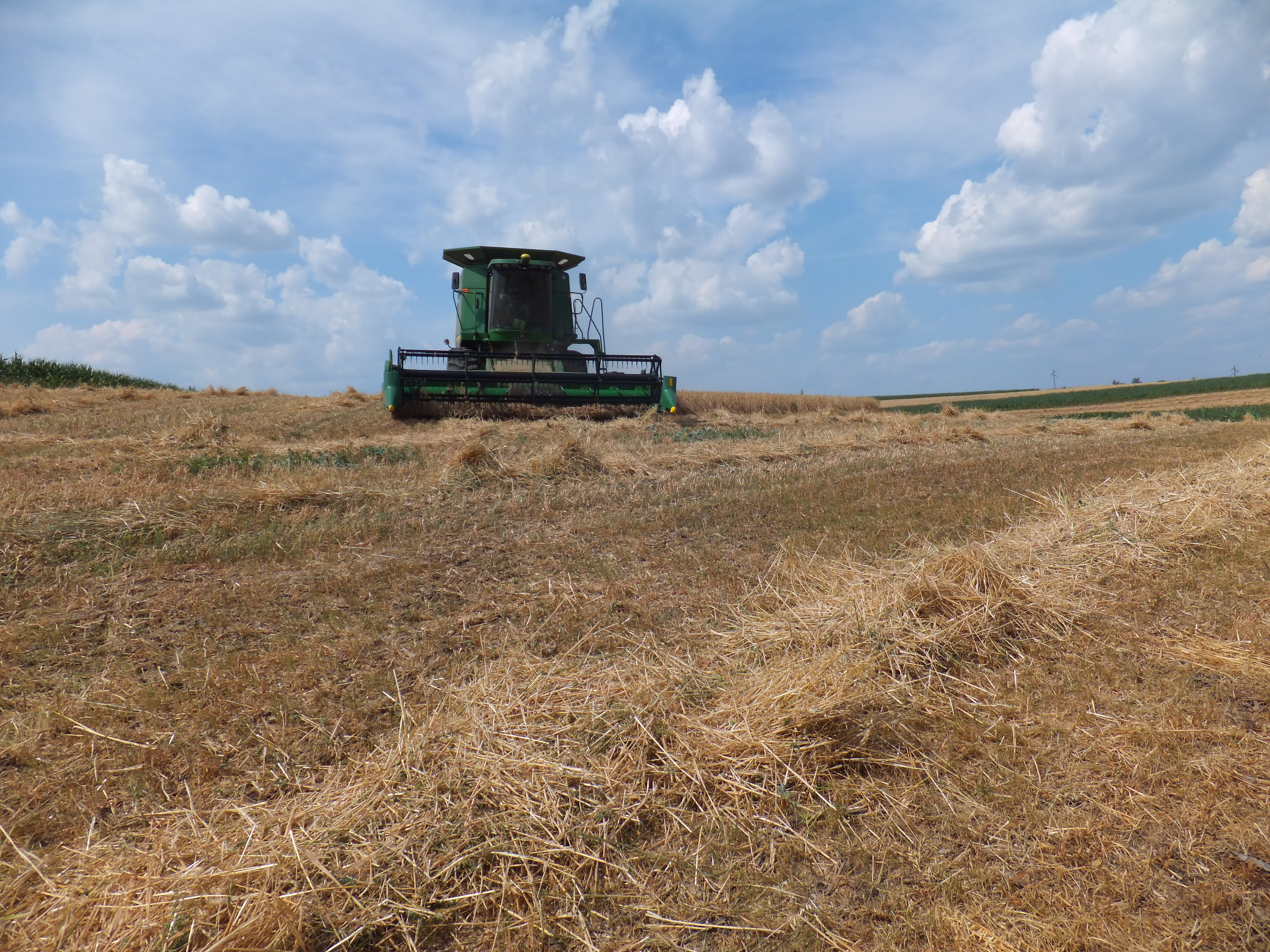
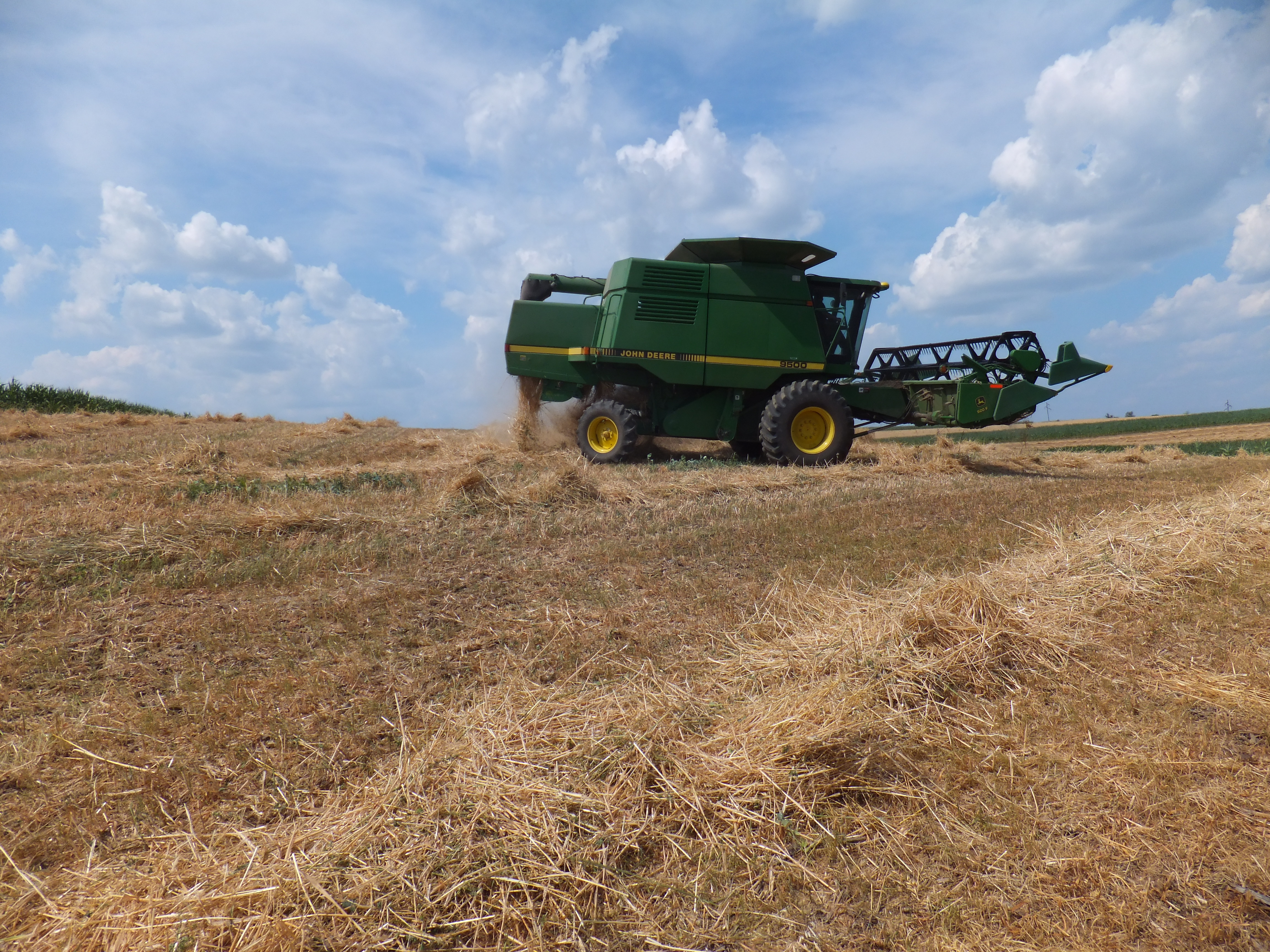
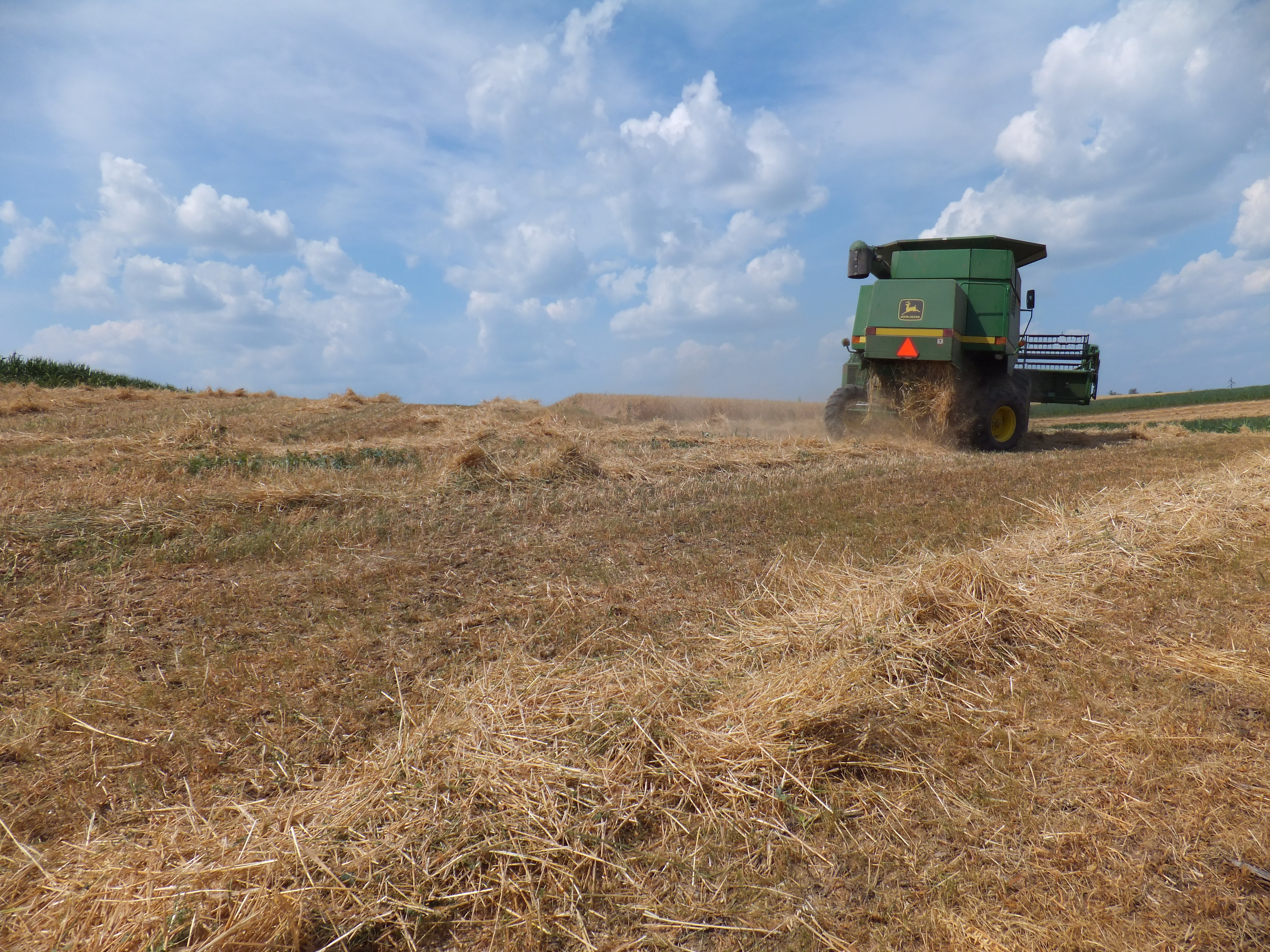
Back on July 15th my neighbor Joe combined my oats.  He has a John Deere combine.  His custom harvesting rate is $25 per acre.

The combine cuts the oats and takes it inside the machine where it separates the grain from the straw.  The grain fills a hopper while the straw is kicked out the back.  I waited a day and then raked and baled the straw to use for animal bedding.

The oats yielded ok, especially considering the drought.  74 bushels, or 2368 lbs. per acre.  They were super-dry, only 4% moisture.

I understand now why small grains like oats, barley, or wheat do so well in the near west.  Moisture in the spring helps the crop get a jump on the weeds, then when it turns dry it’s the only plant growing.  We struggle some in the midwest because we get more rain than they do out west, which is a blessing, but it also causes the weeds to grow up through the maturing oats, resulting in harvest troubles.

This year the oats were weed-free and stood perfectly.  Remember last year when a storm blew them flat? No troubles this year.


Grazing Buckwheat

August 24, 2012

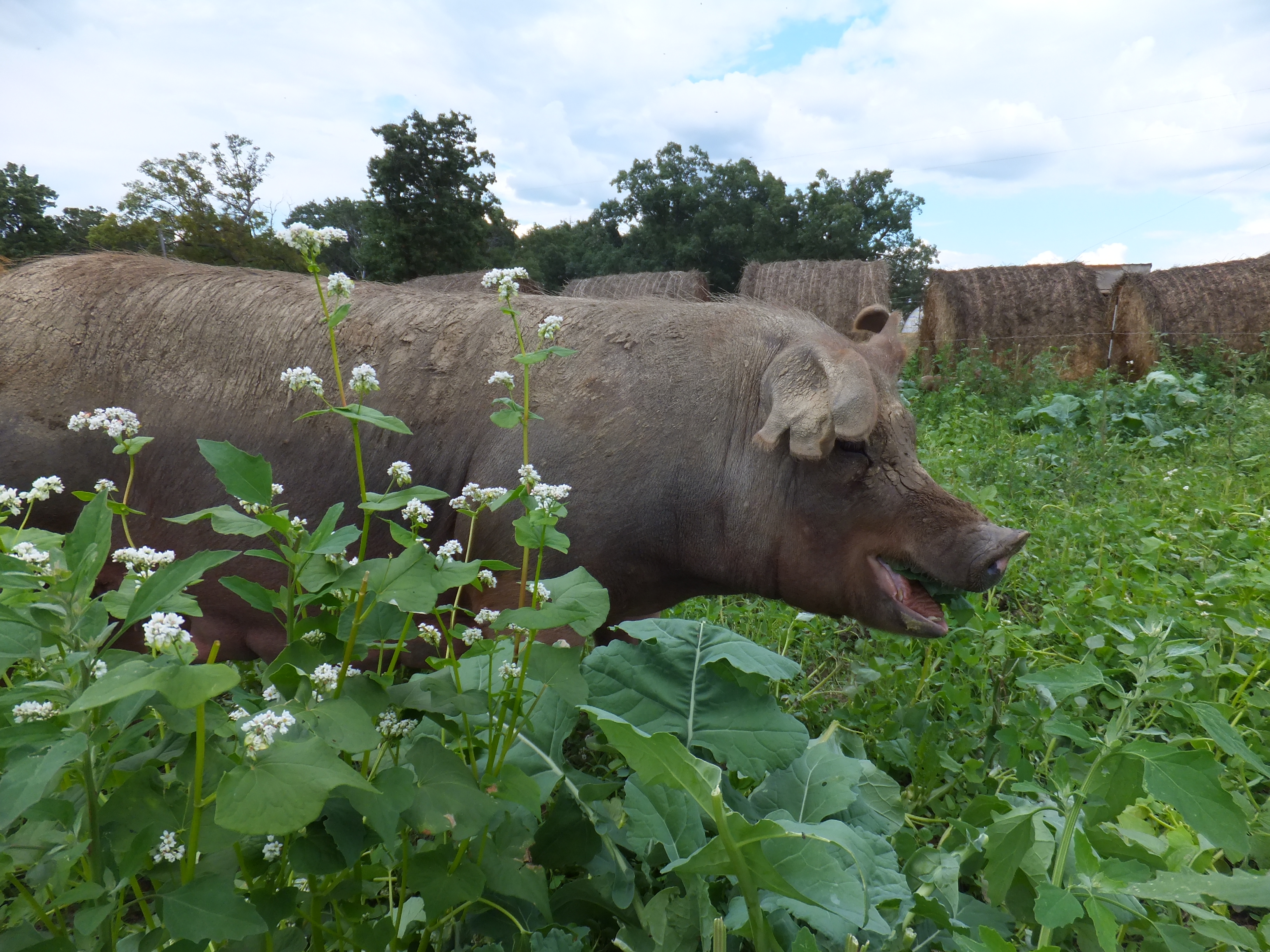
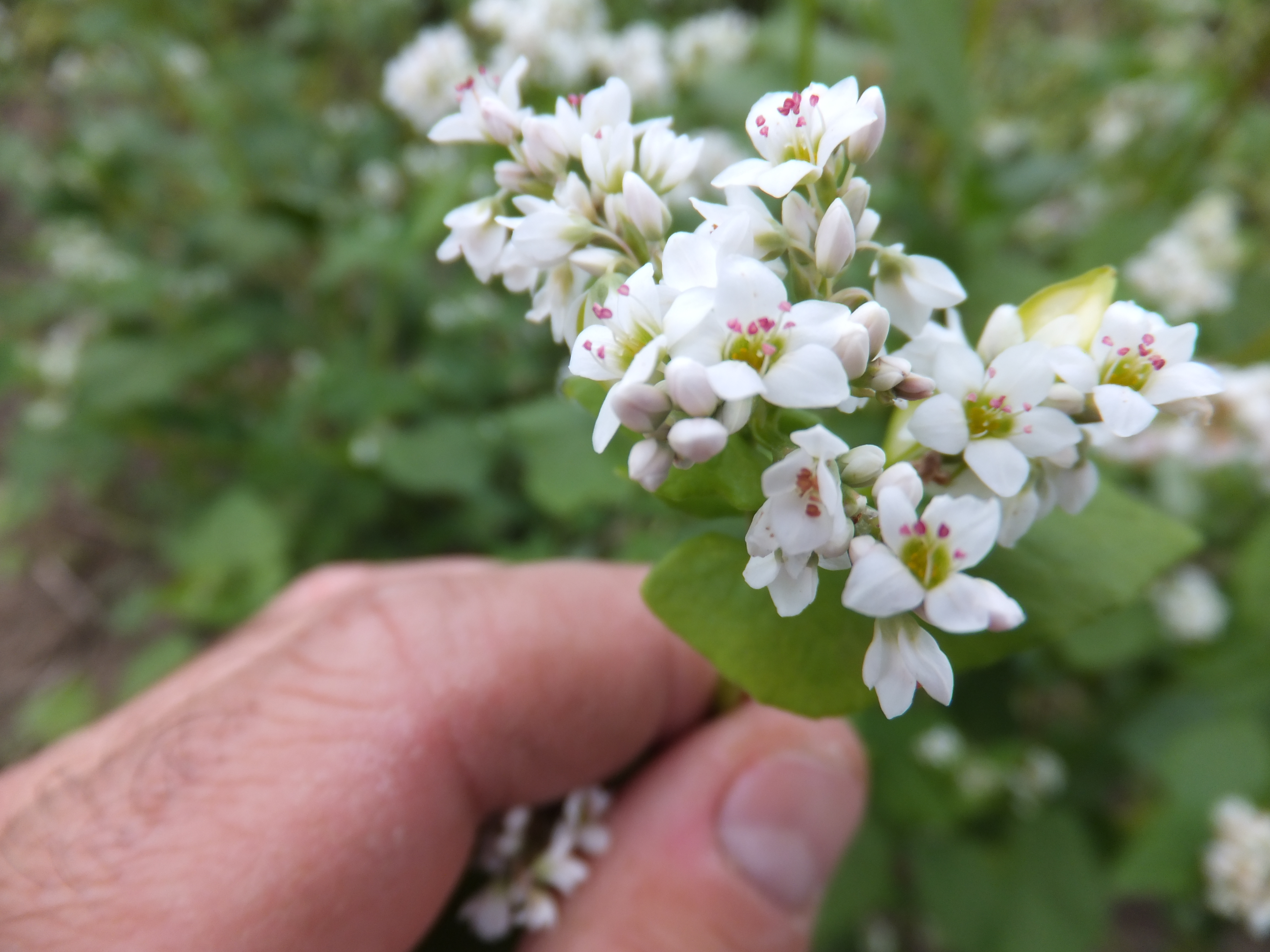
I needed the space, so I ended my Buckwheat experiment by grazing it with the hogs.  They liked it.  In the photo above, the plant with smaller leaves and white flowers is the Buckwheat.  The plant to the right with the larger, darker green leaves is Rape.  Even though I disced after grazing the Rape, some of it still survived.  By the way it grew in the drought, I wish I would have just let the Rape regrow and grazed that.

I apologize to those of you who wanted me to harvest the Buckwheat.  I enjoy planting and watching plants grow, but I don’t believe I have the patience to hand harvest.


Camouflaged Calf

August 20, 2012

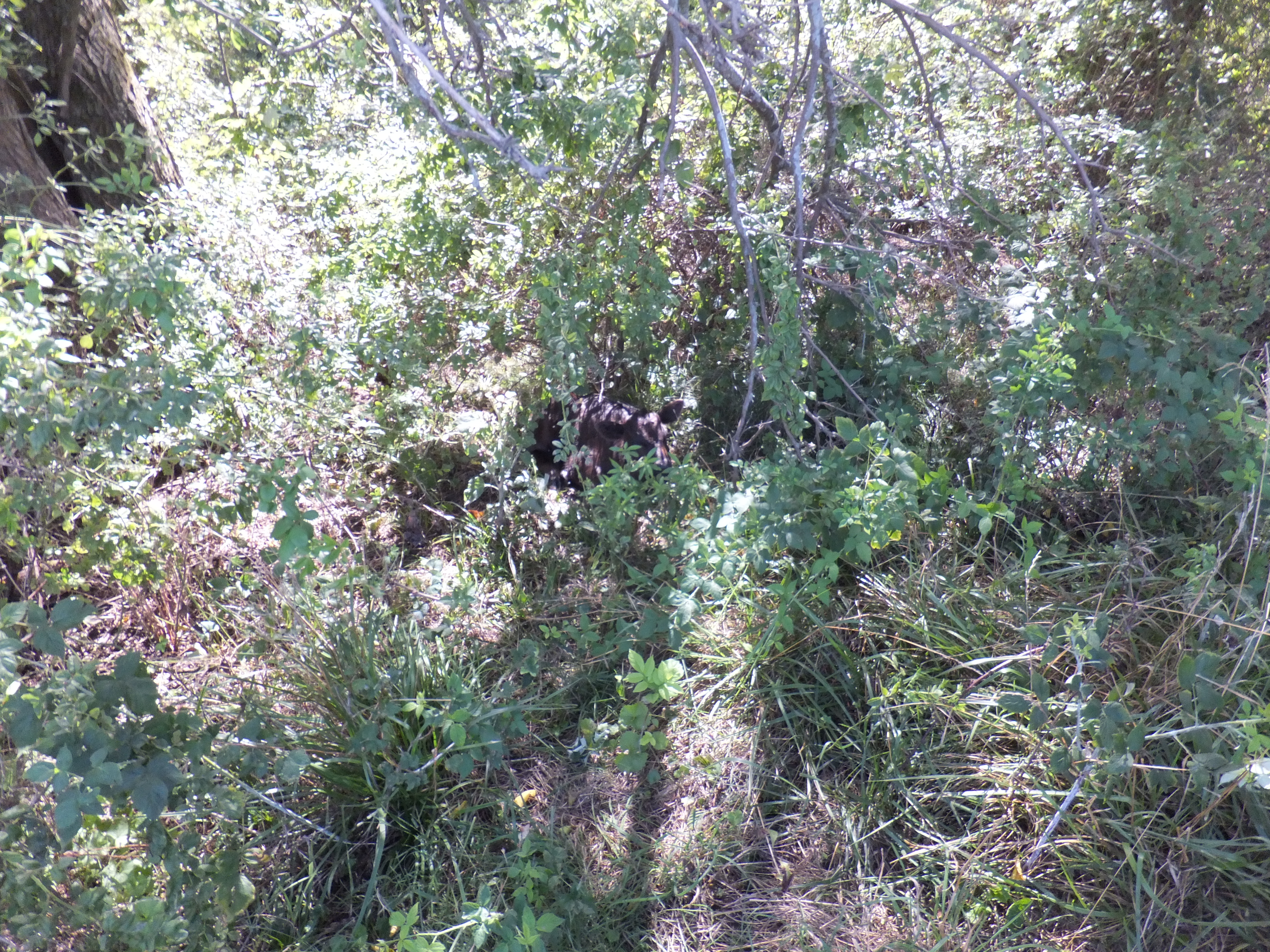
The cows have started calving.  I have a difficult time finding the calves because their mothers hide them.

There is a two-day old calf in the center of the photo above.  Below you can see a close-up of the calf.

The calves are coming out in shades of black even though their moms are red, because their daddy was a neighbor’s Black Angus which jumped the fence and hung out with the cows.  The calf below looks like a chocolate Lab.


Apples in Rented Pasture

August 16, 2012

I was fortunate to rent a pasture this year, close to my farm.  I had a vet preg-check my sixteen fall-calving cows this spring, then vaccinated and fly tagged the twelve which were bred, and put them in the pasture May 1st.

They have done really well, even in the drought, because  I under-stocked the pasture.  I wanted some experience grazing the pasture before I put too many animals in and then had to feed hay or destock.

Now they’re enjoying the wild apples which grow in the woods and in the open.  The cows have a route they walk everyday, checking for down fruit.

The tree above is strange.  Half of it has no apples, the other half is loaded with apples.

I usually eat a few every time I check the cows.  Each tree’s apples taste different, but they’re all good in their own way.


New Splitting Maul

August 1, 2012

I started cutting wood in July.  I woke up one cool morning after the heat broke, and went out in the woods and started cutting.  This might be the year I have all my wood cut before the snow flies.

I only cut dead trees which are down.  If you don’t cut and split the wood, it will start to rot.  Rotting isn’t terrible, as many critters make a living out of decaying trees, but I figure it’s also a good way to heat my house.  If I cut into a tree and its started to rot, I leave it for the critters.

I bought a new splitting maul, pictured.  I don’t know why I scrimped with my old one for so long.  This one works like a dream.  It’s an eight pound maul made by Task.