Summer Litters, Link-Love Sept. 2013

September 19, 2013

DSCF1360

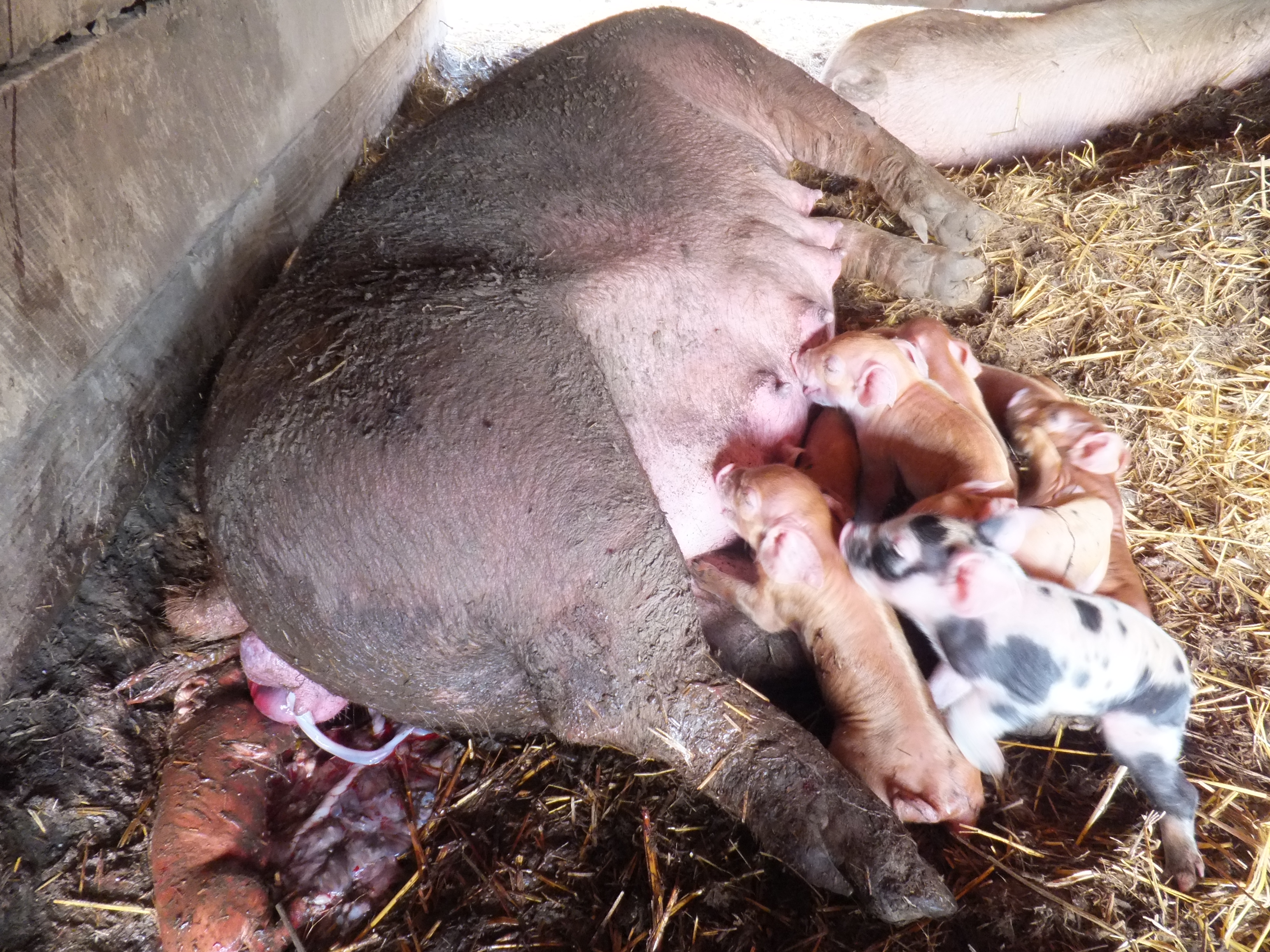
Duroc gilt in the woods with her litter of eleven piglets.  Fourteen gilts farrowed this summer.  It’s amazing how well they do in the warm months compared to the struggles I had last March.

Most farrowed in a shelter, or I put a shelter over them after farrowing, as I let each choose her own spot to farrow.  Two gilts were in a spot in the woods inaccessible to a shelter so I left them alone.  They raised ten and eleven piglets each.

I wouldn’t have had the courage to farm this way without reading other bloggers, specifically the granddaddy of farm bloggers, Walter Jeffries.  Recently, he posted a photo showing a 300 lb, eight-month-old boar, raised on nothing but pasture and dairy products.  Walter is a paradigm shifter for me.

I’ve been without a computer for the past couple of months, hence my lack of posts, but I’ve kept up on the farm blogs I read and enjoy and wanted to share some more with you.

Bruce King wrangles with government agents and speaks at government meetings.  I love hearing about his civic adventures.  He also purchased a confinement dairy farm recently and is transforming it to his vision.

Andrew at Green Machine Farm writes about his new life as a farmer.  He educated us on bat houses recently.  Would you believe he made a bat house out of plywood, painted it black, and placed it on the south side of a shed?  How anything could survive a midwestern summer in that box and not cook to death is beyond me, but Andrew informs us he already has bats living in it.

Gordon Milligan is a train conductor in Chicago.  He has a dream to farm and raise his own food when he retires.  He and his wife recently purchased a farm in Iowa and are anxiously awaiting the day they will call it home.

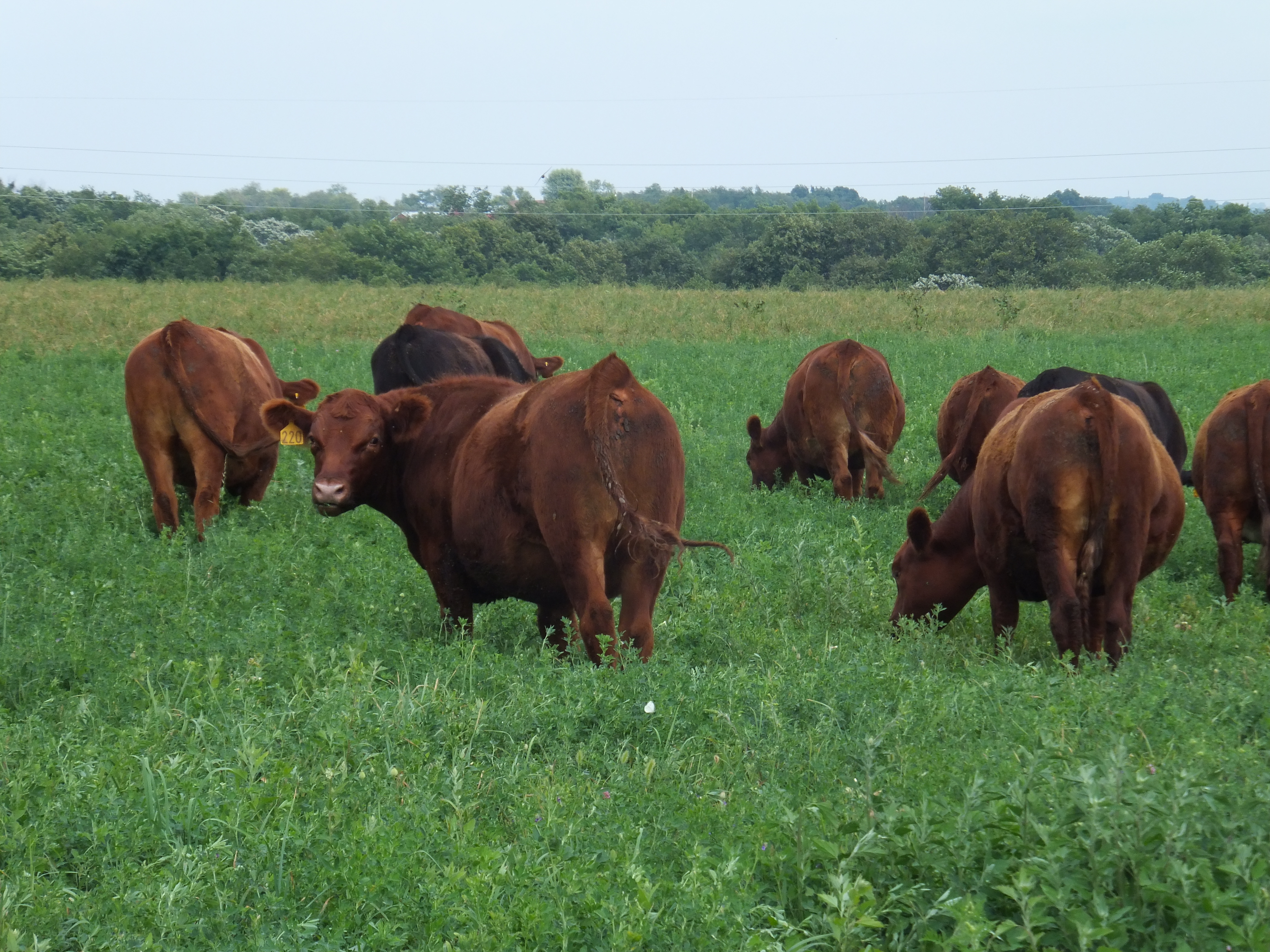
Lastly, I read a blog from a farmer in France.  I like to see what Brent is doing with his farm because the soils and underlying limestone are extremely similar to my farm.  He grass-finishes Salers cattle, grazing alfalfa/orchard grass hay fields.  Check out his blog and see if the photos of his land seem similar to mine, like in the photo below of my steers grazing a fresh hay field.
DSCF1415


Pig Feed: Mix-your-own vs. Bulk-delivered

August 5, 2013

I used all the corn I grew last year and have been purchasing corn from my parents, but it looks like I may use up that supply before fall harvest.  It’s going to be close, though.  So instead of purchasing a small amount of corn which would be a pain to auger into a bin only to shovel back out, I priced a complete feed delivered right into my pig feeders.

The price Big Gain has right now for 16% protein pig feed is $825 for two ton, delivered into my feeder.  If I were to mix my own ration, I could do two ton for $510, not counting the cost of my time and machinery.

Breaking it down for a two ton batch:

80 lbs of vitamin/mineral/amino acid premix for $30

550 lbs of soybean meal for $143

3370 lbs of corn for $337

The cost of the bulk feed is $.21 per lb and the cost of the mix-my-own feed is $.13 per lb.  This seems like a hefty premium to pay for convenience, but I may buy some if I’m cutting it very close.


Election Ink or Berries?

July 21, 2013

012

This is my thumb after picking and eating three different berries:  Black raspberry or Rubus occidentalis, Gooseberry or Ribes hirtellum, and Mulberry or Morus (unsure which species).  We managed to get ahead of our mouths enough to bring Mulberries home where they found their way into corn mufffins, pictured below.

001


Madison Primal/Paleo Meetup

July 14, 2013

Madison Primal/Paleo Meetup

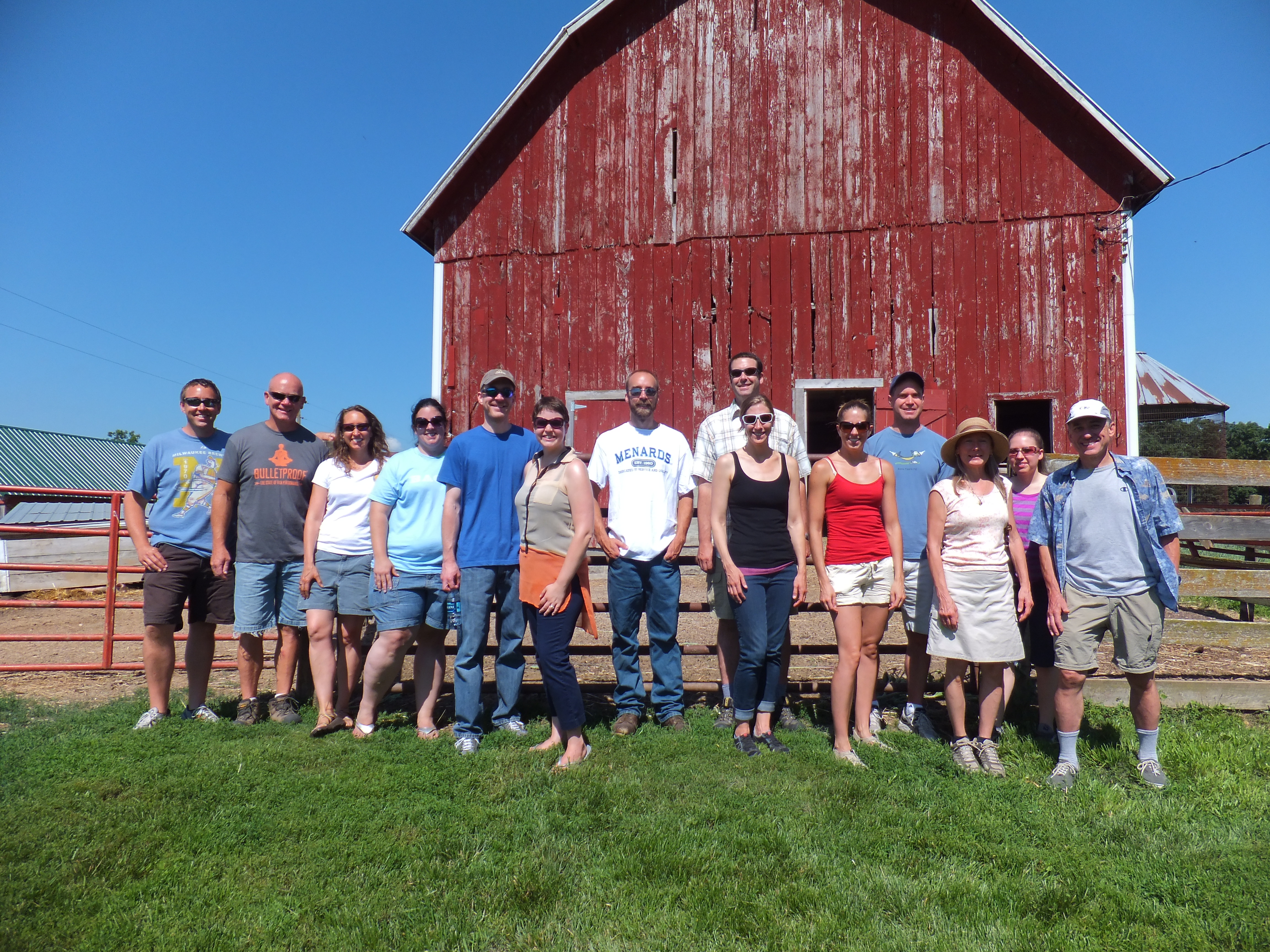
The Madison Primal/Paleo Meetup group toured our farm Sunday morning.  It’s always fun meeting new people who are engaged and interested in what we do.  Most were from the Madison area, but a few were from as far away as Michigan and Iowa.

I showed them a bred gilt who I predicted would farrow within a week.  She farrowed much sooner than that.  By 5 pm she had twelve nice piglets.  I wish the meetup could have seen it.

025


Parasitic Bird Egg

July 10, 2013

001

One of these eggs is not like the others.  I’ve been watching this Red-winged Blackbird nest and a cowbird did what Cowbirds do and laid an egg in it, leaving the care of her young to another.  This is known as brood parasitism.

Coincidentally, a day after finding the cowbird egg, I heard a program on NPR’s Radiolab about the Kirtland’s Warbler.  Habitat disappearing and the Cowbird were thought to lead to the decline and almost extinction of the Kirtland’s Warbler.  So they started trapping and killing Cowbirds, and burning the Jack Pine forests to help new growth which is what Kirtland’s Warblers nest in.  The efforts were deemed successful when the population grew, but the costs were questionable as a deadly forest fire took the life of a young man.  They talk to the man’s family on the show.

I learned about Iatrogenesis from Nassim Taleb’s book, Fooled by Randomness.  It’s when someone causes harm while trying to help.  And now I believe myself to be in that category, because, just as I feared, a predator ate all four eggs.

I mowed around the nest attempting to spare it, only to mark it for predators.  Another person would have mowed it up, allowing the mother to begin immediately building a new nest and laying more eggs.  I, with my good intentions, cost the blackbird a week of prime nesting time and a cowbird one young.

Which brings me around to why I think it’s not worth preserving the Kirtland’s Warbler, besides the cost of a human life.  We can’t begin to understand all the effects of our tampering.  According to Radiolab, Michigan is using over 100 people and spending over a million dollars to maintain a habitat for the Kirtland’s Warbler.  And it’s working as numbers rise, but what effect is it having on everything else?  Like it or not, we are a part of nature.


2013 Corn Height, 4th of July

July 5, 2013

2013 Corn Height

Shepherd decided not to show and butcher hogs at the fair this year.  We decided sweet corn would be his project.  Here he is checking for ears, (not there yet).  The corn is just starting to tassel which you can see on the left.  Also check out the cloud face above his head.

We are trying a supersweet variety this year from Harris seeds.  There are three main types of sweet corn: su or normal, se or sugary enhanced, and sh2 or supersweet, along with many different hybrids among the types.  Supersweet needs to be isolated from other types of corn or the sugar turns to starch.  This happened to my family when I was a kid and we couldn’t eat the corn.


Red-winged Blackbird Eggs

July 3, 2013

Red-winged Blackbird Eggs

I noticed a Red-winged Blackbird fly off her nest when I was mowing hay July 1st.  Most of the nests have been empty, but this must be their second brood because I’ve seen a lot of fledgling birds hopping and test-flying with their short wings.  I mowed around the nest but am not sure I did it any favors because it now sticks out to predators.  I’ll keep checking to see how it makes out.

006


Contour Strip Cropping 2013

July 2, 2013

Contour Strip Cropping 2013

Cut hay is in the foreground.  The light green strip middle left is oats.  The dark green strips above it are corn.  The light green at the top is a hay strip I baled a couple of weeks ago.


Red-winged Blackbird Habitat

June 27, 2013

004

Red-winged Blackbird nest in a Curly Dock, (Rumex crispus), plant.

I noticed almost all of the Red-winged Blackbird nests are built in the stems of Curly Dock.  They need strong stems to anchor their nest, usually using three stems.

Red-winged Blackbirds are my second-favorite bird with the Barnswallow being my favorite.  Ironically, these are the two birds who terrorized me in my youth.  Both viciously dive at those they feel are intruding into their territory.  The Barnswallow attacks the barn cats as they cross the yard.  The Blackbird will even attack Red-tailed Hawks and other raptors.

I’m a believer in and witness to Extra Sensory Perception.  Not ESP as typically thought of as a human reading someone’s mind, but just anything which hasn’t been proven, but can witnessed.  There is so much we don’t understand.

As I said, these birds tormented me until the day I decided to not be afraid anymore.  Once I decided they really couldn’t hurt me, they mostly left me alone.  I believe somehow they sensed my fear and the absence of it.  Maybe they notice body language.  Do any of you have stories about these birds?

003


Milkweed, Doe, Fawn

June 13, 2013

001

Common Milkweed, Asclepias syriaca.  This is the unidentified plant from my last post.  It looks quite different denuded of its leaves.

005

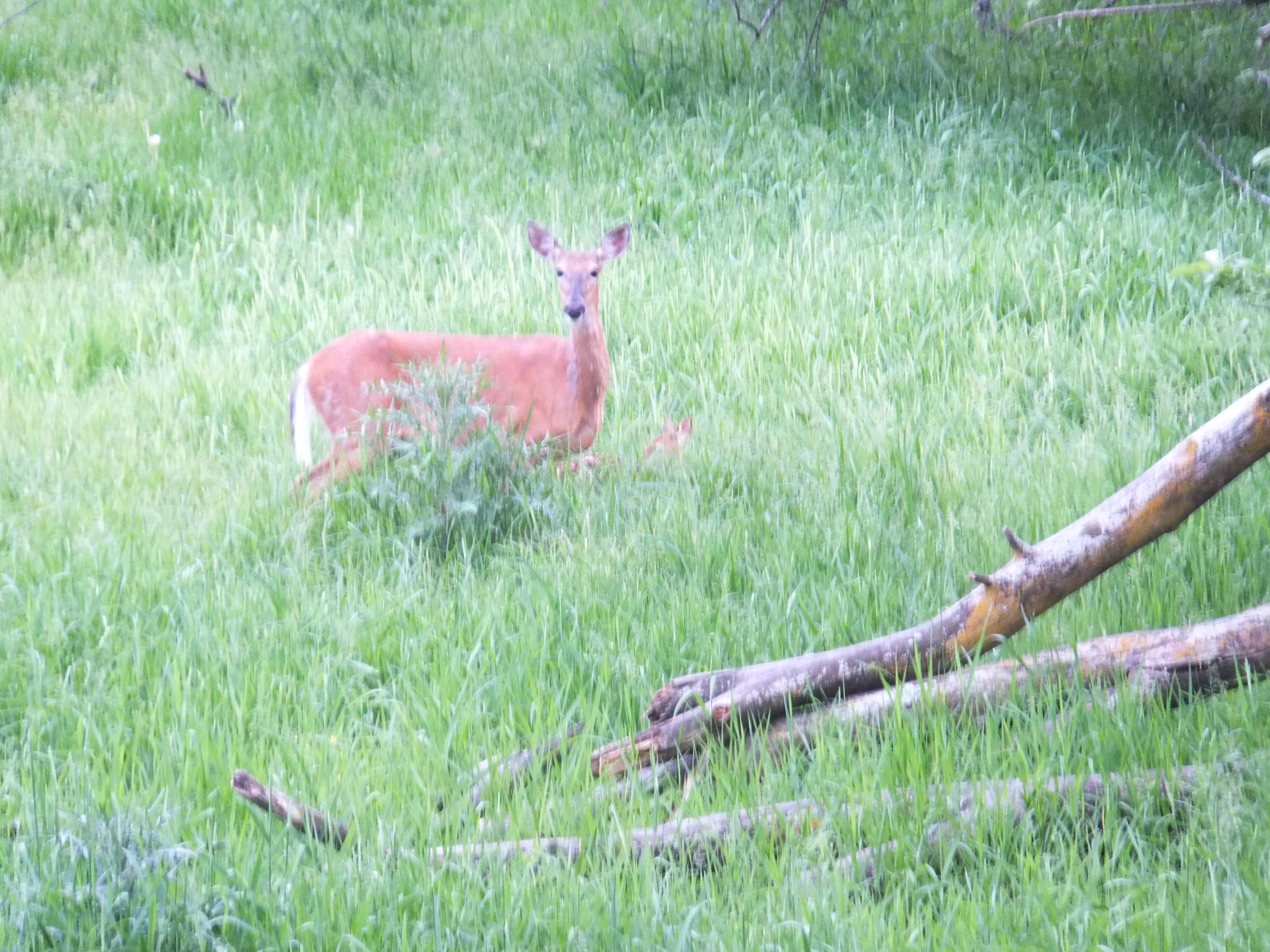
This doe was nursing her fawn close enough to the road that I could snap a distant photo.  The fawn is just ahead of her.  When I stepped out of my truck, the doe ran, but the fawn dropped and froze.  So I walked carefully and took this photo a couple of paces away.  One more step and the fawn knew she was no longer invisible and jumped up and ran like a deer.

006