Outdoor Farrowing, 2013 Summary

December 4, 2013

I had great expectations to improve over 2012’s average weaned per litter of 7.8 piglets.  8 piglets weaned per litter isn’t much of an improvement, but I’ll take it, especially considering the way 2013 farrowing started in a blizzard.  But an average of 8 doesn’t tell the full story as this is a tale of two seasons, difficult spring and easy summer.

2012 was difficult because we started farrowing in January in a hoop barn and lost several piglets when the temperature dropped below zero F.  I thought I could avoid that problem in 2013 by waiting until March to start farrowing.  March 2012 was 80 F and dry, a bad precursor to the drought which would follow, but ideal weather for farrowing.  March 2013 was the opposite, cold and wet, snow, rain, plummeting temps.

I had an idea about how much bedding would be needed in each farrowing hut.  Boy was I wrong.  I didn’t think about the ground under the hut being frozen, so it was extremely cold for the pigs and when the body heat of the sow warmed the ground it became wet.  The first two sows farrowed and 17 of the first 22 piglets froze.  I felt desperate and depressed.

Well, I remembered what Professor Freeman taught me.  Environmental factors are greater for plants than animals for a simple reason: animals can move, animals can modify their environment.  I knew the sows’ instinct to save their piglets was strong, I just needed to give them a chance.

So I started buying truckloads of wood shavings.  I had them slide whole pallets of bagged wood shavings into the back of  my trailer.  I trudged through the snow with a bag on my shoulder and started with two bags for each hut to soak up the wet and cold.  And the sows responded, making dry nests for their piglets.

17 spring litters farrowed 193 live piglets for an average of 11.4 per litter.  They weaned 119 piglets, an average of 7 piglets per litter.  So the preweaning mortality was 38.3%.  Considering how badly they started, I considered it a success to save only 2 out of every 3 piglets born alive.

I let the sows have a long lactation and then weaned all the piglets at once.  Since I didn’t have enough boar power to breed 17 sows, I decided to artificially inseminate, AI.  I was successful the previous fall with AI, settling nearly all the sows, which resulted in these spring litters.  But the spring was a different story as  some of the sows had already started cycling and I was busy with spring work, spending not nearly enough time watching for signs of estrus.  I got exactly 0% of the sows settled with AI.

At this point, I think anyone would say I was in a major swine-farming slump.  A beginning farmer may be thinking swine-farming is not for them.  But my years of experience has taught me that perseverance is what is required, and since I’m my own boss no one gets to decide I fail except for me.

Luckily I had some young boars and gilts which could be used for breeding.  So I put the boars in with the gilts and sold the sows as culls.

The gilts farrowed in July, August, and September.  The first gilt had 14 weak piglets with all but 5 dying quickly and I thought, “oh no, my slump continues,” but thankfully, the next litters were strong and healthy.

The weather was warm and dry.  Many of the gilts farrowed in huts, but some picked their own spots in the woods.  I used very little bedding and did very little work.  It was a joy to experience.

15 gilts farrowed 158 live piglets for an average of 10.5 per litter.  They weaned 138 piglets for an average of 9.2 per litter.  The preweaning mortality on this group was only 12.7%.

The final statistics are 32 sows and gilts farrowed 351 live piglets for an average of 11 per litter.  They weaned 257 piglets for an average of 8 piglets per litter.  Preweaning mortality averaged 27%.

I’m modifying again for 2014.  Sows will start farrowing at the end of February.  I plan on putting huts into a bedded hoop barn and farrowing there for the spring litters.  For the summer litters I’ll continue to just stand back and let them do their thing.


Permaculture Guild

November 25, 2013

DSCF1468

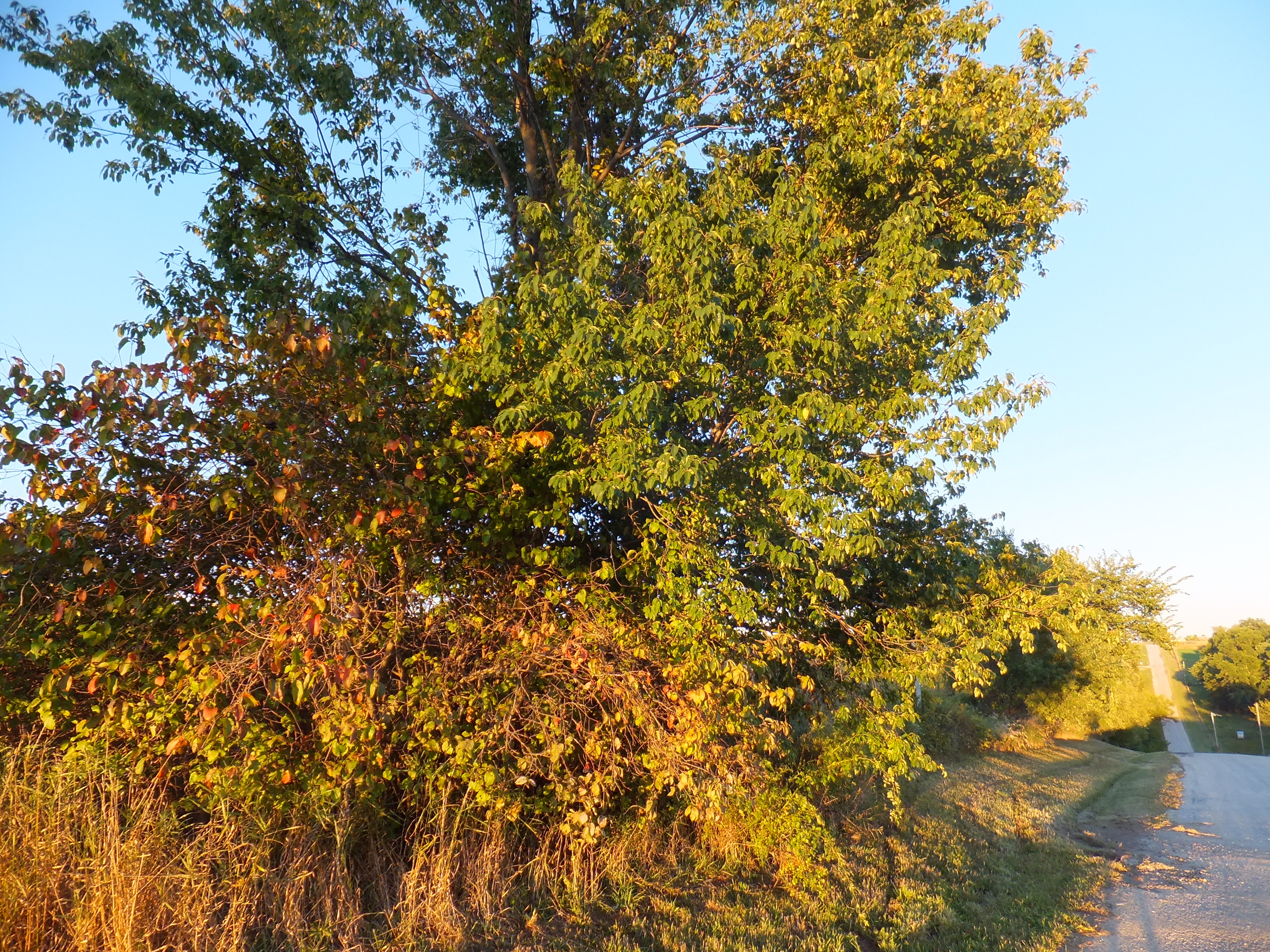
A permaculture guild  is a strategic design of organisms benefitting the whole.  Like all the best concepts of permaculture, this mimics the way nature designs.

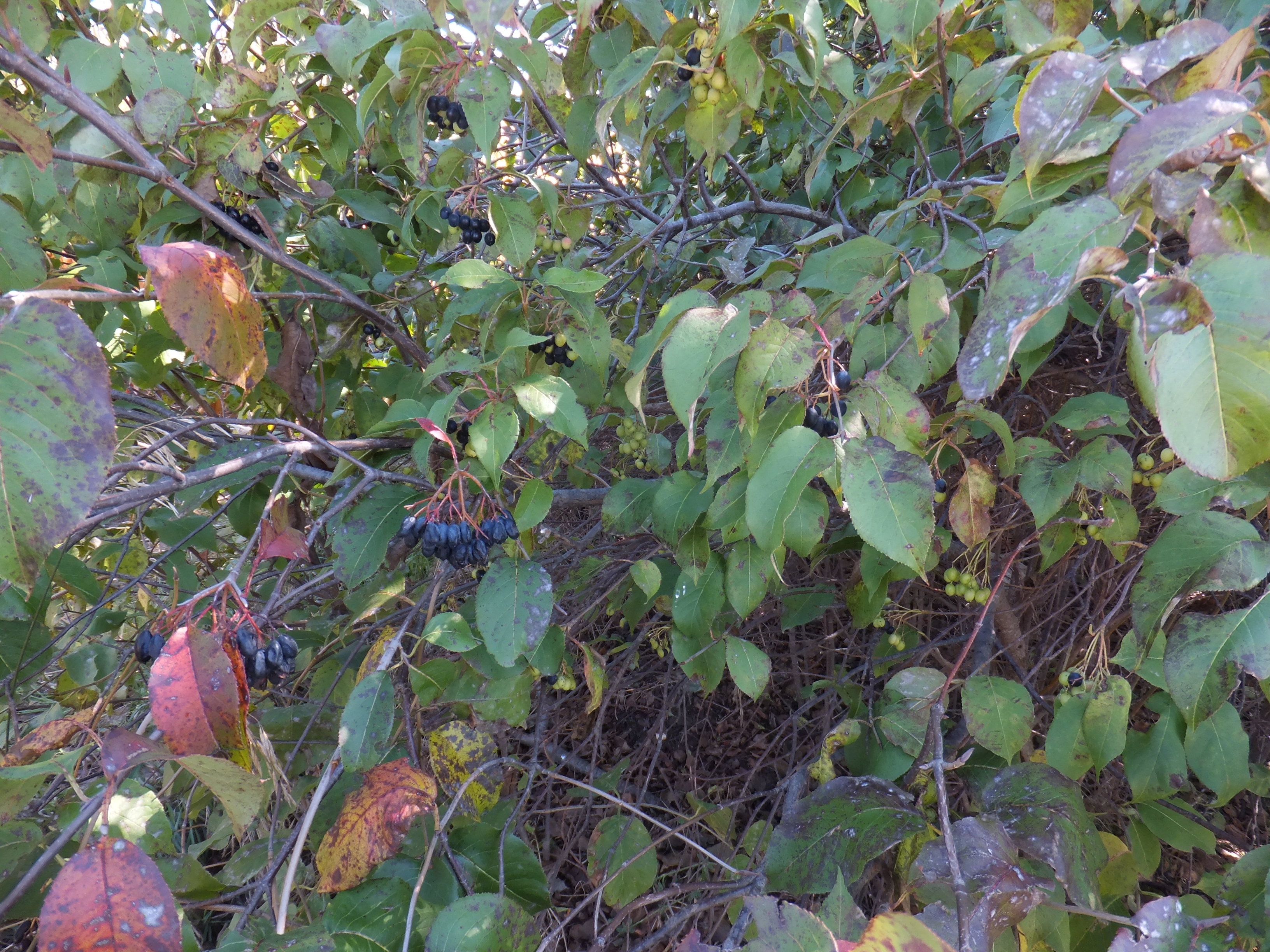
The photo above shows an abandoned fenceline along Oak Grove Lane.  I started thinking about this fenceline when I noticed the Nannyberry bush, which is in the left of the photo with yellow, red, and green leaves.

It’s a little bit humbling, but I realized if I’m successful with my edible windbreak planting, in fifteen years it will look like this abandoned fenceline. It’s also reassuring to know I’m mimicking nature, which uses space so wisely.

The amount of solar energy turned into food and fodder for everything from microorganisms to birds to humans is amazing.  Just in this photo there is the Nannyberry bush, growing under a Chokecherry tree, which has Wild Grapes hanging from its limbs.  Grasses and forbs cover the ground.  The rest of the life in this area would take a lifetime to catalog.


Fall-Calving, Grass-Finished Beef

November 12, 2013

DSCF1509

Bruce King asks, “why fall  calving?”  The short answer is “serendipity”.  The long answer is the rest of this post.

When I split my farm from my parents’ farm, I had to figure out how I was going to farm and keep the beef and pork markets I had built up with Jordandal Farms supplied.  With a much smaller land base I realized I would need to purchase more of my inputs.  So I started purchasing spring-born feeder steers in October when they were weaned from their moms.

I take the steers through the winter on stored feed, shooting for a pound and a half gain per head per day.  They then go onto the lush spring pastures, gaining three pounds per day in May and June.  I start butchering the biggest steers at the end of June weighing around 1000 lbs.  As the summer pastures fade I start to graze hay fields to keep high-quality feed available at all times.  I continue butchering the biggest steers at a rate of eight per month and they’re all gone by October.

But back to the fall-calving herd.  Even though I realized I needed to buy feeder steers to keep my market supplied, I was a little sad I wouldn’t have any cows or calves.  The breeding through birth process is always fun to experience.

But the fall before our farms split up saw many cows returning to estrus, after the herd bulls had been removed.  This is a bad sign because it means the cows are “open” and will not have a calf the next spring.  We sell almost all of the open cows for beef, as it doesn’t pay to feed a cow for a nonproductive year.

But in a bit of serendipity, the neighbor’s bull jumped the fence and spent a month with our cows.  When the veterinarian pregnancy-checked our cows, sure enough many were open, more than usual.  Some of the cows we considered best in the herd.  I realized some of these cows may be short-bred by the neighbor’s bull, (less than a month and the vet wouldn’t be able to determine).

So I decided to start a fall-calving herd.  I picked out the best cows, ones the vet said were reproductively sound even though they were open.  And I moved them to my farm and borrowed one of my parents’ bulls to breed any cows which weren’t bred by the neighbor’s bull.  The neighbor’s bull was black and he sired the black calves last year.  I had 8 black calves and 4 red ones.

I wasn’t sure where this herd would be, as I didn’t think I had room for them on my farm during the grazing months.  Luckily I was able to rent a neighbor’s wooded pasture from May 1st to November 1st.  After November 1st I bring them home and turn the bull out with them.

I wasn’t sure how the small calves would handle the winter, but last winter they did fine, nursing their mothers and eating some hay.  I weaned the calves from their moms at the end of April.  The weaned calves really took off on the spring pastures.  They spent the summer grazing with the feeder steers.  And now I’ve started butchering them weighing around 1000 lbs.

I think the economics of the fall-born calves is better than purchasing feeder steers, because although the cow and calf eat more hay than a feeder steer, I don’t have to spend the money purchasing the weaned calf.  Furthermore, the cow will have a salvage value at the end of her productive life.

If I didn’t need to keep a consistent supply of beef, and could just sell quarters to customers at one time in the fall, I think I would only have a fall-calving herd and market all the fall-born calves the following November.

What makes both systems economical is taking the animals through only one winter.  Feed is a huge cost in beef production, and the cost of winter feed dwarfs the cost of summer pasture.

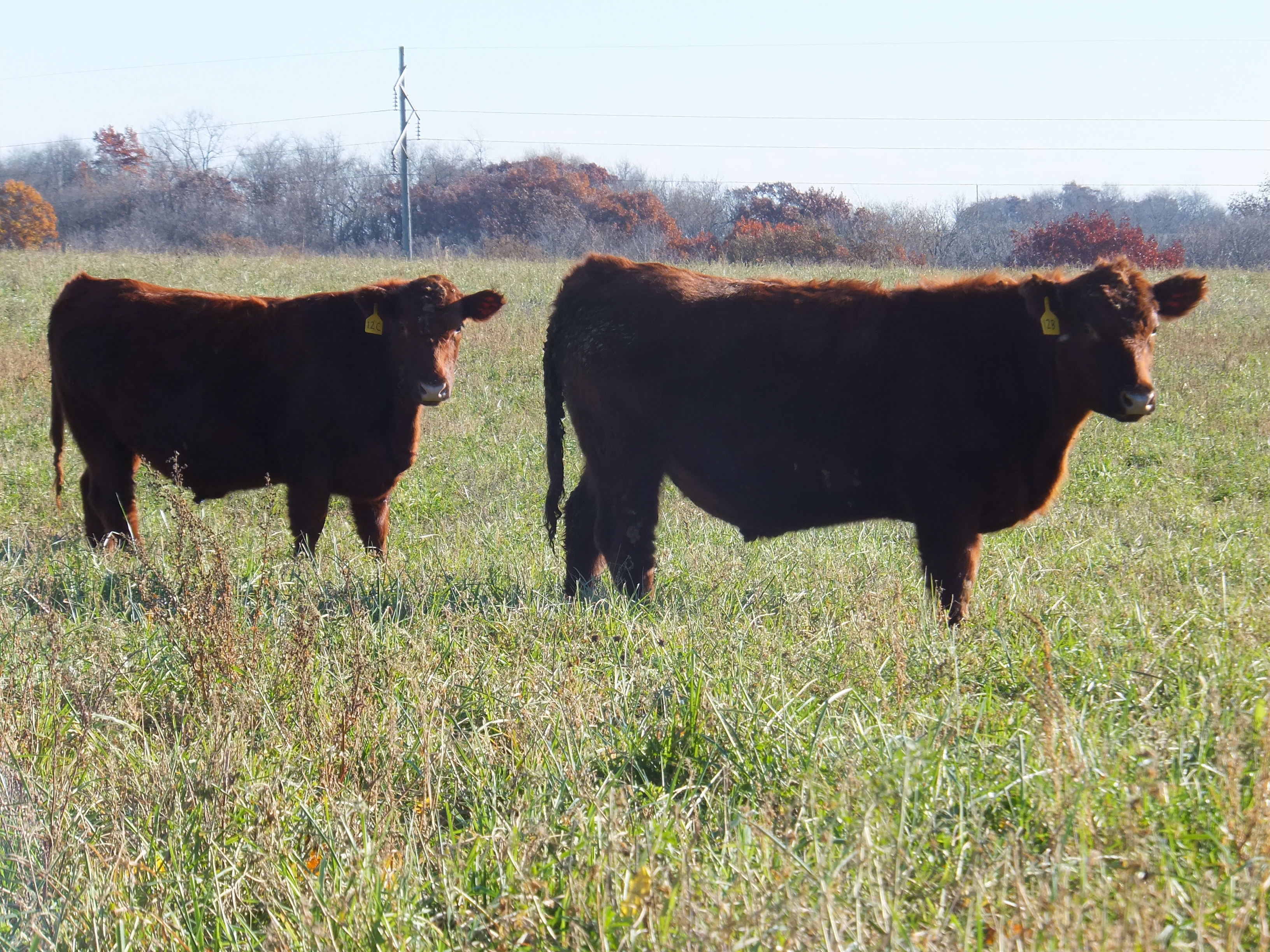
The photos were taken recently and show two, fifteen month old fall-born calves above and below, from a different angle.  They weigh about a  thousand lbs and will be butchered in a few weeks.

The top photo also shows one of my fall-calving cows on the right.  She is eight years old and had something wrong with her udder so I took her calf away from her.  She is one of the biggest cows, I’m sure weighing over 1500 lbs.  She also will be butchered soon.

DSCF1499


First Snow, Fall 2013

November 11, 2013

DSCF1522

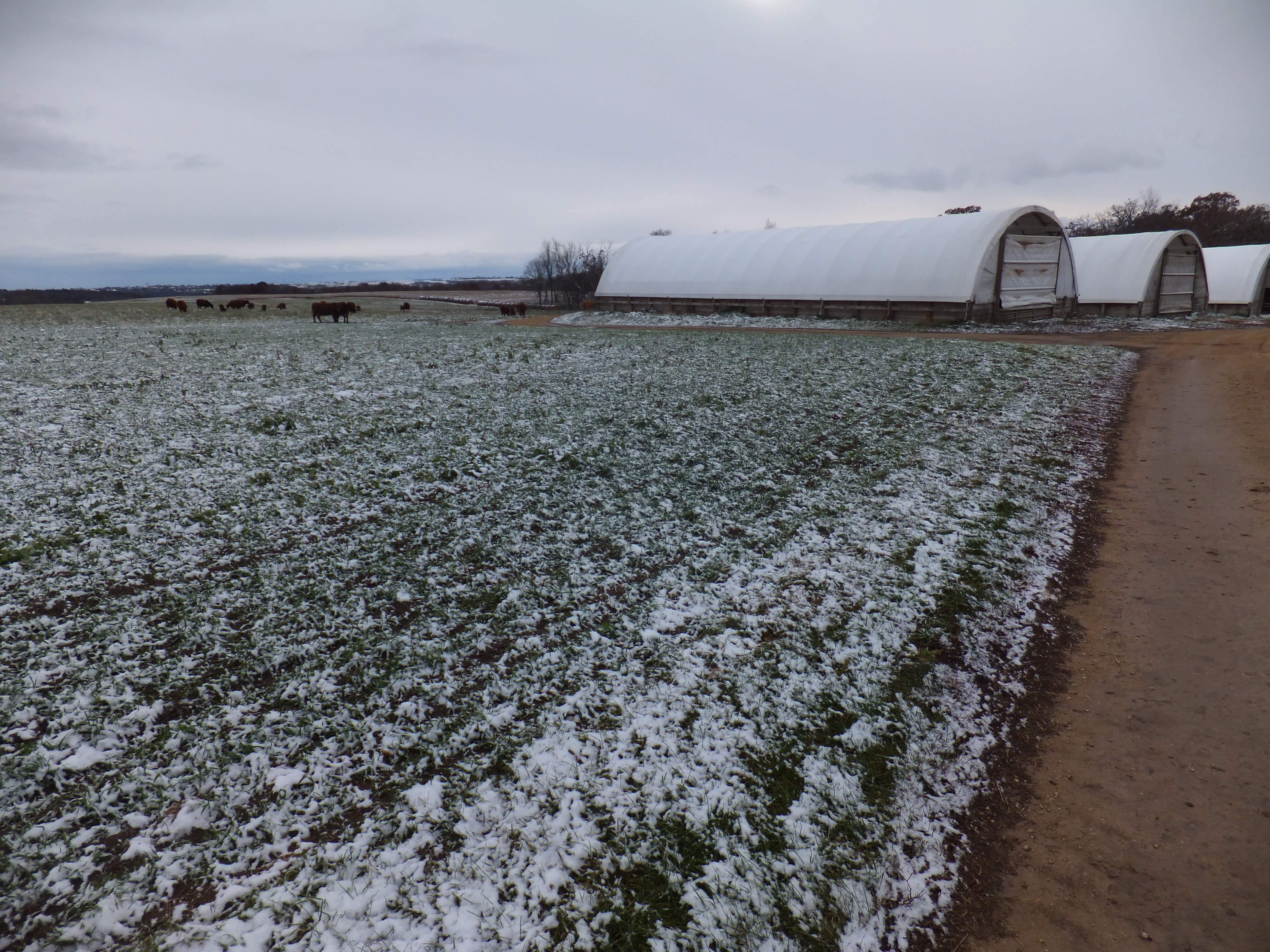
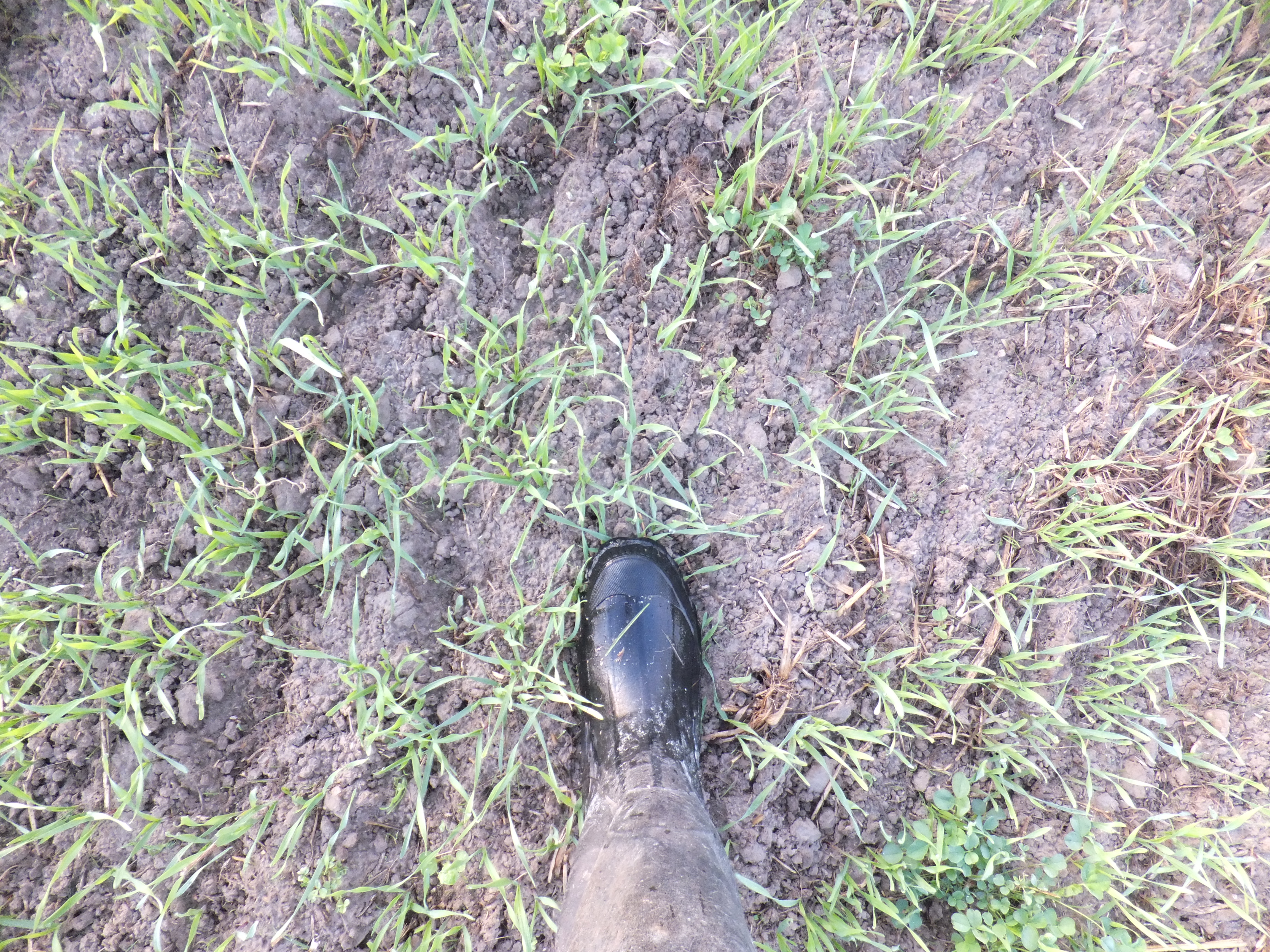
November 11th, 2013.  Here is another photo of the rye, now at six weeks.  It hasn’t grown much since it was two weeks old.

In the background you can see my fall-calving cows with calves.  I moved them home from the summer pasture and now they’re grazing hay fields on the south side of my farm.  The bull in the photo has been with the cows for a week, which will give us August and September calves next year.


Nannyberry

November 9, 2013

DSCF1452

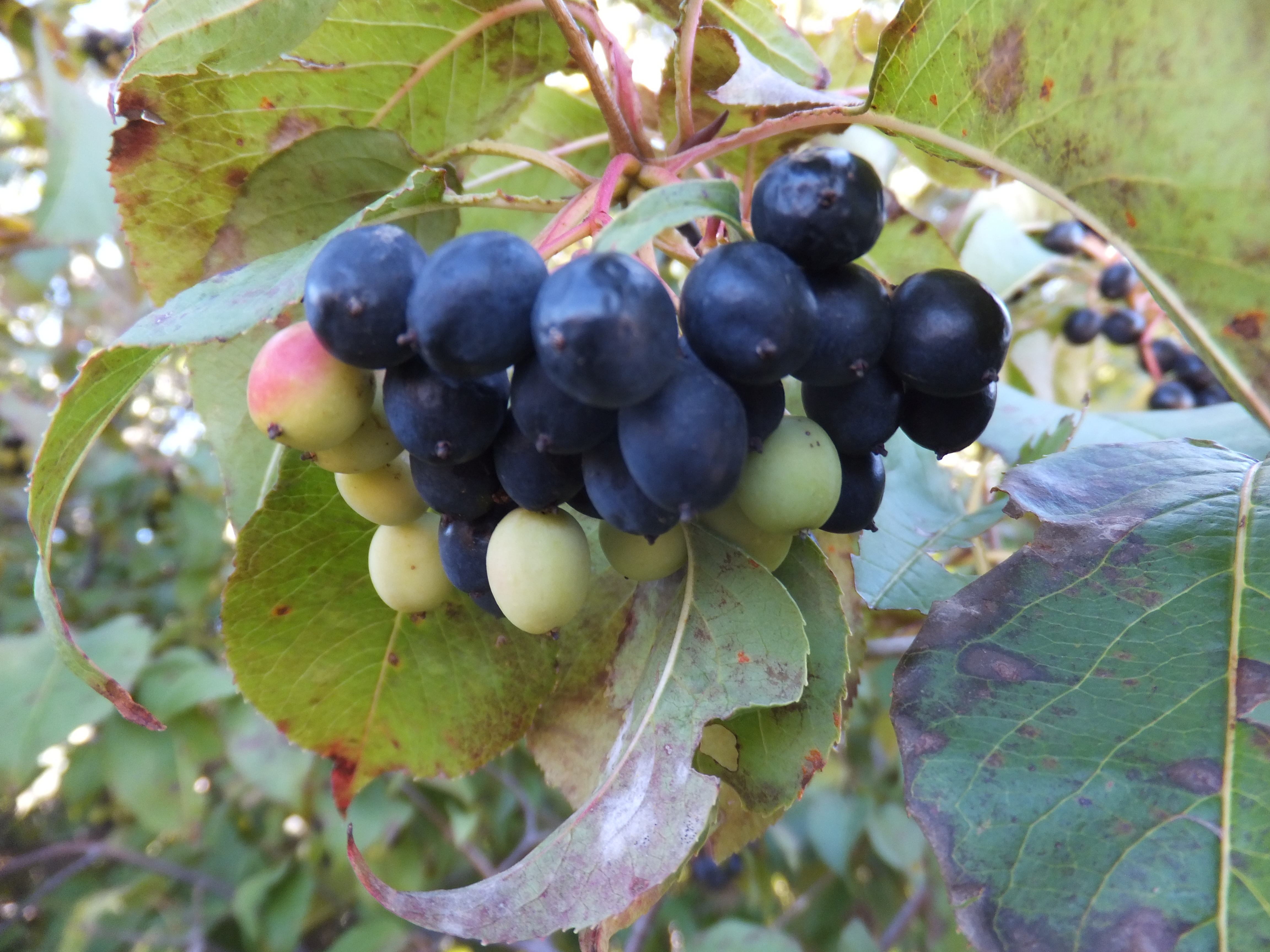
2013 is a good year!  I discovered a wild edible growing twenty yards from our mailbox.  Starting in September, every time I picked up the mail, I popped a handful of nannyberries in my mouth and slowly chewed, separating the meaty pulp from the seeds.  This can take a couple of minutes if you have a mouthful, then you spit the seeds out.

Nannyberries are substantial.  Some people compare them to raisins.  The closest food I would compare them to is figs.

The photo below shows the fruit as it grows, in a cluster, with the green being unripe, and the black ripe.  If you wait until the fruit starts to wrinkle, it doesn’t taste as good.

DSCF1446

It probably seems silly, but I experience real joy when I discover a new, wild edible.  It is so difficult to find a new one on your own.  Until you are able to see it, a thing remains invisible.  I think our mind does more of our seeing than our eyes, if that makes any sense to you.

It amazes me that this bush, which is probably at least fifteen years old and been producing fruit for at least ten years has been invisible to me.  Not only did I not know what it was, I didn’t even see the berries and go, “hey, what kind of berries are these?”  I’ve been yards away from this bush thousands of times.  I don’t think its a stretch to say this bush was ‘invisible’ to me.

I started thinking about nannyberries when I heard Sam Thayer say it is his favorite wild edible on public radio.  I reread the chapter on nannyberries a few times in Sam’s first book, The Forager’s Harvest.  My mind was primed.

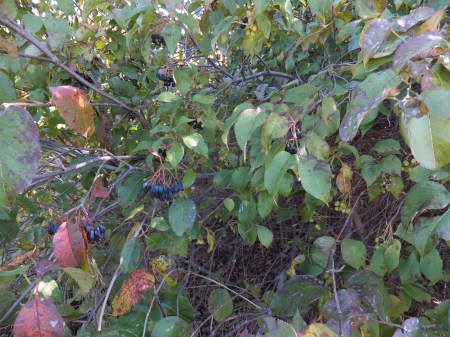
And then one day as I picked up the mail, I noticed these clusters of berries.  I guess it would be more accurate to say they jumped out at me, as this is a large specimen as you can see in the bottom photo.  My mind was opened so I could see.

I didn’t go pop a handful in my mouth.  I retrieved my book and returned.  The photos are never exactly like the specimen you’re looking at.  What sold me was Sam’s description of the claw-like bud at the top of the clusters of fruit.

When I saw that, I was 99% sure, but I was still cautious.  I picked a wrinkly one and tasted it.  It wasn’t very good, which made me wonder about Sam’s description.  I picked a less-wrinkly one and it tasted better.

I chewed and swallowed, and that was it for the first day.  I wanted to wait and see if I would get sick later.  I’ve never gotten sick from a wild edible, but when I’m discovering a new one, I’m very cautious.

I didn’t get sick, so I ate more the next day.  Like anyone trying a new food, it took me a few tries to really start to desire it.  I also had to figure out which berries were ready to be eaten.
DSCF1454

The scientific name for Nannyberry is Viburnum lentago.  I noticed the genus name, Viburnum, is the same as the Highbush Cranberry, Viburnum trilobumwhich I planted several of this spring in my Permaculture orchard.

When you see a scientific name, the genus comes first and is capitalized, followed by the species which is not capitalized.  If two things share the same genus name, they’re related.  If two things share the same species name it doesn’t mean they’re related taxonomically, but it could mean something else.  For example, Fraxinus americana and Ulmus americana refer to the American ash and American elm tree respectively.  They’re not related, except for the fact that they’re both found in North America.

I was intrigued to find the Nannyberry and Highbush Cranberry are both Viburnums.  I found there are over 150 species within the Viburnum genus.  I can’t wait until my Highbush Cranberry starts to produce fruit and I can enjoy and compare to Nannyberry.


Longhorn Beetle: Brown Prionid

October 29, 2013

DSCF1380

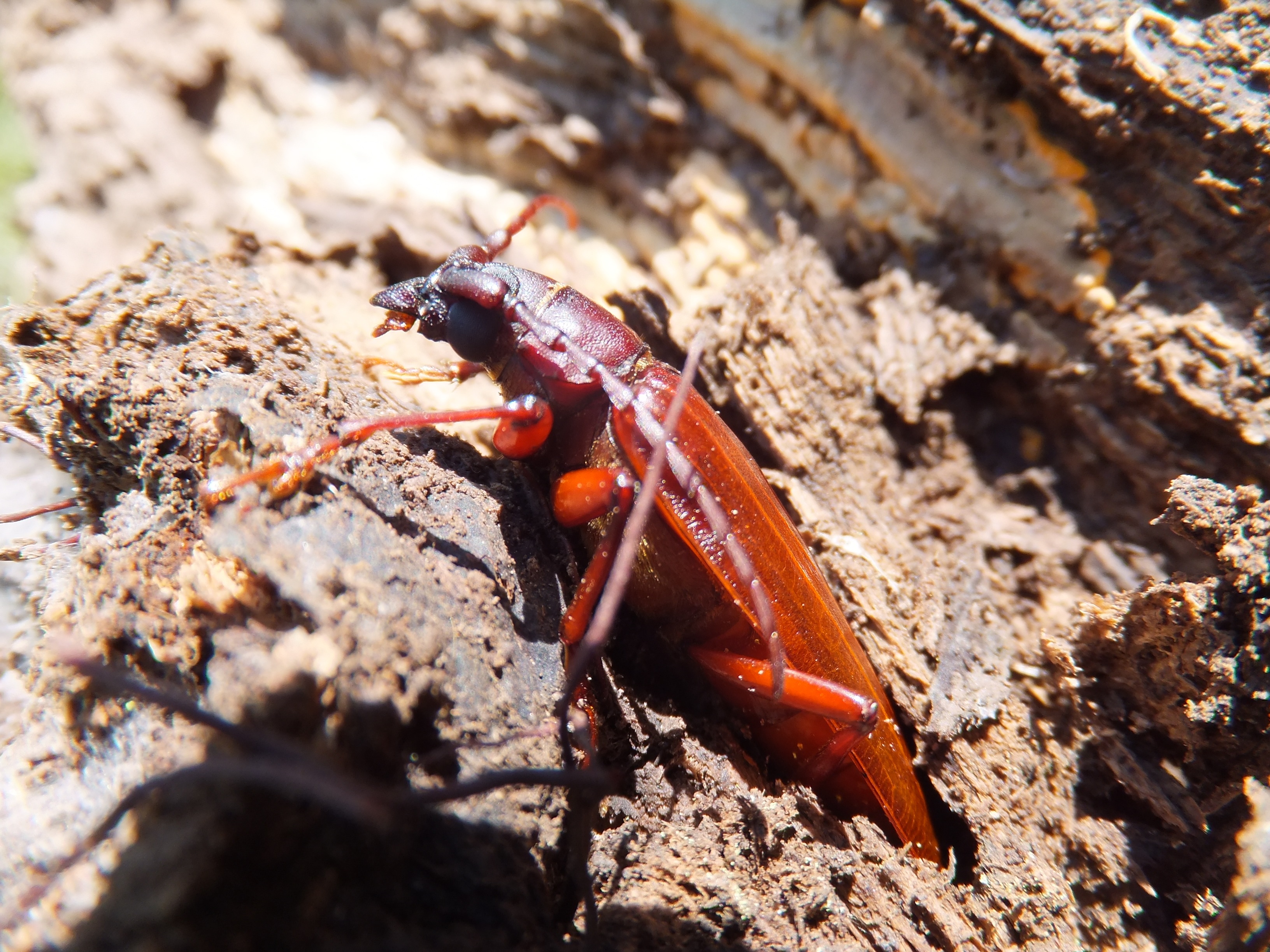
In an Inordinate Fondness for Beetles, Arthur V. Evans and C. L. Bellamy write that if you line up all the plant and animal species, every fifth one would be a type of beetle.  I came across this beauty when I moved a down tree.

I knew I was probably looking at a beetle and started to research which one I had found.  I quickly figured out I was looking at a beetle from the Long-horned beetle family, (Cerambycidae), but I couldn’t narrow it down from there.

A friend who was visiting the farm mentioned his Dad was an entomologist and I was able to send him my photos and he identified the beetle as a Brown Prionid,  Orthosoma brunneum.  As my experience indicates, Brown Prionid feeds and lays its eggs in decaying wood.

DSCF1382


Rye Cover Crop at 2 Weeks

October 11, 2013

DSCF1492

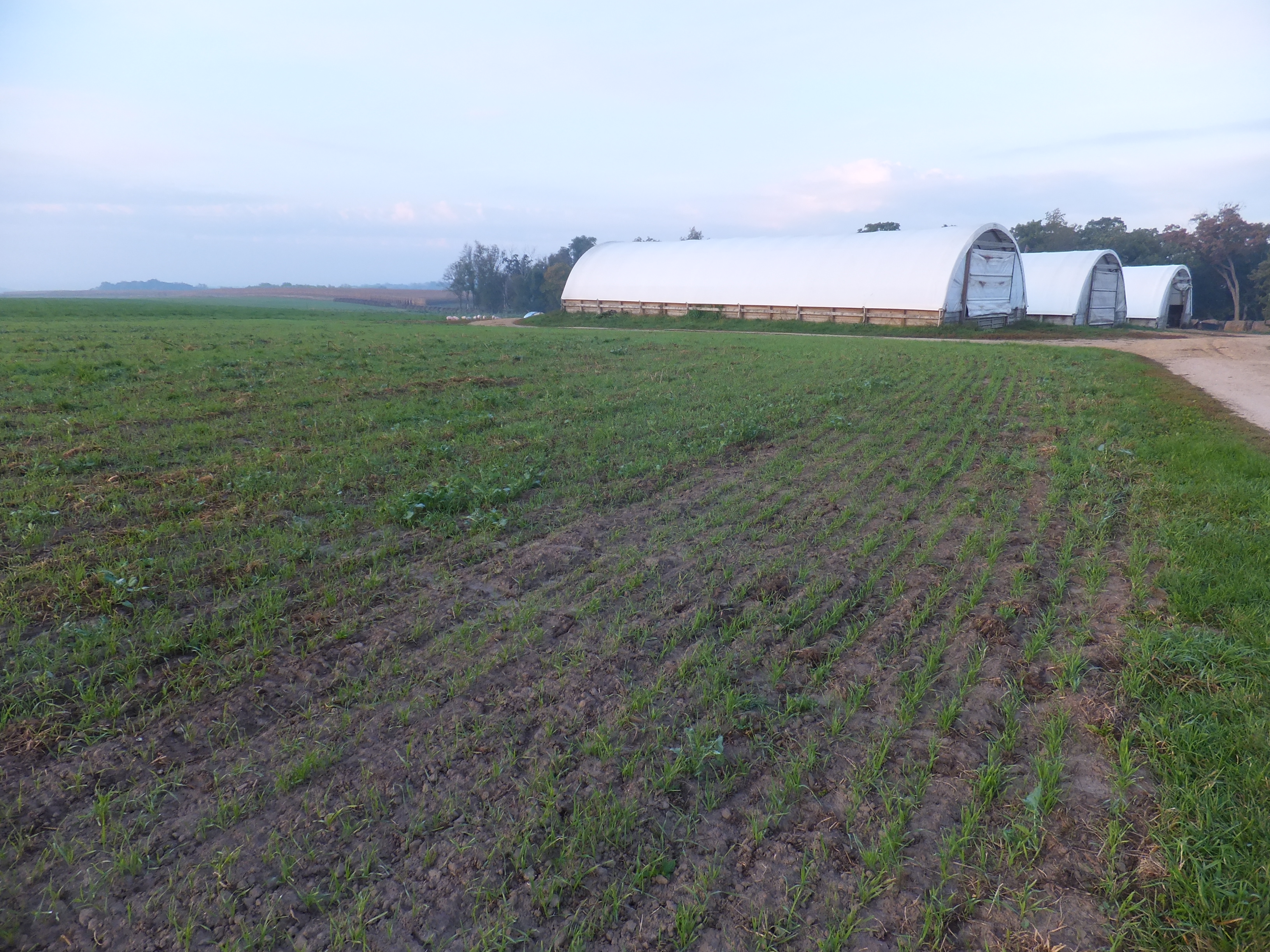
This is my cereal rye cover crop, 2 weeks after planting.  It’s an impressive plant, already 5 inches tall, with most of that growth coming in the last week.  Temperatures have been in the 70’s for highs and 40’s to 50’s for lows.

DSCF1493


Wood Chips from Menards

October 9, 2013

DSCF1484Menards is a home remodel retailer similar to Home Depot.  They have a facility in Illinois which takes all the old wooden pallets used in their business and grinds them up and runs it by a large magnet which removes the nails and metal.  They then give the finished wood chips away if you will haul them.

My uncle has a large straight truck which is used mostly to take mulch and potting soil into Chicago in places a semi tractor trailer can’t access.  He brought me a load for $450, which covers his gas, but not much for his time.  The photo above shows about 60% of the load, as I had him dump it in front of two hoop buildings.

I’m able to use my loader and put it about a foot deep in two hoop buildings.  It makes a great base onto which I spread straw weekly, or as the pigs need it.  When I haul the manure onto the fields I can still see some of the wood chips, but it appears they break down rapidly in the field because I have never seen any intact later.

In the bottom photo you may be able to see a sow eating at the large feeder.  Since I’m using more pasture for my hogs I’m using some of my hoop buildings differently.  In the warm months when they can be out, I have shelters in the pasture, but I let the hogs come into the hoop building for water and feed, fencing off the rest of the hoop building and using that part for machinery storage.  In the cold, wet months I’ll give the hogs access to the rest of the building.

DSCF1487


Rye Cover Crop, Old Pig Pasture

October 2, 2013

DSCF1479

I moved the remaining farrowing huts and mowed the rape and old hay on one of my pig pastures.  I filled in the wallows and other places the pigs rooted with my loader.  I then scraped up the manure from a hay feeding area for my cattle, and spread three loads of this manure on the pasture.

DSCF1476

I used an old soil cultivator  to work up the soil.  This implement is more for finishing tillage rather than starting it, but I own it and I just wanted to lightly and quickly till to mix in the manure and to ensure good soil-to-seed contact.  I had to raise the implement up a few times when some long stems of rape bunched up.  Otherwise it did fine.

DSCF1480

My plan is to grow organic sweet corn here next year.  I’m concerned about weeds, so I talked to an old organic farmer in my area.  He told me to plant cereal rye the fall before I want to grow organic corn.

Rye has an allelopathic effect on  other plants.  Rye releases compounds which inhibit the germination and growth of other plants.  This effect is greater on smaller-seeded plants like weeds, but less of an effect on a large-seeded plant like corn.

I read an article in Progressive Forage Grower titled, “Monitoring nitrogen dynamics in cover-crop mixtures”.  The study showed how a nitrogen-fixing cover crop such as hairy vetch was able to improve yields when no nitrogen fertilizer was added as compared to a non-nitrogen fixing cover crop like rye.  Since I plan on adding no commercial nitrogen, I thought it may be good to include hairy vetch with the cereal rye.

Unfortunately, I read it a little late to incorporate the results into my planting.  I wanted to get the field planted before a rain to help germination.  I planted it last Friday, September 27th.  It rained that night.

However, my thinking is my plants will have more nitrogen available than in the study because I have manure to spread on the field.  The rye is known for sucking up the available nitrogen in the soil and will release it back into the soil in the spring when it breaks down.  The challenge as I understand it is to kill the rye and have it breaking down, releasing nitrogen to the newly growing crop as the crop needs it.

Rye can be a challenge to kill.  The earlier paper I cited said rye should be incorporated into the soil when it’s 12 to 18 inches high.  A wet spring can make this a challenge because rye is known for its fast growth.  I’m not sure what I will use for spring tillage.  Rotovating is more popular now, and my partners own a rotovator, so maybe I’ll use that.

Back to this year.  The photo below shows how I planted the rye.  I used my 12 ft. John Deere grain drill followed by a 12 ft. Brillion cultipacker.  The cultipacker helps to break down any clumps remaining and ensures good soil-to-seed contact.

I planted about two bushels or 110 lbs. of rye to the acre.  I checked the field today and the rye is shooting out of the soil less than a week after planting.  I’ll probably post some photos in the future to track its progress.

DSCF1481


2013 Wild Plum Yield

September 27, 2013

DSCF1420

2013 is the year of the Wild Plum, (Prunus americana)!  Yields were prolific, bending branches with the weight of the juicy orbs.  I ate my fill, yet the pulp of fallen plums squished underfoot.

I wonder why it was such a good year.  I know the weather at flowering in the spring is a large factor.  It must have been perfect this year.  The wild apples were the best ever as well.

What other factors affect yield?  I read that drought reduces yield for plum trees.  Last year we had a severe drought until August.  This year our drought started in July, following over-abundant rains.

My theory is the plum trees suffered early last summer, but were then recharged with the late summer 2012 and early summer 2013 rain, resulting in huge yields.  I’ll have to wait and see if next year’s yield is affected by this year’s drought.

DSCF1416