Cutting Down a Tree in the Yard

May 16, 2012

My friend helped me cut down a tree in our yard.  Half of it split and damaged the house three years ago, and I was dragging my feet cutting the other half down because its a nice tree with late afternoon shade for the house.  Now that its gone though, I’m glad.  Most of the trunk was dead, only about a two-inch section on one side was alive.

We put a rope up high in the tree around the bigger branches to help guide the tree and tied it to my tractor.  We weren’t entirely successful at guiding the tree, as the tree took out the power line when it fell, but I’m thankful we missed the house and shed and no one was injured.


Planted Pig Pasture

May 11, 2012

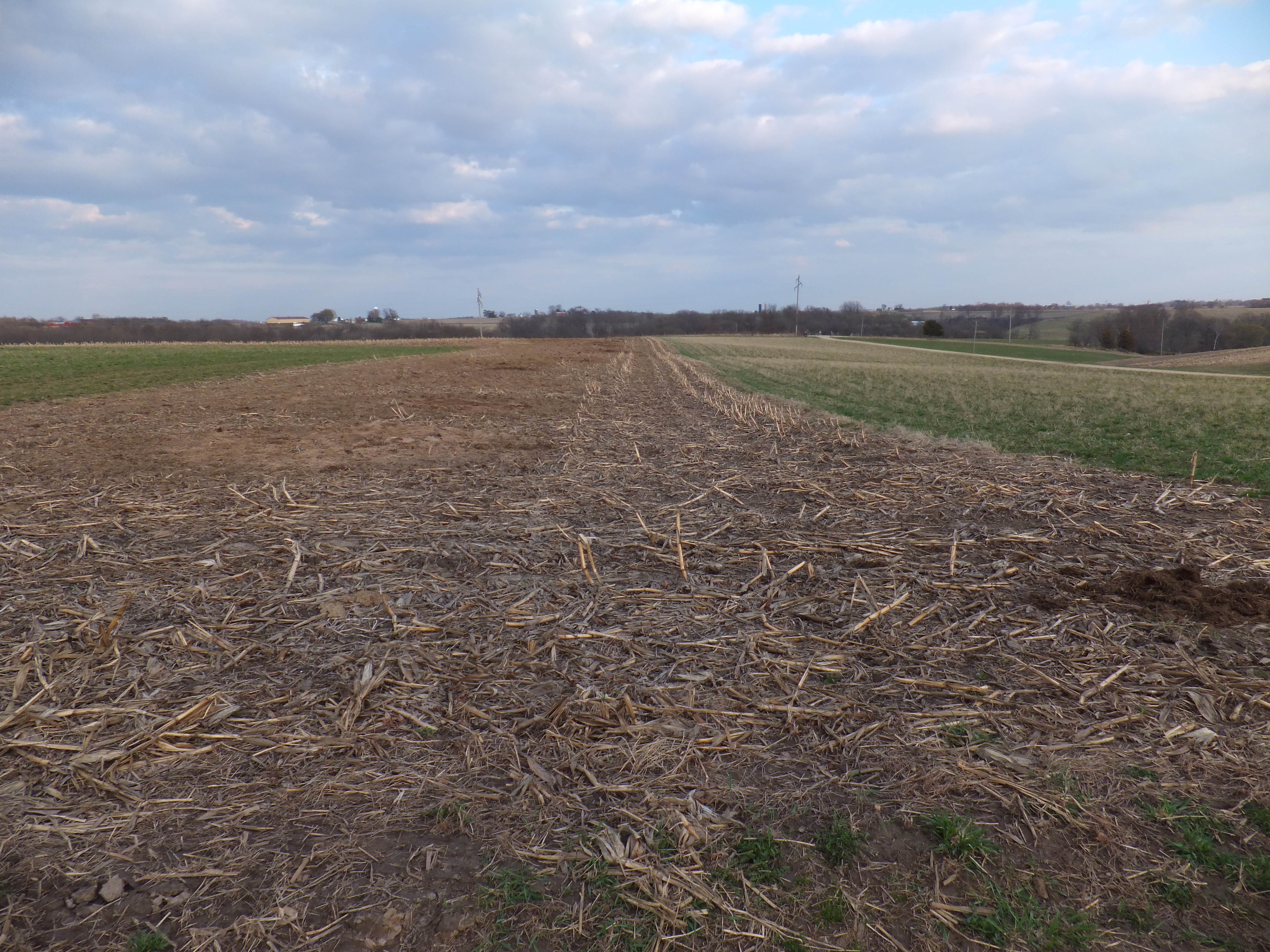
This one acre field was used last winter for the steers.  I fed hay and bedded them down with straw.  Once I turned the steers out to pasture, I loaded the manure which had accumulated over the winter and spread it on the rye field which was then tilled and planted to corn.

After allowing the soil to dry, I tilled this field and then planted barley and rapeseed on April 27th.  The field doesn’t look like much now, but it will be beautiful in six weeks when its ready for grazing.

The unfortunately named rapeseed also produces a beautiful yellow flower.  Rapeseed has two leaves with two segments each, which almost makes it look a 4-leaf clover.  This is the same plant which Canola oil is made from.


New Truck, New Haybine

May 6, 2012

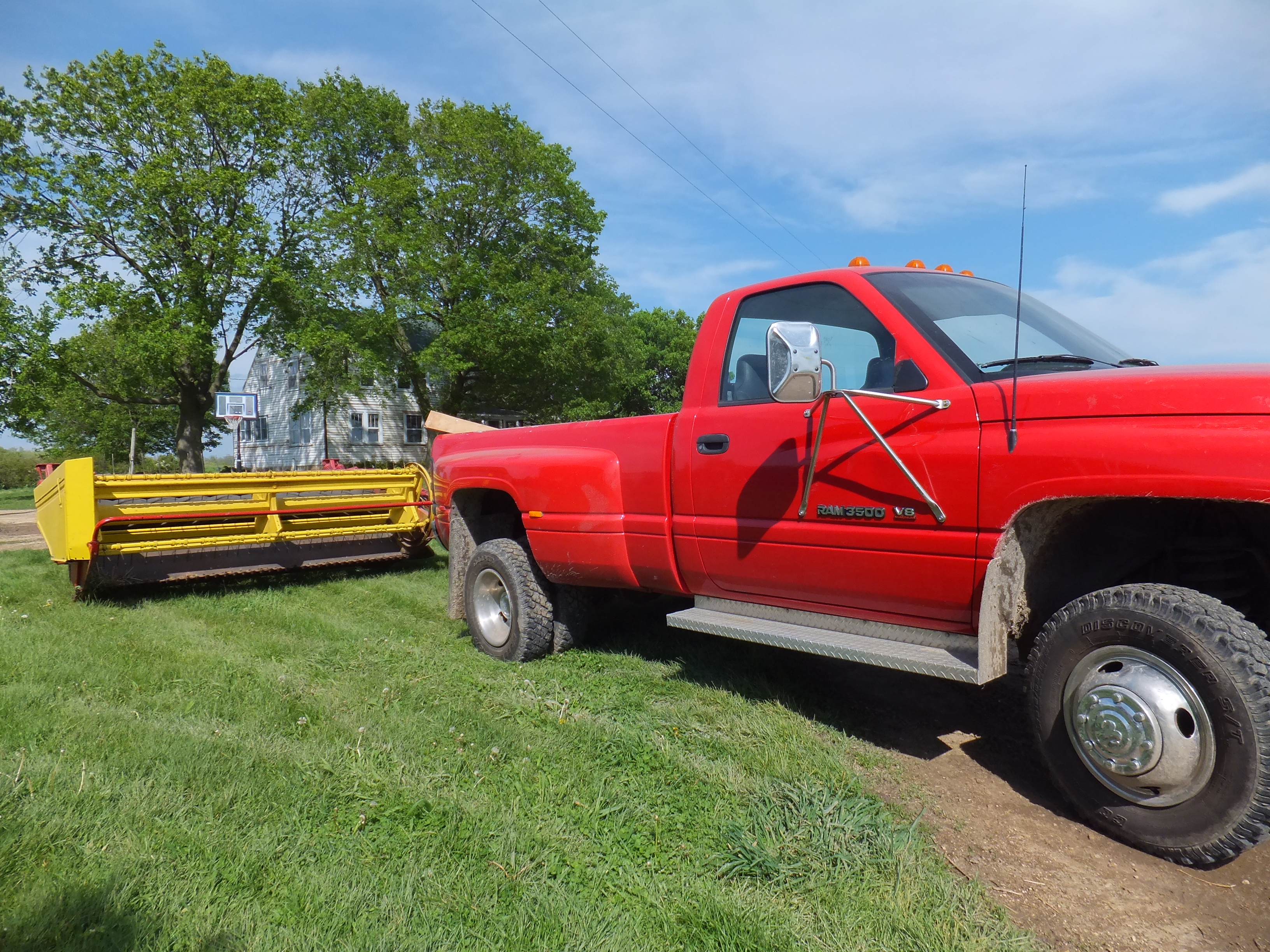
I made a couple of new purchases recently.  The truck is a 98 Dodge with 4-wheel drive.  I bought it specifically for hauling my animals to the butcher.  It does have a cassette player though, so I found my old cassette tapes and have been rerocking the 90’s.

The haybine is a New Holland 488, made in the 80’s.  A friend found it for me on Craig’s List.  It’s in great shape.

I paid $8000 for the truck and $2400 for the haybine.  The truck gets terrible mileage, less than ten miles per gallon when pulling the stock trailer.

Sixty miles round-trip to the butcher with about one load per week equals 3,000 miles, and maybe another 1,000 miles picking up supplies, means I may only drive it 4,000 miles per year.  If I get eight miles per gallon, I’ll use 500 gallons of gas.  At $4 per gallon I’ll spend $2000 annually on gas.

As much as I think grazing animals are part of the solution to global-warming, using this much fuel to get my animals to the butcher leads me to believe I’m not part of the solution.  But alas, I’m part of a system.

I would love to keep all my animals in one herd, schedule a kill date at my butcher, then sort all the animals I want to cull and walk them to the butcher once per year.  This isn’t the world I live in, though.


Grazing Winter Rye II: All Business

April 8, 2012

Five days after turning the cattle into half the winter rye field.  They ate it down to nothing.  And I have a round bale of hay available at all times.  But they want the green stuff.

When I turned them into the field five days ago, they did some running around, feeling their oats.  This time they were all business.  They knew what rye was, and they wanted it.

I love turning cattle into a new field of luscious forage.  Imagine tucking into a really good meal, and you won’t run out of food, and you won’t lose your appetite for about four hours.  I imagine this is how the cattle feel.  Nice.

Happy Easter!


Grazing Winter Rye

April 5, 2012

I planted winter rye after corn silage harvest last fall.  I spreaded the bedding pack manure from one hoop building evenly over the field, disced the field lightly, and planted a bushel of rye per acre with my drill.

It came up nicely and gave me a few days of grazing last fall.  The real beauty of winter rye is that it stays green all winter.  When the snow isn’t too deep, it’s nice to find a sea of green in a dead and dormant winter landscape.

Winter rye also takes off growing in the spring faster than anything.  It has an alleopathic effect, meaning it’s competitive with other plants.  A quick glance in the field found no weeds.

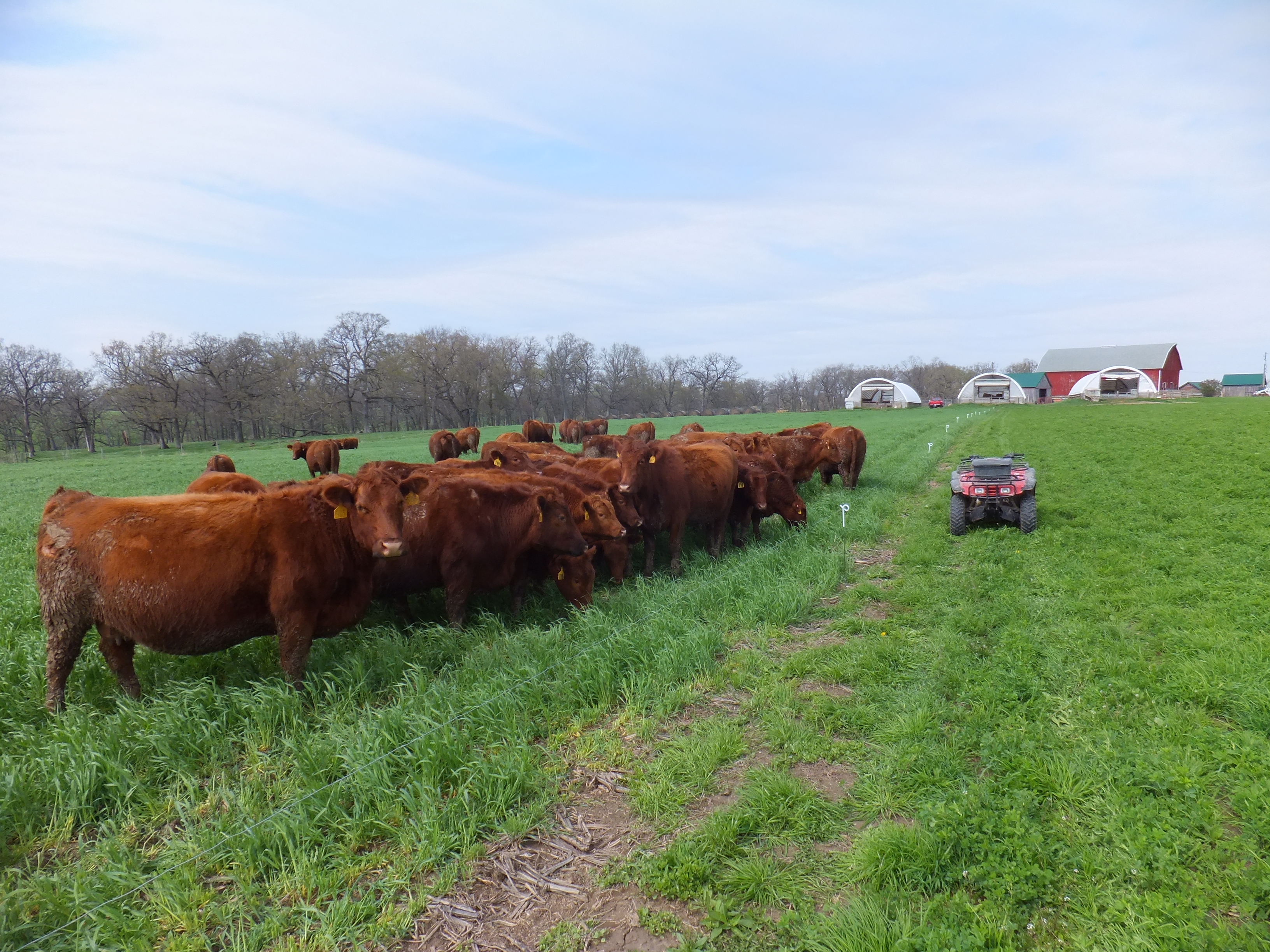
In the photo above you can see the cattle in the rye, kept in  with a single electric wire.  The field with the ATV is alfalfa/grass.  The dead area is where I concentrated the driving of machinery, keeping the compacted/damaged area in one place, rather than scattered throughout the fields.

In the photo below you can see the saying is true, “grass is greener etc,” even when it’s not.  I’m amazed at cows’ body knowledge.  They will reach under an electric fence, mere inches from being shocked, and rarely get shocked.


English Style Farrowing Hut from Port-A-Hut

April 2, 2012

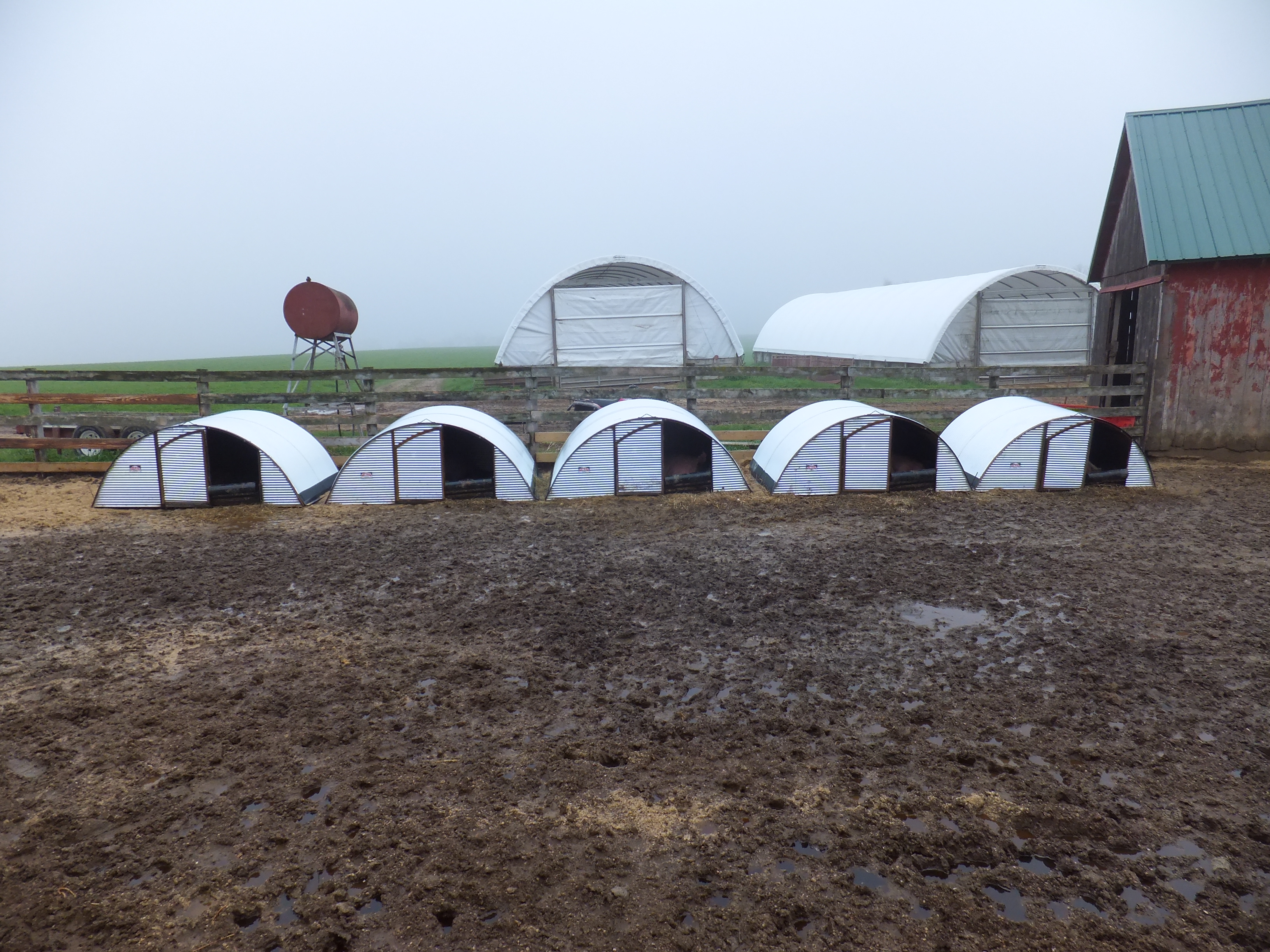
The English Style Farrowing Huts are working pretty well so far.  Four of the five sows farrowed, each in her own hut.

I probably should have spaced the huts farther apart.  I’m having some trouble with sows returning to the wrong hut after they leave to eat and drink.

It’s also going to be a challenge to process the piglets away from the sow.  Sows can be aggressive defending their young, and a squealing piglet sets them off.

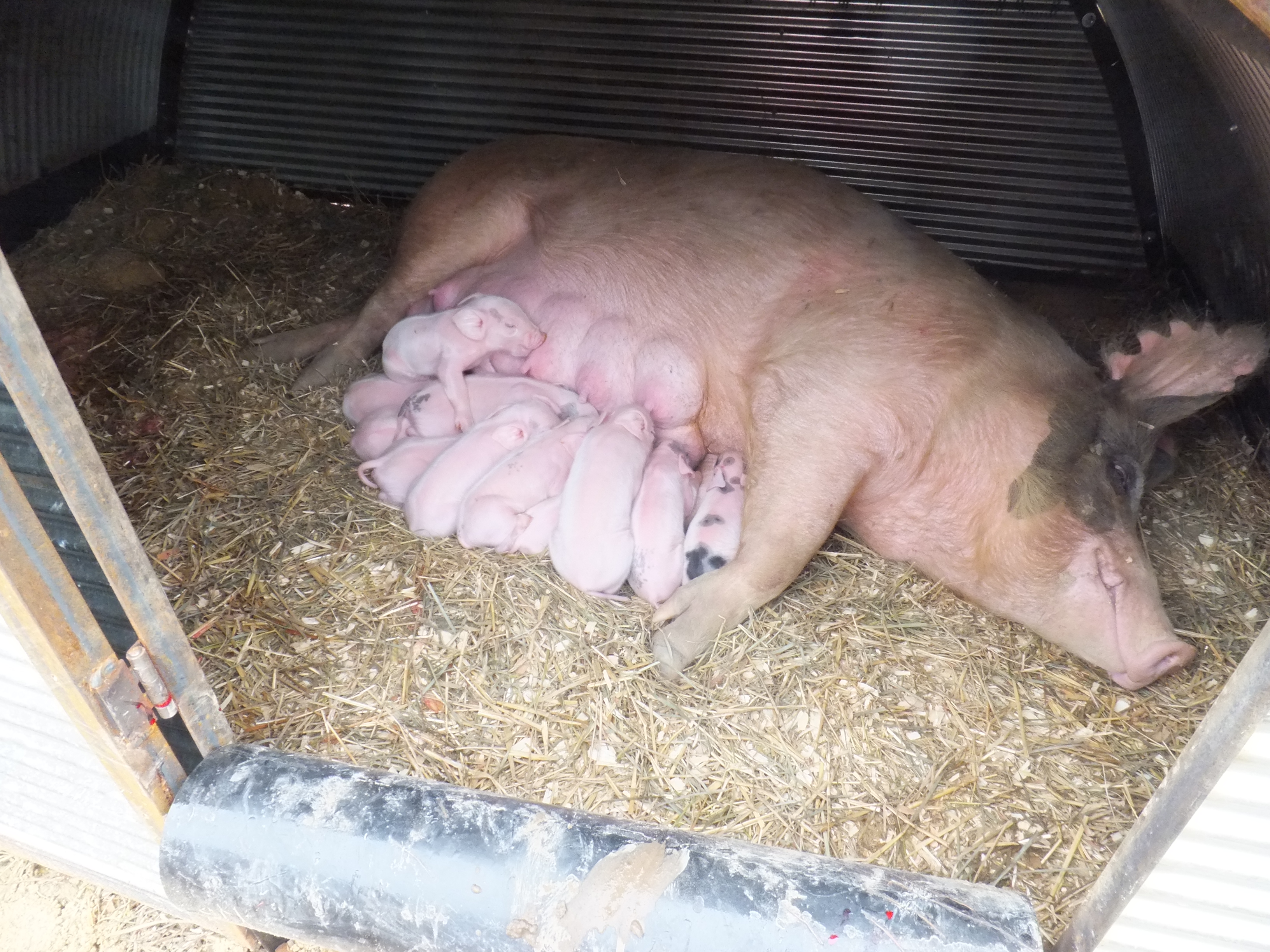
I’m glad I purchased the optional roller which fits in the doorway.  I’m able to leave the door to the hut open so the sow can come and go as she likes, but the roller keeps the piglets in until they are big enough to jump out.  The roller is the blackish thing in the bottom of the photo below.


Warmest March Ever

March 25, 2012

Daffodils above and a Plum tree below.  The winter without a winter is followed by the warmest March ever.  Everything is at least a month ahead of normal.


March 2012, Early Spring

March 19, 2012

A warm winter followed with record high temperatures in March, finds me in the fields earlier than ever.

I fed round bales of hay in a feeder to my fall-calving cows on a field which was corn last year and will be oats and new hay seeding this year.  I moved the feeder every time I fed a new bale so the manure would be spread across the field, pictured below.

The cows had to walk across a hay field to get to water.  Any time the ground wasn’t frozen resulted in damage from the cows’ hooves.

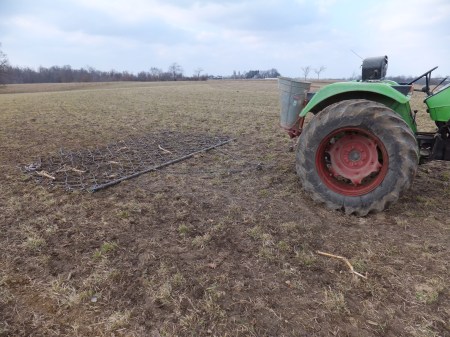
I dragged the damaged areas with a chain harrow pictured above.  I also spread some oats on the worst areas, using the silver seeder located on the back of the tractor, pictured above.  The oats will give some ground cover and forage.

I also fertilized last week.  I put 100 lbs of gypsum and 100 lbs of ammonium sulfate on every acre.  Gypsum supplies Calcium and Sulfur, while ammonium sulfate supplies Nitrogen and Sulfur.

I decided to not add any Phosphorous or Potassium.  My soil tests showed high levels of Phosphorous in the soil.  My forage tests showed high levels of Potassium in the hay.  These two elements, along with Nitrogen are considered the primary macro-nutrients.  Another reason I decided not to fertilize with Potassium is “luxury consumption.”  If potassium is readily available, plants will suck up more than they need.  This is one of the reasons I prefer to fertilize with Potassium in the fall.

Secondary macro-nutrients include Calcium, Magnesium, and Sulfur.  My forage tests were lower in Calcium than I liked.  So I decided to add gypsum which is 22% Calcium.  I could have added  lime, but that would raise the pH of the soil, which is already high at 7.4.

My soil is high in Magnesium because the rock underlying our soil is dolomitic limestone, which is high in Magnesium.

Needed Sulfur was supplied from the polluted atmosphere in acid rain for many years.  Now that the air is getting cleaner, there is less Sulfur available to plants, and plants deficient in Sulfur are being seen.  Gypsum is 17.5 % Sulfur, and Ammonium Sulfate is 24% Sulfur.

I didn’t add any of the micro-nutrients.  I plan on soil testing in late summer and fertilizing in the fall if my budget allows.


March 2012, Fertilizer Prices

March 14, 2012

We priced fertilizers with our local dealer.  Most prices have increased from last year.  I referred back to last year’s post to compare prices.  All prices are per ton.

Product:     2012 Price  2011 Price  % Change

Urea            $650           $462           +41

Am. Sulfate $418           $343           +22

Potash        $620           $537           +16

MAP            $640           $673           -5


Hoop Barn Farrowing Update

March 8, 2012

I learned a lot these past two months, and ended up with some live piglets.  Nine sows averaged seven piglets weaned per litter.  Two sows lost 18 of 20 piglets when they farrowed in below zero F weather.  So the total average is just under six piglets weaned per litter.

I found that if the temperature was 20 F or above, temperature wasn’t an issue.  My plan for next year is to avoid farrowing in December through February.  This will insure decent temps.

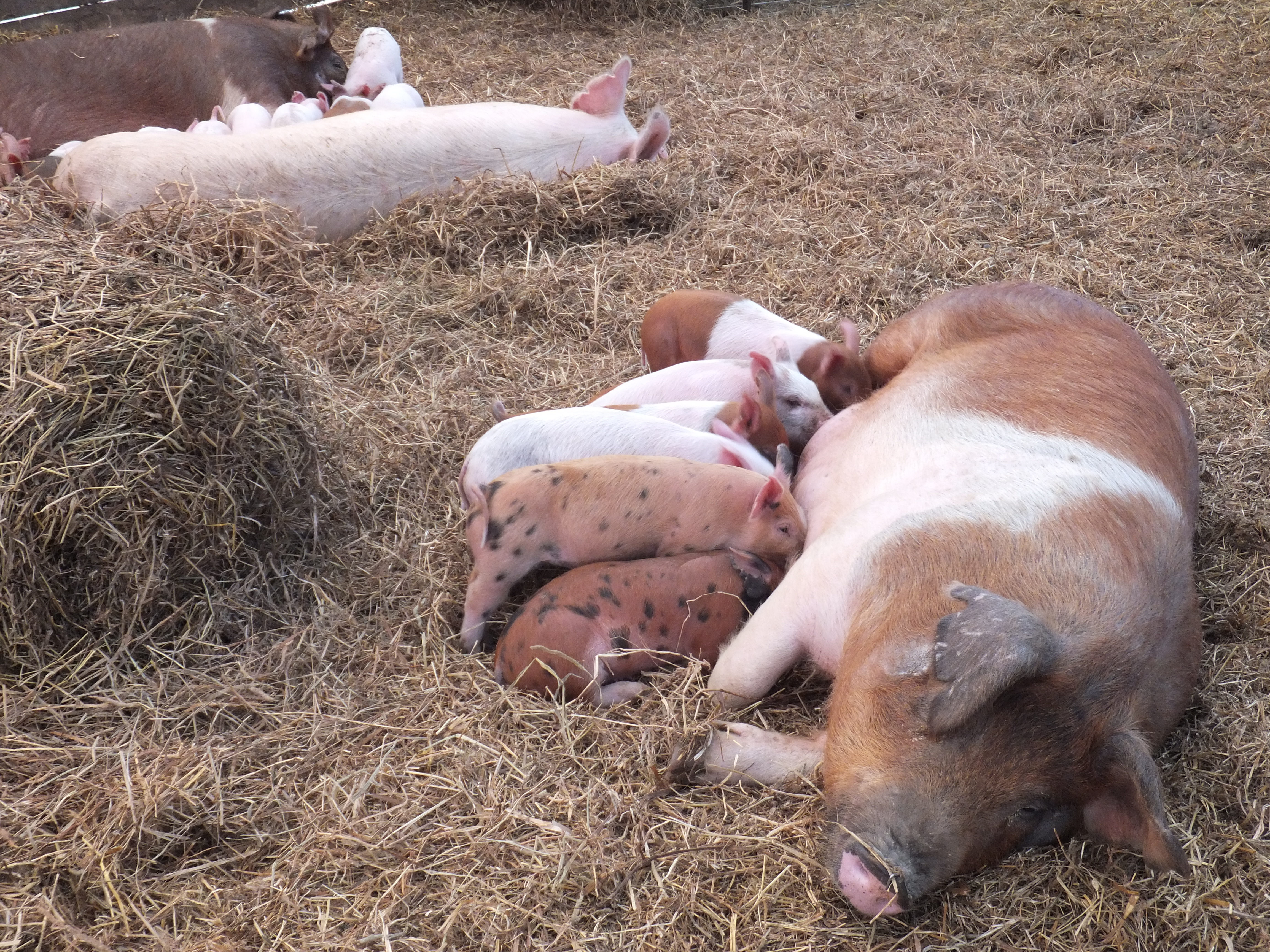
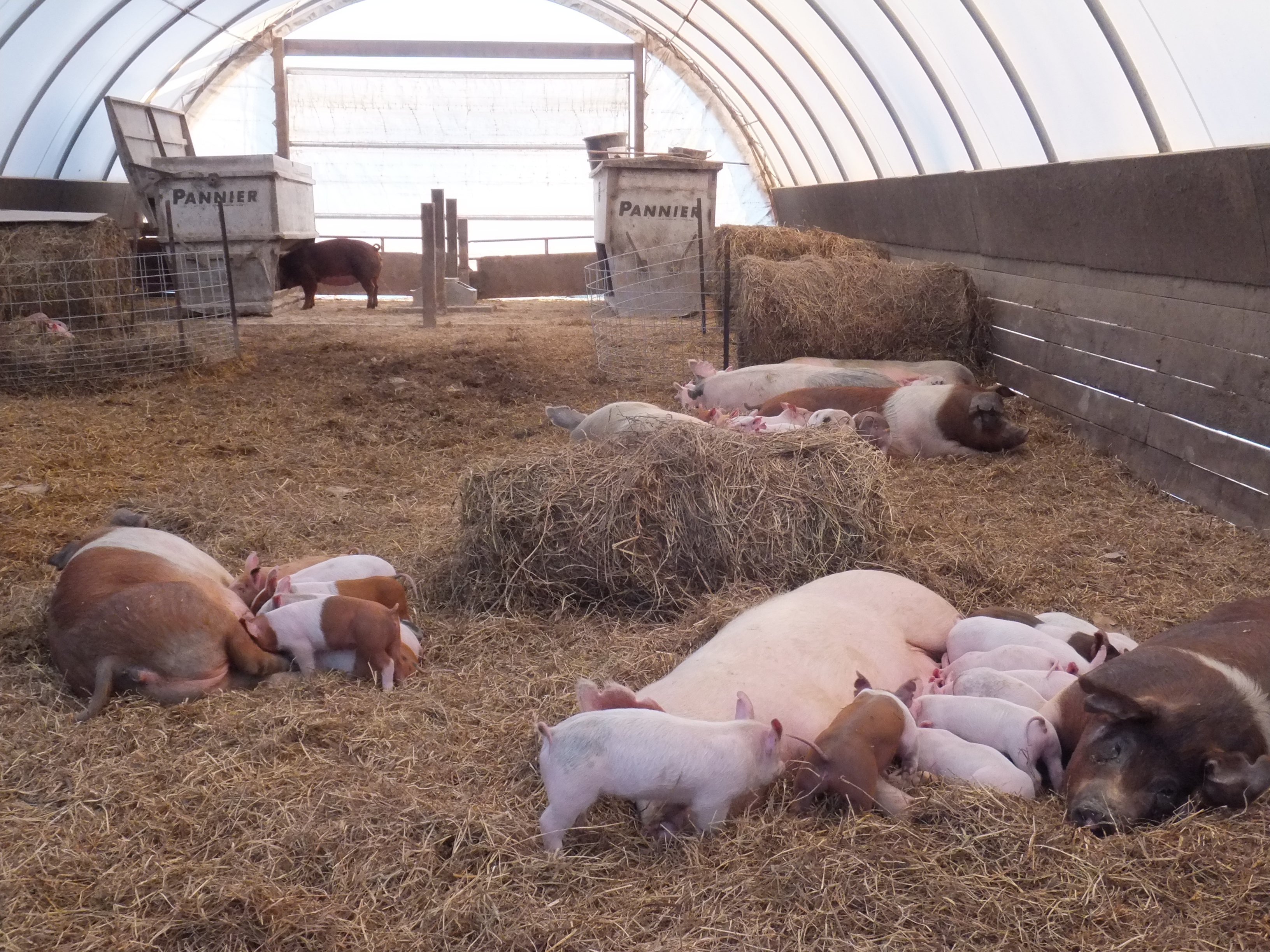
The pens I built worked fine.  I kept the litter confined for 7 to 10 days, letting the mother out for feed and water twice a day.  After that, I just took out the wire panel and let the litters co-mingle.  You can see that in the photo below.

The pens were about nine feet by nine feet.  I just purchased ten English style farrowing huts from Port-A-Hut.  I fear they may not be large enough, measuring nine feet by 5 and a half feet.  Time will tell.  The huts will give me more flexibility, allowing me to farrow outside of the hoop barns.